Posts with «mega» label

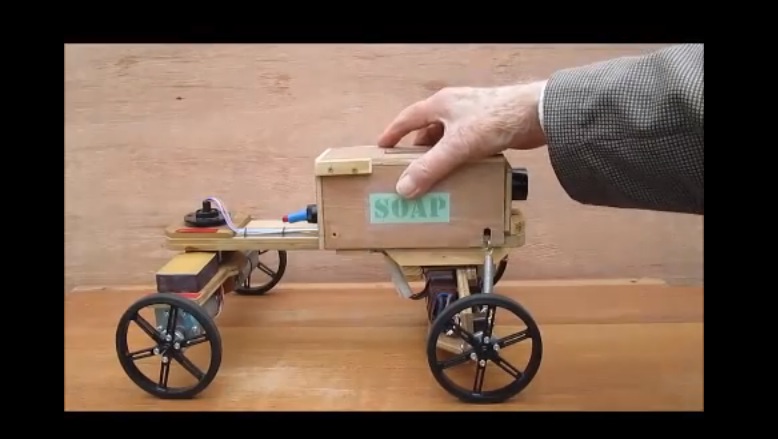
Wood Lizzie is a DIY Soap Box Cart controlled via Wi-Fi

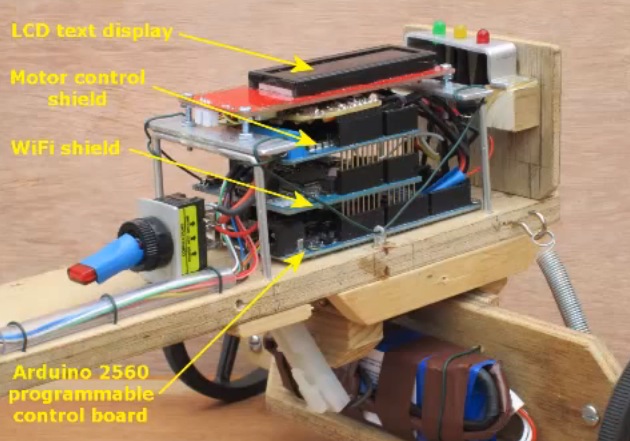
In the following 10-minute video, the Currah team is showing us all the details of Wood Lizzie, a project experimenting with Arduino Mega and Wi-Fi Shield, a very flexible steering system and the virtually unlimited control range afforded by WiFi and Internet Protocol:

The original plan was to construct one of the two-wheeled robots very popular with hobbyists but it was eventually decided that the resulting vehicle would be of very limited application and capable only of traversing smooth surfaces. However, note that the current design can be viewed as the drive of a two-wheeled robot coupled with a trailer by means of a 360 degree pivot. A slip ring capsule within the pivot enables the heavy battery and bulky control system to be separated from the drive and located on the trailer thereby distributing weight evenly between the four wheels.

DIY soap-carts were pretty common among kids in the first part of the 20th century and built from old pram wheels, scrap wood and, typically, soap boxes. They could provide a lot of fun for the family at very low cost and in recent years there’s a new interest in them especially to those appreciating their vintage look!


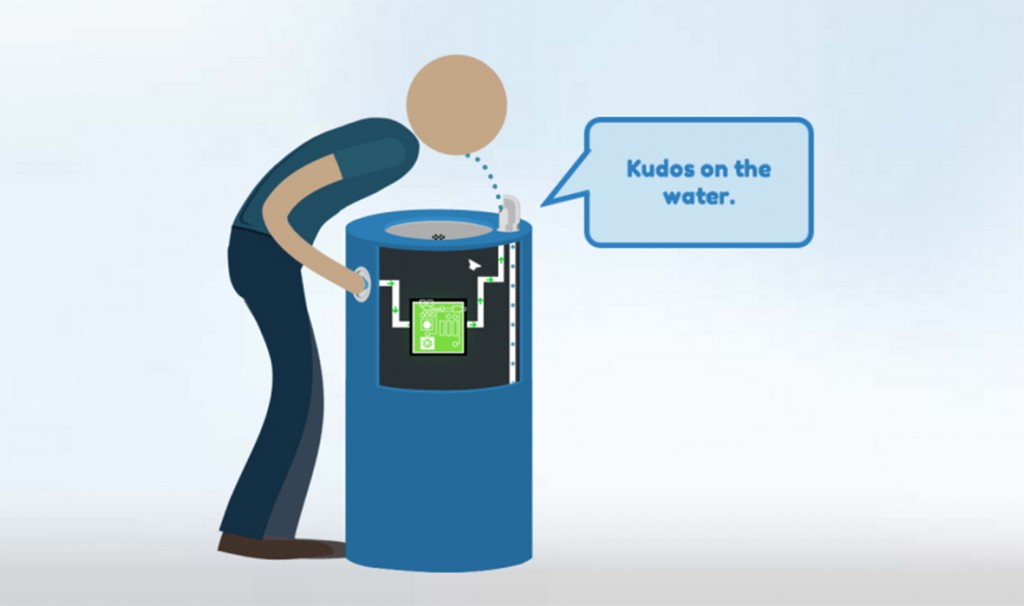
Yes, The Drink Up Fountain is talking to you!

The Drink Up Fountain is project created in September 2013 by YesYesNo Interactive studio in collaboration with PHA Honorary Chair First Lady Michelle Obama and dedicated to encouraging people to drink more water more often: “You are what you drink, and when you drink water you drink up!”

The Fountain runs on Arduino Mega  and

dispenses entertaining greetings and compliments intended to entice the drinker to continue sipping. When a drinker’s lips touch the water, the fountain “talks,” completing a circuit and activating speakers. When the drinker pulls his or her head away and stops drinking, the circuit breaks and the fountain stops talking. With hidden cameras set up, Drink Up caught unsuspecting individuals using the fountain in New York City’s Brooklyn Bridge Park


Take a look at the video to see how the fountain interacts the people:

Play the DIY arpeggiator with infrared detectors and Arduino Mega

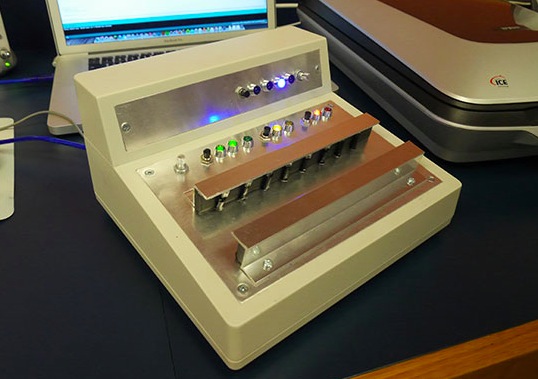
After spending some time on Arduino Forum and finding the right solutions for his project’s sketch, Connor Hubeny shared with us the infraHarp: an Arduino-powered eight-tone arpeggiator made with infrared emitters and detectors, Sparkfun’s Musical Instrument Shield, and an Arduino Mega 2560:

The InfraHarp was my first Arduino project. At first the project seemed daunting since I had no previous experience in programming and electrical engineering. Yet after spending some time with the Arduino I realized that electronics work very much the same, and by learning a few core components you are really right on the doorstep of exploring any technology you have the faintest interest in.

The InfraHarp can play in the keys of A, B, C, D, E, F, G in major, minor melodic and harmonic scales, with two octave choices. Listen to it in the video below:


The project requires basic soldering skills and Connor shared all the info and the sketch on this page.

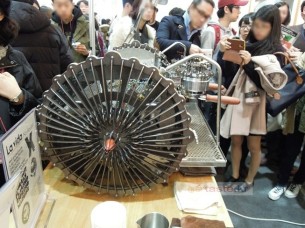
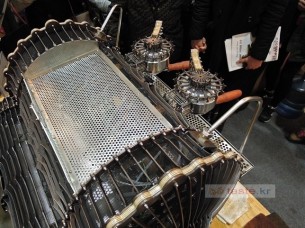
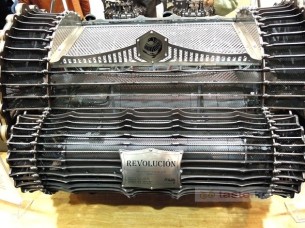
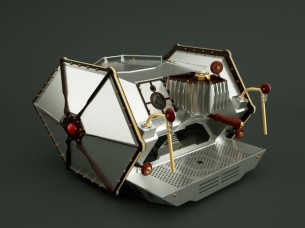
Two steampunk espresso machines running on Arduino Mega

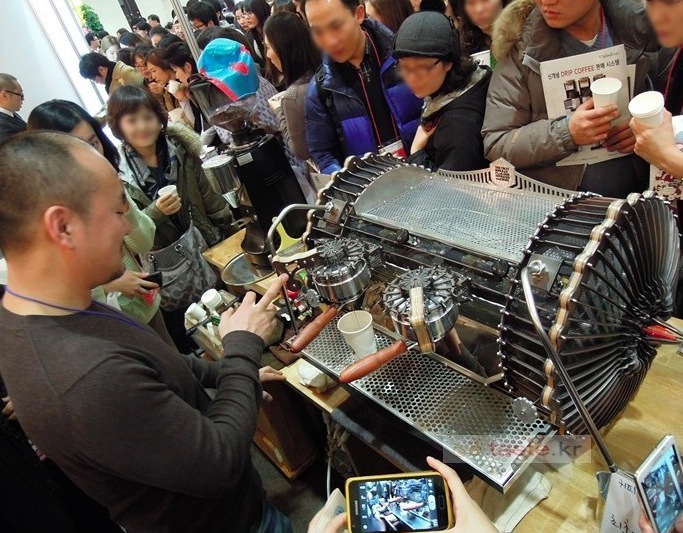
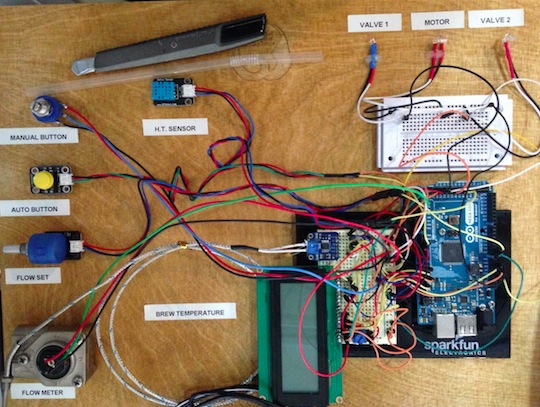
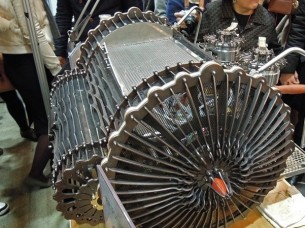
There’s a team of designers based in Korea who are passionate about coffee machines. Their name is Vidastech and recently shared with us two new hand-assembled machines prototyped  with Arduino Mega called Hexagon and Revolucion.

Take a look at the gallery for more pictures:


Arduino Blog 22 Jul 15:50

DIY Pulsoximeter developed with two Arduino

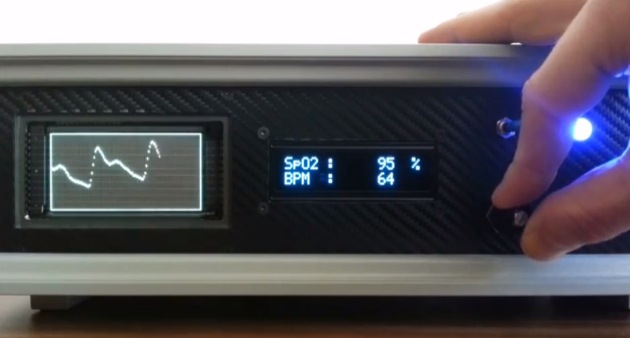
Pulse oximetry is a non-invasive method for monitoring if a patient’s oxygenation is unstable and Arduino user die_Diode sent us his version of a DIY Pulsoximter developed with two Arduino:

Arduino Mega for the oximetry electronics and Arduino Uno for the graph.
The electronics includes LED Driver, Photo current transformation, patient-dependent calibration LED, Active filters, Nellcor SpO2 sensor. Adafruit OLED displays Vitalparamter. Noritake VFD display GUU-100 shows the PPG. The boards are connected to the electronics with a Protoshield.

Arduino Blog 15 Jul 21:41

The world knows what you did last summer


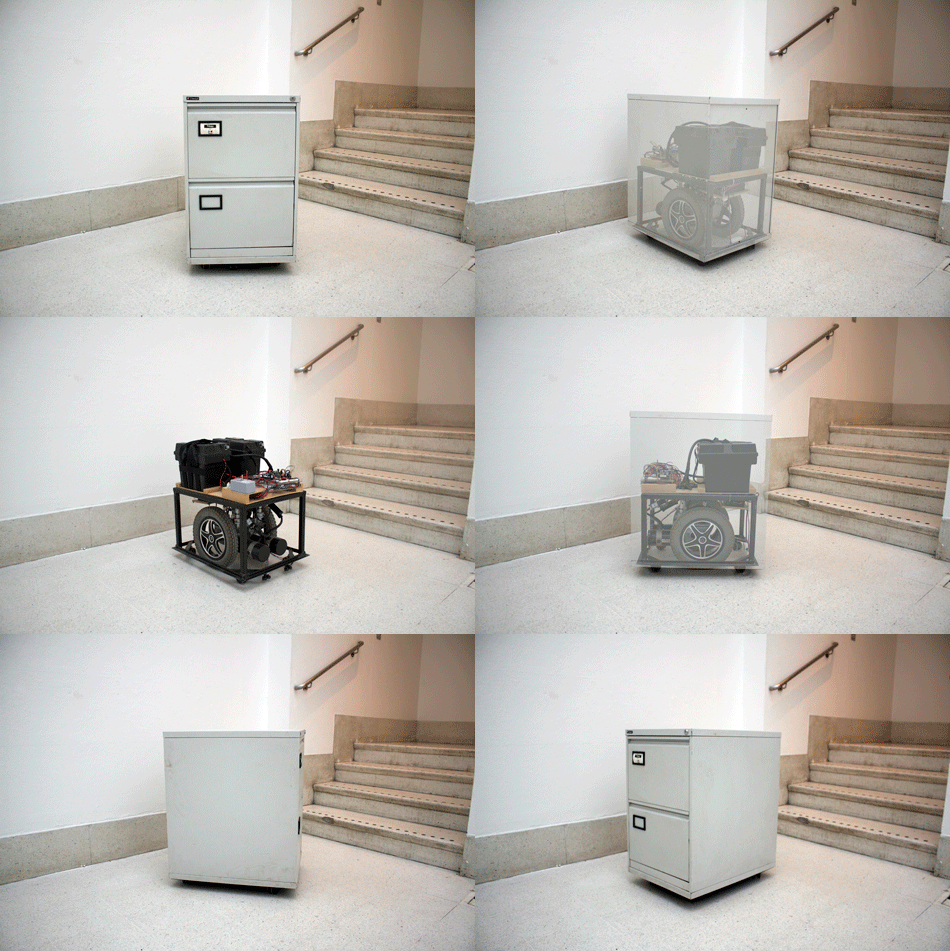
Jaap de Maat shared with us his final year project called I know what you did last summer, the finale to a two-year-long MA in Information Experience Design of the Royal College of Art. The ingredients are  simple (an old electric wheel chair, an Arduino Mega, 12v motor board, Bluetooth slave, wires, blood sweat and tears) and the concept is very actual:

It is physically impossible for the human brain to remember every event from our past in full detail. The default setting is to forget and our memories are constructed based on our current values. In the digital age it has become easier to look back with great accuracy. But this development contains hidden dangers, as those stored recollections can easily be misinterpreted and manipulated. That sobering thought should rule our online behaviour, because the traces we leave behind now will follow us around for ever.

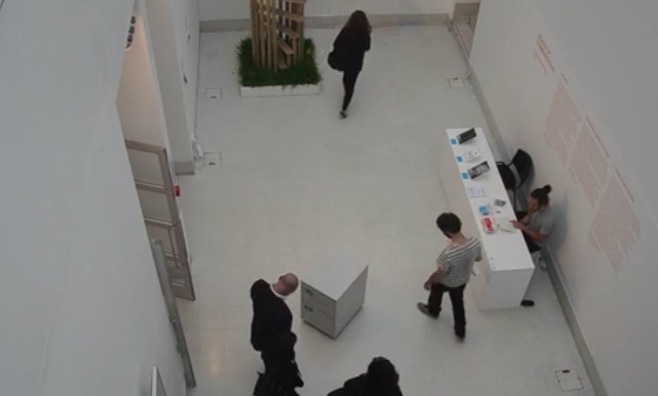
The video of the installation shows how the physical presence of an archive drawer  stalking has a real impact on visitors:

Here’s the making of the prototype:

Arduino Blog 08 Jul 20:53

Freefall camera: an autonomous skydiving robot

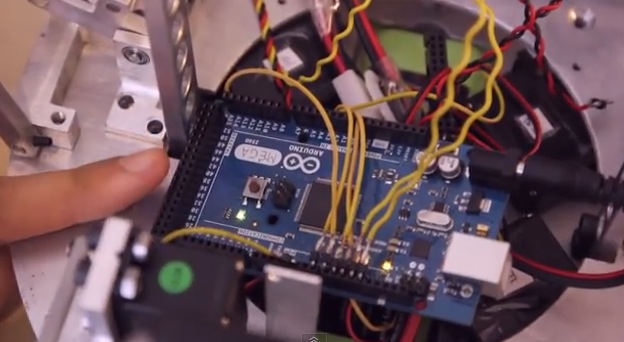
A group of skydivers and engineers, combined their passions to create the world’s first autonomous skydiving robot, equipped by a camera and controlled by Arduino Mega.

The Freefall Camera is a student project at the University of Nottingham, its team is composed by David Alatorre, Tom Dryden, Tom Shorten and Peter Storey who received the third prize at the Student Venture Challenge from the Haydn Green Institute for Innovation and Entrepreneurship.

Their robot freefall camera is already in testing phase and the team features in a number of videos created by the University’s Nottingham Science YouTube channel.

Take a look at the video below explaining how they used Arduino Mega and enjoy the whole playlist at this link.

Arduino Blog 02 Jul 22:17

An origami night light

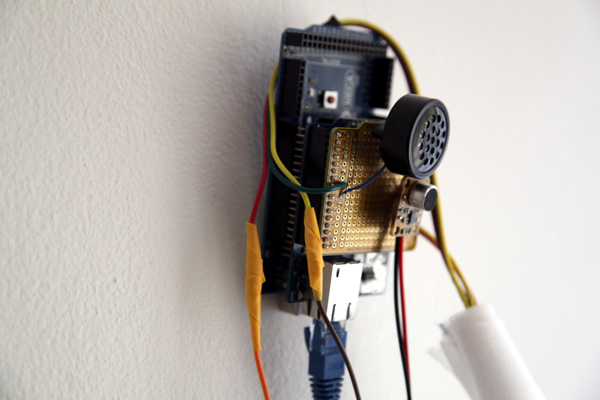
Trent Brook is a designer based in Sydney who created an elefant-shaped night lamp for his daughter Harpa (1 and a half years old). It has evolved from a small paper origami elephant with blinking LEDs, to a large 3-d printed elephant lamp shade with Wifi controlled RGB LEDs, microphone, speaker, and a custom designed iPad application to teach her about colour:

The electronics are driven by an Arduino MEGA 2560 microcontroller with ethernet shield for network control. Connected to the board is a 50cm 5V RGB addressable LED strip with 30 LEDs, a 3.3V microphone module for sound detection, and an 8ohm speaker for playing back generated ‘white-noise’ audio. Total cost for the all the electronics was less than $100.

Check the details of this cute project on his page on Behance.


Arduino Blog 12 Jun 19:35

Wood and electronics in a kinetic steampunk-flavored sculpture

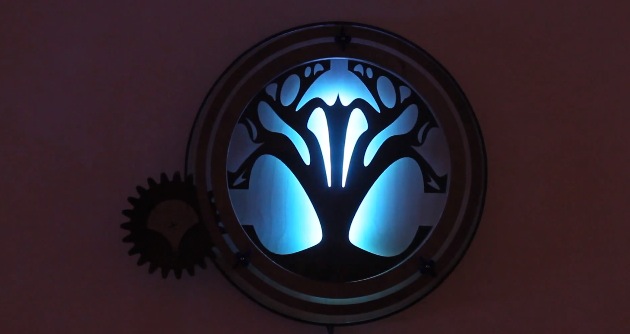
Orbis is a kinetic & lighting  lasercut sculpture controlled by Arduino Mega and created by an engineering design service located in Long Island NY which submitted it to our blog:

Orbis has several unique features and modes of operation not usually seen in Kinetic Art work. There are six specialized lighting modes and two motion modes which are all controlled via two independent Arduino Atmega 2560 control boards.
Orbis was created for a client’s new home who wanted something truly unique. The client specifically requested something which blends the classic look of wood with electronics and mechanics in a simple artistic manner.

It also had to be large enough to highlight a central wall in the home while combining elements of old and new technologies. The client also wanted a separate control box which would allow guests to his home the ability to interact with the Kinetic Sculpture.
In order to create such a unique Kinetic Sculpture and control box, custom 3D models were developed. Once the client approved, these same files were sent out to a laser wood cutting service. Each piece was then hand stained and carefully assembled.


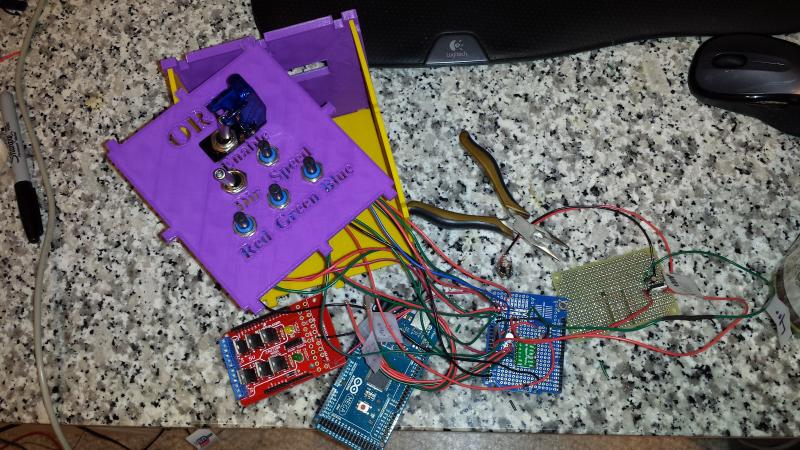
In the picture below you can see the inside of the control box:


More pictures and videos on the project’s website.

Arduino Blog 04 Jun 22:25

A tangible orchestra one can walk through and play with others

Tangible Orchestra is a project by Picarøøn, a collaboration of artists Rebecca Gischel and Sebastian Walter, combining electronic and classical music perceived very individually in a three-dimensional space.

Single units are triggered by people in close proximity and play a unique instrument, with the collection of individual instruments gathering as people congregate in the project space, eventually creating a complete musical work. As electronic music is usually composed and arranged at the mixing desk, the installation creates the illusion of an orchestra playing a musical piece that relies heavily on digitally created sounds and therefore could normally not be perceived this way.

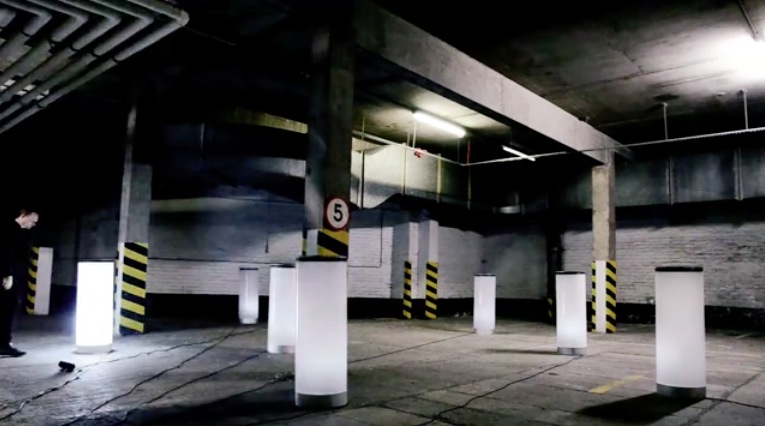
Tangible Orchestra consists of seven individual cylinders that play their unique instrument if people in close proximity are identified by a complex system of sensors. Each column is an independent, interactive sound and computer unit that has the ability to play a separate instrumental track and a sensory system which reacts dynamically to the proximity of its participants.

Essentially, this enables each member of the audience to become a musician and together they constitute a musical ensemble or orchestra. This is achieved because depending on the proximity of each participant to any particular cylinder and the number of participants involved, the range, contribution and volume of the music contained within each cylinder varies proportionately. Therefore, the experience is guaranteed to be different every time; orchestrated by the participants both individually and as part of an ensemble.

The installation uses 112 ultrasonic sensors controlled by Arduino Mega and only if  enough people gather and scatter evenly across the project space, the installation evolves to its greatest potential and the complete work of art can be perceived:

Human interaction within Tangible Orchestra is made possible by 16 ultrasonic sensors on the inside of each cylinder, granting a 360 degree field of view. The sensors are run by one integrated microprocessor per cylinder, evaluating and comparing the readings of all sensors making very accurate assessments.
To avoid interference between ultra sonic waves of different cylinders, the microprocessors run consecutively rather than simultaneously. All microprocessors are controlled, assessed and coordinated by one Arduino Mega.
The programming language Processing is used to communicate with Arduino and consequently with the microprocessors in each cylinder. It is programmed to coordinate the microprocessors, so that their sensors cast their rays consecutively as with 112 ultrasonic sensors operating at the same time, there would be a substantial risk of interference and acoustic shadow misreading. It also assesses the data coming from Arduino and, after verification, generates the output. Is a person detected within the bubble of a cylinder, Processing receives the digital information as an input from Arduino and stops muting the respective instrument which then joins into the melody. Processing also reads the values of each instrumental track to calculate the digital signals for the LEDs and controls the LED stripes inside of the cylinder.
Each instrument is played by a separate speaker which is located in the base of each cylinder. Multiple sound outputs were realised by using several external sound cards together with the minim library by Damien Di Fede. When an instrument plays, the beats of the audible track are analysed and consequently values are calculated to create an equalizer-like light beam. The outcome is transferred via Arduino to a transformer, which converts the 5V Arduino signal into an 230V output operating 192 LEDs per cylinder. Another transformer converts 5V Arduino signals into 12V output powering LED stripes inside of each cylinder as soon as they are activated.

The first exhibition of the Tangible Orchestra was at Royal Mile, Edinburgh  this May 2014. Check their website for next events.