Posts with «featured» label

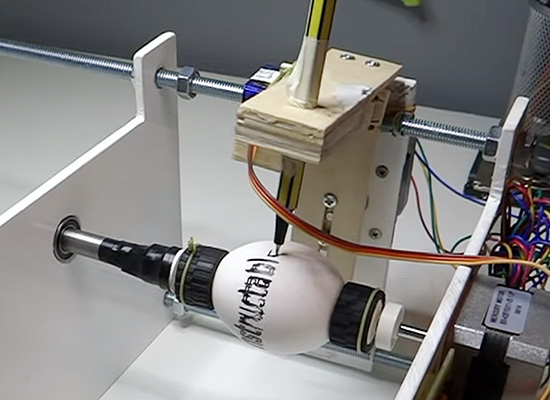
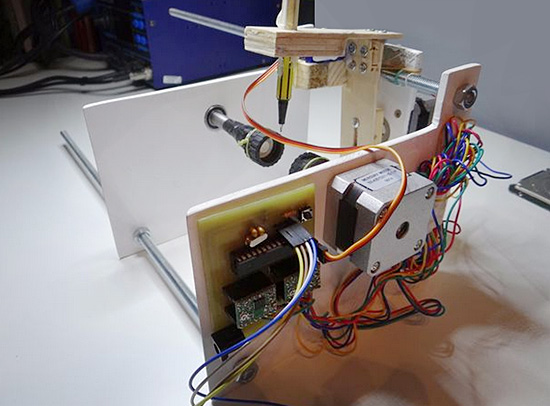
Create the DIY version of Egg-bot running on Arduino

We featured Nikodem’s bike tachometer last September on this blog. He’s now sharing with us another DIY project called DIY Arduino controlled Egg-Bot. It’s a DIY version of the original Egg-bot created by Evil Mad Scientist Laboratories.

You can follow the step-by-step tutorial on Instructables and here’s a preview of the bill of materials you’ll need to make the project at home:

– Stepper motor with 200 steps per revolution (x2)  / I use 12V and 0,33A but you can use other.
– Stepper motor driver A4988 (x2)
Arduino Uno
– Power supply for stepper
– Micro servo
– Plastic plate, wood
– 40cm screws x3 and 12 nuts for it’s
– Two Lego wheels
– Markers in different colors
– Drill, knife, saw, screwdriver, double sided tape, wood glue, wire, soldering iron, rubber bands
– Everything you need to make PCB


Arduino IDE: Nightly Builds are now Hourly Builds

The Arduino IDE is a collection of modules written in different programming languages and available for three operating systems: Windows, Mac OSX and GNU/Linux.

Every time you download the Arduino IDE, you are actually downloading the result of a careful packaging process, intended to make the download as small as possible and to give you the easiest possible out-of-the-box user experience.

The process is fully automated and it’s repeated every time we publish a new feature, or we fix a bug you helped us find, or we merge code you contributed.

The resulting IDEs are called Nightly Builds: they contain the latest and greatest (and, possibly, buggiest) from the Arduino IDE.

We started delivering Nightly Builds about two years ago as a way to ease your life in giving us feedback: you don’t need to be a developer to try a Nightly.
You may have read replies to github issues saying something like “Your issue has been fixed. It will be available with the next nightly build“.

But sometimes nightly is just not enough, because you can’t wait to try what we coded following your suggestions or to see your contribution becoming available to everyone.

So welcome Hourly Builds!

By the time we push new code for the Arduino IDE, it will take at most an hour for the build to be ready to be downloaded and tried. This will allow a much more fluent conversation and prompt feedback when solving issues and implementing new features.

Arduino Blog 23 Apr 16:51
arduino  builds  featured  ide  

Wire Your Arduino Sensors to the Cloud with Temboo Streaming

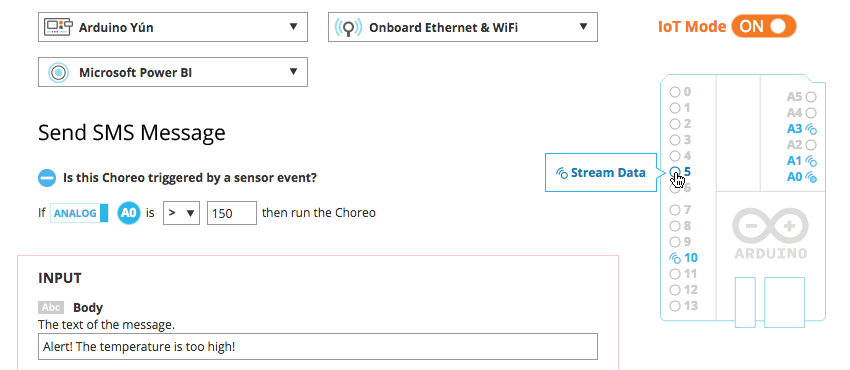
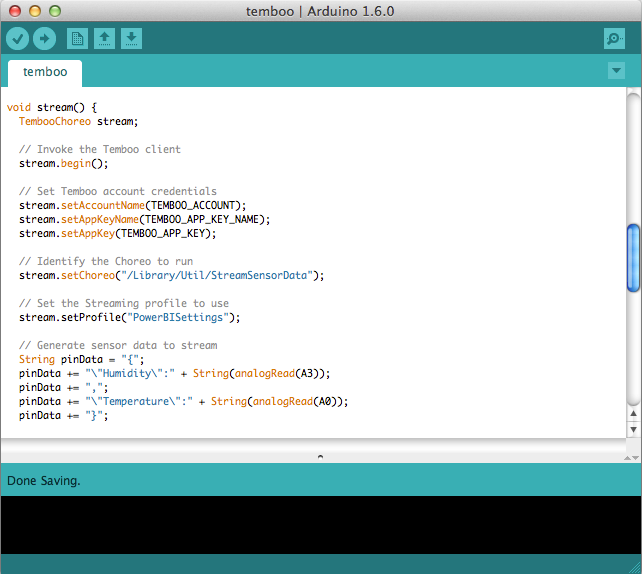
Our friends at Temboo just introduced a new way to log data from an Arduino Yún to the cloud. Called Streaming, it lets you visually select the sensors attached to your Arduino that you have gathering data, and then stream that data to the cloud IoT platform of your choice.

Streaming also makes it easy to switch where you’re sending your data once your application is running, without requiring any hardware or software updates. Right now, Streaming works with Microsoft’s Power BI and Google’s BigQuery, but Temboo will be continuing to add more platforms in the future. As with Temboo’s other Arduino programming tools, Streaming lets you generate all the code you need for your application right in your browser, and tailors that code to the parameters that you specify. It makes it much easier to store sensor data from your Arduino in the cloud, and to analyze the datasets that you build.

This video shows you how it works:

Arduino Blog 22 Apr 18:19

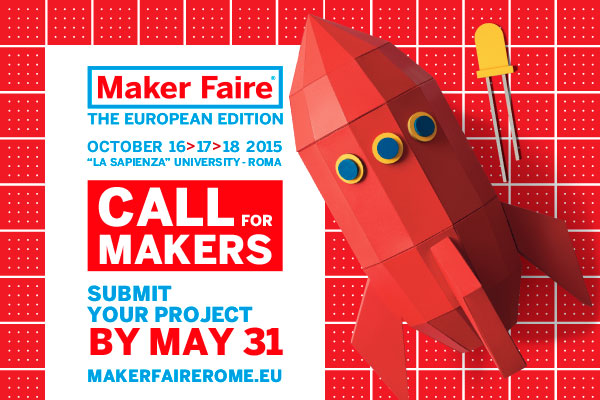
Call for Makers is open! Join Maker Faire Rome 2015

Last year Maker Faire Rome welcomed 600 projects, 200 performances, 90.000 visitors coming from all over the world.  Maker Faire Rome – The European Edition recently announced its third edition scheduled from the 16th to the 18th of October 2015 and will take place at  “La Sapienza” University in Rome, exceptionally “closed” for three days to host this international event.

The Curators of the Faire, Massimo Banzi, co-founder of Arduino and Riccardo Luna, italian Digital Champion, are inviting makers of all kinds and ages to showcase their amazing work and embrace the do-it-yourself (or do-it-together) spirit with a great and appreciative audience.

Are you a Maker, an Innovator, a digital Craftsman? The MakerFaireRome’s Call4Makers is out!

There are many ways to participate:

  • you can exhibit your project: we’ll give you a booth with table and chairs inside the halls, which will be filled with visitors who are curious and interested in meeting you
  • you can give a presentation in public: we’ll give you a room or a stage where you can talk about your project or tell your story or deal with the issues that you want to propose
  • you can hold a workshop: we’ll give you a workshop area where you can do interactive demonstrations and engage participants -adults and / or children- in practical activities
  • you can perform in public: we’ll give you a space or a stage for you to perform in your creative, technological, robotic, musical, pyrotechnic performance…

The proposals regarding the exposure of projects, if accepted, will lead to the allocation of a booth, free of charge. Presence is required at this booth while Maker Faire Rome 2015 is open to the public (three days). It will also be possible to sell products or gadgets.

Accepted projects will be valorized on the MakerFaire Rome website. Besides, Maker Faire Rome press & media team will diffuse info about participants to the newspapers, radio and television stations, which in the past years have devoted a lot of attention to the projects and performers.

We expect creative, innovative, fun, interactive projects, showing the process by which the achievements enrich visitors, communicating passion and ingenuity.

Are you thinking about participanting? In the meanwhile:

  • spread the word! #MFR15
  • help us to involve all the makers you know (and especially those who still do not know they are makers!)
  • subscribe to our newsletter to keep informed about news, events and discounts!

We are looking forward to seeing you all in Rome in October!


Want to help Arduino.CC? Take a pic of your Arduino packages!

We are posting below an interesting blogpost published on the Adafruit’s website on Sunday April 19th, and then mentioned by Hackaday.

Give it a read and use the #TeamArduinoCC tag when posting a pic of your packaging: that’s how you can show your support to Arduino.cc!

————————
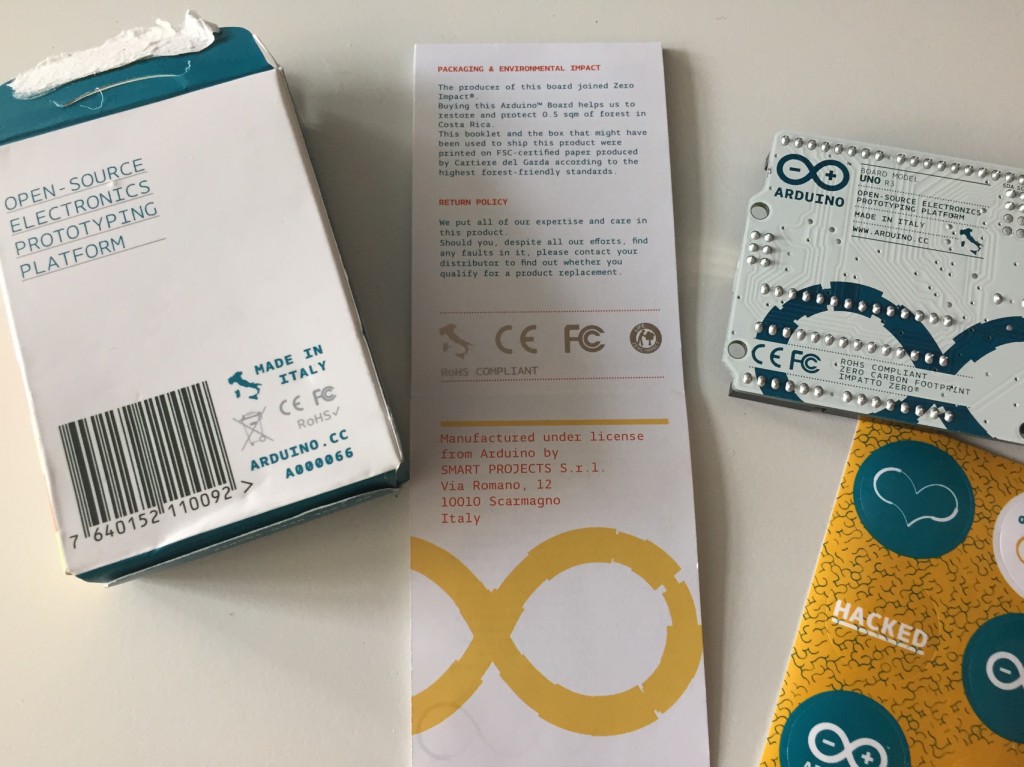
Please post old Arduino packaging that says “Manufactured under license from Arduino” #TeamArduinoCC
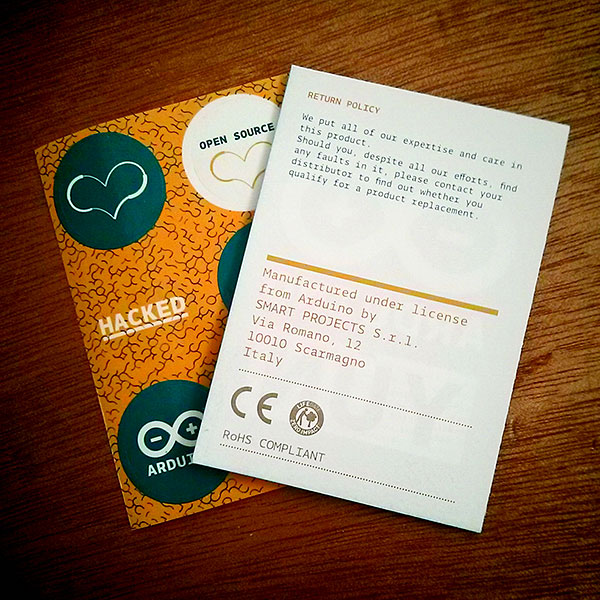
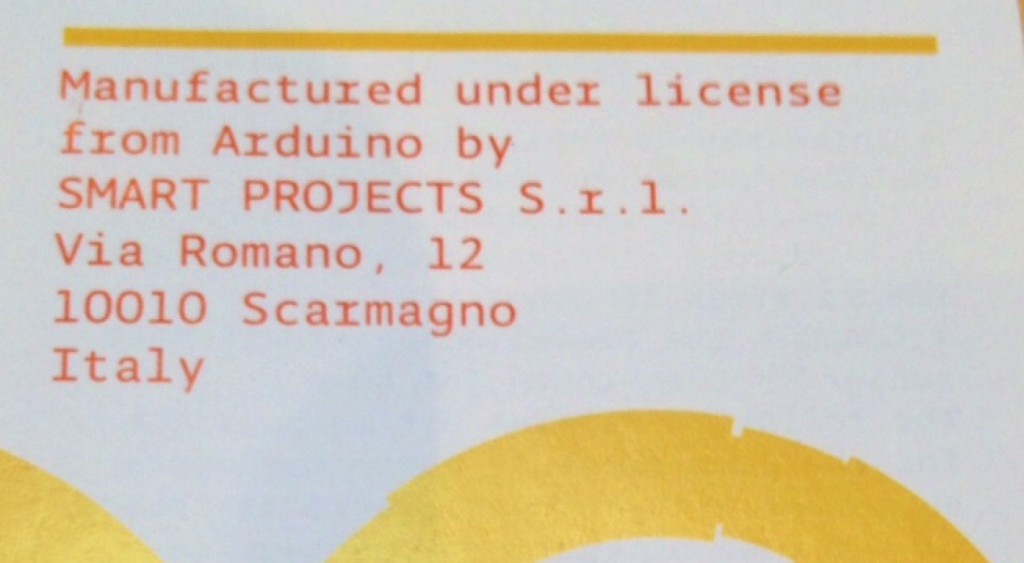
Hey folks, as a lot of you know there’s a huge Arduino vs Arduino dispute (Hackaday / MAKE coverage / Arduino.cc). We’re currently making an official Arduino with Arduino.cc so we’re not commenting at this time for all sorts of good reasons, however, we, as in the Arduino.cc community, could use your help. If you could dig up any old Arduino packaging that has “Manufactured under license from Arduino by SMART PROJECTS” and post the photos – that could be pretty helpful for “team Arduino.cc”.

PLEASE INDICATE what country where you purchased the products in and what year!

Pictured above, an Arduino UNO from September 2014 from Becky Stern’s desk. She had it unopened and we were able to see an important detail “Manufactured under license from Arduino by SMART PROJECTS S.r.l. Via Romano, 12 10010 Scarmagno Italy.

Please post any old packaging you have from older Arduino products that also have this on Flickr, G+, Instagram, Twitter, wherever you can, you can use the tag #TeamArduinoCC to help. You can also email it to teamarduinocc@adafruit.com


Here’s a video showing where’s the sentence mentioned by Adafruit and below the #TeamArduinoCC  hashtag timeline:


#TeamArduinoCC Tweets<>

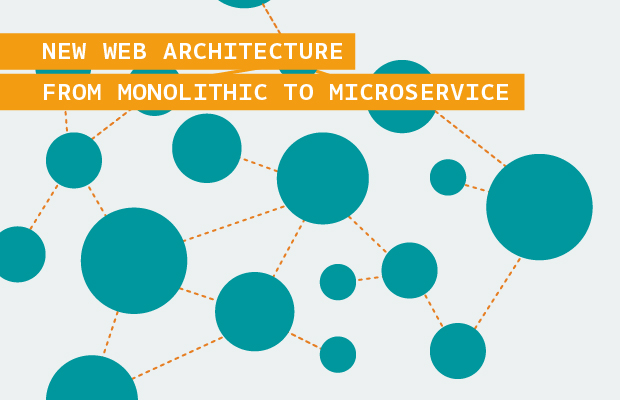
Arduino web architecture, back to the future

The last couple of months have been the most exciting of my entire career. Here at Arduino we are doing a big shift in terms of technology, user experience, and web improvements.

A new Arduino web ecosystem is arising, and the first hint of this new approach is visible in the Arduino Day website. This single-page website was the perfect fit to start experimenting with some new technologies we wanted to put in production. The Arduino Day website was a testbed for some new features of the new architecture we want to achieve.

Goals

  1. Website online and running 99.98% of the time
  2. Fast on every device
  3. Easy way to push updates online
  4. New theme with a single page app
  5. Clear division between presentation and functionalities (client/server architecture)
  6. Https whenever is possible
  7. Microservices

People

How did we achieve these results? It has been a challenge but, from November on, we started building a new Web team with a good mix of junior and more experienced developers. Putting together the team has been key, but we also needed to change some aspects of the way we work.

The team has been always under a tight schedule, at first we started fixing legacy bugs all around, many are still in progress, but we also started experimenting with new things. We started following the agile development methods, including a daily standup meeting to better coordinate our team of designers and developers, we create dedicated topic channel in our chat system to better tackle issues and follow the improvements roadmap, and we created clear todo lists organized by priority.

Technologies

  1. Go Language at the heart of our Web Applications
  2. Angular.js as the framework to create complex and nice websites
  3. PHP for widely used Application built by other communities (forum, blog, etc.)

We based most of our web applications on PHP for many reasons. It is widely used, there are many developers proficient in it, and many of the Arduino developers are familiar with it.

If you are a tech addicted like me you know there are many downsides of using PHP, or at least it was not a good fit for us for many different reasons.

We wanted to separate the frontend and the backend, we have frontend engineers and web designers that are very good at css/js, and backend engineers who knows how to design a REST API. The division of tasks allows developers to feel comfortable in their own expertise area.

We need frequent updates to our web applications and most of the apps are custom.

This ended up in having an easy way to update the system, with just a single binary and all dependencies in it. In addition we planned to have many microservices, each of them doing just one small thing, the Unix way. The language of our choice was Go.

Go is a relatively new language and allowed us to create REST API in few hours/days. It is impressively fast and soon we figured out that our bottleneck was not the language/framework neither the application, but our database (we are thinking about moving from MySQL to PostgreSQL, MongoDB or RethinkDB -very impressed by the last one-)

Having a single binary application made it extremely easy to setup a scalable architecture. Now adding a new server to our load balancer requires just a couple of minutes and it is almost completely automated.

 The frontend of Arduino Day Website is written using the Angular.js framework, allowing us to have a very interactive and responsive interface with an easy way to deploy. Everything is deployed to a nginx server (soon we will use something like Amazon S3), the files are minified and compressed so that the website is relatively fast.

I know this is not exactly cutting edge, but it is very hard to introduce something new in an environment developed for many years and used by so many users of our community. You cannot just introduce a new feature or start a project from scratch, you need to support your old code, keep it running, maintaining it and possibly avoid downtimes and maintenance windows.

Learning from mistakes

We are makers, we made mistakes. Every transition is risky and could end up is some issues. We took the risk when we migrated the forum to a new unstable version and we made a mistake, we learnt a lot from it and we are trying to similar issues as much as possible in the future.

Doing good things is hard, it requires time and the constant feedback from our amazing community. Many of you helped us already giving feedback on the arduino.cc website, the Arduino Day website, the forum and so on. We keep improving the whole web platform as fast as we can, and obviously we are always looking for the right new talent to join the Arduino team.


Arduino Blog 16 Apr 14:59

Casa Jasmina with Opendesk @ Milan Design Week

Casa Jasmina and Arduino are proud to announce a collaboration with Opendesk at Atelier Clerici during Fuorisalone 2015.

Atelier Clerici will host an independent project curated by Space Caviar and Z33, with a daily program of exhibitions and activities aimed at questioning the future of design in relation to architecture, technology and global context of living.

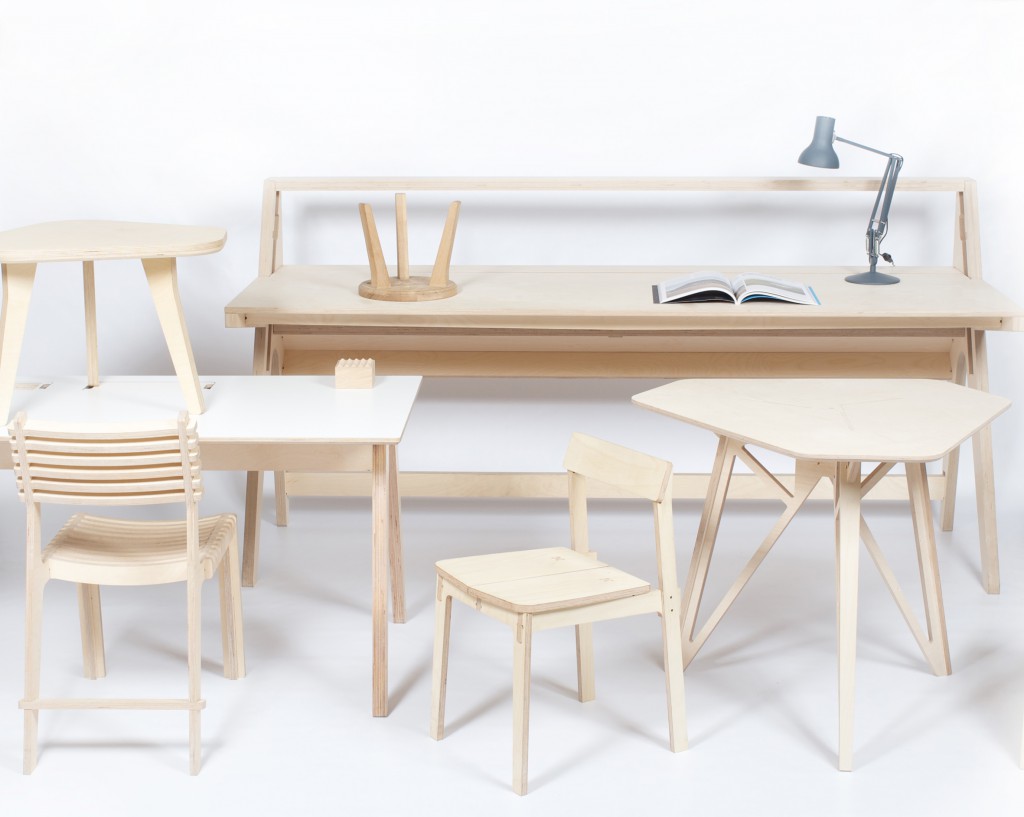
Opendesk, the online platform for open and smart design, will join Atelier Clerici with ‘Open Making Platform’ a series of events exploring issues related to open source design as a global and, at the same time, local practice. The program of  ‘Open Making Platform’ will include an exhibition of smart open designs made by local Italian makers and two workshops: ‘Design for Open Making’ (Wed April 15th, 11.30 am – 1.30 pm)and ‘Smart Furniture’ (Fri April 17th, 2 – 5.30 PM), in collaboration with Arduino.

Arduino and Casa Jasmina invite you to take part to the meetup and informal workshop focusing on the integration of open source connected technologies into everyday objects. Friday’s event will include a presentation by Bruce Sterling about the Casa Jasmina project.

Register for the event here.

Install Intel Galileo & Edison with the IDE Boards Manager

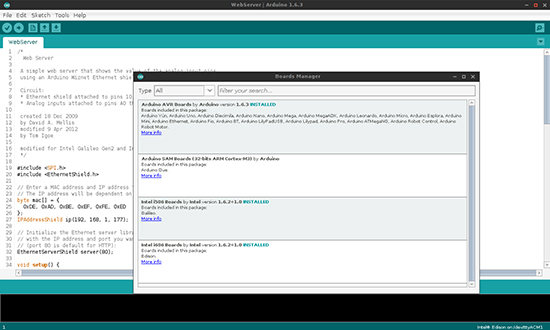
We are very pleased to announce the availability of Intel® Galileo and Edison boards support with the Arduino IDE Boards Manager.

If you’ve already installed the Arduino IDE 1.6.3 (or newer), you are already set!

Just click on menu Tools > Board > Boards Manager to find both Galileo and Edison listed and available for download. Click on one of the list, then click Install. Wait a couple of minutes for the IDE to download and unpack all the needed tools and voilà: Board menu will list the Intel board of your choice.


Thanks for Celebrating Arduino Day around the world!


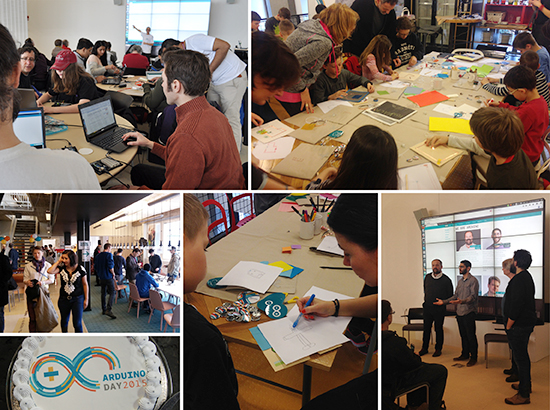
At the end of March Arduino Day was celebrated around the world in more than 260 official and community events. In the video below Massimo Banzi, David Cuartielles, Tom Igoe and David Mellis sent a message to the whole community from the celebration taking place at MIT in Boston:

Take a look at some pictures from official Arduino Day which happened in Boston, Torino, Malmo, Budapest and Bangalore and some birthday cakes popping up on Twitter:

Hoy es Arduino Day #ArduinoD15: ¡¡¡Feliz cumpleaños Arduino!!! Para los que no conocen Arduino; es una platafo… http://t.co/DKCp58gNQp

— StreaMexico (@Stream_Mexico) April 1, 2015

I found #awesomesauce! ???? ?? #ArduinoD15 #arduino #arduinoday #hack #logo #community… … http://t.co/YmZbEF82Ej pic.twitter.com/jE2vglF65e

— Clarke Hosp (@hospdesign) April 2, 2015

#ArduinoD15 and then they brought cake! Awesome thanks @Creating_STEAM pic.twitter.com/GTC6QJGasN — Caren Watkins (@ThisIsCaren) March 28, 2015

It’s Arduino Day! One of our founders @timredfern made a cake version of an @arduino board to celebrate. #ArduinoD15 pic.twitter.com/yN7GVzcPiX

— Drop (@dropkitchen) March 28, 2015

We also wanted to share  links some  organizers sent us to explore pictures/videos of local communities’ gatherings:

Do you have pictures and videos to share of your Arduino Day? Post the link in the comments!

Creative Technologies in the Classroom goes to Ecuador

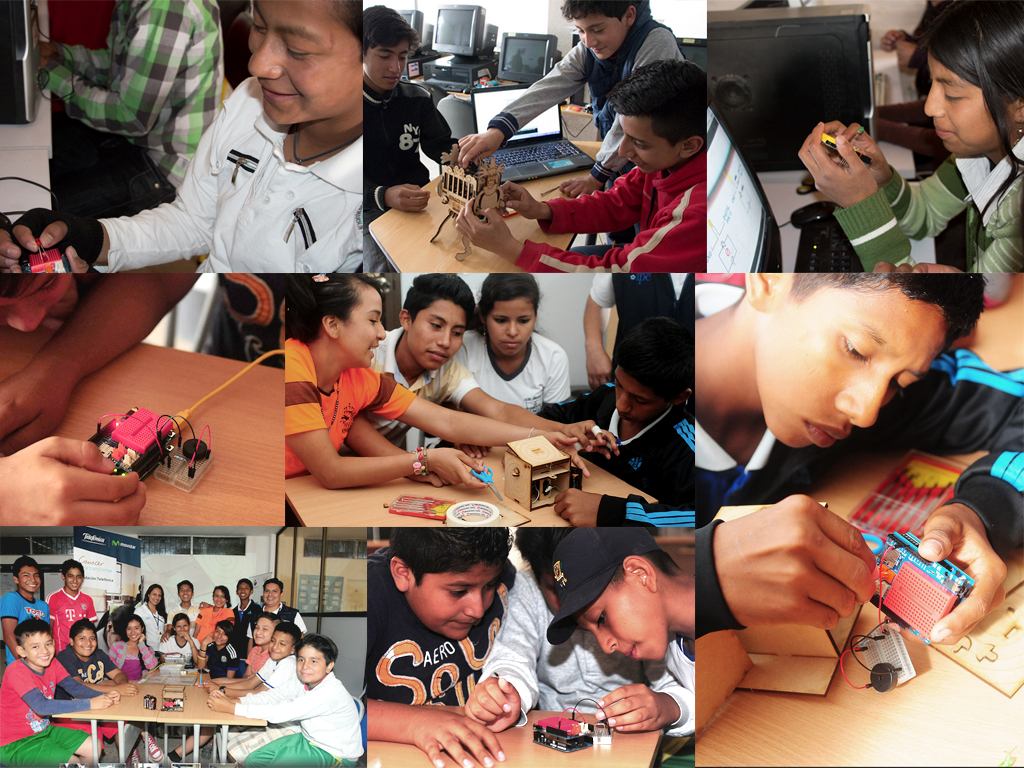
We are happy to announce that Creative Technologies in the Classroom has been successfully implemented in Ecuador since the fall of 2014 in 40 different places along the country, to more than 600 participants and thanks to the Telefonica Foundation Ecuador.

Creative Technologies in the Classroom (CTC) is a collection of experiments aimed at transforming the way technology is taught in schools around the world for participants going from 10 to 18 years old. These experiments introduce basic concepts in programming, electronics, and mechanics and consists of four phases:

  • Teacher Training (1 week)
  • Themed Modules (4 modules)
  • Student Projects (9 weeks)
  • Technology Fair

CTC Ecuador has also been implemented within the Pro Niño Project that helps employed children to attend to educational activities and learn about technology. This aims to open an opportunity for them to study at the technical universities in the area (many of them also support the project). The teachers for CTC/Pro Niño are social workers instead of regular school teachers. Here are some pictures of the program in El Oro and the South of Quito.

Some CTC Ecuador projects were also presented at an exhibition in Cuenca about society, art and technology hosted by Telefonica Movistar Ecuador.

(The news was originally posted on Arduino Verkstad blog)

Arduino Blog 07 Apr 20:38