Posts with «arduino» label

The blueShift Custom Tachometer

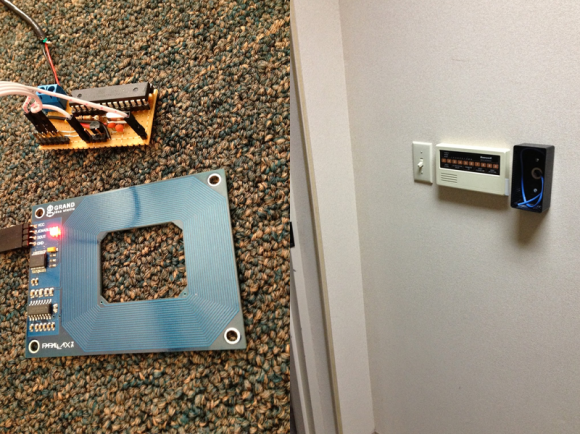
Not satisfied with the stock tachometer on your car? You could buy an aftermarket kit, but for something truly unique, Pete Mills decided to design and build his own. He calls his creation “blueShift,” which, although possibly optimistic about the speed he will be able to achieve in his Ford […]

Read more on MAKE

Theater Safety Glasses

Watch horror movies without the fear of having to cover your eyes when things get scary with these ingenious Theater Safety Glasses created by Aisen Caro Chacin in collaboration with Shawn Lauriat.

Read more on MAKE

A low-cost robotic hand (tutorial) mirroring your own fingers

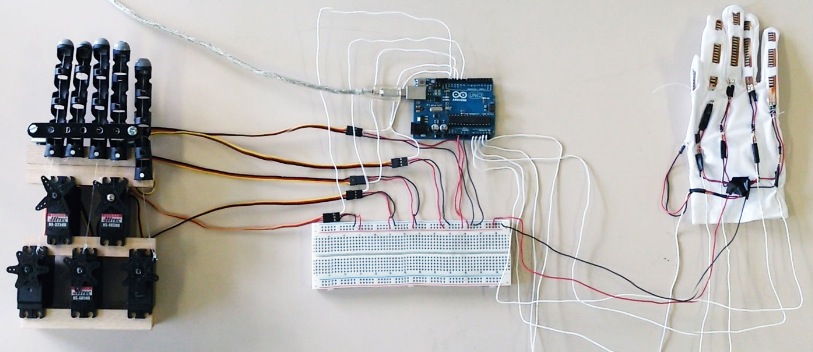
Marco Pucci shared on our Facebook Page a link to the tutorial he made for a low-cost Robotic Hand able to mirror the movement of our own hand. He created it  in the laboratory of new technology of Accademia di Belle Arti di Brera (“Academy of fine arts of Brera”), a state-run public academy in Milan, Italy.

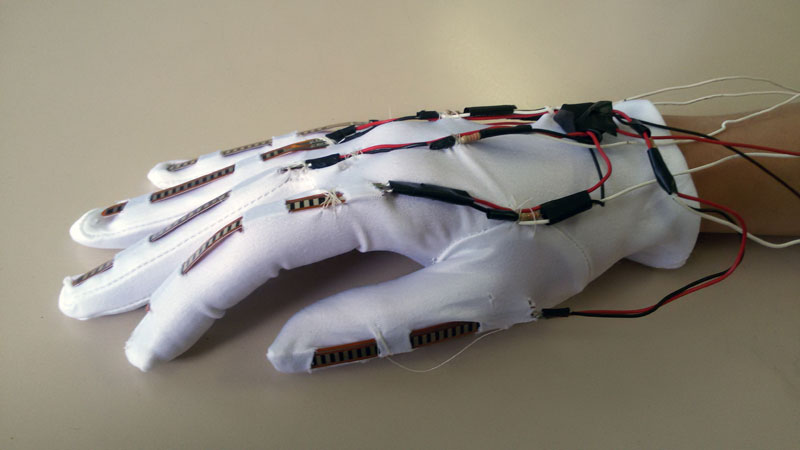
The hand works with flex sensors attached to the glove’s fingers, they are analysed by an Arduino which then moves servo motors connected to threads attached to the robotic hand.

You can follow the tutorial (in italian, but you can use google translate) on this page www.marcopucci.it/arduino/ , download a zip with all the sketches, and watch a demo video below:


Arduino Blog 17 Jul 19:11

Wearables at Camp Galileo with Arduino Woman

Hello World!  My name is Tenaya Hurst and I teach at Camp Galileo – The Tech Summer Camps at the Tech Museum of Innovation in San Jose.  My class is titled Wearable Technology (and I get to teach Circuits & Electronics and Maker Studio).  Students know very little about the […]

Read more on MAKE

Smartphone Rocket Launcher

In the iPhone ad “Powerful,” actors launched a group of model rockets with an iPhone. You can view the ad here. I thought this was insanely cool, but in typical Apple fashion, I couldn’t find out how they did it. I decided to take matters into my own hands and build […]

Read more on MAKE

Solar Powered DIY Plant Watering System

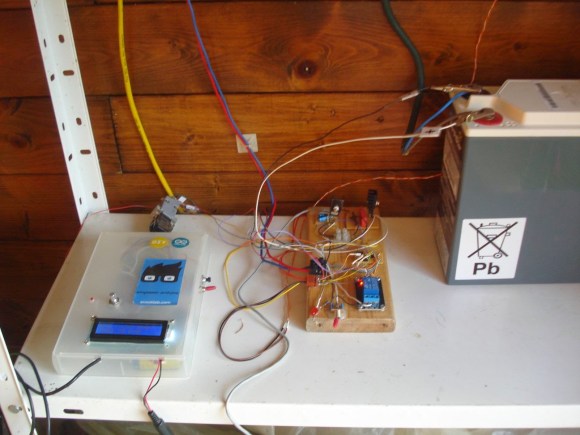
It’s great having fresh vegetables just a few steps away from the kitchen, but it takes work to keep those plants healthy. [Pierre] found this out the hard way after returning from vacation to find his tomato plant withering away. He decided to put an end to this problem by building his own solar-powered plant watering system (page in French, Google translation).

An Arduino serves as the brain of the system. It’s programmed to check a photo resistor every ten minutes. At 8:30PM, the Arduino will decide how much to water the plants based on the amount of sunlight it detected throughout the day. This allows the system to water the plants just the right amount. The watering is performed by triggering a 5V relay, which switches on a swimming pool pump.

[Pierre] obviously wanted a “green” green house, so he is powering the system using sunlight. A 55 watt solar panel recharges a 12V lead acid battery. The power from the battery is stepped down to the appropriate 5V required for the Arduino. Now [Pierre] can power his watering system from the very same energy source that his plants use to grow.


Filed under: Arduino Hacks, green hacks

Share hyperlocal air pollution data with Sensing Umbrella

The Sensing Umbrella is the second project I’m featuring on this blog (see the first), coming out of the class at  the Copenhagen Institute of Interaction Design called Connected Objects, with Massimo Banzi and Giorgio Olivero. 

The project created by a team of students Akarsh Sanghi, Saurabh Datta and Simon Herzog is a platform to gather, display, and share hyperlocal air pollution data:

Each umbrella serves as a node for measuring CO and NO2 pollution levels and can provide exceptionally granular data to pollution databases and for scientific analysis. Simultaneously, the light visualisations inside the umbrella respond to pollution levels in real time and spread awareness of air quality in the city for its inhabitants. The umbrella uses open hardware and software to gather and interpret data through a built-in sensor array, displays CO and NO2 pollution locally in two modes, and logs the timestamped and geolocated data to the cloud for analysis.

Check the video to watch the team introducing the project:

DIY “Google Glass”

13 year old Clay Haight made his own wearable smart glasses, inspired by Google Glass and the pages of Make: magazine.

Read more on MAKE

Future’s so Bright, I Gotta Wear LED Shades

You can buy the new LED Matrix Shades from macetech on their online store. Or build the original version, now available as an open source design.

Read more on MAKE

The Open-Source Smartwatch Built by a Teenager

John Wall, 16, built a smart watch instead of taking driver's ed.

Read more on MAKE