Posts with «arduino» label

Hackaday Links: May 17, 2015

Here’s a worthwhile Kickstarter for once: the Prishtina Hackerspace. Yes, that’s a Kickstarter for a hackerspace in Kosovo. Unlike most hackerspace Kickstarters, they’re already mostly funded, with 20 days to go. If we ever get around to doing the Istanbul to Kaliningrad hackerspace tour, we’ll drop by.

Codebender is a web-based tool that allows you to code and program an Arduino. The Chromebook is a web-based laptop that is popular with a few schools. Now you can uses Codebender on a Chromebook. You might need to update your Chromebook to v42, and there’s a slight bug in the USB programmers, but that should be fixed in a month or so.

Here’s a great way to waste five minutes. It’s called agar.io. It’s a multiplayer online game where you’re a cell, you eat dots that are smaller than you, and bigger cells (other players) can eat you. [Morris] found the missing feature: being able to find the IP of a server so you can play with your friends. This feature is now implemented in a browser script. Here’s the repo.

The FAA currently deciding the fate of unmanned aerial vehicles and systems, and we’re going to live with any screwup they make for the next 50 years. It would be nice if all UAV operators, drone pilots, and everyone involved with flying robots could get together and hash out what the ideal rules would be. That’s happening in late July thanks to the Silicon Valley Chapter of AUVSI (Association for Unmanned Vehicle Systems International).

SOLAR ROADWAYS!! Al Jazeera is reporting a project in the Netherlands that puts solar cells in a road. It’s just a bike path, it’s only 70 meters long, and it can support at least 12 tonnes (in the form of a ‘fire brigade truck’). There’s no plans for the truly dumb solar roadways stuff – heating the roads, or having lanes with LEDs. We’re desperately seeking more information on this one.


Filed under: Hackaday Columns, Hackaday links

Arduino Announces Manufacturing Partnership with Adafruit


Today, May 16th, 2015 Massimo Banzi, CEO and co-founder of Arduino, announced at Maker Faire during the “State of Arduino” keynote that Adafruit is manufacturing Arduino’s for Arduino.cc in New York, New York, USA! 

Limor “Ladyada” Fried said:

“Adafruit and Arduino.cc have been working together on open-source software and hardware for almost 10 years in a variety of ways, this is expanded partnership and manufacturing is part of our collective goal to make the world a better place through the sharing of ideas, code and hardware with our communities –

We’re currently manufacturing the Arduino  Gemma with Arduino.cc right here in New York City at the Adafruit factory, it instantly became a top seller and we’re looking forward to bringing our manufacturing expertise and processes to start shipping Arduinos right here from the USA as soon as possible!”

Take a look at this video interview of Massimo by Make directly from Maker Faire Bay Area and containing other important announcements:

Combination locks are no match for this Arduino-powered cracker

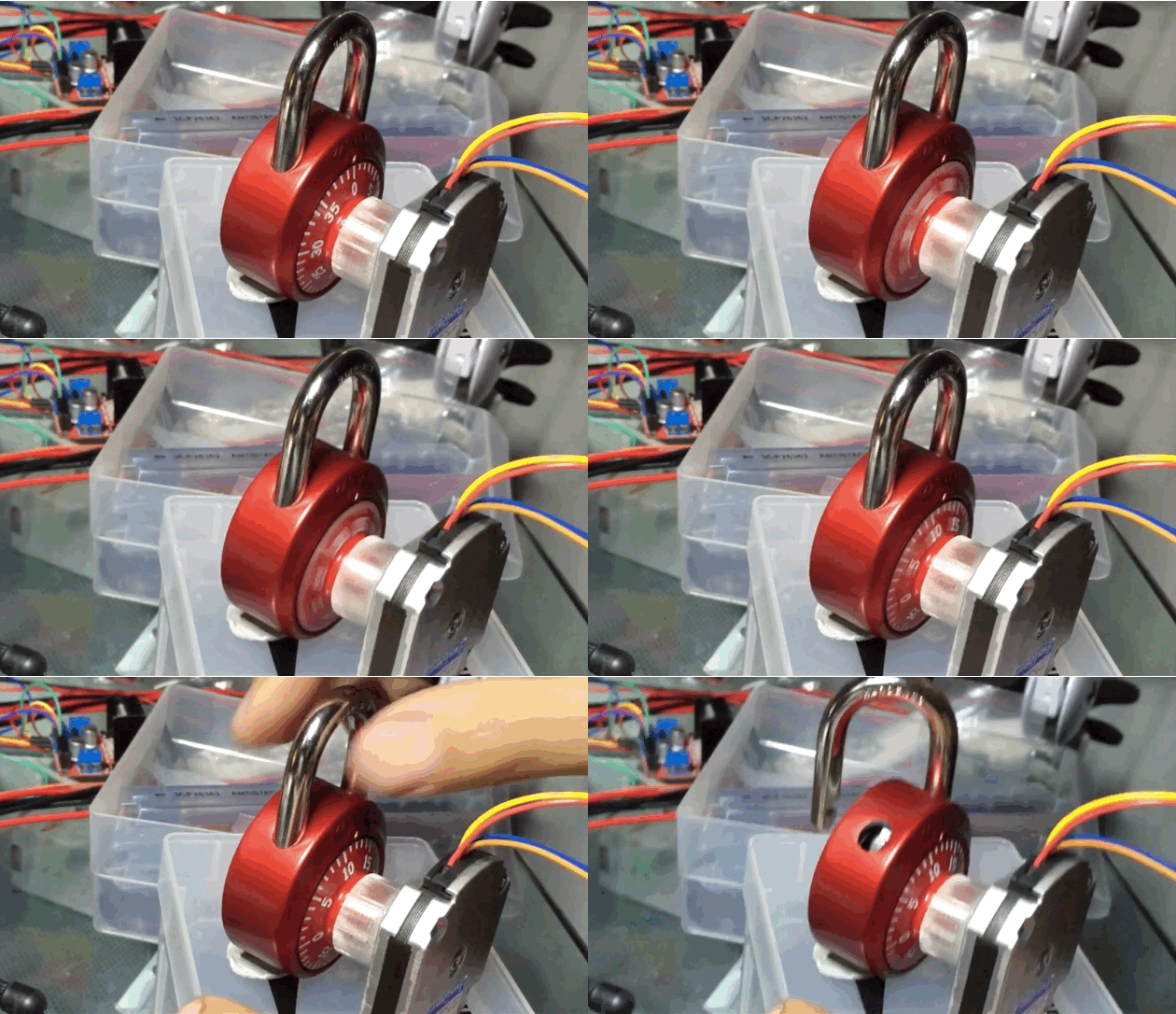
If you need a reminder not to put your complete trust in standard combination locks, here it is. Samy Kamkar, who once also engineered software that can hijack drones, created a motorized lock-cracking device called "Combo Breaker." We don't exactly know what he's going to use it for, but it's capable of going through each combination in less than two seconds and can crack a lock open in no time. Kamkar created two versions of the device: one is smaller and slightly less powerful than the other, but both are equally effective, in part thanks to their Arduino microprocessors. Before you head out in search of a better lock, though, watch Kamkar explain how he built the machines after the break.

Engadget 15 May 08:16

Combination locks are no match for this Arduino-powered cracker

If you need a reminder not to put your complete trust in standard combination locks, here it is. Samy Kamkar, who once also engineered software that can hijack drones, created a motorized lock-cracking device called "Combo Breaker." We don't exactly know what he's going to use it for, but it's capable of going through each combination in less than two seconds and can crack a lock open in no time. Kamkar created two versions of the device: one is smaller and slightly less powerful than the other, but both are equally effective, in part thanks to their Arduino microprocessors. Before you head out in search of a better lock, though, watch Kamkar explain how he built the machines after the break.

Filed under: Robots

Comments

Via: TechCrunch

Source: Samy Kamkar (YouTube)

Engadget 15 May 08:16

Combination locks are no match for this Arduino-powered cracker

If you need a reminder not to put your complete trust in standard combination locks, here it is. Samy Kamkar, who once also engineered software that can hijack drones, created a motorized lock-cracking device called "Combo Breaker." We don't exactly know what he's going to use it for, but it's capable of going through each combination in less than two seconds and can crack a lock open in no time. Kamkar created two versions of the device: one is smaller and slightly less powerful than the other, but both are equally effective, in part thanks to their Arduino microprocessors. Before you head out in search of a better lock, though, watch Kamkar explain how he built the machines after the break.

Via: TechCrunch

Source: Samy Kamkar (YouTube)

Engadget 15 May 08:16

Vacuum Gauge Display; Arduino Replaces Industrial

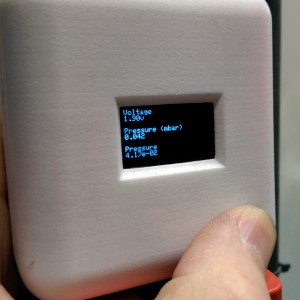
Arduinos! They’re a great tool that make the world of microcontrollers pretty easy, and in [cptlolalot]’s case, they also give us an alternative to buying expensive, proprietary parts. [cptlolalot] needed a gauge for an expensive vacuum pump, and rather than buying an expensive part, built a circuit around an Arduino to monitor the vacuum.

This project goes a little beyond simple Arduino programming though. A 12V to 5V power supply drives the device, which is laid out on a blank PCB. The display fits snugly over the circuit which reduces the footprint of the project, and the entire thing is housed in a custom-printed case with a custom-printed pushbutton. The device gets power and data over the RJ45 connection so no external power is needed. If you want to take a look at the code, it’s linked on [cptlolalot]’s reddit thread.

This project shows how much easier it can be to grab an Arduino off the shelf to solve a problem that would otherwise be very expensive. We’ve been seeing Arduinos in industrial applications at an increasing rate as well, which is promising not just because it’s cheap but because it’s a familiar platform that will make repairs and hacks in the future much easier for everyone.


Filed under: Arduino Hacks

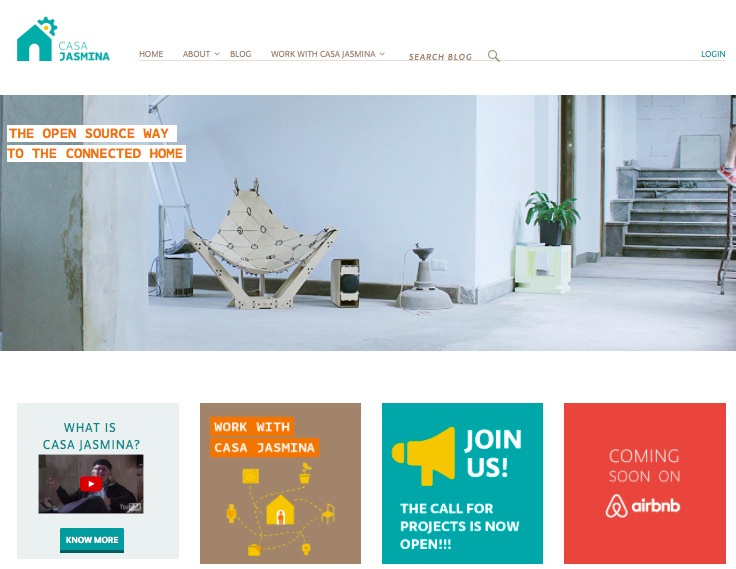
Casa Jasmina and Bruce Sterling at Thingscon 2015

Bruce Sterling went to Thingscon conference with a keynote about Casa Jasmina and then published the following essay.

—————-

This is the third of my Casa Jasmina essays. It’s about the recent “ThingsCon” conference in Berlin, May 2015.

This remarkable event was the second “ThingsCon,” a new gathering which makes itself useful to the European hardware startup scene, especially “connected products” designers and builders from Berlin and London. “ThingsCon” took place in Berlin’s “Culture Brewery,” which is a huge, defunct beer factory, currently re-zoned for theaters, bars, restaurants and design retail.

Anybody who has seen the Garrone Foundry (which houses Toolbox Co-Working, Fab Lab Torino and Casa Jasmina), would surely recognize the “Culture Brewery.” It’s the same European story: the old industrial hulk remade for today’s culture-industry. So we found the ThingsCon venue to be pretty cozy, even though the stairs are of odd sizes, the huge, lofty rooms don’t fit together properly, the events and workshops are on different floors and mysteriously distant from one another, and there was excellent beer everywhere and tiny, crooked bathrooms stuck nowhere in particular. There’s something fun about this steampunk disorganization — if you’ve built a weird open-source Internet-of-Things device out of glued plywood and steel rods, it really fits that atmosphere.

ThingsCon is not a Maker Faire for the general public, and attending it is not cheap. ThingsCon is aimed at designers, developers, engineers, entrepreneurs and similar stakeholder-types from the technology ecosystem. The presentations were full of practical wisdom about commercial tech-product development: scaring up funding money, allocating time and resources, packaging, promotion, marketing, founder exit-strategies, angel investment, the issues common to people who might like to sit down for a serious talk with, say, Intel.

The organizers of ThingsCon are Peter Bihr, Simon Hoher, Emanuel Schwarz, Max Kruger, Sonja Heinen, Alexandra Deschamps-Sonsino, Brady Forrest, Louisa Heinrich, and Marcel Schouwenaar. As conference organizers go, they won’t win any prizes for sleek efficiency. However when it comes to the Internet of Things, these activists know plenty. At ThingsCon you can learn a lot in a hurry.

So: now that we understand what ThingsCon is about and who ThingsCon is meant to please, let’s confront some of their native ThingsCon problems, because they have lots of interesting issues.

The guy who delivered the first ThingsCon opening keynote, Warren Ellis, really understands their pains. Warren Ellis is pretty well known as a comic book writer, film scriptwriter and novelist, but he was also in the brain-trust of BERG,the legendary and now-dead London interaction-design firm. Warren Ellis grasps the many thorny difficulties of modern connected-product design.

Ellis delivered a sardonically funny rant, warning designers, engineers and manufacturers about the fierce wrath of genuine consumers. Consumers — (they’re the people who are supposed to buy Internet-of-Things products) — are a fickle and treacherous group. Consumers are never grateful for the hard work of designers and technicians. On the contrary, consumers are suspicious, endlessly demanding of customer support, and they resent most things they buy. The Internet-of-Things is even worse than traditional consumer capitalism, because interactive products don’t just sit there, they are invasive and intimate. People treasure their homes as a safe space in a harsh, competitive world, and they feel emotionally wounded when anything in their house betrays them.

Warren Ellis is an intelligent and erudite man, and he was telling the crowd the truth, but they were all laughing nervously because they can’t really believe what he says. It’s all true, but it’s important to understand this and still have some courage about it. If you invent and manufacture something, and it’s a commercial success and ten million people buy the product, of course your life is going to change. You won’t be a “Maker” alone in a garage any more, you’ll be an Internet multimillionaire with customer-support issues. Warren Ellis is right to urge people to think these things through: you shouldn’t dabble in technology and business unless you’re ready to face the consequences of getting what you want.

Barriers to entry in manufacturing are collapsing, so the old lines between a do-it-yourself Maker and a commercial industrialist are blurring. But this doesn’t solve old problems, it just creates interesting new ones. This was the lesson conveyed by Tina Aspiala. Before ThingsCon 2015, I had never heard of Tina Aspiala. Thanks to ThingsCon, I will pay attention to Tina Aspiala from now on.

Tina, who achieved some success with a product of hers, has become a Kickstarter patroness. Tina Aspiala spends a lot of time on Kickstarter and likes to give people some crowdfunding money just to see what happens. She told the crowd that results were mixed. Kickstarter is a funding platform, but some people on Kickstarter are crooks, they’re Kickstarter embezzlers. Other people want to be honest, but they flee in terror when they realize what the real world expects from real design and manufacturing. Others just have bad luck with their Kickstarter: they really wanted to do the work, but they broke a leg, or Dad died, or there was a divorce… that mishap wouldn’t stop FIAT or General Electric, but it does stop the Kickstarter team because they are few in number, while FIAT and General Electric have thousands of personnel.

Many Kickstarter projects get built, despite the host of problems in shipping, supply chains, material costs and manufacturing — but that doesn’t end the story. The product might be workable, but just not much good. The product might do what is promised, but the thing that the product does is only interesting once or twice, not useful in daily life. It’s a “gonzo product” (in the term created by Alexandra Deschamps-Sonsino), because it physically works and it does something, but the thing it does is eccentric and weird, so it has no commercial potential or mass appeal.

Why do we have “gonzo products” nowadays? It’s because (as Tina Aspiala pointed out), cheap electronic components make new combinations easy. Projectors, motors, sensors, cameras, processors and various wireless connectivity chips are all drastically cheaper, so product development becomes like a card game, when any gambler can connect X with Y and add some Z, then hope for a jackpot payoff.

In the case of the Internet of Things, there are many possible inputs — dozens of sensors of all kinds — but very limited outputs, because most IoT gizmos can only do very limited things to get any human attention: they blink, or beep, or vibrate. Blinking, beeping, vibrating things that demand human attention can get pretty annoying. Clearly this is a major IoT problem. Tina Aspiala recommends trying to think this situation through with some design perspective, instead of just hacking more components and attaching them to breadboards with soldering irons. That’s a point of view that makes some sense, though, let’s face it, people are gonna want to do it the easy way.

ThingsCon abounded in talks and workshops, more than I can describe here, but the most interesting thing on offer at Thingscon 2015 was the “IOT Design Manifesto”.  That’s why I’m placing the manifesto here in this post.
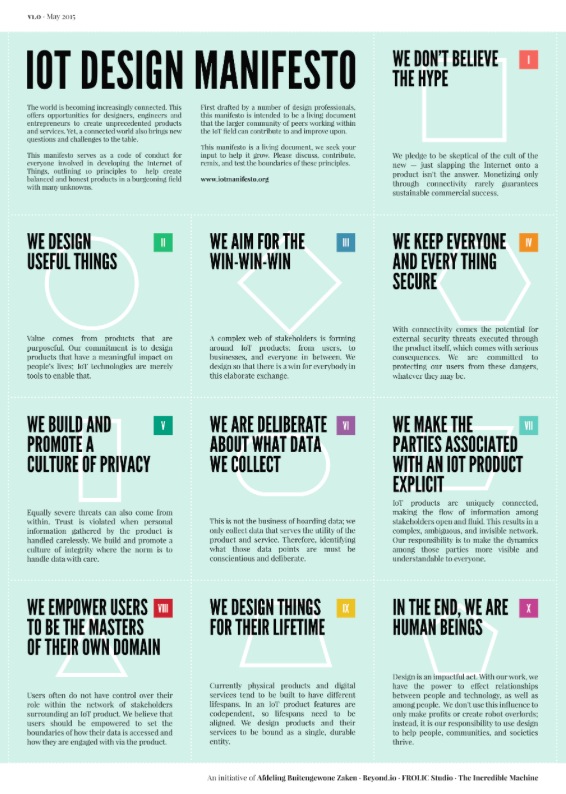

A manifesto is a sign of creative health. It’s not that I agree with the “IoT Design Manifesto” — on the contrary, if everybody agrees with a manifesto, then the manifesto is vapid and useless and hasn’t really said anything. Even a manifesto that’s completely wrong can be useful, because it motivates people to rebel and try something else. This manifesto is pretty good, in my opinion, because it’s kindly in tone and well-mannered, it confronts quite a few of the IoT’s real problems.

Even the first declarations, one and two, “We don’t believe the hype, we design useful things,” singles out the ThingsCon crowd as people who are skeptical and yet also trying to get something done. It’s a good attitude for a young industry. The other declarations are about about participation, security, privacy, data collection, association, personal agency, sustainability and humanity. These are some big, hairy issues which aren’t going to get solved in anybody’s lifetime. However, if you spend your life with the Internet of Things you’re going to be dealing with situations of that kind all the time. So, might as well get used to that prospect now.

The authors of this IoT Manifesto are Andrew Spitz, Ruben van der Vleuten, Marcel Schouwenaar, Harm van Beek, Kevin Verelst, Anner Tiete, Jan Belon, Marcel van Heist and Holly Robbins. Before I went to ThingsCon I’d never heard of any of those people, but they were right to do what they did, and I’ll be watching them with a lot more interest from now on. People tend to grow by the size of their chosen problems. These people have some pretty big problems.

I closed the ThingsCon event by asking the people there to help us with our house.

It’s a bit scary to open the faucet in this way: we don’t know if we’ll get a huge flood, or just a groan in the pipe and some dripping. If we get a lot of interest, Casa Jasmina will be crowded and noisy; if interest is more modest, we’ll try to concentrate on a few core issues. In our Internet-of-Things house, we’ll have to acquire some things, accept some things, build some things and maybe commission some things, too. The project has started deliberately, we have paced ourselves, but as the months pass, Casa Jasmina will slowly become a unique and interesting place, a true place of difference.

I wondered, in starting this project, who would ever really want to stay in such a place, and, having been to ThingsCon, I now have a much better idea about that. ThingsCon had about 300 people attending it — the “new hardware movement” are not a mass movement of millions — but those three hundred people are real people. They are bright and committed, and they really exist. If we understand them as our natural guests and we try to please them, I think we’ll do well.

Bruce Sterling
Arduino IDE Becomes More Open, Less Snarky

Version 1.6.4 of the Arduino IDE has been out for a little while now, and it has a couple of notable changes. To our eyes, the most interesting change makes adding support for non-standard boards and their configurations within the Arduino IDE a lot simpler. We’ll get into details below.

But before that, it’s time to bid farewell to the cheeky little popup window that would deliver a warning message when using a board bearing the USB IDs of their former-partner-turned-competitor. We absolutely agree with [Massimo] that the issues between Arduino SRL / Smart Projects and Arduino LLC are well-enough known in the community, and that it’s time for the popup to fade away.

Now on to the meat of this post. The new “Board Manager” functionality makes it significantly easier for other non-Arduino products to be programmed within the Arduino IDE. Adafruit has a tutorial on using the Board Manager functionality with their products, and it basically boils down to “enter the right URL, click on the boards you want, download, restart Arduino, bam!”

The list of unofficially supported third-party boards is still a bit short, but it includes some stellar entries. For instance, Adafruit has provided the files needed for the ESP8266, which recently received the Arduino treatment. This means that you can simply point your IDE at Adafruit’s URL, and it’ll set you up with everything needed to develop for the ESP8266 from within the comfy Arduino IDE.

Another standout, from our perspective, is this link that simplifies programming bare AVR chips from the Arduino IDE. While programming your Arduino code into a simple AVR ATmega168 has always been possible, it’s never been as easy as it is now.

How it Works

Under the hood, the new board manager system is pretty straightforward. Clicking on one of the links leads to a JSON file with any number of board architecture definitions. Each entry provides text descriptions of the target board that are used for generating menu entries in the Arduino IDE’s pulldown menus, and a link to a zip file. This zip file contains everything necessary to adapt the Arduino libraries to the target board or chip.

For instance, with something simple like the bare-AVR modifications, the zip file simply includes the boards.txt and platform.txt files that the Arduino IDE uses to fill in a lot of board-specific parameters like the CPU clock speed, fuse bit settings, and AVRDUDE command options for flashing new code. For something more involved, like porting Arduino to the ESP8266, the zip file additionally includes the ported Arduino core and library functions, as well as the uploader tools that make Arduino work on that target.

It’s a very interesting experiment to open up the Arduino IDE so transparently to third-party devices. It’ll surely win points with both hackers and retailers of *duinos, and we’re guessing it’ll only encourage porting the Arduino libraries to more platforms. Let’s see where the community takes this one. What do you want to see Arduino ported to next?


Filed under: Arduino Hacks
Hack a Day 13 May 18:01

Samsung Joins Arduino Certified Program with ARTIK family

We are happy to announce that Samsung has joined the Arduino Certified Program with the launch of its new ARTIK platform. The collaboration was announced today, during the Internet of Things World in San Francisco, on stage by Young Sohn – President and Chief Strategy Officer, Samsung Electronics – and Massimo Banzi, Co-founder of Arduino.

The ARTIK family is among the elite group of Arduino Certified processors that are compatible with the Arduino ecosystem. The ARTIK platform can be programmed utilizing the Arduino Software Development Environment (IDE), allowing developers the benefit of tapping into the Arduino community for ideas, insights and best practices. Arduino integration brings the open ARTIK platform into the hands and minds of makers, hobbyists and first-time programmers, who will join developers in discovering new possibilities for the Internet of Things.

Curtis Sasaki, Vice President of Ecosystem, Samsung Electronics said:

“Our approach is to provide open platforms to help accelerate the development of IoT for our customers, developers and end users. Being part of Arduino’s Certified Program helps millions of developers familiar with Arduino IDE to take advantage and focus all of their energy to building new and innovative products.”

Massimo Banzi, Co-Founder of Arduino said:

“Arduino Certified ARTIK gives the Arduino passionate community the right tools to create something revolutionary in IoT, in a faster and easier way”

Selected conference attendees were given the ARTIK development boards to begin immediate development and all those in attendance were asked to join the ARTIK platform alpha program. More information about the ARTIK platform and development tools may be found at www.artik.io.

Scratch extension for Arduino (experimental release)

With the new (experimental) Arduino extension for Scratch, you can create visual programs to control sensors and actuators connected to Arduino boards. Try it on the new ScratchX site.

Scratch allows kids (and everyone) to create their own games, interactive stories, and animations using a visual programming environment. Scratch is made by the Lifelong Kindergarten (LLK) group at the MIT Media Lab. The ScratchX.org site is a place for trying out new, experimental extensions to Scratch — e.g. for connecting to hardware or web services. As a member of both Arduino and LLK, I’m especially excited about this possibility to combine Scratch with Arduino.

This Scratch extension, created by Kreg Hanning and me (mostly Kreg), communicates with the Firmata firmware on an Arduino board. This allows you to send the Arduino commands using special Scratch blocks. To start, we have blocks for working with LEDs, servo motors, buttons, rotation knobs (potentiometers), light sensors, and temperature sensors. There are also more general (and Arduino-like) blocks for doing analog and digital input and output. For more information, see the documentation.

If you have any trouble using the Arduino extension or have any suggestions, please open an issue on the extension repository.

Of course, this isn’t the first attempt to connect Scratch and Arduino. For other approaches, see S4A, s2a_fm, and Catenary. For even more options, see SparkFun’s discussion of alternative programming interfaces for Arduino.

Arduino Blog 11 May 19:17