Posts with «arduino» label

Can Your Really 3D Print a Working Robotic Lawnmower?

Need the lawn mowed? Print out a robotic lawnmower. Have a big yard? Print two?

Read more on MAKE

The post Can Your Really 3D Print a Working Robotic Lawnmower? appeared first on Make: DIY Projects and Ideas for Makers.

Pump up the volume of your party with Boogie cup

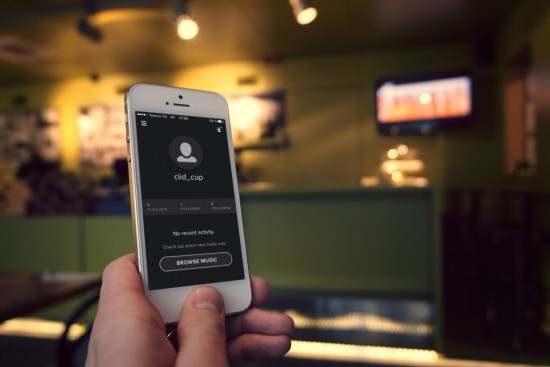
The Boogie Cup is an interactive project controlling the music volume according to the number of cups used in a party and allowing party-goers to follow each other on Spotify. How does it work?

The Boogie Cup Holder uses an infrared distance sensor to detect how many cups are in the stack. As guests take cups, the sensor detects a change in distance, and increases the volume at the party. The Genuino MKR1000 wifi chip connects the Boogie Cup to the Spotify API. When two guests pass by with similar playlists, their cups light up. When they cheers, a message is sent to a server that enables each user to follow each other on Spotify.

The device was created by a team of student (Sophie Chow, Priscila Ferreira, Lars Kaltenbach, Mary Mikhail) during a 4-day exploration into Physical Computing  during the Interaction Design Programme at CIID with the support of Massimo Banzi and Dario Buzzini, with the aim to encourage new behaviors with ordinary objects.


Control Your Camera Rig with the Blackmagic SDI Arduino Shield

Blackmagic's new 3G-SDI Arduino shield will make automating your camera and photography rig easier than ever with SDI input and output.

Read more on MAKE

The post Control Your Camera Rig with the Blackmagic SDI Arduino Shield appeared first on Make: DIY Projects and Ideas for Makers.

Morse Code Waterfall is Cooler Than Your Fifth Grade Science Fair Project

For her science fair project, [David]’s daughter had thoughts about dipping eggs in coffee, or showing how dangerous soda is to the unsuspecting tooth. Boring. Instead she employed her father to help her build a Morse Code waterfall.

A more civilized wea– tool from a more elegant age. Young Jed–Engineer.

[David] worked with his daughter to give her the lego bricks of knowledge needed, but she did the coding, building, and, apparently, wire-wrapping herself. Impressive!

She did the trick with two Arduinos. One controls a relay that dumps a stream of water. The other watches with an optical interrupt made from an infrared emitter and detector pair to get the message.

To send a message, type it in the keyboard. The waterfall will drop spurts of water, and then show the message on the decoder display. Pretty cool. We also liked the pulse length dial. The solution behind the LEDs is pretty clever. Video after the break.


Filed under: Arduino Hacks, news

Alarm System Upgrade Tips The Functionality Scale

Residential-grade commercial alarm systems are good at a few things but terrible at others, like keeping pace with telephone technology. So what to do when a switch to VOIP renders your alarm system unable to call in reinforcements? Why not strip out the old system and roll your own value-added alarm and home automation system?

Generally, the hardest part about installing an alarm system is running the wires to connect sensors to the main panel, so [Bill Dudley] wisely chose to leverage the existing wiring and just upgrade the panel. And what an upgrade it is. [Bill]’s BOM reads like a catalog page from SparkFun or Adafruit – Arduino MEGA 2560, Ethernet shield, a sound board, stereo amplifier, X10 interface, and a host of relays, transformers, and converters. [Bill] is serious about redundancy, too – there’s an ESP8266 to back up the wired Ethernet, and a DS3231 RTC to keep the time just in case NTP goes down. The case is a bit crowded, but when closed up it’s nicely presentable, and the functionality can’t be beat.

Rehabilitating old alarm systems is a popular project that we’ve covered plenty of times, like this Arduino upgrade for a DSC 1550 panel. But we like the way [Bill] really went the extra mile to build add value to his system.


Filed under: Arduino Hacks, home hacks

The AAduino Is An Arduino In An AA Battery

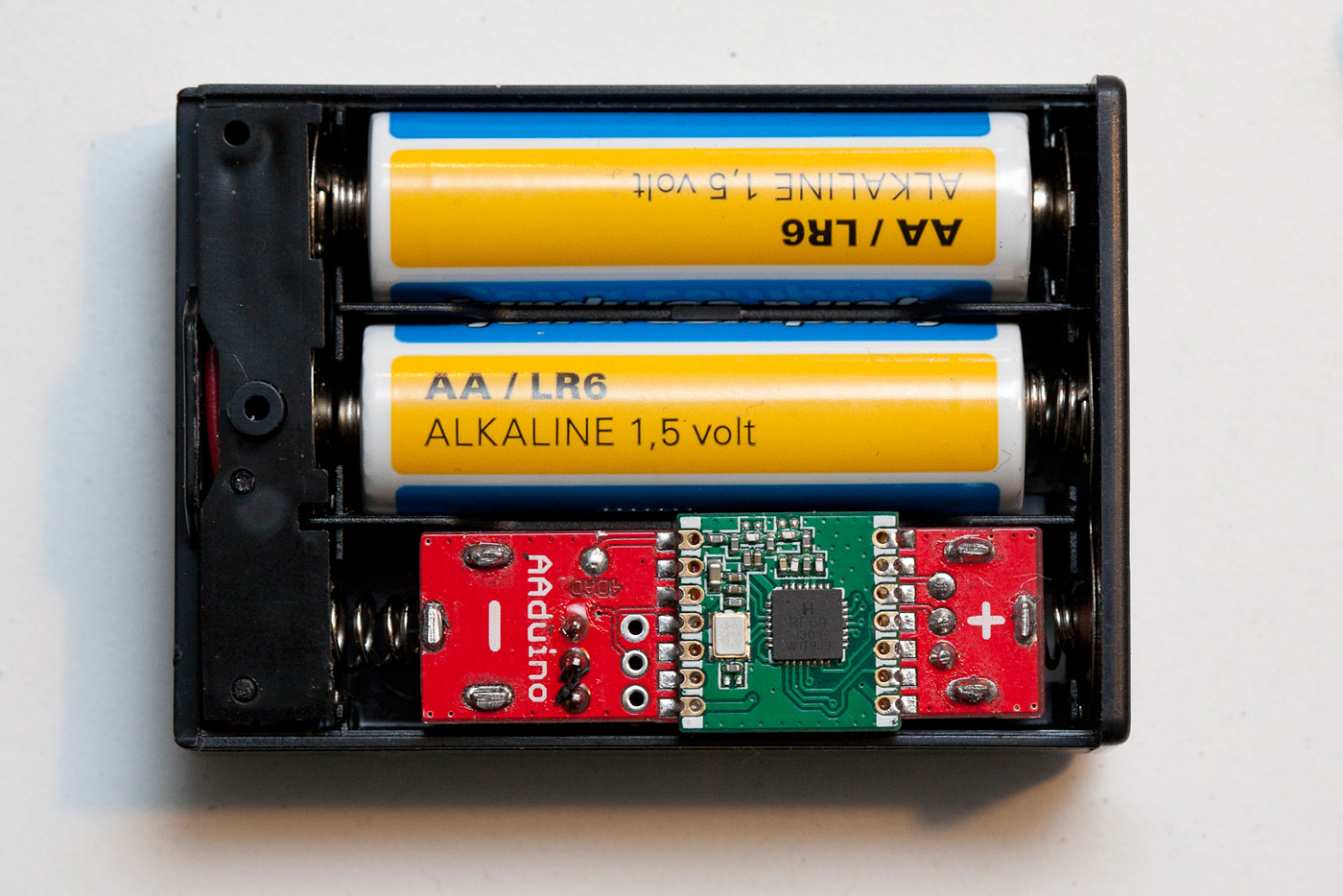
You might think that there could be no form factor that has not as yet had an Arduino fitted in to it. This morning a new one came our way. [Johan Kanflo]’s AAduino is an Arduino clone with an onboard RF module that fits within the form factor of an AA battery. Putting the Arduino inside its own battery pack makes a very neat and compact self-contained unit.

At the heart of the board is an ATmega328 clocked at 8MHz to reduce power consumption and fused to drop out at 1.7V. The radio module is a HopeRF RFM69C which as supplied is a little bit too big for the AA form factor so [Johan] has carefully filed away the edge of the PCB to make it fit. Enough room is left within the shape of an AA cell for a couple of DS18B20 temperature sensors and an indicator LED. He provides a handy buyer’s guide to the different versions of a 3xAA box with a lid, and all the files associated with the project are available in his GitHub repository.

Especially with the onboard radio module we can see that the AADuino board could be a very useful piece of kit. Perhaps for instance it could be used as a very low power self-contained UKHASnet node.

We’ve featured quite a few Arduino clones over the years that try to break the size mould in some way. This stripboard Arduino almost but not quite equals the AAduino’s size, as does this PCB version barely wider than the DIP package of its processor. But the AADuino is a bit different, in that it’s a ready-made form factor for putting out in the field rather than just another breadboard device. And we like that.


Filed under: Arduino Hacks, news
Hack a Day 19 Apr 00:00
aa  arduino  arduino hacks  clone  news  rf  

RFID Lock Keeps Your Bike Safe

What do you do with an RFID chip implanted in your body? If you are [gmendez3], you build a bike lock that responds to your chip. The prototype uses MDF to create a rear wheel immobilizer. However, [gmendez3] plans on building a version using aluminum.

For the electronics, of course, there’s an Arduino. There’s also an RC522 RFID reader. We couldn’t help but think of the Keyduino for this application. When the system is locked, the Arduino drives a servo to engage the immobilizer. To free your rear wheel, simply read your implanted chip. The Arduino then commands the servo to disengage the immobilizer. You can see the system in operation in the video below.

We’ve talked about RFID implants before. Using them as keys for your preferred transportation isn’t a unique idea, of course. Is this is the killer application that makes you want to get chipped? We doubt it, but we admit it is a matter of personal preference.


Filed under: news, security hacks, transportation hacks

The giveaway winner on Instagram for April 14th is…

We’re happy to announce the second winner of the Instagram giveaway!

Congratulations to Emmanuel Ani from Accra (Ghana) for the following picture taken at Genuino Day organized together with Mark Acquaisie Antwi, Andrew Kattenstroth, Atitsogbui Patrick Keli, Selorm Atsatsa, Humphery Batierah, Akati Micah .  He wins a Genuino MKR1000 and a Genuino Mug!


Feel like winning too? Participate now:

– Follow our official Arduino.cc account on Instagram

– Share your pics on your account on Instagram using hashtag #ArduinoD16 and #GenuinoD16 and mention us with the tag @Arduino.cc

– Every thursday, from April 7th to May 26th we are going to choose one of your pics (posted starting April 2nd) and announce on this blog a winner of an Arduino or a Genuino MKR1000 and one of our t-shirt or mug for a total of of 8 lucky people. Easy enough, right?

Remember to share cool pictures regarding Arduino and Genuino moments in your community also beyond Arduino and Genuino Day.
Show us your talent!

Minions Turn Your Keyboard into a Bluetooth Keyboard

Evil geniuses usually have the help of some anonymous henchmen or other accomplices, but for the rest of us these resources are usually out of reach. [Evan], on the other hand, is on his way to a helpful army of minions that will do his bidding: he recently built a USB-powered minion that turns a regular PS/2 mouse and keyboard into a Bluetooth mouse and keyboard.

[Evan] found his minion at a McDonald’s and took out essentially everything inside of it, using the minion as a case for all of the interesting bits. First he scavenged a PS/2 port from an old motherboard. An Arduino Nano is wired to an HC-05 Bluetooth chip to translate the signals from the PS/2 peripherals into Bluetooth. The HC-05 chip is a cheaper alternative to most other Bluetooth chips at around $3 vs. $40 for more traditional ones. The programming here is worth mentioning: [Evan] wrote a non-interrupt based and non-blocking PS/2 library for the Arduino that he open sourced which is the real jewel of this project.

Once all the wiring and programming is done [Evan] can turn essentially any old keyboard and mouse into something that’ll work on any modern device. He also put an NFC tag into the minion’s head so that all he has to do to connect the keyboard and mouse is to swipe his tablet or phone past the minion.

If you’re looking for an interesting case for your next project, this McDonald’s Minion toy seems to be pretty popular. PS/2 keyboards are apparently still everywhere, too, despite their obsolescence due to USB. But there are lots of other ways to get more use out of those, too.


Filed under: Arduino Hacks
Hack a Day 14 Apr 16:01

Massimo Banzi’s guest judge at America’s greatest makers

Massimo Banzi is among the judges on “America’s Greatest Makers” a reality competition from Mark Burnett (the reality-TV king behind “Survivor,” “The Apprentice,” and “The Voice”) in partnership with Intel which debuted last week on TBS.

In a first of its kind competition, the tv show takes 24 teams of makers from across US and puts them in head-to-head challenges to invent disruptive projects and win $1 million. The team are composed by unique people from 15 years old to 59 with ideas going to inspire a whole new audience of potential makers.


In the first two episodes, each team pitched their device idea to the judging panel composed by Intel CEO Brian Krzanich; business and financial expert Carol Roth; comedian, serial entrepreneur and co-host of truTV’s Hack My Life Kevin Pereira; and one of the celebrity guests.

At the end of April during 4th episode guest judge Massimo Banzi joins the panel as the remaining makers compete in the “Make or Break” rounds for $100,000 and a spot in the million dollar finale. If you are not in the USA, watch the episode at this link after April 27th.

In the meanwhile you can also watch a beginner maker project to learn how to do obstacle avoidance using Arduino 101. Cara Santa Maria is the trainer who’s going to guide you into the tutorial about this really important topic for projects involving moving objects like robots and drones:


Follow the show on Twitter, Instagram, Facebook and use hashtag #AmericasGreatestMakers