The Morning After: FDA reportedly denied Neuralink's request to begin human trials of its brain implant

Neuralink’s efforts to bring a brain-computer interface still have a way to go. According to a new report from Reuters, Elon Musk’s startup was apparently denied authorization by the FDA in 2022 to conduct human trials using the same devices that, well, killed 1,500 animals. Those tests, according to internal reports, lead to needless suffering and death of test subjects.

Current and former Neuralink employees told Reuters: "The agency’s major safety concerns involved the device’s lithium battery; the potential for the implant’s tiny wires to migrate to other areas of the brain; and questions over whether and how the device can be removed without damaging brain tissue."

The FDA is concerned that, because of the minuscule size of the electrical leads, they are at risk of breaking off during removal (or even during use). At Neuralink's open house last November, Musk claimed the company would secure FDA approval "within six months," basically by this spring. That’s looking increasingly unlikely.

– Mat Smith

The Morning After isn’t just a newsletter – it’s also a daily podcast. Get our daily audio briefings, Monday through Friday, by subscribing right here.

The biggest stories you might have missed

Alienware reveals revamped gaming peripherals

'Star Trek: Discovery' is ending with season 5 next year

Garmin unveils its first dedicated running watches with AMOLED displays

Don't make me watch 'Boba Fett' to understand 'The Mandalorian' season 3

Microsoft’s Activision Blizzard purchase will reportedly be approved by the EU

Ooni reveals its first indoor pizza oven

We don’t all have gardens.

Ooni

I'm sick of winter, but I love pizza, okay? Ooni is one of the biggest names in the pizza oven game. The company has a full line of models that use wood, charcoal or gas to give you the hot-and-fast pizzeria experience in minutes. Ooni promises high-heat cooking for Neapolitan-style pizza, plus the ability to bake other styles, bread and even sear steaks with its ovens. Until now, all of the company's products have been made for outdoor use, but today it's debuting its first indoor model: the $999 Volt 12. Taking design cues from the high-end Karu 16, the Volt 12 is also Ooni's first all-electric pizza oven. The company says you can use it indoors or outside thanks to "advanced" insulation and powder-coated carbon steel exterior that retains heat and withstands the weather.

Continue reading.

Microsoft gives Bing's AI chatbot personality options

You can make the chatbot more entertaining or direct.

Microsoft’s web services chief Mikhail Parakhin has revealed that 90 percent of Bing preview testers should see a toggle that changes the chatbot's responses. A Creative option allows for more "original and imaginative" answers, while a Precise switch emphasizes shorter, to-the-point replies. There's also a Balanced setting, somewhere between the two. The company reined in the Bing AI's responses after early users noticed strange behavior during long chats and 'entertainment' sessions. As The Verge noted, the restrictions irked some users as the chatbot would simply decline to answer some questions.

Continue reading.

Ford will restart F-150 Lightning production on March 13th

It paused work after a battery issue caused one of the electric trucks to catch fire.

Ford says it’s aiming to restart production of the F-150 Lightning on March 13th, several weeks after it put the EV on hold. It paused production and sent a stop-shipment order to dealers after a battery issue caused a truck to catch fire in a holding lot on February 4th. It’s unclear what exactly led to the fire or how Ford has resolved the problem, though the company has said there's no indication a charging fault was to blame. Since it initially started F-150 Lightning production last April, Ford has sold fewer than 20,000 of the EV. But it’s very much in demand: Ford initially capped reservations at 200,000 in 2021 before reopening them last August. And a reminder: The F-Series has been America’s best-selling vehicle for 41 years.

Continue reading.

This article originally appeared on Engadget at https://www.engadget.com/the-morning-after-fda-reportedly-denied-neuralinks-request-to-begin-human-trials-of-its-brain-implant-121545291.html?src=rss
Why India May Not Be Able to Surpass EU And US in Semiconductor Manufacturing, Highlight Experts

Why India May Not Be Able to Surpass EU And US in Semiconductor Manufacturing, Highlight Experts

The situation is a bit challenging for India because the amount of subsidies offered in the home countries of the global chip manufacturers is way higher

Staff Fri, 03/03/2023 - 16:22
Circuit Digest 03 Mar 10:52

'Star Trek: Discovery' is ending with season 5 next year

There's only one more season left before Star Trek: Discovery bids farewell. The Paramount+ series is ending after season 5, which according to its official summary, "will find Captain Burnham (Martin-Green) and the crew of the U.S.S. Discovery uncovering a mystery that will send them on an epic adventure across the galaxy to find an ancient power whose very existence has been deliberately hidden for centuries." According to Variety, Paramount+ is also streaming the fifth season in 2024 as opposed to this year as previously expected. 

Star Trek: Discovery marked the first time the franchise has had a Black female lead and has prominently featured LGBTQIA+ characters. It also largely took on a more serialized format, wherein each episode is its own installment in a season's main storyline, unlike other entries in the franchise. That became a point of criticism about the series, however, until the showrunners changed course and embraced storytelling with an overarching plot in season four. 

As The Hollywood Reporter notes, the series currently holds the distinction for being the longest-running drama on Paramount+ so far. Its debut back in 2017 led to record sign-up numbers for the streaming service then known as CBS All Access, and its success paved the way for other Trek shows, including Lower Decks and Prodigy.

Tanya Giles, chief programming officer at Paramount Streaming, said in a statement: "Star Trek: Discovery is a perennial favorite on the service, near and dear to the hearts of legions of ‘Star Trek’ fans as well as all of us here at Paramount+. The series and its incredible cast and creatives ushered in a new era for Star Trek when it debuted over six years ago, embracing the future of streaming with serialized storytelling, bringing to life deep and complex characters that honor Gene Roddenberry’s legacy of representing diversity and inclusion, and pushing the envelope with award-winning world-building. This final season will see our beloved crew take on a new adventure and we can't wait to celebrate the series’ impact on the franchise leading up to its final season early next year."

At the moment, Trek fans can watch Star Trek: Picard, which is streaming on Paramount+. Its third season will also be its last, but there are rumors going around that the service is developing spinoffs centering on characters from the show.

This article originally appeared on Engadget at https://www.engadget.com/star-trek-discovery-ending-season-5-next-year-070320271.html?src=rss

Will The US Boost India’s Semiconductor Industry If it Abide By “China Plus One” Strategy?

Will The US Boost India’s Semiconductor Industry If it Abide By “China Plus One” Strategy?

The Taiwan based global semiconductor manufacturing firm TSMC, which is now equipped with the world’s largest foundry, is leading the industry. Chinese premier President Xi Jinping, who is considered to be one of the most powerful global leaders, has undertaken numerous efforts to reunify or invade the island country Taiwan. The danger of military takeover by China is increasing everyday. Now, on the other hand, the US is forming various strategies with its allies to defeat China in the global technology race and also to boost its growth in the chip industry.

Nijhum Rudra Fri, 03/03/2023 - 10:41
Circuit Digest 03 Mar 05:11

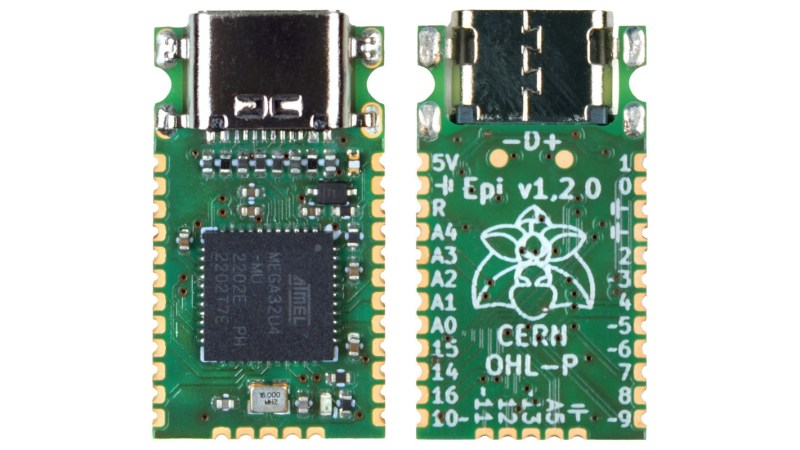
A Mega-Tiny Arduino

Integrated circuits, chipsets, memory modules, and all kinds of other transistor-based technology continues to get smaller, cheaper, and more energy efficient as time moves on. Not only are the components themselves smaller, but their supporting infrastructure is as well. Computers like the Raspberry Pi are about the size of a credit card and have computing power on the order of full-sized PCs from a few decades ago. The Arduino is no exception to this trend, either, and this new dev board called the Epi 32U4 might be the smallest ATmega platform we’ve seen so far.

As the name suggests, the board is based around the ATmega32U4 which is somewhat unique among Atmel chips in that it includes support for USB within the chip itself rather than relying on external translating circuitry. This makes it an excellent choice for any project which involves sending keyboard, mouse, or other peripheral information to a computer. This goes a few steps further with eliminating “bloat” compared to other boards, too. There’s no on-board voltage regulator, no LEDs except for a single one on pin 13, and even the pins and screw terminals are hemispherical rather than through-hole to save space.

One of the other features this board boasts over other small form factor boards is on-board USB-C, which is definitely a perk as more and more devices switch away from the various forms of older USB-type plugs. The project’s specifications are also available on this GitHub page for anyone that wants to produce their own. And, if you don’t have a 32U4 on hand and still want to build a keyboard project, it’s possible to get some other Arduinos to support these features but it’ll take a little more work.

Thanks to [Rasmus L] for the tip!

Hack a Day 03 Mar 00:00

Alienware reveals revamped gaming peripherals

Alienware announced a slew of revamped PC gaming peripherals today in a Twitch livestream. In addition, it revealed pricing and release info for its latest laptops from CES.

First, the mechanical Alienware Tri-Mode Wireless Gaming Keyboard lets you connect in three ways: a 2.4GHz wireless USB-C dongle (including a dongle extender), Bluetooth 5.1 or a detachable USB-A to USB-C paracord cable.​ The keyboard uses Cherry MX Red switches (with a 100 million actuation lifecycle), a programmable rocker switch and dial, anti-ghosting and N-key rollover. The keyboard starts at $290 and launches in the US and China on April 14th and the rest of the world on May 19th.

Alienware Tenkeyless Gaming Keyboard
Alienware

The wired Tenkeyless Gaming Keyboard is a slimmer and more compact mechanical model. It also uses Cherry MX Red switches, double-shot PBT keycaps, anti-ghosting and N-key rollover. The keyboard has an integrated cable routing on its underside that lets you position it toward the left, right or center, depending on your setup (and the USB cable is detachable). It supports per-key RGB lighting in 16.8 million colors. It’s available today for $160.

Alienware also announced the Dual-Mode Wireless Gaming Headset, which connects to your PC with a bundled USB-C dongle or 3.5mm audio cable. It has a 45mm-wide headband with a sliding adjustment and memory foam ear cups covered in fabric. Alienware says it’s plenty roomy inside with “comfortable contact points with your head.” It includes a retractable boom mic and can cancel out background noise for your audience while you’re speaking (not to be confused with active noise cancelation, which it doesn’t have). In addition, the headset uses 40mm drivers and supports Dolby Atmos. Finally, the company says its battery will last up to 30 hours. The headset is available today, costing $160.

Alienware Wired Gaming Headset
Alienware

The company also revealed a second model, the Alienware Wired Gaming Headset. Although you’ll need to plug it in through USB or a 3.5mm cable, it otherwise has near feature parity with the wireless model. It also supports Dolby Atmos and has RGB lighting; it uses a 45mm sliding headband, memory foam ear cups covered in fabric and a retractable boom mic with AI-powered voice isolation. The headset costs $100 and launches on April 14th in North America and China and May 19th in other parts of the world.

The last of the newly announced gear is the Alienware Wireless Gaming Mouse. It has a sculpted right-handed design with a dedicated thumb channel “to help provide comfortable control during long gaming sessions.” It has independent L / R keyplates and optical switches. Alienware says the mouse’s sensor supports up to 26,000 dots per inch while tracking quick movements with 650 inches per second and 50G max acceleration. Additionally, it has tactile grip zones. Alienware promises up to 140 hours of battery life, and the company says five minutes of charging (while on a low battery) will yield 10 hours of uptime. The mouse (which already launched in China last week) is available today in North America and on March 31st elsewhere; it will cost $100.

Devindra Hardawar / Engadget

The company also announced new pricing and release info for products it announced at CES. The Alienware m16 and m18 laptops will be available in all Intel and Nvidia variants on March 7th. The m16 starts at $1,899, while the m18 starts at $2,099. Meanwhile, the Dell G15 ($899 and up) and G16 ($1,499 and up) launch on March 21st in Intel / Nvidia flavors. (AMD options for all those models will arrive in Q2, with pricing info coming later.) Finally, the Alienware x15 R2 launches in early April with a $1,799 starting price.

This article originally appeared on Engadget at https://www.engadget.com/alienware-reveals-revamped-gaming-peripherals-220044252.html?src=rss

Researchers are using sound-waves and holograms to instantly mold tiny 3D shapes

The idea of growing organs or tissues for medical use still sounds like science fiction — and indeed, it's an incredibly difficult thing to do. 3D-printing technology has shown some promise in the field of biofabrication, but the process is too slow, and often damages the tissue it's working with. Researchers in Germany may have a solution: using holograms and sound fields to rapidly assemble matter in 3D.

The process uses acoustic pressure to mold silica gel microspheres and other materials into complex 3D shapes. Pulling that off isn't easy. The team first had to learn how to create complex, layered holographic shapes that were formed from sound, rather than light — and that takes an incredible amount of computational power. "The digitization of an entire 3D object into ultrasound hologram fields is computationally very demanding and required us to come up with a new computation routine," one of the team's researchers told FastCompany.

Once the hologram is complete, however, it can be used to mold various materials. The shapes the team has made so far aren't very large — measuring less than an inch at the largest — but they are fairly complex. Even more impressive, the fabrication process happens quite quickly: One video included with the published study shows a clear cube with a cloudy liquid made of silica gel microspheres. Moments later, that cloud condenses into the shape of a helix.

Other experiments formed shapes using mouse myoblast cells, and the study's lead author, Kai Melde, told FastCompany that the technology had potential to be used for bioprinting in the future. "Ultrasound is gentle and non-toxic to the cells," Melde explained. "And the remote assembly without contact helps keep things sterile and the cells happy." The study also explores the idea of using the technology for targeted drug delivery and rapid prototyping. For now though, the research stands as an interesting proof of concept for rapid-one-step assembly of 3D objects, and a potential, much faster alternative to 3D printing in the future.

This article originally appeared on Engadget at https://www.engadget.com/researchers-are-using-sound-waves-and-holograms-to-instantly-mold-tiny-3d-shapes-214040047.html?src=rss

FDA reportedly denied Neuralink's request to begin human trials of its brain implant

Despite the repeated and audacious claims by its sometimes CEO, Elon Musk, the prospects of brain-computer interface (BCI) startup Neuralink bringing a product to market remain distant, according to a new report from Reuters. The BCI company was apparently denied authorization by the FDA in 2022 to conduct human trials using the same devices that killed all those pigs — namely on account of; pig killing.

"The agency’s major safety concerns involved the device’s lithium battery; the potential for the implant’s tiny wires to migrate to other areas of the brain; and questions over whether and how the device can be removed without damaging brain tissue," current and former Neuralink employees told Reuters.

The FDA's concerns regarding the battery system and its novel transdermal charging capabilities revolve around the the device's chances of failure. According to Reuters, the agency is seeking reassurances that the battery is "very unlikely to fail" because should it do so, the discharge of electrical current or heat energy from a ruptured pack could fry the surrounding tissue. 

The FDA is also very concerned with potential problems should the device need to be removed wholesale, either for replacement or upgrades, due to the minuscule size of the electrical leads that extend into the patient's grey matter. Those leads are so small and delicate that they are at risk of breaking off during removal (or even during regular use) and then migrating to other parts of the brain where they might get lodged in something important.

During Neuralink's open house last November, Musk's confidently claimed the company would secure FDA approval "within six months," basically by this spring. That estimate is turning out to be as accurate as his guesses for when the Cybertruck might finally enter production. “He can’t appreciate that this is not a car,” one employee told Reuters. “This is a person’s brain. This is not a toy.” Neuralink did not respond to requests for comment.

This article originally appeared on Engadget at https://www.engadget.com/fda-reportedly-denied-neuralinks-request-to-begin-human-trials-of-its-brain-implant-204454485.html?src=rss

Don't make me watch 'Boba Fett' to understand 'The Mandalorian' season three

Spoilers for The Mandalorian seasons 1-3 and The Book of Boba Fett below.

Somehow, Grogu has returned. At least, that's what many people will assume when they tune into the first episode of The Mandalorian's third season. When last we left our lone bounty hunter and cub, Grogu was heading off to Jedi training with a creepy de-aged Luke Skywalker. Mando took off his helmet and braced for solitude. We all shed a tear. (How did a show manage to make us care so much for a monosyllabic man in armor and a green puppet? Bless you, executive producers Jon Favreau and Dave Filoni.)

But at the start of this season, Mando (AKA Din Djarin) and Grogu are paired up once again, saving people from gigantic monsters, fighting space pirates and generally being adorable. To a casual viewer, it's like that dramatic season two finale was Jedi mind-tricked away. It turns out if you wanted to get the full story – which also explains why Din is flying a Phantom Menace-era ship, or why Grogu is becoming a more adept force user — you had to watch the final few episodes of The Book of Boba Fett.

Lucasfilm

If I wasn't already a hopeless Star Wars fan, I'd be pretty confused and annoyed. How are normal people supposed to know that The Book of Boba Fett basically served as a stop-gap between Mandalorian seasons? Disney didn't promote the connection between the shows much, so if you weren't reading geeky news sites, or talking to nerdy friends, it was easy to miss.

The first few episodes of Boba Fett made it seem like a far less ambitious series – did we really need to learn the specifics of how he survived the Sarlacc pit? And who cares about his future as Jabba the Hutt replacement? I've talked to several Star Wars fans who tapped out early on, only to catch up once they heard Mando and Grogu popped up. (Honestly, it almost seemed like Favreau and crew got tired of the Boba Fett story – so did we.)

It's not like I'm against the idea of narratives shifting between different shows and films. Everything Marvel's done since Iron Man has practically trained us to consume pop culture this way, with the rise of the Avengers initiative to the ultimate smackdown with Thanos in Endgame. The geeky side of me is overjoyed when I discover connections between films I love. (You should have seen me in the theater at the end of M. Night Shyamalan's Split.) But the idea that viewers have to keep tabs on everything is beginning to feel like homework, and it's particularly frustrating when one piece of media is inexplicably crucial to something that comes later.

It doesn't help that The Mandalorian barely referenced The Book of Boba Fett during its introductory episode. Even a bit of a nudge during the "previously on" opening section would help. Instead, the premiere episode just wants to get us back to normal, with Mando on a video game-like quest and Grogu having fun along the way. It's a shame, since the end of season 2 made it seem like The Mandalorian would actually change things up moving forward.

Speaking to The Hollywood Reporter, creator and executive producer Favreau said he appreciated being able to check in on characters between shows.  “I knew that I didn’t want to dedicate a lot of screen time within The Mandalorian to a period of time where there wasn’t a lot of character progression," he said. "Both [Din and Grogu] were kind of stuck, as far as character progression goes, until they were reunited. So, my feeling was that it would allow me to do both of those things and freed me up now two years later to have a whole new context for these two characters to have a relationship and move forward.”

But what Favreau saw as a problem, I see as an opportunity. In Book of Boba Fett, Din and Grogu's time apart is handled briskly. Neither can fully let each other go. That stalls Grogu's Jedi training, as that's mostly focused on detaching yourself from the world and emotional connections. (Did that really work so well for Anakin Skywalker? Come on, Luke.) Din, meanwhile, acts like an empty nester who's lost his life's purpose. This is all good material for drama, but Favreau cuts through it as quickly as possible on a spinoff show. What a waste.

I may be particularly annoyed by The Mandalorian's disjointed narrative after seeing how Marvel handled its latest big bad, Kang the Conqueror, in Ant-Man and the Wasp: Quantumania. In that film, Kang is introduced as a castaway, someone banished to the Quantum Realm because of his penchant for, well, conquering. But we never got a sense of his true motivation, his powers or what he's actually trying to accomplish.Perhaps that's because the folks behind Quantumania assumed you saw Kang's brief introduction at the end of the Loki streaming series, where he's presented as more of a trickster and vague threat.

Lucasfilm

If you didn't watch Loki and were confused by Quantumania, it's almost like Marvel is saying that's your own fault. To me, that's simply irresponsible storytelling.

Coming off of Andor, Tony Gilroy’s self-contained and trenchant exploration of the Star Wars universe, the simplistic and confusing nature of The Mandalorian feels like a letdown. The show was always a pulpy and almost video game-like romp. But after the end of season two, there was potential for something much greater. Instead, Favreau took the easy way out to deliver more of the same.

This article originally appeared on Engadget at https://www.engadget.com/dont-make-me-watch-boba-fett-to-understand-the-mandalorian-season-three-203004802.html?src=rss

Ford will restart F-150 Lightning production on March 13th

Ford says it’s aiming to restart production of the F-150 Lightning on March 13th, several weeks after it put the EV on hold. It paused production and sent a stop-shipment order to dealers after a battery issue caused one of the trucks to catch fire in a holding lot on February 4th. It’s unclear what exactly led to the fire or how Ford has resolved the problem, though the company has said there's no indication a charging fault was to blame.

The automaker told CNBC that setting a March 13th target gives supplier SK On more time to ramp up battery production at its Georgia factory and deliver the packs to the F-150 Lightning plant in Michigan. "In the weeks ahead, we will continue to apply our learnings and work with SK On’s team to ensure we continue delivering high-quality battery packs – down to the battery cells," Ford said. "As REVC [Rouge Electric Vehicle Center] ramps up production, we will continue holding already-produced vehicles while we work through engineering and parts updates."

Since it initially started F-150 Lightning production last April, Ford has sold fewer than 20,000 of the EVs. Still, the F-150 Lightning is very much in demand. Ford initially capped reservations at 200,000 in 2021 before reopening them last August. The early popularity of the truck is hardly a surprise, though — the F-Series has been America’s best-selling vehicle for 41 years.

Ford had hoped to scale up F-150 Lightning production to 150,000 trucks per annum this year. Last year, the company said that new battery tech would help it hit a global production rate of 600,000 EVs per year by the end of 2023. However, it's unclear how much the downtime has affected those plans.

This article originally appeared on Engadget at https://www.engadget.com/ford-will-restart-f-150-lightning-production-on-march-13th-200550043.html?src=rss