You might not have to worry about apps that can't use the 120Hz refresh rate of the iPhone 13 Pro family. As iMorenotes, Apple has posted a developer article revealing that iPhone apps will need to 'unlock' 120Hz support by adding a key to a .plist file. There's also a bug limiting the speed for some Core Animation-based apps, although Apple said a fix was coming in a future iOS 15 update.
The iPad Pro doesn't require code updates to make full use of its 120Hz display, although that may be due to the tablet's much larger battery. Smartphones are much more likely to take a serious battery life hit from high-refresh screens.
The details suggest a repeat of what happened when Apple introduced the iPhone 6, iPhone X and other phones with significant leaps in display tech — it took a while for Apple and developers to make full use of the new screens. Your iPhone 13 Pro's 120Hz panel should reach its full potential, but there may be a few weeks or months where it goes underused.
It’s that time of year again: the latest Apple devices have arrived. We spent time with all of the company’s new products and reported back on their successes and missteps. First, Cherlynn Low tested out all four of the new iPhone 13 models to see which are worth your money this year. Valentina Palladino spent time carrying around the redesigned iPad mini, which does everything a small tablet should. Also, Devindra Hardawar found one more reason to recommend the Dell XPS 15, and Mat Smith took some average selfie’s with the ZTE Axon 30’s "invisible" front-facing camera.
On paper, Cherlynn Low says there’s not much to get excited about when it comes to the new iPhone 13 and 13 mini. The incremental upgrades like the bigger batteries, better displays and faster chips all feel like standard, annual improvements. The key features of the new handsets are the enhancements made to the cameras. The rear sensors have been improved, the ultra wide lens lets in more light and the A15 chip has a faster image signal processor.
Cherlynn particularly liked the addition of Photographic Styles, which allows the user to choose a profile of contrast levels and color temperature for photos. And she said Cinematic Mode, which blurs out the background behind a subject, was the most intriguing of the new video features. But at its default intensity, the blurriness looked strange and artificial — and Cinematic Mode only works at 1080p/30fps, regardless of the quality you’ve set your camera to record.
Other aspects of the handsets were largely similar to previous models: the speakers are still good enough for video watching, and both phones easily handled switching between multiple apps, uploading photos and other tasks. However, Cherlynn was quick to point out that the phones still feature 60Hz screens, which made them feel laggy in comparison to handsets that have speedier displays. Overall she said that, as expected, they’re excellent (if a bit boring) phones with little to complain about.
Cherlynn Low says make no mistake about it: The one thing that really makes the iPhone 13 Pro and 13 Pro Max stand out is the new ProMotion display. With faster screens that can adjust their refresh rates depending on the task, the handsets are finally able to take advantage of their big OLED displays, whether you’re watching video or simply scrolling social media. The two new models are also 25 percent brighter for better outdoor viewing and, thanks to the 5-core GPU on the Pro, able to handle graphics-intensive tasks more quickly.
Cherlynn said that the A15 Bionic chip combined with the faster refresh rate made everything from YouTube and music streaming to Catan gaming and chatting with friends seem much more responsive. The two new Pro models also have an additional telephoto camera and a new macro photography mode, but all of that power comes with extra weight. The 6.1-inch 13 Pro is 7.19 ounces and the 6.7-inch 13 Pro Max clocks in at 8.46 ounces; Cherlynn said the bigger handset was uncomfortable to use one-handed for more than a few minutes. If that isn’t a dealbreaker, then she says either of the phones would make a worthy upgrade for iOS users.
While the iPad mini has a dedicated fan base, it hasn’t changed much since its debut nine years ago. But the 2021 release of the tiny tablet features enough upgrades to make it feel like a smaller iPad Air. Valentina Palladino says that the new “all-screen” design, flat edges, TouchID-capable top button, second-gen Apple Pencil support and USB-C charging all provide a much needed refresh for the tablet. The bezels helped her keep a comfortable grip on the device while reading and making FaceTime calls, and the lightweight 100-percent recycled aluminum body made it easy to tote around.
Valentina also liked that the new design allowed the second-generation Apple Pencil to magnetically stick to the right edge of the tablet. She reports that the mini makes a capable digital notebook thanks in part to the Pencil and the Quick Notes feature in iPadOS 15. Additionally, she said the A15 Bionic chip and the larger screen make it easy to use the device in place of an iPhone for a wide variety of tasks including video streaming and light gaming. However, the new mini only comes in 64GB and 256GB models — with a $150 price difference between them — and those are notable differences in capacity and cost. Valentina says the significant update will be great for small-tablet lovers, but she’s not sure if the iPad mini will win over others in the market for a standard-sized iPad.
Devindra Hardawar was already a fan of Dell’s excellent XPS 15 laptop, but he says the addition of an OLED screen makes the whole package even better. The star of the show, the 15.6-inch display, has some of the thinnest bezels on the market and uses a 3.5K OLED touchscreen that supports Dolby Vision HDR (of course, this panel costs extra, and there are two LCD options to choose from, too). While watching the new Matrix trailer, it displayed true blacks, brilliant elements like explosions and juggled scenes with bright and dark aspects.
Devindra said he’d never had as much fun scrolling through websites due to the incredibly crisp text. The only additional improvement he could think of was a faster refresh rate, however, he had no complaints about the performance from the eight-core Intel i7 CPU or the 45-watt version of NVIDIA’s RTX 3050 Ti GPU, which transcoded a one-minute 4K video file into 1080p in 35 seconds. Devindra says you can expect it to tackle most intense workloads with ease, and although it’s not a gaming machine, it’s capable of reaching 70fps in Overwatch at the highest graphic settings.
A sequel to the Axon 20, ZTE’s Axon 30 touts an improved 16-megapixel, under-display camera (UDC) with a dedicated chip that keeps the area consistent with the rest of the screen. In practice, Mat Smith was pleased to report that the UDC is nearly invisible but he was less impressed with the resulting photographs. His selfies had fuzzy details and suffered from lens flares and washout due to strong backlighting. Mat got much better images when shooting with the four-camera array on the back, which includes a 64-megapixel Sony sensor.
However, the Axon 30 has more to offer for its $500 price tag: The smartphone also features a 6.92-inch AMOLED screen with 2,460 x 1,080 resolution and a 120Hz refresh rate. And it’s powered by a Snapdragon 870 processor, which handled everything Mat threw at it from Stadia gaming to video streaming. It also has a stand-out battery that lasted two days of typical use with the 120Hz refresh rate off, and the handset can recharge to 100 percent in under an hour. Mat liked the new MyOS 11 skin, which closely mimics the stock Google experience, save for a few shortcuts and widgets. But the smartphone lacks wireless charging and certified resistance against dust and water, and Mat says the 5G support isn’t great in the U.S. as it will only work on T-Mobile’s midband 5G network.
With this year’s iPhone 13 Pro and Pro Max, Apple finally brought its ProMotion display technology from the iPad Pro over to some of its phones. The feature allows the new high-end iPhones to refresh screen content up to 120 times per second, thereby creating a much smoother interface experience. The effect is most noticeable when scrolling, but almost every aspect of a UI can benefit from a higher refresh rate.
Am I correct in seeing that UIView.animateWithDuration APIs aren't clocked at 120Hz on iPhone 13? On UIScrollView, system ones, and Metal by the looks of it, rest is still 60Hz? pic.twitter.com/t3MeM9cj0E
Unfortunately, it looks like the iPhone 13 Pro and Pro Max limit their ProMotion displays in one notable context. According to reports spotted by 9to5Mac, the phones cap some animations in third-party apps to 60Hz. Scrolling and full-screen transitions render as expected but other animations do not. The effect is apparently jarring. What makes it worse is that it’s not something you’ll see when using any software from Apple; the iPhone 13 Pro and Pro Max do not enforce that same limitation on the company’s apps.
What makes the situation particularly confusing is that the iPad Pro does not have a similar limit. It has treated first- and third-party apps equally since it was released in 2017. A source told 9to5Mac the iPhone’s implementation may have something to do with battery life considerations. At the very least, code in iOS 15 suggests the limitation isn’t a bug. Either way, we’ve reached out to Apple for more information, and we’ll update this article when we hear back from the company.
This week brought iPhone reviews, new Surface devices and a bunch of tech deals across the web. Apple's MacBook Air M1 returns to the best price we've seen it while the iPad Air remains discounted by $100. Some of our favorite Sennheiser wireless earbuds are $100 off, too, and you can still grab a great deal from Oculus that knocks $100 off a second headset when you buy a Quest 2 VR system. Here are the best tech deals we found this week that you can still get today.
MacBook Air M1
Engadget
Apple's MacBook Air M1 is back down to an all-time low of $850, which is $150 off its normal price. It earned a score of 94 from us for its stellar performance, attractive, fanless design and its comfortable keyboard and trackpad.
Amazon has the new, space gray iPad mini for $459, or $40 off its normal price. Apple announced the upgraded tiny tablet last week and it's officially available today. We gave it a score of 89 for its much improved design, speedy performance with the A15 Bionic chip, long battery life and USB-C charging.
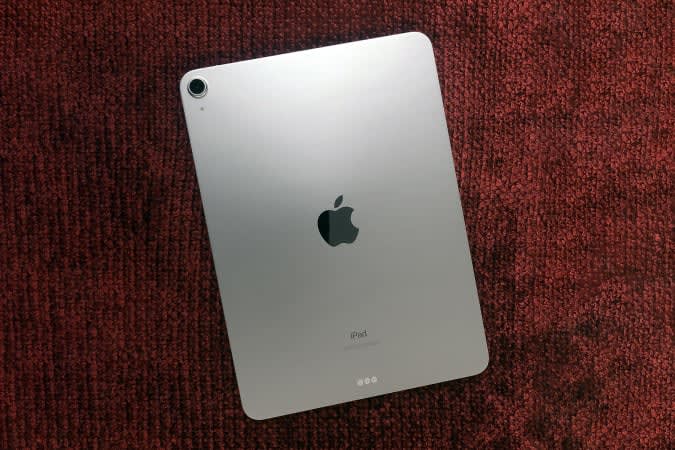
Apple's iPad Air is $100 off right now, bringing it down to $500. All five colors are on sale at Amazon. thanks to automatically applied coupons, although with various shipping times. We gave the Air a score of 90 for its speedy performance and WiFi, healthy battery life and support for the second-gen Apple Pencil.
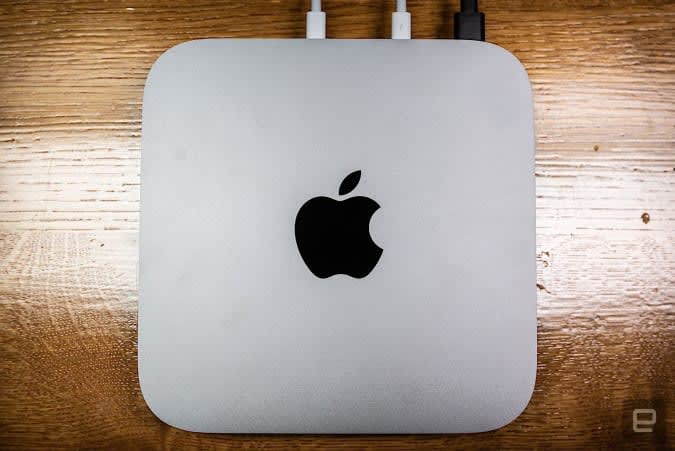
Apple's Mac Mini M1 returned to its all-time-low price of $600 thanks to a sale and an automatically applied coupon. You're getting all of the performance boosts provided by the M1 chipset in a compact desktop package. This is a good machine to get if you have an older desktop that needs replacing, but you don't want to spend a ton of money.
Through September 27, you can get $100 off a second headset when you buy an Oculus Quest 2. That means you'll get two VR machines for as little as $500. We gave the Quest 2 a score of 89 for its powerful hardware, higher resolution screens and excellent performance as a standalone and a desktop VR set.
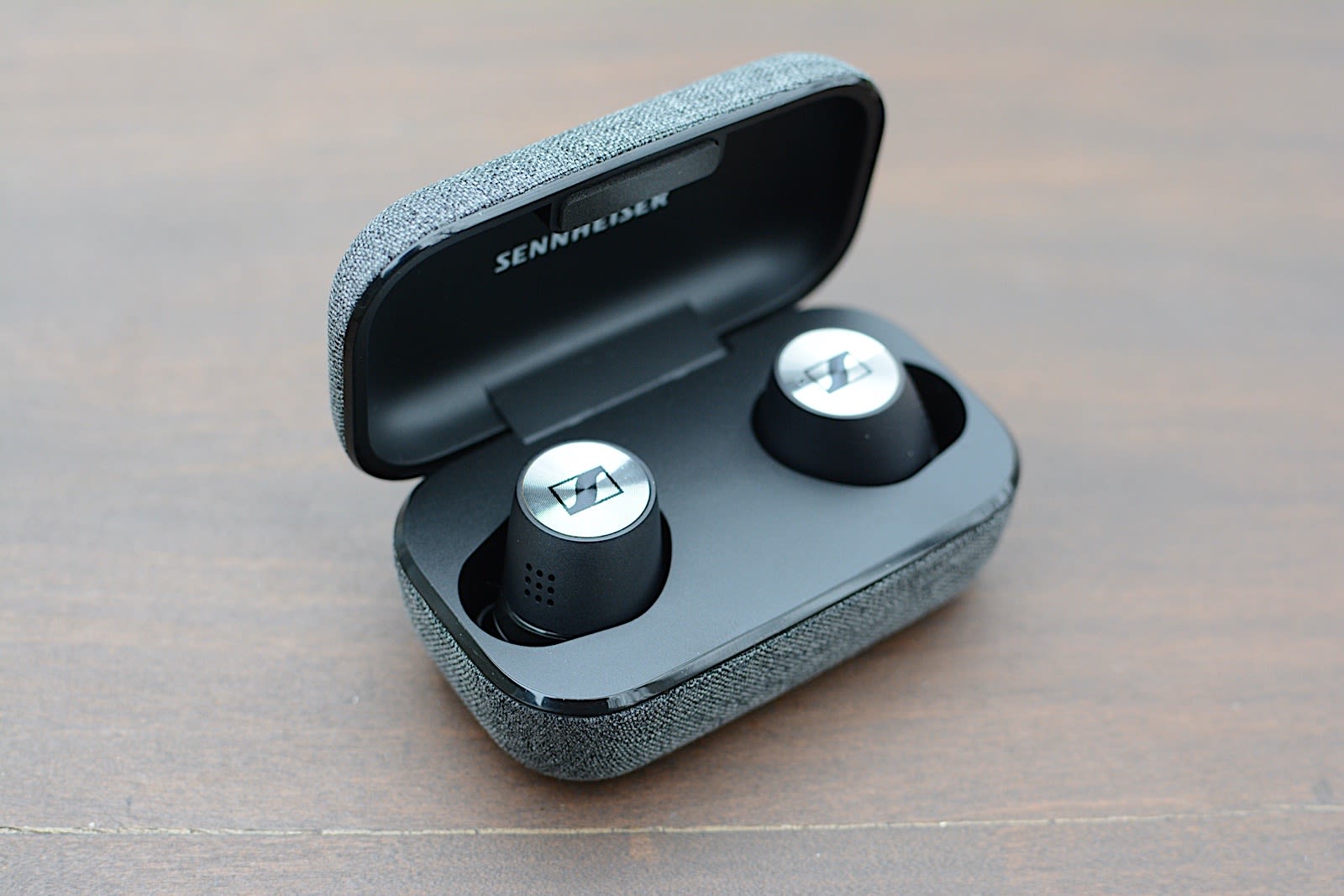
Amazon and Sennheiser have the excellent Momentum True Wireless 2 earbuds for $200, or $100 off their normal price. We gave these buds a score of 85 for their stellar audio quality, good ANC, smaller size and handy companion app.
The original Echo Show 5 is down to $45 again, a return to its all-time low. It's not much different from the second-generation device, which came out earlier this year, so you can safely save some money if you're willing to grab the older device. We gave the Echo Show 5 a score of 85 for its compact size, decent audio quality and its sunrise alarm feature.
With the announcement of an updated Kindle Paperwhite coming this October, Amazon knocked $50 off the previous Kindle Paperwhite, bringing it down to $80. We gave this e-reader a score of 95 for its improved, waterproof design, Audible support and higher-contrast display.
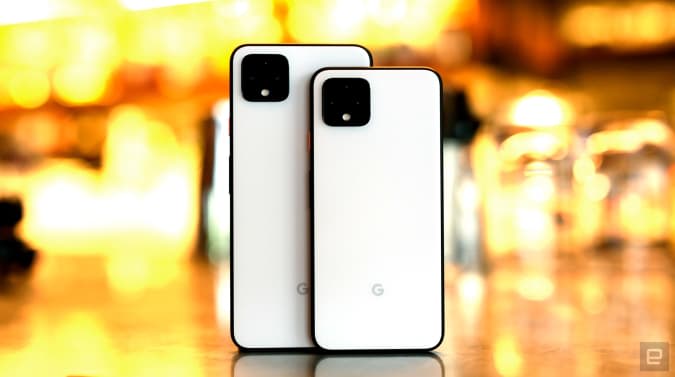
Google's Pixel 4 smartphone is down to a new low of $379 at B&H Photo. We believe the launch of the Pixel 6 to be right around the corner, so you may want to wait if you want the latest phone from Google. However, the Pixel 4 remains a solid handset — we liked its speedy performance, lovely display and stellar camera experience.
Through December 8, you can enter to win four-day passes to San Diego Comic-Con 2022. Along with the passes, you'll get access to a special preview night, reserved seating in Hall H, a personal concierge, a private tour of the Comic-Con Museum, dinner in Balboa Park and tickets to the "Night at the Comic-Con Museum" event. It's free to enter, but funds from this sweepstakes will go to the San Diego Comic Convention.
Amazon has the Logitech G915 TKL keyboard for $50 off, bringing it down to $180. This one has low profile mechanical switches and an attractive aluminum alloy body. It's also a wireless keyboard that can last up to 40 hours before it needs a recharge.
WarnerMedia pulled HBO Max from Amazon Prime Video Channels this week, but it's hoping to entice fans to subscribe directly with a new offer. Through September 26, new and returning HBO Max subscribers can get six months of the service for 50 percent off, which comes out to $7.49 per month. That's one of the best deals we've seen, but just remember the price will automatically go up after the six-month period.
NordVPN, one of our favorite VPNs, is running a sale on a two-year subscription. You can sign up and pay $99 for two years, plus you'll get an extra three months free. We like NordVPN for its speed, its no-logs policy, the thousands of servers it has to choose from and that one account supports up to six connected devices.
A phone can be endowed with the fastest processor in the world, but if it’s saddled with a slow screen, it could still feel sluggish — especially when compared to a similarly equipped device with a faster panel. That’s why the iPhone 13 Pro’s most important new feature is its ProMotion display.
But ProMotion is only included on the Pro and Pro Max models this year, making it one of the features that differentiate them from the iPhone 13 and 13 mini, not to mention last year’s 12 Pro. For an extra $200 to $300, the Pro series also offers an additional telephoto camera, a new macro photography mode, as well as more power and endurance. But are the iPhone 13 Pro’s new cameras and screens worth the extra money?
Design
Before we get into those features, though, there’s one thing you should consider: weight. At 204 grams (7.19 ounces), the 6.1-inch 13 Pro is heavier than both the 12 Pro and the iPhone 13. The 13 Pro Max, which has a 6.7-inch screen, outweighs last year’s Pro Max and Samsung's Galaxy S21 Ultra. While I didn’t mind the regular Pro, it was uncomfortable to use Apple’s biggest flagship one-handed for more than a few minutes at a time.
David Imel for Engadget
In addition to being heavier than last year's models, the iPhone 13 Pro and Pro Max are a bit thicker, too. They also have larger rear camera modules and slightly smaller display notches. Otherwise, Apple hasn’t strayed far from the 12 Pro’s design. These phones have similar stainless steel enclosures with glass coverings, and are rated IP68 for water and dust resistance.
Even the colors available are familiar: The typical trio of graphite, gold and silver are now accompanied by Sierra Blue. Personally, I prefer this paler shade to the Pacific Blue offered on the last generation.
Display and audio
I realized something when I started testing the iPhone 13 series last week: Basically everything I do on a phone requires scrolling. That includes browsing social feeds, looking for the right component on a spec sheet, reading through old conversations, creeping on my Instagram viewers and reading articles, to give you a non-exhaustive list.
This is why Apple’s new ProMotion screen on the iPhone 13 Pro and Pro Max is a big deal, and also why it’s kind of annoying that it took the company so long to adopt this technology in the first place. Google was already a little behind when it added 90Hz panels to the Pixel 4, after companies like ASUS and OnePlus had already introduced higher refresh rates. Nowadays, this tech isn't just for premium, top-tier Android devices either.
David Imel for Engadget
This is hardly the first time Apple is late to adopt a new technology. But it is worth emphasizing that the faster screens on the iPhones make a real difference. Like many Android phones, the iPhone 13 Pro and Pro Max adjust their refresh rates depending on what you’re doing. They can go as low as 10Hz when you’re looking at a static image, or up to 120Hz for scrolling and compatible games.
The benefits might not be obvious at first, but when you go back to a slower screen, you’ll quickly notice the jagged artifacts they produce.
Aside from ProMotion, the iPhone 13 Pro’s OLED displays are also 25 percent brighter than their predecessors, which is nice for outdoor reading. But without a side-by-side comparison, the difference is subtle at best.
Regardless, I enjoyed watching the visual perfection that is Doja Cat’s Kiss Me More music video on the iPhone 13 Pro’s True Tone display. The rosy, cotton-candy hues looked vibrant and her individual lashes were clear. The stereo speakers also did a respectable job of delivering crisp audio with adequate bass. Other things like voices and instrumental background music in videos and games all came through clearly as well.
Cameras
Apple says the iPhone 13 Pro’s rear cameras have received the “biggest upgrade ever,” touting “next-level hardware that captures so much more detail.” The triple 12-megapixel setup includes a primary sensor with a large f/1.5 aperture, a 77mm telephoto lens and an ultra-wide option with a 120-degree field of view. Night mode is now supported on all three of the cameras, so you don’t have to compromise on wide-angle or close up shots in low light. There’s also a new macro photography feature thanks to the updated ultra-wide lens, along with software like Photographic Styles and Cinematic Mode.
Those two modes are also offered on the iPhone 13 and 13 mini, and you can read my review of those phones for more details. In short, Photographic Styles lets you easily customize and set a sort of default for the contrast levels and color temperature of your images. Meanwhile, Cinematic Mode is good at identifying faces and people in a scene and blurring out everything surrounding a subject, but it struggled when I tried to change the focal point. The system is also a little wonky at outlining individuals, and stray body parts like thumbs and ears can get eaten up in the artificial blur. I found that adjusting the intensity via the f-stop setting helped keep this problem at bay, but the trade-off was less of a DSLR-like look in the final video.
David Imel for Engadget
One feature the Pros have over the regular 13 is macro photography. With this generation, you can get as close as two centimeters away from your subject and not lose focus. Unfortunately, Apple doesn’t offer a way to manually enable a macro mode; the system automatically switches to the close-up camera when you get all up in something’s face.
The iPhone 13 Pro was generally accurate at detecting when I was trying to get a tight shot, but it kept changing back and forth between macro and regular views. Sometimes it would continually focus and refocus on the flowers behind the buds I was trying to shoot. The latter is a more understandable issue; every little hand tremor is magnified when a camera is zoomed that far in, making it hard to latch on to a subject. Not to mention something in motion, like a leaf in the wind. But that’s all the more reason to give users manual control.
Apple has said it will be releasing a software update soon that should prevent the camera from switching in and out of macro mode, which I of course can't vouch for yet.
When it worked as expected, macro mode delivered surprisingly great results. My shots of a closed flower bud and the vein system on a leaf’s surface were impressively detailed, showing individual hairs on the stem and petals. Close-ups of a fried fish clearly rendered the oil oozing out of the batter.
You need to make sure to let enough light shine on your subject, though, because my shots of a bee inside a flower were dark and splotchy. But that’s basically Photography 101; it’s not an issue specific to macro mode.
In general, the iPhone 13 Pro took sharp, colorful photos rivaling my sample shots from the Pixel 5 and Galaxy S21 Ultra. Apple’s default treatment renders pictures that are typically brighter and sometimes more saturated, but with Photographic Styles you can pick a look that you like and stick with it. I’m not a fan of the iPhone’s aggressive HDR effects compared to the Pixels’ more neutral landscapes, but frankly we’re at a point where Samsung, Google and Apple are generally on par in terms of sheer quality.
The iPhone 13 Pro’s upgraded sensors also really improved low light performance. I took photos of the moon peeking through some clouds in the middle of Manhattan skyscrapers with the S21 Ultra, Pixel 5 and iPhone 13 Pro, and they were all clean and sharp. They differed a bit in color temperature, but it’s not noticeable without a direct comparison. Google still retains an advantage with Night Sight, though; it produces photos that are significantly cleaner, brighter and richer in detail.
David Imel for Engadget
As for the 13 Pro’s front camera, it’s pretty much the same as the iPhone 13’s, and that’s not a bad thing. You’ll still get Cinematic Mode and Photographic Styles via the 12-megapixel True Depth sensor, and though selfies were a little soft in low light, they were otherwise sharp.
Because these are Pro-series phones, Apple also threw in support for ProRes videos in addition to its ProRAW format for stills... or at least it will eventually. ProRes won’t be available until a future iOS 15 update arrives at an unspecified date, but it promises to preserve colors at high quality. And, thanks to the A15’s hardware acceleration plus video encoders and decoders, you’ll be able to record in the format at up to 4K resolution (1080p for the base 128GB model) and 30 frames per second.
iOS 15
Speaking of, the iPhone 13 series runs iOS 15 out of the box, and I was able to test most of the new features when I tested the beta version. Focus modes, for example, let you set custom home pages and notification profiles based on your location or time of day. It’s one of my favorite new features on any smartphone platform in recent years because it allows people without a separate work device to switch off from work when they please.
David Imel for Engadget
Since most of iOS 15’s new features will be coming to older iPhones, though, they’re unlikely to sway your decision on whether to upgrade. We’ll have a more in-depth review of iOS 15, but suffice to say I appreciate the level of control it offers. I’m especially looking forward to testing out SharePlay, which hasn't rolled out yet, but will let you watch shows with or stream your phone screen to friends over FaceTime.
Performance and battery life
The main difference between the iPhone 13 and iPhone 13 Pro’s processors is that the latter uses a beefier 5-core GPU. This means that graphics-intensive tasks like gaming or video editing should be executed more quickly. I made a trailer in iMovie and while I had to wait 51 seconds for it to finish exporting on the iPhone 13, it took a mere 15 seconds on the Pro.
The iPhone 13 Pro’s A15 Bionic chip is similarly powerful in less-intensive tasks. I played rounds of Catan, watched various YouTube videos, chatted with friends, played music and snapped photos in rapid succession — all without any delay. And I know I’ve already said this a lot, but I have to stress again that the faster screens here just make most tasks feel more responsive.
In the week or so that I’ve had the iPhone 13 Pros, I’ve only needed to charge them twice. Granted, I spent most of the first few days focusing on the iPhone 13 and 13 mini, using the Pros predominantly when I was doing intensive camera testing. But when I switched over to the more-premium devices, the iPhone 13 Pro lasted almost a full two days before needing a charge. Battery levels dipped more quickly when I was playing games and exporting videos, but not so much that I had to worry about running out of juice.
Considering its higher refresh rate, that’s an impressive runtime. I’m still running battery tests across the iPhone 13 lineup, and will update this review with more empirical results as soon as that’s done. For now, though, it’s clear that despite the ProMotion displays, the iPhone 13 Pro and Pro Max can last longer than a day.
David Imel for Engadget
Wrap-up
With faster screens, superb performance and long-lasting batteries, the iPhone 13 Pro and Pro Max are excellent phones. If you’re on a device older than a 12 Pro, you should consider upgrading just for the new ProMotion displays. Though the cameras also got a noteworthy improvement, I’m not sure they’re going to be the biggest draw. It’s honestly hard to spot the difference in quality between photos taken by Apple’s recent flagships.
Features like Cinematic Mode, Photographic Styles and macro cameras are nice to have, but won’t define your iPhone 13 Pro experience. And though Apple was playing catch up to Android flagships by finally introducing 120Hz screens to its phones, there are now fewer things that Samsung and Google offer that the iPhones don’t. But for basically anyone who uses iOS, the iPhone 13 Pro (and Pro Max, if you don’t mind its weight) is a worthy upgrade.
Key specs (iPhone 13 Pro)
Processor: A15 Bionic with 6-core CPU and 5-core GPU
Storage: 128/256/512GB or 1TB storage
MicroSD card support: None
Display: 6.1-inch Super Retina XDR OLED with ProMotion up to 120Hz
Display resolution: 2,532 x 1,170 (460 ppi)
Rear triple cameras: 12MP f/1.5 wide-angle camera with sensor-shift OIS; 12MP f/1.8 ultra-wide camera (120-degree FOV); 12MP f/2.8 77mm telephoto camera
Front camera: 12MP f/2.2 TrueDepth camera
Operating system: iOS 15
Battery: "Up to 22 hours video playback"
Charging: Lightning port with fast wired charging at 20W (up to 50 percent in 30 minutes); Support for MagSafe wireless charging up to at 15W; Qi wireless charging at up to 7.5W.
Dimensions: 5.78 x 2.82 x 0.30 inches; 146.7 x 71.5 x 7.65 mm
Weight: 7.19 ounces; 204 grams
Fingerprint sensor: No
Waterproofing: IP68
NFC: Yes
Headphone jack: No
Key specs (iPhone 13 Pro Max)
Processor: A15 Bionic with 6-core CPU and 5-core GPU
Storage: 128/256/512GB or 1TB storage
MicroSD card support: None
Display: 6.7-inch Super Retina XDR OLED with ProMotion up to 120Hz
Display resolution: 2,778 x 1,284 (458 ppi)
Rear triple cameras: 12MP f/1.5 wide-angle camera with sensor-shift OIS; 12MP f/1.8 ultra-wide camera (120-degree FOV); 12MP f/2.8 77mm telephoto camera
Front camera: 12MP f/2.2 TrueDepth camera
Operating system: iOS 15
Battery: "Up to 28 hours video playback"
Charging: Lightning port with fast wired charging at 20W (up to 50 percent in 30 minutes); Support for MagSafe wireless charging up to at 15W; Qi wireless charging at up to 7.5W.
Dimensions: 6.33 x 3.07 x 0.30 inches; 160.8 x 78.1 x 7.65 mm
It's fall, and new gadget season has officially begun! This week, Cherlynn and Devindra dive into all of Microsoft's new hardware: The Surface Laptop Studio, Pro 8 and Duo 2. Also, Commerce Editor Valentina Palladino joins to chat about the iPhone 13, 13 Mini and her iPad Mini review. And of course, we carve out some time to yell at Facebook.
Listen below, or subscribe on your podcast app of choice. If you've got suggestions or topics you'd like covered on the show, be sure to email us or drop a note in the comments! And be sure to check out our other podcasts, the Morning After and Engadget News!
Credits Hosts: Cherlynn Low and Devindra Hardawar Guest: Valentina Palladino Producer: Ben Ellman Livestream producers: Julio Barrientos,Luke Brooks Graphics artists: Luke Brooks, Kyle Maack Music: Dale North and Terrence O'Brien
You may have to update your brand new Apple device before you can use it to play music. As spotted by MacRumors, the tech giant has issued an advisory warning users about an Apple Music bug and advising them to update their devices. Apparently, people may not be able to access their Apple Music catalog and settings or use Sync Library if they restore their new phone or tablet from a backup. The bug affects the company's latest mobile devices, namely the iPhone 13, iPhone 13 mini, iPhone 13 Pro, iPhone 13 Pro Max, 6th-generation iPad mini and 9th-generation iPad.
Apple unveiled its new smartphones and tablets at an event in mid-September. The largest and most expensive phone in the bunch is the iPhone Pro Max, with its 6.33-inch screen and prices that reach $1,599. Compared to their predecessors, the standard iPhone 13 and iPhone mini models have smaller notches, batteries that last up to 2.5 hours longer and brighter displays. Meanwhile, the new entry-level iPad now ships with an A13 Bionic chip, promising faster performance than the previous generation. As for the new iPad mini, it now comes with a USB-C port instead of Apple's proprietary Lightning port.
The new devices started shipping on September 24th, and MacRumors says users have already started getting notifications for a software update. To install it, you simply have to go to Software Update under General in Settings.
If you're the early adopter sort who bought the original Surface Duo, you'll soon get an Android update — if not the one you'd expect in late 2021. Microsoft told The Verge in a statement that it expected to upgrade the first Duo to Android 11 "before the end of this year." The company didn't say what to expect with the update, although it wouldn't be surprising if some Surface Duo 2 features carried over to the older dual-screen phone.
Android 11 on the Duo 2 refines the multitasking experience, such as prioritizing the right-hand screen. Google's OS also includes generally improved support for dual-screen devices, potentially improving support for third-party apps. You might also see Microsoft iron out the Duo's still-buggy software, although that's not guaranteed.
The issue, as you might guess, is the timing. Microsoft is delivering Android 11 right as Google is close to releasing Android 12. Surface Duo owners will still be roughly a year behind their counterparts with conventional phones. That's understandable given the challenges of supporting a dual-screen device, but it won't be much consolation to Duo users wanting to try the latest Android features.
You won't need a Pixel phone to use some of Google's handiest (and in one case, face-preserving) features. Google is rolling out a batch of Android feature upgrades that include perks previously reserved for its in-house devices. Google Photos' Locked Folder is coming to Android 6 and newer devices, for instance — you can create a passcode-protected space to keep certain photos and videos separate from the rest.
Similarly, Gboard's Smart Compose is coming to Android 11 and newer hardware. If you're writing a common phrase or just want to save time, you'll get suggestions to complete messages. And there's good news if you're prone to walking into lamp posts — the Heads Up anti-distracted-walking feature is available through Digital Wellbeing on all Android 9 or later devices.
Other additions are new to all Android devices. Google Assistant now has a central Reminders hub. Nearby Share now includes a much-needed privacy control that can limit visibility to no one, contacts only or everyone. Gboard, meanwhile, can automatically suggest pasting addresses, phone numbers, web links and even screenshots. Over 1,500 new Emoji Kitchen stickers are due in the fall. And if you have an Android TV, you'll find remote control features built into Android on your phone.
This strategy is a familiar one for Google. It tends to bring features to Pixels first before a wider release, whether it's to help sell phones or just to ensure they work well before reaching other devices. Whatever the reasons for the staggered launch here, the greater availability might just be welcome if you're privacy-minded or in a hurry.
Europe may require all manufacturers to use USB-C charging for all phones and electronic devices, according to a new EU Commission ruling proposal. It aims to reduce e-waste and "consumer inconvenience" caused by different and incompatible chargers still in use. The Commission also wants manufacturers to unbundle the sale of chargers with electronic devices.
"With today's proposal... USB-C will become the standard port for all smartphones, tablets, cameras, headphones, portable speakers and handheld videogame consoles," according to the report.
The EU said its work with industry has managed to reduce the number of mobile phone chargers from 30 to 3 over the last decade. One of those three is Apple's Lightning port used by around 20 percent of devices sold in Europe. The EU hopes to change that situation, according to a statement by executive VP Margrethe Vestager:
European consumers were frustrated long enough about incompatible chargers piling up in their drawers. We gave industry plenty of time to come up with their own solutions, now time is ripe for legislative action for a common charger. This is an important win for our consumers and environment and in line with our green and digital ambitions.
When a common charger was first voted on by the EU last year, Apple issued a statement saying that the proposal would "stifle innovation," and its position has not changed. "We remain concerned that strict regulation mandating just one type of connector stifles innovation rather than encouraging it, which in turn will harm consumers in Europe and around the world," an Apple spokesperson told the BBC.
Since the launch of the iPhone 12, however, Apple has stopped including chargers in the box, something it said would save 861,000 tons of copper, zinc and tin. Apple itself now uses USB-C charging on its latest Mac laptops and certain iPad models, since that standard supports higher voltage charging required for larger devices.
Nearly all Android smartphones now use USB-C charging, and many models from Samsung and others are sold with charging/data cables but not chargers. It total, around 420 million mobile phones and other portable electronic devices sold in Europe just in the last year.
The EU throws away 12,000 tons of chargers each year, some unused, according to Bloomberg. At the same time, consumers spend around 2.4 billion euros ($2.8 billion) on standalone chargers not included with devices. The law is still in the proposal stages and needs to be passed by EU lawmakers and governments, so it could come into force around two years after that.