Motorola's Edge 40 Pro offers 125W fast charging and a 165Hz screen

Now that Lenovo has given up on Legion gaming smartphones, it can focus on its primary brand: Motorola. To wit, the company just launched a new flagship that offers some of Legion's gaming cred, the Motorola Edge 40 Pro. Some of the impressive features include a fast 165Hz screen, the latest Snapdragon 8 Gen 2 chipset and extremely fast charging. 

The Edge 40 uses a screen that curves inward, even at the top, for what Moto calls "unparalleled comfort" — though anyone who's ever owned a curved screen phone knows they tend to slip in your hands. It comes with an anti-fingerprint coating on the front and anti-glare glass inlay on the back, with both sides protected by Corning's Gorilla Glass Victus. 

The 6.67-inch FHD+ pOLED display runs at up to a 165Hz refresh rate, making it one of the faster flagship phone displays out there And if it's entertainment you're into, it's also the first Motorola phone with Dolby Vision HDR (and HDR10+) playback, offering a bright and accurate view of HDR movies and games. It also uses Dolby Atmos sound, along with a new feature called Moto Spatial Sound for music, movies and games. It sounds a lot like Apple's spatial audio, offering an immersive surround sound experience.

For demanding games and tasks, the Edge 40 Pro users Qualcomm's latest Snapdragon 8 Gen 2 mobile platform, along with LPDDR5X RAM and UFS 4.0, the fastest RAM and storage currently available. Meanwhile, the 4,600 mAh battery can be charged at up to 125W, letting you fully juice it in 23 minutes, right up there with the best Android phones.

Finally, on the camera front, the Edge 40 Pro has a triple high-res camera system with a 50-megapixel (MP) wide camera that features optical image stabilization (OIS) and phase-detect AF for every pixel. The ultrawide camera is also 50-megapixels, and the third camera is a 12MP 2x telephoto. There's a 60MP selfie pinhole camera up front. Video can be captured in 8K30p, 4K HDR10+ at 30fps, and 4K at up to 60fps. Naturally, it features AI tricks like auto smile capture, Google Lens integration, auto night vision and more. 

Unfortunately, the Motorola Edge 40 pro will only be available in Europe in the coming days and Latin America a little bit later — there's no sign of US availability so far. It starts at €900 in Europe, a reasonable price for such a high-spec phone. 

This article originally appeared on Engadget at https://www.engadget.com/motorolas-edge-40-pro-offers-125w-fast-charging-and-a-165hz-screen-110018477.html?src=rss
Japan Finally Restricts Export of 23 Semiconductor Manufacturing Technologies To China

Japan Finally Restricts Export of 23 Semiconductor Manufacturing Technologies To China

The semiconductor industry in China is very well-known for stealing intellectual property and carried out unfair trade practices that negatively impacted the US workforce in China

Staff Tue, 04/04/2023 - 15:31
Circuit Digest 04 Apr 11:01

Virgin Orbit files for bankruptcy protection as it seeks a buyer

Virgin Orbit has filed for Chapter 11 bankruptcy protection a few days after officially shutting down its space launch operations. The private space company has been burning money for a while now and reported a loss of $49.2 million in its last fiscal quarter. It tried to raise money in late 2021 by going public through an SPAC merger that was expected to raise $483 million for the company. However, it ultimately got less than half of that amount in gross proceeds. 

While Virgin Orbit carried on throughout 2022, its financial issues came to a head after its "Start Me Up" mission didn't quite go as expected. It was supposed to be a historic event as the first orbital launch from UK soil, but it failed to reach orbit due to a dislodged fuel filter. The company went into operational pause and furloughed most employees after that, in mid-March, as it sought new investors. And by the end of last month, it extended its employee furlough, because it wasn't able to close any deals. 

Virgin Orbit's late-stage discussions with Texas-based investor Matthew Brown, who was going to put $200 million into the company, reportedly broke down. It was perhaps the perfect deal for the launch provider, since that amount would've been enough to give the investor a controlling stake. A previous report by CNBC's Investing in Space newsletter said Sir Richard Branson didn't want to own the company anymore, even through the bankruptcy process, and that the Virgin Group had been rushing to find new sources of funding and buyers before the news broke. 

On March 30th, the company officially shuttered its space launch operations due to lack of funding. It flew a total of six flights from 2020, though only four of which were able to put satellites in orbit. According to Financial Times, Virgin Orbit said it expected to report $33.1 million in revenue and a net loss of around $191 million for the 2022 fiscal year. The company's search for a buyer will now proceed while protected by Chapter 11, though the process could culminate in the business being wound down if it doesn't find a new owner.

This article originally appeared on Engadget at https://www.engadget.com/virgin-orbit-files-for-bankruptcy-protection-as-it-seeks-a-buyer-094236877.html?src=rss

The History of Arduino Part 2: Revolutionizing Embedded Electronics

The History of Arduino Part 2: Revolutionizing Embedded Electronics

Shields Up! New Boards Incoming!

Staff Tue, 04/04/2023 - 12:33

Jury reduces Tesla's $137 million racism lawsuit penalty to $3.2 million

Back in 2021, a San Francisco court ordered Tesla to pay Owen Diaz, a former Black contract worker who accused the company of enabling a racist workplace, $137 million in damages. It was one of the highest amounts awarded to an individual suing on the basis of discrimination, but the appeals that followed had lowered it significantly. While US District Judge William Orrick affirmed the jury's original verdict, he found the original damages awarded to Diaz "excessive" and lowered the total to $15 million. Now, a San Francisco federal jury has reduced the amount even further and has ordered Tesla to pay Diaz $3.2 million only. 

The former elevator operator at Tesla’s Fremont assembly plant rejected the $15 million award Orrick had proposed and instead sought for a retrial. In the latest hearing, Diaz again recounted his experiences working for Tesla, where he said he and his fellow Black workers were subjected to racial slurs. He also said that he was made to feel unsafe at work and that other workers left drawings of swastika and racist graffiti, such as Inki the Caveman, in his workspace and the company restrooms. 

Diaz's lawyers urged the jury to penalize Tesla, a company currently worth over $600 billion, an amount that will get its attention. But Tesla's lawyer Alex Spiro reportedly argued that Diaz should only be awarded half his salary. He apparently characterized Diaz as a liar in court, who misstated how long he worked at the automaker and who exaggerated his testimonies and the abuse he suffered to gain a bigger payout. 

We may not be seeing the end to this case, though. According to the Los Angeles Times, Diaz's lawyer believes the jury decided on awarding him only $3 million in punitive damages and $175,000 in non-economic damages because he was wrongly attacked by the defense. He said Tesla's strategy to "minimize and sanitize" worked and that he has already filed a request for a new trial due to "misconduct."

This article originally appeared on Engadget at https://www.engadget.com/jury-reduces-teslas-137-million-racism-lawsuit-penalty-to-32-million-060414307.html?src=rss

Digi-Key Celebrates 50 Years of Fueling Innovation Around the World

Digi-Key Celebrates 50 Years of Fueling Innovation Around the World

Thief River Falls Mayor Declares April 3 “Digi-Key Day”

Staff Tue, 04/04/2023 - 11:03
Circuit Digest 04 Apr 06:33

Rode's Wireless ME squeezes a second mic into its receiver

When Rode released the original Wireless GO, it was an instant success. The ease of use, audio quality and reasonable price made wireless microphones much more accessible. In fact it was so successful that it spawned a number of copycat products from rivals. After releasing the Wireless GO II ($299) with dual mics, the company is back with a more affordable option - the $149 Wireless ME. There’s also a new video app called Rode Capture aimed at creators which offers tight integration with the Wireless ME and other products from the company.

If you’re thinking “more affordable” means fewer features, then you’d be right. But also you might be surprised. Even though there initially appears to be just one transmitter (mic) and one receiver, the latter also has a mic built-in so you can still record two speakers at the same time with their own separate audio files. That said, Rode is calling the second mic the “ME mic” and describes it as a “narrator” microphone because you can’t use it wirelessly (it’s the one that plugs into your recording device) so it can only really be used by someone off camera. That obviously is no problem if you’re not recording video, but worth knowing if you are.

There are, of course, other minor compromises. For one, the receiver doesn’t have any type of display, so visual feedback for connectivity is limited to a pair of LEDs. There doesn’t appear to be any feedback for gain levels at all. There’s also no onboard storage for recording away from a camera, computer or a phone. This also means there’s no option to record a safety track at a lower gain level which, given the lack of a way to see levels means you’ll have to really be sure you have everything set right up front. As a reminder, though, the ME is half the price of the GO II.

Photo by James Trew / Engadget

There are tools to help, though. The Wireless ME comes with a feature called GainAssist which internally monitors the signal and sets levels automatically depending on your environment and the volume of the subject. This definitely helps keep things from clipping, but you can still go into the red with it. It appears to be using either a limiter or compression (or both) but you can still make it go into the red. There’s a “dynamic” mode too for when recording things with a more consistent volume than speech.

In terms of range, you can expect about 100 meters / 328 feet (line of sight) but in practice this can vary a little in either direction depending on the conditions. This is a shorter range than the Wireless GO II (200 meters / 656 feet) and DJI’s Mic (250 meters / 820 feet) but likely ample for most scenarios. As for battery life, it’s a respectable seven hours but there’s no charging case as with DJI or Anker’s solutions.

With no way to change settings directly on the device, you’ll want to get familiar with the Rode Central app. It’s here where you’ll be able to turn the receiver’s microphone on or off if you want to use it, change whether it records to one or two separate files (if using both mics) and adjust the gain settings. There are versions for both desktop and mobile (Android/iOS) so you can change modes on the go, even if it’s a bit more involved than doing it on the receiver as with DJI and Anker’s products.

Given that the narrator-guest setup isn’t ideal for recording two speakers on camera at the same time it's a shame that the receiver doesn't have the option to plug an external 3.5mm lav mic into it. This would mean you could theoretically run one with a longer cable and have two on camera hosts. You can still use 3.5mm mics with the main transmitter though. Alternatively, if you have access to another transmitter, such as a Wireless GO II, you can pair it with the ME’s receiver and record up to three people at the same time – though two of them will have to share an audio channel in case having separate files for all speakers is important to you.

Rode

The interoperability between the Wireless GO II and the ME shows that Rode is thinking about how these products can work together, meaning creators can collaborate seamlessly with their own gear or continue using older products even as new ones come around. Expect to see more interoperability with other wireless devices in the future.

Along with the new microphone kit is the aforementioned Capture app. It’s a dedicated video app with a twist: direct access to the settings of compatible Rode microphones. Most video apps don’t even let you know what mic you’re using which can cause anxiety when you’re not sure it’s working with the one you plugged in. Having this assurance alone is useful and the direct access to microphone settings is always going to be a welcome bonus for creators. The app is entirely free and doesn’t require a Rode product to work but will need one of Rode's compatible products if you wish to access its settings.

The Wireless ME is available for $149 starting today.

This article originally appeared on Engadget at https://www.engadget.com/rodes-wireless-me-squeezes-a-second-mic-into-its-receiver-000009619.html?src=rss

An Ultra Low Power Dash Cam

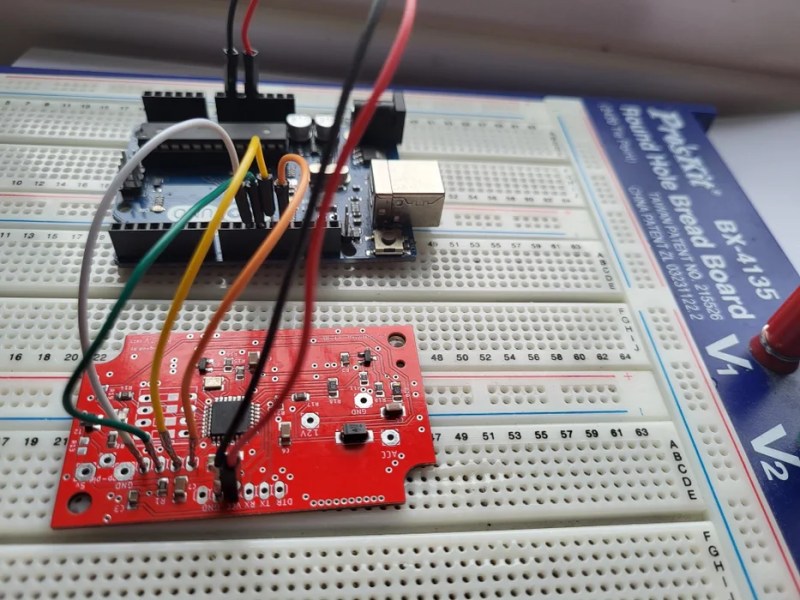
Dash cameras are handy as they provide a video recording of interactions on the road. However, their utility comes from the fact that they are always recording while driving. This always-on means power draw. [Kuzysk] took it upon himself to cut that power draw by a factor of almost 70x.

He found his existing dash cam from MiVue consumed 3.5mA in idle which works out to be a whole amp-hour every 12 days. The custom version takes just 50uA which means it will draw an amp-hour in two years. The brains of the chip are formed by an ATmega328 and an LM2596M, which is a simple step-down regulator. Interestingly, [Kuzysk] purchased clones and original chips and found that the cheaper clones had a lower switching frequency but a much lower power draw. Programming an Arduino bootloader onto the board is fairly straightforward and [Kuzysk] kindly provides his code. It can detect the ACC voltage that’s on when the engine is on and is powered by a permanent 12v connection to the battery.

Overall it’s a straightforward hack that goes through rolling your own Arduino, optimizing for low power, and putting it all together into a polished project. Perhaps for the next version, he can use the ATmega to control a cheaper camera and make it smart.

Thanks to [Microchip makes] and [Abe] for the tip!

Spotify is shutting down its standalone live audio app

Spotify is shutting down Spotify Live, the company told Music Ally on Monday. Previously known as Spotify Greenroom, the standalone live audio app came out of Spotify’s $62 million acquisition of Betty Labs in 2021. Shortly after the deal went through, Spotify rebranded the startup’s Locker Room app to Spotify Greenroom, and expanded the scope of the experience to include topics outside of sports. Then, almost exactly a year ago, the streaming giant renamed the platform yet again and integrated some of its functionality into the main Spotify app.

“After a period of experimentation and learnings around how Spotify users interact with live audio, we’ve made the decision to sunset the Spotify Live app,” a Spotify spokesperson told Music Ally. “We believe there is a future for live fan-creator interactions in the Spotify ecosystem; however, based on our learnings, it no longer makes sense as a standalone app. We have seen promising results in the artist-focused use case of ‘listening parties,’ which we will continue to explore moving forward to facilitate live interactions between artists and fans.”

Spotify did not immediately respond to Engadget’s request for comment. However, the company shared confirmation of the impending shutdown with TechCrunch. When Spotify first announced it was moving into live audio at the height of the medium in 2021, CEO Daniel Ek predicted the format would become ubiquitous. "Just like Stories with video where every major platform has them as one way for its audience to communicate with each other, I see live audio similarly," he said at the time. "I expect all the platforms to have it."

However, at the end of last year, the company canceled a host of live audio shows, signaling a scaling back of its previous ambitions. It’s worth noting Spotify is not the only company to pull back from the format. Last May, Facebook parent company meta announced it was shutting down a host of audio products, including Soundbites, the short-form audio-sharing tool it introduced in 2021.

This article originally appeared on Engadget at https://www.engadget.com/spotify-is-shutting-down-its-standalone-live-audio-app-211056429.html?src=rss

ASUS' ROG Ally is yet another Steam Deck competitor

ASUS isn't going to let the likes of Ayaneo or Valve have the handheld gaming PC market to themselves. After an April 1st announcement that prompted skepticism (don't announce real products on April Fools' Day, folks), ASUS has confirmed that it's building its own handheld, the ROG Ally. While the company is light on details, it notes the system will run Windows 11 and use a custom AMD Ryzen chip. You can even plug in an external GPU.

As The Vergenotes, YouTuber Dave 2D has learned that the ROG Ally has a 7-inch touchscreen, but it's a 16:9 ratio 1080p display with a 120Hz refresh rate versus the Steam Deck's 16:10 panel that only manages 800p and 60Hz. Despite this, ASUS' handheld is narrower, thinner and slightly lighter than Valve's machine. It's not clear how that screen will affect battery life.

The company hasn't shared pricing or release dates. However, you can sign up for an alert when pre-orders begin at Best Buy. 

Whether or not the ROG Ally does well largely depends on its price and performance relative to the Steam Deck (starting at $399) and higher-end handhelds like the $850 Ayaneo 2. As ASUS' early marketing suggests, though, there are potentially strong advantages. Unlike the Steam Deck, which is officially limited to running games in your Steam library (and only some, at that), the Ally can theoretically run most any game its hardware can handle. And while brands like Ayaneo and GPD are relatively small, ASUS is a major name — you'll likely have an easier time finding the Ally.

This article originally appeared on Engadget at https://www.engadget.com/asus-rog-ally-is-yet-another-steam-deck-competitor-204535105.html?src=rss