Getting access to everything you want to watch without a cable subscription is easy these days — but the subscription fees can add up quickly. On average, streaming services charge between $5 and $15 each month for their on-demand libraries. If you're a Verizon Wireless customer, however, you might be able to save a little with a new bundle: starting on June 2nd, the company will offer Netflix's Premium Plan and Paramount+ with Showtime for $25.99 per month.
The deal is available exclusively through Verizon's +play portal, which it introduced last year as a tool to help customers manage their streaming subscriptions and discover new content. It's essentially a service that helps you consolidate all of your streaming bills in one place, and this bundle seems to be an incentive to get more users on the service. To get access, however, you'll need to be a Verizon Wireless customer specifically: subscribers to Verizon Fios don't qualify.
Netflix's Premium plan costs $19.99 on its own, and you'll pay $11.99 for Paramount+ with Showtime — Verizon's deal can save about $6 a month for a qualifying customer.
This article originally appeared on Engadget at https://www.engadget.com/verizon-streaming-bundle-offers-netflix-premium-and-paramount-with-showtime-for-26-190627317.html?src=rss
There’s much truth in the advice that, to truly understand something, you need to build it yourself from the ground up. That’s the idea behind [Christian]’s entry for the Re-engineering Education category of the 2023 Hackaday Prize. Built as an educational demonstrator, this is a complete arithmetic-logic unit (ALU) using discrete relays — and not high-density types either — these are the big honking clear-cased kind.
The design is neatly, intentionally, partitioned along functional lines, with four custom PCB designs, each board operating on 4-bits. To handle a byte-length word, boards are simply cascaded, making a total of eight. The register, adder, logic function, and multiplex boards are the heart of the build with an additional two custom boards for visualization (using an Arduino for convenience) and IO forming the interface. After all, a basic CPU is just an ALU and some control around it, the magic is really in the ALU.
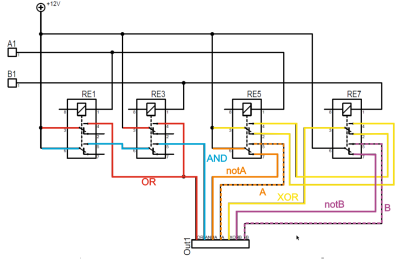
The fundamental logical operations operating upon two operands, {A, B} are A, ~A, B, ~B, A or B, A and B, A xor B, can be computed from just four relays per bit. The logic outputs do need to be fed into a 7-to-1 bit selector before being fed to the output register, but that’s the job of a separate board. The adder function is the most basic, simply a pair of half-adders and an OR-gate to handle the chaining of the carry inputs and generate the carry chain output.
3D printed cable runs are a nice touch and make for a slick wiring job to tie it all together.
The Marvel’s Spider-Man 2 gameplay that Sony showed during last week’s PlayStation Showcase shed some light on what it will be like to play as both Peter Parker and Miles Morales in the same game. During a spectacular set piece, the action switched between the two characters. One of the burning questions fans were left with was how swapping between the Spider-Men would work throughout the single-player game, and now developer Insomniac has provided an answer.
"When you're playing the main story, we control when you switch between Pete and Miles... it's done in service to the story when we're making those switches, for sure," Spider-Man 2 creative director Bryan Intihar told Eurogamer. "We have content designed around Peter, we have content designed around Miles and we have content where you can play either. You'll be able to, in the open world, freely switch between them with a simple button press."
It seems that the Grand Theft Auto V-style character switching will happen swiftly too, thanks to the PS5’s capabilities. One of the early examples of the console’s speedy loading times was seen in Spider-Man: Miles Morales, where players could use the fast travel system to get from one end of Manhattan to the other in just a couple of seconds.
In addition, Miles and Peter will each have their own skill trees, and there will be a third one that they share so you can use some of the same abilities with either character. "We saw in the gameplay reveal where Miles has the evolved Venom powers, whereas Peter has the Symbiote abilities. And so those, those change a bit of how you play, and you can upgrade those in their respective trees as well,” game director Ryan Smith said.
Meanwhile, by expanding to Queens and Brooklyn in the sequel, Insomniac says the sequel’s map is around double the size of the previous two games. “Since these two areas are somewhat smaller and residential, I think you’ll find them different from Manhattan,” Intihar said in a Gematsu translation of a Famitsu interview. “We’ve prepared some unexpected situations we haven’t done before, like a battle on the river between two of the cities, so I hope you’ll look forward to them.”
Insomniac hasn’t revealed a release date for Spider-Man 2. However, it said the PlayStation 5 exclusive is still on track to arrive this fall.
This article originally appeared on Engadget at https://www.engadget.com/spider-man-2-will-let-you-swap-between-peter-and-miles-with-the-push-of-a-button-182502190.html?src=rss
Feline-focused cyberpunk adventure Stray is officially coming to Mac. The critically-acclaimed title will be available for all Apple silicon models, from the most powerful Mac Studio desktops to standard Macbook Air laptops. This is only for silicon models, however, so older Intel-based Macs need not apply. There’s no release date yet but developer BlueTwelve Studio and publisher Annapurna Interactive urge fans to keep an eye on its Twitter accounts for up-to-date information.
Stray originally launched last year for PS4, PS5 and PC via Steam. The game has gone on to rack up glowing reviews and several industry awards, nabbing Best Independent Game and Best Debut Indie Game at The Game Awards. As the marketing suggests, you play as a cat navigating a cyberpunk world, solving puzzles and fooling around with a robot drone companion.
This is yet another feather in Apple’s gaming cap. For years (decades really) the platform struggled to lure top-tier developers and high-quality titles. This has been changing thanks to the power of Apple’s silicon chipsets and upscaling tools like MetalFX. Hit space sim No Man’s Skyjust launched on Mac computers and the platform currently hosts titles like Resident Evil: Village, Hades, Disco Elysium and more.
This article originally appeared on Engadget at https://www.engadget.com/hit-cat-game-stray-is-coming-to-macs-181521626.html?src=rss
When Motorola rebooted the legendary Razr line as a foldable phone in 2019, it felt like such a natural evolution. Unfortunately, we haven’t gotten a ton of updates since then aside from a mildly-upgraded 5G variant in 2020 and a China-only version late last year. But that changes now because today Motorola is announcing not one but two new members of the Razr family with the Razr and Razr+. And after getting a chance to check both of them out, I feel like each one has some interesting features you don’t get on competing devices.
In terms of general design, both the Razr and Razr+ share the same chassis and internal flexible display. The main difference is that the Razr+ sports a 3.6-inch 144Hz pOLED screen on its front – which Motorola claims is the largest exterior display on any foldable available today – while the standard Razr has a much smaller 1.5-inch external panel. The Razr+ also boasts faster performance thanks to a Snapdragon 8+ Gen 1 chip that helps the phone achieve a 165Hz refresh rate on its main screen, whereas the Razr uses a Snapdragon 7 Gen 1 chip that can only support 144Hz. Both also feature 30-watt wired charging and wireless Qi charging, though the latter is capped to a slow 5 watts.
Both feature a side-mounted fingerprint sensor, 8GB of RAM and up to 128GB of storage (or 256GB on the Razr+). They have the same 32-megapixel hole-punch selfie cameras on the interior, with the Razr+ packing a 12-MP main rear camera and a 13-MP ultra-wide/macro setup, while the regular Razr’s sensors are 64-MP and 8-MP respectively. And as a nod towards everyday durability, both Razrs do have some form of water resistance, though their IP52 ratings aren’t good for protecting against more than a weak splash or light rain.
With that out of the way, I’m going to focus on the Razr+ because it’s the more interesting of the two. Unlike the previous foldable Razrs from 2019 and 2020, the new model doesn’t sport the line’s iconic chin, which is a bit sad. But in exchange, you get a much bigger screen that feels more usable when compared to rivals like Samsung’s Z Flip 4. And the way the display wraps around the phone’s two main cameras looks better too.
Photo by Sam Rutherford/Engadget
On top of that, Motorola optimized the exterior display so you can access your most important apps, notifications and more without things feeling too cramped. Heck, there are even some simple games that have been tweaked specifically for the outside display. That means you can do stuff like look at a map, respond to texts or check your calendar without having to open the phone. This gives you some of the adaptability of a big foldable like the Z Fold 4 but in a more compact device.
Then when you open up the Razr+, you’re greeted by a beautiful 6.9-inch flexible OLED display with great brightness (up to 1,100 nits). And while there technically is a crease that you can feel if you run your fingers over the middle of the screen, visually, it’s almost undetectable. It’s a really nice acheivement and when you combine that with a chassis that folds completely flat and measures just 15.1mm when closed, you start to really appreciate the many subtle design tweaks Moto made to get here. You even get Gorilla Glass Victus in the front and back for a bit of extra toughness (except for on the Viva Magenta model which gets a vegan leather material in the rear).
In a lot of ways, the Razr+’s body feels like a more polished and functional take on the Z Flip 4’s template. The outside screen is bigger and easier to use while the flexible display on the inside doesn’t suffer from any distracting furrows or wrinkles. Moto even included a slightly larger 3,800 mAh battery, which is great because longevity has never been a strong suit of flip-style foldable phones. And thanks to a new hinge that can hold its position when half open, Moto was even able to include a number of nifty camera modes so you can hold the phone like an old-school camcorder, use the exterior screen to give your subjects a preview of your shot or trigger the new Photobooth mode by holding your hand up.
As for the standard Razr, the benefit of having a smaller exterior screen is that it leaves room for a larger sensor on its main camera in addition to a slightly bigger 4,200 mAh battery. And while you don’t get Gorilla Glass Victus on its exterior, subbing that out for vegan leather seems like a great choice both for style and durability.
Photo by Sam Rutherford/Engadget
But my favorite thing about the 2023 Razr family is that by expanding the line into two devices, it feels like Motorola is making foldable phones a lot more approachable. At $1,000, the Razr+ is almost bridging the gap between modern flip phones and bigger foldable devices and could be ideal for people who want a compact device that doesn’t sacrifice much in terms of usability.
My one concern at this point is Moto’s timing. Currently, the Razr+ is slated to be available for pre-order starting on June 16th before official sales begin on June 23rd. That’s close to when Samsung typically announces new foldables in the late summer, which means the Razr+ may only be on the market for a month or two before fresh opposition (likely with faster silicon) appears.
Photo by Sam Rutherford/Engadget
Meanwhile, for those curious about foldable handsets, there’s the standard Razr. Sure, it’s got a slower chip and its exterior screen isn’t meant for much more than checking notifications. The one hang-up is that at least for now, there’s no official info about an expected price or release date. But according to Motorola executives, it will also be “meaningfully cheaper” than the Razr+, which could make it a great entry-level foldable – especially if Moto can get the price down around $750 or less.
But if you’re like me and you’ve been waiting for more foldable phones to hit shelves, between Moto’s two new Razrs and Google’s upcoming Pixel Fold, this summer has gotten a lot more exciting real quick.
This article originally appeared on Engadget at https://www.engadget.com/moto-razr-2023-hands-on-two-promising-foldable-updates-to-an-iconic-phone-specs-price-180043133.html?src=rss
Motorola skipped the US market with last year's Razr, but it's coming back — and there may be reasons to consider the company's latest foldable phones over Samsung's rival Galaxy Z Flip series.The company has introduced a 2023 Razr family headlined by the Razr+ (Razr 40 Ultra in Europe), a flagship-level model whose centerpiece is a comparatively huge 3.6-inch, 1,056 x 1,066 external display running at up to 144Hz. The extra real estate allows for quick access "panels" (including a dedicated Spotify panel) and even mini games.
The folding action is also improved. Like the Z Flip, you can now open the device at different angles for hands-free recording and video viewing. A redesigned hinge also makes this the thinnest foldable phone on the market when closed, Motorola claims. The internal 6.9-inch, 165Hz 1080p screen (slightly larger than the 6.7 inches of before) is "nearly creaseless" at the same time, and you'll find spatial audio that includes Dolby Atmos support.
The Razr+ isn't any faster than the 2022 model with a Snapdragon 8+ Gen 1 chip and 8GB of RAM. Motorola is rethinking its camera approach, mind you. The new phone includes 'just' a 12MP main camera, but dual-pixel autofocus and a wide f/1.5 aperture could make it well-suited to low-light shots. You'll also find a 13MP ultra-wide cam that doubles as a macro shooter, and a 32MP selfie camera sits in a cutout in the main display. The clamshell should last longer, too, thanks to a larger 3,800mAh battery that reportedly lasts all day and night with wireless or 30W wired charging.
The price may be as much of a draw as the phone itself. Motorola will sell the Razr+ with 256GB of storage on June 23rd through its website, AT&T, Google Fi, T-Mobile, Optimum Mobile and Spectrum Mobile for $1,000, or $41.67 per month in a two-year instalment plan. In Europe, it's available now for €1,200. That's well below the price of past US models, and makes it competitive with the Galaxy Z Flip 4 you can buy as of this writing. It's just a question of whether or not you like Motorola's hardware enough to avoid waiting for the likely Galaxy Z Flip 5 launch this summer.
Motorola
There will also be a rare option for the budget-conscious, or those who simply want to reduce the temptation to check their phones. The plain Motorola Razr (Razr 40 elsewhere) has a 6.9-inch, 144Hz 1080p main display with the same hinge tech as the higher-end model, but carries a much smaller 1.5-inch external screen that provides just the essentials — in a sense, it harkens back to older Z Flip models.
You'll have to settle for a Snapdragon 7 Gen 1 and 128GB of storage. However, you will get a larger 4,200mAh battery and a higher-resolution 64MP main camera. This may be the better option if you're more interested in longevity than raw speed.
The base Razr will reach North America sometime in the "coming months." Motorola hasn't divulged pricing, but executives say the device will be "meaningfully cheaper" than the Razr+. If so, that could make it one of the first modestly-priced foldables in the US. You won't have to pay top-tier money to get a more pocketable handset, even if you're sacrificing some performance in the process.
This article originally appeared on Engadget at https://www.engadget.com/motorolas-folding-razr-will-have-a-giant-external-display-180012979.html?src=rss
Meta announced a slate of upcoming games today for its standalone VR headsets (including the upcoming Meta Quest 3). Apple is expected to enter the virtual headset space next week, so Meta is hoping to make a lasting impression with its lineup of upcoming VR titles from beloved franchises, including Assassin’s Creed, Stranger Things, Ghostbusters and Attack on Titan — along with some VR remakes of old-school classics.
In addition to Asgard's Wrath 2, the most enticing game may be the one we know the least about. Although it was little more than a tease, Meta confirmed that Assassin’s Creed Nexus VRisn’t vaporware after all: The next VR installment in the long-running series will launch in the Meta Quest Store later this year. Unfortunately, further details must wait for its official reveal at Ubisoft Forward on June 12th.
We first learned about an upcoming Stranger Things VR game late last year, and today we got a closer look. The title lets you play as season four villain Vecna as you “invade the dreams and memories of fan-favorite characters and harness telekinetic powers to possess minds and battle creatures.” Gameplay includes grabbing, crushing and throwing opponents using telekinesis and opening and closing portals “at your peril.” Meanwhile, the story will allow you to tap into Vecna’s more human past to “relive memories from [Henry Creel’s] time at Hawkins Lab with Dr. Brenner as you explore an otherworldly, interconnected hive mind.” Stranger Things VR is developed by Tender Claws and will launch this fall on “major VR platforms,” including Meta Quest Pro / 3 / 2.
Ghostbusters: Rise of the Ghost Lord is another previously announced VR game in the pipeline from an iconic IP. The trailer focuses on the backstory of Gustav Hookfaber, a disgruntled and morally confused scientist who has transformed into the villainous Ghost Lord to wreak havoc on San Francisco. You’ll wield proton packs and other classic equipment for solo or co-op ghost-busting. “Continue the Ghostbusters’ legacy, protect the city from fiendish ghosts, and experience all the humor and frights from the beloved franchise,” the game’s description reads. Ghostbusters: Rise of the Ghost Lord will launch on Meta headsets this fall.
Although it may not be as familiar to younger audiences, The 7th Guest was one of the coolest spectacles to fire up on your cutting-edge CD-ROM in the mid-90s. About three decades later, you’ll be able to play an updated version of the atmospheric adventure / puzzle game in virtual reality. “[Developer Vertigo Games] is using volumetric video capture to recreate the FMV (full-motion video) storytelling of the original game, bringing the classic adventure to life like never before,” the description reads. “And for the first time ever, the iconic mansion is being recreated in full 3D — though don’t be surprised if it starts shifting around you. After all, it’s haunted.” The 7th Guest arrives later this year for Quest.
Another remake, the ultraviolent 2011 first-person shooterBulletstorm is also getting a VR makeover. And the game’s creatively gruesome “Skillshots” are in tow. “Kick an enemy into a cactus?” the game’s teaser asks rhetorically. “Skillshot. Crush one under a hot dog cart? Skillshot. Grab one with your Energy Leash and fling ‘em into a burner? Definitely a skill shot.” Developer Incuvo and publisher People Can Fly (the original game’s developer) created the VR refresh, which appears to stay true to the title’s over-the-top indulgence. Bulletstorm launches later this year on Quest Pro / 3 / 2.
Manga and anime fans may want to heed the upcoming Quest title Attack on Titan VR: Unbreakable. The game places you in the Scout Regiment for solo and co-op play. “[Players] will need to combine entirely free three-dimensional movement through use of their Omni-directional Mobility (ODM Gear with cross-range combat in order to defend themselves against killer titans,” the game’s blurb reads. “As players progress, the battle difficulty will increase, so only those with determination and skills critical to making it through to the final battle will survive.” Attack on Titan VR: Unbreakable arrives “this winter” for Quest.
In a slightly less epic and mythological (but perhaps just as fun) gaming world, PowerWash Simulator is getting a VR variant. “With 1:1 accuracy and control of the Quest Touch controllers, blasting away every speck of dirt and grime is a breeze,” the description says. “Reach up, get down and lean-in to tackle those pesky hard-to-reach spots or sit back and wash your worries away.” In addition, the cleaning sim supports solo play and online multiplayer as you “Absorb the relaxing atmosphere and stress-free pace as you take the pressure off and strip dirt from patios, pavements, vehicles, and public parks.” PowerWash Simulator VR launches later this year on Quest headsets.
Owners of Meta headsets may already be familiar with Schell Games' I Expect You to Die. Dating back to the Oculus Rift launch lineup in 2016, Schell Games’ series combines seated gameplay with clever puzzles in a James Bond-like atmosphere laced with wit and satire. The third installment, I Expect You to Die 3: Cog in the Machine, has you again taking on the evil Dr. Zor. It promises an “expanded narrative” with new levels and “more hours of gameplay” compared to the series’ first two installments. The third game in the series launches this summer for Quest, and the developer says pre-orders will get 10 percent off the game’s full price.
In addition to these familiar franchises, Meta announced several other upcoming games and updates for existing titles. For example, tactical FPS Onward is getting a big 1.11 update that adds new player animations, a redesigned lobby, shooting-range revisions and more. Other new or upcoming Quest titles include the roguelike Ghost Signal: A Stellaris Game, mech-fighter Underdogs, jumpscare horror game Silent Slayer: Vault of the Vampire and a remake of the arcade / Dreamcast rhythm game Samba de Amigo. You can read more about all of the big Quest VR announcements in Meta’s recap.
This article originally appeared on Engadget at https://www.engadget.com/vr-assassins-creed-stranger-things-and-ghostbusters-arrive-on-meta-quest-later-this-year-174119442.html?src=rss
One of the biggest announcements at today's Meta Quest Gaming Showcase was Asgard’s Wrath 2, a sequel to the well-regarded original from 2019 that’s slated for release this winter. It's shaping up to be Meta's most ambitious game to date — it's an action RPG that the company thinks can stand alongside the genre’s heaviest hitters on consoles and PC. To live up to that promise, developer Sanzaru Games may have to push a VR headset that uses mobile technology from 2020 to its limits.
In a gameplay overview video, Sanzaru studio creative director Mat Kraemer said that Asgard's Wrath 2 features "massive worlds beyond the scope of any other game on the Meta Quest platform." Much of the action will take place in Ancient Egypt rather than the Norse setting of the first game, though you’ll still visit Muspelheim (a location that God of War fans will be familiar with).
Like Asgard's Wrath, the sequel features animals you can turn into companions to help with puzzles and combat. For the first time in the series, you can also use the animals as mounts to help you traverse the larger landscapes. Elsewhere, there’s a more aggressive approach to combat this time around, compared with the original game's defense-based system. Previously, players had to parry and block before having the opportunity to remove enemy shields. In Asgard's Wrath 2, they can use rapid attacks to chip away at shields or use skilled parries for more powerful attacks. In a neat touch, enemies will be able to catch thrown weapons and hurl them back at you.
Many of the elements you'd expect from a modern action RPG are present here, from crafting, minigames (including fishing and a slingshot shooting gallery) and extensive exploration to gear and weapon upgrades and enemies that grow stronger as you do. Both you and your animal buddies have skill trees to level up. As in the first game, you'll be able to manipulate the world with cosmic powers. Elemental weaponry should provide more enemy variety and customization, while you can possess mortals to use their skills and abilities and help them fulfill their destinies.
Sanzaru Games/Oculus Studios
That's a lot for any game to juggle, let alone one that's running on a similar chipset to the Samsung Galaxy S20 series. Sanzaru, which made the original game for Oculus Rift, is developing Asgard’s Wrath 2 for Meta Quest 2. The headset uses the Qualcomm Snapdragon XR2, which is derived from the Snapdragon 865.
While many players will be diving into the game on a Quest 2, the Meta Quest 3, which was revealed today, will be available by the time Asgard’s Wrath 2 comes out. “Meta Quest 3’s advanced processor and higher resolution will provide an even better look and feel within Asgard’s Wrath 2, while players will have a more comfortable wear during the game’s 60+ hours of gameplay,” a Meta spokesperson told Engadget.
In any case, it seems that Sanzaru is squeezing as much as it can out of the current headset, which gave the studio more to work with than the Rift.
"The biggest and best thing is that now we're working with devices that are completely wireless, untethered, kind of the way this a game like this is meant to be played, because it's so combat centric," Sanzaru creative director Grace Lingad told Engadget. "We really focus on visceral, gesture-based, physics-based combat. Being free of external tracking sensors and wires and everything like that, the Quest platform has really been a game changer for the franchise."
As for how the game might run on the Quest Pro, Lingad (who spoke to Engadget before the Quest 3 was announced) said that Sanzaru’s focus was on the Quest 2 due to that headset having a big install base. “We really want to make sure as many people as possible can enjoy this game,” she said.
Sanzaru Games/Oculus Studios
In recent weeks, critics have called out other major action RPGs, namely Redfall and Diablo IV, over the state of their open worlds outside of the main quests. Striking the right balance between having plenty to do in Asgard's Wrath 2 and giving players open areas to tear across on their mounts while dealing with the limitations of the Quest 2 hardware was something Sanzaru had to bear in mind.
"That's one of the big design challenges that the team had to deal with, because there's ways that we can build the levels so that they feel like they're sprawling, but of course, we have to consider the hardware limitations," Lingard said. "There's some amount of negative space, which is good for the eyes, for the mind to rest.
"We do try to tuck in little side areas, but they're hidden and tucked away," she added. "It's really for the players, the ones who really like to explore that whole, 'hey, there's this little area, if I can crawl through there...' and then you emerge into this secret monster den and we hide some really challenging stuff in there, really good rewards in there. So, in that way, we keep the density high, but it's not like all bam, bam, bam, in your face, which I think is a clever move by our team."
Sanzaru, which Meta snapped up in 2020, estimates Asgard's Wrath 2's campaign will take 60-plus hours to beat. That’s around twice the length of the original game. On top of that, there's an endless mode called Uncharted Rifts that has randomly generated dungeons. Players can dip into that mode at almost any point to plunder high-level loot to take back into the campaign, but Uncharted Rifts could keep ardent fans going well after they've finished the story.
Add everything up, and that's a long time to spend playing a game in a virtual reality headset, particularly one with fast-paced combat. Motion sickness has been a long-standing concern for VR users. Sanzaru has kept that in consideration while building out Asgard Wrath 2's settings and accessibility features.
Lingard said it was important for the team to offer a swathe of settings that players "can use to tailor their experience to their comfort level." Those concern factors such as motion sickness and combat difficulty. The accessibility options include movement settings, such as snap turning and smooth turning with the controller, rather than having to rotate your body. It's particularly important for a VR game to give players a wide array of options, Lingard notes, because the experience is "so visceral and personal."
Since everyone's history with VR is different, "we really make it a point to have a lot of settings available." she said. "We really want to respect people's time. For some people, maybe this is their first game in VR. We're hoping we really launch with a splash and people want to check it out for themselves. We want to make sure that experience is as accessible and as easy to get into as possible."
On that note, Sanzaru wanted to make sure Asgard's Wrath 2 is welcoming to VR newcomers and folks who haven't played the first game. You can opt to see a recap of the previous title before you get started
We’ll need to wait several more months to find out whether the Quest 2 and Quest 3 (which is said to offer double the graphics performance of the current model) can truly support Sanzaru’s ambitions. But if you're a fan of the first game or you're looking for a lengthy, immersive VR experience, it may be worth adding Asgard’s Wrath 2 to your wishlist.
This article originally appeared on Engadget at https://www.engadget.com/asgards-wrath-2-is-metas-most-ambitious-vr-game-to-date-172826048.html?src=rss
Lordstown Motors' problems now include the performance of its first EV. The Environmental Protection Agency (EPA) has rated the Endurance pickup's range at just 174 miles. For context, the all-wheel drive Ford F-150 Lightning manages 240 miles with a smaller battery, and the Rivian R1T manages 289 miles. This is also well short of Lordstown's original claim that the truck would manage an EPA-rated 250 miles of driving.
We've asked Lordstown for comment. Autoblognotes EPA figures are sometimes too conservative. The Porsche Taycan, for instance, regularly exceeds its government-rated range in real-world driving. The Endurance also tows more than the F-150, although it has less than half the payload capacity. The Ford is also priced $399 lower.
If the rating holds up, it largely limits the appeal of the Endurance to customers who only need short-distance hauls, such as contractors who make infrequent stops in a single city. It could be problematic for workers who make many stops, not to mention anyone who has to travel between cities.
Accurate or not, the EPA rating compounds Lordstown's troubles. The Ohio brand is still grappling with production issues that have hindered its output. GM sold its stake in the company last year, and manufacturing partner Foxconn is threatening to pull out over an alleged stock-related breach of contract. Now, it's not clear that the Endurance will be competitive even if Lordstown can solve its other dilemmas.
This article originally appeared on Engadget at https://www.engadget.com/lordstowns-ev-pickup-has-a-worryingly-short-174-miles-of-epa-range-164714534.html?src=rss
Don't worry if your favorite shop or gym doesn't have a digital membership card, as you'll soon have a way to create one yourself. Google Wallet will soon add the option to save passes to wallet by taking a photo of the card. So long as there's a barcode or QR code, you can replicate it on your Android phone for convenience and a backup.
Google is also matching Apple in supporting digital IDs. As of today, Maryland residents can add their driver's licenses and ID cards to Wallet on any device using Android 8 or newer. Arizona, Colorado and Georgia residents will have the option in the months ahead. You can already use the Maryland IDs for TSA PreCheck lines at some airports, but an upgrade later this year will let you use digital IDs to verify online accounts or book cars through Turo.
Health insurance cards are also coming to Wallet through Humana in the US and the UK government's HMRC app. As these cards include sensitive info, you'll have to verify through a phone sign-in (such as your fingerprint) whenever you want to use them. Later this year, you can add corporate badges to Wallet.
You'll also have a way to get your passes through Google's Messages app when RCS is enabled. You can check in to a flight or train ride using a chatbot and get a Wallet pass without leaving the app. This will initially be available for travelers through Spanish train operator Renfe as well as Vietnam Airlines, while gourmands can reserve restaurants through platforms like TagMe.
This article originally appeared on Engadget at https://www.engadget.com/google-wallet-will-let-you-add-passes-by-taking-a-photo-160028725.html?src=rss


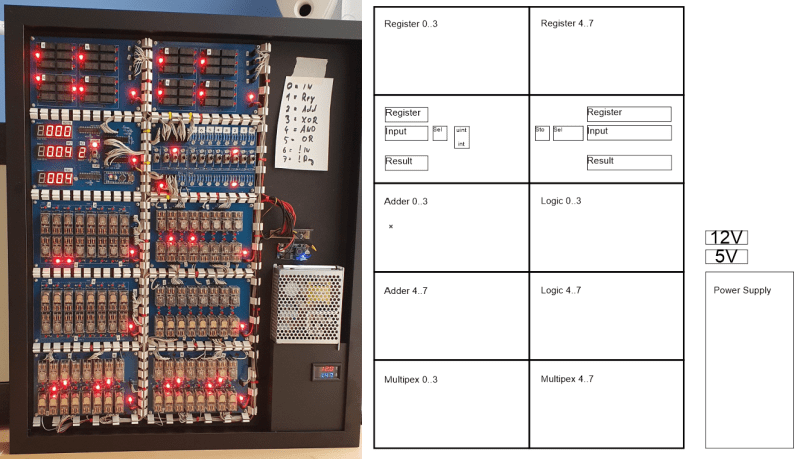
 operating on 4-bits. To handle a byte-length word, boards are simply cascaded, making a total of eight. The register, adder, logic function, and multiplex boards are the heart of the build with an additional two custom boards for visualization (using an Arduino for convenience) and IO forming the interface. After all, a basic CPU is just an ALU and some control around it, the magic is really in the ALU.
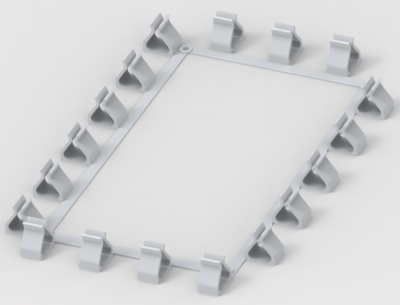 but that’s the job of a separate board. The adder function is the most basic, simply a pair of half-adders and an OR-gate to handle the chaining of the carry inputs and generate the carry chain output.