EU tells Google to delist Russian state media websites from search

The European Commission has sent Google a request to remove Russian state media results for searches performed in countries within the EU. As The Washington Post reports, Google has uploaded a letter from EU officials to a database of government requests. In it, the officials explain how the commission's official order to ban the broadcast of RT and Sputnik in the European Union also applies to search engines and internet companies in general.

If you'll recall, the commission issued a ban on the state media outlets a few days after Russia's invasion of Ukraine began. Ursula von der Leyen, President of the European Commission, said back then that by doing so, the outlets "will no longer be able to spread their lies to justify Putin's war." While it wasn't quite clear how the order applies to internet companies, Facebook, Twitter and TikTok promptly restricted access to RT and Sputnik across Europe. Google also announced its own restrictions, but only for the outlets' YouTube channels.

In the letter Google has uploaded, officials explained that search engines play a major role in disseminating content and that if the company doesn't delist the outlets, it would facilitate the public's access to them. Part of the letter reads:

"The activity of search engines plays a decisive role in the overall dissemination of content in that it renders the latter accessible to any internet user making a search on the basis of the content indication or related terms, including to internet users who otherwise would not have found the web page on which that content is published...Consequently, if search engines such as Google did not delist RT and Sputnik, they would facilitate the public's access to the content of RT and Sputnik, or contribute to such access. 

It follows from the foregoing that by virtue of the Regulation, providers of Internet search services must make sure that i) any link to the Internet sites of RT and Sputnik and ii) any content of RT and Sputnik, including short textual descriptions, visual elements and links to the corresponding websites do not appear in the search results delivered to users located in the EU."

Google didn't return The Post's request for comment, but the publication says a search conducted within the EU didn't bring up links for "Russia Today." RT links still showed up for us, however, when we conducted searches using Google Austria and France. 

The letter also said that the order applies to "posts made by individuals that reproduce the content of RT and Sputnik" — for example, screenshots of articles from those outlets — and that social networks must delete those posts if they get published. That could create a deluge of additional work for social media websites already struggling to moderate content posted by their users. According to The Post, though, the actual sanctions law doesn't define the order in the way that's written in the letter, so the officials' interpretation could be challenged in court. 
Build a DIY Oscilloscope using Arduino Nano and OLED Display

An oscilloscope is an electronic test device that can monitor the steady change of any electrical voltage using two-dimensional graphs, where the change of one or more electric voltages is placed over time on the vertical Y-axis. In general, every electronic hobbyist or someone interested in dealing with electronics will require an oscilloscope at some point. However, it is prohibitively expensive for students, hobbyists, and that's why in this article we will discuss how to make a mini oscilloscope at home using Arduino.

Circuit Digest 10 Mar 09:33

'Valkyrie Elysium' is an action-RPG sequel to PS1's 'Valkyrie Profile'

Square Enix is dipping into its back catalog with the launch of Valkyrie Elysium, a new instalment in the Valkyrie Profile series that first appeared on the original PlayStation in 1999. Announced during Sony's latest State of Play livestream yesterday, the action-RPG is set to arrive in 2022 on the PlayStation 4, PS5 and Windows PCs. 

"You play as a Valkyrie who is entrusted with the fate of this world by the All-Father — the highest among gods and the ruler of all creation," the description states. "Descending to the land below, you must battle powerful foes, and uncover the secrets behind the impending ruin."

The game will feature "fast-paced combat using a variety of weapons," along with magic abilities. It will use aspects from past Valkyrie games like finishing moves and combos, along with a "brand new real-time action combat system that rewards both fast reactions and strategic thinking," Square Enix said. 

The developer is Soleil Ltd (Samurai Jack), with music from composer Motoi Sakuraba (Dark Souls) and character design courtesy of Yuya Nagai from CyDesignation (NieR Re[in]carnation). The most recent game in the series is Valkyrie Anatomia: The Origin, a mobile title from 2016. Other sequels include Valkyrie Profile 2: Silmeria for PS2 and Valkyrie Profile: Covenant of the Plume on DS.

TikTok's SoundOn platform lets musicians directly share their own tracks

TikTok now has its own music distribution platform. The social network has launched SoundOn, which allows artists to upload their music directly to TikTok and to distribute it to various music streaming services. ByteDance, the app's parent company, won't be charging artists any distribution or transaction fees. Artists will get 100 percent of their royalties for an unlimited time when TikTok creators use their music for their videos, as well as for whatever they earn on ByteDance's music streaming service Resso.

For other streaming services that include Apple Music, Spotify and Pandora, artists will get 100 percent of their royalties in the first year and then 90 percent in the years after that. As TechCrunch reports, other similar music distribution platforms charge subscription fees or charge for distribution while paying out 100 percent in royalties to artists. 

SoundOn users will be able to choose which streaming services they want to upload their music to. They'll also get access to audience insights, advice from the SoundOn marketing team and promotional support from TikTok. They'll get verified on TikTok, as well, and other users will see their profile under the song page for their tracks. As noted on SoundOn's FAQ page, artists will get to keep all the rights to their music, and they're not expected to use the platform exclusively.

TikTok already has a massive effect on the music industry, thanks to viral videos on the app that tend to use the same catchy tunes. The SoundOn platform, which could potentially expand TikTok's influence even further on today's music landscape, is now live in the US, UK, Brazil and Indonesia, and musicians in those regions can visit its website to register.

Apple's 5K Studio Display should support Windows, including the webcam and speakers

Apple's new 27-inch 5K Studio Display — including its 12-megapixel webcam and fancy speakers — should work just fine with Windows PCs, Apple has told The Verge. However, certain features enabled by the monitor's built-in A13 Bionic processor will only function on Macs, Apple said.

There was never much doubt that the display itself would function on a PC, but the resolution may depend on your PC configuration. In effect, you'll need a graphics card with compatible Thunderbolt or USB-C ports and support for 5K or higher resolution (most modern GPUs have these features).

The status of the webcam was not very clear, though. According to Apple's Studio Display web page, "camera features and firmware updates require a connection to a Mac." However, an Apple spokesperson confirmed to The Verge that the camera should work like a normal USB webcam when plugged into a PC. 

One "camera feature" that won't work on a PC though, is Center Stage. On a Mac, that feature uses digital zoom to keep the subject or subjects in the frame, even if they move around. Other features enabled by the A13 chip, like Spatial Audio and "Hey Siri," are also unavailable on Windows computers, the spokesperson said. 

At $1,600, the Studio display is pretty expensive for a 27-inch display, especially if you get it with the ridiculously overpriced height adjustment bracket. On the plus side, it does look nice and and the 12-megapixel webcam and high-end speakers add a lot of value. If that's not important, you could get a 32-inch 4K display with similar specs for far less money.

Nine women accuse Sony of systemic sexism in a potential class-action lawsuit

In November, former PlayStation IT security analyst Emma Majo filed a lawsuit against Sony, claiming the company discriminated against women at an institutional level. Majo alleged she was fired because she spoke up about gender bias at the studio, noting she was terminated shortly after submitting a signed statement to management detailing sexism she experienced there. 

Majo later filed the paperwork to turn her case into a class-action lawsuit, and just last month Sony attempted to have the whole thing thrown out, claiming her allegations were too vague to stand up to legal scrutiny. Plus, Sony's lawyers said, no other women were stepping forward with similar claims.

Today, eight additional women joined the lawsuit against Sony. The new plaintiffs are current and former employees, and only one of them has chosen to remain anonymous. One plaintiff, Marie Harrington, worked at Sony for 17 years and eventually became a senior director of program management and chief of staff to senior VP of engineering George Cacciopo.

"When I left Sony, I told the SVP and the Director of HR Rachel Ghadban in the Rancho Bernardo office that the reason I was leaving was systemic sexism against females," Harrington said in a court statement. "The Director of HR simply said, 'I understand.' She did not ask for any more information. I had spoken with the Director of HR many times before about sexism against females."

Harrington claimed women were overlooked for promotions, and said that during annual review sessions, Sony Interactive Entertainment engineering leaders rarely discussed female employees as potential "high performers." She said that in their April 2019 session, only four of the 70 employees under review were women, and while all of the men in this group were marked as high performers, just two of the women were. 

"Further, when two of the females were discussed, managers spent time discussing the fact that they have families," Harrington's statement reads. "Family status was never discussed for any males."

The remaining women shared similar stories in their statements, with the common theme being a lack of opportunity for female employees to advance and systemic favoritism toward male employees. The plaintiffs claimed male leaders at Sony made derogatory comments including, "you just need to marry rich," and, "I find that in general, women can’t take criticism.” 

One plaintiff alleged that while on a work trip to E3, her superior tricked her into having drinks with him at the hotel bar, hit on her even after she declined, and told other male employees that "he was going to try to 'hit that.'" Another plaintiff shared a story about a gender equality meeting at Sony that had a five-person panel, all of them men.

The lawsuit against Sony comes at a time of reckoning for many major video game studios, including Activision Blizzard, Ubisoft and Riot Games. Activision Blizzard is facing a lawsuit and multiple investigations into claims of institutional sexism, sexual harassment and gender discrimination, while Ubisoft has long faced similar allegations from former and current employees. Riot Games paid $100 million in December to settle a class-action lawsuit over workplace sexual harassment and discrimination.

Sony has not yet responded to the latest movement in the class-action lawsuit, though it denies Majo's claims of gender discrimination. The company has requested the lawsuit be dismissed, and that will be decided in a hearing in April.

Ukraine may move its top-secret data and servers abroad

Fears that Russia could steal top-secret government documents has caused Ukrainian authorities to explore potentially moving its data and servers to another country, reportedReuters. While the original plan is still to protect the country’s IT infrastructure, moving the most sensitive data to another location is a viable Plan B, Victor Zhora— the deputy chief of Ukraine's information protection arm—told the news service.

Ukraine has already faced a litany of aggressive cyberattacks from the neighboring nation, including last month’s penetration of its military and energy networks. Russia also attempted to interfere with Ukraine’s 2014 presidential election and regularly launches attacks on Ukraine’s power grid, leading to outages that last for days. 

The Ukrainian government made the precautionary move of migrating its computer systems in Kyiv in 2014, following Russia’s occupation of Crimea. Ukrainian cyber teams have developed plans to disable infrastructure and transfer back-ups if its networks become compromised, Zhora told Politico.

But the fact that Ukraine’s most sensitive data is centralized in Kyiv presents a problem if Russia’s military occupies the capital. At the time of publication, Russian troops are currently encircling Kyiv, and experts estimate they could attack the city within days. Ukraine is already moving some sensitive data and servers to remote areas, out of Russia’s reach. 

Ukraine hasn't released details on where it might attempt to relocate its sensitive governmental data, but shifting it to an allied nation might provide more than just physical distance from Russian's military. Reuters reported that cyberattacks against said data, were it stored within the borders of an ally nation, might trigger NATO’s collective defense clause, which requires all member nations to respond if one is attacked.

For now, Ukraine’s Parliament still has to give its seal of approval before the nation’s sensitive data can be moved.

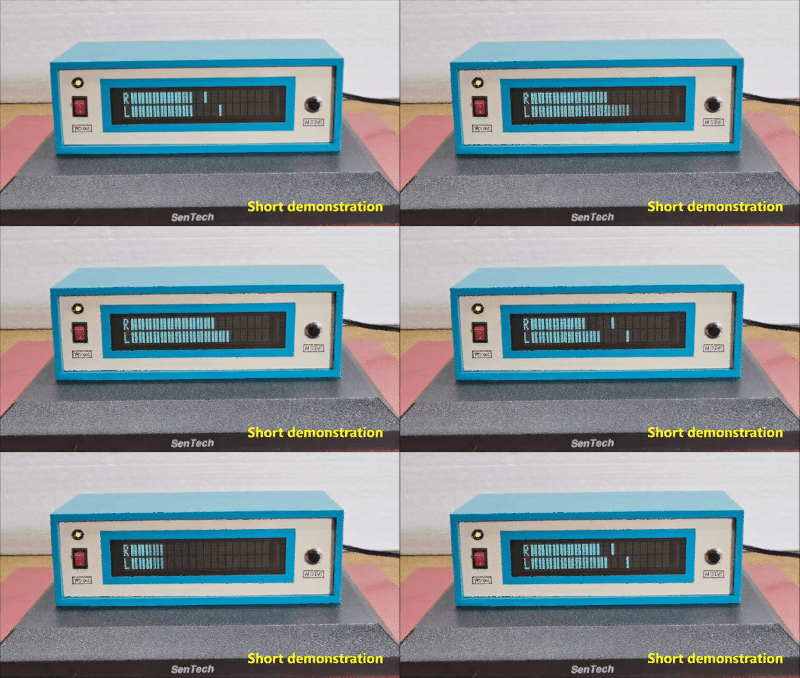
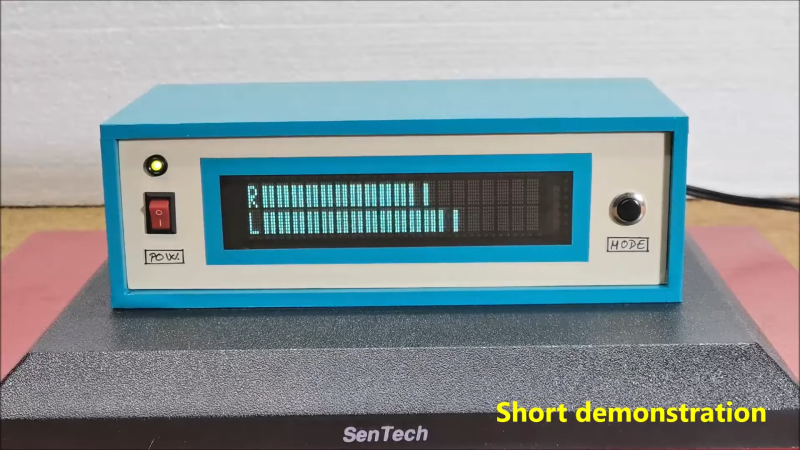
VFD Character Display Turned Into Audio VU Meter

Humans love visualising music, whether it’s in the form of an inscrutable equation drawing squiggles in Winamp, or a simple VU meter pulsing with the beat. This build from [mircemk] is of the latter variety, repurposing a VFD display to do the job.

The project is built around a VFM202MDA vacuum fluorescent display, which provides that lovely green-blue glow we all know and love, driven by a PT6314 driver chip. This has the benefit that it can be readily driven by a microcontroller in much the same way as the familiar HD44780 character LCD driver chip. With some minor tweaks, the character set can be modified to allow the display to become a surprisingly-responsive VU meter.

An Arduino Nano runs the show, with an envelope follower circuit feeding a signal for the left and right channels into the analog inputs of the microcontroller. The Arduino then measures the voltage on those inputs and feeds the necessary commands to the PT6314 driver to update the display.

The resulting VU meter has 38 bars per channel, and is highly responsive. The fast flickering of the meter bars in response to the music make it compelling to watch, and the era-appropriate enclosure the project is built in adds plenty to the aesthetic.

We’ve seen other VU meter builds before too, like this one that uses a little physics knowledge to create a more realistic analog-like needle meter. Video after the break.


'The DioField Chronicle' is a new strategy RPG that looks like 'Final Fantasy Tactics'

In 1997, Square Enix released one of the finest games of the original PlayStation era in Final Fantasy Tactics. Outside of a handful of remasters and spinoffs, however, the company has been reluctant to return to the genre in a meaningful way. And while we may never get a proper sequel to Tactics, the good news is Square Enix is working on a new tactical RPG. 

During Sony's most recent State of Play on Wednesday, the publisher announced The DioField Chronicle. And if what you loved about Final FantasyTactics was its sprawling story and iconic art by Akihiko Yoshida, you're in luck because DioField looks to have both on offer. You'll lead the forces of the Kingdom of Alletain, a neutral island nation that gets dragged into a conflict with the sinister Trovelt-Schoevian Empire. Instead of a turn-based battle system, engagements play out in real-time and it appears you can control more than one character at a time.    

Square plans to release The DioField Chronicle later this year on PlayStation 4 and PS5.

Toddlers can get their frag on with VTech’s baby gamer chair

Kids love to imitate the adults in their lives. That’s why you can find such odd items in the toy aisle as baby-sized irons, mops and vacuums. Now you can add more weirdo item to that list, one that has some members of the Engadget staff howling with laughter: A baby gamer chair. Yes, you read that right. Baby. Gamer. Chair.

VTech, long-time purveyor of kiddie tablets and educational toys is now selling a tiny gaming chair for budding streamers and future Fortnite players. The $50 Level Up Gaming Chair is a plastic simulacra of bigger leather seats made for adults, complete with slick black armrests and a molded back with two cut-out sections for air flow. However, instead of wheels, the chair rests on four boot-like blue feet, so your baby won’t be tipping over while they’re pretending to curse out other players on the included headset. The tiny non-functional headset even has a tiny non-functional mic to complete the look.

Because this is VTech after all, the Level Up Gaming Chair has some interactive electronic parts, namely a light-up keyboard that kids can play with to learn numbers and letters and even piano keys — which we admit, is actually a step up from traditional mechanical gaming keyboards. The keyboard console can be detached for on-the-go play, and the tray it normally rests on can be used for snack time as well so kids never have to leave their gaming throne when it goes on sale this fall. (We recommend pairing it with Fisher Price's Laugh and Learn Controller.)