Highly Integrated Dual Band Wi-Fi 6 MCU with Bluetooth 5 Connectivity designed for Wireless Transmissions

Highly Integrated Dual Band Wi-Fi 6 MCU with Bluetooth 5 Connectivity designed for Wireless Transmissions

Espressif Systems has released a highly integrated MCU ESP32-C5 that supports 2.4 and 5 GHz dual-band Wi-Fi 6 along with Bluetooth 5 (LE) connectivity. The new ESP32-C5 packs a dual-band Wi-Fi 6 (802.11ax) radio with the 802.11b/g/n standard for backward compatibility. The Wi-Fi 6 support is optimized for IoT devices and the support for the 5GHz band provides customers with a more stable and low-latency wireless connectivity in cases where less traffic and lower interference are needed for critical applications. 

Lakshita Khanna Tue, 06/21/2022 - 12:48
Circuit Digest 21 Jun 08:18

A YouTuber built his own PS5 Slim that's less than an inch thick

Sony typically follows up its PlayStation consoles with a slim version a few years later, but that time hasn't come for the PS5 yet. While we all wait for a slimmer PS5 that would fit in small spaces better, a YouTuber called DIY Perks already built one for himself. He took apart a standard PlayStation 5 and replaced everything that needed to be replaced to get rid of the console's bulk. He substituted components with similar parts and his own home-made creations, including the console's rather voluminous casing. 

Putting the current device's power supply and cooling system with the rest of the console's components wouldn't yield a "slim" version of the PS5, though. So, what Perks did was build his own water-cooling system and put it in a separate case with the power source. It's a long, slim case that can be placed behind the TV, where it won't be noticeable. While he did run into some issues that took time to solve, he was able to make the console work in the end. His cooling system was even more efficient than the the standard PS5's, based on the temperatures he took when he tested it out using Horizon Forbidden West

Unfortunately, Perks' PS5 Slim is one of a kind and not easy to replicate. You can check out his process in the video below if you need ideas or just want to be awed.

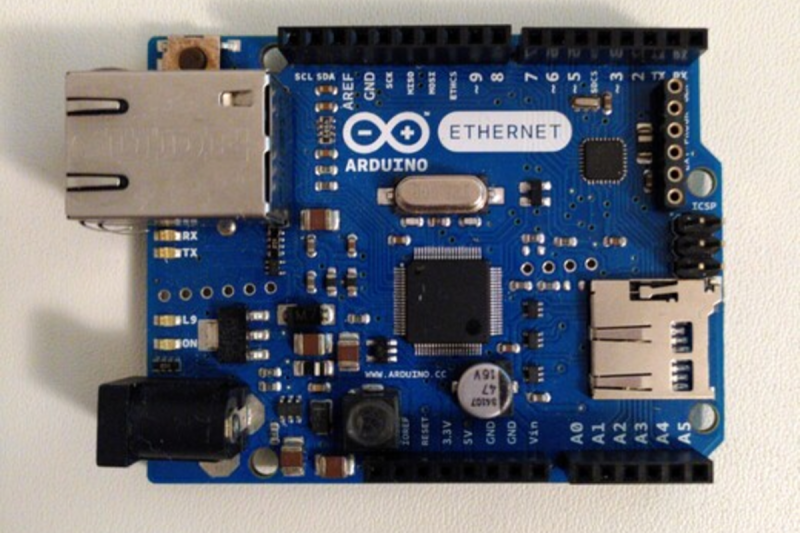
Blinking an Arduino LED, in Julia

The Julia programming language is a horrible fit for a no-frills microcontroller like the ATMega328p that lies within the classic Arduino, but that didn’t stop [Sukera] from trying, and succeeding.

All of the features that make Julia a cool programming language for your big computer make it an awful choice for the Arduino. It’s designed for interactivity, is dynamically typed, and leans heavily on its garbage collection; each of these features alone would tax the Mega to the breaking point. But in its favor, it is a compiled language that is based on LLVM, and LLVM has an AVR backend for C. Should just be a simple matter of stubbing out some of the overhead, recompiling LLVM to add an AVR target for Julia, and then fixing up all the other loose ends, right?

Well, it turns out it almost was. Leaning heavily on the flexibility of LLVM, [Sukera] manages to turn off all the language features that aren’t needed, and after some small hurdles like the usual problems with volatile and atomic variables, manages to blink an LED slowly. Huzzah. We love [Sukera’s] wry “Now THAT is what I call two days well spent!” after it’s all done, but seriously, this is the first time we’ve every seen even super-rudimentary Julia code running on an 8-bit microcontroller, so there are definitely some kudos due here.

By the time that Julia is wedged into the AVR, a lot of what makes it appealing on the big computers is missing on the micro, so we don’t really see people picking it over straight C, which has a much more developed ecosystem. But still, it’s great to see what it takes to get a language designed around a runtime and garbage collection up and running on our favorite mini micro.

Thanks [Joel] for the tip!

Canada is banning the sale, production and import of some single-use plastics

Canada is banning companies from producing and importing a handful of single-use plastics by the end of the year, Reuters reports. Among the items the country won’t allow the production of include plastic shopping bags, takeout containers and six-pack rings for holding cans and bottles together.

We promised to ban harmful single-use plastics, and we’re keeping that promise. The ban on the making and importing of plastic bags, cutlery, straws and other items comes into effect in December 2022 – and selling these items is prohibited as of December 2023.

— Justin Trudeau (@JustinTrudeau) June 20, 2022

The federal government will subsequently prohibit the sale of those same items in 2023, with an export ban to follow in 2025. The one-year gap between the initial ban and the one that follows is designed to give businesses in Canada enough time to transition their stock of the listed items. Over the next ten years, the federal government estimates the new regulation will eliminate approximately 1.3 tonnes of plastic waste, Prime Minister Justin Trudeau said on Twitter.

Not targeted by Canada’s new regulations are plastic fishing nets and lines, which can be far more problematic than single-use plastics like straws and shopping bags. Discarded fishing gear leads to ghost fishing, a phenomenon where those tools continue to trap and kill marine life. With more than 640,000 tons worth of fishing nets discarded every year, it’s a problem that’s only getting worse and one Canada’s plastics ban doesn’t address.

"It's a drop in the bucket," Sarah King, the head of Greenpeace Canada's oceans and plastics campaign, told the CBC. "Until the government gets serious about overall reductions of plastic production, we're not going to see the impact we need to see in the environment or in our waste streams."

The ban follows a similar one enacted by France last year and is part of a broader move by governments across the world to curb the production of single-use plastics. In March, the United Nations agreed to begin work on a first-ever global plastic pollution treaty. While the agreement won’t be complete until 2024 at the earliest, it could be among the most significant efforts to curb climate change since the Paris agreement in 2015.

Fitbit will fix frequent disconnections for Charge 5 owners

If your Fitbit Charge 5 has had flaky performance lately, you'll be glad to hear that a solution is on the horizon. 9to5Google has learned Fitbit is promising a fix for frequent disconnections between the activity tracker and its host phone. If you're affected, the Bluetooth connection will spontaneously drop and prevent your wearable from syncing fitness data, whether you're using an Android phone or iPhone.

Reports of the problem first surfaced in January. Common solutions like rebooting the Charge 5 have little effect. Fitbit also hasn't offered a stopgap solution or indicated the likely culprit.

There's no timeline for the expected patch, and it's not clear how many users have the issue. This certainly isn't what Fitbit would hope for, though. The Charge 5 sits next to the Luxe at the top of Fitbit's activity tracker lineup, and is competing as much with some lower-end smartwatches as it is fitness devices. The disconnections won't help the Charge fare well against rivals in a market that still has fierce competition from the likes of Amazfit and Garmin.

Android users can now add Google Password Manager to their home screen

While Google has long included a password manager among its account perks, accessing a native version of that tool on your Android phone or tablet hasn’t been straightforward. Before a recent Google Play Services update, you had to navigate to the “Privacy” section of Android’s Settings menu to find an option to launch the software. But as 9to5Google points out, you can now add a home screen shortcut to the tool on your Android phone or tablet.

You’ll have the option once you’ve updated to Google Play Services version 22.18. The easiest way to do that is to tap on a direct link to the software’s Play Store listing and manually download the latest release. Once that’s done, open the Settings app on your phone, then navigate to the Privacy section and tap “Autofill service from Google,” followed by “Passwords.” Doing so will launch the Google Password Manager. At that point, you’ll want to tap on the gear icon at the top of the interface to open the applet’s settings menu. You should then see an option that says “Add shortcut to your home screen.” You know what to do next.

Even the simplified process isn’t as straightforward as it should be, but Google making it easier to see and modify your passwords will also make it easier to change them when the situation calls for it. 

'Diablo Immortal' delayed indefinitely in China just before its planned release date

Diablo Immortal was supposed to debut in China on June 23rd, but those who have been waiting for the game in the country will need to wait longer. NetEase, which co-developed the game with Blizzard, has pushed back the release date indefinitely. It wrote in a blog post that "the development team is making a number of optimization adjustments."

However, there are other factors at play. NetEase found itself in the bad graces of China's censors over a post on its Weibo social media service that seemingly referenced Winnie the Pooh, according to the Financial Times. The cartoon character is used to mock Chinese President Xi Jinping.

In the wake of a screenshot of the post (which read "why hasn't the bear stepped down?") gaining traction, the official Diablo Immortal Weibo account was banned from posting anything. Discussions related to the post were also wiped from the service.

Currently, Diablo Immortal does not have a release date in China, though NetEase still expects to ship the game in the country. It promised players an "exclusive thank-you package containing legendary equipment" as a makegood for the delay.

The PC and mobile title debuted in other territories this month. According to reports, it raked in $24 million in two weeks as a result of its aggressive approach to monetization. China is the biggest gaming market on the planet and not being able to release Diablo Immortal there would likely have a severe impact on the game's expected revenues. NetEase declined to comment to the Financial Times. Engadget has contacted Blizzard for comment.

It's not the first time a game developer has run into issues with Chinese regulators over a Winnie the Pooh reference. Publisher Indievent lost its license to sell Devotion in China, leading it to cut ties with developer Red Candle Games, which included a blatant dig at Xi in the game itself. The studio, which is based in Taiwan, later started selling a DRM-free version of Devotion on its own storefront.

iOS 16 will let you skip CAPTCHAs on some websites

iOS 16 might just help you avoid the CAPTCHA anti-bot systems that stand between you and some web sign-ins. As MacRumorsnoticed, Apple used WWDC 2022 to detail a Private Access Token system in iOS 16, iPadOS 16 and macOS Ventura that skips CAPTCHAs altogether for some apps and websites. Enable an Automatic Verification feature and supporting sites will use iCloud to verify both your Apple ID and your device, presenting a token that proves you're trustworthy. You might not have to enter inscrutable text or tap pictures of traffic lights just to show that you're human.

Apple noted that devices won't share sensitive data linked to your account (such as the email address or phone number). The company also won't know who's making the verification request, so it can't tie these checks to specific providers. The token system is billed as more respectful of privacy, as it doesn't track your IP address. It could also improve accessibility by making CAPTCHA-verified sites usable by more people with disabilities.

Importantly, the technology could easily see widespread adoption that might extend beyond Apple hardware. Cloudflare and Fastly have already unveiled plans to support the token approach, potentially bringing it to millions of websites. Also, Apple worked with those companies and Google to make Private Access Tokens an open standard. While there's no direct Android equivalent yet, the technology seen in iOS 16 hints at a future where few people need to manually complete CAPTCHAs.

‘Dune: Spice Wars’ early access adds multiplayer modes

Ever since we got our first look at Dune: Spice Wars during the 2021 Game Awards, it has looked like one of the most promising videogame adaptions of Frank Herbert’s sci-fi series in a long time. If you’ve been playing the game in Steam early access, you can now look forward to fighting over Arrakis with your friends.

On Monday, developer Shiro Games announced the release of Spice Wars' multiplayer update, allowing you and up to three other players to participate in 2v2 or free-for-all matches. If you can’t find enough friends or strangers to play with, the game will fill your match with computer opponents. As with the Spice Wars' single-player component, you can tweak the difficulty of your AI foes and factors like map size, sandworm activity, and more.

Multiplayer support is the headline feature, but today’s update includes several other enhancements. Shiro has introduced additional in-game events and Landsraad resolutions that can change the course of your games. It has also added new regions to increase map diversity, and reworked building graphics, among other changes.

If you haven’t checked out Spice Wars yet, it’s currently 20 percent off on Steam. I’ve sunk about 30 hours into the game since it came out in early access back in April. So far, I can say Shiro has done a great job of creating an experience that feels authentic to the novels. 

Razer's Kishi gamepad for iOS is cheaper than ever right now

If you've been looking for a better way to play games on your phone than relying on touch controls, an external controller is what you need. The Razer Kishi is a solid dedicated gamepad option and the iOS version has dropped to an all-time low price on Amazon. It's currently $55, which is $45 off the regular price. The USB-C Android version, meanwhile, is $45.

Buy Razer Kishi (iOS) at Amazon - $55

The controller has a wired connection to your device, meaning that you won't need to charge it. That will also result in lower latency compared with a gamepad that's connected via Bluetooth. There is a Lightning port, but that's only for passthrough charging. You won't be able to use wired headphones (rival Backbone One has a 3.5mm headphone jack, however).

Along with Apple Arcade and other native iOS games, the Kishi is compatible with cloud gaming services like Google Stadia, GeForce Now and Xbox Cloud Gaming. You can also use it to play Xbox or PlayStation consoles using remote play apps.

The controller is compact when not in use, which makes it easy to keep in your bag. To use it, you'll need to unclip a rear panel. A belt holds the two halves together and it stretches to accommodate various phone sizes. You'll likely need to remove your phone's case before using the Kishi, since it needs to be plugged into the Lightning port.

The Kishi does the trick for on-the-go use, though some may find the stubby analog sticks and other design choices a little uncomfortable for long gameplay sessions. The iOS version of the gamepad has been heavily discounted ahead of the Kishi V2, a new version of the controller that's expected to arrive later this year.

Razer released the $100 Android edition of the Kishi V2 this month. It has a solid sliding bridge rather than the stretchy belt (an idea Razer seems to have cribbed from Backbone), clickier buttons and the option to keep certain cases on while using the device. There's also a share button that only works with the Razer Nexus app on Android. Players can use that to stream gameplay to the likes of YouTube and Facebook.