The best smart displays you can buy

Smart displays have evolved quite a bit since the initial debut of Amazon’s first Echo Show back in 2017. In fact, the category didn’t really come into its own until Google joined the fray with its own line of hardware about a year later. Now, both of these companies are essentially dominating the smart display landscape, with each offering their own take on a smart assistant with a screen.

It’s that screen that makes smart displays so much more useful than smart speakers. Rather than just having a voice recite the current weather report, for example, you can see a five-day forecast as well. The same goes for when you ask about your shopping list or calendar; it's simply easier to see the whole list or your day's appointments at a glance.

Plus, displays offer other benefits that speakers can't, like watching videos or checking your webcam to see who's at your front door. They're especially handy in the kitchen, where you can use them for step-by-step cooking instructions. And, thanks to touchscreens, you can often navigate through functions and settings a lot faster than using your voice.

Amazon vs. Google

The first question you should ask is whether you'd rather be in Amazon's ecosystem or Google's. If you have a lot of Google products in your home, like Nest thermostats or Nest cams, then a Google-powered model makes more sense. If you have Amazon products, like a Fire TV Stick or a Ring cam, Amazon would obviously be a better choice. Of course, it's perfectly acceptable to have products from competing companies in the same home, but just realize they might not work seamlessly with each other.

Aside from that, the two systems also offer some unique features. Google, for example, works best if you have an existing Google account and use services like Calendar and Photos. In fact, we especially love Google smart displays because they work well as digital photo frames. You can set it up to automatically pull in pictures of friends and family from your Google Photos library, and the algorithm is smart enough to use what it thinks are the best shots — so less chance of blurry photos or images of your eyes half-closed showing up, for example.

It might seem like a minor point, but seeing as the display is on standby 90 percent of the time, its secondary function as a digital photo frame is very welcome. All Google smart displays also support YouTube and YouTube TV, step-by-step cooking instructions and all of the usual benefits of Google Assistant, like weather reports. As with Assistant on the phone, it also has voice recognition, so only you can see your calendar appointments and not others.

Amazon's smart displays, on the other hand, are slightly different. Instead of YouTube, they offer some alternative video streaming options, including Amazon Prime, NBC and Hulu. They also come with two browsers (Silk and Firefox), which you can use to search the web or watch YouTube videos – a handy enough workaround given the lack of a dedicated app.

Amazon devices offer step-by-step cooking instructions as well, thanks to collaborations with sources like SideChef and AllRecipes. In fact, the cooking instructions sometimes include short video clips. But although you can use Amazon's displays as digital photo frames, the process is not quite as intuitive as Google’s, and Amazon doesn’t have anything comparable to Google’s photo-sorting algorithm.

The best smart displays

Smart displays come in all sorts of shapes and sizes, and some are better suited to certain rooms in the home than others. So while we do have some favorite all-around picks, we've also compiled a list of smart displays that would suit specific use cases as well.

The best Google smart display: Google Nest Hub
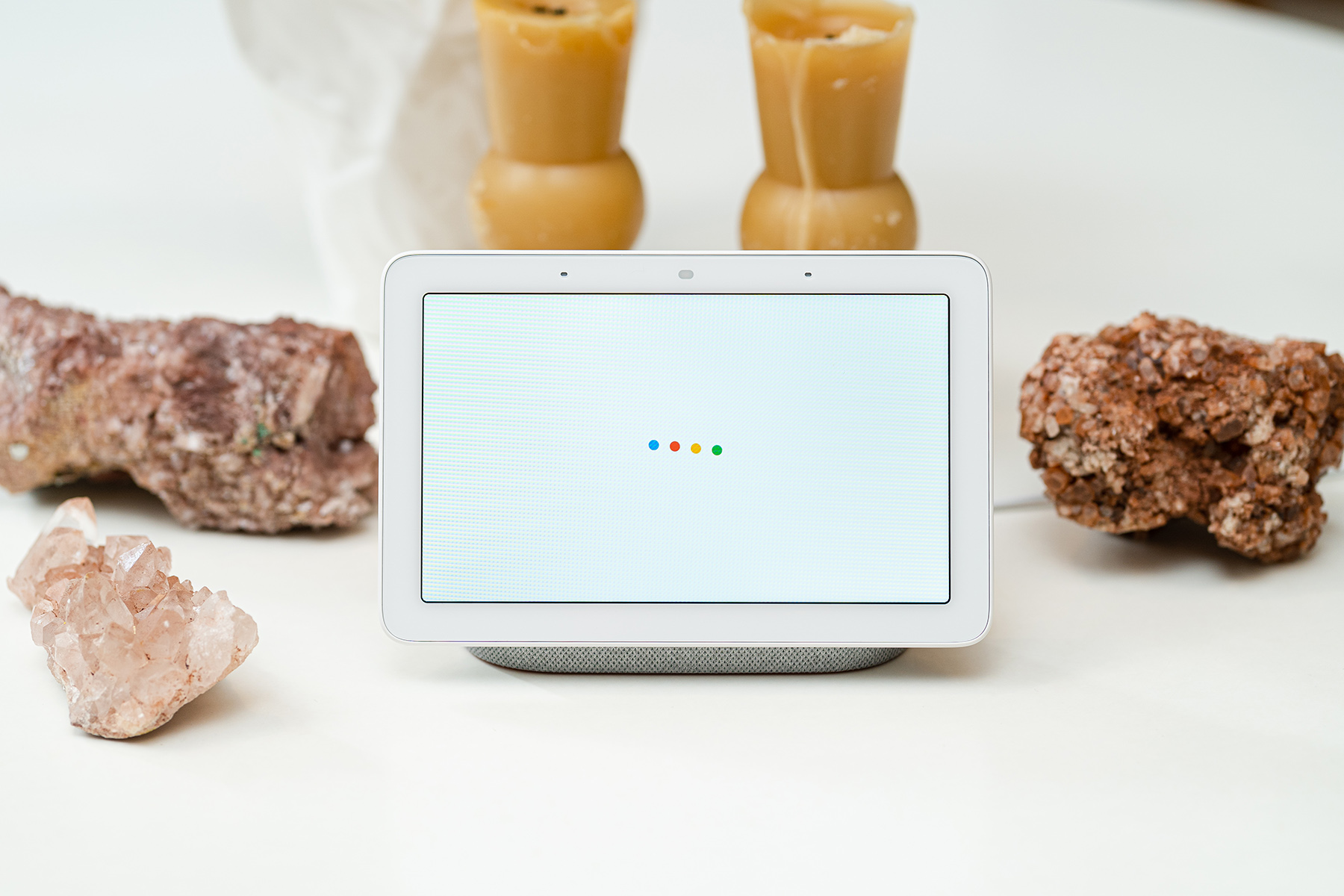
We at Engadget tend to prefer Google smart displays because most people are likely already entrenched in the Google ecosystem due to the ubiquity of Google services like Gmail, Calendar and so forth. We also tend to find Google Assistant to be a little smarter than Alexa, especially when bringing up answers from the web. As mentioned earlier, we also really like the tie-in with Google Photos and the smart photo-sorting algorithm.

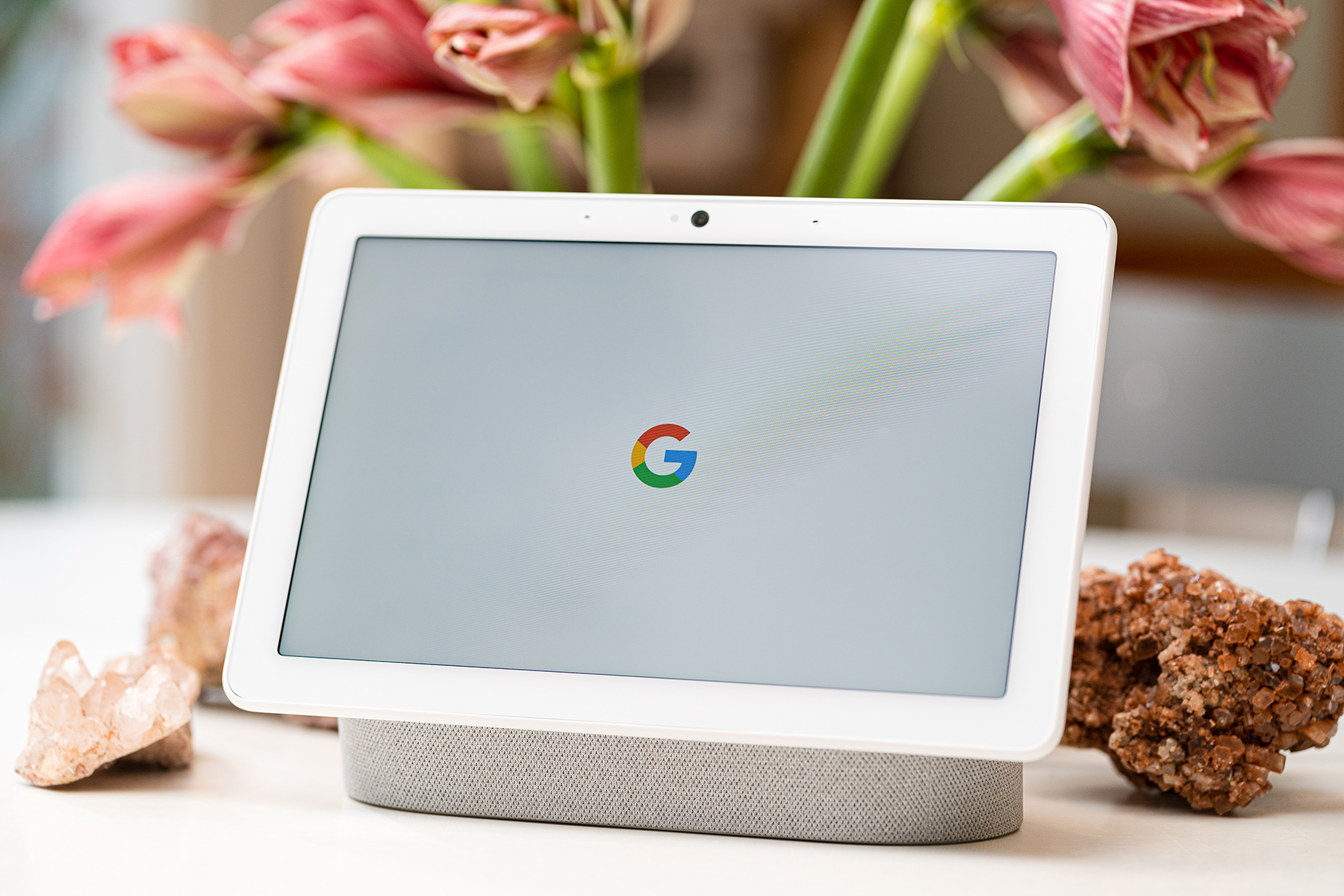
Our favorite smart display overall is Google's latest Nest Hub. Its 7-inch size is a better fit in more rooms, and its unobtrusive design combined with its soft fabric exterior blends nicely into your existing home decor. It does everything we think most people would want in a smart display, like YouTube videos, step-by-step cooking instructions, smart home controls and the ability to check in on your Nest cams if you have any.

In fact, the Nest Hub is especially useful if you have a Nest video doorbell, as the camera view of who’s at the front door will show up on the screen. An ambient light sensor helps to detect the light and color temperature of the environment and adjusts the screen to match. Plus, if you choose, it can help track your sleep patterns if placed next to your bed.

Another feature of the Nest Hub is actually a lack of one: It doesn't have a camera. That gives it that additional layer of privacy that many people covet, and it's also a lot more suitable for personal spaces like the bedroom. Sure, you could also cover up a camera with a shutter, but with the Nest Hub you don't have to remember to do that.

Buy Nest Hub at Walmart - $100

Runner up: Google Nest Hub Max

If you like Google but you miss having a camera for video calls, or you just prefer a bigger screen, consider the Google Nest Hub Max. At 10 inches instead of seven, it works a lot better for watching videos from YouTube and YouTube TV. It's especially useful in the kitchen, where it functions as a kind of portable television, and you can see more of those step-by-step cooking instructions at a glance. The bigger display also means a larger photo frame, which you may prefer.

As mentioned, the Nest Hub Max adds a camera to the mix. It doesn't have a physical shutter, which is a concern, but you can shut it off with an electronic switch. You can use the camera for video calls with Google's Duo service as well as Zoom, and it can also function as a Nest Cam to help you keep an eye on your house when you're away. Another benefit of the camera is the addition of Face Match facial recognition for authentication purposes, which we found to be a little more accurate than just using Voice Match.

Last but not least, the Nest Hub Max's camera adds a unique gestures feature that lets you play and pause media simply by holding up your hand to the screen. It's not entirely necessary, but it's potentially useful if you're in a noisy environment and just want the music to stop without having to shout over everyone. Or perhaps you have messy hands while cooking and don’t want to dirty up the display.

Buy Nest Hub Max at Walmart - $170

The best Amazon smart display: Amazon Echo Show 8

Amazon

Our favorite Amazon smart display is the second-gen Echo Show 8. Its 8-inch screen is just right; it doesn’t take up as much space as the Echo Show 10, but it’s also more suitable for watching videos than the tiny Echo Show 5. Like other Amazon smart displays, it has a built-in camera, but there is a physical camera cover to help alleviate privacy concerns.

As such, the Echo Show 8 is a compelling choice if you want the option of using your smart display for video calls. Not only is the camera quality fantastic, but the Show 8 has a feature that automatically frames your face and follows your movements during video calls. It’s useful if you want to move around as you’re chatting, or if you have rambunctious children and pets running around the house and you want to involve them in the conversation. You can use the Echo Show 8 to make calls between other Echo Show displays, or through Skype or Zoom.

As with the other smart displays, the Echo Show 8 also works as a digital photo frame and can be used to keep up with the news, check the weather and control smart home devices. If you want to use your smart display to play music, we also really like the Echo Show 8’s audio quality on account of its deep bass and rich tone.

Buy Echo Show 8 at Amazon - $130

Runner up: Amazon Echo Show 5

Nicole Lee / Engadget

At only 5.5 inches wide, the Echo Show 5 is one of the smallest smart displays on the market, and as a result, will work nicely on a desk or a nightstand. In fact, one of the reasons we like the Echo Show 5 so much is that it doubles as a stellar smart alarm clock. It has an ambient light sensor that adjusts the screen's brightness automatically; a tap-to-snooze function so you can whack the top of it for a few extra minutes of shut-eye; plus a sunrise alarm that slowly brightens the screen to wake you up gently.

The Echo Show 5 does have a camera, which might make you a touch queasy if you are privacy conscious – especially if this is supposed to sit by your bedside. Still, it does have a physical camera cover, which can help ease any fears.

Buy Echo Show 5 at Amazon - $85

The best smart clocks

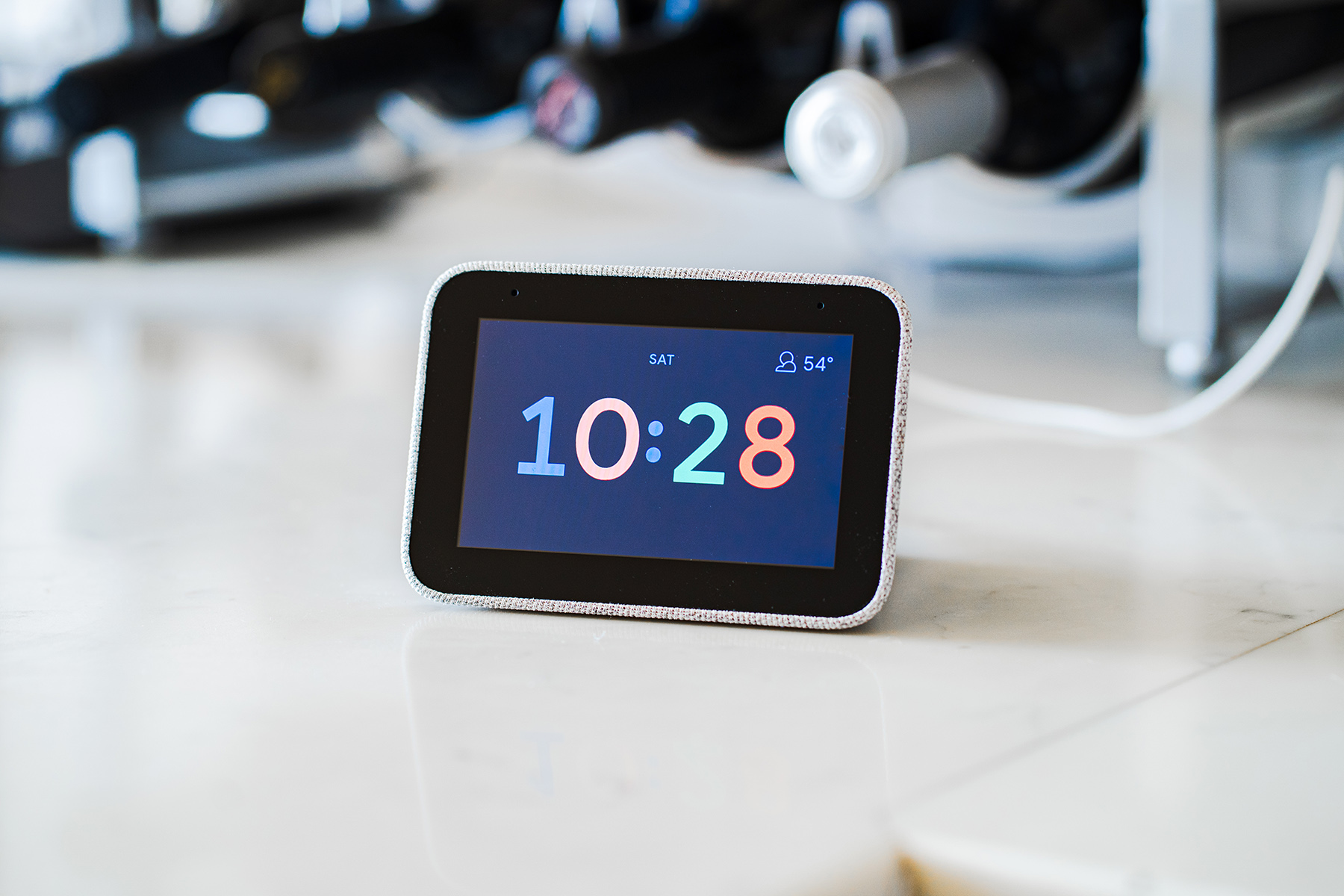
Perhaps a smart display doesn't appeal to you because you don't care about watching videos on it. But maybe the idea of a smarter alarm clock like the Echo Show 5 intrigues you. In that case, I’d recommend the 4-inch Lenovo Smart Clock 2, which isn't a full-fledged smart display because you can't play any videos on it, but it does use Google's smart display tech, so you can use it for controlling your smart home as well as checking out your Nest Cams.

We also like it because it lacks a camera, which makes it perfect for your nightstand. It has all of the features we want in a smart alarm clock, like an ambient light sensor, that tap-to-snooze function and a sunrise alarm. Plus, the latest version can double as a night light – you can swipe down the display to enable it – and you can get an optional wireless charging base to go with it.

If the Smart Clock 2 is too advanced for you, Lenovo does offer an even simpler version called the Smart Clock Essential. It really isn’t a smart display at all – it’s really more of a smart speaker with a clock – but it does perform many of the same functions as the Smart Clock 2.

Lenovo sells the Smart Clock Essential in two different versions: One has Google Assistant, while the other is powered by Alexa. The one with Google Assistant has a built-in night light, an extra USB port for charging devices and a mic-mute button. The one with Alexa, on the other hand, is compatible with an optional docking station that can be used with accessories such as a wireless charging pad or an ambient light dock (it comes in either a sea lion or a squid shape) that can act as a night light.

Buy Lenovo Smart Clock 2 at Walmart - $70Buy Lenovo Smart Clock Essential at Walmart - $33

Amazon's Omni Fire TVs are up to 46 percent off right now

Amazon has kicked off the lead up to this year's Prime Day by discounting a bunch of Fire TVs. A number of Toshiba, Insignia and Hisense smart TVs are on sale right now, so you could pick up a TV for as low as $90. But we recommend springing for one of the higher-end Omni Series televisions, which came out last September. All sizes are cheaper than usual, but you'll find the steepest discount on the 55-inch Omni Series 4K TV, which is 46 percent off and down to $300. While many of these TV deals are Prime exclusives, some — including the 55-inch Omni deal — are available to all Amazon shoppers.

Shop Fire TV sales at AmazonBuy 55-inch Omni Series Fire TV at Amazon - $300

All of the Omni Series sets streaming in 4K and support HDR10, HLG and Dolby Digital Plus — if you want Dolby Vision, you'll have to spring for the 65- or 75-inch TVs. You'll get access to streaming services like Netflix, Disney+, HBO Max and others, but you'll find the real perks come in if you're already a heavy Alexa user. Omni Series sets have built-in microphones to allow hands-free Alexa access, so you can basically treat the TV as you would an Echo smart speaker. You can ask it to set timers and reminders, check sports scores and more, even when the TV is off. But if that's not really your thing, you can use the built-in switch to electronically disable the microphones.

As far as connectivity goes, the 55-inch model has three HDMI ports plus one HDMI 2.1 jack with eARC, one USB port and an Ethernet connector. While you could deck the TV out with the soundbar of your choosing, you can also wirelessly pair the TV with Echo speakers to create a more immersive home theater setup. These TVs are clearly best for those who already have a lot of Amazon devices throughout their home, and those who rely on Alexa a lot already. But they're also good options for anyone that wants a truly budget smart TV. $300 for a 55-inch set is a solid deal, and if you're looking to spend even less than that, you've got options at the $200 and $100 marks as well.

Follow @EngadgetDeals on Twitter and subscribe to the Engadget Deals newsletter for the latest tech deals and buying advice.

NASA finally succeeds with its Artemis 1 wet launch test

NASA encountered a couple of issues while conducting the Artemis 1 "wet dress rehearsal," but it still checked off a major milestone by the time the test had ended. The agency was able to fully fuel all the Space Launch System's propellant tanks for the first time and was able to proceed to terminal launch countdown. "Wet dress rehearsals," as they're called, are tests that simulate a rocket launch without the rocket actually lifting off. The launch team had to cut short three previous attempts at fueling the SLS earlier this year due to various leaks and other issues that have already been corrected. 

This attempt wasn't flawless either: NASA had to put fueling on hold a couple of times since the rehearsal started on Saturday. Fueling was first put on hold on early Monday morning due to an issue with the rocket's backup supply of gaseous nitrogen. The team was able to repair the valve for the gaseous nitrogen line, however, and fueling recommenced a couple of hours later. As CNN notes, though, a few issues popped up just as the team was finishing up the fueling process on Monday afternoon. They discovered a hydrogen leak and had to find options to seal it after their first solution didn't work. Plus, the flare stack, which burns excess liquid hydrogen from the rocket, caused a small fire in the grassy area around the launch site. 

In the end, the launch controllers came up with a plan to mask data associated with the leak so as not trigger a hold by the launch computer. That wouldn't fly in a real launch scenario, but they wanted to get as far into the countdown as possible to gather the data they need. They were successfully able to resume the 10-minute final launch countdown after an extended hold and got to T-29 seconds before they had to end the test completely. The launch team originally planned to let the countdown get to until T-33 seconds before the launch is supposed to occur. They then intended to restart the timer and repeat the countdown until around T-9 seconds before launch. 

Regardless, they successfully performed several critical operations needed for launch during the test, including handing over control from the ground launch sequencer to the automated launch sequencer controlled by the rocket's flight software. NASA will now assess the data collected from the test to determine whether it can finally set an official launch date for Artemis 1, which will send an unmanned Orion spacecraft on a mission to fly around the Moon, with the earliest possible date being sometime in August. The agency will hold a conference about the test today, June 21st, at 11AM, and you can watch the stream live on its website.

.@NASAGroundSys teams ended the #Artemis I wet dress rehearsal today at 7:37 p.m. at T-29 seconds in the countdown.

Learn more about today's test: https://t.co/IPNXHJUmFJpic.twitter.com/b8vEzxspht

— NASA's Kennedy Space Center (@NASAKennedy) June 21, 2022

Master & Dynamic's MW75 headphones pair a fresh design with adaptive ANC

For years, Master & Dynamic has blended premium design with solid performance for its headphones. With its latest model, the company has refreshed the aesthetics on top of boosting the active noise cancellation (ANC) for more effective distraction blocking. Today, Master & Dynamic is debuting the MW75, a high-end set of ANC over-ear headphones with Adaptive Active Noise Cancellation that automatically adjusts based on the clamor of your environment. 

When it comes to the new active noise cancellation setup, Master & Dynamic says four microphones monitor your surroundings to "intuitively adjust" the ANC to properly counter any changes to the external roar. The MW75 isn't the first set of headphones to do this, but the automatic tweaks are new to the company's lineup starting with this model. There are two additional noise-canceling modes to choose from — All Day and Max — so you're not stuck with Adaptive as the lone option. There are also two ambient sound modes, one for general use and the other specifically tailored to voices. 

Master & Dynamic has mostly kept the same design for its headphones for years. There have been some small changes to the formula, but for the most part the lineage remained intact. With the MW75, the company opted for an updated design with similarities to its MG20 gaming headset. While the MG20 has elements of both past and present, the MW75 takes the new aesthetic one step further. 

The company is still using a mix of aluminum and leather (lambskin this time), but it added tempered glass panels to the outside of the earcups. These aren't touch sensitive, they're simply a design choice. The on-board controls are still physical buttons. And thankfully, the memory foam earpads still detach easily in the event you need to replace them, which is a standard feature for much of Master & Dyanmic's gear. The new design is simplified and refined, but the new look does come at a bit of a cost. The MW75 is nearly 100 grams heavier than its predecessor. 

Master & Dynamic

Inside, 40mm Beryllium-coated drivers power what Master & Dynamic describes as its "expansive signature sound," a blend of "warmer lows and richer highs." The company says an additional set of four beamforming microphones offer assistance with calls and are designed to combat any wind interference. Unlike Master & Dyanmic's previous flagship model, the MW65, the MW75 offers wear detection and is compatible with the company's app for customizing the EQ and other settings. The company says you can expect up to 28 hours of listening time with ANC on and that figure goes up to 32 hours when noise cancellation is disabled. If you find yourself in a pinch, 15 minutes of charging will give you six hours of battery life.

The MW75 will be available on June 28th in four color options: gunmetal with black leather, silver metal with grey leather, silver metal with brown leather and black metal with black leather. Like Master & Dynamic's previous premium headphones, the high-end look and flagship features don't come cheap. The MW75 will cost $599 (€599/£549) when it goes on sale at the end of the month — $100 more than the MW65.

Uber to bring back shared rides to nine US cities this summer

Uber suspended its shared rides service — Uber Pool — in the early months of the pandemic as a safety measure. But the company has now relaunched the feature under a new name, UberX Share, which is available starting today in New York City, Los Angeles, Chicago, San Francisco, Phoenix, San Diego, Portland, Oregon, Indianapolis and Pittsburgh. This formal launch follows a quieter debut back in November, when it was available only in Miami as part of a pilot test.

The new shared rides feature is similar to Uber’s pre-pandemic carpooling feature, but with an added cash incentive. Riders who select UberX Share will be matched with another co-rider who is headed in the same direction. In exchange for the hassle and extra time spent on the road, Uber will give riders up to a 20 percent discount on the total fare and $2 in Uber Cash, according to a guide on Uber's website. Even if riders don’t get matched with a co-rider, they’ll receive a 5 percent up-front discount on their ride.

One downside of Uber’s carpool service in the past was that co-riders could end up taking a much longer trip than they expected. The company claims it has updated the service to make sure that UberX Share rides are no more than eight minutes longer than an equivalent solo ride.

UberX Share is likely to be appealing for budget-conscious riders, especially if it’s a short or non-urgent trip. But the feature posed problems for drivers in the past, who reportedly earned less per passenger on shared rides than they made transporting individual passengers. Drivers also have to do the added work of coordinating multiple drop-offs and pick-offs per trip. 

The company, for its part, has made several changes this time around that may be more driver friendly. Passengers can only request UberX Share rides for themselves, and only one other co-rider can join per trip. Uber Pool gave riders the option of booking up to two seats, and during very busy times could match drivers with more than one co-rider. The new changes will likely create a less hectic shared ride experience for everyone.

Sony's new Linkbuds S get their first real discount

Sony only recently launched its $200 LinkBuds S wireless earphones with active noise cancellation, and we're now seeing the first serious discount. Amazon is selling both the white and black models for $178, for a savings of $22 or 11 percent — a nice drop if you've been pondering a pair. 

Buy Sony LinkBuds S (white) at Amazon - $178Buy Sony Linkbuds S (black) at Amazon - $178

Sony unveiled the open wear LinkBuds earlier this year, but the LinkBuds S offer a more traditional in-ear "closed" design. They resemble Sony's WF-1000XM4 earbuds, but are smaller and therefore more comfortable to wear for longer periods. Sony in-fact calls them "the world's smallest and lightest, noise-canceling, hi-res" true wireless earbuds. In addition, they're IPX4 rated so you can use them for workouts or in bad weather. 

With 5mm drivers, they promise "powerful bass and stunningly clear vocals," Sony says. They also use the new Integrated Processor V1 found on the new WH-1000XM5 headphones to ensure high sound quality, reduce distortion and augment noise cancellation. They support high-resolution listening via Sony's LDAC codec and DSEE Extreme upscaling. 

The ANC isn't as powerful as that found on the WF-1000XM4, but it can still reduce background clamor. It also has a transparency mode so you can hear what's going on around you and it can adjust that based on your activity or location. Meanwhile, a new feature called Auto Play can automatically play or resume audio based on your activity when you put the earbuds in or complete a call — letting you have a select playlist when you go for a walk, for instance. 

In other words, they're ideal wireless earphones for everyday use and can adapt to a wide variety of activities. Considering they just launched last month, though, the deal may not last long. 

Follow @EngadgetDeals on Twitter and subscribe to the Engadget Deals newsletter for the latest tech deals and buying advice.

The Morning After: iOS 16 might let you skip those anti-bot login tests

Apple’s next update to its iPhone operating system might just help you avoid the CAPTCHA anti-bot systems that stand between you and some web sign-ins. Apple teased a Private Access Token system in iOS 16, iPadOS 16 and macOS Ventura that skips CAPTCHAs altogether for some apps and websites. Enable an Automatic Verification feature and supporting sites will use iCloud to verify both your Apple ID and your device, presenting a token that proves you're trustworthy.

Apparently, owning an iOS device (and Apple ID) may be enough to prove you’re a sentient, possibly lazy, being.

— Mat Smith

The biggest stories you might have missed

Someone built their own inch-thick PS5 Slim

And its cooling system is even better than the original's.

DIY Perks

While we all wait for a slimmer PS5 from Sony, YouTuber DIY Perks already built one for himself. He took apart a standard PlayStation 5 and replaced everything he could to get rid of in the console's bulk. He substituted components with similar parts and his own homemade creations and built his own water-cooling system, which he put in a separate case with the power source.

Continue reading.

Where were the AAA games at Summer Game Fest?

And who needs them anyway?

The pandemic slowed or paused the development on a generation of games, and studios of all sizes are being absorbed by the biggest names in the room. With all this going on, there aren’t a lot of huge games coming out in the second half of 2022.

There won’t be many AAA blockbusters out of Microsoft or Sony and, whether we like it or not, these studios set the pace of the industry. What makes it worse is Microsoft and Sony have announced and then abandoned multiple huge projects over the past few years. Jessica Conditt lays out how this year’s big games event, in lieu of E3, didn’t really deliver the blockbuster games we usually expect.

Continue reading.

WhatsApp now lets you mute and message individual users during group calls

The app will also alert you when someone joins a call.

You can now both mute and message specific people in your group calls on WhatsApp. The former should be particularly helpful when someone might not be aware everyone else can hear what’s going on in the background of their home or office. The company has also added a banner to notify you when someone joins a group call.

Continue reading.

Canada is banning the sale, production and import of some single-use plastics

The ban targets grocery bags, takeout containers and stir sticks.

Reuters

Canada is banning companies from producing and importing a handful of single-use plastics by the end of the year. Banned items will include plastic shopping bags, takeout containers and six-pack rings for holding cans and bottles together. Over the next ten years, the Canadian government estimates the new regulation will cut approximately 1.3 million tonnes of plastic waste.

Continue reading.

Tesla sued by ex-employees who claim that mass layoffs violated federal law

Tesla is being sued by two former employees from its Sparks, Nevada gigafactory over mass layoffs, Reuters has reported. They claim that more than 500 workers were let go at the plant without the required 60-days of advance notice, in violation of federal laws. "Tesla has simply notified the employees that that their terminations would be effective immediately," the complaint states. They're seeking class action status on behalf of any US Tesla employees laid off in May or June without advance notice. 

The US WARN Act requires that companies provide 60-day notice before any mass layoffs, under certain circumstances. The idea is to give employees sufficient time to find other work or retrain. One of the workers who filed the suit, John Lynch, said he was notified on June 10th that he'd been terminated effective immediately.

"Tesla started laying people off in blatant disregard for the WARN act," attorney Shannon Liss-Riordan (who is representing the workers), told Bloomberg — adding that Tesla only offered one week of severance pay to some employees. She's preparing an emergency motion in an effort to block Tesla from trying to get releases from employees in exchange for a week of severance pay.

Thousands of Tesla workers have reportedly been let go around the US and many suffered "devastating economic impact," according to the lawsuit. Earlier this month, CEO Elon Musk told Tesla executives in an email that he planned to cut around 10 percent of jobs, according to Reuters, saying he had a "super bad feeling" about the economy. 

Advanced Bluetooth Low Energy SoC with 2D Graphics Processors Enables Small Form Factor for IoT Product Designs

Advanced Bluetooth Low Energy SoC with 2D Graphics Processors Enables Small Form Factor for IoT Product Designs

Renesas Electronics Corporation has announced the SmartBond DA1470x Family of Bluetooth low energy (LE) solutions that integrate a power management unit, a hardware voice activity detector (VAD), a Graphics Processing Unit (GPU), and Bluetooth

Lakshita Khanna Tue, 06/21/2022 - 13:22
Circuit Digest 21 Jun 08:52

New Philips Hue smart lights include its first portable rechargeable smart lamp

Signify has introduced a bunch of new Philips Hue smart lighting products, including its first portable, rechargeable lamp that was designed for use both indoors and outdoors. The Philips Hue Go portable table lamp has a silicone grip so you can take it with you wherever you go. It can last for up to 48 hours on a single charge, and you can plug it in using its charging base if it runs out of power. Since you can use the lamp in various environments and scenarios, it comes with a button that lets you cycle through all the preset scenes to find the right lighting. The portable Philips Hue Go lamp will be available by the end of summer for $160 in the US and £130 in the UK.

Signify is also rolling out a new Sunrise wake-up style. The Hue light you use it on will go through a colorful transition from blue to soft orange to mimic the sun rising over the horizon. It will launch alongside the new Philips Hue Signe gradient lamp in oak by mid-July in the US. The gradient floor lamp with its natural wood-toned base was designed to be a subtle accent for the bedroom and will set you back $350. In the UK, however, it will be available for purchase today for £300. A smaller gradient table lamp is also coming out in the UK for £200.

In addition to the lamps, Signify is releasing new downlights with increased lumen output, enabling them to provide sufficient lighting to fill bigger rooms. The new white and color lights will be available in 4-inch and 5/6-inch cans starting today in the US for prices starting at $50. Finally, there's the new Philips Hue Tap dial switch with four buttons that can control smart lights in up to three separate rooms in your home. It will also be available starting today for $50 in the US and £45 in the UK. If you want to see these new products in action first, you can watch the Philips Hue media event on the brand's official website.

Signify