Teenage Engineering's 'Field' products are testing customer loyalty

Ten years ago, Teenage Engineering made a splash with the quirky, “boutique” OP-1 synthesizer. The b-word gets quotes because the OP-1 would go on to be a huge hit, enjoying a 10 year run and several re-stocks along the way. The success of the OP-1 and the equally unique products that followed saw big brands lining up to collaborate in the hope that some of that design magic might do wonders for their own products. Today, Teenage Engineering’s unique style can be found in everything from adorable gaming consoles to living rooms and pant pockets across the globe.

Back here in 2022, the company recently unveiled the sequel to the synth that started it all - and it’s called the OP-1 Field ($1,999). The new “Field” line also includes the TX-6 mixer ($1,199) and it looks like the company is repositioning itself with a new design aesthetic and… price range. Teenage Engineering has always charged a premium for its genre-bending, playful design but given that the original OP-1 cost around $800 at launch and that the OP-1 Field is largely based on it, it’s understandable that some loyal fans are feeling a little… priced out this time around.

Perhaps the bigger question is, will the new Field series offer enough magical music dust and Nordic design delight, to not only justify the expense, but to also keep Teenage Engineering’s unique approach to making music relevant to new and existing artists alike?

@Random Mcranderson (YouTube) - I think what TE missed is the overall negative effect on their reputation this has had.

Introducing the TX-6 and OP-1 Field

Before we can try and understand “Field” and what it means for the company, we should probably get a feel for the latest two products that are dividing fans in comments sections and on forums. We’ll start with the TX-6 as that’s an entirely new product for Teenage Engineering.

In the most simple terms, the TX-6 is a tiny battery-powered mixer and audio interface. Despite its diminutive size it has six stereo inputs, a built-in synth, eight effects, “DJ mode”, an instrument tuner and wireless/Bluetooth MIDI control. For something as portable as a deck of cards, that’s quite impressive. The TX-6 could be your main desktop audio interface by day and the beating heart of your hyper-portable (or not) multi-synth studio by night.

James Trew / Engadget

Unsurprisingly it’s particularly well suited for connecting and mixing smaller studio gear. Not only Teenage Engineering’s own products, but Korg’s Volca range or Roland’s many compact synths and drum machines are also a good fit. Ultimately, anything you can wrangle into a 3.5mm line-level output is fair game here. Anything with either an XLR connection or that requires phantom power is going to be a challenge of course. For outputs there are: main, aux and "cue” (for DJ mode).

@Pretty.mess (Gear Space) If I had enough money to buy one of these, I would probably buy something else. But I do love TE and the built in sequencer and synth looks interesting.

As is often the case with Teenage Engineering products, there are some features that one might not normally expect. On the TX-6 that would be the synth engine that includes drums sounds. Without a MIDI controller you can’t play it chromatically, but it’s unusual to see creative tools like this in most mixers and provides a way to poke out ideas right on the device. The inclusion of Bluetooth MIDI really feels in keeping with the portable form factor and a recent firmware update allowed for recording the mixer’s output directly to USB drives, which means you can lay down tracks without even needing a phone to record into. One might argue some internal storage could have been included for the price, but we presume the density of the hardware doesn’t allow for it (we hope).

The OP-1 Field, on the other hand, is very clearly a successor to the decade-old OP-1. The launch was sold as the new synth being “100 times” better with a list of 100 new features or improvements. In practical terms, the main upgrades seem to be much improved on-board storage, new “tape” modes (more on this later), full stereo signal chain, a new synth engine, a new reverb effect, an improved display, longer battery life and 32-bit float recording.

@Tarekith (OP-Forums) not everything needs to be aimed at the lower end of the market. This is a massive update for an already very capable instrument.

With the Field, the OP-1 has been refreshed to bring it up to date after a decade of user feedback. And this includes squashing some long-held limitations of the original. Most notably, the ability to work on multiple projects on the device without the hassle of backing them up to a PC. Yep, the original OP-1 only had the ability to record one song (or more accurately, one "tape") at a time. Another big one, particularly for the synth and drum engines, is the introduction of stereo.

To show this off, there’s a new synth engine called “Dimension.” It joins the other 10 that were on the original (which already covered most bases). Dimension is a subtractive/analog-style synth with a variable waveform (it gradually changes from various pulse styles through sawtooth and then noise).It also has a chorus feature for a fuller stereo sound. It does a pretty good job of replicating more analog style sounds as well as lush pads and even some horns and wind instruments.

With so many different synth engines you’re not short of choice, but the OP-1 is sometimes considered as having quite a colder, digital sound. This is true to a degree, but – as with most things on this synth – there are creative ways to get around that if you know where to look.

James Trew / Engadget

Instead of there being an internal sequencer, Teenage Engineering decided to imitate recording to tape on the OP-1, with just four tracks, including a physical time limitation of six minutes for each track. The analogy is taken seriously with no “undo” or “copy/paste” instead you “lift” tape and you can drop it back elsewhere. There are modern concessions so that it’s not just about making life needlessly hard – instead it's a very different way of making music that urges you to build songs in a way that most software’s infinite options and endless tracks ironically doesn’t.

But it’s precisely this unusual approach, anachronisms like “tape” and imitating physical limitations in a digital environment that arguably makes Teenage Engineering products stand out. Most electronic music production these days likely happens in software on laptops. As computers became powerful enough to mimic outboard gear, often the only hardware you might see producers using was a MIDI controller for playing software instruments with. In the last decade, at least, there’s been a steady re-emergence of hardware at the center of the workflow. But most don’t employ such a restrictive workflow as the OP-1.

@ellisedwardsx (Reddit) Love it. Everything cool about Op-1 to me but minus the things I didn’t like. I love the new additions.

“It favors those that have playing skills” YouTuber and OP-1 expert Cuckoo told Engadget referring to the OP-1’s live tape recording approach. “Like if you want to be incredibly immediate, and you appreciate that, then it's for you,” he added.

Cuckoo, like many fans of Teenage Engineering, sees the lack of things like a MIDI sequencer or the ability to add and remove effects at any stage in the creation process as a good thing. A typical DAW lets you move single notes around or change almost anything at any time which “feels” more useful (and it’s how most modern production tools work). The OP-1, for example, is just a lot more committal. Once that idea is recorded to tape, you’re limited in what can be done with it. But for some, that’s what makes it so exciting. Everything you do nudges you forward in the song-making process or, at the very least, avoids you jamming away several hours as you trawl through VST presets as often happens in something like Ableton Live.

“Teenage Engineering, they're very good at minimizing your options, and in a good way. Like on a computer, everything is possible. But because everything is possible, it's not like one optimized workflow. You need to find that workflow for yourself. And most people probably don't create like, a tight workflow.” Cuckoo said.

While this alternative way of working does have its fans, it can almost feel like learning a new language if you’re used to a more conventional DAW+MIDI situation. This will likely mean, at the beginning at least, you’ll almost certainly spend as much time googling for answers as you do actually creating. Before long though, you’ll start noticing the exciting things you can do that your faithful old DAW may never have put in your mind (even if it’s something it can do).

James Trew / Engadget

Take the built-in FM radio on the OP-1, for example, as Cuckoo illustrates. “Sometimes I've been performing with an OP-1, and been sampling from the FM radio, chopping up a [drum] kit, making a song, making an improvisation in like, maybe seven minutes or so?” Making a song based on sampling the radio in under 10 minutes is not something most gear inspires you to do.

Most don’t have an FM radio to be fair.

You can also use that radio in other, weird creative ways. You could use it to modulate an LFO, for example (so the song on the radio is controlling a filter or other parameter). Or you can create synth sounds using a random FM sample looped and twisted in creative ways. You can also broadcast over FM (albeit incredibly short distances), which works perfectly with Teenage Engineering’s OB-4 speaker, which also has an FM receiver.

@finc (Reddit) But what is a tiny low powered FM transmitter for?

This is really where Teenage Engineering excels: adding playful touches that open creative opportunities you might not find elsewhere. Along with the FM radio, the OP-1 Field has a gyroscope that can also be used as a modulator, which makes it exciting for live performances.

And while MIDI Bluetooth LE is becoming more common, it makes so much sense in the portable form-factor of both the TX-6 and the OP-1 Field. Using the TX-6 wirelessly with the OP-1 Field was easy to setup and felt very natural. In fact they both play nice with iOS natively too, so if you have a suite of mobile apps you enjoy using already, you can carve out quite a capable mobile studio with a good mix of hardware and software alike.

Using the OP-1 Field together with the TX-6 does feel decadent. The 3.5mm inputs on the mixer naturally makes you think twice about what you might plug into it. I could plug a full-size synth into it, or maybe something like the MPC Live II, but this would also be a bit bizarre. A relatively comprehensive mixer it might be, but its size begs you to, well, take it outside we suppose?

“I think ‘Field’ leads my mind to think about field recordings and to be out in the field, work outside of the office… music that is portable. And I think it's very obvious especially if you look at the TX-6 mixer [...] this thing is so incredibly well designed. And it's hard to convince people that get angry when they see the price tag that how incredibly well engineered it is.” Cuckoo said.

@Brokener Than (YouTube) The personal aspect of buying the OP-1 and what you get out of it is really the only justification you need to overpay for an instrument.

But if portability is the key behind the “Field” moniker, Teenage Engineering has to convince people to part with thousands of dollars when there are apps and even mixers that can combine to do something similar for a fraction of the price.

“A lot of people say, well, ‘you can do all of this with Ableton Live and a computer that costs half the price!’ But it's not the point. It's, I think, if the result is all that counts, the end product you can do a lot of stuff with an iPad, and some apps are free even. The result is not everything, it’s also mastering a device. Like, playing this live is a joy.” Cuckoo said.

James Trew / Engadget

Take a look around on YouTube at who is actually using the OP-1 or the TX-6. If you look (and listen) long enough you’ll maybe start to see that there has maybe long been a corner of the music making world that doesn’t feel at home with the pads of an MPC, or the endless expandability of Ableton Live. A group that doesn’t want to get pulled into the world of modular synthesis or circuit bending. People that have a fondness for alternative methods but with an appreciation for well-designed hardware. As long as they have the means.

It’s hard not to get sucked into the OP-1 Field. I personally struggled with the workflow initially, but I find it curious. Something tells me that if I stick with it and break my old MIDI/DAW habits, great rewards await. The TX-6 mixer on the other hand is a harder sell while still somehow incredibly appealing. Especially if you are already flush with portable gear, it makes a lot more sense. Perhaps the important question is: What is next in the Field series. An OP-Z Field? Some high-end Pocket Operators? Something completely different? Whatever it is, it could be the company’s most crucial device yet, or what ultimately alienates the company’s loyal fan base.
You can watch the first 'House of the Dragon' episode on YouTube for free

The Game of Thrones finale was never going to please everyone, but the consensus is that the final season had a lot of flaws. As such, it's totally understandable if you're reluctant to sign up to HBO Max just to catch the new spin-off show, House of the Dragon. You now won't have to pay anything to get a proper taste of the series and see if it might be for you, as HBO has dropped the first episode on YouTube for free.

The premiere sets the table for a story that's set 200 years before the events of Game of Thrones (which is now streaming in 4K HDR on HBO Max). House of the Dragon focuses on House Targaryen, which means there are lots of people with white hair. Oh, and dragons.

While we can't embed the video here to an age restriction setting (this is very much not a family-friendly show), you can head over to YouTube to watch the episode. It's worth noting it appears to be geo-restricted to the US. Meanwhile, if you're looking for a different flavor of high-budget fantasy, the first episodes of The Lord of the Rings: The Rings of Power just hit Amazon Prime.

Samsung says hackers obtained some customer data in newly disclosed breach

Samsung has disclosed another cybersecurity incident. While an intrusion earlier this year led to hackers getting their hands on Galaxy source code, this time around, attackers obtained some customers' personal information.

The company says that Social Security numbers, as well as credit and debit card numbers, were not accessed. However, the event "may have affected information such as name, contact and demographic information, date of birth and product registration information." It hasn't revealed how many people may have been affected. The company is notifying some customers directly via email.

Samsung says someone gained unauthorized access to its systems in late July. It determined in early August that the attacker had obtained customer data, but consumer devices weren't affected. The company said it has taken steps to secure its systems and that it brought in a third-party cybersecurity firm. It's also in communication with law enforcement.

In an FAQ, Samsung said it's not necessary for customers to take immediate action based on what it has learned so far in its investigation. Still, it suggested that people exercise caution if they receive unsolicited emails and to review their accounts for signs of suspicious activity.

"We are committed to protecting the security and privacy of our customers," Samsung said. "We will continue to work diligently to develop and implement immediate and longer-term next steps to further enhance the security across our systems."

A collector is selling thousands of game consoles for $1 million

An eBay listing popped up this week that likely has game console collectors salivating. Someone based in France is selling more than 2,200 consoles, including as many models, color variants and special editions as they could get their hands on. The asking price for this slice of gaming history? €984,000, or just a hair under $1 million.

Per Google Translate, the seller, who goes by Kaori30, says the collection covers 50 years of gaming history. It includes console variants that were only offered through contests. Along with the consoles, the listing (by way of Kotaku) includes a few hundred games, some statues and other collectibles.

Kaori30/eBay

Kaori30 says they started the collection in the early '90s, but sold everything they had acquired a few years later. They started snapping up consoles again later that decade and stopped in 2011 due to a lack of time and how difficult it was to find rarer pieces. After a visit to Japan in 2018, they reignited their passion and were able to get back almost everything they sold, as well as a bunch more consoles.

The collector estimates that there are between 200 and 300 items that aren't available anywhere else, which makes this a one-of-a-kind collection. The listing details many, if not all, of the Nintendo items in the trove (including at least 20 Nintendo 64 variants). Still, Kaori30, who has a perfect positive feedback score on eBay, promises that the lot has "everything," including Sega and Neo Geo consoles. A glance at photos the seller provided reveals that they're also offering many other devices, including PlayStation, Xbox and TurboGrafx hardware and even an Ouya. Some old videos also offer a closer look at many of the items.

Kaori30 is only offering delivery in France. So, if you're a well-off gaming enthusiast living elsewhere and you want to snag this vast collection, you'll need to figure out shipping too.

'The Last of Us Part I' directors explain why the game stayed so true to the original

Aside from whether The Last of Us Part I is worth the $70 asking price, the question surrounding this remake is how much the original 2013 game was going to change. Would developer Naughty Dog treat this as a total do-over, changing the level design, gameplay mechanics and player upgrades? It has become obvious over the last few weeks, as Sony released a handful of preview videos ahead of today's release, that that wouldn’t be the case. Instead, the goal was to bring massively updated visuals and a host of quality-of-life improvements to a game that would otherwise stay true to its roots.

“This is a unique project for Naughty Dog. It’s the first time we’ve taken on a full remake,” said creative director Shaun Escayg in an interview. “We knew that we wanted to stay true to the original game as closely as possible, [to] add what we think will heighten and enhance the experience but not fundamentally change the experience.” That mindset permeates the game, from everything you can see in the environment down to the battles against both humans and the Infected.

“We didn’t feel like these combat encounters were dated and there wasn’t really anything we were looking at saying ‘we want a do-over here,’” added game director Matthew Gallant. “We love the combat in The Last of Us. We think those spaces are really iconic: They’re really strong, they afford a ton of different options for moving around and fighting. What often was dated was perhaps the technology underlying some of these fights.”

Gallant, who was a combat designer on the original The Last of Us, says the game could only handle eight AI “brains” at any given time, despite fights that often had more enemies than that. This meant that they had to reactivate and deactivate those brains based on where the character was and what they were doing. Similarly, he described a lot of the battles in the original game as “hand scripted.” “You move here, they react by doing this; that was just the level of technology that we had at the time and it was what made sense, and we got pretty good results,” he said. “Those are really great fights, and they hold up really well. But with our latest engine technology we can be a lot more flexible.”

The new AI, unsurprisingly, is far more advanced. “We have the option to use information in the [level] layout to tell enemies ‘this is a strong position to defend, this is a good flanking route, this is a good line of sight to other enemies, and there’s an encounter manager layer that’s assigning NPCs to roles within the fight,” Gallant said. “Who would be the best flanker right now, who would be the best person to defend this point, who should be pushing up on the player right now?” In my experience so far, the end result is a game that’s far less predictable than the original – if you get caught out of stealth, enemies advance quickly and mercilessly, especially on harder difficulty levels. “You should be able to play a fight ten different ways and get ten different results,” he added.

Another big question around combat was why Naughty Dog didn’t add some of the new mechanics it built in The Last of Us Part II from 2020. In that game, players control Ellie and Abby, both of whom can lie on the ground to hide in grass or crawl under vehicles for cover. They can also dodge, a feature that added a whole new dimension to fights, giving you an out when a Clicker or Bloater is bearing down on you for a one-hit instant kill.

According to Gallant, the ripple effects of adding dodge to the original game would have been too significant. “Dodge isn’t something that lives in a vacuum,” he said. “You have to add tells to the enemy attacks, and now the enemies are going to be attacking differently. You also may need to change the encounter spaces; you need to give a little more room to have that dodge gameplay.” Beyond that, adding dodge would diminish the tension that Naughty Dog tried to infuse in the game’s battles.

“If you have dodge, you kind of have an out. Then all of a sudden, a fight that was very claustrophobic and tense and nerve-wracking – this thing’s bearing down on you and you have to land that headshot to kill it – you get a very different sensation if you have dodge,” Gallant said.

But most importantly, according to Gallant, playing as Joel fundamentally needs to feel different than playing as Ellie, and just porting over her moves would diminish those differences. “The way Joel plays tells you a lot about his character,” he said. “He is a bruiser, he’s a brawler, he’s an older man. The way that he fights is supposed to feel very different than the way Ellie fights in The Last of Us Part II. She’s a younger woman, she’s nimble, she has a whole skill set that’s very different.” Fans can continue to argue about whether Naughty Dog should have gone further with the changes it made to gameplay, but it’s also reasonable that they want to keep the characters in Part I distinct from those in Part II.

While it might take players some time to recognize the extent of the AI updates, the graphical improvements are immediately obvious. For me, the most striking change is the facial animations, but the extent to which Naughty Dog went in and looked at every aspect of a scene to improve it is equally impressive. For example, as Joel and Ellie make their way through the suburbs of Pittsburgh with new companions Henry and his teenage brother Sam, Ellie and Sam take a break on a couch in a ruined house. From looking back at old screenshots, I saw that the couch was totally redesigned. Why not just use the original couch design?

“We’re trying to update everything with the decade of artistic development and improvement in technology since the PlayStation 3,” Escayg explained. “Is this the most grounded-looking couch? Can it stand up in this environment? How does it wear and tear over time? How does it work with the lighting and the time of day in that setting? Does it actually focus your attention on Sam and Ellie, or does it detract?”

Speaking more broadly, Escayg notes that Naughty Dog went through thousands of “micro decisions” across the entire game. “Does anything distract? Let’s remove it,” he said. “Do we absolutely need it? Are fans really attached to it? Are we really attached to it?”

Gallant says that a lot of the re-evaluation that Naughty Dog did focused on why it designed sections of the game the way they did a decade ago. “This area is plain — is it plain because we want you to kind of move through it and it’s meant to be unremarkable, or is it plain because we were low on memory on the PlayStation 3 and this was kind of a transition area from one detailed area to a next one?”

Naughty Dog did make one major addition that will fundamentally change how The Last of Us Part I plays. There are now myriad accessibility options, none of which were present in either the PS3 game or the PS4 remaster. The feature set includes everything the developer put into Part II in 2020, along with a few new additions. Despite the fact that the game wasn’t originally designed with accessibility in mind, Gallant says that it was relatively straightforward to bring these features over – though some of the more unique scenes in the game were tougher to account for.

“One example is the arcade mini-game in Left Behind,” Gallant said. The mini-game in question requires you to make a specific series of directional and button presses in a limited amount of time, like you do in Street Fighter II or Mortal Kombat. “We needed to design our text-to-speech there to tell you the instructions of what buttons to put in very quickly so you have time to put in the inputs. We worked with accessibility consultants and they tried some various revisions of that mini game. We did a couple rounds there to make sure that experience was accessible.”

The PS5’s DualSense controller and its extensive haptics system opened up one of those new accessibility options, dialog haptics. “This is a feature where we play the spoken dialog as vibrations on the controller,” Gallant explained, “and the intent there is to give deaf players a sense of how the line was delivered. Where was the emphasis, what was the cadence? And that along with the subtitles provides more of that story context and the performance to deaf players as well.”

While people will still continue to argue about whether The Last of Us Part I is worth $70, my conversation with Escayg and Gallant made it clear that Naughty Dog doesn’t believe things like the level design and core gameplay needed an overhaul. “We wanted anything we changed, anything we remade, anything that we adjusted to be in service of the original vision that was larger than what the hardware was capable of,” Gallant said. For better or worse, Naughty Dog’s mission was to make a version of The Last of Us that is, as Gallant puts it, “the best version of itself.”

The best Labor Day tech sales we could find

As you gear up to enjoy the Labor Day holiday, you can also save on some of our favorite gadgets across the web. Apple's AirPods Max headphones are $120 off while the Apple TV 4K remains on sale for only $120. Amazon's swiveling Echo Show 10 is down to the best price we've seen since Prime Day in July, and Solo Stove has knocked up to 45 percent off all of its machines — including the new Mesa tabletop fire pit — for the holiday weekend. Here are the best Labor Day tech sales we found for 2022.

Solo Stove

Solo Stove

Solo Stove has discounted all of its fire pits and bundles for the Labor Day holiday. The Ranger 2.0, Bonfire 2.0 and Yukon 2.0 are down to $200, $230 and $430, respectively, and you can save on most bundles, too, including the Bonfire Backyard Bundle 2.0 that gives you a spark shield, stand, shelter, carrying case and lid along with the aforementioned fire pit. The sale also includes the new Mesa tabletop fire pit, which has been discounted from $120 to $80.

Shop fire pits at Solo StoveBuy Mesa at Solo Stove - $80Buy Ranger 2.0 at Solo Stove - $200Buy Bonfire 2.0 at Solo Stove - $230Buy Yukon 2.0 at Solo Stove - $430

Apple TV 4K

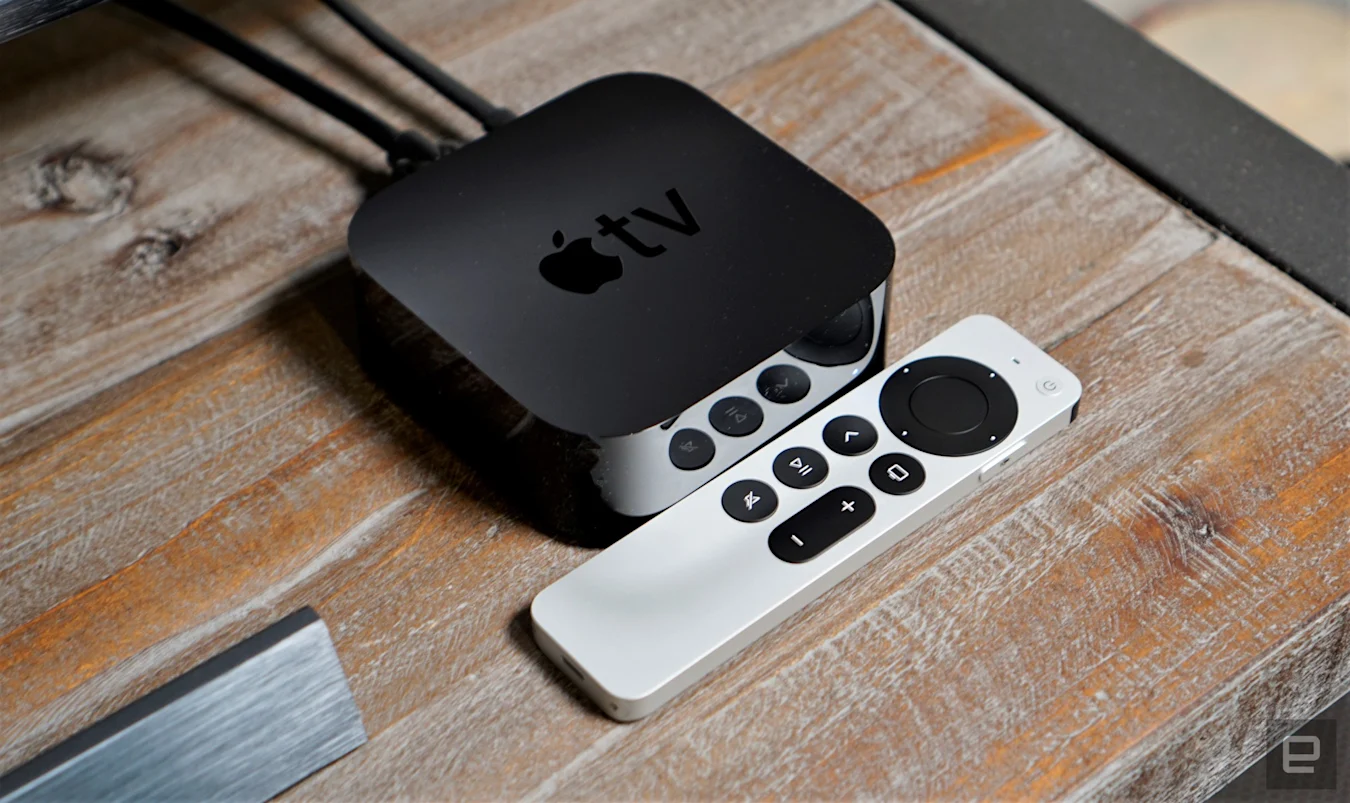
The Apple TV 4K is back in stock at Amazon and on sale for $120. While not quite as cheap as it was on Prime Day last month ($109), this remains one of the best prices we've seen no our favorite high-end set-top box. We gave the device a score of 90 for its fast performance, Dolby Vision and Atmos support, HomeKit integration and much-improved Siri remote.

Buy Apple TV 4K at Amazon - $120

AirPods Max

Engadget

Apple's AirPods Max are $120 off and down to $429, which is the cheapest price we've seen them on Amazon. We gave the headphones a score of 84 for their excellent sound quality, comfortable fit and strong ANC.

Buy Apple AirPods Max at Amazon - $429

Amazon Echo Show 10

Engadget

Amazon's Echo Show 10 smart display is $50 off and down to $200, which is the best price we've seen since Prime Day back in July. We gave the device a score of 83 for its excellent audio quality, ability to work as a security camera and automatic panning and zooming capabilities for video calls.

Buy Echo Show 10 at Amazon - $200

Samsung Galaxy Buds Pro

Billy Steele/Engadget

Samsung's Galaxy Buds Pro are down to $149 at Wellbots when you use the code ENGBUDS20 at checkout. While they are no longer Samsung's latest pro-level earbuds, we gave them a score of 85 when they came out for their good sound quality, comfy fit and wireless charging capabilities.

Buy Galaxy Buds Pro at Wellbots - $149

Sony WH-CH710N

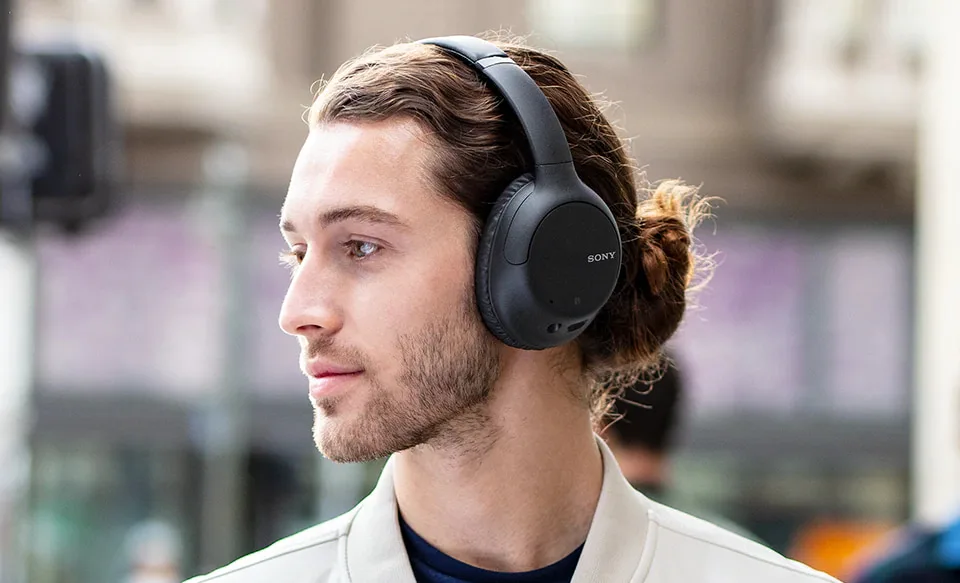
Sony's budget-friendly WH-CH710N headphones are on sale for an excellent price of $98. While we have seen them cheaper before, this 35-percent discount is a good one for these ANC cans. We like them for their comfortable design, solid noise cancellation and long battery life.

Buy Sony WH-CH710N at Amazon - $98

HBO Max

HBO Max has discounted its annual plan, so you can save 30 percent if you sign up and pay for one year upfront. If you can deal with ads, the service will cost $70 for 12 months, down from the usual $100. to get an ad-free experience, you'll pay $105, which is $45 off the usual rate.

Subscribe to HBO Max

iRobot Roomba j7+

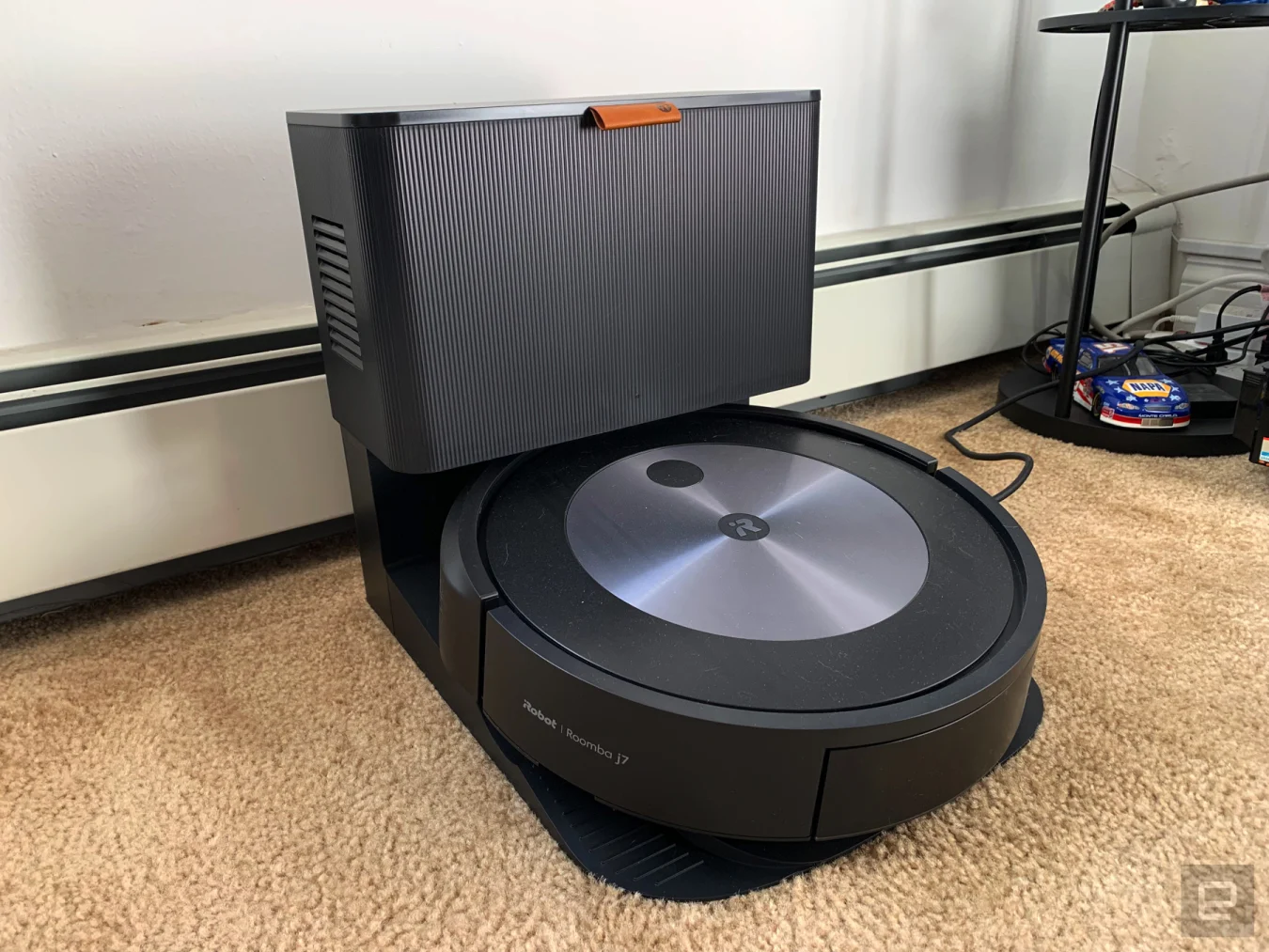
iRobot's Roomba j7+ is $200 off and down to $599 right now, while the s9+ has the same discount and is on sale for $799. These are some of our favorite robot vacuums, and they're made even better by these sale prices. The j7+ has advanced obstacle detection that helps it avoid pet poop and other hazards, while the s9+ has the strongest suction power of any Roomba.

Buy Roomba j7+ at Amazon - $599Buy Roomba s9+ at Amazon - $799

Follow @EngadgetDeals on Twitter and subscribe to the Engadget Deals newsletter for the latest tech deals and buying advice.

Seth Rogen and Pete Davidson are starring in the inevitable GameStop dramatization

As if multipledocumentaries, podcasts and books weren't enough to tell the tale of last year's GameStop stock squeeze, a feature film about the saga is in the works. Seth Rogen (aka Donkey Kong), Pete Davidson, Sebastian Stan and Paul Dano will star in Dumb Money, which starts filming this month, according to Variety.

Craig Gillespie (Pam & Tommy, Cruella) will direct the film, which is based on the nonfiction book The Antisocial Network by Ben Mezrich. It will focus on the Redditors at the heart of the story. If you recall, a group of users banded together on the r/WallStreetBets subreddit to artificially send GameStop stock soaring. Hedge funds and short sellers felt the brunt of the squeeze, with at least one hedge fund closing shop as a result. The situation even caught the attention of Congress amid calls for stricter regulation of the stock market.

What to expect at Apple’s ‘far out’ iPhone 14 event

Get ready for some major upgrades to the iPhone and Apple Watch lineup at Apple's "Far Out" event next week. While last year's iPhone 13 was a mostly marginal update (aside from fast ProMotion screens and Cinema Mode on the Pro models), the latest rumors suggest the iPhone 14 will be a considerable step forward. The iPhone 14 Pro may finally lose its notch! We could actually get higher resolution cameras! We're also eager to see what, exactly, Apple means with its cryptic invite and star-laden imagery. Even if you're not looking to upgrade, half the fun of these launch events is predicting what Apple has up its sleeves. So let's speculate!

iPhone 14 and iPhone 14 Pro

Once again, we're expecting to see four iPhone models, but the line-up will likely look different than the last few years. Not too long after the iPhone 13 hit stores, Bloomberg's Mark Gurman reported that the iPhone 14 would be a "complete redesign," which would mark the first major revision since the iPhone X landed in 2017. Additionally, Apple may be giving up on the iPhone Mini, a phone we've always wanted to love, but the short battery life has been a sticking point. Instead, Apple will reportedly unveil a 6.7-inch iPhone 14 Max or Plus, which will likely just have the same hardware as the standard iPhone 14.

iPhone 14 Pro notification render via 9to5Mac.
9to5Mac

While that's unfortunate news for fans of tiny devices, the trend among most consumers is towards larger screens. Apple can't let Samsung have all the fun, after all. Similarly, Apple could be taking a cue from the Galaxy phone maker (and practically every other Android phone company) by introducing pin-hole front cameras on the iPhone 14 Pro models. While early leaks pointed to two separate cut-outs — a circular one for the camera alongside a pill-shaped hole for the FaceID sensor — MacRumors claims (with support from Gurman) they'll show up as a single pill-shaped cut out unified by software. (See image above.) Additionally, 9to5Mac reports that Apple is using the space in the middle of the cut-out for its privacy notification dots, which appear when an app is using your camera or microphone. On existing iPhones, those dots are shoved above the cellular reception bars.

Apple appears to be saving most of its big updates for the Pro iPhones. For one, they could have always-on screens, according to 9to5Mac. That could work well with the revamped lock screens we've seen in iOS 16, which now have room for widgets and far more customization than before.

More controversially, though, is a report claiming that only the Pro models will receive Apple's new A16 Bionic chip. The standard iPhone 14 models may stick with last year's A15 (which is still plenty powerful). As a cost-saving measure, that makes sense, especially chips and other components still in short supply. But it marks the first time Apple has introduced a major performance gulf between its iPhone models. (It's particularly surprising since Apple was also able to squeeze the A15 chip into the tiny iPhone 13 Mini.) Most consumers won't know the difference, but having a more powerful chip would clearly be a big draw for Pro models.

David Imel for Engadget

Typically, Apple has used its camera technology as the big differentiator between the standard and Pro iPhones. That doesn’t appear to be changing. In addition to all of the upgrades above. According to analyst Ming-Chi Kuo, Apple is planning to bump the Pro's wide camera to 48-megapixels, a huge leap from the 12MP cameras the company has relied on for years. More recently, Kuo also claimed that the iPhone 14 Pro ultra-wide sensors will feature larger pixels with better low-light sensitivity. As for the base iPhone 14, it's expected to get the six-element ultra-side camera from the iPhone 13 Pro.

And what are we to make of the "Far Out" text on Apple's event invite? The ever-busy Kuo recently noted that Apple has completed testing on satellite connectivity for the iPhone 14, something that was also rumored to arrive ahead of the iPhone 13's launch. Even though the hardware may be in place, Apple is reportedly still working on partner deals to unlock that connectivity. And while the idea of satellite support seemed wild last year, it makes more sense now that we've seen T-Mobile and SpaceX team up to offer emergency satellite support via StarLink. (Good news for iPhone 13 owners: Kuo claims those phones also have satellite hardware built-in.) Don't expect to be FaceTiming via satellite, though, as the limited bandwidth will only leave room for short text messages and voice calls.

Apple Watch Series 8 and Apple Watch Pro

Much like the iPhone, all eyes will likely be on a "Pro" Apple Watch next week. Bloomberg's Gurman reported in July that the new model could sport a larger 2-inch screen, more durable titanium case and battery life for up to two days, thanks to a new "low power" mode. If all that ends up being true, the Apple Watch Pro would also be significantly larger than the current Series 7 model. Given all of its new hardware, Gurman claims it'll be the biggest redesign of the Apple Watch since the Series 4 landed in 2017. Don't get your hopes up for a round design, though, it sounds like Apple is just evolving its current rectangular style.

The Apple Watch Pro is also rumored to include the new temperature sensor that's rumored for the Watch Series 8. It could potentially alert you if you're running a fever, and suggest that you see a doctor or use a dedicated thermometer for a more accurate reading. It could also be a useful resource for period and fertility tracking apps. Design-wise, the Series 8 isn't expected to change much from last year's models. It may end up running the same dual-core S7 chip as the Series 7, though some higher-end models could have an improved display.

MacRumors

AirPods Pro 2

Given that we're nearing three years since the launch of the AirPods Pro, it's high time Apple followed up with a sequel. Gurman last year initially claimed the AirPods Pro 2 could have a stem-less design, much like Google's Pixel Buds, but a more recent report from MacRumors suggests that the AirPods Pro 2 won't look much different than before. Instead, leaked renders point to a new case with speaker holes (which would help with alerts for the "Find My" app) and a slot for a strap. The latter would be an anomaly for Apple, but it could be useful for attaching an AirTag. (Better yet, just build that into the case Apple!)

As for sound quality, Kuo claimed earlier this year that the AirPods Pro 2 could include support for Apple's Lossless Audio (ALAC), which could be a draw for audiophiles. (Let's not get into the viability of actually hearing any differences on small earbuds, though.) Additionally, the new headphones may include an updated H1 chip, as well as driver improvements similar to the AirPods 3. But don't hold your breath for any health tracking features, as Gurman recently noted that they won't include heart-rate or body temperature sensors as earlier rumors suggested.

Nathan Ingraham/Engadget

iPad

Apple typically saves its biggest iPad news for its second fall event, but we wouldn't be surprised to see some news about its entry-level model next week. The 10th-generation iPad is expected to include a USB-C port, bringing it in line with the rest of the family, and it could get a speed bump with the A14 Bionic chip. Don't expect any major design changes, though, as the entry-level iPad doesn't get much love from Apple these days. So be prepared to see thick bezels and a home button, once again. But on the plus side, it may finally get 5G support as well as a revamped front-facing camera, according to 9to5Mac.

Amazon knocks up to 49 percent off LG, Samsung and Sony TVs for today only

Good TVs are always in high demand, so finding deals can be a fruitless quest. If you're on the lookout for one, Amazon is running a one-day sale right now on LG, Samsung and Sony sets, including OLED and other desirable models at all-time low prices. For instance, LG's 55-inch A1 OLED is just $797 instead of $1,300 for the biggest savings we've seen yet. Sony's A80J 65-inch OLED model is $1,399 or 44 percent off (a new low), and Samsung's 55-inch Frame TV with Quantum HDR is priced at just $980, also an all-time low.

Buy Samsung, Sony and LG TVs at Amazon

LG's 2021 line of A1 OLED TVs first appeared at CES 2021, offering support for Dolby Vision, Dolby Atmos, Filmmaker mode, Google Assistant, Amazon Alexa and AirPlay 2. You can expect a color accurate picture with deep blacks, though some things are missing like a 120Hz display and HDMI 2.1. Still, at $797, the 55-inch A1 will deliver everything else you might want in an OLED TV. 

Sony

Sony's A80J OLED TV also popped up at CES 2021, offering Sony's "Cognitive Processor VR" to improve picture quality on individual elements of a picture. It also delivers 120Hz 4K thanks to an HDMI 2.1 input, along with features like Dolby Vision, Google TV, Google Assistant and Alexa support. Again, it's available at an all-time low price of $1,400, or 44 percent off the regular price. 

Finally, if you want a low-profile TV that also doubles as a picture frame and smart device, Samsung's 55-inch Frame TV is priced at $980, another all-time low. It can rotate between portrait and landscape modes and display up to 1,400 works of art, while offering features like 4K upscaling, HDR, Alexa and Samsung's Tizen smart TV interface. 

There are plenty of other good deals as well, including Sony's 85-inch X91J priced at $1,800 (36 percent off), LG's 65-inch NanoCell 90 series TV at $717 (49 percent off) and more. It's best to act soon, though, as it's strictly a one-day sale. 

Follow @EngadgetDeals on Twitter and subscribe to the Engadget Deals newsletter for the latest tech deals and buying advice.

Japan’s Digital Minister is going to war against floppy disks and fax machines

Japan has a high level of adoption when it comes to advanced technologies and is a world leader in various areas, such as robotics. However, it's also resistant to certain facets of modernization and tend to stick to old-fashioned solutions — fax machines, for instance, are still widely used. And apparently, so are floppy disks. The country's newly appointed Minister of Digital Affairs, Taro Kono, has tweeted that he's declaring "a war on floppy disks."

Apparently, there are still around 1,900 government procedures in Japan that require the use of disks, including floppy disks, CDs and MiniDiscs, to submit forms and applications. "Where does one even buy a floppy disk these days?" he asked during a news conference. Indeed, the younger generation might not know what any of those look like anymore. Kono said his agency will work on amending regulations that require their use, so people can submit forms and applications online instead.

Digital Minister declares a war on floppy discs.
There are about 1900 government procedures that requires business community to use discs, i. e. floppy disc, CD, MD, etc to submit applications and other forms. Digital Agency is to change those regulations so you can use online.

— KONO Taro (@konotaromp) August 31, 2022

The US government had been using floppy disks as recently as 2019, as well, and it was to receive nuclear launch orders from the President. It wasn't until that year that the government transitioned to a "highly-secure solid state digital storage solution."

Kono doesn't intend to stop with floppy disks either and has announced his plans to phase out the use of more outdated technologies. "I'm looking to get rid of the fax machine, and I still plan to do that," he said. The minister doesn't have to worry about ending pager services, at least: The last pager provider in the country closed up shop a mere three years ago in September 2019.