Amazon orders limited series about the FTX crypto exchange scandal

The Russo brothers are creating a series for Amazon based on the story of how FTX, which was once one of the most well-known crypto exchanges, met such a swift and scandalous end. According to Variety, Amazon has approved a limited series adaptation with eight episodes and is looking to start production by spring next year. David Weil, who previously worked with the Russo brothers in their Prime Video series Citadel, will write and executive produce the pilot episode. Meanwhile, Anthony and Joe Russo, known for directing four Marvel Cinematic Universe movies, are reportedly in talks of directing on top of serving as the show's executive producers. 

FTX filed for bankruptcy last week after a series of events ultimately led to its collapse in a short amount of time. The exchange's FTT tokens had plummeted in value earlier this month after rival exchange Binance announced that it was going to sell its remaining FTTs due to "recent revelations." A few days before Binance decided to liquidate all its FTTs, CoinDesk had reported that Alameda Research, the trading firm that was founded by then-FTX CEO Sam Bankman-Fried, was mostly backed by FTT tokens. "The situation adds to evidence that the ties between FTX and Alameda are unusually close," CoinDesk wrote. Alameda had reportedly been having financial issues and was allegedly using FTX customers' deposits to pay debts.

Smaller investors and ordinary customers also sought to get out upon smelling trouble in the air and submitted requests for withdrawals, which caused a liquidity issue. Binance initially agreed to bail out FTX by buying it but ultimately backed out of the deal. After that, FTX filed for bankruptcy, and Bankman-Fried resigned as CEO. There's a lot more to the story, including the mystery of where billions of dollars of missing or stolen funds had gone, that the Russo brothers could include in their show. 

It's still unclear what source material the Russos are planning to use, but Variety says the show could be based on "insider reporting" by journalists who've been investigating the FTX scandal. They're also reportedly in talks with multiple Marvel actors to play key roles in the series. Before Amazon confirmed that it was working on a show based on FTX, Deadline reported that Apple was close to signing a seven-figure deal for the rights on a book about Bankman-Fried and the crypto exchange that's being written by Michael Lewis. That's the same author behind Moneyball, The Big Short and The Blind Side. Unlike Amazon, Apple is reportedly planning to turn Lewis' book into a feature film. 
Infineon and Fingerprints step into cooperation on the all-in-one solution SECORA™ Pay Bio that will bring biometric payment cards to a new level

Infineon and Fingerprints step into cooperation on the all-in-one solution SECORA™ Pay Bio that will bring biometric payment cards to a new level

Infineon Technologies AG and Fingerprint Cards AB today announced the signing of a joint development and commercialization agreement of a plug-and-play turnkey solution for biometric payment smart cards. The goal of the cooperation is to make biometric smart card production as simple and easy as producing a standard dual interface payment card.

Staff Thu, 11/24/2022 - 17:53
Circuit Digest 24 Nov 12:23

Tesla's FSD driver assist beta is now available to anyone who wants to pay

After gradually expanding access to its so-called full self-driving (FSD) beta for the last few years, Tesla is opening it up to anyone who has paid for it, Elon Musk announced in a tweet. "Tesla Full Self-Driving Beta is now available to anyone in North America who requests it from the car screen, assuming you have bought this option," he said. 

FSD is an extension of Tesla's "Autopilot" driver-assist feature, expanding on the latter with automated functions like automated steering in cities, automatic parking, smart vehicle summoning and traffic light/stop sign recognition. The feature is a paid upgrade priced at $15,000 following a price hike of $3,000 in September. 

Tesla Full Self-Driving Beta is now available to anyone in North America who requests it from the car screen, assuming you have bought this option.

Congrats to Tesla Autopilot/AI team on achieving a major milestone!

— Elon Musk (@elonmusk) November 24, 2022

Tesla first promised to launch full self-driving features in 2018, but they only finally appeared in July 2021 to a small number of "expert and careful drivers." It was released more widely in the version 9.0 beta, but testers were limited to an early access program. On the last FSD release, Tesla dropped the requirement for at least 100 Autopilot miles and an 80 safety score, and now anyone who wants it can have it. 

However, Tesla is rolling out FSD widely at a time when it's under scrutiny from regulators. The National Highway Traffic Safety Administration (NHTSA) recently expanded its investigation into a series of Tesla crashes involving first responders to most models. In a separate probe, it's also looking into more than 30 incidents involving Autopilot. 

Musk has promised full self-driving with no one behind the wheel for some time now. Most recently, he said he thought it could arrive this year, but backed off those claims in Tesla's latest earnings report. Tesla's stock has been on a steep decline of late, following Elon Musk's $44 billion purchase of Twitter

The FTC might file an antitrust lawsuit to block Microsoft's Activision purchase

Microsoft's $69 billion purchase of Activision Blizzard is facing scrutiny from antitrust investigators in several countries. In the US, for instance, the Federal Trade Commission (FTC) started looking into the acquisition shortly after it was announced. Now, the FTC is reportedly ready to take action and will likely file an antitrust lawsuit to block Microsoft's massive purchase, according to Politico. Microsoft failed to convince the FTC staff reviewing the deal with its arguments, Politico's sources said, but the agency's commissioners have yet to vote on filing a complaint or to meet with lawyers. 

While a lawsuit is not 100 percent guaranteed yet, the commission is reportedly done with the biggest parts of the investigation, including with the depositions of the Microsoft chief Satya Nadella and Activision CEO Bobby Kotick. If the FTC ultimately decides to file a lawsuit, it could do so as soon as next month. The publication says the commission will likely file the case in its own in-house administrative court, since it doesn't have to bring it to federal court first to seek a temporary injunction. Seeing as other regulators are also looking into the acquisition, it wouldn't be able to go through (if it's ultimately allowed to do so) until sometime next year. 

In the UK, the Competition and Markets Authority (CMA) launched an in-depth investigation of the deal in September. And more recently, the European Commission announced that it will carry out a full-scale probe into Microsoft's purchase. Like these two European regulators, the FTC is concerned that the acquisition will give Microsoft an unfair advantage in the gaming sector and that it may significantly reduce competition in the market. 

Sony has been one of the loudest voices opposing the deal and has expressed concerns that Microsoft might make valuable IPs like Call of Duty an Xbox exclusive. Jim Ryan, Sony PlayStation's CEO, previously revealed that Microsoft only offered to keep Call of Duty available on PlayStation for three years after the current agreement ends. But Xbox chief Phil Spencer said more recently that the company is "not taking Call of Duty from PlayStation." In Microsoft's latest filing with the CMA, it argued that the acquisition won't give it an unfair advantage: Sony has more exclusive games than the Xbox, it said, and many of them are of "better quality."

Tidy POV Display Using The ESP32

Chinese Youtuber [corebb] presents the second version of his POV display. The earlier version used 5050-sized SMT addressable LEDs, which didn’t give great resolution, so he rev’d the design to use a much higher number (160 to be exact) of APA102 LEDs. These are 2mm on the side, making them a little more difficult to handle, so after some initial solder paste wobbles, he decided to use a contract assembly house to do the tricky bit for him. This failed as they didn’t ‘understand’ the part and placed them the wrong way around! Not to be deterred, he had another go with a modified solder stencil, and eventually got the full strip to light up correctly.

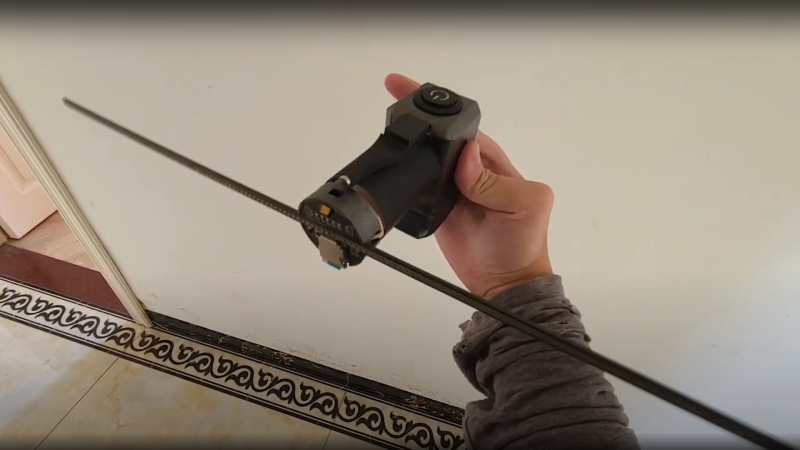
Based on an ESP32 (using the Arduino stack) and SDCard for control, and a LiPo cell charged wirelessly, the build is rather tidy. A couple of hall effect switches are mounted at the start of each of the two arms, presumably lining

Real-time video streaming? Check!

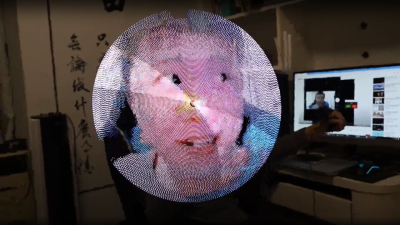
up with a magnet on the case somewhere, although this isn’t clear. The schematic and PCB appear to have been designed with JLCEDA, which is a repackaging of EasyEDA. We can see the attraction with the heavy integration of this with the JLC and LCSC services. It appears that he even managed to get streamed video working — showing a live video from a webcam — which is quite an undertaking to pull off when you think how much processing needs to happen in real-time. As he alludes to in the video, trying to increase the resolution beyond this point is not viable with the processing capability of the ESP32.

A resin-printed case finishes off the build, with a screw-thread mount added to the rear, to allow typical camera mounts to be used to hold the thing down. A smart move we think.

We love POV displays around here, this spherical POV display is especially fabulous, but you don’t need fancy hardware if you have a handy ceiling fan and a bit of protoboard spare.

Thanks to [mrx23dot] for the tip!

Hack a Day 24 Nov 00:00

Mercedes' new EV innovation is a paywall on your car's performance

Tesla isn't the only car brand asking you to pay extra to unlock your car's existing capabilities. As The Vergeobserves, Mercedes has introduced a $1,200 per year "Acceleration Increase" subscription that improves the performance of the EQE and EQS in their standard sedan and SUV variants. Pay the annual fee and your 0-60MPH time will improve by 0.8 to 1 seconds thanks to a higher peak motor output and increased torque.

Mercedes is quick to explain that this is strictly a software change. In other words, you're paying to get performance your car could already handle. While you're still getting more value than BMW's $18 per month heated seats, it's an odd move when these cars are already expensive and have speedier models that only require a one-time outlay. Why buy an EQS 450 with the acceleration add-on when an EQS 580 will be faster and include more creature comforts in the bargain?

The German automaker isn't the first to charge extra for added performance. Tesla has long asked customers to shell out for its most advanced driver assists. For a while, it also charged entry Model S buyers a premium to unlock battery capacity. And if you're more inclined toward motorcycles, Zero asks nearly $1,800 to maximize the power of the 2022 SR. The difference, of course, is that those are still one-off purchases where Mercedes wants you to keep paying for the life of the car.

The business strategy is clear. As with the tech world's general shift toward subscription services, Mercedes is hoping for a steady stream of revenue from customers who might otherwise spend little beyond the initial purchase. Acceleration Increase is decidedly more lucrative than periodic navigation updates and maintenance. Unlike those, though, there's no recurring costs to help justify the power boost's existence.

UK surgeon named world's first astronaut with a disability

The European Space Agency on Wednesday selected the world’s first astronaut with a disability. John McFall, whose right leg was amputated at age 19, is the first recruit for a new program investigating accommodations for astronauts with disabilities.

The agency called for applications in March 2021, seeking people with disabilities who could pass stringent physical and psychological testing but were limited by a lack of hardware accommodations. The program will investigate the changes and costs required to send astronauts with disabilities into space. The ESA chose McFall out of 257 entrants, and describes him as the world’s first “parastronaut.” And next spring, he will enter the 12-month training program at the European Astronaut Centre in Cologne, Germany.

“I’ve always been hugely interested in science generally, and space exploration has always been on my radar,” said the 41-year-old McFall on Wednesday. “But having had a motorcycle accident when I was 19, like wanting to join the armed forces, having a disability was always a contraindication to doing that.”

After McFall’s accident and amputation, he learned to run again and won a bronze medal in the 100-meter dash at the 2008 Paralympic Games. In addition, he earned several medical degrees and was a Foundation Doctor in the British National Health Service from 2014 to 2016. McFall currently works as a trauma and orthopedic specialist in South England.

“In early 2021 when the advert for an astronaut with a physical disability came out,” said McFall, “I read the person specifications and what it entailed, and I thought, ‘Wow, this is such a huge and interesting opportunity.’ And I thought that I would be a very good candidate to help ESA answer the question they were asking: ‘Can we get someone with a physical disability into space?’ And I felt compelled to apply.”

HP will lay off up to 6,000 employees over the next few years

Add HP to the list of tech companies cutting staff. The PC maker plans to lay off as many as 6,000 employees over the next three years. The cuts are part of a broader restructuring HP announced during its Q4 earnings call on Tuesday (via Gizmodo). The company estimates its “Future Ready Transformation plan” will save it $1.4 billion by the end of fiscal 2025, in part by reducing its headcount by at least 4,000 employees.

“The company expects to reduce gross global headcount by approximately 4,000-6,000 employees,” HP said. “These actions are expected to be completed by the end of fiscal 2025.”

HP employs approximately 51,000 employees globally. The company’s most recent fiscal quarter saw revenue drop by more than 11 percent year-on-year to $14.8 billion. CEO Enrique Lores blamed the poor performance on macroeconomic conditions and “softening demand” for the company’s PCs and printers.

Following Tuesday’s announcement, Lores said HP’s restructuring plan would “enable [the company] to better serve our customers and drive long-term value creation by reducing our costs and reinvesting in key growth initiatives to position our business for the future.”

HP isn’t the only tech company to announce significant job cuts in recent weeks. Twitter completed multiple rounds of layoffs after Elon Musk took control of the company on October 27th. Meta and Amazon also announced job cuts this month. In the case of the social media giant, the 11,000 employees it let go on November 9th represented the first mass layoffs in the company’s history.

CD Projekt Red shows off The Witcher 3's 'next-gen update' ahead of launch

CD Projekt Red has finally shared a gameplay trailer for The Witcher 3: Wild Hunt's imminent "next-gen" update, and it's largely what you'd hope for. The overhauled action role-playing game looks better thanks to more detailed character models (with 4K textures), ray-traced lighting effects and other cosmetic upgrades. Geralt looks more grizzled than ever, while even the water reflections are prettier. It's not surprising that the refreshed game would look at least somewhat better than the 2015 original, and it's not necessarily a night-and-day difference. Still, the changes are welcome if you thought the title was showing its age.

The update also brings gameplay tweaks, cloud saves and new content inspired by Netflix's The Witcher series. You can play at 60 frames per second, and a photo mode will help you take snapshots of the game's bleak-yet-beautiful landscapes.

The next-gen (really, current-gen) update will be available December 14th on PC, PS5 and Xbox Series X/S. It's not a full-fledged sequel or even a remake, but it could be worth a go if you're either new to The Witcher games or just haven't touched The Witcher 3 in years. Think of it as the start to CDPR's revival of the franchise.

How Theranos founder Elizabeth Holmes was sentenced to 11 years in prison

More than seven years after the first Wall Street Journal story about problems with Theranos’ blood tests, its founder, Elizabeth Holmes, was sentenced to over a decade in prison for defrauding the company’s investors. She had been found guilty on four counts of fraud during a months-long trial where her lawyers argued that she was an inexperienced entrepreneur who hadn’t intended to mislead anyone.

Holmes’ story is, by now, well known. She founded Theranos as a college dropout, raising hundreds of millions of dollars from high-profile investors and courting former high-ranking government officials for her board. Since then, the rapid rise and downfall of Holmes and Theranos has taken on a life of its own, with major podcasts, books and a recent Hulu miniseries.

But Holmes herself has been almost completely silent. Her trial, where she testified in her own defense, and her sentencing are the only times she has spoken publicly about what went wrong at Theranos and how she feels all these years later. Watch the video above for the full story.