Mac users who want to play Baldur's Gate III on their computers only have to wait a few more days: Larian Studios has announced that the full version of the game will be available for Mac on September 21. It has been available for the OS for quite some time, but as a limited, early access version. Fans can only play the first act of the game and can't go any further than what the developer previously described as "approximately 25 hours of self-contained content." Soon, Mac gamers will be able to continue playing until they reach the Moonrise Towers and until secrets are revealed in the third act.
Thank you from the fiery infernal engine we keep in place of our heart. ❤️🔥 We couldn't have asked for a better response to Baldur's Gate 3.
Patch 3 is coming September 21 with full support for BG3 on Mac.
Baldur's Gate III was initially released for Windows PCs on August 3 before it came out for the PlayStation 5 earlier this month. For consoles, it remains a PlayStation 5 exclusive, but not because the developer struck a deal with Sony Entertainment. What happened was Larian Studios couldn't cross a technical hurdle, preventing it from launching the game on Xbox at the same it came out for the PS5.
Microsoft has rules requiring developers to ensure that games released for the Series S and Series X have the same features. In Larian Studios' case, it couldn't make the game's split-screen coop feature work on the less powerful Series S. After meeting with Microsoft Gaming CEO Phil Spencer, though, the developer was given permission to release the title for the Series S without the split-screen function but with cross-save progression between Steam and the two Xbox consoles. The Xbox version of Baldur's Gate III doesn't have an exact release date yet, but it's expected to come out before the year ends.
This article originally appeared on Engadget at https://www.engadget.com/baldurs-gate-iii-will-be-fully-available-for-mac-users-on-september-21-054650964.html?src=rss
Xbox Live Gold will be no more as of tomorrow, September 14. Replacing it is a new tier of Game Pass called Xbox Game Pass Core. It's a different offering to Games with Gold in that there will be a rotating library of a few dozen games, rather than you being able to claim some titles for your collection each month. Xbox has now revealed the initial list of Game Pass Core titles, but the choices may leave some players hoping for more.
The 36 titles you’ll be able to play through Game Pass Core on Xbox One and Xbox Series X/S at the jump are:
Among Us
Astroneer
Celeste
Dead Cells
Descenders
Dishonored 2
Doom Eternal Standard Edition
Fable Anniversary
Fallout 4
Fallout 76
Firewatch
Forza Horizon 4 Standard Edition
Gang Beasts
Gears 5 Game of the Year Edition
Golf with your Friends
Grounded
Halo 5: Guardians
Halo Wars 2
Hellblade: Senua’s Sacrifice
Human Fall Flat
Inside
Limbo
Ori & the Will of the Wisps
Overcooked! 2
Payday 2: Crimewave Edition
Powerwash Simulator
Psychonauts 2
Slay the Spire
Spiritfarer: Farewell Edition
Stardew Valley
State of Decay 2: Juggernaut Edition
Superliminal
The Elder Scrolls Online
Teenage Mutant Ninja Turtles: Shredder’s Revenge
Unpacking
Vampire Survivors
There are more than a few great games on that list, from Vampire Survivors and Celeste to Doom Eternal and Dishonored 2. Game Pass Core might be worth $60 per year for those who haven’t played many of those before. But it’s hard to make the case that this is the most exciting selection Microsoft could have come up with for this base version of Game Pass. The company says it plans to update the list two or three times per year, so there may be a three- to six month wait until Microsoft refreshes the library.
There are other features of Game Pass Core that could prompt people to subscribe or remain a member, most notably the fact the service is required to play many multiplayer games on Xbox. For instance, you won’t be able to play Call of Duty: Modern Warfare III with friends on your Xbox without at least a Game Pass Core membership.
This article originally appeared on Engadget at https://www.engadget.com/microsoft-reveals-the-first-36-titles-in-the-xbox-game-pass-core-library-150519932.html?src=rss
Mario Kart Tour has carved out a niche for itself in the mobile gaming space since launching as a beta in 2019, but all good things must come to an end. Nintendo just announced that there are only three more "tours" (original multiplayer events) scheduled for the next month and after that the tours will repeat from the beginning. There will be no new courses, drivers, karts, gliders or features of any kind added after October 4th, according to an in-game screengrab posted to Reddit.
Does this mean the game is heading to the digital scrapyard? Yes and no. Nintendo is abandoning the development of new content for the free-to-play racer, but it’ll still be available to download and experience. Without the lure of fresh content, however, the player base will likely shrink dramatically, despite Nintendo saying they hope people will continue to use the app.
Nintendo/Engadget
Engadget reached out to Nintendo for clarification as to why the content spigot was turned off and we'll update this post when we get something official. However, every game eventually runs out of new content, and it could be just as simple as that. It’s worth noting that Mario Kart Tour has been a success for the company, raking in nearly $300 million as of last year, which was originally reported by Eurogamer. This haul makes it Nintendo’s second-most profitable mobile title, behind the massively popular Fire Emblem Heroes.
Despite financial success, Mario Kart Tour has had its share of controversy. Like most free-to-play mobile games, it constantly asks you for money and the most egregious instance of this was something called “Spotlight Pipes.” This gacha mechanic provided loot boxes with undisclosed odds, so you had no idea if it was worth it or not. Gamers rallied against this mechanic and Nintendo removed the pipes last September. However, the company faces a class-action lawsuit after a parent claimed his child spent $170 on Spotlight Pipes, as reported by Kotaku.
Nintendo’s still churning out content for other mobile games, including Animal Crossing: Pocket Camp, Super Mario Run and the aforementioned Fire Emblem Heroes. The company recently partnered with mobile giant DeNA to create something called Nintendo Systems, which presumably is developing new smartphone games and related experiences.
This article originally appeared on Engadget at https://www.engadget.com/nintendo-is-sunsetting-mario-kart-tour-next-month-170533206.html?src=rss
The developer of Only Up!, a viral indie climbing game that blew up in popularity on Twitch streams, has delisted the title from Steam. After receiving accusations of using infringing assets and promoting NFTs, the game’s creator said they plan to “put the game behind” them due to stress. “What I need now is peace of mind and healing,” wrote developer SCKR Games.
The developer posted an update on the title’s Steam page explaining the decision, as first spotted byPCGamesN. “I’m a solo developer and this game is my first experience in Gamedev, a game I did for creativity, to test myself, and where I made a lot of mistakes,” SCKR Games wrote on Steam. “The game has kept me under a lot of stress all these months. Now I want to put the game behind me. And yes. The game won’t be available in the [Steam] store soon, that’s what I decided myself.” The title was delisted at the time of this article’s publication, with its name changed to “not available.” You can view a cached version of the game’s listing on the Internet Archive’s Wayback Machine.
The title’s absurd difficulty became its calling card — likely a big reason it was a hot destination on Twitch. Players stepped into the shoes of Jackie, a teenager from the projects with dreams of rising out of poverty. Inspired by “Jack and the Beanstalk,” the developer tasked gamers with climbing and parkouring through elaborate mazes of pipes and other objects stretching into the sky. Lacking a save feature, it put you back at square one after falling. “The point is that each successive level raised the stakes in the game, the higher you climb the more painful to fall,” the developer wrote on the Only Up! Steam store page. However, the title did include a time-slowing feature to help fine-tune the more difficult leaps.
SCKR Games / Steam
According to data viewed by PCGamesN, Only Up! attracted up to 280,000 concurrent viewers on Twitch at its peak. A YouTube walkthrough from ‘iShowSpeed’ (Darren Jason Watkins ) has garnered 5.6 million views in two months.
This isn’t the first time Only Up! has been removed. SCKR Games delisted it in late June following the games’ alleged copyright violations. A 3D artist accused SCKR Games of using a Sketchfab asset, a giant statue of a girl that wasn’t licensed for commercial use. (The game cost $10.) Only Up! returned in early July with a statue of Atlas replacing the infringing one.
The one-person SCKR Games says it will return with a new project. “I plan to take a pause, and continue my education in game design and further with new experience and knowledge to direct my energies to my next game with the working title Kith — it will be a new experience and a new concept with realism, a completely different genre and setting, and the emphasis is on cinematography,” the developer wrote. “This time I hope the project will be created by a small team. This is a challenging project on which I want to significantly improve my skills in game design. Thank you for your understanding.”
This article originally appeared on Engadget at https://www.engadget.com/viral-indie-game-only-up-delisted-from-steam-171652546.html?src=rss
A couple weeks ago, Sega did something it doesn’t normally do: it gathered up a bunch of its studios (Atlus, Amplitude, Sega of Europe and others) and put together a showcase highlighting a number of titles coming out over the next few months.
Like a lot of people, I have a love-hate relationship with Sonic. While the original games on the Genesis produced iconic levels like the Green Hill Zone and unforgettable characters like Tails, Knuckles and the lovable blue hedgehog himself, more recent titles often miss the mark (to put it politely). Sonic the Hedgehog ‘06nearly broke me and the Sonic Boom series was a particularly dark period for fans of speedy protagonists.
But Sonic Superstars feels like a return to form, expanding on the breakneck 2D gameplay the franchise was best at, while adding a super crisp art style that doesn’t rely on 16-bit nostalgia. Stages like Cyber Station Zone offer fun twists on the formula by letting you transform into voxelized squids or rockets as you traverse the level. In a lot of ways, it feels like Sega is finally giving side-scrolling Sonic games the overhaul they’ve needed for more than a decade, similar to what Nintendo is doing with Super Mario Bros. Wonder.
Furthermore, Sega has added multiplayer co-op to a 2D Sonic game for the first time, and not coincidentally, it plays a lot like a modern Mario title. Health, or in this case rings are shared between all the players, so as long as your party possesses a single shiny loop, you can revive your friends (except for during boss fights). The one small issue is that due to the pace of the game, if you die you might get stuck in a floating bubble for a bit until things slow down and your friends get a chance to break you out.
This is probably the game I was most excited to try out, and even with high expectations I did not come away wanting. Not only is it a treat to hear more riffs on one of the greatest video game soundtracks in recent memory, there are so many mechanics from the JRPG franchise that transition seamlessly to the tactics genre, I’m kind of surprised it took Atlus this long to make a Persona spin-off like this.
Right away the game introduces concepts like team attacks and knockdowns that had me thinking about how to take down enemies in the fewest moves. And instead of Persona’s traditional elemental affinities, Tactica introduces new cover mechanics that make the game feel like a mix between XCOM and the Mario + Rabbids series. The chibi-style art is also fun and expressive without being too kawaii.
Also, while it’s always nice to have played Persona 5 for the added context, the title is a self-contained story featuring new characters, so you don’t need to spend 50+ hours playing P5 before diving into this.
I don’t have much to say about Persona 3 Reload aside from I’m thankful that this game is finally getting the remake it deserves. The original basically paved the way for the last 15+ years of Persona RPGs. It’s kind of a shame Atlus isn’t including some of the extra content from Persona 3 FES and the PSP port (notably the female protagonist), but with discs for the original PS2 game becoming harder and harder to find, it’s nice to have a great looking and more widely available version coming in early 2024.
While I’m familiar with some of Amplitude Studio’s previous titles, the latest entry in the Endless series might be the most pleasant surprise I encountered at the showcase. It’s a twin-stick shooter with squad-based gameplay that’s layered on top of rogue-lite mechanics that allow you to unlock things like new weapons, characters and abilities. You can choose to go it alone and control up to three heroes at the same time (with some automated assistance) or play co-op (both local and online) with friends. Either way, the game is refreshingly challenging.
As you explore and open doors, you’ll unleash waves of enemies, collect items and upgrade skills. When you reach the final room, you’ll face a huge horde and even with one of the devs giving me pointers, we didn’t survive. But that merely highlighted the depth of the game’s strategic elements. From what I played, Endless Dungeon has exactly what I look for in a rogue-lite: deep mechanics and solid replayability (with engaging co-op as a bonus).
But my favorite thing is that, despite Sega’s long history on consoles, all of the games above will also be available on PC. This is a move the publisher said it wanted to embrace after seeing strong sales on Steam during the pandemic. Regardless, whether you’re an old-school 2D platformer junkie or someone who just wants more tactics games, there’s a lot to like from Sega’s growing family of studios. And that’s even with me running out of time to check out some of Sega’s other upcoming releases like Total War: Pharoah or Like a Dragon Gaiden: The Man Who Erased His Name.
This article originally appeared on Engadget at https://www.engadget.com/segas-summer-showcase-delivered-exciting-updates-to-some-of-its-most-iconic-franchises-152354209.html?src=rss
Since its release in 1993, id Software's DOOM franchise has become one of modern gaming's most easily recognizable IPs. The series has sold more than 10 million copies to date and spawned myriad RPG spinoffs, film adaptations and even a couple tabletop board games. But the first game's debut turned out to be a close thing, id Software cofounder John Romero describes in an excerpt from his new book DOOM GUY: Life in First Person. With a mere month before DOOM was scheduled for release in December 1993, the iD team found itself still polishing and tweaking lead programmer John Carmack's novel peer-to-peer multiplayer architecture, ironing out level designs — at a time when the studio's programmers were also its QA team — and introducing everybody's favorite killer synonym to the gamer lexicon.
In early October, we were getting close to wrapping up the game, so progress quickened. On October 4, 1993, we issued the DOOM beta press release version, a build of the game we distributed externally to journalists and video game reviewers to allow them to try the game before its release. Concerned about security and leaks, we coded the beta to stop running on DOS systems after October 31, 1993. We still had useless pickups in the game, like the demonic daggers, demon chests, and other unholy items. I decided to get rid of those things because they made no sense to the core of the game and they rewarded the player with a score, which was a holdover from Wolfenstein 3-D. I removed the concept of having lives for the same reason. It was enough to have to start the level over after dying.
There was still one missing piece from the game, and it was a substantial one. We hadn’t done anything about the multiplayer aspect. In modern game development, multiplayer would be a feature factored in from day one, and architected accordingly, in an integrated fashion. Not with DOOM. It was November, and we were releasing in a month.
I brought it up to Carmack. “So when are we going to make multiplayer mode?”
The short answer was that Carmack was ready to take it on. Looking from the outside in, I suspect some might wonder if I wasn’t just more than a bit concerned since we were hoping to ship in 1993. After all, John had never programmed a multiplayer game before. The truth is that I never had a doubt, not for a second. Back in March, Carmack had already done some innovative network programming in DoomEd. He wanted to play around with the distributed objects system in NeXT-STEP, so he added the ability to allow multiple people who were running DoomEd to edit the same level. I could see him drawing lines and placing objects on my screen from his computer. Then, I’d add to his room by making a hallway, and so on.
For multiplayer, Carmack’s plan was to explore peer-to-peer networking. It was the “quick and dirty” solution instead of a client-server model. Instead of one central computer controlling and monitoring all the action between two to four players, each computer would run the game and sync up with the others. Basically, the computers send each other updates at high speed over the local network. The speed of Carmack’s network programming progress was remarkable. He had some excellent books on networking, and fortunately, those books were clearly written and explained the process of using IPX* well. In a few hours, he was communicating between two computers, getting the IPX protocol running so he could send information packets to each computer. I’d worked with him for three years and was used to seeing incredible things on his screen, but this was awe inspiring, even for him. In a matter of hours, he got two PCs talking to each other through a command-line-based tool, which proved he could send information across the network. It was the foundation needed to make the game network-capable. It was great for two players, and good for four, so we capped it at that. We were still on track to deliver on our promise of the most revolutionary game in history before the end of the year.
Carmack called me into his office to tell me he had it working. Both PCs in his office had the game open, and they were syncing up with two characters facing one another. On one PC, Carmack veered his character to the right. On the other monitor, that same character, appearing in third person, moved to the left. It was working!
“Oh my God!” I yelled, throwing in some other choice words to convey my amazement. “That is fucking incredible.”
When I’d first truly visualized the multiplayer experience, I was building E1M7. I was playing the game and imagined seeing two other players firing rockets at each other. At the time, I thought, “This is going to be astonishing. There is nothing like this. This is going to be the most amazing game planet Earth has ever seen.” Now, the moment had finally arrived.
I rushed to my computer and opened the game, connecting to Carmack’s computer.
When his character appeared on screen, I blasted him out of existence, screaming with delight as I knocked “John” out of the game with a loud, booming, bloody rocket blast. It was beyond anything I had ever experienced before and even better than I imagined it could be.
It was the future, and it was on my screen.
“This is fucking awesome!” I yelled. “This is the greatest thing ever!”
I wasn’t kidding. This was the realization of everything we put into the design months earlier. I knew DOOM would be the most revolutionary game in history, but now, it was also the most fun, all-consuming game in history. Now that all the key elements of our original design were in place, it was obvious. DOOM blew away every other game I’d ever played. From that moment on, if I wasn’t playing DOOM or working on DOOM, I was thinking about DOOM.
Kevin, Adrian, and Jay began running the game in multiplayer mode, too, competing to blow away monsters and each other. They were yelling just as much as I did, cheering every execution, groaning when they were killed and had to respawn. I watched them play. I saw the tension in their bodies as they navigated the dark, detailed world we’d created. They were hunters and targets, engaged in a kill-or-be-killed battle, not just with monsters, but with other, real people. Players were competing in real time with other people in a battle to survive. I thought of boxing or an extreme wrestling match, where you go in a cage to fight. This was much more violent, more deadly. It was all simulated, of course, but in the moment, it felt immediate. It was a new gaming experience, and I searched for a way to describe it.
“This is deathmatch,” I said. The team latched onto the name. It instantly articulated the sinister, survival vibe at the heart of DOOM.
In mid-November, we buckled down, getting in the “closing zone,” where you begin finalizing all areas of the game one by one. Now that Carmack had multiplayer networking figured out, we needed to fine-tune the gameplay and functionality, delivering two multiplayer modes—one in which players work together to kill monsters and demons, and the other where players try to kill each other (usually without monsters around). The first mode was called co-op, short for cooperative. The second, of course, was deathmatch.
Another important word needed to be coined. Deathmatch was all about getting the highest kill count in a game to be judged the winner. What would we call each kill? Well, we could call it a kill, but that felt like a less creative solution to me. Why don’t we have our own word? I went to the art room to discuss this with Kevin and Adrian.
“Hey guys, for each kill in a deathmatch we need a word for it that is not ‘kill,’” I said.
Kevin said, “Well, maybe we could use the word ‘frag.’"
“That sounds like a cool word, but what does it mean?” I asked.
“In the Vietnam War,” Kevin explained, “if a sergeant told his fire team to do something horrifically dangerous, instead of agreeing to it, they would throw a fragmentation grenade at the sergeant and call it friendly fire. The explanation was ‘Someone fragged the sarge!’”
“So, in a deathmatch we’re all fragging each other!” I said.
“Exactly."
And that is how “frag” entered the DOOM lexicon.
The introduction of deathmatch and co-op play profoundly affected the possibility space of gameplay in the levels. Crafting an enjoyable level for single-player mode with lots of tricks and traps was complex enough, but with the addition of multiplayer we had to be aware of other players in the level at the same time, and we had to make sure the single-player-designed level was fun to play in these new modes. Our levels were doing triple duty, and we had little time to test every possible situation, so we needed some simple rules to ensure quality. Since multiplayer gameplay was coming in quickly near the end of development, I had to define all the gameplay rules for co-op and deathmatch. We then had to modify every game map so that all modes worked in all difficulty levels. These are the rules I came up with quickly to help guide level quality:
Multiplayer Rule 1: A player should not be able to get stuck in an area without the possibility of respawning.
Multiplayer Rule 2: Multiple players (deathmatch or co-op mode) require more items; place extra health, ammo, and powerups.
Multiplayer Rule 3: Try to evenly balance weapon locations in deathmatch.
Multiplayer Rule 4: In deathmatch mode, try to place all the weapons in the level regardless of which level you’re in.
Additionally, we had to make all the final elements for the game: the intermissions and various menus had to be designed, drawn, and coded; the installation files needed to be created, along with the text instruction files, too. We also had to write code to allow gamers to play these multiplayer modes over their modems, since that was the hardware many people had in 1993. Compared to our previous games, the development pace on DOOM had been relatively relaxed, but in November our to-do list was crowded. Fortunately, everything fell into place. The last job for everyone was to stress-test DOOM.
Preparing for release, we knew we needed someone to handle our customer support, so earlier in the year, we’d hired Shawn Green, who quit his job at Apogee to join us. Throughout development, at every new twist and turn, we kept Shawn up to date. He had to know the game inside out to assist gamers should any issues arise. Shawn also helped us by testing the game as it went through production.
I noted earlier that id Software never had a Quality Assurance team to test our releases. For three years, John, Tom, and I doubled as the id QA team. We played our games on our PCs, pounding multiple keys, literally banging on keyboards to see if our assaults could affect the game. On the verge of release, and with more people than ever before in the office, we spent thirty hours playing DOOM in every way we could think of—switching modes, hitting commands—running the game on every level in every game mode we had, using every option we added to the game to see if there were any glitches.
Things were looking good. We decided to run one last “burn-in” test, a classic test for games where the developers turn the game on and let it run overnight. We ran DOOM on every machine in the office. The plan was to let it run for hours to see if anything bad happened. After about two hours of being idle, the game froze on a couple screens. The computers seemed to be okay—if you hit “escape” the menu came up—but the game stopped running.
We hadn’t seen a bug like this during development, but Carmack was on the case. He was thinking and not saying a word, evidently poring over the invisible engine map in his head. Ten minutes passed before he figured it out. He concluded that we were using the timing chip in the PC to track the refresh of the screen and process sound, but we weren’t clearing the timing chip counter when the game started, which was causing the glitch. Ironically, this logic had been part of the engine from day one, so it was surprising we hadn’t noticed it before.
He sat down at his computer, fixed the bug, and made a new build of the game. We put the update on all the machines and held our breath for the next two hours.
Problem solved.
That was the last hurdle. We were ready to launch. That day, December 10, would be DOOM Day.
***
* IPX is an acronym for Internetwork Packet Exchange. In sum, it is a way in which computers can talk to one another.
This article originally appeared on Engadget at https://www.engadget.com/hitting-the-books-doom-guy-john-romero-abrams-press-143005383.html?src=rss
There's a new Rugrats game coming out next year, and you can play it with graphics that make it look like it was developed for the Nintendo Entertainment System (NES). The Mix Games and Wallride have unveiled Rugrats: Adventures in Gameland, which you can play either in HD cartoon mode or in 8bit mode, if you're feeling nostalgic. It's a puzzle platformer where you have to control the Rugrat of your choice — Tommy, Chuckie, Phil and Lil — as they pretend that they're inside a game.
Its official page says: "Through the power of imagination, the babies transform Tommy's house into a video game world full of action, excitement, and adventure!" The game features multiple levels with different themes and bosses, and each Rugrat has unique abilities of their own that you can use to navigate the environment and to defeat enemies. You can also play solo or in a two-player coop if you want to enjoy the game with friends.
According to the developers' announcement, the game is making its way to PC and consoles sometime next year. They didn't say which consoles exactly, but Mix confirmed on Twitter that it will be playable on NES hardware. The game will most likely be available as a software download, but the developers are also planning to release physical versions of the title via Limited Run Games.
You can watch a trailer of Rugrats: Adventures in Gameland below:
This article originally appeared on Engadget at https://www.engadget.com/rugrats-adventures-in-gameland-is-a-throwback-to-the-nes-era-091004983.html?src=rss
It’s hard to believe that the last brand-new 2D Mario game came out more than 10 years ago. That’s not to say I don’t appreciate updates to classics like Super Mario 35 or remixes such as the Super Mario Maker series. But without a fresh entry to the franchise, it felt like there was something missing. However, after getting a chance to go hands-on with Super Mario Bros. Wonder ahead of its official release on October 10th, it feels like the magic is back.
By shifting locations from the Mushroom Kingdom to the Flower Kingdom Nintendo gave itself the freedom to update practically every aspect of the game, while staying true to the core formula that is running, jumping, smashing blocks and collecting everything in sight. There are power-ups like the new elephant suit that lets you bash enemies with your trunk. And while classic items like the Fire Flower are still around, there are refreshing twists like the Bubble Flower that give you the ability to both attack and reach new heights by jumping on the orbs you shoot out.
Nintendo
Super Mario Bros. Wonder also boasts the largest roster of characters in any Mario sidescroller yet, including the 2D return of Daisy along with, Peach, Luigi, Toad, Nabbit and multiple colors of Yoshi (the latter two having some important gameplay implications). Unlike the others, Yoshi and Nabbit can’t transform, but they also don’t take damage from enemies, projectiles or even the environment (like falling debris). Not only does this provide an easy way to adjust game difficulty on the fly, it’s also the perfect way to introduce 2D platformers to a new generation. After all, think about how many kids whose first glimpse of Mario might have been in a movie theater instead of on an 8 or 16-bit console. And if that’s not enough, Wonder even provides individual difficulty ratings for every level.
Mario’s horde of enemies has increased as well. There are Koopas wearing roller skates and herds of angry rhinos to contend with. We’ll even see entirely new genera of foes like Goombrats, which look like Goombas if they were based on tomatoes instead of mushrooms.
Nintendo
Aside from in-game power-ups, there’s also the new badge system which is divided into two types (Action badges and Boost badges), giving you yet another way to customize your gameplay. Action badges like the “Wall Climb Jump” and the “Floating High Jump” can make it easier to reach secrets while Boost badges like the Coin badge and the “Add ! Blocks” badge can change how you traverse a stage. And because you can swap in new badges before starting each level, it adds another measure of gameplay customization and replayability. Unfortunately, my preview didn't show how new badges are earned, so that's something we'll have to figure out when the game officially goes on sale.
The most impactful new mechanic though is Wonder Flowers, which can completely turn a level on its head. Suddenly, warp pipes are crawling around on the ground like worms while Super Stars fall from the sky. Day becomes night and in some levels you might even find yourself floating through the sky. The effect of Wonder Flowers on each stage is different, but no matter what happened, I found myself smiling at the delightful subversion of my expectations.
Nintendo
On a more granular level, I love all the little details and animations Nintendo has added. This is easily the most expressive 2D Mario game yet. Mario’s face changes the faster he runs while his hat flaps around in the wind. Meanwhile, small gouts of flame pop off your feet every time you jump with a Fire Flower equipped. And in the background, there are happy little flowers that cheer you on as you speed by. Everything looks sharp and snazzy to the point where I feel like I’d be happy just sitting there watching someone else play. It’s a real treat for the eyes.
Finally, while it’s not as big a part of the game as in something like Super Mario Maker, I enjoyed Wonder’s online multiplayer. You can play with up to four people online (or up to two locally with another two online) in two different modes. There’s a straightforward race mode similar to time trials in Mario Kart with ghosts (or in this game, shadows) that show the progress of other players as you zoom through levels. There’s also a more collaborative mode that allows you to see how other players tackle certain challenges, but more importantly, they can even help you out by hitting checkpoints so you don’t have to go all the way back to the beginning of a stage if you die.
Nintendo
With Super Mario Bros. Wonder, Nintendo has managed to reinvent its platformer for a new generation while keeping all the charm and playfulness that made the series a classic almost 40 years ago. And, even though I only got a quick preview of what’s in store, Nintendo’s next 2D sidescroller already feels like an instant buy.
This article originally appeared on Engadget at https://www.engadget.com/super-mario-bros-wonder-hands-on-a-delightful-reinvention-of-a-classic-180012480.html?src=rss
Patience. Starfield is a huge game set in a universe of newly inhabited planets, and it combines interstellar travel with furious gunplay, alien exploration, spaceship management, character customization and interpersonal strife, and it takes a moment for all of these layers to merge into a coherent experience. But, give Starfield time, approach its systems with grace, and you’ll be rewarded with a big, generic sci-fi RPG.
Starfield has moments of beauty, but it features just as many instances of drudgery and disconnection in its main quest line. Playing on pre-release code on Xbox Series S, these issues are only exacerbated by chugging framerates, low-resolution set pieces and roughly one hard crash every five hours. Starfield is big and largely bland, and while it gets some open-world gameplay aspects right, it doesn’t offer anything new for the sci-fi or RPG genres.
Bethesda
That said, there are plenty of classic cosmic environments to enjoy in Starfield, and chances are, every player will find a gameplay aspect that resonates with them. Bethesda claims it will take hundreds of hours to interact with everything in Starfield, and I can say that 40 hours and one New Game Plus later, this doesn’t feel like a lie. I've barely scratched the surface of some late-game systems, like outpost building and in-depth ship customization, but I got a sense of these mechanics while completing the main storyline and related side missions, which featured exploration, mining, social manipulation, resource management, crafting, cooking and combat — both on the ground and among the stars.
Combat is one of Starfield’s weak points, unfortunately. Gun battles are central to the game’s core loop, but they often feel unnecessary. Some encounters are straightforward, but some act as a literal roadblock, with too many enemies, robots and turrets to destroy, no opportunity for stealth, and random drop-ins from high-level bullet sponges. My advice is to pay attention to the level of each foe you’re shooting, and if you’re overwhelmed, run straight past the bemused enemies to unlock the next step in your mission. (This tactic works in a surprising number of encounters, and it never feels great).
My issues with Starfield’s combat largely stem from its homogenous weaponry. Maybe I’ve been spoiled by Borderlands, but the guns in Starfield all feel incredibly similar to each other, and they generally aren’t satisfying to shoot. This situation improves with time — players have the option to modify their arsenal and there are a few guns with elemental effects scattered around the galaxy — but overall, combat feels like something tacked on to appease FPS players, despite being central to progression.
Bethesda
There are no VATS here, just items to upgrade your stats and a secondary ability tree that eventually gets added to your loadout. The boost pack is a nice touch, allowing players to fly in short bursts without expending precious oxygen. These features help make fighting more dynamic, but even in the final battles of the main mission, gunplay doesn’t feel consistent or compelling. Starfield’s combat isn’t awful, but the experience maxes out at meh.
Being sneaky was never really an option for me — I placed a point in my Stealth skill, but even with a crouch meter, security guards and space pirates always spotted me instantly, and they all chose violence. Sure, I could’ve focused on upgrading my Stealth tree, but I was busy maxing out my Persuasion skills and adding tools like Thrusters to my ship (which I recommend doing early on).
It’s not just the weapons in Starfield that feel repetitive. Regardless of which planet they’re on, buildings come in three flavors: bright utopia, gritty cyberpunk, and industrial laboratory. Combat environments tend to blend together, with metallic platforms, staircases and vents in factory-like bases. Sometimes these are built into an extremely dark cave system, but they’re often filled with the same containers, doors and enemies. The cyberpunk city of Neon — I bet you can guess what it looks like — is essentially an expanded version of the underground marketplace at New Atlantis, your character’s headquarters. The main commercial districts are recognizable across planets, with clean white architecture.
Bethesda
Not only are these set pieces similar to each other, but they’re also stereotypical in sci-fi. Starfield offers nothing new from a visual standpoint. This isn’t too surprising, considering the game’s retrofuturistic angle, which limits its design to specific aesthetics that have been mined by Blade Runner, Star Trek, Star Wars and other incredibly popular franchises. On top of this, there are missed opportunities for unique worldbuilding — there is no intelligent alien life in the game, and even generations removed from Earth’s rigid borders, humans speak English with distinct regional accents. Across the solar systems, from ships to skyscrapers to clothing, Starfield is filled with drab.
Despite its familiarity, I had a good time hanging out in Neon specifically. When building my character, I chose to affiliate myself with the Street Rats of Neon, and this trait helped me feel at home under the prismatic lights of the city, providing valuable dialogue options and insights. When it came time to grind, I chose to spend my time on Neon, completing tasks for various citizens and shop owners, and eventually landing a job in corporate espionage at a massive technology company. Anyone who enjoys Bethesda’s dialogue trees and Persuasion mechanics will be happy here, but be aware that combat has been shoehorned into most of these missions, too.
When I needed a break from stealing trade secrets, I explored a handful of planets from the main missions, following distortions on my scanner, surveying the landscape and growing in strength along the way. These were some of the most peaceful and deeply enjoyable moments of Starfield, for me: wandering along the ruins of a lost settlement while a soundtrack of simple piano music echoed like interstellar radar, notes building slowly, teasing adventure beyond the next bend.
Engadget
This was the loop that I liked in Starfield. Other players will be drawn to quests outside of Neon; others will spend hours customizing their ships, gear and outposts; some will stick to interstellar combat and completing their Starmap. There’s enough variety in the planets to justify exploration, though there remains an abundance of gray and brown in the terrain overall. Ship combat is tricky at first, but it quickly becomes a delightful challenge of resource management and target prioritization, as long as you’re not suddenly bombarded by overpowered enemies.
There is a lot to do in Starfield, and a lot to enjoy. The Digipick lock-picking mechanic is so satisfying that I’d play it as a standalone game. The end of the main mission line introduces a compelling twist that messes with the player’s sense of reality in the middle of a frantic gun fight, and it was the most fun I had in combat. Though I would’ve loved to meet some extraterrestrials, it was fantastic to see so many women, LGBT folks and people of color in leadership positions throughout the game.
Starfield is a classic Bethesda RPG from toot to snoot, and this includes a litany of technical issues. I saw problems with facial and movement animations, I encountered dialogue and persuasion trees that barely made sense, and I had multiple conversations with characters who were rudely facing the wrong way.
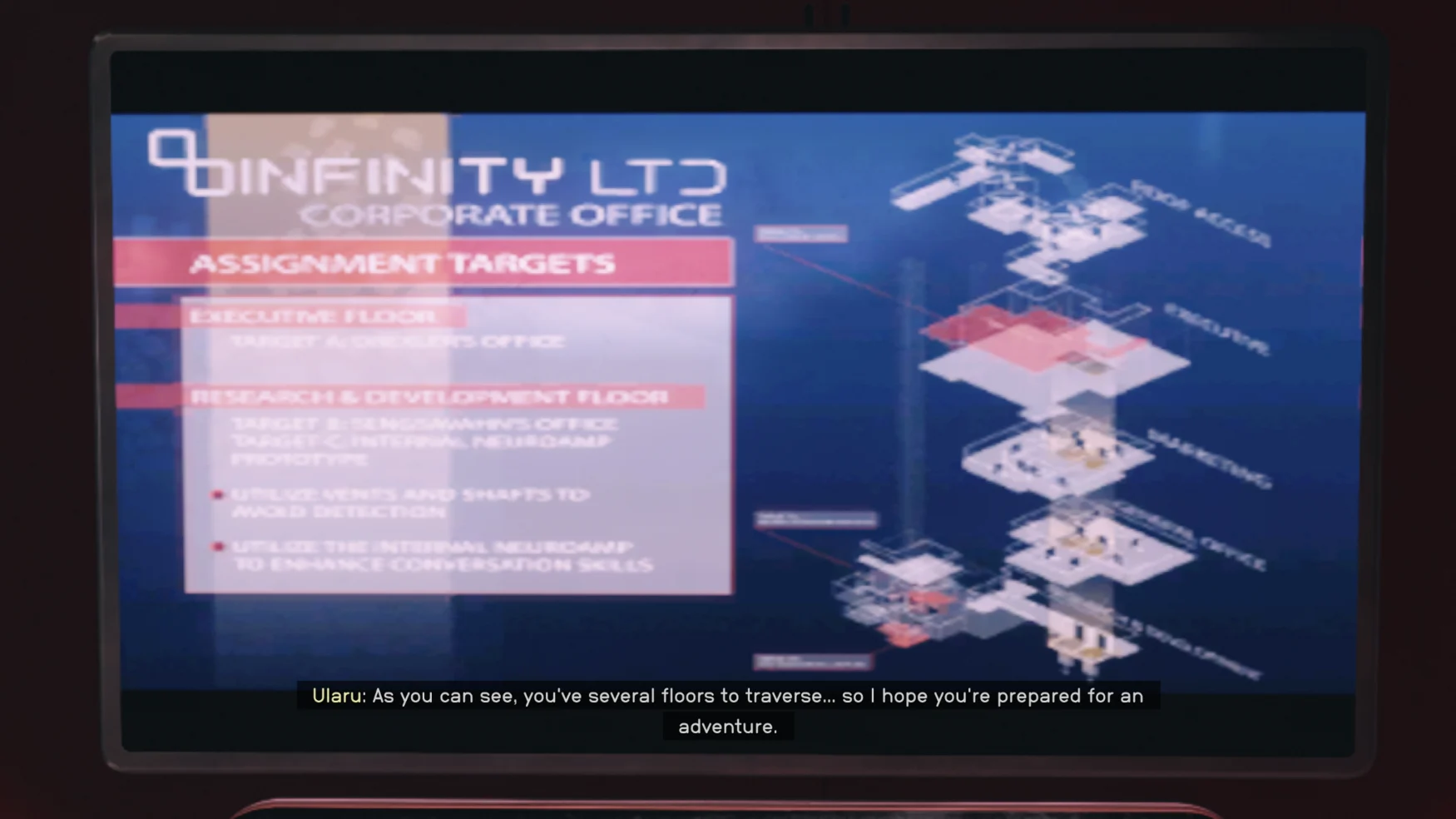
I played on Xbox Series S, and I attribute a handful of additional glitches to that hardware specifically, including the fact that my game crashed 10 times in 40 hours. There are generous auto saves, so I only lost significant progress twice, but that was more often than I’d like. The game also has lengthy, static loading screens, and consistent framerate issues. In one scene, a character was describing how I should sneak into a rival’s headquarters, and an image of the building’s layout filled the screen, pixelated beyond recognition.
“As you can see…,” the character said, driving home the visual insult.
The story that unravels in Starfield is mainstream sci-fi fare, and while it’s not revolutionary, it’s perfectly serviceable for an RPG. It establishes a universe of items to collect and knowledge to gain, with mysteries, danger and new characters emerging along the way. The game is at its best when the main narrative falls to the wayside, and players are free to mess around on new planets, play with their spaceships, find settlements or simply explore the galaxy.
Starfield is huge, and it contains a mission or mechanic that every player can enjoy — they just might have to get through 40 hours of a game they don’t really like before discovering that loop. Todd Howard, the head of Bethesda Game Studios, said in a letter to reviewers that there are 3 million words in the game; he noted the amount of text, but that figure says nothing about quality.
Overall, Starfield is fine. It’s a Frankenstein monster of other sci-fi games and references, and it doesn’t do any of these things better than the existing products. Combat? Cyberpunk 2077 is smoother. Mining and exploration? That’s all No Man’s Sky. Ship management? FTL still reigns. RPG storytelling? Look no further than Outer Worlds.
Digipicks, though? That one goes to Starfield.
This article originally appeared on Engadget at https://www.engadget.com/starfield-review-you-will-like-some-of-it-160046067.html?src=rss
Panic is an odd little company. It started out in the late 1990s as an app developer, and in 2016 it pivoted to video game publishing with Firewatch, followed by Untitled Goose Game in 2019. Both of these were breakout indie hits, resulting in significant success for the developers and Panic itself. And then, in 2022, Panic debuted the Playdate, a tiny yellow game console with a crank on the side and a monochromatic display. Playdate was a verified hit and its library is still being updated today.
Now it's mid-2023, and Panic just unveiled a fresh slate of projects it's publishing in its first-ever games showcase. Panic showed off five games and teased new titles from the makers of FAR: Changing Tides (Okomotive) and the team behind Untitled Goose Game (House House).
Nour: Play with your Food is what happens when high art meets a food fight, and honestly, it looks delicious. Nour lays out a bright and colorful landscape where players can mess around with bubbly, 3D versions of doughnuts, burgers, boba tea and other foodstuffs, creating strangely beautiful scenes or simply exploding noodles everywhere. It's all set to music and there are tiny challenges to complete, but Nour is mostly about making digital edible art. It all comes from Missouri studio Terrifying Jellyfish, helmed by designer and digital artist TJ Hughes. Nour is due to hit PC, PlayStation 4 and PS5 on September 12th, and it features DualSense-specific interactions — like slurping soup through the controller's microphone — on PS5.
Thank Goodness You're Here! got center-stage treatment during Gamescom's Opening Night Live showcase last week, and developers Will Todd and James Carbutt offered additional, sheep-laden context for the game during Panic's event today. Thank Goodness You're Here! is a slapstick platformer reminiscent of Don't Hug Me I'm Scared, but in a hand-crafted Gumball or Adventure Time art style. It's a silly romp through a Northern English town, starring a traveling salesman who picks up odd jobs from the equally odd people of Barnsworth. Thank Goodness You're Here! comes from Yorkshire studio Coal Supper and it's set to come out in 2024 for PC, Switch and PS5.
Arco is a complex archery game masquerading as a pixelated, top-down adventure, and it comes complete with a rich original soundtrack. Arco is the product of an international team of developers: Polish pixel artist Franek Nowotniak, Australian game developer Max Cahill, Spanish composer and sound designer José Ramón "Bibiki" García, and Mexican industry veteran Antonio "Fayer" Uribe. Arco is a tactical turn-based RPG with a unique combat system that has players plan moves in real-time, dodging incoming shots and taking aim in the moments between seconds. It's heading to PC and consoles (no specifics yet) in 2024.
There were no specific updates for this next game, Despelote, but its segment was powerful regardless. Despelote comes from Ecuadorian developers Julián Cordero and Sebastián Valbuena, and they use childhood memories of playing football around the city of Quito to tell their country's story of economic ruin and resurgence in the early 2000s. Panic's showcase highlighted personal stories from Cordero and Valbuena, and dove into the making of the game: Its dialogue is based on recordings of conversations they've had with family members and friends who lived through Ecuador's economic downturn in the late 1990s, and those who witnessed the country unite ahead of the 2002 World Cup. The backgrounds of the game, covered in static and color, are photographs of real places around Quito, and interactable objects, like the soccer ball, are highlighted in black and white. Despelote is coming to PC, Xbox Series X/S and PS5 in 2024.
The final confirmed game in Panic's lineup is Time Flies. This one has been generating buzz for a while now, and we had a great time with the preview at Summer Game Fest in 2022, but the big news today is that Panic has signed on to publish it. Time Flies is a simplistic, black-and-white game about the short life of a fly — and, in effect, the person playing as the fly. With mere seconds to live, players get to choose how a lonely housefly will live out its existence, completing a series of small challenges or just buzzing around, enjoying the scenery. The game comes from Michael Frei and Raphaël Munoz, it's produced by Frei's studio Playables, and is now being published by Panic. Time Flies will land on PC, Switch and PlayStation 5 in 2024 (a delay from its initial 2023 window).
The final two projects in Panic's lineup are just teases, for now. The Swiss team behind FAR: Changing Tides and FAR: Lone Sails, Okomotive, is working on a new game that will be published by Panic. Additionally, the developers of Untitled Goose Game, House House, are building something new, and they're pitching it as a totally different experience than the honk-fest that put them on the map. Panic published Untitled Goose Game, and the studio is on board to handle whatever comes next from House House.
This article originally appeared on Engadget at https://www.engadget.com/panics-first-games-showcase-highlights-five-deliciously-weird-titles-173045645.html?src=rss