Canada is joining the ranks of countries and states planning to ban sales of combustion engine cars. Canada has outlined an Emissions Reduction Plan that will require all new passenger car sales to be zero-emissions models by 2035. The government will gradually ramp up pressure on automakers, requiring "at least" 20 percent zero-emissions sales by 2026 and 60 percent by 2030.
Officials didn't say whether this applied to a make's product mix or simply the volume of cars sold. The strategy is more forgiving for the workplace — the Canadian government wanted 35 percent of total medium- and heavy-duty vehicle sales to be zero-emissions by 2035, and 100 percent of a "subset" of those machines by 2040.
The country is also offering $1.7 billion CAD (about $1.36 billion US) to extend incentives for buying electric cars and other zero-emissions vehicles. The current federal program offers up to a $5,000 CAD ($4,010 US) rebate for EVs, plug-in hybrids and hydrogen fuel cell cars that meet varying price, seat and battery requirements. Some provinces, such as British Columbia and Nova Scotia, offer their own incentives.
The broader plan is meant to reduce emissions to 40 to 45 percent below 2005 levels by 2030, and reach net zero by 2050. This includes funds to support renewable energy projects, shrink oil industry emissions and develop "nature-based climate solutions."
Canada's car market is small compared to the US. Passenger vehicle sales in Canada reached 1.64 million in 2021, according to estimates, versus an estimated 15 million for the country's southern neighbor. However, the de facto ban on combustion engine cars could further motivate car brands already transitioning to EVs — that's still a lot of potentially lost sales, particularly for a country known for its auto manufacturing plants.
It's a terrible time to buy a car. The global chip shortage and a pandemic-driven demand for safe transportation has pushed prices to obscene levels. It's not unusual to see dealers adding on $10,000 or more in "market adjustment fees." For most people, the smartest decision right now is to hold onto your current car for as long as possible. But as my wife and I began preparing for our second child, we realized we needed a larger vehicle for carrying twice as much baby gear, as well as to take the occasional road trip.
As much as I loved my 2017 RAV4 Hybrid, it would have been too tight with two car seats in the backseat along with two kids worth of gear in the trunk. It also didn't have CarPlay integration, which meant I had to rely on Bluetooth audio and Toyota's abysmal infotainment apps. (I was particularly annoyed that I couldn't even play the radio while using Google Maps navigation.) There weren't any rear vents for heating and cooling, either, which inevitably turned the back seat into a furnace during Georgia's obscenely humid summers. That's a surefire way to make a toddler cranky, and it would be even worse with an infant onboard.
Thankfully, I've spent the last few years obsessively researching the perfect family car. (You can thank the pandemic and my desire to tinker with new hardware for that.) Toyota's hybrid 2021 Sienna taught me that minivans can actually look cool these days and get decent mileage. I've also tested out Toyota's RAV4 Prime, Prius Prime and the Kia Sorento, all of which were plug-in hybrids (PHEVs) with a bit of electric driving range.
At first, I leaned towards the updated Sienna: I genuinely loved our review unit, and Toyota's reliability is legendary. But it turns out tons of other people had the same idea earlier this year. New Siennas were selling for $8,000 over their list price, based on what I saw at several local dealers. (Who, of course, didn't tell me about those extra fees until I stepped foot in their godforsaken offices.) And used 2021 models were actually going for more than their original list price. I wasn't about to spend over $50,000 on a used Sienna.
Devindra Hardawar/Engadget
Then I remembered the other popular minivan, the Chrysler Pacifica Hybrid. It's the only PHEV minivan on the market, delivering 33 miles of electric range and 32 MPG of gas driving. We gave it a glowing review in 2018, and, well, my options were pretty limited earlier this year. My dream car would have been a large family-sized EV, but with the Tesla Model X still far out of reach and no alternatives available, a PHEV simply made more sense.
After being burned by several useless car dealers, I spent weeks hunting through Carvana listings. I appreciated that they were up front about extra fees, they don't gouge you as much as dealers and I had a great experience buying my RAV4 from them in 2020. Eventually, I found my ideal Pacifica: a Limited 2018 model with low mileage, CarPlay, a tri-plane sunroof, advanced safety features and a 20-speaker sound system. There was no way I was going to look like a cool dad in a minivan, but at least I could have a bit of fun driving it.
Devindra Hardawar/Engadget
A week later, Carvana took away my RAV4 as a trade-in and delivered the Pacifica to my driveway. It was love at first sight. Even though it's not as sporty as the Sienna or RAV4 Prime, I love the Pacifica's cute and quirky aesthetic. It's as if Chrysler took the idea of a family van and processed it through a '90s anime filter. Its arched LED daytime running lights seem like they're winking at you, while the elegant body lines give it a sense of motion while it's standing still.
The sheer practicality of the Pacifica also won me over quickly. The Pacifica's sliding doors made it a cinch to install my daughter's 30-pound car seat, and I appreciated having much more room for child loading/unloading. Being a minivan, its trunk area was massive, even if I decided to have the third-row seats opened up. Those rear seats are a serious upgrade over mid-size SUVs, where they're only meant for children.
Devindra Hardawar/Engadget
My wife and I also loved having more interior space in general, since we inevitably found ourselves buried in toddler toys and gear in the RAV4. There’s even enough room for my daughter to use her portable potty between the seats! Another bonus: The rear seats also have two separate video screens, which will be perfect for keeping the kids entertained during long trips.
Things got even better in the driver’s seat, where the Pacifica’s UConnect infotainment system finally made me feel like I was driving a modern car. The 8.4-inch screen was bright enough to be clearly visible in direct sunlight (something my RAV4 struggled to do), and it had a surprisingly responsive touchscreen. While I was most excited to have CarPlay integration, it was nice to see that UConnect’s entire interface could be customized as easily as an iOS device.
Unfortunately, Carvana didn’t ship the Pacifica with a Level 1 charging cable, but I received a voucher to receive one from a local mechanic. That process would take a few weeks though, so I bought another charger myself to get juice up sooner. After 12 hours of charging from a standard wall socket in my garage, the Pacifica truly became the PHEV of my dreams. It handled quietly and smoothly around my neighborhood, giving us enough EV driving to deal with daycare drop-off and pickup, as well as our typical neighborhood errands.
While I’m sure nobody would ever mistake the Pacifica for a Tesla, I definitely surprised some local drivers when I zoomed ahead of them at stop lights. That’s the power of EV torque in action: It was so smooth, it never felt like I was driving a large minivan.
Devindra Hardawar/Engadget
My family and I had a blissful first few weeks with the Pacifica. We rarely exceeded the 30 miles of EV range we typically saw every day (a bit less than EPA estimates), which meant the gas gauge pretty much stayed put. Sadly, our honeymoon period ended shortly after Valentine’s Day, when Chrysler announced it was recalling 16,741 2017-2018 Pacifica hybrid models. The company said it was aware of 10 vehicles that caught fire while the ignition was off, many of which were also charging at the same time. Chrysler’s advice: Park outside and don’t charge your Pacifica until the problem is fixed.
Sadly, our car was among the recalled models, so now we’re stuck using it like a standard hybrid. The Pacifica is still a very nice family minivan, but without EV driving it just felt less special to me. Occasionally, its regenerative brakes will gather enough juice for a bit of electric fun, but it’s never too long before the V6 engine kicks in and it starts guzzling gas again. We’re also not getting anywhere near the 32MPG estimated mileage. Instead, it’s hovering around 21MPG, which is more in line with the standard gas Pacifica.
Devindra Hardawar/Engadget
After all that research and anticipation, it's heartbreaking to see our dream PHEV turned into a hybrid with so-so mileage, especially with skyrocketing gas prices. I’m also kicking myself for taking a risk on a Chrysler car, a brand that hasn’t been known for reliability nearly as much as Toyota. All I can do now is hope Chrysler comes up with a fix soon and pray that we don’t have to deal with a car fire with kids onboard. (Or just throw caution to the wind and swap to the Volvo XC90 PHEV.)
FedEx plans to test a different method of moving goods between depots starting next year, which could speed up the delivery process. The company has teamed up with Elroy Air, which is developing a vertical take-off and landing (VTOL) cargo drone, to transport packages between sorting centers via autonomous flights.
Elroy Air unveiled the Chaparral C1 drone in January. The company claims the hybrid-electric system has a range of up to 300 miles and can carry a load of up to 500 pounds in its cargo pod (so FedEx would need a lot of them if it wants to eventually replace planes). The drone has 12 electric motors and 12 propellers.
FedEx noted in a press release that the Chaparral C1 doesn't need specific infrastructure like an airport or dedicated charging station. It added that adopting the aircraft lines up with its goal of making operations carbon neutral by 2040.
Elroy Air
The companies have been collaborating for over two years and they're working on securing certifications to use the Chaparral C1 commercially. All going well, the plan is to start test flights in 2023 in Fort Worth, Texas.
Autonomous cargo flights could enable FedEx to move packages between sorting centers more efficiently than by on-the-ground transportation. The Chaparral C1 is in a pre-production phase (the cruise speed is unknown as yet). If it works as promised, FedEx would be able to fly cargo by drone from Fort Worth to Oklahoma City.
The electric revolution is no longer limited to daily drivers and eco-commuters. Luxury brands such as Audi, BMW, Mercedes and Porsche have already begun augmenting their lineups with EV variants, while hypercar makers like Lamborghini and Ferrari expect their first electrics to arrive in the next few years. On Tuesday, British automaker Lotus announced that it too has an EV, the 600HP Eletre, with deliveries beginning next year in China, Europe and the UK.
Lotus
Developed under the codename Type 132, the Eletre "takes the heart and soul of the latest Lotus sports car – the Emira – and the revolutionary aero performance of the all-electric Evija hypercar, and reinterprets them as a Hyper-SUV," according to the company's press release. It also accomplishes a number of firsts, the release continued: "first five-door production car, the first model outside sports car segments, the first lifestyle EV, the most ‘connected’ Lotus ever."
The Eletre was developed atop Lotus' 800V Electric Premium Architecture (EPA) platform. That voltage puts it on par with the Audi e-Tron and Hyundai Ioniq 5, meaning that on a 350 kW DC fast charger, drivers will be able to add around 248 miles of range in a 20 minute charge, according to the company. Lotus hasn't specified how big the battery will be beyond that it "has a battery capacity that’s over 100 kWh" but the company is estimating a total range of 373 miles, equivalent to that of the Tesla Model X Long Range Plus. Its dual front and rear motors will reportedly output 600 horsepower producing a top speed of 161 MPH and a sub-3 second 0-60.
Lotus
Ben Payne led development of the Eletre's exterior design, which features "porous" aerodynamics, a low stance atop the platform's long wheelbase with short overhangs at either end. "The Eletre is a progressive all-electric performance vehicle embodying emotion, intelligence and prestige and, as the first of the brand’s lifestyle cars, it sets the standard for what will follow," he said. "We have taken the iconic design language of the Lotus sports car and successfully evolved it into an elegant and exotic Hyper-SUV.”
The interior will offer either the traditional two-buckets-and-a-bench layout or an optional four individual seats, front and rear, beneath a fixed panoramic sunroof. The material choices for the cabin reflect Lotus' net-zero goals, with "durable man-made microfibres on the primary touchpoints, and an advanced wool-blend fabric on the seats," while the hard parts are constructed from little bits of carbon fiber recycled from the edge of weaves rather than being made specially.
Lotus
The infotainment system is a whole production. "Below the instrument panel a blade of light runs across the cabin, sitting in a ribbed channel that widens at each end to create the air vents," Tuesday's announcement read. This light blade serves as part of the vehicle's HMI and changes color to alert occupants of important events like incoming calls.
Below that is a 30mm tall "ribbon of technology." On the driverside, that ribbon serves as the instrument cluster, displaying vehicle and trip information, which can also be displayed via the AR system, which comes standard. On the passenger side, a second ribbon shows relevant contextual information like the nearby points of interest or the current music selection which plays through a KEF Premium 1,380-watt 15-speaker surround sound set-up with Uni-QTM.
Lotus
Between these two ribbons sits a 15.1-inch OLED touchscreen infotainment system that folds away when not in use. While most of the cabin controls are digital and can be used either through the touchscreen or voice interfaces, Lotus deemed some functions vital enough to warrant being mirrored to physical knobs and switches so drivers won't have to dig through submenus to turn on the windshield wipers. Even those digital controls, Lotus boasts that "with three touches of the main screen users can access 95 percent of the car’s functionality."
Lotus
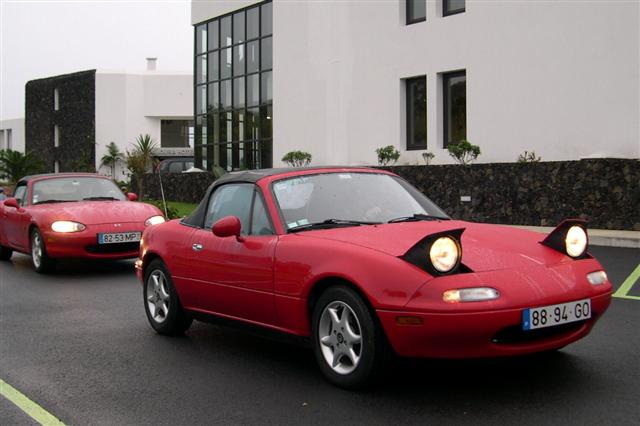
The Eletre is also the first vehicle on the market with a deployable LIDAR array. Used to supplement the driver assist system the unit pops up from the top of the windscreen, top of the rear glass and the front wheel arches — like the headlights from a 1990 MX-5 — when in use and then retracts when finished to maintain aerodynamics.
"ADAS technologies such as LIDAR sensors and cameras will become increasingly common on new cars as we move into a more autonomous era, and to have the world’s first deployable LIDAR system on the Eletre is a signal of the technology vision we have for Lotus," said Maximilian Szwaj, Vice President of Lotus Technology and Managing Director, LTIC. "This car has tech for today, and also for tomorrow, as it’s been developed to accept OTA updates as standard."
Lotus
Manufacturing begins later this year at Lotus' new production plant in Wuhan, China with deliveries beginning in 2023. The model will be available first in China, Europe and the UK. The company hasn't disclosed pricing details yet.
If you thought it wouldn't be long before Kia turned the Concept EV9 into a production model, you guessed correctly. The automaker has revealed that a road-ready version of the electric SUV will be available in Europe in 2023. There was no mention of launches in North America or other regions, but it's an SUV — it may just be a matter of time before you see the EV9 cruising American and Canadian streets.
Kia didn't say what would change in the transition from concept to production. However, we'd expect the badge to cut many of the more exotic features, including the yoke, giant wheels, retractable roof rails and lounge-like seating modes. We wouldn't be surprised if Kia kept the 27-inch display and even the hood-mounted solar panel, though.
The production EV9 might also preserve the claimed specs. The concept promised up to 300 miles of range and 350kW fast charging that could take it from a 10 percent charge to 80 percent in 30 minutes. Kia also recently detailed autonomous "Automode" technology for the EV9 that can take over from the driver on the highway.
There are still important unknowns like pricing. Even so, the EV9 could be one of Kia's most important all-electric vehicles to date, at least in some areas. While the EV6 has been well-received so far, some markets (particularly North America) skew heavily toward crossovers and SUVs. The EV9 could help Kia take on competitors like the Tesla Model Y and Volkswagen ID.4, not to mention reel in buyers who haven't been thrilled by the Niro EV.
Spotify is trying out a new “Car Mode” on a handful of users, the streaming service confirmed to TechCrunch. Last year the company retired its old Car View mode, explaining that it needed to pave the way for “new innovations”. The new in-car interface, called “Car Mode” appears to be more focused on voice controls than the older version. The jury is still out on whether hands-free voice recognition actually makes driving safer (some studies suggest drivers who use voice controls are more distracted). But the new revamp does offer less visual distractions and a cleaner interface.
According to screenshots of the Android version of Spotify Car Mode posted by 9to5Google, users can use voice controls to search for artists, browse albums, play or pause, fast forward and “like” a song. The new in-car mode appears to be far less busy than the older version, with simplified “Player View” and a “Library” tab that allows you to quickly access music or podcasts you’ve recently listened to.
#Spotify Car Mode : après avoir retiré son mode voiture à la fin de l'année dernière, Spotify travaille sur une nouvelle interface pour écouter ses listes de lecture au volant. En test sur Android pour certains utilisateurs. https://t.co/PlzRXcDT26 via @Frandroidpic.twitter.com/ryoEuWcqDX
Tech companies like Google and Amazon have pushed automakers to build more voice recognition features in future models of cars. As TechCrunchnotes, voice controls will also be an essential feature in autonomous vehicles. Spotify is no doubt trying to stay ahead of this trend. Last month, Spotify officially launched Car Thing, an in-car player with voice controls, after an extended test period (we reviewed it here). But for those who don’t want to pay extra for a hands-free in-car listening experience, Spotify’s new mode will be a welcome option.
The UK plans to increase the number of electric vehicle charging stations to 300,000 by 2030. That would increase the current number of charge points in the country by tenfold. The government has committed £1.6 billion ($2.1 billion) to the Electric Vehicle Infrastructure Strategy.
The effort to upgrade the charging network includes a focus on fast-charging stations for longer journeys and making EVs more viable for people without access to off-street parking. A previously announced Rapid Charging Fund has put £950 million ($1.25 billion) toward establishing a network of more than 6,000 fast-charging stations along England’s motorways by 2035. Under the strategy, £500 million ($658 million) has been earmarked for setting up charging stations in communities, including on-street locations.
New rules will mean that EV drivers can use contactless payments for charging, compare pricing and use apps to find stations. The UK will ban the sale of new fossil fuel-powered vehicles by 2030, so a more expansive charging network will be vital to ease the transition to EVs.
Along with the environmental benefits of EVs, the government touted the plan as a way to create jobs and reduce the UK’s dependency on foreign sources of energy and oil. As is the case elsewhere, prices of gas and home energy have increased dramatically in the UK since Russia invaded Ukraine last month. Access to Russian oil and energy suppliers has been nixed in the wake of sanctions against the country.
Produced by Oshkosh Defense, the NGDV (Next Generation Delivery Vehicle) is slated to become the new workhorse of the USPS, with the first batch of trucks scheduled to hit the road sometime in 2023. And as part of the USPS' efforts to upgrade its aging fleet, the service placed an initial order of 50,000 vehicles featuring a mix of gas and electric-powered trucks.
However, after learning that only 10 percent of those trucks would be EVs, the EPA and the Biden Administration requested the USPS to reconsider the distribution of its order. So now the USPS has increased the number of new electric postal trucks on order to 10,019 BEVs, which is a significant improvement, but still in the minority compared to gas-powered models.
Postmaster Lous Dejoy says "Today’s order demonstrates, as we have said all along, that the Postal Service is fully committed to the inclusion of electric vehicles as a significant part of our delivery fleet even though the investment will cost more than an internal combustion engine vehicle. That said, as we have also stated repeatedly, we must make fiscally prudent decisions in the needed introduction of a new vehicle fleet. We will continue to look for opportunities to increase the electrification of our delivery fleet in a responsible manner, consistent with our operating strategy, the deployment of appropriate infrastructure, and our financial condition, which we expect to continue to improve as we pursue our plan.”
Upgrades on the NGDV include air conditioning, built-in 360-degree cameras, better braking and traction control, and much improved safety thanks to things like air bags and a new collision avoidance system. That said, with the USPS having over 190,000 trucks currently in service, this initial 50,000 order only represents a fraction of what the service will need to fully modernize its fleet. So while the mix of gas and electric NGDVs might not be ideal right now, there should be room to expand electrification in the future.
Uber has struck a deal that will soon allow folks in New York City to hail yellow cabs through its app. The city's 14,000 taxi drivers will be able to accept fares from Uber users through apps like Curb and Arro.
This is Uber's first citywide partnership of this nature in the US. It expects the integrations to be up and running this spring. Passengers will pay around the same as they would for Uber X rides, the company told The Wall Street Journal, with Uber and its partners taking a cut of the fare. Taxi drivers will be able to see their estimated earnings before deciding whether to accept a trip.
The move could help remedy Uber's shortage of drivers and tackle the surge pricing problem while helping cab drivers find more fares. It could be an uneasy alliance, however, given that the taxi industry has opposed ride-sharing apps in the past. Engadget has contacted the New York Taxi Workers Alliance — which represents 21,000 yellow cab, ride-sharing and other drivers — for comment.
Toyota and Aurora are bringing their robotaxi partnership to Texas roads. TechCrunchreports the two companies are launching an autonomous ride-hailing test in the Dallas-Fort Worth area using modified Sienna hybrid minivans. The project will focus on highways and other high-speed roads, and is already dealing with challenges like high-speed merges, construction and vehicles stopped on shoulders.
The test is small, and the vans aren't truly driverless. Each vehicle will have both a behind-the-wheel supervisor as well as a monitor in a passenger seat. The Siennas will drive autonomously up to 70MPH, however, and Aurora said it would both grow the fleet and expand testing into more urbanized areas over the months ahead.
Aurora chose Texas both due to an abundance of major trucking routes (to help with its cargo-carrying plans) and the power to develop and test high-priority trips for its Aurora Connect robotaxi platform, such as rides to the airport. The company's trucks are already ferrying goods for Uber Freight in Texas.
There's plenty of pressure for Toyota and Aurora to succeed with the test. Aurora bought Uber's self-driving unit in December 2020 to help speed-up its ride-hailing plans, and it ultimately hopes to plug Connect into Uber and other hailing services. The sooner experiments like this bear fruit, the sooner Toyota, Aurora and Uber can compete with rivals like Cruise and Waymo, both of which are already offering limited rides to the public.