Microsoft is set to launch its abusive-voice reporting feature for Xbox consoles. Announced in July, it lets gamers submit inappropriate remarks heard while playing multiplayer titles. The system captures a 60-second clip saved to the console; you then have 24 hours to complete the report. The feature arrives this week in the September update for Xbox Series X/S and Xbox One. However, it’s initially limited to the “select English-language markets” of the US, UK, Canada, Ireland, Australia and New Zealand.
Microsoft says it tailored voice reporting to balance ease of use with minimal gaming interference. “Our feature is designed so that only you, the player, can initiate the capture of the last 60 seconds of gameplay activity that occurred for content moderation purposes,” the company wrote. It works similarly to capturing standard gameplay clips, but content recorded for moderation review is only used for that purpose. “They will not appear in your recent captures, and clips cannot be downloaded, modified, or shared,” Microsoft wrote.
The company stressed that the console won’t save or upload any clips unless you start the reporting process. After capturing a clip of spoken chat that you believe breaks Xbox’s community standards, the sample will remain on your console for “24 online hours,” and you can choose to submit it immediately or wait for your gameplay session to end. In addition, your Xbox will alert you as a final reminder to send the report if the 24-hour period is about to expire. Finally, you’ll receive a notification later telling you whether the company took action against the perpetrator.
Also included in the Xbox September update is the ability to quickly stream Xbox gameplay to Discord. After updating your console, you can link your Discord account and join voice channels on the platform directly from the console. You’ll find the activation controls in the Xbox guide by navigating to Parties & Chats and choosing Discord.
The September update also lets users toggle the console’s variable refresh rate (VRR). You can now turn the feature off or back on by navigating to General > TV & display options > Video. You’ll see options to leave VRR “always on,” switch it to “gaming only” or disable it altogether.
This article originally appeared on Engadget at https://www.engadget.com/xboxs-reporting-system-for-abusive-voice-chat-arrives-this-week-175806184.html?src=rss
The critically-acclaimed cat-based adventure gameStray is getting an actual animated movie. Even cooler? The title's original publisher Annapurna is making the flick, after it scored a surprise hit on Netflix with its first animated feature Nimona. The creative team is still under wraps, but Annapurna Animation head Robert Baird told Entertainment Weekly that the film is in active development and that it’ll be the “greatest hopepunk movie that's ever been made.”
Baird defines “hopepunk” as a narrative concept that deems optimism as a form of resistance against tyranny. That just about describes the emotional tenor of the game, so Annapurna’s on the right track. Additionally, it’s been confirmed that the game’s companion drone B-12 will be a large part of the film, with Baird stating it’s a “buddy comedy about a cat and a robot” going on to cite the pair’s “hilarious dynamic.”
The original game was released last year and put players in control of a curious cat in a cyberpunk landscape. There’s plenty of platforming, stealth-based traversal and, uh, meows. The title was praised for giving players a cat-level perspective on the world and has been a huge hit on just about every platform.
As for Annapurna, the Stray movie is only a single step in its plans for Hollywood domination. The animation arm of the company announced a few more films and teased plenty more. Chris Wedge, the creator of Ice Age, is directing a movie called FOO, short for fish out of water, and Nimona’s co-director Nick Bruno has signed on to helm an unnamed project that’s only been described as “high concept” and “Spielbergian.”
The company also teased that other games under its umbrella could receive the movie treatment, stating that Stray was chosen as the first adaptation due to it being “wildly popular.” Other titles in the publisher’s roster include the time-loop thriller Twelve Minutes, starring Daisy Ridley and James McAvoy, the Starfield-before-Starfield sci-fi romp Outer Wilds, the narrative mystery Kentucky Route Zero and many more. Each of these would make for a decent movie.
This article originally appeared on Engadget at https://www.engadget.com/cyberpunk-adventure-game-stray-will-be-adapted-as-an-animated-movie-174606306.html?src=rss
The classic survival horror series Alone in the Darkrecently announced a reboot set to release in October, but it just got delayed to January. This push isn’t for the usual reasons. The game doesn’t need more polish or anything like that. It’s simply a matter of finding an audience in the bustling gaming month of October, given the flood of titles coming in the next several weeks.
The new release date is January 16, with publisher THQ Nordic noting that the game’s “eerie embrace of solitude” would be “impossible to achieve in a gaming month as busy as October.” The company isn’t blowing smoke, as October sees the release of Super Mario Bros. Wonder, Forza Motorsport, Spider-Man 2, Assassin’s Creed Mirage, Detective Pikachu Returns, Sonic Superstars, Alan Wake II and, well, the list goes on and on. It’s certainly a wallet-busting month.
This is in addition to September’s crowded release schedule, so the January launch of Alone in the Dark will give gamers more time to finish Starfield, Baldur’s Gate 3, Mortal Kombat 1 and a fresh round of Cyberpunk 2077 DLC. It’s interesting to note that none of these September or October releases are survival horror games, though Alan Wake gets close, so the title could have found a niche anyways.
So what is Alone in the Dark? The original title is considered the first 3D survival horror game, beating Resident Evil to the punch by four years. Since the 1990s, there have been sequels, spinoffs and even other attempts at rebooting the franchise. This latest installment is the first mainline entry since 2015 and the first game in the series developed since THQ Nordic bought the license from Atari back in 2018.
The reboot’s story is written by Mikael Hedberg, the mind behind the survival games Soma and Amnesia: The Dark Descent. Creature designs are being handled by long-time Guillermo del Toro collaborator Guy Davis. THQ Nordic has stated that the new Alone in the Dark is a completely original game, but will feature playable characters from the 1990s titles. It’ll release on PlayStation 5, Xbox Series X/S and PC on January 16, 2024.
This article originally appeared on Engadget at https://www.engadget.com/alone-in-the-dark-reboot-delayed-to-the-oh-so-spooky-month-of-january-161346620.html?src=rss
It’s fairly evident that Meta has been losing interest in dealing with news links and discussion across its platforms for some time and now the company is doing away with Facebook’s News tab in a few countries. It will remove the dedicated section in the UK, France and Germany in early December.
Unlike in Canada, where the company has blocked news content to protest a law that would compel it to pay publishers in the country, Meta says news organizations can continue to post links, Reels and so on to Facebook in those three territories. Users shouldn’t have any issues with accessing news content there either.
Meta says it will honor existing Facebook News deals with publishers in the UK, France and Germany. However, it won’t renew those pacts or enter into new ones in those countries. Moreover, the company doesn’t “expect to offer new Facebook products specifically for news publishers in the future.”
Meta says the Facebook News shutdown in the three countries is part of its efforts to funnel resources toward services and products users care more about. News accounts for less than three percent of what people see in their Facebook feeds, and the company claims folks are more interested in short-form video, connecting with other people and finding opportunities, interests and passions.
The decision doesn’t undercut Meta’s commitment to providing users with access to reliable information across its platforms, the company said. It added that it remains committed to working with third-party fact checkers to clamp down on misinformation.
Still, the shuttering of the tab is part of a trend of Meta depreciating the importance of news across its platforms. For one thing, it switched from human curators to relying on algorithms to place stories in the News tab earlier this year. When it debuted its latest platform, Threads, it said news wouldn’t be a priority there. That’s despite the company designing the service as a direct competitor to X (formerly Twitter), where news and real-time events drove much of the discourse for over a decade.
Meta’s decision to nix news content in Canada entirely has been a contentious one. Many parties criticized Meta for limiting access to reliable information related to serious issues such as the wildfires that have raged across the country this summer.
Last week, the Canadian government said that to comply with its Online News Act and continue to offer users in the country news content on Facebook and Instagram, Meta would need to pay publishers there around $62 million CAD ($45.5 million) per year. Meta, which generated over five times that amount in revenue per day last year, didn’t budge on its stance.
This article originally appeared on Engadget at https://www.engadget.com/facebooks-news-tab-is-going-away-in-the-uk-france-and-germany-142243544.html?src=rss
Since its release in 1993, id Software's DOOM franchise has become one of modern gaming's most easily recognizable IPs. The series has sold more than 10 million copies to date and spawned myriad RPG spinoffs, film adaptations and even a couple tabletop board games. But the first game's debut turned out to be a close thing, id Software cofounder John Romero describes in an excerpt from his new book DOOM GUY: Life in First Person. With a mere month before DOOM was scheduled for release in December 1993, the iD team found itself still polishing and tweaking lead programmer John Carmack's novel peer-to-peer multiplayer architecture, ironing out level designs — at a time when the studio's programmers were also its QA team — and introducing everybody's favorite killer synonym to the gamer lexicon.
In early October, we were getting close to wrapping up the game, so progress quickened. On October 4, 1993, we issued the DOOM beta press release version, a build of the game we distributed externally to journalists and video game reviewers to allow them to try the game before its release. Concerned about security and leaks, we coded the beta to stop running on DOS systems after October 31, 1993. We still had useless pickups in the game, like the demonic daggers, demon chests, and other unholy items. I decided to get rid of those things because they made no sense to the core of the game and they rewarded the player with a score, which was a holdover from Wolfenstein 3-D. I removed the concept of having lives for the same reason. It was enough to have to start the level over after dying.
There was still one missing piece from the game, and it was a substantial one. We hadn’t done anything about the multiplayer aspect. In modern game development, multiplayer would be a feature factored in from day one, and architected accordingly, in an integrated fashion. Not with DOOM. It was November, and we were releasing in a month.
I brought it up to Carmack. “So when are we going to make multiplayer mode?”
The short answer was that Carmack was ready to take it on. Looking from the outside in, I suspect some might wonder if I wasn’t just more than a bit concerned since we were hoping to ship in 1993. After all, John had never programmed a multiplayer game before. The truth is that I never had a doubt, not for a second. Back in March, Carmack had already done some innovative network programming in DoomEd. He wanted to play around with the distributed objects system in NeXT-STEP, so he added the ability to allow multiple people who were running DoomEd to edit the same level. I could see him drawing lines and placing objects on my screen from his computer. Then, I’d add to his room by making a hallway, and so on.
For multiplayer, Carmack’s plan was to explore peer-to-peer networking. It was the “quick and dirty” solution instead of a client-server model. Instead of one central computer controlling and monitoring all the action between two to four players, each computer would run the game and sync up with the others. Basically, the computers send each other updates at high speed over the local network. The speed of Carmack’s network programming progress was remarkable. He had some excellent books on networking, and fortunately, those books were clearly written and explained the process of using IPX* well. In a few hours, he was communicating between two computers, getting the IPX protocol running so he could send information packets to each computer. I’d worked with him for three years and was used to seeing incredible things on his screen, but this was awe inspiring, even for him. In a matter of hours, he got two PCs talking to each other through a command-line-based tool, which proved he could send information across the network. It was the foundation needed to make the game network-capable. It was great for two players, and good for four, so we capped it at that. We were still on track to deliver on our promise of the most revolutionary game in history before the end of the year.
Carmack called me into his office to tell me he had it working. Both PCs in his office had the game open, and they were syncing up with two characters facing one another. On one PC, Carmack veered his character to the right. On the other monitor, that same character, appearing in third person, moved to the left. It was working!
“Oh my God!” I yelled, throwing in some other choice words to convey my amazement. “That is fucking incredible.”
When I’d first truly visualized the multiplayer experience, I was building E1M7. I was playing the game and imagined seeing two other players firing rockets at each other. At the time, I thought, “This is going to be astonishing. There is nothing like this. This is going to be the most amazing game planet Earth has ever seen.” Now, the moment had finally arrived.
I rushed to my computer and opened the game, connecting to Carmack’s computer.
When his character appeared on screen, I blasted him out of existence, screaming with delight as I knocked “John” out of the game with a loud, booming, bloody rocket blast. It was beyond anything I had ever experienced before and even better than I imagined it could be.
It was the future, and it was on my screen.
“This is fucking awesome!” I yelled. “This is the greatest thing ever!”
I wasn’t kidding. This was the realization of everything we put into the design months earlier. I knew DOOM would be the most revolutionary game in history, but now, it was also the most fun, all-consuming game in history. Now that all the key elements of our original design were in place, it was obvious. DOOM blew away every other game I’d ever played. From that moment on, if I wasn’t playing DOOM or working on DOOM, I was thinking about DOOM.
Kevin, Adrian, and Jay began running the game in multiplayer mode, too, competing to blow away monsters and each other. They were yelling just as much as I did, cheering every execution, groaning when they were killed and had to respawn. I watched them play. I saw the tension in their bodies as they navigated the dark, detailed world we’d created. They were hunters and targets, engaged in a kill-or-be-killed battle, not just with monsters, but with other, real people. Players were competing in real time with other people in a battle to survive. I thought of boxing or an extreme wrestling match, where you go in a cage to fight. This was much more violent, more deadly. It was all simulated, of course, but in the moment, it felt immediate. It was a new gaming experience, and I searched for a way to describe it.
“This is deathmatch,” I said. The team latched onto the name. It instantly articulated the sinister, survival vibe at the heart of DOOM.
In mid-November, we buckled down, getting in the “closing zone,” where you begin finalizing all areas of the game one by one. Now that Carmack had multiplayer networking figured out, we needed to fine-tune the gameplay and functionality, delivering two multiplayer modes—one in which players work together to kill monsters and demons, and the other where players try to kill each other (usually without monsters around). The first mode was called co-op, short for cooperative. The second, of course, was deathmatch.
Another important word needed to be coined. Deathmatch was all about getting the highest kill count in a game to be judged the winner. What would we call each kill? Well, we could call it a kill, but that felt like a less creative solution to me. Why don’t we have our own word? I went to the art room to discuss this with Kevin and Adrian.
“Hey guys, for each kill in a deathmatch we need a word for it that is not ‘kill,’” I said.
Kevin said, “Well, maybe we could use the word ‘frag.’"
“That sounds like a cool word, but what does it mean?” I asked.
“In the Vietnam War,” Kevin explained, “if a sergeant told his fire team to do something horrifically dangerous, instead of agreeing to it, they would throw a fragmentation grenade at the sergeant and call it friendly fire. The explanation was ‘Someone fragged the sarge!’”
“So, in a deathmatch we’re all fragging each other!” I said.
“Exactly."
And that is how “frag” entered the DOOM lexicon.
The introduction of deathmatch and co-op play profoundly affected the possibility space of gameplay in the levels. Crafting an enjoyable level for single-player mode with lots of tricks and traps was complex enough, but with the addition of multiplayer we had to be aware of other players in the level at the same time, and we had to make sure the single-player-designed level was fun to play in these new modes. Our levels were doing triple duty, and we had little time to test every possible situation, so we needed some simple rules to ensure quality. Since multiplayer gameplay was coming in quickly near the end of development, I had to define all the gameplay rules for co-op and deathmatch. We then had to modify every game map so that all modes worked in all difficulty levels. These are the rules I came up with quickly to help guide level quality:
Multiplayer Rule 1: A player should not be able to get stuck in an area without the possibility of respawning.
Multiplayer Rule 2: Multiple players (deathmatch or co-op mode) require more items; place extra health, ammo, and powerups.
Multiplayer Rule 3: Try to evenly balance weapon locations in deathmatch.
Multiplayer Rule 4: In deathmatch mode, try to place all the weapons in the level regardless of which level you’re in.
Additionally, we had to make all the final elements for the game: the intermissions and various menus had to be designed, drawn, and coded; the installation files needed to be created, along with the text instruction files, too. We also had to write code to allow gamers to play these multiplayer modes over their modems, since that was the hardware many people had in 1993. Compared to our previous games, the development pace on DOOM had been relatively relaxed, but in November our to-do list was crowded. Fortunately, everything fell into place. The last job for everyone was to stress-test DOOM.
Preparing for release, we knew we needed someone to handle our customer support, so earlier in the year, we’d hired Shawn Green, who quit his job at Apogee to join us. Throughout development, at every new twist and turn, we kept Shawn up to date. He had to know the game inside out to assist gamers should any issues arise. Shawn also helped us by testing the game as it went through production.
I noted earlier that id Software never had a Quality Assurance team to test our releases. For three years, John, Tom, and I doubled as the id QA team. We played our games on our PCs, pounding multiple keys, literally banging on keyboards to see if our assaults could affect the game. On the verge of release, and with more people than ever before in the office, we spent thirty hours playing DOOM in every way we could think of—switching modes, hitting commands—running the game on every level in every game mode we had, using every option we added to the game to see if there were any glitches.
Things were looking good. We decided to run one last “burn-in” test, a classic test for games where the developers turn the game on and let it run overnight. We ran DOOM on every machine in the office. The plan was to let it run for hours to see if anything bad happened. After about two hours of being idle, the game froze on a couple screens. The computers seemed to be okay—if you hit “escape” the menu came up—but the game stopped running.
We hadn’t seen a bug like this during development, but Carmack was on the case. He was thinking and not saying a word, evidently poring over the invisible engine map in his head. Ten minutes passed before he figured it out. He concluded that we were using the timing chip in the PC to track the refresh of the screen and process sound, but we weren’t clearing the timing chip counter when the game started, which was causing the glitch. Ironically, this logic had been part of the engine from day one, so it was surprising we hadn’t noticed it before.
He sat down at his computer, fixed the bug, and made a new build of the game. We put the update on all the machines and held our breath for the next two hours.
Problem solved.
That was the last hurdle. We were ready to launch. That day, December 10, would be DOOM Day.
***
* IPX is an acronym for Internetwork Packet Exchange. In sum, it is a way in which computers can talk to one another.
This article originally appeared on Engadget at https://www.engadget.com/hitting-the-books-doom-guy-john-romero-abrams-press-143005383.html?src=rss
The artist formerly known as Twitter has been in some hot water this week after Bloomberg found that the social media site would start collecting biometric details, along with job and education data, from users. Now, a newly-released privacy policy indicates that X will use this data, along with other collected personal information, to train AI models, as originally spotted by Alex Ivanovs at Stackdiary.
The privacy policy clearly indicates that the company plans to use information it collects, along with any publicly available data, to help train machine learning algorithms.
“We may use the information we collect and publicly available information to help train our machine learning or artificial intelligence models for the purposes outlined in this policy,” the privacy posting reads.
Musk has confirmed the change, but notes that only publicly available information will be collected, and not “DMs or anything private.” X no longer has a press arm, so there’s no real way to get ahold of anyone for more concrete information as to what data and information will be scooped up and what exactly it'll be used for.
X doesn’t have any public AI ambitions, but owner Elon Musk does. He recently launched a company called, wait for it, xAI that aims “to understand the true nature of the universe”, so maybe your biometric data and related information will be used to further that lofty and totally achievable goal. Stackdiary points to text on the xAI homepage that says it “will work closely with X” to “make progress towards our mission.”
There’s another option for where this data is headed. Musk recently announced ambitions to compete with Linkedin, stating that the employment site was “cringe” and that X’s version would be “cool.” So that would explain the collection of job and education histories from its user base.
Finally, there’s a third option. X isn’t exactly raking in the advertising dollars, so selling user data would be an easy way to make some coin. However, there’s no evidence to point to that, aside from it being a standard practice in the social media world. In the past, Twitter primarily used collected user data to benefit itself, and not third parties.
This article originally appeared on Engadget at https://www.engadget.com/elon-musks-x-will-use-public-data-to-train-ai-models-184924197.html?src=rss
A new G.I. Joe beat 'em up is on its way. Hasbro, developer Maple Powered Games and publisher Freedom Games announced G.I. Joe: Wrath of Cobra today. The upcoming retro game will let you play as series stalwarts Duke, Scarlett, Snake Eyes, Roadblock and other classic characters. It joins TMNT: Shredder’s Revenge and Double Dragon reboot as the latest evidence that 2D side-scrolling punch-fests are enjoying an unexpected 2020s renaissance.
The game’s developers promise a variety of locales to bash and kick your way through as you try to defeat Cobra. “Navigate land, air, sea, and even space through iconic locations like Cobra Island, the Pit, Cobra’s top-secret underwater base, and more as you thwart the devious Cobra Commander’s latest scheme to take over the world,” the game’s announcement reads. It promises an arsenal of weapons, explosives and more.
Hasbro / Maple Powered Games / Freedom Games
G.I. Joe: Wrath of Cobra has story and arcade modes, each supporting up to four co-op players (online or locally). It includes “lovingly hand-drawn pixel art” and “classic style cartoon cutscenes.” The soundtrack, crafted by Tee Lopes (composer of its spiritual sibling, TMNT: Shredder’s Revenge), appears to include a modern take on the animated series’ classic theme song. (No word yet on whether it will take timeouts for “Knowing is half the battle” PSAs.)
“G.I. Joe is one the most iconic brands from the 80s and it was the golden era of arcade games. To celebrate the growing popularity of retro themed games we’re thrilled to partner with Maple Powered Games and Freedom Games to bring G.I. Joe fans our first ever Hasbro Retro Arcade experience in this exciting interpretation of a classic 2D beat ‘em up,” said Eugene Evans, Hasbro’s SVP of Digital Strategy and Licensing.
G.I. Joe: Wrath of Cobra will launch on Switch, Windows, macOS and Linux in Q1 2024. You can wish-list the game today on Steam and Epic.
This article originally appeared on Engadget at https://www.engadget.com/gi-joe-wrath-of-cobra-continues-the-retro-beat-em-up-renaissance-212256623.html?src=rss
The first trailer for the Five Nights at Freddy’s movie was pretty nifty, but suspiciously light on the game franchise’s renowned murderous animatronics. That issue has been rectified with the latest trailer, as it features prominent appearances from Foxy, Bonnie, Chica and of course, Freddy himself. The homicidal puppets are doing what they do best, murdering people.
You also get a bit more of the plot, which seems to mirror the game. It zeroes in on a character played by Josh Hutcherson, from the criminally underrated Future Man, as he starts a new overnight gig as a security guard at a family entertainment center. However, Freddy and his animatronic gang of thugs pose a terrifying threat to anyone in the building after dark.
As expected, the animatronics look great, nearly matching the game’s original aesthetic. This is no surprise given they were designed by Jim Henson’s Creature Shop. This is a far leap from Kermit and Miss Piggy, however, as the movie contains plenty of “strong violent content, bloody images and language.”
Despite that warning, it’s rated PG-13, so the gore will likely be kept to a minimum. Five Nights at Freddy’s premieres in theaters and on the streaming service Peacock just in time for Halloween, on October 27th.
This article originally appeared on Engadget at https://www.engadget.com/new-five-nights-at-freddys-movie-trailer-shows-the-murderous-animatronics-in-action-171506472.html?src=rss
YouTube Music's latest redesign of the Now Playing page is making its way to iOS and Android devices everywhere. There's a new feature that brings an extra social element to the app. You'll now be able to read and post comments on the Now Playing page. That option was limited to playlists until now.
According to screenshots that 9to5 Google shared, some of the comments on the page may date back several years. As such, it seems like Google is populating the section with comments from related YouTube videos, for better or worse (probably worse).
The updated design is rolling out gradually, so you may not see it right away, but there are some other changes in store. The cover art is bigger and song titles and artist names now hug the left side of the screen. One other key thing to note is that there's now a carousel with buttons for comments, giving a track a thumbs up or down, saving songs to a playlist, sharing, downloading and the radio. Most of the previously available actions required an extra tap to access until now. The buttons look very similar to the ones you'll see below the YouTube video player. In addition, more of the controls should be easier to access as they're at the bottom of the screen.
This article originally appeared on Engadget at https://www.engadget.com/youtube-musics-now-playing-tab-adds-everyones-least-favorite-feature-youtube-comments-164521304.html?src=rss
Patience. Starfield is a huge game set in a universe of newly inhabited planets, and it combines interstellar travel with furious gunplay, alien exploration, spaceship management, character customization and interpersonal strife, and it takes a moment for all of these layers to merge into a coherent experience. But, give Starfield time, approach its systems with grace, and you’ll be rewarded with a big, generic sci-fi RPG.
Starfield has moments of beauty, but it features just as many instances of drudgery and disconnection in its main quest line. Playing on pre-release code on Xbox Series S, these issues are only exacerbated by chugging framerates, low-resolution set pieces and roughly one hard crash every five hours. Starfield is big and largely bland, and while it gets some open-world gameplay aspects right, it doesn’t offer anything new for the sci-fi or RPG genres.
Bethesda
That said, there are plenty of classic cosmic environments to enjoy in Starfield, and chances are, every player will find a gameplay aspect that resonates with them. Bethesda claims it will take hundreds of hours to interact with everything in Starfield, and I can say that 40 hours and one New Game Plus later, this doesn’t feel like a lie. I've barely scratched the surface of some late-game systems, like outpost building and in-depth ship customization, but I got a sense of these mechanics while completing the main storyline and related side missions, which featured exploration, mining, social manipulation, resource management, crafting, cooking and combat — both on the ground and among the stars.
Combat is one of Starfield’s weak points, unfortunately. Gun battles are central to the game’s core loop, but they often feel unnecessary. Some encounters are straightforward, but some act as a literal roadblock, with too many enemies, robots and turrets to destroy, no opportunity for stealth, and random drop-ins from high-level bullet sponges. My advice is to pay attention to the level of each foe you’re shooting, and if you’re overwhelmed, run straight past the bemused enemies to unlock the next step in your mission. (This tactic works in a surprising number of encounters, and it never feels great).
My issues with Starfield’s combat largely stem from its homogenous weaponry. Maybe I’ve been spoiled by Borderlands, but the guns in Starfield all feel incredibly similar to each other, and they generally aren’t satisfying to shoot. This situation improves with time — players have the option to modify their arsenal and there are a few guns with elemental effects scattered around the galaxy — but overall, combat feels like something tacked on to appease FPS players, despite being central to progression.
Bethesda
There are no VATS here, just items to upgrade your stats and a secondary ability tree that eventually gets added to your loadout. The boost pack is a nice touch, allowing players to fly in short bursts without expending precious oxygen. These features help make fighting more dynamic, but even in the final battles of the main mission, gunplay doesn’t feel consistent or compelling. Starfield’s combat isn’t awful, but the experience maxes out at meh.
Being sneaky was never really an option for me — I placed a point in my Stealth skill, but even with a crouch meter, security guards and space pirates always spotted me instantly, and they all chose violence. Sure, I could’ve focused on upgrading my Stealth tree, but I was busy maxing out my Persuasion skills and adding tools like Thrusters to my ship (which I recommend doing early on).
It’s not just the weapons in Starfield that feel repetitive. Regardless of which planet they’re on, buildings come in three flavors: bright utopia, gritty cyberpunk, and industrial laboratory. Combat environments tend to blend together, with metallic platforms, staircases and vents in factory-like bases. Sometimes these are built into an extremely dark cave system, but they’re often filled with the same containers, doors and enemies. The cyberpunk city of Neon — I bet you can guess what it looks like — is essentially an expanded version of the underground marketplace at New Atlantis, your character’s headquarters. The main commercial districts are recognizable across planets, with clean white architecture.
Bethesda
Not only are these set pieces similar to each other, but they’re also stereotypical in sci-fi. Starfield offers nothing new from a visual standpoint. This isn’t too surprising, considering the game’s retrofuturistic angle, which limits its design to specific aesthetics that have been mined by Blade Runner, Star Trek, Star Wars and other incredibly popular franchises. On top of this, there are missed opportunities for unique worldbuilding — there is no intelligent alien life in the game, and even generations removed from Earth’s rigid borders, humans speak English with distinct regional accents. Across the solar systems, from ships to skyscrapers to clothing, Starfield is filled with drab.
Despite its familiarity, I had a good time hanging out in Neon specifically. When building my character, I chose to affiliate myself with the Street Rats of Neon, and this trait helped me feel at home under the prismatic lights of the city, providing valuable dialogue options and insights. When it came time to grind, I chose to spend my time on Neon, completing tasks for various citizens and shop owners, and eventually landing a job in corporate espionage at a massive technology company. Anyone who enjoys Bethesda’s dialogue trees and Persuasion mechanics will be happy here, but be aware that combat has been shoehorned into most of these missions, too.
When I needed a break from stealing trade secrets, I explored a handful of planets from the main missions, following distortions on my scanner, surveying the landscape and growing in strength along the way. These were some of the most peaceful and deeply enjoyable moments of Starfield, for me: wandering along the ruins of a lost settlement while a soundtrack of simple piano music echoed like interstellar radar, notes building slowly, teasing adventure beyond the next bend.
Engadget
This was the loop that I liked in Starfield. Other players will be drawn to quests outside of Neon; others will spend hours customizing their ships, gear and outposts; some will stick to interstellar combat and completing their Starmap. There’s enough variety in the planets to justify exploration, though there remains an abundance of gray and brown in the terrain overall. Ship combat is tricky at first, but it quickly becomes a delightful challenge of resource management and target prioritization, as long as you’re not suddenly bombarded by overpowered enemies.
There is a lot to do in Starfield, and a lot to enjoy. The Digipick lock-picking mechanic is so satisfying that I’d play it as a standalone game. The end of the main mission line introduces a compelling twist that messes with the player’s sense of reality in the middle of a frantic gun fight, and it was the most fun I had in combat. Though I would’ve loved to meet some extraterrestrials, it was fantastic to see so many women, LGBT folks and people of color in leadership positions throughout the game.
Starfield is a classic Bethesda RPG from toot to snoot, and this includes a litany of technical issues. I saw problems with facial and movement animations, I encountered dialogue and persuasion trees that barely made sense, and I had multiple conversations with characters who were rudely facing the wrong way.
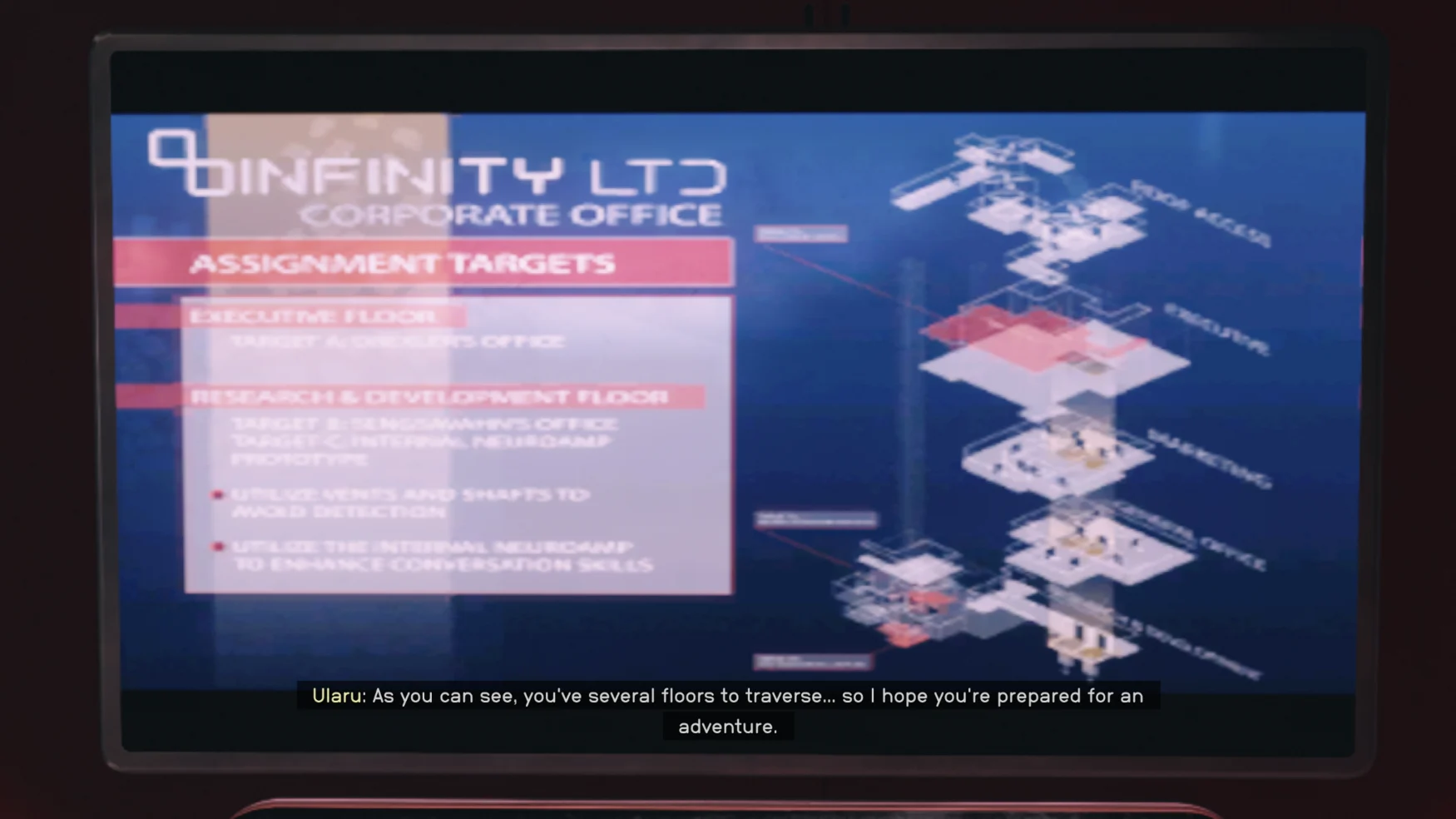
I played on Xbox Series S, and I attribute a handful of additional glitches to that hardware specifically, including the fact that my game crashed 10 times in 40 hours. There are generous auto saves, so I only lost significant progress twice, but that was more often than I’d like. The game also has lengthy, static loading screens, and consistent framerate issues. In one scene, a character was describing how I should sneak into a rival’s headquarters, and an image of the building’s layout filled the screen, pixelated beyond recognition.
“As you can see…,” the character said, driving home the visual insult.
The story that unravels in Starfield is mainstream sci-fi fare, and while it’s not revolutionary, it’s perfectly serviceable for an RPG. It establishes a universe of items to collect and knowledge to gain, with mysteries, danger and new characters emerging along the way. The game is at its best when the main narrative falls to the wayside, and players are free to mess around on new planets, play with their spaceships, find settlements or simply explore the galaxy.
Starfield is huge, and it contains a mission or mechanic that every player can enjoy — they just might have to get through 40 hours of a game they don’t really like before discovering that loop. Todd Howard, the head of Bethesda Game Studios, said in a letter to reviewers that there are 3 million words in the game; he noted the amount of text, but that figure says nothing about quality.
Overall, Starfield is fine. It’s a Frankenstein monster of other sci-fi games and references, and it doesn’t do any of these things better than the existing products. Combat? Cyberpunk 2077 is smoother. Mining and exploration? That’s all No Man’s Sky. Ship management? FTL still reigns. RPG storytelling? Look no further than Outer Worlds.
Digipicks, though? That one goes to Starfield.
This article originally appeared on Engadget at https://www.engadget.com/starfield-review-you-will-like-some-of-it-160046067.html?src=rss