Posts with «media» label

Facebook allowed ads that promoted anti-vaccine messages

Facebook said that it's cracking down on anti-vaccine messages, but it recently allowed multiple anti-vaccine ads to run on its site, CNN has reported. One ad compared the rollout of vaccines to the Holocaust, and another promoted T-shirts with the message "I'm originally from America but I currently reside in 1941 Germany."

The ads were run by merchandise companies, including one called "Ride the wave" that spent $280,000 with Facebook's parent, Meta. Another company called "Next Level Goods" spent $500,000 on ads for items like anti-vaccine T-shirts, according to the report.

Facebook, now under parent company Meta, recently vowed to remove claims that COVID-19 vaccines can harm children, among others. It also said that it deleted more than 20 million pieces of content as part of its fight against misinformation in an ongoing partnership with the CDC, WHO and other health authorities. 

Meta said that the ads comparing COVID policies to Nazi German or calling the vaccines poison went against its misinformation policies. However, it still allowed them to slip through, in part because it doesn't review all ads manually, researcher Laura Edelson told CNN. It also has a weaker moderation approach to commercial pages compared to those associated with political campaigns, she added. 

Facebook is already under heavy pressure for the US and other governments over privacy, misinformation and other issues. A trove of documents revealed recently by whistleblower Frances Haugen showed that the company was aware that harmful content increased engagement, yet failed to deploy countermeasures recommended in its own studies. "Facebook, over and over again, has shown it chooses profit over safety," she said. 

Hulu pulls Astroworld news special amid social media backlash

On Thursday, Hulu pulled Astroworld: Concert From Hell, an ABC special many mistook as a documentary on the recent Travis Scott festival that killed 10 people on November 5th, just one day after its debut on the platform. Shortly after its release, Astroworld started to trend on Twitter, with many assuming the special was commissioned by the streaming service.

“Hulu making a documentary about Astroworld is in poor taste all around,” says one of the more popular tweets on the subject. “Great documentaries are done when all the facts are laid out. Not enough time has passed to fully discuss this.”

Hulu making a documentary about Astroworld is in poor taste all around.

People are still burying their loved ones. The legal cases haven’t even started.

Great documentaries are done when all the facts are laid out. Not enough time has passed to fully discuss this.

— Petty Slimane (@LilAioli) December 2, 2021

Hulu pulled Concert From Hell following the social media backlash. The special was produced by KTRK-TV, ABC’s local Houston affiliate. You can still watch it on ABC13’s website. It includes early interviews and clips filmed following the immediate aftermath of the festival. Disney owns both ABC and Hulu, which is why many news specials end up on the streaming platform.

“[Astroworld: Concert From Hell] was an investigative local news special from ABC13/KTRK-TV in Houston that originally aired on November 20th,” a spokesperson for Hulu told Engadget. “This was not a Hulu documentary and has since been removed to avoid confusion.”

Amid more than 250 lawsuits, Scott recently offered to pay the funeral costs of the 10 victims who died at the concert. According to Rolling Stone, half of the bereaved families rejected the offer, including the kin of nine-year-old Ezra Blount, the youngest of the 10 individuals who died when the crowd of 50,000 at the festival surged forward to get closer to Scott.

Facebook will force users at risk of being hacked to enable two-factor authentication

Facebook has taken steps to ensure that users most at risk of being hacked don't lose their accounts to bad actors. The social network has updated its Protect program that was designed to provide extra security features to human rights activists, politicians, journalists and other at-risk users. In a press call with reporters, Facebook announced that it'll start requiring users part of the program to switch on two-factor authentication. 

The website will start implementing the new rule over the coming months all over the world — for members in the US, the requirement will take effect sometime in mid-to-late February. Facebook explained that it worked on making the enrollment and use of two-factor on its website "as frictionless as possible for these groups of people by providing better user experience and support." It admitted that it may take time for all users to be able to comply with the new rule, since not everyone actively uses its platform. But Facebook and its parent company seem to be pleased with what they'd seen in early testing.

Meta's head of security policy Nathaniel Gleicher said:

"So far, it's actually going very, very well we're seeing well above 90% of people successfully enabling ahead of that mandatory period."

Facebook first tested Protect back in 2018 and offered it to American politicians ahead of the 2020 US Elections. It expanded the program's scope and opened it up to more users after that— in my case, I was locked out of my account until I activated it. The website is now on track to make the program available in more than 50 countries by the end of year, including the US and India, where most of its users are based.

Gleicher said over 1.5 million users had enrolled in the program so far, and 950,000 had already switched on 2FA. He also said that 2FA is an underutilized feature on the platform, with only 4 percent of the website's monthly users enabling it. Even so, there are no plans to require people outside of the Protect program to switch it on.

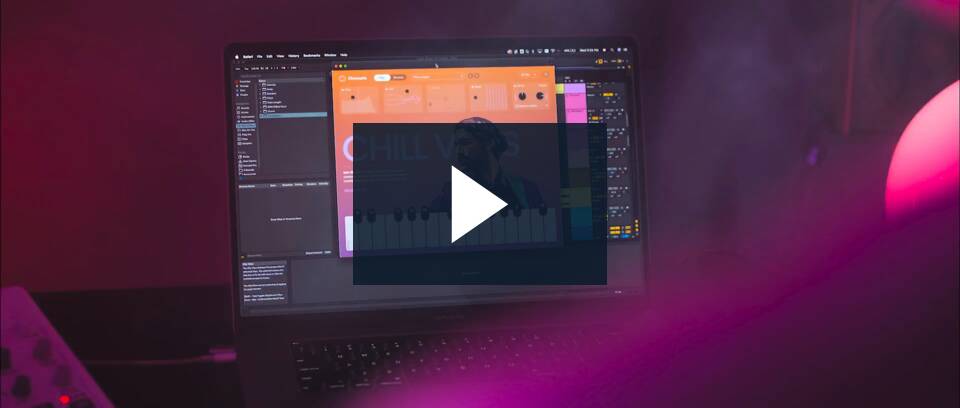
LANDR’s Chromatic DAW lets you make music with artist-generated loops

Sample and mastering site LANDR has unveiled a new subscription-based DAW app called Chromatic that makes it easy to piece together artist-created loops into all-new creations, the company announced. The company has partnered with artists, session players and others who created "inspiring playable instrument loops, vocal hooks, one-shots, and soundscapes," along with a story behind the sounds. You can then use those samples in any way you like to create your own tracks. 

Chromatic is as much about the interface as the capability, according to LANDR. It gives users access to content across genres of music through color-coded mood boards, so you can "quickly audition or earmark individual sound sets" and incorporate them into your workflow. At the same time, they're matched to the tempo and key of any project. 

"As an instrument, Chromatic lets you explore, play, and manipulate original sounds created by artists and producers, making them your own," says LANDR CEO Pascal Pilon in a statement. "We've developed Chromatic to bring the human element back into your virtual studio, a unique way to collaborate and engage with the creators of your favorite tracks and musical styles."

Artists who contribute the loops will receive royalties for when they're used. However, for certain specific artists and labels, LANDR will support splits on works created with their sound sets. "With this unique arrangement, Chromatic will serve as a foundation for emerging producers to collaborate with featured artists, resulting in a split release and promotion of a new work made with their Chromatic content." This presumably means that Chromatic users would share royalties on commercial releases with select, high-profile loop creators. 

Chromatic is LANDR's first instrument, and a move towards a trend of subscriptions toward virtual instruments. A recent example is Output, which recently unveiled a similar subscription-based product called Arcade. Auto-Tune also offers a subscription, and Splice recently launched two vocal VST plugins that are behind subscription walls, as well. 

Chromatic is now available as a free download with access to the full library of royalty-free sound sets at $10 per month. It's also offering an "All Access Pass" at $10 per month for six months and $15 per month thereafter, with royalty-free access to the sample library, AI-assisted mastering, music distribution on sites like Spotify, Sessions collaboration and more. 

Facebook details its takedown of a mass-harassment network

Meta/Facebook is today updating the world on how its efforts to remove fake and adversarial networks from its platform are going. The social network has released a new report saying that it has successfully closed down a number of networks for Coordinated Inauthentic Behavior (CIB). But in addition to networks of fake profiles all working in tandem, the company has also shed some light on how it deals with additional threats. This includes Brigading — the use of negative comments and counter-posting to drown out an individual’s posts — and Mass Reporting, where Facebook’s own anti-harassment tools are used as a weapon. This is another step beyond the broader tactics the company announced back in September, where it pledged to combat broader social harms that took place on its platform.

With Brigading, the company took down what it describes as a “network of accounts that originated in Italy and France” which targeted medical professionals, journalists and public officials. Facebook says that it tracked the activity back to a European anti-vaccine conspiracy movement called “V_V,” adding that its members used a large volume of fake accounts to “mass comment on posts” from individuals and news agencies “to intimidate them and suppress their views.”In addition, those accounts posted doctored images, superimposing the swastika onto the faces of prominent doctors and accusing them of supporting nazism.

In Vietnam, Facebook took down a network that was being used to target activists and users critical of the local government. The network would submit “hundreds — in some cases thousands — of complaints against their targets through our abuse reporting flows.” Attackers also created duplicate accounts of the users they intended to silence and then reported the real account as an impersonator from the fake account. Facebook added that some of these fake accounts were automatically detected and disabled by the company’s automatic moderation tools.

As for the more old-fashioned methods of Coordinated Inauthentic Behavior, the company took down networks in Palestine, Poland, Belarus and China. The first was reportedly tied to Hamas, while the second two were crafted to exacerbate tensions during the humanitarian crisis on the border there. In a call with reporters, Facebook said that the Polish network had very good operational security and, so far, it has not been able to tie it to a real-world organization. The Belarusian network, on the other hand, had much poorer operational security, and so the company has tied the activity to the Belarusian KGB.

The final network, out of China, has prompted Facebook to publish a deep dive into the activity given the depth of what took place. In its report, the company says that a group created a fake profile of a Swiss biologist called Wilson Edwards who posted material critical of the US and WHO. 48 hours later, and his comments were picked up by Chinese state media, and engaged with by high-level officials. But there was no evidence that Wilson Edwards existed, which prompted the platform to close the account.

Researchers found that Edwards’ was “the work of a multi-pronged, largely unsuccessful influence operation,” involving “employees of Chinese state infrastructure companies across four continents.” Facebook wanted to make it clear that Edwards’ comments were not engaged with organically, and it was only when the posts were reported by state media did things suddenly rise in prominence.

One thing that Facebook did identify is the use of guides which were used to train potential network members. The V_V network, for instance, published videos through its Telegram channels that suggested that users replace letters in key words so that it wouldn’t be picked up by automatic filtering. The people behind the Chinese network, too, would sometimes inadvertently post notes from their leaders, written in Indonesian and Chinese, offering tips on how best to amplify this content.

In addition, Facebook has announced that it has launched a tool, through CrowdTangle, to enable OSINT (Open Source Intelligence) researchers to study disinformation networks. This includes storing any content taken down by the company, allowing a small list of approved third parties the chance to analyze it. Access has, so far, been limited to teams from the Digital Forensic Research Lab at the Atlantic Council, Stanford Internet Observatory, Australian Strategic Policy Institute, Graphika and Cardiff University.

Facebook believes that offering greater detail and transparency around how it finds these networks will enable researchers in the OSINT community to better track them in future.

Spotify's 2021 Wrapped is here to chronicle your year in music

In early December, Spotify rolls out its Wrapped year-in-review so that users can relive their go-to artists, songs and podcasts from the last several months. Today, the service is debuting the 2021 installment with some familiar features and a number of new additions, both of which are personalized to each listener's streaming habits. Like before, you'll get all the info on your top artists, genres, songs, podcasts and total minutes listened with the ability to share those details on Snapchat, Twitter, Facebook, Instagram and, for the first time ever, TikTok. 

With Wrapped 2021, Spotify is once again using the stories-style format it revealed last year. The company is continuing to make this personalized retrospective exclusive to its mobile apps on iOS and Android. Here, you'll get all of your stats along with a number of playlists the service will build based on your months of listening. Those include Your Top Songs 2021 and Your Artists Revealed, appearing alongside service-wide lists for the Top Tracks and Top Artists of the year. Spotify has also compiled playlists for its library of podcasts, including Best Episodes of 2021 and Best New Podcasts of 2021, to help you discover what was popular in the world of episodic content. 

Spotify

In terms of new features, Spotify has added a "2021: The Movie" section to the Wrapped story carousel. This assigns songs from your activity to opening credits, a training montage and dance-off of a theoretical film for your 2021 music habits. Spotify also added "Your Audio Aura" that displays colors based on your go-to music moods — like "confident" and "bold." The story section includes a Two Truths game as well, where you are presented with three potential facts about what you listened to most with the goal of trying to pick out the lie. Lastly, the company is leveraging its Blend feature that compares your music with a friend's listening activity. For Wrapped, Blend will analyze your year of streaming with someone you know to mind commonalities. 

Alongside Wrapped, Spotify has also announced the most popular artists on the platform for 2021. For the second straight year, Bad Bunny took the top spot globally, amassing over 9.1 billion streams this year. Olivia Rodrigo's "drivers license" and SOUR were the global top song and top album, respectively. And a revelation that shouldn't be too shocking: The Joe Rogan Experience, a Spotify exclusive, was the top podcast both globally and in the US. For the full breakdown of what was popular in 2021, check out Spotify's full lists here

The 2021 edition of Wrapped is rolling out to all users today in Spotify's iOS and Android apps. 

Twitch will use machine learning to catch ban-dodging trolls

Twitch is introducing a new machine learning feature to help streamers protect their channels from people attempting to avoid bans. Dubbed "Suspicious User Detection," the tool will automatically flag individuals it suspects may be "likely" or "possible" ban dodgers.

In cases involving the former, Twitch will prevent any messages they send from showing up in chat. It will also identify those individuals for streamers and any mods helping them with their channel. At that point, they can decide if they want to ban that person. By default, possible repeat trolls can send messages in chat, but they too will be flagged by the system. Additionally, Twitch says creators have the option to prevent them from sending any messages in the first place.

Twitch

"The tool is powered by a machine learning model that takes a number of signals into account — including, but not limited to, the user's behavior and account characteristics — and compares that data against accounts previously banned from a Creator's channel to assess the likelihood the account is evading a previous channel-level ban," a Twitch spokesperson told Engadget when we asked about the signals the system uses to detect potential offenders.

While Twitch plans to turn on Suspicious User Detection for everyone, the tool won't automatically ban users for streamers. That's by design because it's impossible to create a machine learning tool that is 100 percent accurate in every context. "You're the expert when it comes to your community, and you should make the final call on who can participate," the company said in a blog post. "The tool will learn from the actions you take and the accuracy of its predictions should improve over time as a result."

The introduction of the tool follows a summer in which Twitch struggled to contain a phenomenon called "hate raids." The attacks saw malicious individuals use thousands of bots to spam channels with hateful language. In many cases, they targeted creators from marginalized communities. Hate raids became such a frequent feature of the platform that some creators walked away from Twitch for a day in protest of the company's lack of action.

Quest headset owners can capture VR gameplay using their phones

Meta’s Reality Labs unit is rolling out one last major software update for the Quest and Quest 2 before the end of the year. And it’s one you’ll want to download as soon as you can because it adds some handy features.

One of them allows you to record yourself while inside a game or app. If you own a VR headset, you’ve probably seen videos like the one above where you can see how a game physically plays. Before today, you needed special equipment to capture footage from that mixed reality perspective. With the new update, you can use your phone instead.

Reality Labs

Naturally, the final result isn’t as polished as the above video, but you can still get an idea of how games like Beat Saber play out in the real world. You’ll need an iPhone XS or above with iOS 11 or higher to use the new mobile mixed reality camera. With today’s release, about a dozen games support the feature, including Superhot VR, Pistol Whip and Synth Riders.

The update also includes a number of features Meta said were coming “soon” at its Connect conference in late October. To start, you can now make voice calls through the Messenger app on Quest and Quest 2 headsets. The feature allows you to not only call other Quest users, but you can also dial up your Facebook friends.

Reality Labs

Starting today, some games will also allow you to back up your save data to the cloud. The feature may not be immediately available on your headset after downloading the update. That’s because Reality Labs says it’s rolling it out at a slower pace to make sure it works correctly. Additionally, it’s an opt-in feature for developers, so not every game may support it even after it’s broadly available. While not new to the Quest platform, today’s update also removes the experimental tag that had been applied to the multi-user and app sharing features that were introduced at the start of the year.

Lastly, while not directly related to today’s update, in the “coming weeks” Reality Labs plans to introduce new customization options to Horizon Workrooms. To start, you’ll have the option to choose from multiple virtual office environments and the ability to decorate the space with custom posters and your company's logo.

Bethesda shows off more 'Starfield' in a seven-minute featurette

Starfield is just under a year away from landing on PC and Xbox Series X/S, and Bethesda has offered another peek at what's in store with a mini documentary. The seven-minute "Into the Starfield: The Endless Pursuit" featurette shows a lot of concept art and brief shots of things like robots, alien worlds and a spaceport.

The video is centered around the evolution of Bethesda Game Studios and the worlds it has built over the years. Given that many of the studio's games are about exploration (such as those in the Elder Scrolls and Fallout series), progressing to space exploration with Starfield is a logical next step. Art director Matt Carofano noted the upcoming game has a "more realistic, science-based backing to it" than, say, the fantasy world of Skyrim.

Game director Todd Howard also offered a "cryptic" tease. He said Starfield has "two step-out moments." Many other games typically only have one of those, in which the player sees the expanse of an open-world environment for the first time.

There isn't a ton of detail about what Starfield is in this video, but it gives folks who are excited about the game a little more insight. There will be more episodes of "Into the Starfield" in the coming months as the release date edges closer. Starfield will arrive on November 11th, 2022.

UK competition regulator orders Meta to sell Giphy

As rumored, the UK's Competition and Markets Authority (CMA) has ordered Meta (Facebook) to sell Giphy, saying the deal "could harm social media users and UK advertisers." It found that the deal would boost Meta's already prodigious market power by limiting other platforms' access to Giphy GIFs, "driving more traffic to Facebook owned sites — Facebook, WhatsApp and Instagram." 

The CMA said that Meta's sites dominated social media user time to the tune of 73 percent and that it could further muscle out rivals like TikTok, Twitter and Snapchat by leveraging Giphy. It added that prior to the merger, Giphy launched "innovative advertising services" used by brands like Dunkin' Donuts and Pepsi that it could have brought to the UK. 

"Facebook terminated Giphy’s advertising services at the time of the merger, removing an important source of potential competition," the regulator wrote. "The CMA considers this particularly concerning given that Facebook controls nearly half of the £7 billion display advertising market in the UK."

We disagree with this decision. We are reviewing the decision and considering all options, including appeal.

Facebook purchased Giphy in May of 2020, reportedly for $400 million, with the aim of integrating it into Instagram. A month later, the CMA launched an investigation into the deal and ruled in August that Facebook could stop rivals like TikTok and Snapchat from accessing Giphy's GIF library. At the same time, it said the deal could remove potential UK display advertising competitors after Meta ended Giphy's paid ad partnerships. 

Meta previously said that the CMA had no jurisdiction because Giphy has no operations in the UK, adding that Giphy's paid services weren't display advertising by the CMA's definition. In October, the authority fined Meta $70 million for breaking rules related to the deal by refusing to report required information and changing its chief compliance officer twice without permission. 

The CMA said that after consulting with interested businesses and organizations, it "has concluded that its competition concerns can only be addressed by Facebook selling Giphy in its entirety to an approved buyer." It's not clear how this would be done, however.  

"We disagree with this decision. We are reviewing the decision and considering all options, including appeal. Both consumers and Giphy are better off with the support of our infrastructure, talent, and resource," a Meta spokesperson told Engadget in a statement. "Together, Meta and Giphy would enhance Giphy’s product for the millions of people, businesses, developers and API partners in the UK and around the world who use Giphy every day, providing more choices for everyone."