Apple reportedly told employees its stores and authorized third-party repair shops will soon be able to resolve Face ID hardware issues without having to replace an iPhone entirely. Technicians may have access to a TrueDepth camera part that includes the Face ID and front-facing camera modules. They'll be able to swap it into an iPhone, according to an internal memo obtained by MacRumors.
The company reportedly said the part may lower the number of whole-device replacements, which will help reduce the company's carbon footprint. Although Apple didn't mention pricing for such repairs in the memo, it would make sense for a new part to be less expensive than a replacement device. What's more, consumers wouldn't have to be concerned about losing or having to restore their data.
The report notes that the part will be compatible with iPhone XS and newer devices. As such, iPhone X owners might miss out.
If Apple does offer authorized technicians the part, it seems like a good move for all involved. It should bolster Apple's repairability efforts a few months after the company said it would sell iPhone and Mac parts to consumers and offer repair guides to help them resolve hardware issues by themselves.
Shortly after the iPhone 13 was released, it emerged that Face ID stopped working in some cases if the screen was replaced by a third-party repair shop. Apple seemed to have resolved that issue with the rollout of iOS 15.2 in December.
A lot of gadgets operate on a "tick-tock" development cycle, with the most well-known being past iPhones that sported fresh designs, only to be replaced 12 months later by more refined but similar-looking S variants. And after Samsung ticked the box with a fresh new design for last year's S21, now the company has returned with the more polished Galaxy S22 and S22+. While they might look a lot like last year's phones, there have been some notable upgrades, especially on the S22's display, performance and camera.
Design
Even though I'm still not sure how much I love Samsung's Contour Cut camera design, the Galaxy S22 very much looks and feels like a high-end device. The outside of the phone features Samsung's Armor Aluminum alloy that's been polished to a near-mirror finish, with the S22 also being one of the first phones equipped with Corning's Gorilla Glass Victus+ to protect the phone from drops and scratches — both in front and in back.
Sam Rutherford/Engadget
To add a little spice to the mixture, the S22's backside sports a lovely matte texture – which does a surprisingly good job of resisting fingerprints. And for 2022, Samsung also spruced up the S22's color options with new shades of green, pink and white, along with good ole black.
Like previous Galaxy S phones, the S22 comes with an ultrasonic in-screen fingerprint reader, and after years of tweaking its algorithm and improving the tech, this time it feels seriously fast. In my experience, unlocking the phone was practically instant, and I never really ran into recognition issues unless my fingers were legit wet or greasy. (Keep your grubby hands away from my phone if you're eating pizza, k thnx.)
Sam Rutherford/Engadget
The one thing avid movie watchers should be aware of though is the color-matched frames on the pink and white models. If you're the kind of person that might be bothered by a glint or sparkle around the edge of the phone while watching videos, you may want to go with one of the darker color options.
And while it's not really a surprise at this point, the S22 doesn't feature a microSD card slot or a headphone jack. With the Galaxy S line now being three generations removed from the last device to include both of those features, it's pretty clear they're not coming back.
Display
Samsung has had a lock on the crown when it comes to making the best mobile displays in the business for a while now. But on the S22, the company has outdone itself once again with displays that can hit a peak brightness of 1,300 nits on the S22, or an astounding 1,750 nits on the S22+. Suffice to say any fears of the S22's screen being hard to read even in direct sunlight are unfounded.
Sam Rutherford/Engadget
Then, to make things look even better, Samsung created a new feature called Vision Booster designed to amp up things like contrast and color saturation in very bright or dim conditions. While there's no indicator or pop-up that lets you know it's working, I found the effect most pronounced when I used the phone outdoors, with more subtle changes in the dark when compared to phones like the Pixel 6 Pro. I found Vision Booster made dark scenes easier to parse, but even when viewed side-by-side, I basically had to press my face up against the phones to really see the differences.
But regardless of where you are, the end result is a display that lives in technicolor, pumping out vivid shades and hues, along with the perfectly dark inky blacks that make OLED screens so enthralling. Plus, thanks to a 2,340 x 1,080 resolution and a variable 120Hz refresh rate, everything from photos to gifs look sharp and crisp.
Performance
The Galaxy S22 line is one of the first phones to feature Qualcomm's new Snapdragon 8 Gen 1 chip, which when combined with 8GB of RAM and 128GB of storage (or 256GB if you opt for the upgrade) results in a phone that feels blisteringly fast. In my experience, there isn't really anything you can throw at the S22 that makes it even sweat, aside from stuff like hardcore multitasking when connected to an external monitor via Samsung Dex (which is still very much a thing).
Sam Rutherford/Engadget
And while some reports claim that Qualcomm's Snapdragon Gen 8 Gen 1 has a proclivity for running hot, S22's built-in vapor chamber cooling system seems effective at keeping throttling to a minimum. Compared to the S21 FE, which features an older Snapdragon 888 chip, our S22+ posted scores in Geekbench 5's Compute test around 25 percent higher (4,708 vs 5,999). And while the gap wasn't quite as large in Geekbench 5's CPU test, the S22+ still posted a significantly higher single-core score of 1,213 compared to 1,061 for the S21 FE.
As for wireless connectivity, all versions of the S22 and S22+ support all the important flavors of 5G, including Verizon and AT&T's new C-band spectrum.
Cameras
After recent advancements from competitors like the iPhone 13 and Pixel 6, Samsung is now playing catchup to Apple and Google in the camera department. And while Samsung is touting a bunch of new camera features for the S22 and S22+ like Adaptive Pixel and various "Nightography" improvements, the real upgrades are the S22's new sensors — particularly the one for its 50MP main cam.
Sam Rutherford/Engadget
Thanks to that significantly higher resolution (up from 12MP on the S21), photos from the S22's main wide-angle camera are just flat-out sharper than before. But more importantly, the S22's primary camera offers wider dynamic range and big improvements for low-light photos. In darker scenes, the S22 uses a four-to-one pixel binning technique that combines four adjacent pixels into one big pixel, which allows for improved light sensitivity. The result is brighter photos with richer colors, especially at night. And even though Google's Night Sight still has a slight advantage over Samsung's Night Mode, the S22 has seriously narrowed the gap.
Elsewhere, you also get a solid 12MP ultra-wide camera with a 120-degree field of view, and a 10MP telephoto camera with a 3x optical zoom, the latter of which is important because neither the standard iPhone 13 or Pixel 6 comes with a dedicated zoom lens. So once again, the base S22 is the most well-rounded camera phone for the money. And in front, the 10MP selfie camera captured crisp pictures of my face including my many pores and blemishes, though you can always play around with Samsung's beauty settings if you want to put on a smoother face for social media.
Where things get frustrating is that some of the S22's new camera features are often hard to use, or even tell when they're working — with the main offender being Samsung's Adaptive Pixel feature. Adaptive Pixel uses multi-frame image capture to shoot pics using the main sensor's full resolution along with lower-res pixel-binned shots, before merging them together to create a higher-quality composite final image. The issue is that Adaptive Pixel isn't turned on by default, and searching the phone's settings for it doesn't return any matches.
To even activate this, you need to first make sure Samsung's scene optimizer is on, then you have to turn on the camera app's full 50MP capture mode, make sure the Detail Enhancer setting is disabled, and then point the S22 at a dark scene and hope Adaptive Pixel kicks in. And I do mean hope, because there's no pop-up or notification that lets you know when the feature is activated. Even when you do get it to work, while the pictures are a bit sharper and feature a more neutral color profile (which is better for anyone who wants to edit their pics later), Adaptive Pixel doesn't really produce magically superior images like Samsung's marketing may have led you to believe.
Sam Rutherford/Engadget
That's kind of a shame after all the attention Adaptive Pixel got during the S22's debut at Samsung's recent Unpacked event. Thankfully, other new camera features like Auto Framing work as advertised, allowing the phone to track up to 10 people's faces when capturing video, while Samsung's Advanced OIS ensures that your clips look smooth and shake-free. The company's AI Stereo Depth Map technique also makes the phone a bit better at differentiating between your subject's face and the background in portrait mode, though you may have to do some serious zooming in to really see the difference.
In short, I like a lot of the changes Samsung has made to the S22's camera setup, raising its general photo prowess, even if some of the phone's new software don't quite live up to expectations.
Software
Sam Rutherford/Engadget
The Galaxy S22 line comes with Samsung's One UI 4.0, which is based on Android 12. That means because it has long supported features like scrolling screenshots, the main upgrades in Samsung's latest Android skin are the new Privacy Dashboard and customization options for your home screen, app icons and the phone's UI. Similar to what's available in Google's Pixel phones, the customizations allow you to set a consistent color palette across your phone's menu, while new mic and camera notifications make sure you know when apps are accessing critical hardware components.
Other software upgrades include Live Sharing in Google Duo, which is a Samsung-exclusive feature that lets you share your screen during video chats. It's simple and effective, even if it's not quite as full-featured as Apple's SharePlay in iOS 15. And for those looking to keep better track of digital documents like your ID, credit cards, and even digital car keys, Samsung also made a new Digital Wallet that can securely store all those things in one place.
Battery life
Sam Rutherford/Engadget
Featuring 3,700 and 4,500 mAh batteries respectively, both the S22 and S22+ have respectable longevity. But if lasting a long time between charges is really important for you, the S22+ is definitely the better pick as it lasted 17 hours and 33 minutes on our local video rundown test, compared to just 14 hours and 47 minutes for the standard S22. And thanks to its 45W wired charging (up from 25W charging on the S22), the S22+ juices up way faster too. In both cases though, you'll need to make sure you have the proper power brick, as neither phone comes with a charging adapter in the box.
S22 vs S22+
Aside from the obvious differences in screen size (6.1 inches vs. 6.6 inches) and overall dimensions (5.8 x 2.8 x 0.3 inches and 5.9 ounces vs. 6.2 x 2.9 x 0.3 inches and 6.9 ounces), there are a few other features that separate the S22 and S22+. The S22 is limited to 25-watt wired charging while the S22+ gets 45-watt wired charging, with both phones also featuring 15W Qi wireless charging and 4.5W reverse wireless charging (aka wireless power share).
Other differences include slightly faster WiFi speeds on the S22+ thanks to support for WiFi 6E (compared to standard WiFi 6 for the S22). The S22+ also has built-in UWB connectivity, which isn't available on the S22. UWB is one of many protocols used to send files to other devices wirelessly via Nearby Share, though that's not really a big deal since Nearby Share still works, albeit less swiftly, over WiFi and Bluetooth. The other consideration is that for people looking to use digital car keys from automakers like BMW and others, those often work better and have longer ranges using UWB compared to NFC, which might make the S22+ a better choice for more tech-savvy new car buyers.
Wrap-up
Sam Rutherford/Engadget
The Galaxy S22 isn't a huge improvement or departure from last year's phone, but just like an "S-year" iPhone, Samsung has tweaked and elevated all the phone's most critical components. You're getting a more refined design, improved performance, a sharper main cam with better low-light photography and an even brighter screen. And that's saying something from the king of mobile displays.
Sure, some features like Vision Booster and Adaptive Pixel are more subtle or harder to use than I'd like, but putting all this in a chassis sporting excellent build quality and other premium features like IP68 dust and water resistance, reverse wireless charging and more is a formula that's hard not to like. And with a starting price of $800 for the standard S22, you're getting more phone for the money than anything you can buy from Apple or Google.
Following its release back in 2020, the Moto G Stylus quickly became one of the company’s most popular phones. But now, Motorola is stepping up its ambitions with the new Edge+, which is essentially a more affordable take on a Galaxy Note.
With a starting price of $1,000 (or $900 at launch thanks to a limited-time discount), the Moto Edge+ combines strong performance from Qualcomm’s Snapdragon 8 Gen 1 chip with native stylus support. That said, unlike a Galaxy Note or the new Galaxy S22 Ultra, Motorola’s Smart Stylus is an optional extra that will come bundled with a folio cover, the latter of which addresses the phone’s lack of built-in stylus storage. Meanwhile, recharging the stylus is taken care of using the phone’s 5-watt reverse wireless charging.
Elsewhere, the Edge+ comes with a number of premium features including a 6.7-inch 2400 x 1080 OLED with a 144Hz refresh rate, 15-watt Qi wireless charging and dual stereo speakers with support for Dolby Atmos. Base specs include 8GB of RAM, 128GB of storage and a 4,800 mAh battery, though you can bump that up to 12GB of RAM and 512GB of storage if you like. And while Motorola’s software and security support still doesn’t match what you get from Google or Samsung, the company has committed to two years of Android OS upgrades and three years of bi-monthly security updates.
Motorola
The Moto Edge+ also sports a decent selection of cameras headlined by its 50MP main cam and 50MP ultra-wide cam which also pulls double duty for macro photography, with an even higher-res 60MP selfie camera in front. Unfortunately, because the phone’s third rear “camera” is merely a 2MP depth sensor, that means you don’t get a dedicated zoom lens like you do on Samsung’s latest Galaxy S handsets.
In addition to serving as your mobile drawing and notetaking device, Moto envisions the Edge+ as a part-time work device thanks to support for the company’s Ready For platform. When the phone is connected to a nearby TV or monitor (either over USB-C or wirelessly), Ready For provides a more desktop-like UI similar to Samsung’s Dex mode, while the company’s Thinkshield security platform helps protect any potentially sensitive data.
All told, the Edge+ looks like an intriguing mix of specs and features for the price, especially when compared to the $1,200 S22 Ultra. The one thing I’m not quite sure about its is design, most notably that camera module and its surrounding pebble-like glass housing. But for anyone who’s fancied a Galaxy Note but couldn’t stomach Samsung’s super premium price tags, it’s definitely nice to see Motorola offer a more affordable alternative.
The new Moto Edge+ is available today as an unlocked device from Motorola and third-party retailers including Best Buy and Amazon, followed by wider availability from carriers such as Verizon, Boost Mobile and Republic Wireless sometime later this spring.
It took nearly three years, but Apex Legends Mobile is almost here — for some people, at least. Respawn has announced a "limited regional launch" next week for 10 countries that include Australia, New Zealand, Argentina, Colombia, Indonesia, Malaysia, Mexico, Peru, the Philippines and Singapore. You're likely out of luck if you're reading this, then, but these early adopters will get to play on both Android and iOS.
The small-scale release will last through the spring and help the team refine gameplay and features before a wider launch, Respawn said. The initial mobile character roster mostly sticks to those available when Apex Legends launched in 2019, although the fast-moving Octane will also be an option.
Respawn stressed that you won't see cross-play with non-mobile platforms. You'll need at least an iPhone 6s to play on iOS, while Android users will need 3GB of RAM and OpenGL 3.0 or higher graphics support. The developers have focused their Android optimizations on popular brands like Samsung, Oppo and Xiaomi.
The limited debut might be frustrating if you're eager to play a Fortnite or PUBG alternative. It's easy to understand the cautious approach, however. Apex Legends is one of the few battle royale games to enjoy lasting success, and the mobile debut represents a major opportunity to expand the title's reach. A careful premiere could be key to competing with other heavyweights and keeping Apex in the spotlight for years to come.
If you know a small tablet will fit into your life easily, chances are you've considered the iPad mini in the past. Now, you can grab the latest model for $40 less at Amazon, which has the 64GB space gray model for $459. Unfortunately, that's the only color at that price right now — the 64GB starlight model is $25 off and down to $474, while the purple and pink models are hovering around $489-$499. Discounts like these typically don't stick around very long, so we recommend grabbing the mini soon if you've had your eye on it.
The iPad mini may be small, but it packs a lot of power. It's even more capable than the base iPad with its A15 Bionic chip and Neural Engine, 12MP ultra-wide front camera with Center Stage, 5G connectivity and USB-C port for charging. Apple totally redesigned the mini this time around, making it look like a smaller version of the iPad Air. It has an 8.3-inch 2,266 x 1,488 resolution Liquid Retina screen that's almost edge-to-edge, flat edges and a fingerprint-toting power button. Not only does the new mini feel more modern than ever before, but it also handled everything we threw at it, including light gaming, online shopping, video streaming, FaceTime calls and note-taking with the second-generation Apple Pencil.
FaceTime calls are even better on the small tablet, too, thanks to the Center Stage feature on the front-facing camera. It automatically pans and zooms to keep you in the middle of the frame even while you're moving around and chatting at the same time. As far as battery life goes, the iPad mini lasted about 12 hours on a single charge in our testing, which is two hours longer than Apple's estimate. Admittedly, an 8-inch tablet won't work for everyone, but those who know that the e-reader-sized device is exactly what they're looking should consider grabbing one in Amazon's latest sale.
Follow @EngadgetDeals on Twitter for the latest tech deals and buying advice.
There's won't be a big revival for BlackBerry phones anytime soon. OnwardMobility, the Austin-based startup that announced its plans to release a 5G BlackBerry device with a physical keyboard back in 2020, is shutting down. The company posted a notice of its closure on its website, making it clear that it won't be proceeding with the development of the smartphone. This comes a month after it responded to people asking about the status of the project with a blog post entitled "contrary to popular belief, we are not dead."
While OnwardMobility didn't expound on the reason behind its closure, Android Police reported a few days ago that its license to use the BlackBerry name had been canceled. Apparently, BlackBerry wants to distance itself from its past as a smartphone manufacturer after it sold off its remaining mobile patents for $600 million in the beginning of February. OnwardMobility reportedly decided not to push through with the development of a new smartphone without the BlackBerry name, especially since it won't be easy entering the market with an ongoing global component shortage.
OnwardMobility was never able to release images of the phone it was developing, but it was reportedly going to take design cues from the BlackBerry Priv. As Android Police notes, the Priv was BlackBerry's first Android phone and the only one it designed in-house before it outsourced the production of its mobile devices to TCL. If BlackBerry, in its current form, truly does want to distance itself from its past, then we might never see a new BlackBerry-branded phone again.
A number of new tech deals have popped up across the web ahead of the Presidents' Day holiday. Apple's iPad mini with extra storage is $50 off and down to a record low, while the AirPods Pro are on sale for $175. Both the 40mm and 45mm cellular Samsung Galaxy Watch 4s remain $80 off, plus you still have time to pre-order and save on the Galaxy S22 smartphones, which officially come out on February 25th. Here are the best tech deals from this week that you can still get today.
AirPods Pro
Billy Steele / Engadget
The AirPods Pro are down to $175 right now, or 30 percent off their normal price. We gave them a score of 87 for their solid sound quality, strong ANC and more comfortable fit.
The 256GB iPad mini is $50 off and on sale for $599. We gave the small tablet a score of 89 for its revamped design, solid performance, Center Stage cameras and good battery life.
Both Samsung and Amazon will knock up to $100 off Galaxy S22 smartphones when you pre-order them. This discount applies only to the higher-storage variants, so you can essentially get extra onboard space at no additional cost.
The Stream Deck MK.2 is $10 off right now and down to $140. For a gadget that rarely goes on sale, this is a good discount and one that shouldn't be overlooked if you've had your eye on the controller for a while. It has 15 programmable hotkeys that let you easily do things like control audio and video feeds, launch apps, post to social media and more while you're streaming.
8BitDo's Pro 2 controller is 10 percent off at Amazon when you clip the on-page coupon, bringing the final price down to $45. That's the best price we've seen on the controller, which is leaps and bounds more comfortable to use than Joy-Cons if you're a Nintendo Switch fan. We like its ergonomic design, customization options and its compatibility with a bunch of platforms including PC, MacOS and Raspberry Pi.
Samsung's cellular Galaxy Watch 4 models are on sale for record-low prices right now. The 40mm model is down to $220 while the 44mm version is down to $250. We consider the Galaxy Watch 4 to be the best Android smartwatch you can get and it earned a score of 85 for its bright screen, comprehensive health tracking and new Wear OS features, like downloading apps directly from the Play Store.
Samsung's T7 portable SSD in 1TB is down to a record low of $110, or 35 percent off its usual rate. It's one of our preferred drives if you need something compact, speedy and compatible with a bunch of devices. We also like its aluminum unibody and its Dynamic Thermal Guard that helps control heat levels.
Samsung's 980 Pro internal drive in 2TB is 35 percent off and down to $280 — a great price for a powerful SSD that works with the PS5 (provided you have a heatsink). It has read speeds up to 7,000 MB/s, advanced thermal controls and works with Samsung's Magician Software, which lets you check its health and optimize settings as you'd like.
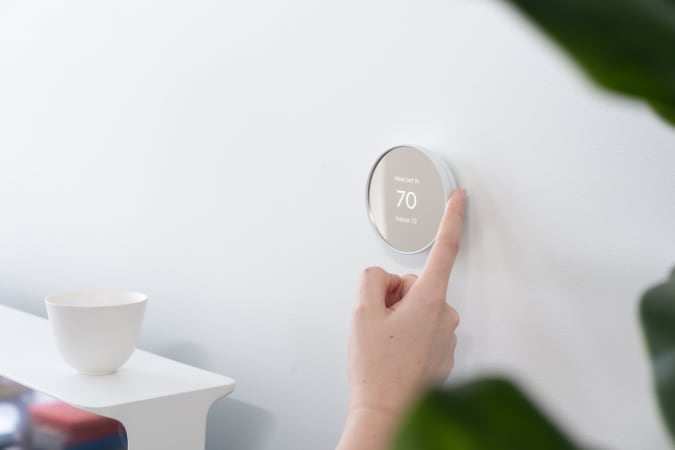
Google's Nest Thermostat is down to $99 right now, and the device with a trim kit will set you back $114. This version has a mirrored display and a touch-sensitive edge, and it can be controlled with the Google Home app. It also has features like Savings Finder, which suggests ways you can tweak your home system to conserve energy.
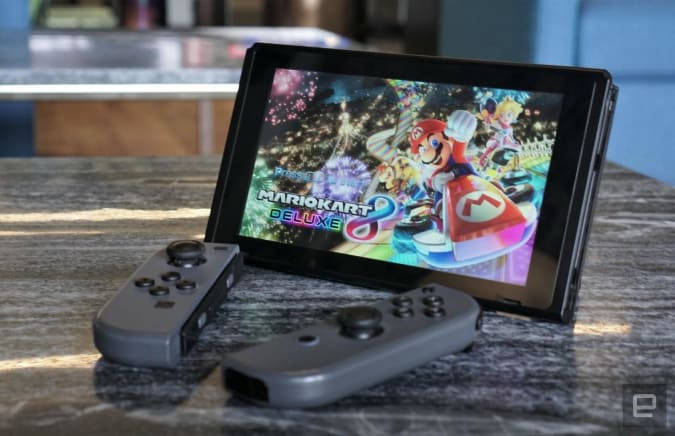
Prime members can get $20 off the Nintendo Switch at Woot right now. While the discount isn't on the OLED model, it's a good sale on a console that rarely sees sales like this. Just make sure to check out Woot's return policy before buying.
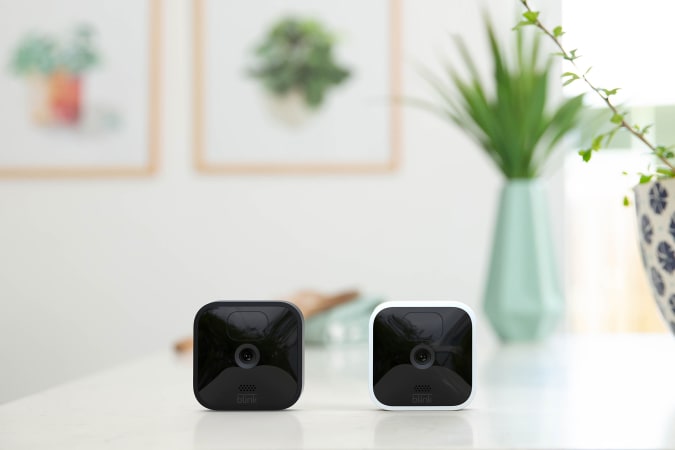
Blink home security cameras are up to 30 percent off, meaning you can get a one-camera Blink Outdoor kit for $70. In addition to being weatherproof, these cams are wireless and support 1080p video, night vision two-way audio and motion alerts. The wired Blink Mini is also on sale and down to only $25.
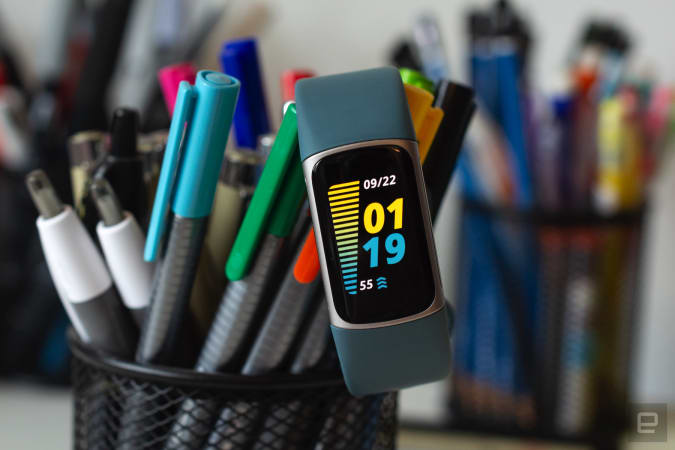
Fitbit's Charge 5 is on sale for a record low of $120 right now. We gave the fitness tracker a score of 82 for its large, full-color display, built-in GPS, standard Fitbit Pay and long battery life. The Fitbit Sense smartwatch is also on sale for $100 less than usual, bringing the price down to $200.
Apple's magnetic battery pack for iPhones is down to $88, which is 11 percent off its normal price. We have seen it cheaper in the past, but this is the best price we've seen since December. The accessory attaches magnetically to the back of the latest iPhones and provides up to 15W of wireless charging.
Woot knocked 34 percent off LG's 65-inch C1 OLED smart TV, bringing it down to $1,650. You're getting the deepest blacks and high contrast that are signature of OLED sets, plus LG's α9 Gen 4 AI processor 4K, Game Optimizer with Auto Low-Latency Mode and HGiG, and the Google Assistant and Amazon Alexa built in. Just make sure to check Woot's return policy before buying.
GameStop has two Star Wars wireless charging pads that are up to 50 percent off right now. If you or someone you love is a super fan, either the Millennium Falcon or The Mandalorian accessories will spice up their charging setup.
It's not on sale, but Dyson's AirWrap Complete in Nickel/Fuchia is available to order once again after being out of stock for along time. The high-tech hair gadget has become quite popular since its launch in 2018 for its versatility. Depending the attachment you choose, the device can curl, straighten or dry hair. It also uses continuously flowing air around the barrel that guides your hair around it, so you don't have to put your fingers near the hottest parts of the gadget.
The on-demand fitness service Alo Moves has an offer few new members that knocks 50 percent off the price of a one-year membership, bringing it down to $99. The platform has dozens of yoga, pilates, barre and strength training classes, along with guided meditations and series that help you master specific skills over the course of longer periods of time.
NordVPN's latest sale knocks the price of a two-year subscription down to just under $96, plus you'll get a free gift on top of it. The prize isn't anything physical, but rather additional subscription time on top of the two-year plan you paid for. Prizes are chosen at random, but after you make your purchase, you'll get either an extra month, and extra year or an extra two years added on to your subscription.
The S22 Ultra is, for all intents and purposes, a new Galaxy Note. It has the same rectangular silhouette, the same onboard S Pen and the same list of top-tier specs. With the S22 Ultra, Samsung is introducing a more mainstream audience to the S Pen that’s long been the hallmark of the Note series. By merging the two lines, Samsung is consolidating its top-tier products, bringing together the most popular features across its portfolio. That’s not to say there’s nothing new about the S22 Ultra — Samsung brought updated camera, display and software features this year as well.
It’s strange to review a phone that’s supposed to be new, but feels so familiar. If you’ve been missing the Note series, that familiarity will be welcome. But for those simply considering a new Galaxy S flagship, the S Pen alone won’t be enough of an upgrade. Thankfully, though, Samsung promises display and camera improvements that might make the S22 Ultra even better than its predecessor.
Design
The difference between the S22 Ultra and last year’s model starts with their design. The S22 Ultra is pretty much a Note 20 Ultra clone, which makes it a departure from the S21 Ultra’s rounder silhouette. With the same rectangular shape, curved edges and matte brushed metal finish, the two handsets look and feel almost identical. The S Pen slot is even in the same location at the left side of the bottom edge. If I didn’t give you the exact dimensions, you probably wouldn’t even be able to tell that the S22 Ultra is slightly wider, shorter and thicker than the Note. You might notice, though, that the S22 Ultra is about 21 grams (or 0.74 ounces) heavier.
The phone weighs more than the Pixel 6 Pro, too, though the iPhone 13 Pro Max still beats it at 240 grams. Google’s premium flagship already reminded me of the Note 20 Ultra, aside from its colorful two-tone design and camera bar. Instead of a rectangular module at the top left corner housing the array of sensors, the S22 Ultra’s cameras are neatly laid out in two columns on the back with no boundaries containing them. I prefer this streamlined, less cluttered look to the Note 20 and S21 Ultra’s versions.
I also appreciated the S22 Ultra’s Gorilla Glass Victus+ covering, especially after it fell from the top of a cabinet and survived without a scratch. I was somewhat disappointed that the review unit I received was the boring black version, not one of the other three color options. If I were shopping for myself, I’d choose either the green or burgundy, which I got to see in person at a recent Samsung hands-on event.
Display and audio
As is usually the case with Samsung's devices, the S22 Ultra's screen is sumptuous. Its 6.8-inch Super AMOLED panel is colorful, bright and easy to read in the sun, thanks to its peak brightness of 1,750 nits. Like previous Galaxy flagships, the S22 Ultra also refreshes at 120Hz, making for a smooth scrolling experience.
Cherlynn Low / Engadget
To ensure users can see what's on their phones regardless of the lighting conditions, Samsung this year introduced what it's calling "Vision Booster." The feature is meant to kick in when it detects you're in direct sunlight or in super dim environments, adjusting not only the display brightness but also its color and contrast. You'll need to have adaptive brightness on for it to work.
I didn't notice much of a difference when I was playing Two Dots in bed one night, even when I pulled up the same scene on my Pixel 6 Pro to compare. Samsung says the effect is more noticeable in sunlight, but I still didn’t observe a significant difference as the sun shone on the S22 Ultra’s screen when I made my way to the office. Perhaps this is something where the effect is so subtle that it’s hard to notice, but I never had trouble reading things on the S22 Ultra, regardless of the lighting around me.
I don’t generally play music through my phone, but one night when my WiFi went out and I couldn’t use my speakers, I had to resort to streaming Spotify on the S22 Ultra and it provided decent audio quality. It was loud enough to deliver the background noise I was looking for, though songs like Heartbreaker by Wabisabi sounded hollow and were lacking in bass. It was, however, better at handling mid-heavy sounds like the audio cues for games like Two Dots.
S Pen
Another aspect of the S22 Ultra that’s more than a little reminiscent of the Note is the onboard S Pen. The main difference between the S Pens on the S22 Ultra and the Note 20 Ultra is the improved latency of 2.8 milliseconds this year (down from 9ms). This means you'll be getting a slightly better version of an already responsive writing experience, along with Samsung's nifty handwriting recognition software in its Notes app. If you use Samsung's keyboard instead of switching to Gboard, you'll also be able to use the S Pen to scrawl text into search fields and URL boxes throughout the system.
Samsung also provides a list of suggested functions when you pop the S Pen out of its slot, so you can quickly do things like create a note or select a portion of your screen to take a screenshot of and immediately draw on it.
Engadget (Screenshot)
There's not much I can say about the S Pen now that we haven't already covered in previous reviews. Samsung's stylus is competent, if a bit of a blunt object for those looking to create finer works of art. But as a pencil for jotting down a quick list, or signing documents on the fly or as a cursor for the big screen, the S Pen is more than adequate. In fact, in more mainstream functions like acting as a remote control for your camera or music playback, it's perfectly capable. The only issue is whether you're the sort of person who would pull out a stylus to interact with your phone, as opposed to simply using your hands. Either way, the S Pen is a nice accessory to have when you need it, and it stays out of your way when you don’t.
Cameras
The S22 Ultra shares the same camera setup as the S21 Ultra, with a 108-megapixel main sensor, a 12-MP ultrawide option and a pair of 10-MP telephoto lenses. What's new this year are features like auto-framing and improved video stabilization in videos, better stereo depth mapping for more accurate portrait blur and something Samsung is calling Adaptive Pixel. This stitches together high-res images from the 108-MP sensor and a photo taken with nona-binning for bigger pixels to capture more light, supposedly resulting in brighter pictures that retain crisp detail.
Cherlynn Low / Engadget
In reality, Adaptive Pixel is tricky to figure out, and its results might not be worth the effort. First, you have to set the S22 Ultra to shoot at the highest resolution and then, when the system detects you're shooting in low light, it performs the stitching in the background. There's no way you can be certain Adaptive Pixel is at work; there are no user-facing indicators. I shot a few photos of the New York City nightscape with the S22 Ultra both at the default 12-MP and at 108-MP, and they were mostly indistinguishable from each other. When I zoomed in to see more detail, buildings looked equally muddy, mostly due to flares from the various lights in the image.
I took more pictures in low light with the camera set to default resolution and 108-MP, and honestly the effects were incredibly subtle. The high-res shots were sometimes better exposed, but not always. And any improvement in clarity was so subtle that you wouldn’t notice unless you were extremely zoomed in.
Either way, though, Samsung's photos held their own against those from the iPhone 13 Pro and Pixel 6 Pro. Google continues to deliver superior pictures in low light thanks to its Night Sight mode, but Apple and Samsung's offerings are closing the gap. In daylight, the S22 Ultra produced slightly more saturated pictures than the Pixel 6 Pro, which generally renders a more neutral tone. Which camera suits you better ultimately boils down to your preference: Do you like richer-looking pictures, even if they're not the most realistic? Meanwhile, the iPhone 13 series offers Photographic Styles that let you select a default color temperature and contrast setting so all your shots come out tuned to your tastes.
Up front, the S22 Ultra's 40-MP camera is also similar to the S21 Ultra's. Samsung says it improved its stereo depth mapping system for more accurate bokeh effects in portraits, though, and from my experience it seems effective. Compared to selfies I took with the iPhone 13 Pro and Pixel 6 Pro, Samsung's flagship was just as accurate at differentiating my hair from my background, blurring out exactly the same areas as the other two did. Previous Samsung cameras delivered somewhat artificial and awkward-looking portraits, but this time around the S22 Ultra produces more natural-looking bokeh.
The S22 Ultra’s other updates are around video recording. Specifically, Samsung added an auto-framing feature that will detect faces in view and keep up to 10 subjects centered in the scene. You can also select the people you want to prioritize, and the system will follow them around. This was generally effective in my testing, and though I held the S22 Ultra still from a fixed point, the camera followed our video producer Brian around as he strolled around our office. But as he got to the extreme sides of its field of view, the scene started to show noticeable fisheye distortion, warping Brian’s face.
There are plenty of other features Samsung carried over from its previous flagships, but breaking them down here would take forever. Suffice to say that most features you’ve enjoyed on the S21 Ultra or older, like capable image stabilization and Director’s View for recording with both the front and rear cameras, are there. And if you’re one of the people who enjoyed the 100x Space Zoom feature from before, you can still use the S22 Ultra to get super up close to faraway objects. Though I generally found this feature slightly creepy, in some cases the results were actually clear enough to read. For the most part, though, I found Space Zoom most useful at up to 30x zoom. Anything beyond that was usually muddy and unusable.
Samsung software exclusives
Thanks to a collaboration with Google, the S22 series gets a custom version of the Duo video calling app that exclusively enables new screen sharing and auto framing features.
When my colleague Sam and I called each other on our review units, I was able to show him a game I was playing by selecting the new screen share button in Duo. As I launched other apps while on the call, a small icon appeared on the left side of the screen to remind me I was still sharing my screen.
Engadget (Screenshot)
This integration isn’t as sophisticated as Apple’s SharePlay, which has thoughtful limitations on what notifications can be seen while you’re sharing your screen. Meanwhile, another S22 Ultra reviewer I called could see the message alerts that popped up during our chat. Samsung and Google’s Live Sharing feature also doesn’t natively support streaming apps like Netflix or Hulu, meaning you won’t be able to watch shows together with your friends (unless it’s on YouTube).
Samsung also added the auto-framing feature it introduced in its camera app to Duo, so you can make sure your face is centered while you’re on your call. When I enabled this feature, the app automatically switched to a wider angle shot via the front camera, zooming in to keep me in view as I moved around my living room. It’s helpful if you want to leave your phone propped up somewhere while you’re talking, but it does nothing if you’re just going to hold your phone up or remain stationary, which is how I take most of my video calls. This feature is more useful on smart displays, since you can’t move them around as easily as phones.
Samsung also offers a “collaboration view” feature that allows you to use your S22 handset as a second screen for a Tab S8. For example, if you open Samsung Notes on the tablet and click the phone icon on the top right (after both devices are connected to the same WiFi), you can use your S22 as a secondary menu or control panel for paintbrush options. We don’t have a Tab S8 in for review yet, so I unfortunately couldn’t test this feature.
Cherlynn Low / Engadget
As with older Samsung flagships, you can also quickly share content to other nearby Galaxy devices and use Link To Windows to connect to your laptop. One UI 4.0 also offers new color palettes and themes that permeate the entire system, a la Material You on Android 12, which lets you refresh your interface any time you get bored.
Performance and battery life
The S22 series are among the first flagships to use Qualcomm’s new Snapdragon 8 Gen 1 processors, and in general you’ll get the expected speedy performance from the premium processors. My S22 Ultra didn’t break a sweat when I was jumping between reading Reddit and playing a spot-the-difference game while using it as a hotspot for my other devices while my internet was out. I’m actually surprised I never noticed the handset running warm during my time with it, and I have to give credit to Samsung for its improved thermal system here.
I was also slightly taken aback to see the S22 Ultra’s battery life drop from 75 percent when I took it out of its box at noon to just 20 percent by the evening. I initially chalked that up to power used during setup, but in general the S22 Ultra never made it through a full 24 hours. On our video rundown battery test, the S22 Ultra’s result of 17 hours and 16 minutes beat the Pixel 6 Pro by just three minutes, but was hours behind the S21 Ultra, which lasted 21 hours and 42 minutes. It’s possible that the Snapdragon 8 Gen 1 is not as power efficient as its predecessor, and Samsung also confirmed to Engadget that the S Pen draws power from the S22 Ultra while inside its slot, which might be why the S21 Ultra has a longer runtime.
Wrap-up
I have to confess: While writing this review, I kept typing “the Note 22 Ultra” and had to correct my mistake at least a dozen times. Those of you who are Note fans will find this a pleasant reunion. The main upgrades for those coming from a Note 20 Ultra will be in the cameras and software, and considering that phone is about two years old by now, you’ll probably be thankful for the updated specs.
But if you’ve never held a Galaxy Note before, the change could be a welcome refresh. With the addition of the S Pen, too, the S22 Ultra is, more than ever, the phone for the most demanding of power users.
If you want a premium Android flagship but don't need extras like the S Pen or a second telephoto lens, you'll probably find the S22+ good enough. The only real complaints I have with the S22 Ultra are that the display and camera updates Samsung added this year are a little underwhelming. Minor gripes aside, the S22 Ultra is still an excellent phone and the best premium Android flagship you can buy.
Key specs
Spec
Samsung Galaxy S22 Ultra
Display
6.8-inch 3,088 x 1,440 (19.3:9) curved AMOLED, up to 120Hz, with Vision Booster and 240Hz touch sampling in Game Mode
Dimensions
6.43 x 3.06 x 0.4 inches / 163.3 x 77.9 x 8.9 mm; 8.07 oz / 229 grams
You have about one more week to pre-order Samsung's latest smartphones before they come out on February 25th. Samsung has a number of offers available to those who pre-order, but now Amazon is matching one of the discounts. The online retailer has knocked up to $100 off the higher-storage variants, so you can essentially get extra onboard space at no additional cost. The 256GB Galaxy S22 Ultra is $1,200 and $100 off, while the 512GB version is also $100 off and down to $1,300. As for the Galaxy S22+ and S22, the 256GB models of those handsets are $50 off and on sale for $1,000 and $800, respectively.
Samsung unveiled the three smartphones last week and the Galaxy S22 Ultra is the most premium of the bunch. It has a mesmerizing 6.8-inch QHD+ OLED screen with a 120Hz refresh rate, an impressive rear camera array, and is outfitted with the highest specs you can get in a Samsung phone — a Qualcomm's 4nm Snapdragon Gen 1 chip, up to 12GB of RAM and up to 1TB of onboard storage. Samsung married the designs of its S- and Note-series phones in this new model, and fans of the Note family will be happy to see that the S22 Ultra comes with a built-in S Pen. While we had a bit of time to test out the Galaxy S22 Ultra before Samsung's announcement, stay tuned for a full review coming soon.
The Galaxy S22+ and S22 may not have all the bells and whistles found on the Ultra, but Samsung made important updates to the insides of both smartphones. They share a design that looks similar to last year's flagships, but they're now made partially of post-consumer recycled material and come in new colors. The 6.6-inch S22+ and the 6.1-inch S22 both have FHD+ displays with 120Hz refresh rates, a triple rear camera array, a 40-megapixel selfie camera and a new Vision Booster feature, which adjusts screen settings automatically throughout the day to make it easier to view in different environments. As far as performance goes, both handsets run on Qualcomm’s 4nm Snapdragon 8 Gen 1 chip, 8GB of RAM and up to 256GB of storage. Keep an eye out on Engadget for our full review in the coming weeks.
Follow @EngadgetDeals on Twitter for the latest tech deals and buying advice.
Samsung's next hardware event will coincide with Mobile World Congress in Barcelona. The company announced today it will host a fully virtual keynote on Sunday, February 27th at 1PM ET. You'll be able to watch the event on Samsung's website and the company's YouTube channel. You'll also find full coverage here at Engadget.
In years past, Mobile World Congress was one of the most important events in Samsung's release calendar. Between 2014 and 2018, the company frequently took to Barcelona to announce its latest Galaxy S phones. However, after it came out with the Galaxy S9 in 2018, the company began instead to unveil those devices at its own Unpacked events. It's easy to see why: while Samsung always dominated the MWC news cycle, it still shared the limelight with other phone makers, including Sony and LG.
As for what we can expect from Samsung, it's hard to say. At its first Unpacked of 2022, the company announced the Galaxy S22 and Tab S8. Judging from the invite Samsung shared, the company could focus on devices like the Galaxy Z Flip and Z Fold. The next version of the latter will reportedly take inspiration from the new Galaxy S22 Ultra and add a built-in slot for the company's S Pen Stylus. We won't know the full details until Samsung confirms them come February 27th. Either way, you'll want to visit Engadget that day to see what the company has been working on behind the scenes.