Ahead of its upcoming Galaxy Unpacked event, Samsung has published a blog post by its president TM Roh that basically tells us what it plans to announce next month. In addition to a new Galaxy Watch powered by Wear OS, the company will be launching the third generation of its Galaxy Z series and "the first-ever S Pen designed specifically for foldable phones."
A stylus made for the pliable screens on foldables like the Galaxy Z Fold 2 and Z Flip has been a widely requested feature, and would make the larger, opened up displays more useful. Of course, Samsung shared little else about this S Pen besides the fact that it's coming, so there are plenty of unknowns at the moment. How will it avoid damaging the softer, flexible screen? How precise will the stylus be? What size is its nib, what is its pressure sensitivity and will there be the foldables have onboard slots to house it? Will it have Bluetooth support for remote control actions? Clearly, these are things we'll have to wait till Unpacked on August 11th to learn about.
Roh also confirmed that Samsung will not be launching a new Note handset at the event, saying that "Instead of unveiling a new Galaxy Note this time around, we will further broaden beloved Note features to more Samsung Galaxy devices."
Chris Velazco / Engadget
As for the third generation of the Galaxy Z phones we'll be seeing at the event, Roh said the company has "lined up even more partner apps that make the most of the versatile fold-out format." We can expect "hands-free optimized video calling with Google Duo and watching videos in Flex mode on YouTube," as well as "multitasking in Microsoft Teams."
Specifically, too, the next Galaxy Z Flip will have "an even more refined style" and "more durable, stronger materials," while the upcoming Z Fold will "combine the very best that smartphones and tablets offer and [deliver] completely new ways of working, connecting and creating."
The language is unsurprisingly vague, as Samsung can't give away all the details ahead of Unpacked. But it clearly also wants people to be excited — excited enough that they might be temped to reserve one of the new Z series devices already. If you choose to go through the company's Reserve Now program, you can trade in up to two devices, including phones, tablets and wearables, towards a new Galaxy product. I'd recommend till we learn more about what's coming on August 11th before doing that, and you can join us on Engadget's YouTube channel to watch Unpacked live. We'll be kicking things off with a pre-show at 9:40am ET and answer your questions in a post-show after Samsung wraps.
Tesla appears to have shrugged off the production woes it suffered last year during the COVID lockdown with the company announcing a number of "new and notable records" during its Q2 earnings call on Monday. Not only did Tesla build and ship 200,000 vehicles during the quarter, a 151 percent increase over last year, it also earned $1.1 billion in net income during the same period — a whopping tenfold increase year over year. Overall, revenue grew 98 percent from this time last year thanks in large part to Tesla's increased deliveries though the company did suffer from a "Bitcoin-related impairment" of $23 million during the past quarter.
Additionally, Tesla rolled out 85 MW worth of solar capability in Q2, a 215 percent increase from last year's 25 MW as well as added nearly 1,000 Supercharging stations to its ever expanding network.
In terms of tech, Tesla's use of radar as part of the vehicle's Full Self Driving system will soon be coming to an end. "After selling over a million vehicles equipped with radar, we have collected enough data to start removing it in some regions," the company wrote in its shareholder deck. "The removal of radar, which is enabled by our collection of a vast dataset of corner cases, allows us to focus on vision and increase the pace of improvement."
The company is also getting closer to switching over to its new 4680 battery cells, having successfully validated the battery tech's "performance and lifetime" at its California-based fabrication facility. With that testing out of the way, Tesla is focusing on "improving the 10 percent of manufacturing processes that currently bottleneck production output," though the company has not yet announced when the battery style changeover will actually take place.
First developed more than 100,000 years ago, clothing is one of humanity’s earliest — and most culturally significant — inventions, providing wearers not just protection from the environment and elements but also signifying social status, membership in a community and their role within that group. As robots increasingly move out of labs, off of factory floors and into our everyday lives, a similar garment revolution could soon be upon us once again, according to a new research study out of New York’s Cornell University.
“We believe that robot clothes present an underutilized opportunity for the field of designing interactive systems,” the team argues in What Robots Need From Clothing, which was submitted to the In Designing Interactive Systems Conference 2021. “Clothes can help robots become better robots — by helping them be useful in a new, wider array of contexts, or better adapt and function in the contexts they are already in.”
“I started by looking at how different materials would move on robots and thinking about the readability of that motion — like, what is the robot's intention based on the way materials move on the robot,” Natalie Friedman, a PhD student at Cornell Tech and lead author on the paper, explained to Engadget. “From there, I started thinking about all the different social functions that clothes have for people and how that could influence how the robot is viewed.”
While tomorrow’s robots may wear white button down dress shirts and black bow ties while serving hors d'oeuvres to party guests or wear candy stripes while working as nurses, it’s not simply a matter of tossing human clothing onto a robotic chassis. “What robot clothes are is integrally tied to what robots need from clothing. Robot clothing should analogously fulfill needs robots have, rather than just being human clothes on a robot,” the researchers wrote.
Robo-clothes could take any number of forms, depending on their wearer’s specific function. Robotic firefighters, such as the Thermite from Howe and Howe, might theoretically be issued heat-resistant overcoats akin to what humans wear but embedded with thermochromic ink to provide the robot’s operator an easy visual reference to the area’s ambient temperature or indicate that the robot is in danger of overheating. Conversely, search-and-rescue bots could wear waterproof garments when conducting oceanic operations and then strap on extra-grippy boots when searching for lost hikers in mountainous terrain or survivors of a building collapse.
"I think this work is important to helping engineers and technologists understand the functional importance of aesthetics and signaling in design,” Cornell Tech professor and co-author Wendy Ju, said in a recent blog. “It's not ‘just fashion’ - what the robot wears helps people understand how to interact with it in ways that are critical to safety and task execution."
Overall, the use of swappable attire could lead to more generalized robot designs as the specific capabilities the clothing provides don't have to be baked into the robot’s construction. “It is more difficult to build a new robot than to build new clothes,” Friedman said. “I think that clothes are going to influence robot design and robot designs are going to influence clothes. Maybe it'll start in one direction — clothes made to fit robots — but, in the future, I think that robots might be built to better fit in clothes.” She notes that Pepper, though recently discontinued by SoftBank, offers an online merch store with a wide variety of costumes and outfits for the robot to wear including outfits designating cultural, national, professional and religious affiliations.
NurPhoto via Getty Images
But clothing on robots isn’t just for their own benefit, it also serves to demystify and humanize these cutting-edge machines in the eyes of the people they’re working with. For example, clothing could help protect a robot’s sense of shame — or rather that of its user.
“The need for wire modesty — to cover up nudity — stems from anthropomorphic priggishness, since robots do not get embarrassed about wires poking out of them,” the researchers wrote. “However, both humanoid and non-humanoid robots have pragmatic reasons to maintain a clean and covered aesthetic, because exposed wires present a real risk to function. Any wire that is pulled out or cut will remove power or signal to a subsystem, and that can be risky to the robot and any people or objects in the environment.”
“I definitely see a future where [when robots] aren't wearing clothes, it might look a little funny,” Friedman added. “I mean we are just mapping our ideas onto robots, right? Robots don’t have consciousness, so they don't feel shame.”
However, putting clothes on robots could also prove problematic especially if the apparel style has been culturally appropriated. You can bet your bottom dollar that the first cannabis dispensary to dress an automated budtender in rastafarian garb is going to make headlines — and not the kind that are good for business — same as if you outfitted a Roomba with a Native American headdress. “Hawaiian shirts, for example, used to be a marker of ‘casual Friday’ office attire, but more recently are affiliated with the extremist ‘Boogaloo Boys,’” the researchers wrote.
Despite the potential drawbacks to putting pants on robots, doing so could help make the entire field of research more attractive to a new generation of roboticists. “I like to think about girls in robotics,” Friedman said. “When they're young, I think robotics seems like a really intimidating thing but I see clothes as kind of a way to welcome, you know, the stereotypically feminine... skills that women have. I see clothes as a way to welcome girls into [robotics].”
The emergence of virtual productions like those popularized by Disney's The Mandalorian have given display giants a new niche for their massive screens. Sony, which boasts a movie production arm, is already using its modular crystal LEDs to provide backgrounds for shoots. Now, Samsung is getting in on the act through a new partnership with Korea's CJ ENM, the entertainment group best known for the Oscar-winning social satireParasite.
The pact will see Samsung provide its massive MicroLED TVs, known as The Wall, to the studio's virtual production facility when it opens in Paju, Gyeonggi Province later this year. CJ ENM previously struck a deal with Fortnite maker Epic Games to use its Unreal Engine game engine — which also provided the digital backdrops for The Mandalorian — for future projects.
Virtual productions are gaining traction in global filmmaking. The technique involves the use of LED stages, game engines and VR to create and control computer-generated backdrops. Currently, the massive investment has limited the tools to blockbuster shoots, but industry insiders believe that could change as people realize the savings they bring on crew travel and physical sets and infrastructure. As a result, virtual production is expected to become the norm in filmmaking within five years, according to an industry report by the Göteborg Film Festival.
Samsung says its latest screens will deliver improved visuals thanks to their support for HDR 10+ and optimized frame rates such as 23.976Hz, 29.97Hz and 59.94Hz. The company will install an oval-shaped main display at CJ ENM's new complex with a diameter of 20 metres and a height of seven metres or more. Samsung says its massive screen measures over 1,000 inches and supports up to 16K high-resolution content.
But, the Korean company hasn't embraced virtual production quite like Sony. The Japanese conglomerate previously paid $250 million to acquire a minority stake in Epic Games. It also bought virtual production software maker Nurulize in 2019 and integrated it into Sony Innovation Studios, the state-of-the-art facility located on the Sony Pictures Studios lot.
LG may be through with smartphones, but it's still making gear you can use with your mobile. The Korean company has unveiled its new range of LG Tone Free wireless earbuds, and this time the germ-killing UV tech isn't the highlight. Of the three newcomers, the high-end FP9 model has a charging case that plugs into a headphone jack to work as a Bluetooth dongle. The feature could be handy during flights and in other wired environments.
The trio, including the mid-range FP8 and low-end FP9, also come with active noise-canceling and two new spatial audio upgrades. That means you should hear musical elements as if they're positioned in different spaces in a 3D soundstage. The results are supposed to be more "lifelike," according to LG, but we'll have to test them before offering a verdict.
LG
In fact, spatial audio is becoming a more common feature in general. It recently arrived on Apple Music and has long been available through Sony's 360 Reality Audio format. While Verizon claims that its spatial audio format, Adaptive Sound, doesn't even require specific headphones, earbuds or speakers.
The big departure in the Tone Free's design is the shorter stem, which LG reduced by 4.4 millimeters. All three also pack a trio of microphones and a new voice calling feature, dubbed Whispering Mode, that lets you hold the right earbud close to your mouth as a dedicated mic.
UV auto-cleaning is back, too, but limited to the FP8 and FP9. It can get rid of 99.9 percent of germs in five minutes when the buds are placed inside the case, which features wireless charging on the FP8. Both the mid- and high-end earbuds also pack more battery life than the low-end- FP5: 10 hours of playback time compared to 8 hours between charges, and 24 hours with the case compared to 22 hours.
LG says the LG Tone Free FP series will be available starting this month in colors including charcoal black and pearl white, with the FP8 and FP9 also offered in haze gold. We've reached out for pricing info and will update this article accordingly.
Valve may boast that the Steam Deck will run games well, but you won't have to worry about the handheld PC running games too quickly. As The Vergenotes, Valve's Pierre-Loup Griffais has revealed that the Steam Deck will include a "built-in" frame rate limiter option that caps performance in return for longer battery life. If you're playing a title that doesn't demand highly responsive visuals, you can trade some unnecessary frames for extra game time.
Not that games will necessarily drag the system down. After Valve told IGN it was aiming for a 30FPS target, Griffais added that the frame rate was the "floor" for playable performance. Every game the company has tested so far has "consistently met and exceeded" that threshold, the developer said. While you probably won't run cutting-edge games at 30FPS with maximum detail (this is a $399 handheld, after all), you might not have to worry that a favorite game will be too choppy to play.
The company already expects Portal 2 to last for six hours at 30FPS versus four with no frame rate restrictions. We wouldn't be surprised if the effect is reduced for newer or more intensive games that are less likely to reach high frame rates.
The Steam Deck might not offer a completely seamless experience even with the limiter. Digital Foundrywarned that you might get a less-than-ideal experience with V-Sync active. And of course, the 30FPS target generally applies only to existing games — don't count on a cutting-edge 2023 game running at playable frame rates, at least not without significantly reduced detail. This is more about ensuring that your existing game library is usable on launch.
The "30 FPS target" refers to the floor of what we consider playable in our performance testing; games we've tested and shown have consistently met and exceeded that bar so far. There will also be an optional built-in FPS limiter to fine-tune perf vs. battery life.
Xbox's Ultimate Game Sale has returned. Microsoft is offering deals on hundreds of Xbox and PC games and accessories over the next two weeks. Among the console titles you can save on are FIFA 21 Ultimate Edition and NBA 2K21(75 percent off at $25 and $15, respectively), Battlefield 1 Revolution ($8, down 80 percent) and Forza Horizon 4 Ultimate Edition ($45, 55 percent off).
MLB The Show 21's standard Xbox One edition and Series X/S bundle have both been discounted by 35 percent to $39 and $55.24 respectively. Call of Duty: Black Ops Cold War is half off at $30, as is Assassin's Creed Valhalla. Other Xbox game deals include Mass Effect Legendary Edition (25 percent off, $45), Far Cry 5 (down 85 percent to $9), The Witcher 3: Wild Hunt – Game of the Year Edition (discounted from $50 to $10) and Watch Dogs: Legion ($20, usually $60).
There are discounts on dozens of PC games as well. Gears 5, for instance, is down from $40 to $16. You can also save on Yakuza: Like a Dragon ($36, 40 percent off), Control (half off at $15) and Halo: The Master Chief Collection (down from $40 to $20).
There are many more deals to check out on the Ultimate Game Sale pages for Xbox and PC. The sale runs until August 5th. Still, before you snap up any of the games on offer, it's worth checking whether you already have access to them through Xbox Game Pass or EA Play. There are details about that on each game's product page.
You'll also be able to save on PCs and accessories as part of the sale. Microsoft has cut the prices of several gaming PCs and laptops by up to $500. You can save up to $300 on the Razer Blade 15, which starts at a sale price of $2,700. There are solid deals on VR headsets too, including the HTC Vive Cosmos and Vive Cosmos Elite, which have been discounted by $250 to $449 and $649 respectively.
Follow @EngadgetDeals on Twitter for the latest tech deals and buying advice.
A bunch of gadgets went on sale this week, from Apple products to streaming devices. The latest iPad Air is $100 off at Amazon, bringing it down to an all-time low of $500. Plus, you can still grab a pair of AirPods Pro for $190 and this year's Apple TV 4K with 64GB of storage of $180. If you're more of a Roku person, many of the company's streaming gadgets are on sale — including the Roku Streambar, which is down to $99. And those looking for a new TV can save hundreds on some of the latest OLED sets from LG, Sony and Samsung in Best Buy's Black Friday in July sale. Here are the best tech deals we found this week that you can still get today.
iPad Air
Dana Wollman/Engadget
The latest iPad Air is down to the best price we've seen it, just $500 for the base model. That's $100 off its normal price and a great deal on what we think is the best iPad for most people. We gave the slab a score of 90 for its fast performance, speedy WiFi, healthy battery life and support for the second-generation Apple Pencil.
Best Buy's Black Friday in July sale runs through this weekend and, while there are a bunch of gadgets on sale, OLED TVs stand out with some of the best prices. The retailer knocked hundreds of dollars off the latest LG OLED sets and you can also save on Sony and Samsung TVs, too.
The AirPods Pro are back on sale for $190, or $60 off their normal price. While not a record low, it's still one of the best sale prices we've seen all year. The AirPods Pro earned a score of 87 for their improved audio quality, comfortable fit, solid ANC and IPX4 water resistance.
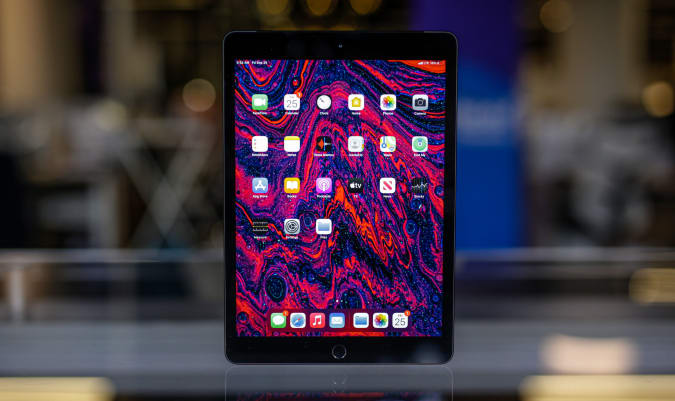
Apple's 10.2-inch iPad is still on sale for $299, or $30 off its normal price. It's arguably the best iPad for new tablet owners and we liked its improved performance, familiar design and support for the first-generation Apple Pencil.
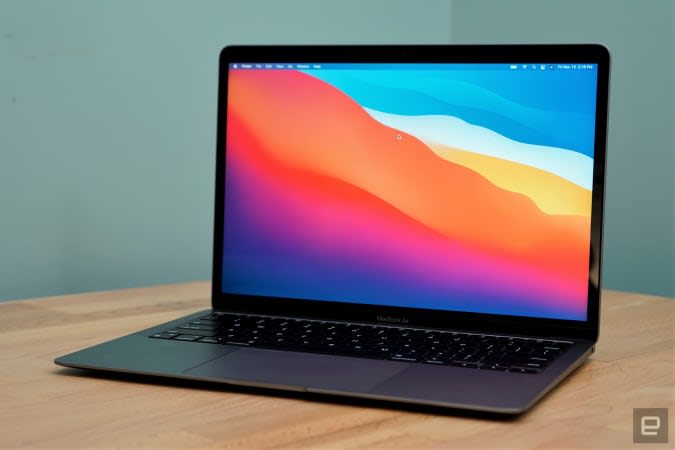
The latest MacBook Air M1 is down to $899 at Amazon, or $100 off its regular price. It's one of the best laptops for most people, and the M1 chipset only makes it a better buy. The Air M1 earned a score of 94 from us for its incredibly fast performance, excellent keyboard and trackpad, good battery life and lack of fan noise.
The 2021 Apple TV 4K with 64GB of storage is nearly $20 off right now, bringing it down to $180. This deal represents a new record-low price on the set-top box, and it lets you get the extra-storage model for the original price of the base model. We gave the Apple TV 4K a score of 90 for its excellent new Siri remote, improved performance, HomeKit integration and support for Dolby Vision and Atmos.
A bunch of Roku devices are on sale at Amazon, including the Roku Streambar, which is down to a record low of $99. This compact soundbar is a convenient gadget to get if you want to upgrade your home theater system without spending a ton of money. We gave it a score of 86 for its space-saving design, Dolby Audio support and built-in 4K streaming technology. If you want to spend even less, a handful of Roku streamers have been discounted, including the Express ($25) and the Streaming Stick+ ($39).
The Instant Pot Duo Crisp multi-cooker and air fryer is down to $98 at Amazon, or more than $50 off its normal price. You're getting 11 cooking modes with this appliance, including air fry, dehydrate, bake, broil and more, plus most of the accessories needed to try out all of the presets. While we have seen this model on sale for $79 around Black Friday, this is the best price we've seen on Amazon all year.
The Thermapen Mk4 has been discounts to $69 as ThermoWorks makes room for the new Thermapen One thermometer. The Mk4 is the best instant-read thermometer we've used so far —the backlit display makes it easy to read in almost any situation and the display rotates depending on how you're holding the pen. Plus, you never have to remember to turn it off because the pen automatically turns on when you pick it up and will shut off after some time of no use.
In Omaze's latest giveaway, you can win two seats on one of the first Virgin Galactic flights to space. In addition, you'll go on a tour of Spaceport America in New Mexico with Richard Branson. You don't have to pay to enter, but funds from all paid entries will support Space for Humanity, an organization that hopes to make space more accessible for all.
Omaze is giving away another $20,000 to build your ultimate gaming PC. This sweepstakes is free to enter, but funds donated with purchased entries will benefit Schools on Wheels, an organization that provides free tutoring and mentoring services to children experiencing homelessness across Southern California.
Pricing and availability is subject to change. No donation or payment necessary to enter or win this sweepstakes.See official rules on Omaze.
New tech deals
Mirror
Mirror's summer sale knocks $400 off its high-tech fitness system when using the code JULY400 at checkout. The discount breaks down to $150 off the mirror device itself, plus free delivery and installation. Just know that the sale is only on the product itself, not on the subscription needed to take the Mirror's fitness classes.
Eufy's SpaceView Pro baby monitor kit is down to $130, or $40 off its normal price. It comes with one camera that's capable of shooting 720p video, and one video receiver that lets you see what your kid's up to at all times. In addition to the camera's 330-degree pan and 110-degree tilt capabilities, we also appreciate the display's 12-hour battery life when kept on.
Fitbit's Charge 4 tracker is back down to its record-low price of $100. If the smartwatch life isn't for you, this might be a good fit because it does a good job marrying fitness tracking with handy smart features. We gave it a score of 82 for its accurate built-in GPS, standard Fitbit Pay and multi-day battery life.
Arturia has knocks 50 percent off all of its individual software titles through August 8. That means you can get some of our favorite music software, including Pigments and Analog Labs, for $99 each. This is a good opportunity to add new synths and other software instruments to your collection for less.
A number of our favorite board games are on sale at Amazon, including Codenames for $11 and Star Wars: Outer Rim for $43. While you may be spending more time out of the house this summer, now's a good time to stock up on some new games to get you through the colder fall and winter months.
One of our recommended VPNs is running a good sale on a two-year subscription. You can sign up for NordVPN for only $89 for the first two years, which comes out to $44.50 per year — and an additional summer promotion adds three free months on top of that. We like NordVPN for its speed, its no-logs policy, the thousands of servers it has to choose from and that one account supports up to six connected devices.
While it's a bit early to be thinking about the holidays, retailers jump on the opportunity to remind us that we're six months out from the festivities. Black Friday in July sales have been ongoing this month, but Best Buy's just began and will run through this weekend. A plethora of gadgets have been discounted across the site, but there are a number of sales on TVs that are worth highlighting. Best Buy slashed hundreds off TVs big and small, including some of the latest OLED sets from LG, Sony and Samsung. Amazon's matching many of the deals, too, so you have options when it comes to where you spend your money. Here are the best smart TV deals we found in Best Buy's Black Friday in July sale.
55-inch LG A1 OLED 4K TV
LG
The latest LG OLED lineup just became available a few months ago and now you can grab the 55-inch A1 model for $1,300. The A1 series is the most affordable of the bunch, making these sets good options for anyone looking to upgrade to OLED while on a tight budget.
The 55-inch, mid-tier LG C1 OLED TV is down to $1,500, or $300 off its normal price. It uses LG's a9 Gen4 AI Processor 4K and supports HDMI 2.1, G-SYNC and FreeSync for gaming and voice commands using Alexa or the Google Assistant.
Sony's 48-inch Bravia A9S OLED TV has been discounted by $300, bringing it down to $1,500. It runs on the company's Processor X1 Ultimate and supports HDR and Dolby Vision, Acoustic Surface Audio, X-Motion Clarity technology, AirPlay 2 and more.
Last year's flagship LG GX OLED TV is on sale for $1,500 for the 55-inch mode, or $500 off its normal price. While the latest G1 flagship is also on sale (see below), it'll set you back an additional $500. If you can deal with a slightly older processor and fewer bells and whistles, this remains a solid OLED set to invest in.
This massive 82-inch Samsung Q60T smart TV is on sale for $1,580, or $420 off its regular price. You're getting Quantum Dot technology here with HDR support, a refresh rate up to 60Hz, Game Enhancer for a better gaming experience and support for multiple voice assistants including Alexa and the Google Assistant.
One of Sony's premium OLED TVs, the 55-inch Bravia XR A80J set, is down to $1,800 in this sale, or $500 off its normal price. It packs most of Sony's best TV technology into one set, including the Cognitive Processor XR, HDMI 2.1 support, 4K upscaling, XR Motion Clarity and improved sound with Acoustic Surface Audio+ and built-in subwoofers. It also runs the Google TV operating system, so you can call upon the Assistant for all your entertainment needs.
The 65-inch The Frame set from Samsung is down to $1,700, or $300 less than normal. This is the TV to get if you'd prefer to look at something more interesting than a black box when not actually watching a TV show or movie. Its art mode lets you select art to display on the screen whenever you want, and it also supports 4K AI upscaling and truer colors using Quantum Dot technology.
A 55-inch LG G1 OLED TV will set you back $2,000 if you grab it during this sale, saving you $200 off its normal price. It's part of the "gallery" series and it uses OLED evo panel technology, which provides better brightness and clearer whites than standard OLED displays. It also runs on LG's a9 Gen4 AI Processor 4K and supports features like G-SYNC, FreeSync, OLED Motion Pro and voice commands via Alexa and the Google Assistant.
If you're keen on investing in an 8K TV, this 75-inch Samsung Q900T QLED 8K set is $1,500 off, bringing it down to $3,000. It includes Quantum HDR 32X, precisely controlled LED backlights and 8K AI upscaling. Just keep in mind that there isn't a ton of 8K content available just yet, so it may be a while before you experience the full benefits of this smart TV.
Google has gone all-out on today's doodle to mark the start of the Tokyo Olympics. Select the modified logo and you can play 'Doodle Champion Island Games,' an anime-infused title featuring sports mini-games. Google says it's the largest interactive doodle it's ever made.
You control Lucky the cat in a pixel-art landscape dotted with Japanese landmarks. Once you join one of several color-coded teams, you can take part in mini-games including table tennis and skateboarding. The controls are relatively straightforward, relying on various combinations of the arrow keys and spacebar. We won gold in the table tennis and pulled off kick-flips and fakies while skateboarding with ease. The doodle will stick around for the coming weeks, adding new games along the way.
The cut scenes are pretty lush, too. According to Google, the interactive doodle was made in collaboration with STUDIO4°C, the Tokyo-based animation house behind feature films like Tekkonkinkreet. It also worked on action-adventure puzzle gameCatherine. You can find out more about Doodle Champion Island Games in the behind-the-scenes video below.