With less than a week before Elden Ring’sFebruary 25th release date, publisher Bandai Namco has shared a new “Overview” trailer detailing the many systems of FromSoftware’s latest action RPG. The clip features nearly six minutes of edited gameplay footage for fans to check out. And if you’ve been trying to avoid spoilers but still want to see what From’s latest project will offer, this is probably your best chance to do so.
Notably, the trailer offers a glimpse of not just the game’s open-world environment, but the many dungeons that you’ll have a chance to explore during your adventures, including the so-called “legacy” ones that feature the same dense level design that has been a hallmark of FromSoftware games since Demon’s Souls. The clip also offers a look at item crafting, player customization and cooperative play, among other elements.
Elden Ring will be available to play on PlayStation 4, PS5, Xbox One, Xbox Series X/S and PC. FromSoftware first announced the title back at E3 2019. A Song of Ice and Fire author George R. R. Martin helped Dark Souls and Bloodborne mastermind Hidetaka Miyazaki create the world of the game. After years of waiting, fans will finally get to see the fruits of that collaboration for themselves.
From domestication and selective breeding to synthetic insulin and CRISPR, humanity has long sought understand, master and exploit the genetic coding of the natural world. In The Genesis Machine: Our Quest to Rewrite Life in the Age of Synthetic Biology authors Amy Webb, professor of strategic foresight at New York University’s Stern School of Business, and Andrew Hessel, co-founder and chairman of the Center of Excellence for Engineering Biology and the Genome Project, delve into the history of the field of synthetic biology, examine today's state of the art and imagine what a future might look like where life itself can be manufactured molecularly.
It’s plausible that by the year 2040, many societies will think it’s immoral to eat traditionally produced meat and dairy products. Some luminaries have long believed this was inevitable. In his essay “Fifty Years Hence,” published in 1931, Winston Churchill argued, “We shall escape the absurdity of growing a whole chicken in order to eat the breast or wing, by growing these parts separately under a suitable medium.”
That theory was tested in 2013, when the first lab-grown hamburger made its debut. It was grown from bovine stem cells in the lab of Dutch stem cell researcher Mark Post at Maastricht University, thanks to funding from Google cofounder Sergey Brin. It was fortuitous that a billionaire funded the project, because the price to produce a single patty was $375,000. But by 2015, the cost to produce a lab-grown hamburger had plummeted to $11.43. Late in 2020, Singapore approved a local competitor to the slaughterhouse: a bioreactor, a high-tech vat for growing organisms, run by US-based Eat Just, which produces cultured chicken nuggets. In Eat Just’s bioreactors, cells taken from live chickens are mixed with a plant-based serum and grown into an edible product. Chicken nuggets produced this way are already being sold in Singapore, a highly regulated country that’s also one of the world’s most important innovation hotspots. And the rising popularity of the product could accelerate its market entry in other countries.
An Israel-based company, Supermeat, has developed what it calls a “crispy cultured chicken,” while Finless Foods, based in California, is developing cultured bluefin tuna meat, from the sought-after species now threatened by long-standing overfishing. Other companies, including Mosa Meat (in the Netherlands), Upside Foods (in California, formerly known as Memphis Meats), and Aleph Farms (in Israel), are developing textured meats, such as steaks, that are cultivated in factory-scale labs. Unlike the existing plant-based protein meat alternatives developed by Beyond Meat and Impossible Foods, cell-based meat cultivation results in muscle tissue that is, molecularly, beef or pork.
Two other California companies are also offering innovative products: Clara Foods serves creamy, lab-grown eggs, fish that never swam in water, and cow’s milk brewed from yeast. Perfect Day makes lab-grown “dairy” products—yogurt, cheese, and ice cream. And a nonprofit grassroots project, Real Vegan Cheese, which began as part of the iGEM competition in 2014, is also based in California. This is an open-source, DIY cheese derived from caseins (the proteins in milk) rather than harvested from animals. Casein genes are added to yeast and other microflora to produce proteins, which are purified and transformed using plant-based fats and sugars. Investors in cultured meat and dairy products include the likes of Bill Gates and Richard Branson, as well as Cargill and Tyson, two of the world’s largest conventional meat producers.
Lab-grown meat remains expensive today, but the costs are expected to continue to drop as the technology matures. Until they do, some companies are creating hybrid animal-plant proteins. Startups in the United Kingdom are developing blended pork products, including bacon created from 70 percent cultured pork cells mixed with plant proteins. Even Kentucky Fried Chicken is exploring the feasibility of selling hybrid chicken nuggets, which would consist of 20 percent cultured chicken cells and 80 percent plants.
Shifting away from traditional farming would deliver an enormous positive environmental impact. Scientists at the University of Oxford and the University of Amsterdam estimated that cultured meat would require between 35 and 60 percent less energy, occupy 98 percent less land, and produce 80 to 95 percent fewer greenhouse gases than conventional animals farmed for consumption. A synthetic-biology-centered agriculture also promises to shrink the distance between essential operators in the supply chain. In the future, large bioreactors will be situated just outside major cities, where they will produce the cultured meat required by institutions such as schools, government buildings and hospitals, and perhaps even local restaurants and grocery stores. Rather than shipping tuna from the ocean to the Midwest, which requires a complicated, energy-intensive cold chain, fish could instead be cultured in any landlocked state. Imagine the world’s most delicate, delicious bluefin tuna sushi sourced not from the waters near Japan, but from a bioreactor in Hastings, Nebraska. Synthetic biology will also improve the safety of the global food supply. Every year, roughly 600 million people become ill from contaminated food, according to World Health Organization estimates, and 400,000 die. Romaine lettuce contaminated with E. coli infected 167 people across 27 states in January 2020, resulting in 85 hospitalizations. In 2018, an intestinal parasite known as Cyclospora, which causes what is best described as explosive diarrhea, resulted in McDonald’s, Trader Joe’s, Kroger, and Walgreens removing foods from their shelves. Vertical farming can minimize these problems. But synthetic biology can help in a different way, too: Often, tracing the source of tainted food is difficult, and the detective work can take weeks. But a researcher at Harvard University has pioneered the use of genetic barcodes that can be affixed to food products before they enter the supply chain, making them traceable when problems arise.
That researcher’s team engineered strains of bacteria and yeast with unique biological barcodes embedded in spores. Such spores are inert, durable, and harmless to humans, and they can be sprayed onto a wide variety of surfaces, including meat and produce. The spores are still detectable months later even after being subjected to wind, rain, boiling, deep frying, and microwaving. (Many farmers, including organic farmers, already spray their crops with Bacillus thuringiensis spores to kill pests, which means there’s a good chance you’ve already ingested some.) These barcodes could not only aid in contact tracing, but be used to reduce food fraud and mislabeling. In the mid-2010s, there was a rash of fake extra virgin olive oil on the market. The Functional Materials Laboratory at ETH Zurich, a public research university in Switzerland, developed a solution similar to the one devised at Harvard: DNA barcodes that revealed the producer and other key data about the oil.
There are worse movies than Uncharted, especially when it comes to the seemingly cursed genre of video game adaptations. But as I struggled to stay awake through the finale — yet another weightless action sequence where our heroes quip, defy physics and never feel like they're in any genuine danger — I couldn't help but wonder why the film was so aggressively average.
Sony Pictures
The PlayStation franchise started out as a Tomb Raider clone starring a dude who wasn't Indiana Jones. But, starting with Uncharted 2: Among Thieves, the games tapped into the language of action movies to put you in the center of innovative set pieces. They were cinematic in ways that few titles were in the early 2010s. But going in the opposite direction — bringing aspects of those games into a movie — doesn't work nearly as well.
Director Ruben Fleischer (Zombieland, Venom), along with screenwriters Rafe Lee Judkins, Art Marcum and Matt Holloway, have crafted an origin story for the treasure hunter Nathan Drake (Tom Holland). It hits the notes you're expecting — his childhood as an orphan, his first team-up with his partner Victor "Sully" Sullivan (Mark Wahlberg), and a globe-trotting treasure hunt that defies logic — but it's all just a Cliff's Notes version of what we've seen in the games. And for a franchise that was already a watered-down version of Indiana Jones, a movie adaptation just highlights all of its inherent flaws. Watching Uncharted made me long for the basic pleasures of Nicholas Cage's National Treasure – at least that Indy clone had personality.
Even the iconic action scenes don’t hit as hard. The film opens mid free-fall, as Drake realizes he just fell out of a plane. Discerning viewers will instantly recognize the sequence from Uncharted 3. We watch as he hops across falling cargo (and wonder if that’s even possible while everything is falling), but the entire scene feels like Tom Holland is going on the world’s most extreme Disney World ride. Without the rumble of the Dualshock 3 controller in my hand, and my responsibility over Drake’s impending death, there just aren’t any stakes. It’s particularly unexciting compared to what we’ve seen in the recent Mission Impossible movies. Tom Cruise (and skydiving camera man Craig O'Brien) jumped out of an actual plane several times for our entertainment!
Still, it's somewhat surprising that this adaptation exists at all. Sony has been trying to develop an Uncharted film since 2008, starting with a loftier iteration by arthouse auteur David O. Russell. That version was going to star Wahlberg as an older Nathan Drake, as we see him in the games, and focus on the idea of family. But the project ended up changing hands several times over the last decade. By the time it was actually gearing up for production in 2020, Wahlberg had aged out of the starring role and into the older sidekick spot. (Sorry, Super Cool Mack Daddy, it happens to all of us.)
After we've seen so many video game films completely miss the mark, like Resident Evil: Welcome to Racoon City and Assassin's Creed, I'm starting to wonder if there's some sort of secret to making a good adaptation. Different audiences want different things, after all. Game fans typically want to see the characters and sequences they love so much legitimized on film. Discerning movie geeks may be comparing adaptations to other, usually better, films. And studio executives just want existing intellectual property that they can churn out to an undiscerning public.
There are a handful of memorable video game films, but they mostly seem like flukes. The original Mortal Kombat was iconic because of its killer soundtrack and (at the time) cutting-edge special effects. Werewolves Within doesn't have much to do with the VR title it's based on, aside from its name. And Sonic the Hedgehog was a blast, but that was mostly due to its lead performances.
As an avid gamer and cinephile, I'll never give up on hoping for successful adaptations. But it could just be that the two mediums are a bit incompatible. A film can never capture the interactive magic and freedom you get from a game. And when you're playing something, heavy-handed cut scenes and direction can often take you out of the experience (unless you’re Hideo Kojima, in which case gamers will argue it’s all a work of genius).
With its cinematic roots, Uncharted had a better shot at a decent adaptation than most games. It’s just a shame that, for a series that’s about exploring new lands and discovering forgotten treasure, it offers nothing new.
A number of new tech deals have popped up across the web ahead of the Presidents' Day holiday. Apple's iPad mini with extra storage is $50 off and down to a record low, while the AirPods Pro are on sale for $175. Both the 40mm and 45mm cellular Samsung Galaxy Watch 4s remain $80 off, plus you still have time to pre-order and save on the Galaxy S22 smartphones, which officially come out on February 25th. Here are the best tech deals from this week that you can still get today.
AirPods Pro
Billy Steele / Engadget
The AirPods Pro are down to $175 right now, or 30 percent off their normal price. We gave them a score of 87 for their solid sound quality, strong ANC and more comfortable fit.
The 256GB iPad mini is $50 off and on sale for $599. We gave the small tablet a score of 89 for its revamped design, solid performance, Center Stage cameras and good battery life.
Both Samsung and Amazon will knock up to $100 off Galaxy S22 smartphones when you pre-order them. This discount applies only to the higher-storage variants, so you can essentially get extra onboard space at no additional cost.
The Stream Deck MK.2 is $10 off right now and down to $140. For a gadget that rarely goes on sale, this is a good discount and one that shouldn't be overlooked if you've had your eye on the controller for a while. It has 15 programmable hotkeys that let you easily do things like control audio and video feeds, launch apps, post to social media and more while you're streaming.
8BitDo's Pro 2 controller is 10 percent off at Amazon when you clip the on-page coupon, bringing the final price down to $45. That's the best price we've seen on the controller, which is leaps and bounds more comfortable to use than Joy-Cons if you're a Nintendo Switch fan. We like its ergonomic design, customization options and its compatibility with a bunch of platforms including PC, MacOS and Raspberry Pi.
Samsung's cellular Galaxy Watch 4 models are on sale for record-low prices right now. The 40mm model is down to $220 while the 44mm version is down to $250. We consider the Galaxy Watch 4 to be the best Android smartwatch you can get and it earned a score of 85 for its bright screen, comprehensive health tracking and new Wear OS features, like downloading apps directly from the Play Store.
Samsung's T7 portable SSD in 1TB is down to a record low of $110, or 35 percent off its usual rate. It's one of our preferred drives if you need something compact, speedy and compatible with a bunch of devices. We also like its aluminum unibody and its Dynamic Thermal Guard that helps control heat levels.
Samsung's 980 Pro internal drive in 2TB is 35 percent off and down to $280 — a great price for a powerful SSD that works with the PS5 (provided you have a heatsink). It has read speeds up to 7,000 MB/s, advanced thermal controls and works with Samsung's Magician Software, which lets you check its health and optimize settings as you'd like.
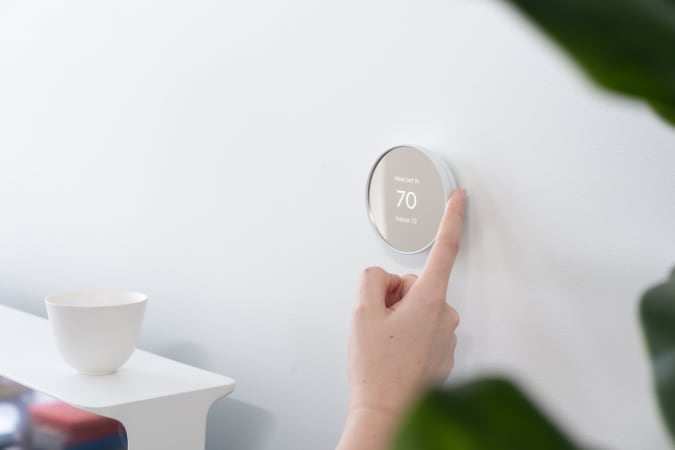
Google's Nest Thermostat is down to $99 right now, and the device with a trim kit will set you back $114. This version has a mirrored display and a touch-sensitive edge, and it can be controlled with the Google Home app. It also has features like Savings Finder, which suggests ways you can tweak your home system to conserve energy.
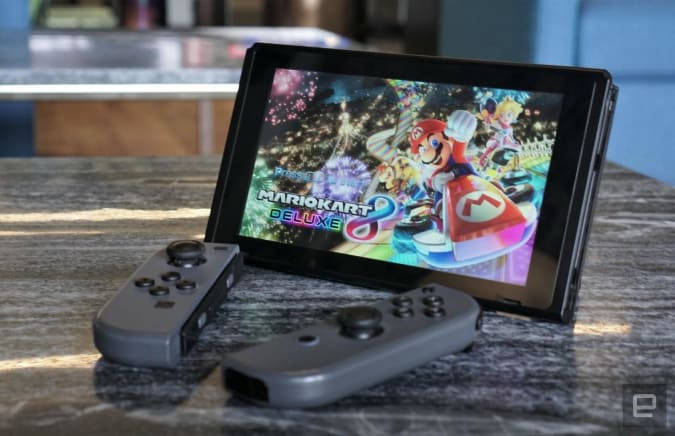
Prime members can get $20 off the Nintendo Switch at Woot right now. While the discount isn't on the OLED model, it's a good sale on a console that rarely sees sales like this. Just make sure to check out Woot's return policy before buying.
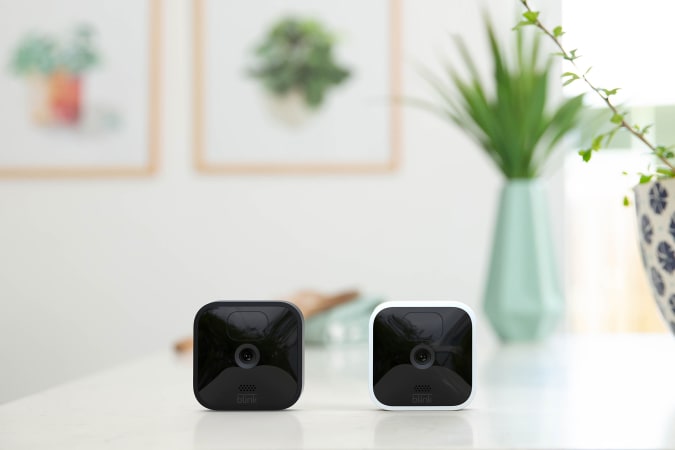
Blink home security cameras are up to 30 percent off, meaning you can get a one-camera Blink Outdoor kit for $70. In addition to being weatherproof, these cams are wireless and support 1080p video, night vision two-way audio and motion alerts. The wired Blink Mini is also on sale and down to only $25.
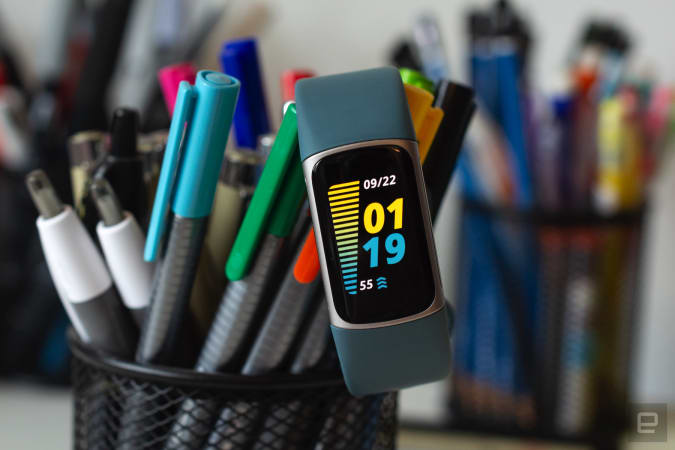
Fitbit's Charge 5 is on sale for a record low of $120 right now. We gave the fitness tracker a score of 82 for its large, full-color display, built-in GPS, standard Fitbit Pay and long battery life. The Fitbit Sense smartwatch is also on sale for $100 less than usual, bringing the price down to $200.
Apple's magnetic battery pack for iPhones is down to $88, which is 11 percent off its normal price. We have seen it cheaper in the past, but this is the best price we've seen since December. The accessory attaches magnetically to the back of the latest iPhones and provides up to 15W of wireless charging.
Woot knocked 34 percent off LG's 65-inch C1 OLED smart TV, bringing it down to $1,650. You're getting the deepest blacks and high contrast that are signature of OLED sets, plus LG's α9 Gen 4 AI processor 4K, Game Optimizer with Auto Low-Latency Mode and HGiG, and the Google Assistant and Amazon Alexa built in. Just make sure to check Woot's return policy before buying.
GameStop has two Star Wars wireless charging pads that are up to 50 percent off right now. If you or someone you love is a super fan, either the Millennium Falcon or The Mandalorian accessories will spice up their charging setup.
It's not on sale, but Dyson's AirWrap Complete in Nickel/Fuchia is available to order once again after being out of stock for along time. The high-tech hair gadget has become quite popular since its launch in 2018 for its versatility. Depending the attachment you choose, the device can curl, straighten or dry hair. It also uses continuously flowing air around the barrel that guides your hair around it, so you don't have to put your fingers near the hottest parts of the gadget.
The on-demand fitness service Alo Moves has an offer few new members that knocks 50 percent off the price of a one-year membership, bringing it down to $99. The platform has dozens of yoga, pilates, barre and strength training classes, along with guided meditations and series that help you master specific skills over the course of longer periods of time.
NordVPN's latest sale knocks the price of a two-year subscription down to just under $96, plus you'll get a free gift on top of it. The prize isn't anything physical, but rather additional subscription time on top of the two-year plan you paid for. Prizes are chosen at random, but after you make your purchase, you'll get either an extra month, and extra year or an extra two years added on to your subscription.
It’s all about Samsung this week! Cherlynn, Devindra and Engadget Senior Editor Sam Rutherford dive into the company’s newest flagship smartphones, the Galaxy S22 and S22 Ultra. It’s jam-packed with new features, we just wish they were easier to use. (And what the heck is “Vision Booster” anyway?) Also, Sam gives us his thoughts on Alienware’s x14 gaming laptop, and Cherlynn is introduced to the infamous Bitcoin cryptocouple.
Listen above, or subscribe on your podcast app of choice. If you've got suggestions or topics you'd like covered on the show, be sure to email us or drop a note in the comments! And be sure to check out our other podcasts, the Morning After and Engadget News!
New productivity tools in Google Smart Canvas – 43:38
Chrome OS Flex – 46:36
Motorola and Verizon’s weird 5G neckband – 47:32
Cryptocouple scammers caught trying to launder 25,000 BTC – 52:54
Working on – 57:33
Pop Culture Picks – 1:02:00
Video livestream
Credits Hosts: Cherlynn Low and Devindra Hardawar Guests: Sam Rutherford Producer: Ben Ellman Music: Dale North and Terrence O'Brien Livestream producers: Julio Barrientos and Luke Brooks Graphic artists: Luke Brooks, Kyle Maack
The Galaxy S22 Ultra is Samsung’s new Note. That’s the simplest way to put it. With a different design to the rest of the S22 family — which admittedly looks a little dated in comparison — and the return of the S Pen, this is the power-user flagship many Samsung fans have been waiting for.
Reviews Editor Cherlynn Low spent a week testing the S22 Ultra, and its familiarity means many users will feel totally at home with Samsung’s biggest new phone. The S22 Ultra is the best premium Android flagship around, with an excellent display, solid cameras and useful software. Nothing here is revolutionary, but with the onboard S Pen, the spirit of the Galaxy Note lives on. We scored it 89 — read on for why.
Apple commissioned famous Korean director Park Chan-wook to create a short film as part of its Shot on iPhone campaign. Park, perhaps best known for the action thriller flick Oldboy, used an iPhone 13 Pro to shoot a 20-minute fantasy martial arts movie entitled Life is But a Dream, which the tech giant has released on YouTube. Take a look for yourself.
The company’s cloud GPUs will come later this year.
As previously announced, Intel’s Arc gaming GPUs will debut in laptops from partner companies this quarter, presumably alongside 12th-gen Alder Lake CPUs. However, desktop gamers will need to wait a little longer before they can plug Arc GPUs into their rigs. Intel says those graphics cards will ship in Q2. At an investor meeting, Intel also revealed plans for a service that will enable access to Arc GPUs via the cloud. It says Project Endgame, which will be available later this year, is "an always-accessible, low-latency computing experience."
Horizon Forbidden West developer Guerrilla was well aware of the PS5 and much of its capabilities when it started working on Forbidden West in 2018. But, the company also planned to make the game work on the PS4, a console that turns nine this fall. In an interview with the creators, we learn exactly how they were able to make a game that works well on both platforms. Two factors that helped? COVID-19 and game streaming.
Reliability and ease of use gave Ford's EV the edge.
Tesla's Model 3 has been Consumer Reports' top EV choice for the past two years, but the publication is ready to declare a new champion. CR has revealed that Ford's Mustang Mach-E has ousted the Model 3 as its EV Top Pick.
The Mustang crossover is not only "more practical," according to editors, but has better first-year reliability and a "far easier" infotainment system, which doesn't require multiple steps for basic tasks.
You can now catch up on episodes of Naruto or Tokyo Revengers on your Switch while waiting for the subway. The anime streaming platform Crunchyroll today unveiled an app for Nintendo's handheld console.
Using your Nintendo Switch to watch movies is still a relatively new concept (and not for those who already suffer from eye strain due to hours of gameplay), but one that’s taking off. There are currently Switch apps for Hulu, YouTube, Twitch Pokémon TV and Funimation. It’s fair to say we’ll likely see more entertainment offerings on the Switch soon, given its popularity. Nearly 103 million units of the Switch have been sold globally, surpassing its predecessor the Wii, Wii U, GameCube and Nintendo 64. Switch sales skyrocketed during the pandemic, leading to a global shortage that has carried over to 2022 and absurd price gouging.
The user base for Switch is considerably larger and more diverse than other game consoles (half of all Switch users are women and users tend to be older). But there are far fewer streaming options on Switch than other consoles, much to the chagrin of current owners.
While Crunchyroll is free, you’ll need to purchase one of its premium plans in order to stream shows on multiple devices or watch shows off-line. Plans start at $7.99 a month.
The S22 Ultra is, for all intents and purposes, a new Galaxy Note. It has the same rectangular silhouette, the same onboard S Pen and the same list of top-tier specs. With the S22 Ultra, Samsung is introducing a more mainstream audience to the S Pen that’s long been the hallmark of the Note series. By merging the two lines, Samsung is consolidating its top-tier products, bringing together the most popular features across its portfolio. That’s not to say there’s nothing new about the S22 Ultra — Samsung brought updated camera, display and software features this year as well.
It’s strange to review a phone that’s supposed to be new, but feels so familiar. If you’ve been missing the Note series, that familiarity will be welcome. But for those simply considering a new Galaxy S flagship, the S Pen alone won’t be enough of an upgrade. Thankfully, though, Samsung promises display and camera improvements that might make the S22 Ultra even better than its predecessor.
Design
The difference between the S22 Ultra and last year’s model starts with their design. The S22 Ultra is pretty much a Note 20 Ultra clone, which makes it a departure from the S21 Ultra’s rounder silhouette. With the same rectangular shape, curved edges and matte brushed metal finish, the two handsets look and feel almost identical. The S Pen slot is even in the same location at the left side of the bottom edge. If I didn’t give you the exact dimensions, you probably wouldn’t even be able to tell that the S22 Ultra is slightly wider, shorter and thicker than the Note. You might notice, though, that the S22 Ultra is about 21 grams (or 0.74 ounces) heavier.
The phone weighs more than the Pixel 6 Pro, too, though the iPhone 13 Pro Max still beats it at 240 grams. Google’s premium flagship already reminded me of the Note 20 Ultra, aside from its colorful two-tone design and camera bar. Instead of a rectangular module at the top left corner housing the array of sensors, the S22 Ultra’s cameras are neatly laid out in two columns on the back with no boundaries containing them. I prefer this streamlined, less cluttered look to the Note 20 and S21 Ultra’s versions.
I also appreciated the S22 Ultra’s Gorilla Glass Victus+ covering, especially after it fell from the top of a cabinet and survived without a scratch. I was somewhat disappointed that the review unit I received was the boring black version, not one of the other three color options. If I were shopping for myself, I’d choose either the green or burgundy, which I got to see in person at a recent Samsung hands-on event.
Display and audio
As is usually the case with Samsung's devices, the S22 Ultra's screen is sumptuous. Its 6.8-inch Super AMOLED panel is colorful, bright and easy to read in the sun, thanks to its peak brightness of 1,750 nits. Like previous Galaxy flagships, the S22 Ultra also refreshes at 120Hz, making for a smooth scrolling experience.
Cherlynn Low / Engadget
To ensure users can see what's on their phones regardless of the lighting conditions, Samsung this year introduced what it's calling "Vision Booster." The feature is meant to kick in when it detects you're in direct sunlight or in super dim environments, adjusting not only the display brightness but also its color and contrast. You'll need to have adaptive brightness on for it to work.
I didn't notice much of a difference when I was playing Two Dots in bed one night, even when I pulled up the same scene on my Pixel 6 Pro to compare. Samsung says the effect is more noticeable in sunlight, but I still didn’t observe a significant difference as the sun shone on the S22 Ultra’s screen when I made my way to the office. Perhaps this is something where the effect is so subtle that it’s hard to notice, but I never had trouble reading things on the S22 Ultra, regardless of the lighting around me.
I don’t generally play music through my phone, but one night when my WiFi went out and I couldn’t use my speakers, I had to resort to streaming Spotify on the S22 Ultra and it provided decent audio quality. It was loud enough to deliver the background noise I was looking for, though songs like Heartbreaker by Wabisabi sounded hollow and were lacking in bass. It was, however, better at handling mid-heavy sounds like the audio cues for games like Two Dots.
S Pen
Another aspect of the S22 Ultra that’s more than a little reminiscent of the Note is the onboard S Pen. The main difference between the S Pens on the S22 Ultra and the Note 20 Ultra is the improved latency of 2.8 milliseconds this year (down from 9ms). This means you'll be getting a slightly better version of an already responsive writing experience, along with Samsung's nifty handwriting recognition software in its Notes app. If you use Samsung's keyboard instead of switching to Gboard, you'll also be able to use the S Pen to scrawl text into search fields and URL boxes throughout the system.
Samsung also provides a list of suggested functions when you pop the S Pen out of its slot, so you can quickly do things like create a note or select a portion of your screen to take a screenshot of and immediately draw on it.
Engadget (Screenshot)
There's not much I can say about the S Pen now that we haven't already covered in previous reviews. Samsung's stylus is competent, if a bit of a blunt object for those looking to create finer works of art. But as a pencil for jotting down a quick list, or signing documents on the fly or as a cursor for the big screen, the S Pen is more than adequate. In fact, in more mainstream functions like acting as a remote control for your camera or music playback, it's perfectly capable. The only issue is whether you're the sort of person who would pull out a stylus to interact with your phone, as opposed to simply using your hands. Either way, the S Pen is a nice accessory to have when you need it, and it stays out of your way when you don’t.
Cameras
The S22 Ultra shares the same camera setup as the S21 Ultra, with a 108-megapixel main sensor, a 12-MP ultrawide option and a pair of 10-MP telephoto lenses. What's new this year are features like auto-framing and improved video stabilization in videos, better stereo depth mapping for more accurate portrait blur and something Samsung is calling Adaptive Pixel. This stitches together high-res images from the 108-MP sensor and a photo taken with nona-binning for bigger pixels to capture more light, supposedly resulting in brighter pictures that retain crisp detail.
Cherlynn Low / Engadget
In reality, Adaptive Pixel is tricky to figure out, and its results might not be worth the effort. First, you have to set the S22 Ultra to shoot at the highest resolution and then, when the system detects you're shooting in low light, it performs the stitching in the background. There's no way you can be certain Adaptive Pixel is at work; there are no user-facing indicators. I shot a few photos of the New York City nightscape with the S22 Ultra both at the default 12-MP and at 108-MP, and they were mostly indistinguishable from each other. When I zoomed in to see more detail, buildings looked equally muddy, mostly due to flares from the various lights in the image.
I took more pictures in low light with the camera set to default resolution and 108-MP, and honestly the effects were incredibly subtle. The high-res shots were sometimes better exposed, but not always. And any improvement in clarity was so subtle that you wouldn’t notice unless you were extremely zoomed in.
Either way, though, Samsung's photos held their own against those from the iPhone 13 Pro and Pixel 6 Pro. Google continues to deliver superior pictures in low light thanks to its Night Sight mode, but Apple and Samsung's offerings are closing the gap. In daylight, the S22 Ultra produced slightly more saturated pictures than the Pixel 6 Pro, which generally renders a more neutral tone. Which camera suits you better ultimately boils down to your preference: Do you like richer-looking pictures, even if they're not the most realistic? Meanwhile, the iPhone 13 series offers Photographic Styles that let you select a default color temperature and contrast setting so all your shots come out tuned to your tastes.
Up front, the S22 Ultra's 40-MP camera is also similar to the S21 Ultra's. Samsung says it improved its stereo depth mapping system for more accurate bokeh effects in portraits, though, and from my experience it seems effective. Compared to selfies I took with the iPhone 13 Pro and Pixel 6 Pro, Samsung's flagship was just as accurate at differentiating my hair from my background, blurring out exactly the same areas as the other two did. Previous Samsung cameras delivered somewhat artificial and awkward-looking portraits, but this time around the S22 Ultra produces more natural-looking bokeh.
The S22 Ultra’s other updates are around video recording. Specifically, Samsung added an auto-framing feature that will detect faces in view and keep up to 10 subjects centered in the scene. You can also select the people you want to prioritize, and the system will follow them around. This was generally effective in my testing, and though I held the S22 Ultra still from a fixed point, the camera followed our video producer Brian around as he strolled around our office. But as he got to the extreme sides of its field of view, the scene started to show noticeable fisheye distortion, warping Brian’s face.
There are plenty of other features Samsung carried over from its previous flagships, but breaking them down here would take forever. Suffice to say that most features you’ve enjoyed on the S21 Ultra or older, like capable image stabilization and Director’s View for recording with both the front and rear cameras, are there. And if you’re one of the people who enjoyed the 100x Space Zoom feature from before, you can still use the S22 Ultra to get super up close to faraway objects. Though I generally found this feature slightly creepy, in some cases the results were actually clear enough to read. For the most part, though, I found Space Zoom most useful at up to 30x zoom. Anything beyond that was usually muddy and unusable.
Samsung software exclusives
Thanks to a collaboration with Google, the S22 series gets a custom version of the Duo video calling app that exclusively enables new screen sharing and auto framing features.
When my colleague Sam and I called each other on our review units, I was able to show him a game I was playing by selecting the new screen share button in Duo. As I launched other apps while on the call, a small icon appeared on the left side of the screen to remind me I was still sharing my screen.
Engadget (Screenshot)
This integration isn’t as sophisticated as Apple’s SharePlay, which has thoughtful limitations on what notifications can be seen while you’re sharing your screen. Meanwhile, another S22 Ultra reviewer I called could see the message alerts that popped up during our chat. Samsung and Google’s Live Sharing feature also doesn’t natively support streaming apps like Netflix or Hulu, meaning you won’t be able to watch shows together with your friends (unless it’s on YouTube).
Samsung also added the auto-framing feature it introduced in its camera app to Duo, so you can make sure your face is centered while you’re on your call. When I enabled this feature, the app automatically switched to a wider angle shot via the front camera, zooming in to keep me in view as I moved around my living room. It’s helpful if you want to leave your phone propped up somewhere while you’re talking, but it does nothing if you’re just going to hold your phone up or remain stationary, which is how I take most of my video calls. This feature is more useful on smart displays, since you can’t move them around as easily as phones.
Samsung also offers a “collaboration view” feature that allows you to use your S22 handset as a second screen for a Tab S8. For example, if you open Samsung Notes on the tablet and click the phone icon on the top right (after both devices are connected to the same WiFi), you can use your S22 as a secondary menu or control panel for paintbrush options. We don’t have a Tab S8 in for review yet, so I unfortunately couldn’t test this feature.
Cherlynn Low / Engadget
As with older Samsung flagships, you can also quickly share content to other nearby Galaxy devices and use Link To Windows to connect to your laptop. One UI 4.0 also offers new color palettes and themes that permeate the entire system, a la Material You on Android 12, which lets you refresh your interface any time you get bored.
Performance and battery life
The S22 series are among the first flagships to use Qualcomm’s new Snapdragon 8 Gen 1 processors, and in general you’ll get the expected speedy performance from the premium processors. My S22 Ultra didn’t break a sweat when I was jumping between reading Reddit and playing a spot-the-difference game while using it as a hotspot for my other devices while my internet was out. I’m actually surprised I never noticed the handset running warm during my time with it, and I have to give credit to Samsung for its improved thermal system here.
I was also slightly taken aback to see the S22 Ultra’s battery life drop from 75 percent when I took it out of its box at noon to just 20 percent by the evening. I initially chalked that up to power used during setup, but in general the S22 Ultra never made it through a full 24 hours. On our video rundown battery test, the S22 Ultra’s result of 17 hours and 16 minutes beat the Pixel 6 Pro by just three minutes, but was hours behind the S21 Ultra, which lasted 21 hours and 42 minutes. It’s possible that the Snapdragon 8 Gen 1 is not as power efficient as its predecessor, and Samsung also confirmed to Engadget that the S Pen draws power from the S22 Ultra while inside its slot, which might be why the S21 Ultra has a longer runtime.
Wrap-up
I have to confess: While writing this review, I kept typing “the Note 22 Ultra” and had to correct my mistake at least a dozen times. Those of you who are Note fans will find this a pleasant reunion. The main upgrades for those coming from a Note 20 Ultra will be in the cameras and software, and considering that phone is about two years old by now, you’ll probably be thankful for the updated specs.
But if you’ve never held a Galaxy Note before, the change could be a welcome refresh. With the addition of the S Pen, too, the S22 Ultra is, more than ever, the phone for the most demanding of power users.
If you want a premium Android flagship but don't need extras like the S Pen or a second telephoto lens, you'll probably find the S22+ good enough. The only real complaints I have with the S22 Ultra are that the display and camera updates Samsung added this year are a little underwhelming. Minor gripes aside, the S22 Ultra is still an excellent phone and the best premium Android flagship you can buy.
Key specs
Spec
Samsung Galaxy S22 Ultra
Display
6.8-inch 3,088 x 1,440 (19.3:9) curved AMOLED, up to 120Hz, with Vision Booster and 240Hz touch sampling in Game Mode
Dimensions
6.43 x 3.06 x 0.4 inches / 163.3 x 77.9 x 8.9 mm; 8.07 oz / 229 grams
It's no secret that the built-in speakers in most TVs are trash. They don't project enough sound out to the front so you can hear well — especially subtle details. Thankfully, you don't have to splurge for a five-speaker (or more) surround-sound setup to fix the problem. In most living rooms, a single soundbar and maybe a subwoofer will suffice. To help guide your shopping spree, we've compiled a list of everything you need to look for when searching for the best soundbar for you, along with a list of the top picks for a range of budgets.
What to look for in a soundbar
Features
When it comes to features, the more you pay the more you're going to get. Most affordable options ($150 or less) will improve your television's audio, but that's about it. Step into the $300 to $400 range and you'll find things like built-in voice control, wireless connectivity, Chromecast, AirPlay 2 and even options like Android TV. They're all helpful when you want to avoid looking for the remote, but the best audio quality is usually only in the top tier and the formats those premium devices support. I’m talking about things like Dolby Atmos, DTS:X and other audio standards. These are what you'll want to look for if truly immersive sound is what you crave for your living room setup. And not all Atmos soundbars are equal, so you'll need to look at the finer details carefully before you break into the savings account.
Ports
Sony
This is a big one. A lot of the more affordable soundbars have limited options when it comes to connectivity. They either offer an optical port or one HDMI jack and, if you're lucky, both. Things get slightly better in the mid-range section, but that's not always the case. The Sonos Beam, for example, is $449, but only has a single HDMI port. If you want to connect your set-top box, gaming console and more directly to your soundbar for the best possible audio, you'll likely want to look for an option with at least two HDMI (eARC) inputs. HDMI connections are essential for things like Dolby Atmos, DTS:X and other high-res and immersive audio formats. And with the new HDMI 2.1 spec, soundbars can support HDR, 8K and 4K/120 passthrough to make these speakers an even better companion for a game console.
Channels
Another big thing you’ll want to pay attention to is channels. That’s the 2.1, 7.1.2 or other decimal number that companies include in product descriptions. The first figure corresponds to the number of channels. A 2 would just be left and right while a more robust Atmos system, especially one with rear satellite speakers, could be 5 or 7 (left, right, center and upward). The second number refers to the subwoofer, so if your soundbar comes with one or has them built in, you’ll see a 1 here. The third numeral is upfiring speakers, important for the immersive effect of Dolby Atmos. Not all Atmos-enabled units have them, but if they do, the third number will tell you how many are in play.
Wireless
Sony
Most soundbars these days offer either Bluetooth, WiFi or both. When it comes to WiFi, that connectivity affords you luxuries like voice control (either built-in or with a separate device), Chromecast, Spotify Connect and AirPlay 2. Depending on your preferences, you might be able to live without some of these. For me, AirPlay 2 and Chromecast are essentials, but the rest I can live without. Those two give me the ability to beam music and podcasts from my go-to apps without having to settle for — or struggle to pair — a Bluetooth connection.
Size
This one might seem obvious but humor me for a minute. Nothing is more soul-crushing than getting a pricey soundbar in your living room only to discover you have to rearrange everything to find a spot for it. This was my plight when the Sennheiser Ambeo Soundbar review unit arrived at my door. Yes, that speaker is absurdly large (and heavy), and most soundbars aren't nearly as big. Indeed, I learned a valuable lesson: Make sure the space where you want to put a soundbar will accommodate the thing you're about to spend hundreds (if not thousands) of dollars on.
Basically, it all comes down to the TV you have (or are planning to get) and what the primary goal is for your living-room audio. Is it ease of use? Do you want the best possible sound from a single speaker or speaker/sub combo? Do you just want to be able to actually hear your TV better?
Engadget picks
By paying attention to each of those areas, you should have a good idea of what to look for in a soundbar or soundbar/sub combo. With that said, we've put numerous products through their paces at Engadget over the years, and have a few favorites at various price points to get you started.
Best premium soundbar: Sony HT-A7000
The HT-A7000 and optional SA-SW5 subwoofer.
Sony
Sony has a long track record for high-end soundbars and its latest is another great-sounding product. The A7000 is a robust Dolby Atmos device, capable of immersive 7.1.2 audio thanks to Sony’s 360 Sound Mapping, Sound Field Optimization, vertical surround technology and S-Force Pro front surround. There’s a lot of tech at work here, and I haven’t even mentioned 360 Reality Audio or DSEE Extreme upscaling for compression, both handy when it comes to listening to music. Speaking of audio, you’ll have the option of using Chromecast, Spotify Connect or AirPlay 2 to send your tunes to the A7000.
Two HDMI eARC inputs means you can hook up multiple streaming boxes or gaming consoles to this soundbar. Thanks to HDMI 2.1 support, you can expect 8K and 4K/120 passthrough to your television, so the A7000 is a great option for gamers who crave a robust home theater setup. This soundbar is expensive at $1,400 and it doesn’t come with a subwoofer. However, Sony does give you multiple options for both a sub and rear satellite speakers. The SA-SW3 sub is $400 while the SA-SW5 is $700. For rear speakers, the SA-RS3S is $350 while the truly wireless (and much better looking) SA-RS5 set is $600.
The top end of Sonos’ home theater lineup was well overdue for a refresh by the time the company introduced the Arc in 2020. This unit replaced the Playbar that debuted in 2013, offering directional sound via Dolby Atmos as the main upgrade. The Arc sports a more modern design, stellar sound and all of Sonos’ smarts – including the ability to automatically calibrate to your living room and when you add additional speakers.
The $899 price doesn’t include a sub, but the Playbar didn’t come with one either. And sadly, Sonos doesn’t include a second HDMI jack here for directly connecting devices besides your TV. As is typically the case with the company’s wares, expansion gets expensive quickly as the wireless sub is $749 and satellite One speakers are $219 each. However, the combination of the Arc and a sub will get you pretty far sound-wise, even if they are separate purchases.
Solid sound quality? Check. Dolby Atmos? Yep. Compact and easy to set up? Uh huh. Compatible with other Sonos products for a more robust system? You betcha. The first-gen Sonos Beam has been one of our favorites since it arrived in 2018, but there was one thing it didn’t have: Dolby Atmos. With the 2021 model, the company’s big addition was that immersive sound, though it’s a bit limited since the Beam doesn’t have any upward-firing speakers. Sonos manages to make things seem more directional by tweaking audio timing and frequency instead of adding more drivers. The new Beam still only has the one HDMI port which means you won’t be connecting a gaming console or set-top box directly to this. It also means that if you have an older TV with an optical jack, you’ll need an adapter here.
If you’re looking for a way to improve your TV sound on a budget, Vizio has some solid options. With the V21t-J8, you get a 2.1-channel setup in a compact soundbar and 4.5-inch wireless sub combo. This would be a great choice if you don’t want your add-on TV speaker to take up a lot of space. There’s no WiFi connectivity, but that’s really the only sacrifice when it comes to the basics. HDMI ARC/eARC and optical connections link to your television while a 3.5mm aux jack and Bluetooth allow you to play music from your phone or another device. DTS Virtual:X compatibility offers some of the effect of surround sound without a bigger unit or additional speakers.
Roku has a line of products that not only allow you to improve your television’s sound quality, but they also have a streaming player built right in. For $130, the Streambar gives you all the benefits of a Roku player, including 4K HDR, inside of a soundbar with four 1.9-inch drivers. There are a lot of handy features here too, like the ability to dull the roar of commercials, enhanced speech clarity and compatibility with most voice assistants. Plus, the Streambar supports AirPlay for beaming both video and audio to the device. Roku doesn’t pair a subwoofer with this soundbar, but it does offer one separately for $180.
You have about one more week to pre-order Samsung's latest smartphones before they come out on February 25th. Samsung has a number of offers available to those who pre-order, but now Amazon is matching one of the discounts. The online retailer has knocked up to $100 off the higher-storage variants, so you can essentially get extra onboard space at no additional cost. The 256GB Galaxy S22 Ultra is $1,200 and $100 off, while the 512GB version is also $100 off and down to $1,300. As for the Galaxy S22+ and S22, the 256GB models of those handsets are $50 off and on sale for $1,000 and $800, respectively.
Samsung unveiled the three smartphones last week and the Galaxy S22 Ultra is the most premium of the bunch. It has a mesmerizing 6.8-inch QHD+ OLED screen with a 120Hz refresh rate, an impressive rear camera array, and is outfitted with the highest specs you can get in a Samsung phone — a Qualcomm's 4nm Snapdragon Gen 1 chip, up to 12GB of RAM and up to 1TB of onboard storage. Samsung married the designs of its S- and Note-series phones in this new model, and fans of the Note family will be happy to see that the S22 Ultra comes with a built-in S Pen. While we had a bit of time to test out the Galaxy S22 Ultra before Samsung's announcement, stay tuned for a full review coming soon.
The Galaxy S22+ and S22 may not have all the bells and whistles found on the Ultra, but Samsung made important updates to the insides of both smartphones. They share a design that looks similar to last year's flagships, but they're now made partially of post-consumer recycled material and come in new colors. The 6.6-inch S22+ and the 6.1-inch S22 both have FHD+ displays with 120Hz refresh rates, a triple rear camera array, a 40-megapixel selfie camera and a new Vision Booster feature, which adjusts screen settings automatically throughout the day to make it easier to view in different environments. As far as performance goes, both handsets run on Qualcomm’s 4nm Snapdragon 8 Gen 1 chip, 8GB of RAM and up to 256GB of storage. Keep an eye out on Engadget for our full review in the coming weeks.
Follow @EngadgetDeals on Twitter for the latest tech deals and buying advice.