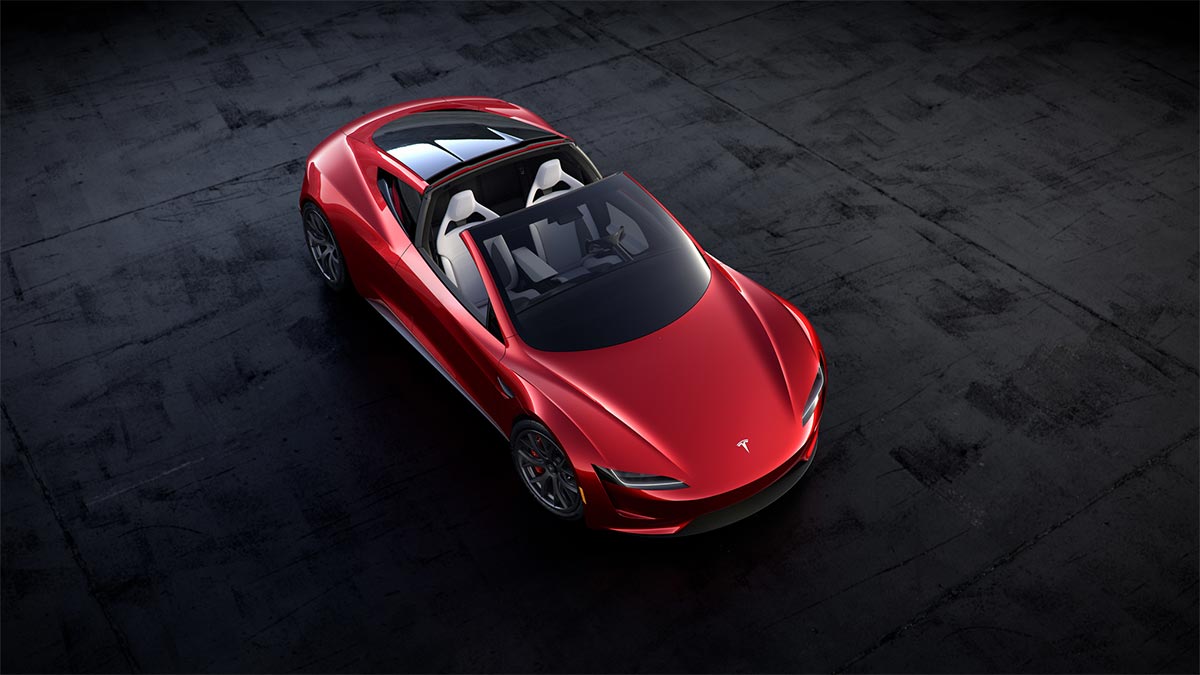
Tesla CEO Elon Musk wants to cut around 10 percent of jobs at Tesla, according to a report from Reuters. In an email to executives, he wrote that he has a "super bad feeling" about the economy. Including its subsidiaries, Tesla employed around 100,000 people as of the end of 2021, so any layoffs could be substantial.
Tesla has struggled with production more than some automakers, as most of its vehicles bound for Asian and European markets are manufactured in China at its Shanghai factory. Like other firms that manufacture in the nation, it has had difficulty restarting production following COVID-19 lockdowns.
On top of that, investor sentiment has been down due to inflation and the war in the Ukraine. However, the US jobs market is as good as it's ever been, with unemployment holding steady at a 3.6 percent, the lowest level since the start of the pandemic. Demand for Tesla vehicles remains strong as well, according to Reuters.
Musk recently told SpaceX and Tesla employees that they had to return to the office full-time or leave the company. His uncompromising stance on remote work contrasts with other major tech companies that have allowed workers to request work-from-home permanently, including Salesforce, Slack and Facebook. Tech talent agency founder Jason Stomel told Reuters that Musk's stance could be a "disguised layoff" because he "knows there's a percentage of workers who are just not going to come back."
Back in 2017, Sony's Insomniac Games famously tweeted that its Spider-Man game was a "permanent PS4 exclusive" that would "never appear on Xbox or PC." Welp, Sony just announced that the Spider-Man series is coming to PC, with Spider-Man Remastered arriving on August 12th, 2022 and Spider-Man: Miles Morales coming in the fall.
Sony mildly acknowledged its previous ultimatum ("That's right...), while pointing out that the port isn't due to any lack of success on PS4 or PS5. It said that the series has now sold through more than 33 million copies globally as of May 15, 2022, which makes it one of Sony's biggest first-party hits.
From the footage shown in the teaser, the visuals look pretty great. The remastered version includes adjustable render settings and ray-traced reflections, and you'll of course be able to use your keyboard and mouse. The game "will include the full main story and its continued narrative in Marvel's Spider-Man: The City that Never Sleeps DLC," with three accompanying Peter Parker story chapters along with additional missions and challenges, according to Insomniac.
Despite the "never" tweet, a Spider-Man port looked far more likely after Sony purchased Nixxes, a studio known for porting games to PC. Nixxes did in fact do the work, saying it focused on "creating the best possible PC experience that takes advantage of all the exciting possibilities the PC platform has to offer." As mentioned, Spider-Man Remastered arrives on August 12th and Spider-Man: Miles Morales shortly afterwards in autumn. More information about both games will arrive closer to the launch dates.
One of the myriad issues with hydrogen as a clean energy source is infrastructure, as it's very expensive to move around and store an extremely explosive gas. Toyota and its subsidiary Woven Planet believe they may have a solution with a new portable hydrogen cartridge prototype. The idea is that they can be filled up at a dedicated facility, transported where needed, then returned when you receive your next shipment.
The cartridges would be relatively small at 16 inches long, 7 inches in diameter and about 11 pounds in weight. Toyota calls them "portable, affordable, and convenient energy that makes it possible to bring hydrogen to where people live, work, and play without the use of pipes.. [and] swappable for easy replacement and quick charging."
They could be useful for "mobility [i.e. hydrogen cars], household applications, and many future possibilities we have yet to imagine," Toyota said. It didn't mention any specific uses, but it said that "one hydrogen cartridge is assumed to generate enough electricity to operate a typical household microwave for approximately 3-4 hours."
In its press release, Toyota acknowledges that most hydrogen is made from fossil fuels and so not exactly green. But it thinks that it'll be generated with low carbon emissions in the future, and that the cartridges could help with some of the infrastructure issues.
Toyota plans to test that theory by conducting proof of concept trials in various places, including its "human-centered smart city of the future," Woven City in Susono City, Zhizuoka Prefecture in Japan. The company is also "working to build a comprehensive hydrogen-based supply chain aimed at expediting and simplifying production, transport, and daily usage," it said.
Hydrogen is an impractical fuel for automobiles, mainly due to the expense and lack of places to refuel. It's more viable for things like trains and semi trucks, where electrification can be more of a challenge. It also holds promise for air transportation, as batteries are too heavy to be practical in that situation. However, Toyota seems to be pitching the cartridges for personal and home use, but it's not yet clear what you'd use them for.
After a leak yesterday spoiled the surprise, Microsoft has unveiled the Surface Laptop Go 2, a $600 starter laptop with premium looks. It looks very much like the original, has an near-identical 12.4-inch 1,536 x 1,024 touch display, anodized aluminum top and weight that's just a fraction more at 2.48 pounds. However, the new model is powered by an 11th-gen Intel Core i5 CPU with Iris Xe graphics, and runs Windows 11 instead of Windows 10.
The 11th-gen Intel CPU should give the Surface Laptop Go 2 a much-needed speed boost. And storage options are now 128GB or 256GB — a step up from the previous model, which offered just 64GB of sluggish eMMC storage on the base $550 model. However, other aspects of the new model haven't changed. It still offers from 4GB to 8GB of LPDDR4x RAM (or 16GB for commercial customers), a relatively low-resolution screen, and no backlight on the keyboard.
Microsoft
Battery life is up a touch from 13 to 13.5 hours under normal usage, good enough for a day's worth of computing. And you can charge it to 80 percent power in under an hour thanks to the 39-watt charger. Other features include WiFi 802.11ax, one USB-C port, one USB-A port, a 3.5mm headphone jack and a Surface Connect power port.
The Surface Laptop Go 2 is still the cheapest Surface laptop, but we weren't completely sold on the original. Designed to take on Chromebooks, it offered more premium look for a bit more money. However, the mediocre performance made it a tough sell against rivals like the Dell XPS 13, which cost about the same in an 8GB configuration. Hopefully, the new model addresses those performance concerns — it's now available on pre-order at Microsoft.com or BestBuy.com starting at $600.
Porsche is strengthening its relationship with EV supercar company Rimac, investing "eight figures" for a total ownership stake of 20 percent, TechCrunch reported. Rimac scored $500 million in total, with additional funds coming in from investment giants Softbank and Goldman Sachs. All of that is a huge vote of confidence in the company, which has become a key supplier and collaborator on EVs built by Hyundai, Porsche and other mainstream automakers.
Porsche, which invested $83.3 million in Rimac last year, said it's "delighted" that Rimac has gained some new, high-profile investors. "SoftBank is the biggest tech investor in the world, and Goldman is a very big financial investor," said Rimac founder and CEO, Mate Rimac. The money will be used to build a $200 million Rimac campus in Zagreb, Croatia and bolster the company's Rimac Technology subsidiary, which designs and builds EV parts for other automakers.
Despite the influx of cash from Porsche, Rimac said the overall investment will help it remain independent. "It’s very good for us to have Porsche and Hyundai onboard as shareholders, but we don’t want to be fully dependent on them," the CEO explained.
Last year, Rimac set up a joint venture with Porsche to run Bugatti after Volkswagen ceded ownership. The new entity, called Bugatti Rimac, recently unveiled the 1,914-horsepower Rimac Nevera EV hypercar that will go from 0-60 MPH in 1.85 seconds and have an estimated top speed around 250 MPH. Apart from Porsche and Hyundai, Rimac Technology develops and manufactures batteries and other components for Koenigsegg, Pininfarina and Aston Martin.
Fujifilm has launched its new flagship APS-C mirrorless camera, the $2,500 X-H2S, with an all-new 26.2-megapixel (MP) stacked BSI CMOS sensor and a raft of impressive features. Some of the key highlights include 40 fps blackout-free burst shooting, 6.2K 30fps video and 7-stop in-body stabilization.
The X-H2S is the long-rumored successor to the X-H1, released over four years ago. However, it bears little resemblance to that model (apart from the top LCD display) with a substantially different grip and button layout. It's also lighter at 660 grams compared to 673 grams. Unlike the tilt-only display on the X-H1, the X-H2S has a fully articulating 1.62-million dot rear display, making it far better for vloggers and solo video shooters. The 5.76-million-dot 120Hz EVF outclasses other APS-C cameras and hopefully addresses EVF performance issues on the X-T4.
It's the first Fujifilm camera with a stacked, backside illuminated sensor (the X-Trans 5HS) and new X-Processor image processor — though the 26.2-MP resolution sensor is the same we've seen on models as far back as the X-T3. By contrast, Canon's new EOS R7 APS-C camera has a 32-megapixel sensor, but it's neither backside illuminated nor stacked.
Fujifilm
The stacked sensor allows for some impressive shooting speeds. It can hit up to 40 fps in silent electronic shutter mode with no blackout, or 15fps in mechanical shutter mode (at 1/8000th maximum), both with autofocus and auto-exposure enabled. It comes with a high-capacity buffer, allowing you to capture 175 compressed RAW frames in 40fps ES mode (4.4 seconds worth) and 400 compressed RAW frames in mechanical shutter mode.
Fujifilm promises much-improved phase-detect autofocus (AF) performance over the X-T4, with three times the speed and improved accuracy. Meanwhile, the AF algorithms can do prediction for moving subjects, while allowing for zone AF subject detection and low-contrast situations. On top of recognizing humans (face/eye), it can also detect animals, birds, cars, bikes, airplanes and trains.
Also enabled by the faster sensor/processor is a big jump in video specs over the X-T4. The X-H2S supports 6.2K video at 30 fps, DCI 4K (4,096 x 2,160 pixels) at 120 fps and Full HD at 240 fps, with no cropping or sub-sampling on all video modes up to 60 fps. 4K at 120p is mildly cropped at 1.29x, but it's still oversampled with no pixel binning or line skipping.
Fujifilm
It's also the first Fujifilm APS-C camera to support ProRes (ProRes422, ProResHQ, ProResLT and ProResProxy), along with H.264 and H.265 video. All of those resolutions can be recorded at 4:2:2 10-bit quality, and Fujifilm has introduced F-Log2 recording that allows for 14+ stops of dynamic range below 30 fps and 13+ stops at higher frame rates (with settings at or above ISO1250) — impressive, if accurate.
External recording via the full-sized HDMI 2.1 port is equally impressive. On top of all of the above settings (6.2K/29.97P, 4K/120P 4:2:2 10bit), you can record ProRes RAW at 6.2K/29.97P and 4.8K/59.94P, both at 4:2:2 12bit with 13 stops of dynamic range. External recording with ProRes RAW means that Fujifilm won't need to deal with RED RAW patent lawsuits, like the one recently slapped on Nikon's Z9.
Like other stacked sensor cameras, the X-H2S promises well-controlled rolling shutter at 1/90th of a second (11 ms) for video under 30fps and 1/180th of a second (5.6 ms) for higher framerates. That's right up there with other stacked sensor cameras like Sony's A1 or the Canon R3, meaning you should see minimal jello or wobble in video, particularly at higher framerates.
Fujifilm
Overheating doesn't appear to be much of an issue at normal temperatures, with a promised four hours of 4K60p shooting at 25 degrees C (77 degrees F). That drops to 20 minutes at 40 C (104 F), but you can boost that to 50 minutes with an optional $199 cooling fan.
The X-H2S has improved in-body stabilization over past Fujifilm cameras, as well. It delivers 7 stops of shake reduction compared to 6.5 stops on the X-T4, which should help smooth videos and reduce blur on photos.
Other key features include both CFexpress and SD UHS II card slots, a USB 3.1 gen 2 (10Gbps) port with a handy cable lock screw, 3.5mm microphone/headphone jacks, 10-bit HEIF photo support and an optional $400 vertical grip. It also supports wireless and wired functions like live streaming, tethered shooting, webcam functions (no app required) and cloud storage uploads. CIPA battery life is 610 shots max with the EVF, or 1,580 shots with the vertical grip.
Fujifilm
Along with the camera and accessories, Fujifilm has launched two new lenses, the XF150-600mm f/5.6-8 R LM OIS WR zoom telephoto (left), arriving on July 7, 2022 for $2,000. It's also introduced the XF18-120mm f/4 LM PZ WR (right), a versatile wide-telephoto zoom coming in September 2022 for $900. Meanwhile, the X-H2S will be Fujifilm's most expensive APS-C camera to date, arriving on July 7th for $2,500 — the same price as Canon's full-frame EOS R5.
Panasonic and Leica have formed a new collaboration called L² (L squared) that will see them jointly develop cameras, lenses and imaging technology, they announced. Both companies are already part of the L-Mount mirrorless alliance (along with Sigma and Leitz) and Panasonic has loaned its camera tech to Leica. However, the new partnership goes deeper, as they'll use "jointly developed technologies" in their respective lens and camera products, while the L² branding will feature in future marketing activities.
"Through this collaboration, the two companies will jointly invest in new technologies that can be incorporated into camera and lens products, and will incorporate jointly developed technologies into each other's Leica and Lumix products to further enhance their product capabilities," the press release states. "Going forward, Leica and Lumix will utilize L² Technology, which will open up new possibilities for creative camera users, in their marketing activities in order to develop a collaborative system over the long term."
There's no word on when we'll see the fruit of this collaboration. It does make some sense, though, as Panasonic tends to get overshadowed by Canon, Sony and Nikon, despite producing good cameras — especially for video. Meanwhile, Leica has a sterling reputation for lens quality, but gets far less respect for its mirrorless cameras because they're mostly rebadged, overpriced Panasonic models. By collaborating, Panasonic could gain some prestige off Leica's iconic reputation and lens quality, while Leica will get access to Panasonic's technological chops.
English jargon has invaded every corner of France, causing consternation among language purists — a trade fair popular with politicians during election season is called "Made in France," for example. Despite widespread usage in business and elsewhere, the government has decided to pick on gaming, officially banning terms like "streamer" and "cloud gaming," according to AFP. Going forward, the far more convoluted terms joueur-animateur en direct and jeu video en nuage must be used for any government communications.
The changes were made in consultation with France's Ministry of Culture, which has in the past touted the gaming industry as a French economic success story. However, it told the AFP it's concerned that English terms could become a "barrier to understanding" for non-gamers. (That's a solid point, as I can attest that many French non-gamers wouldn't have a clue what a term like "streaming" means.) France's language keepers, l'Académie française, has also expressed concern about English jargon in gaming, having published a lexicon of alternate French terms back in 2017.
The changes were issued in the government's official journal, meaning they're binding on all government workers. However, it's hard to see them catching on in daily use or even on French websites or newspapers. Previous efforts by l'Académie française to replace anglicisms have not gone well — its attempt to get people to use l’access sans fil à internet instead of le wifi failed completely, as The Local France points out.
DeLorean Motor Company has revealed the first images name of its upcoming EV called the Alpha5. The main things that stand are the wedge-like supercar styling, pair of massive gullwing doors and four seats — letting it hit 88 MPH with two extra passengers or carry considerably more than 55 pounds of cocaine. DeLorean first teased its upcoming EV last month, promising a full reveal later this summer on August 18th. To be clear, it won't be built by the original DeLorean, but rather a Texas company that purchased the rights to the DeLorean name and spare parts.
DeLorean
The Alpha5 was designed by Giorgetto Giugiaro's ItalDesign studio (which also designed the original DeLorean) but there's no word if it uses stainless steel panels like the OG. It's based on the "Medusa" concept that the original DeLorean company had been working on before it went bankrupt back in 1982.
That vehicle was supposed to have four independent gullwing doors, but the DeLorean appears to have decided (probably wisely, given the complexity of such doors) to stick with two. From a top-front angle, the Alpha5 bears a passing resemblance to Tesla's new Roadster with similar lines on the hood/frunk.
DeLorean
DeLorean is targeting a 100kWh battery pack that should provide excellent range, along with a dual-motor, all-wheel-drive setup. It's projected to hit a top speed of 155 MPH and go from 0 to 60 MPH in 2.99 seconds or (yes) 0-88 MPH in 4.35 seconds.
The DeLorean was made famous, of course, by the Back to the Future series of films. Its creator John DeLorean also had a colorful history, having managed the development of American muscle cars like the Pontiac GTO in the '60s and '70s. He was arrested in 1982 and charged with cocaine trafficking, but the trial ended in a not guilty charge. The new DeLorean company will reveal the Alpha5 to the general public tomorrow morning on its website.
For iPhone users looking for extra power plus wireless charging who want to stay in the Apple ecosystem, the MagSafe battery pack is the best (and only) way to go. It's pretty expensive at $99, but Amazon now has it on sale for $80 ($19 off the regular price), the cheapest we've seen it this year.
The MagSafe battery pack snaps magnetically onto the back of all iPhone 12 or 13 models and starts charging the handset once attached with about 5 watts of power. It fits onto the back of even the iPhone 13 mini, so you can continue to use your phone with one hand while powering up. If you plug in the battery pack while charging your iPhone, you'll get up to 15W of power and you can keep track of your phone's and the battery pack's recharge on your iPhone's lock screen.
The main downside to the MagSafe battery pack is the 1,460 mAh battery that can't fully charge any of the supported iPhones, and charging speed limited to 5 watts — lower than some third-party models. If you need more juice, take a look at Anker's $60 5,000 mAh MagGo model or the bulky but powerful $60 Belkin 10,000 mAh magnetic charger and portable power bank. Apple's MagSafe model is certainly more elegant and portable than those options, so if you've been looking to buy one, it'd be best to act soon.
Follow @EngadgetDeals on Twitter for the latest tech deals and buying advice.