The electric revolution is no longer limited to daily drivers and eco-commuters. Luxury brands such as Audi, BMW, Mercedes and Porsche have already begun augmenting their lineups with EV variants, while hypercar makers like Lamborghini and Ferrari expect their first electrics to arrive in the next few years. On Tuesday, British automaker Lotus announced that it too has an EV, the 600HP Eletre, with deliveries beginning next year in China, Europe and the UK.
Lotus
Developed under the codename Type 132, the Eletre "takes the heart and soul of the latest Lotus sports car – the Emira – and the revolutionary aero performance of the all-electric Evija hypercar, and reinterprets them as a Hyper-SUV," according to the company's press release. It also accomplishes a number of firsts, the release continued: "first five-door production car, the first model outside sports car segments, the first lifestyle EV, the most ‘connected’ Lotus ever."
The Eletre was developed atop Lotus' 800V Electric Premium Architecture (EPA) platform. That voltage puts it on par with the Audi e-Tron and Hyundai Ioniq 5, meaning that on a 350 kW DC fast charger, drivers will be able to add around 248 miles of range in a 20 minute charge, according to the company. Lotus hasn't specified how big the battery will be beyond that it "has a battery capacity that’s over 100 kWh" but the company is estimating a total range of 373 miles, equivalent to that of the Tesla Model X Long Range Plus. Its dual front and rear motors will reportedly output 600 horsepower producing a top speed of 161 MPH and a sub-3 second 0-60.
Lotus
Ben Payne led development of the Eletre's exterior design, which features "porous" aerodynamics, a low stance atop the platform's long wheelbase with short overhangs at either end. "The Eletre is a progressive all-electric performance vehicle embodying emotion, intelligence and prestige and, as the first of the brand’s lifestyle cars, it sets the standard for what will follow," he said. "We have taken the iconic design language of the Lotus sports car and successfully evolved it into an elegant and exotic Hyper-SUV.”
The interior will offer either the traditional two-buckets-and-a-bench layout or an optional four individual seats, front and rear, beneath a fixed panoramic sunroof. The material choices for the cabin reflect Lotus' net-zero goals, with "durable man-made microfibres on the primary touchpoints, and an advanced wool-blend fabric on the seats," while the hard parts are constructed from little bits of carbon fiber recycled from the edge of weaves rather than being made specially.
Lotus
The infotainment system is a whole production. "Below the instrument panel a blade of light runs across the cabin, sitting in a ribbed channel that widens at each end to create the air vents," Tuesday's announcement read. This light blade serves as part of the vehicle's HMI and changes color to alert occupants of important events like incoming calls.
Below that is a 30mm tall "ribbon of technology." On the driverside, that ribbon serves as the instrument cluster, displaying vehicle and trip information, which can also be displayed via the AR system, which comes standard. On the passenger side, a second ribbon shows relevant contextual information like the nearby points of interest or the current music selection which plays through a KEF Premium 1,380-watt 15-speaker surround sound set-up with Uni-QTM.
Lotus
Between these two ribbons sits a 15.1-inch OLED touchscreen infotainment system that folds away when not in use. While most of the cabin controls are digital and can be used either through the touchscreen or voice interfaces, Lotus deemed some functions vital enough to warrant being mirrored to physical knobs and switches so drivers won't have to dig through submenus to turn on the windshield wipers. Even those digital controls, Lotus boasts that "with three touches of the main screen users can access 95 percent of the car’s functionality."
Lotus
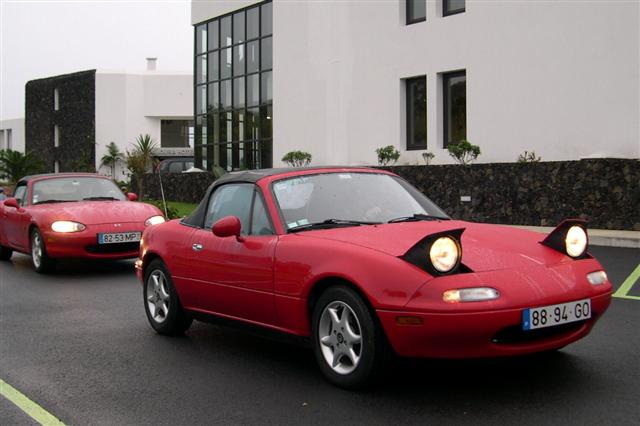
The Eletre is also the first vehicle on the market with a deployable LIDAR array. Used to supplement the driver assist system the unit pops up from the top of the windscreen, top of the rear glass and the front wheel arches — like the headlights from a 1990 MX-5 — when in use and then retracts when finished to maintain aerodynamics.
"ADAS technologies such as LIDAR sensors and cameras will become increasingly common on new cars as we move into a more autonomous era, and to have the world’s first deployable LIDAR system on the Eletre is a signal of the technology vision we have for Lotus," said Maximilian Szwaj, Vice President of Lotus Technology and Managing Director, LTIC. "This car has tech for today, and also for tomorrow, as it’s been developed to accept OTA updates as standard."
Lotus
Manufacturing begins later this year at Lotus' new production plant in Wuhan, China with deliveries beginning in 2023. The model will be available first in China, Europe and the UK. The company hasn't disclosed pricing details yet.
Barely a month into its already floundering invasion of Ukraine and Russia is rattling its nuclear saber and threatening to drastically escalate the regional conflict into all out world war. But the Russians are no stranger to nuclear brinksmanship. In the excerpt below from Ben Buchanan and Andrew Imbrie's latest book, we can see how closely humanity came to an atomic holocaust in 1983 and why an increasing reliance on automation — on both sides of the Iron Curtain — only served to heighten the likelihood of an accidental launch. The New Firelooks at the rapidly expanding roles of automated machine learning systems in national defense and how increasingly ubiquitous AI technologies (as examined through the thematic lenses of "data, algorithms, and computing power") are transforming how nations wage war both domestically and abroad.
As the tensions between the United States and the Soviet Union reached their apex in the fall of 1983, the nuclear war began. At least, that was what the alarms said at the bunker in Moscow where Lieutenant Colonel Stanislav Petrov was on duty.
Inside the bunker, sirens blared and a screen flashed the word “launch.”A missile was inbound. Petrov, unsure if it was an error, did not respond immediately. Then the system reported two more missiles, and then two more after that. The screen now said “missile strike.” The computer reported with its highest level of confidence that a nuclear attack was underway.
The technology had done its part, and everything was now in Petrov’s hands. To report such an attack meant the beginning of nuclear war, as the Soviet Union would surely launch its own missiles in retaliation. To not report such an attack was to impede the Soviet response, surrendering the precious few minutes the country’s leadership had to react before atomic mushroom clouds burst out across the country; “every second of procrastination took away valuable time,” Petrov later said.
“For 15 seconds, we were in a state of shock,” he recounted. He felt like he was sitting on a hot frying pan. After quickly gathering as much information as he could from other stations, he estimated there was a 50-percent chance that an attack was under way. Soviet military protocol dictated that he base his decision off the computer readouts in front of him, the ones that said an attack was undeniable. After careful deliberation, Petrov called the duty officer to break the news: the early warning system was malfunctioning. There was no attack, he said. It was a roll of the atomic dice.
Twenty-three minutes after the alarms—the time it would have taken a missile to hit Moscow—he knew that he was right and the computers were wrong. “It was such a relief,” he said later. After-action reports revealed that the sun’s glare off a passing cloud had confused the satellite warning system. Thanks to Petrov’s decisions to disregard the machine and disobey protocol, humanity lived another day.
Petrov’s actions took extraordinary judgment and courage, and it was only by sheer luck that he was the one making the decisions that night. Most of his colleagues, Petrov believed, would have begun a war. He was the only one among the officers at that duty station who had a civilian, rather than military, education and who was prepared to show more independence. “My colleagues were all professional soldiers; they were taught to give and obey orders,” he said. The human in the loop — this particular human — had made all the difference.
Petrov’s story reveals three themes: the perceived need for speed in nuclear command and control to buy time for decision makers; the allure of automation as a means of achieving that speed; and the dangerous propensity of those automated systems to fail. These three themes have been at the core of managing the fear of a nuclear attack for decades and present new risks today as nuclear and non-nuclear command, control, and communications systems become entangled with one another.
Perhaps nothing shows the perceived need for speed and the allure of automation as much as the fact that, within two years of Petrov’s actions, the Soviets deployed a new system to increase the role of machines in nuclear brinkmanship. It was properly known as Perimeter, but most people just called it the Dead Hand, a sign of the system’s diminished role for humans. As one former Soviet colonel and veteran of the Strategic Rocket Forces put it, “The Perimeter system is very, very nice. Were move unique responsibility from high politicians and the military.” The Soviets wanted the system to partly assuage their fears of nuclear attack by ensuring that, even if a surprise strike succeeded in decapitating the country’s leadership, the Dead Hand would make sure it did not go unpunished.
The idea was simple, if harrowing: in a crisis, the Dead Hand would monitor the environment for signs that a nuclear attack had taken place, such as seismic rumbles and radiation bursts. Programmed with a series of if-then commands, the system would run through the list of indicators, looking for evidence of the apocalypse. If signs pointed to yes, the system would test the communications channels with the Soviet General Staff. If those links were active, the system would remain dormant. If the system received no word from the General Staff, it would circumvent ordinary procedures for ordering an attack. The decision to launch would thenrest in the hands of a lowly bunker officer, someone many ranks below a senior commander like Petrov, who would nonetheless find himself responsible for deciding if it was doomsday.
The United States was also drawn to automated systems. Since the 1950s, its government had maintained a network of computers to fuse incoming data streams from radar sites. This vast network, called the Semi-Automatic Ground Environment, or SAGE, was not as automated as the Dead Hand in launching retaliatory strikes, but its creation was rooted in a similar fear. Defense planners designed SAGE to gather radar information about a potential Soviet air attack and relay that information to the North American Aerospace Defense Command, which would intercept the invading planes. The cost of SAGE was more than double that of the Manhattan Project, or almost $100 billion in 2022 dollars. Each of the twenty SAGE facilities boasted two 250-ton computers, which each measured 7,500 square feet and were among the most advanced machines of the era.
If nuclear war is like a game of chicken — two nations daring each other to turn away, like two drivers barreling toward a head-on collision — automation offers the prospect of a dangerous but effective strategy. As the nuclear theorist Herman Kahn described:
The “skillful” player may get into the car quite drunk, throwing whisky bottles out the window to make it clear to everybody just how drunk he is. He wears very dark glasses so that it is obvious that he cannot see much, if anything. As soon as the car reaches high speed, he takes the steering wheel and throws it out the window. If his opponent is watching, he has won. If his opponent is not watching, he has a problem; likewise, if both players try this strategy.
To automate nuclear reprisal is to play chicken without brakes or a steering wheel. It tells the world that no nuclear attack will go unpunished, but it greatly increases the risk of catastrophic accidents.
Automation helped enable the dangerous but seemingly predictable world of mutually assured destruction. Neither the United States nor the Soviet Union was able to launch a disarming first strike against the other; it would have been impossible for one side to fire its nuclear weapons without alerting the other side and providing at least some time to react. Even if a surprise strike were possible, it would have been impractical to amass a large enough arsenal of nuclear weapons to fully disarm the adversary by firing multiple warheads at each enemy silo, submarine, and bomber capable of launching a counterattack. Hardest of all was knowing where to fire. Submarines in the ocean, mobile ground-launched systems on land, and round-the-clock combat air patrols in the skies made the prospect of successfully executing such a first strike deeply unrealistic. Automated command and control helped ensure these units would receive orders to strike back. Retaliation was inevitable, and that made tenuous stability possible.
Modern technology threatens to upend mutually assured destruction. When an advanced missile called a hypersonic glide vehicle nears space, for example, it separates from its booster rockets and accelerates down toward its target at five times the speed of sound. Unlike a traditional ballistic missile, the vehicle can radically alter its flight profile over longranges, evading missile defenses. In addition, its low-altitude approach renders ground-based sensors ineffective, further compressing the amount of time for decision-making. Some military planners want to use machine learning to further improve the navigation and survivability of these missiles, rendering any future defense against them even more precarious.
Other kinds of AI might upend nuclear stability by making more plausible a first strike that thwarts retaliation. Military planners fear that machine learning and related data collection technologies could find their hidden nuclear forces more easily. For example, better machine learning–driven analysis of overhead imagery could spot mobile missile units; the United States reportedly has developed a highly classified program to use AI to track North Korean launchers. Similarly, autonomous drones under the sea might detect enemy nuclear submarines, enabling them to be neutralized before they can retaliate for an attack. More advanced cyber operations might tamper with nuclear command and control systems or fool early warning mechanisms, causing confusion in the enemy’s networks and further inhibiting a response. Such fears of what AI can do make nuclear strategy harder and riskier.
For some, just like the Cold War strategists who deployed the expert systems in SAGE and the Dead Hand, the answer to these new fears is more automation. The commander of Russia’s Strategic Rocket Forces has said that the original Dead Hand has been improved upon and is still functioning, though he didn’t offer technical details. In the United States, some proposals call for the development of a new Dead Hand–esque system to ensure that any first strike is met with nuclear reprisal,with the goal of deterring such a strike. It is a prospect that has strategic appeal to some warriors but raises grave concern for Cassandras, whowarn of the present frailties of machine learning decision-making, and for evangelists, who do not want AI mixed up in nuclear brinkmanship.
While the evangelists’ concerns are more abstract, the Cassandras have concrete reasons for worry. Their doubts are grounded in storieslike Petrov’s, in which systems were imbued with far too much trust and only a human who chose to disobey orders saved the day. The technical failures described in chapter 4 also feed their doubts. The operational risks of deploying fallible machine learning into complex environments like nuclear strategy are vast, and the successes of machine learning in other contexts do not always apply. Just because neural networks excel at playing Go or generating seemingly authentic videos or even determining how proteins fold does not mean that they are any more suited than Petrov’s Cold War–era computer for reliably detecting nuclear strikes.In the realm of nuclear strategy, misplaced trust of machines might be deadly for civilization; it is an obvious example of how the new fire’s force could quickly burn out of control.
Of particular concern is the challenge of balancing between false negatives and false positives—between failing to alert when an attack is under way and falsely sounding the alarm when it is not. The two kinds of failure are in tension with each other. Some analysts contend that American military planners, operating from a place of relative security,worry more about the latter. In contrast, they argue that Chinese planners are more concerned about the limits of their early warning systems,given that China possesses a nuclear arsenal that lacks the speed, quantity, and precision of American weapons. As a result, Chinese government leaders worry chiefly about being too slow to detect an attack in progress. If these leaders decided to deploy AI to avoid false negatives,they might increase the risk of false positives, with devastating nuclear consequences.
The strategic risks brought on by AI’s new role in nuclear strategy are even more worrying. The multifaceted nature of AI blurs lines between conventional deterrence and nuclear deterrence and warps the established consensus for maintaining stability. For example, the machine learning–enabled battle networks that warriors hope might manage conventional warfare might also manage nuclear command and control. In such a situation, a nation may attack another nation’s information systems with the hope of degrading its conventional capacity and inadvertently weaken its nuclear deterrent, causing unintended instability and fear and creating incentives for the victim to retaliate with nuclear weapons. This entanglement of conventional and nuclear command-and-control systems, as well as the sensor networks that feed them, increases the risks of escalation. AI-enabled systems may like-wise falsely interpret an attack on command-and-control infrastructure as a prelude to a nuclear strike. Indeed, there is already evidence that autonomous systems perceive escalation dynamics differently from human operators.
Another concern, almost philosophical in its nature, is that nuclear war could become even more abstract than it already is, and hence more palatable. The concern is best illustrated by an idea from Roger Fisher, a World War II pilot turned arms control advocate and negotiations expert. During the Cold War, Fisher proposed that nuclear codes be stored in a capsule surgically embedded near the heart of a military officer who would always be near the president. The officer would also carry a large butcher knife. To launch a nuclear war, the president would have to use the knife to personally kill the officer and retrieve the capsule—a comparatively small but symbolic act of violence that would make the tens of millions of deaths to come more visceral and real.
Fisher’s Pentagon friends objected to his proposal, with one saying,“My God, that’s terrible. Having to kill someone would distort the president’s judgment. He might never push the button.” This revulsion, ofcourse, was what Fisher wanted: that, in the moment of greatest urgency and fear, humanity would have one more chance to experience—at an emotional, even irrational, level—what was about to happen, and one more chance to turn back from the brink.
Just as Petrov’s independence prompted him to choose a different course, Fisher’s proposed symbolic killing of an innocent was meant to force one final reconsideration. Automating nuclear command and control would do the opposite, reducing everything to error-prone, stone-coldmachine calculation. If the capsule with nuclear codes were embedded near the officer’s heart, if the neural network decided the moment was right, and if it could do so, it would—without hesitation and without understanding—plunge in the knife.
Spontaneously generating reality is a messy affair.
Our Big Bang, for example, unleashed a universe’s worth of energy and matter in an instant, then flung it omnidirectionally away at the speed of light as temperatures throughout the growing cosmos exceeded 1,000 trillion degrees Celsius in the first few nanoseconds of time’s existence. The following couple hundred million years, during which time the universe cooled to the point that particles beyond quarks and photons could exist — when actual atoms like hydrogen and helium came into being — are known as the dark ages, on account of stars not yet existing to provide light.
Eventually however, vast clouds of elemental gasses compressed themselves enough to ignite, bringing illumination to a formerly dark cosmos and driving the process of cosmic reionization, which is why the universe isn’t still just a whole bunch of hydrogen and helium atoms. The actual process of how the light from those new stars interacted with surrounding gas clouds to create the ionized plasma that spawned heavier elements is not fully understood but a team of researchers at MIT have just announced that their mathematical model of this turbulent epoch is the largest and most detailed devised to date.
The Thesan simulation, named in honor of the Etruscan goddess of dawn, simulates the period of cosmic reionization looking at the interactions between gasses, gravity, and radiation in a 100 million cubic light year space. Researchers can scrub through a synthetic timeline extending from 400,000 years to 1 billion years after the Big Bang to see how changing different variables within the model impacts the generated outcomes.
“Thesan acts as a bridge to the early universe,” Aaron Smith, NASA Einstein Fellow in the MIT Kavli Institute for Astrophysics and Space Research, told MIT News. “It is intended to serve as an ideal simulation counterpart for upcoming observational facilities, which are poised to fundamentally alter our understanding of the cosmos.”
It boasts higher detail at a larger volume than any previous simulation thanks to a novel algorithm tracking light’s interaction with gas that dovetails with separate galaxy formation and cosmic dust behavior models.
“Thesan follows how the light from these first galaxies interacts with the gas over the first billion years and transforms the universe from neutral to ionized,” Rahul Kannan of the Harvard-Smithsonian Center for Astrophysics, which partnered with MIT and the Max Planck Institute for Astrophysics on this project, told MIT News. “This way, we automatically follow the reionization process as it unfolds.”
Powering this simulation is the SuperMUC-NG supercomputer in Garching, Germany. Its 60,000 computing cores run the equivalent of 30 million CPU hours in parallel to crunch the numbers needed by Thesan. The team has already seen surprising results from the experiment as well.
“Thesan found that light doesn’t travel large distances early in the universe,” Kannan said. “In fact, this distance is very small, and only becomes large at the very end of reionization, increasing by a factor of 10 over just a few hundred million years.”
That is, light at the end of the reionization period traveled further than researchers had previously figured. They have also noticed that the type and mass of a galaxy may influence the reionization process, though the Thesan team was quick to point out that corroborating real-world observations will be needed before that hypothesis is confirmed.
Google's Threat Analysis Group announced on Thursday that it had discovered a pair of North Korean hacking cadres going by the monikers Operation Dream Job and Operation AppleJeus in February that were leveraging a remote code execution exploit in the Chrome web browser.
The blackhatters reportedly targeted the US news media, IT, crypto and fintech industries, with evidence of their attacks going back as far as January 4th, 2022, though the Threat Analysis Group notes that organizations outside the US could have been targets as well.
"We suspect that these groups work for the same entity with a shared supply chain, hence the use of the same exploit kit, but each operate with a different mission set and deploy different techniques," the Google team wrote on Thursday. "It is possible that other North Korean government-backed attackers have access to the same exploit kit."
Operation Dream Job targeted 250 people across 10 companies with fraudulent job offers from the likes of Disney and Oracle sent from accounts spoofed to look like they came from Indeed or ZipRecruiter. Clicking on the link would launch a hidden iframe that would trigger the exploit.
Operation AppleJeus, on the other hand targeted more than 85 users in the cryptocurrency and fintech industries using the same exploit kit. That effort involved "compromising at least two legitimate fintech company websites and hosting hidden iframes to serve the exploit kit to visitors," Google's security researchers found. "In other cases, we observed fake websites — already set up to distribute trojanized cryptocurrency applications — hosting iframes and pointing their visitors to the exploit kit."
"The kit initially serves some heavily obfuscated javascript used to fingerprint the target system," the team said. "This script collected all available client information such as the user-agent, resolution, etc. and then sent it back to the exploitation server. If a set of unknown requirements were met, the client would be served a Chrome RCE exploit and some additional javascript. If the RCE was successful, the javascript would request the next stage referenced within the script as 'SBX,' a common acronym for Sandbox Escape."
The Google security group discovered the activity on February 10th and had patched it by February 14th. The company has added all identified websites and domains to its Safe Browsing database as well as notified all of the targeted Gmail and Workspace users about the attempts.
Atari is celebrating its 50th anniversary with some smoking new kicks. The venerated gaming company announced on Thursday that it is collaborating with sustainable footwear maker, Cariuma. The collection will feature five designs atop two of Cariuma's most popular sneaker styles, the Chuck Taylor-esque OCA Low and the Vans-adjacent Catiba Pro.
The Catiba Pros retail for $98 and will come in black and white variants while the $89 OCA Lows will include a red color scheme in addition to the black and white. Though both prominently feature the Atari logo, the two styles will be discernible from a distance given the Lows sport the words “Game On” opposed to the Pro's depiction of a pixelated Cariuma logo. The sneakers are constructed from eco-friendly materials including GOTS-certified organic cotton canvas, natural rubber and recycled plastics. What's more, for every pair purchased, Atari and Cariuma will plant two trees in the Amazon rainforest.
Despite the pandemic shuttering offices and upending commutes across the nation for more than two years, America’s roads and bridges remain critical to its economic and social well being, acting as a circulatory system for goods and people. But like the ticker found in your average American, our transportation system could stand more routine checkups and maybe a few repavings if it wants to still be around in another four decades. The guy whose job it is to make sure that happens, US Secretary of Transportation Pete Buttigeig, took to the SXSW stage at the Austin Convention Center last week to discuss the challenges that his administration faces.
The Secretary’s hour-long town hall presentation touched on a wide range of subjects beginning with the projects his agency plans to focus on thanks to the recent passage of a $1.2 trillion infrastructure package, roughly half of which is earmarked for transportation programs. “There are five things that we're really focused on,” Secretary Buttigeig said. “Safety, economic development, climate, equity and transformation.
“It's the reason the department exists,” he continued. “We have a Department of Transportation, first and foremost, to make sure everybody can get to where they need to go safely.”
But despite his agency’s efforts, the Secretary noted that some 38,000 Americans died on the road last year, compared to air travel where, “it's not unusual to have a year where there are zero deaths in commercial aviation in the United States… I don't believe it has to be that way.”
These investments will also help position the country to better compete economically. He points to China, which has invested extensively in its infrastructure for decades, “because of how important it is for their economic future,” he said. “This is what countries do. This is what the United States, historically, has done except we sort of skipped about 40 years.”
We need not look further than the collapse of Pittsburgh’s Forbes Avenue bridge in January to see the impacts of nearly half a century of investment austerity upon the nation’s roadways. Hours before President Biden was scheduled to speak in the city, promoting his infrastructure plan no less, when the elevated span fell, sending ten people to the hospital with non-life-threatening injuries and highlighting Pennsylvania’s ongoing struggles to ensure the proper upkeep of its nearly 500 bridges.
Ensuring the safe operation of transportation also promotes economic development, Buttigeig argued, “so we're going to make sure that we drive economic opportunity through great transportation, both in the installation of electric chargers and the laying of track.”
Tempering the capitalist urges that a functional transportation network seems to rouse are the agency’s climate goals. “Every transportation decision is a climate decision, whether we recognize it or not,” Buttigeig said, noting that the transportation sector is the US economy’s second leading source of greenhouse gas, behind the energy sector. “Not only do we have to cut emissions from transportation on our roads by making it so that you don't have to drag two tons of metal along to get to where you need to go all the time, we've got to prepare for the climate impacts that are already happening.”
Secretary Buttigeig also touched on how to most equitably distribute the benefits from those mitigation efforts and the incoming investment funds. “Infrastructure can and should connect, but sometimes it divides,” Buttigeig said, referencing the nation’s historical red-lining practices and “urban renewal” projects that tore apart black communities for generations.
“We have a responsibility to make sure that doesn't happen this time around, and to make sure that the jobs that are going to be created, are available to everybody,” he continued. “Including fields that have been traditionally very male, or very white, but could be open to everybody. A lot of great pathways in the middle class, through these kinds of construction and infrastructure jobs that are being created.”
Looking ahead, “I will say that I think the 2020s will probably be one of the most transformative periods we've ever seen in transportation,” Buttigeig told the SXSW audience, nodding to recent advances in EVs, automation, UAVs and private space flight. “These things are happening, they're upon us, and we have an opportunity to prepare the way to make sure that the development of these innovations benefits us in terms of public policy goals.”
But for the Transportation Secretary’s excitement at these future prospects, he had no misconceptions about how long it will likely take to achieve them. “I get a lot of interviews where the first question is, ‘all right, what are we going to see this summer,’” he said. “I will say, you will see more construction starting to happen as early as this summer in some places as a result of this bill.”
This is not a 2009 economic stimulus-style plan where “the idea was to get as much money pumped into our economy as possible to stimulate demand and deal with high unemployment,” he said. “This is a very different economic reality right now. And there's a very different purpose behind this bill. It’s not about short-term stimulus. This is about getting ready for the long term.”
Following the release of its dual-motor variant late last year, Polestar announced on Wednesday that the 270-mile long range, single-motor version of its Polestar 2 EV is now available for sale in the US.
Starting at $45,900 — $33,400 after federal and state incentives — the single-motor Polestar 2 is $4,000 less expensive than its AWD sibling (which starts at $51,200) and provides 16 extra miles of driving range to the all-wheel's 249 miles. Other than the number of e-motors affixed to their axles, the two are functionally identical.
“All variants of the Polestar 2 exude the brand’s leadership in cutting-edge technology with the Google infotainment system, premium sustainable materials, and unparalleled avant-garde design," Gregor Hembrough, Head of Polestar North America, said in a press statement. The $4,000 creature comfort "Plus" upgrade and $3,200 "Pilot" sensor and safety package are likewise available with either powertrain setup.
Folks looking to stick it to their local petrochemical conglomerate can schedule a test drive either through the Polestar 2 configurator site or at one of the company's physical retail locations located in major cities throughout the US.
As the scope and focus of human spaceflight has evolved, so too have NASA’s methods and operations. Regions that were once accessible only by the world’s most powerful nations are today increasingly within reach of Earth’s civilian population, the richest uppermost crusts, at least. The business community is also eyeing near Earth space as the next potentially multi-trillion dollar economy and is already working with the space agency to develop the technology and infrastructure necessary to continue NASA’s work in the decades following the ISS’ decommissioning. At SXSW 2022 last week, a panel of experts on the burgeoning private spaceflight industry discussed the nuts and bolts of NASA’s commercial services program and what business in LEO will likely entail.
As part of the panel, The Commercial Space Age Is Here, Tim Crain, CTO of Intuitive Machines, Douglas Terrier, associate director of vision and technology of NASA's Johnson Space Center, and Matt Ondler, CTO and director of engineering at Axiom Space, sat down with Houston Spaceport director, Arturo Machuca. Houston has been a spacefaring hub since NASA’s founding and remains a hotbed for orbital and spacelift technology startups today.
“We're going from a model of where we've had primarily government funded interests in space to one that's going to be focused a lot on the commercial sector,” Terrier said, pointing out that Axiom, Intuitive Machines, and “SpaceX down in Boca Chica” were quickly being joined by myriad startups offering a variety of support and development services.
“[Space is] the most important frontier for the United States to continue to have world leadership in and our goal is to ensure that we continue to do that in a new model that involves harnessing the innovation and the expertise from both inside and outside of NASA in the community represented here,” he continued.
Axiom is no stranger to working with both sides of the government contractor dynamic. It is scheduled to launch the first fully private crew mission to the ISS in April and plans to build, launch and affix a privately funded habitat module to the station by 2028. “This commercial space, very similar to the beginning of the internet,” Older explained. “There were a few key technologies that really allowed the internet to explode and so there's a few things in aerospace that will really allow commercial space to take off.”
“We think that the low Earth orbit economy is a trillion dollar economy, whether it's bioprinting, organs, whether it's making special fiber optic cable,” he continued. “I am completely convinced that 15 to 20 years from now we're going to be surrounded by objects that we can't imagine how we [had] lived without that were manufactured in space.”
“For the last 20 years humans have lived on the International Space Station continuously,” Terrier agreed. “My grandchildren are living in a world where humans live on the moon, where they'll get a nightly news broadcast from the moon? I mean, the opportunities from a societal- and civilization-changing standpoint is beyond comparison.. is actually beyond comprehension.”
The space-based economy is already valued at around $400 billion, Terrier added, with government investment accounting for around a quarter of the necessary upkeep funding and the rest coming from the private sector. He noted that NASA plays two primary roles as President Kennedy dictated in his 1962 “Why Go to the Moon” speech at Rice University: the scientific exploration of space for one, but also “to create the conditions for commercial success for United States in space,” Terrier said.
“It's synergistic in a sense that the more companies operating in space, the more of an industrial base we can call on — driving the price down, amortizing the access to space — so that NASA doesn't have to bear that cost,” he said. “It creates a role where there are things like exploring out among the planets, for which there isn't a business case — clearly the government needs to take the lead there. And then there are things where we're now commercializing low Earth orbit and that is success for everybody.”
This won’t be the first time that the US government hands off control of technology it previously had monopoly power over, Crain added. He points to NACA as “NASA for aviation in the 20s” and guided the government’s commercialization of aircraft technology.
“The only reason we can build a commercial space station is because of 25 years of flying the international space station and all the things that we've learned from NASA,” Ondler said. “NASA has learned about keeping humans alive [in space] for long periods of time. We're really leveraging so much history and so much of the government's investment to build our commercial station.”
Ondler pointed out that construction of the 7-foot x 3-foot Earth Observatory window being installed in Axiom’s station module, “by far the largest space window ever attempted,” would not have been possible without the knowledge and coaching of a former NASA space shuttle engineer. “her expertise, just her helping an engineer in one little area,” Ondler said, “allowed him to design a really good window on his first try.”
“We definitely stand on the shoulder of the great work that the space community has done until now, in terms of technology,” Crain agreed. The Apollo era, he notes, was dominated by producing one-off spacecraft parts meticulously designed for often singular use cases but that system is no longer sufficient. “The more we can make our supply chain, not custom parts, but things that have already been used already in a terrestrial market, the better off we are,” he said.
“Our mindset has to shift from ‘well, let's go all in, I'm building this first lander’ to doing it the first time already looking at the second lander,” Crain continued. “What are the differences between the two, how do we regularize that production in a way so that our design, the core of that vehicle, is basically the same from flight to flight?”
Once the Artemis missions begin in earnest, that supply chain will begin to stretch and expand. It will extend first to LEO, but should attempts to colonize the moon prove successful, it will grow to support life and business there, much like how towns continually grew along the trade and expansion routes of the American West. “You don't load up your wagons in Virginia and go straight to San Francisco,” Terrier said. “You stop in Saint Louis and reprovision, and people build up an economy around that.”
“The cool thing is that it's not just aerospace engineering anymore,” Crain added. He noted that, for example, retinal implants can be more accurately and efficiently printed in microgravity than they can planetside, but the commercial process for actually doing so has yet to be devised. “There's a completely different industry that we're gonna need. Folks to figure out, how do we build that [retinal implant printing] machine? How do we bring it and the raw materials up and down [from LEO]? We need marketing people and all those sort of folks. It's not just aerospace engineering and I think that's really what we mean when we talk about the trillion dollar economy.”
With its newly minted bi-directional charging capabilities, the Ford F-150 Lightning can now serve as a backup home power supply in a pinch. Soon, the automaker hopes it might do the same for your office space thanks to a new partnership with Cisco, makers of Webex conference software.
Ford CEO Jim Farley announced on Tuesday, “We’re going all in, creating separate but complementary businesses that give us start-up speed and unbridled innovation.” So far that effort has seen the company announce in recent months plans to separate its EV and ICE businesses, produce in excess of 600,000 EVs annually by in 2023, and introduce seven new EV models to the European market in the next few years.
And what better way for Ford to fully capture the hearts and minds of the American driving public than to outfit their electric vehicles with the internet's most popular pastime since March 2020, online conference calling? “We’re looking at ways to bring the human connection in," Darren Palmer, Vice President, Ford Electric Vehicle Programs, said in a press statement. "We don’t see why people wouldn’t be using their vehicles as a fantastic quality office, to be able to collaborate together.”
To that end, Ford and Cisco have partnered to "unlock the browser experience on SYNC4A," the automaker's infotainment system, and are currently developing a WebEx app capable of running natively on the HTML 5-centric OS. “Ford is excited to be collaborating with Webex by Cisco for next-gen experiences in our electric vehicles,” Palmer continued. “We see Webex as providing a secure and immersive collaboration experience.”
Your cat jumping in front of the webcam can be quite cute when you're conference calling from home. Your kids loudly melting down in the back seat about who may or may not be touching whom is decidedly less adorable. To help prevent those high-decibel interruptions, future Ford EVs will be outfitted with Webex's Optimize for My Voice feature which automatically mutes out everybody in the cabin who isn't part of the meeting. To further minimize distractions to the driver, “We’ll make sure that any collaboration like Webex is deployed only when the vehicle is stationary, or audio-only when driving," Palmer said. The companies did not disclose a timeline for the application's eventual release.
Volkswagen's electrification efforts in North America will receive an additional $7.1 billion investment over the next five years, the company announced on Monday.
VW intends to spend that money on "[boosting] its product portfolio, regional R&D and manufacturing capabilities," per a release, in hopes that doing so will help drive 55 percent of its US sales to be EVs by 2030. The company intends to ramp down its internal combustion production capacity over the same time frame, transitioning American assembly plants to produce the ID.4 in 2022, the ID.Buzz in 2024, and a yet-to-be-released SUV starting in 2026.
The company estimates that 90 percent of the vehicles it sells in North America are already assembled in North America. Its production facilities in Chattanooga, TN have already begun the electrification process with its factories at Pueblo and Silao, Mexico coming online by the middle of the decade.
VW is also betting big on batteries, having already invested more than $2.7 billion in North American supplier partnerships ahead of the ID'4's launch. The company also plans to officially open its Battery Engineering Lab (BEL) in Chattanooga this May and is considering constructing a battery production plant stateside as well though that's still in its most initial planning stages.
These investments are already paying dividends to drivers. During a press event Monday morning, Scott Keogh, President and CEO, Volkswagen Group of America noted that VW intends to bring OTA updates and new software features like plug-and-charge, which automates the transaction portion of recharging on a public station allowing drivers to simply plug in without having to swipe a debit card or fiddle with NFC readers, later this year.