On Thursday, Hulu pulled Astroworld: Concert From Hell, an ABC special many mistook as a documentary on the recent Travis Scott festival that killed 10 people on November 5th, just one day after its debut on the platform. Shortly after its release, Astroworld started to trend on Twitter, with many assuming the special was commissioned by the streaming service.
“Hulu making a documentary about Astroworld is in poor taste all around,” says one of the more popular tweets on the subject. “Great documentaries are done when all the facts are laid out. Not enough time has passed to fully discuss this.”
Hulu making a documentary about Astroworld is in poor taste all around.
People are still burying their loved ones. The legal cases haven’t even started.
Great documentaries are done when all the facts are laid out. Not enough time has passed to fully discuss this.
Hulu pulled Concert From Hell following the social media backlash. The special was produced by KTRK-TV, ABC’s local Houston affiliate. You can still watch it on ABC13’s website. It includes early interviews and clips filmed following the immediate aftermath of the festival. Disney owns both ABC and Hulu, which is why many news specials end up on the streaming platform.
“[Astroworld: Concert From Hell] was an investigative local news special from ABC13/KTRK-TV in Houston that originally aired on November 20th,” a spokesperson for Hulu told Engadget. “This was not a Hulu documentary and has since been removed to avoid confusion.”
Amid more than 250 lawsuits, Scott recently offered to pay the funeral costs of the 10 victims who died at the concert. According to Rolling Stone, half of the bereaved families rejected the offer, including the kin of nine-year-old Ezra Blount, the youngest of the 10 individuals who died when the crowd of 50,000 at the festival surged forward to get closer to Scott.
Facebook has taken steps to ensure that users most at risk of being hacked don't lose their accounts to bad actors. The social network has updated its Protect program that was designed to provide extra security features to human rights activists, politicians, journalists and other at-risk users. In a press call with reporters, Facebook announced that it'll start requiring users part of the program to switch on two-factor authentication.
The website will start implementing the new rule over the coming months all over the world — for members in the US, the requirement will take effect sometime in mid-to-late February. Facebook explained that it worked on making the enrollment and use of two-factor on its website "as frictionless as possible for these groups of people by providing better user experience and support." It admitted that it may take time for all users to be able to comply with the new rule, since not everyone actively uses its platform. But Facebook and its parent company seem to be pleased with what they'd seen in early testing.
Meta's head of security policy Nathaniel Gleicher said:
"So far, it's actually going very, very well we're seeing well above 90% of people successfully enabling ahead of that mandatory period."
Facebook first tested Protect back in 2018 and offered it to American politicians ahead of the 2020 US Elections. It expanded the program's scope and opened it up to more users after that— in my case, I was locked out of my account until I activated it. The website is now on track to make the program available in more than 50 countries by the end of year, including the US and India, where most of its users are based.
Gleicher said over 1.5 million users had enrolled in the program so far, and 950,000 had already switched on 2FA. He also said that 2FA is an underutilized feature on the platform, with only 4 percent of the website's monthly users enabling it. Even so, there are no plans to require people outside of the Protect program to switch it on.
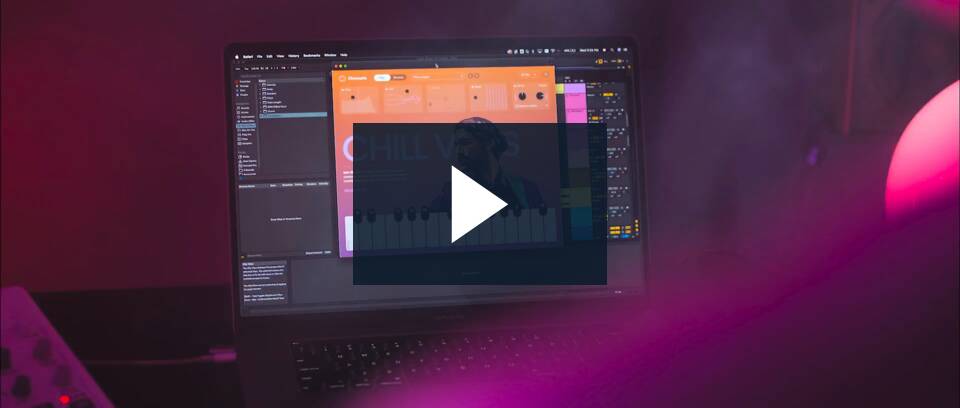
Sample and mastering site LANDR has unveiled a new subscription-based DAW app called Chromatic that makes it easy to piece together artist-created loops into all-new creations, the company announced. The company has partnered with artists, session players and others who created "inspiring playable instrument loops, vocal hooks, one-shots, and soundscapes," along with a story behind the sounds. You can then use those samples in any way you like to create your own tracks.
Chromatic is as much about the interface as the capability, according to LANDR. It gives users access to content across genres of music through color-coded mood boards, so you can "quickly audition or earmark individual sound sets" and incorporate them into your workflow. At the same time, they're matched to the tempo and key of any project.
"As an instrument, Chromatic lets you explore, play, and manipulate original sounds created by artists and producers, making them your own," says LANDR CEO Pascal Pilon in a statement. "We've developed Chromatic to bring the human element back into your virtual studio, a unique way to collaborate and engage with the creators of your favorite tracks and musical styles."
Artists who contribute the loops will receive royalties for when they're used. However, for certain specific artists and labels, LANDR will support splits on works created with their sound sets. "With this unique arrangement, Chromatic will serve as a foundation for emerging producers to collaborate with featured artists, resulting in a split release and promotion of a new work made with their Chromatic content." This presumably means that Chromatic users would share royalties on commercial releases with select, high-profile loop creators.
Chromatic is LANDR's first instrument, and a move towards a trend of subscriptions toward virtual instruments. A recent example is Output, which recently unveiled a similar subscription-based product called Arcade. Auto-Tune also offers a subscription, and Splice recently launched two vocal VST plugins that are behind subscription walls, as well.
Chromatic is now available as a free download with access to the full library of royalty-free sound sets at $10 per month. It's also offering an "All Access Pass" at $10 per month for six months and $15 per month thereafter, with royalty-free access to the sample library, AI-assisted mastering, music distribution on sites like Spotify, Sessions collaboration and more.
In early December, Spotify rolls out its Wrapped year-in-review so that users can relive their go-to artists, songs and podcasts from the last several months. Today, the service is debuting the 2021 installment with some familiar features and a number of new additions, both of which are personalized to each listener's streaming habits. Like before, you'll get all the info on your top artists, genres, songs, podcasts and total minutes listened with the ability to share those details on Snapchat, Twitter, Facebook, Instagram and, for the first time ever, TikTok.
With Wrapped 2021, Spotify is once again using the stories-style format it revealed last year. The company is continuing to make this personalized retrospective exclusive to its mobile apps on iOS and Android. Here, you'll get all of your stats along with a number of playlists the service will build based on your months of listening. Those include Your Top Songs 2021 and Your Artists Revealed, appearing alongside service-wide lists for the Top Tracks and Top Artists of the year. Spotify has also compiled playlists for its library of podcasts, including Best Episodes of 2021 and Best New Podcasts of 2021, to help you discover what was popular in the world of episodic content.
Spotify
In terms of new features, Spotify has added a "2021: The Movie" section to the Wrapped story carousel. This assigns songs from your activity to opening credits, a training montage and dance-off of a theoretical film for your 2021 music habits. Spotify also added "Your Audio Aura" that displays colors based on your go-to music moods — like "confident" and "bold." The story section includes a Two Truths game as well, where you are presented with three potential facts about what you listened to most with the goal of trying to pick out the lie. Lastly, the company is leveraging its Blend feature that compares your music with a friend's listening activity. For Wrapped, Blend will analyze your year of streaming with someone you know to mind commonalities.
Alongside Wrapped, Spotify has also announced the most popular artists on the platform for 2021. For the second straight year, Bad Bunny took the top spot globally, amassing over 9.1 billion streams this year. Olivia Rodrigo's "drivers license" and SOUR were the global top song and top album, respectively. And a revelation that shouldn't be too shocking: The Joe Rogan Experience, a Spotify exclusive, was the top podcast both globally and in the US. For the full breakdown of what was popular in 2021, check out Spotify's full lists here.
The 2021 edition of Wrapped is rolling out to all users today in Spotify's iOS and Android apps.
Meta’s Reality Labs unit is rolling out one last major software update for the Quest and Quest 2 before the end of the year. And it’s one you’ll want to download as soon as you can because it adds some handy features.
One of them allows you to record yourself while inside a game or app. If you own a VR headset, you’ve probably seen videos like the one above where you can see how a game physically plays. Before today, you needed special equipment to capture footage from that mixed reality perspective. With the new update, you can use your phone instead.
Reality Labs
Naturally, the final result isn’t as polished as the above video, but you can still get an idea of how games like Beat Saber play out in the real world. You’ll need an iPhone XS or above with iOS 11 or higher to use the new mobile mixed reality camera. With today’s release, about a dozen games support the feature, including Superhot VR, Pistol Whip and Synth Riders.
The update also includes a number of features Meta said were coming “soon” at its Connect conference in late October. To start, you can now make voice calls through the Messenger app on Quest and Quest 2 headsets. The feature allows you to not only call other Quest users, but you can also dial up your Facebook friends.
Reality Labs
Starting today, some games will also allow you to back up your save data to the cloud. The feature may not be immediately available on your headset after downloading the update. That’s because Reality Labs says it’s rolling it out at a slower pace to make sure it works correctly. Additionally, it’s an opt-in feature for developers, so not every game may support it even after it’s broadly available. While not new to the Quest platform, today’s update also removes the experimental tag that had been applied to the multi-user and app sharing features that were introduced at the start of the year.
Lastly, while not directly related to today’s update, in the “coming weeks” Reality Labs plans to introduce new customization options to Horizon Workrooms. To start, you’ll have the option to choose from multiple virtual office environments and the ability to decorate the space with custom posters and your company's logo.
Starfieldis just under a year away from landing on PC and Xbox Series X/S, and Bethesda has offered another peek at what's in store with a mini documentary. The seven-minute "Into the Starfield: The Endless Pursuit" featurette shows a lot of concept art and brief shots of things like robots, alien worlds and a spaceport.
The video is centered around the evolution of Bethesda Game Studios and the worlds it has built over the years. Given that many of the studio's games are about exploration (such as those in the Elder Scrolls and Fallout series), progressing to space exploration with Starfield is a logical next step. Art director Matt Carofano noted the upcoming game has a "more realistic, science-based backing to it" than, say, the fantasy world of Skyrim.
Game director Todd Howard also offered a "cryptic" tease. He said Starfield has "two step-out moments." Many other games typically only have one of those, in which the player sees the expanse of an open-world environment for the first time.
There isn't a ton of detail about what Starfield is in this video, but it gives folks who are excited about the game a little more insight. There will be more episodes of "Into the Starfield" in the coming months as the release date edges closer. Starfield will arrive on November 11th, 2022.
The British Fashion Council (BFC) has handed out an award in a brand new category called Metaverse Design created in collaboration with Roblox. Five Roblox creators were nominated, with the in-app clothing store cSapphire coming out the winner.
The presentation of the award will play out inside a Roblox experience (from November 29th until December 7th 2021), with a virtual representation of Gucci creative director Alessandro Michele (above) doing the honors. If you're interested in watching, you'll be able to do so inside a virtual Roblox recreation of Albert Hall — and even roleplay as a high-profile red carpet guest.
Companies like Roblox have been doing a metaverse long before Facebook decided to jump in. With the award, the BFC has acknowledged that virtual spaces can be a fun way for both consumers and designers to explore fashion ideas. Roblox previously worked with Gucci on a collection, and we've seen labels like Moncler Louis Vuitton inside Fortnite and other games.
It's a fun addition to the show, but the BFC is taking it fairly seriously. The Metaverse judging panel includes some high-profile folks, including fashion model Karlie Kloss along with editors from fashion sites and magazines like W and Highsnobiety.
"By awarding the platform’s creators, we are recognizing the powerful global impact of digital fashion on communities around the world, its ability to create new trends in fashion, as well as the incredible opportunities it provides for talented young creators," said BFC chief executive Caroline Rush in a statement.
AMC is extending its fondness for the blockchain to the freebies you get with ticket pre-orders. The theater chain and Sony Pictures are giving away 86,000 NFTs to Stubs Premiere, A-List and Investor Connect members who buy or reserve tickets for Spider-Man: No Way Home showings on December 16th. Redeem a code through a special website and you'll get one of 100 designs available through the more eco-friendly Wax blockchain.
You'll need to order your tickets through the AMC Theatres website or mobile app when pre-orders launch on November 29th. If you qualify, you'll get your code on December 22nd and will have until March 1st, 2022 to claim the NFT.
This is a first for AMC, but not shocking. On top of the company's existing crypto enthusiasm, chief Adam Aron said moviegoers and shareholders were "calling" for NFTs. This could also be considered an experiment — AMC and Sony will find out how many viewers are eager to own a purely digital collectible. There are no guarantees the promo will translate to stronger ticket sales, but this might become relatively commonplace if there's enough interest.
HBO Max has uploaded another alternative DC Comics movie cut, but it won't brag about this one. As CBR and The Verge note, WarnerMedia comms executive Johanna Fuentes has confirmed HBO Max accidentally uploaded the censored TV version of the 2020 movie Birds of Prey. While it's listed as the R-rated version from theaters, play it and you'll get the same 'family-friendly' edit you'd see on TNT.
Fuentes promised that HBO Max would upload the R-rated movie, although she didn't provide a timeline. That uncensored take will be the only version on the service, the exec added, and it has been available for about a year.
It's not clear how the slip-up occurred. We've asked WarnerMedia for comment. With that said, HBO Max certainly isn't averse to foul language or violence. This is an embarrassing moment for a streaming provider still in its early stages, but it doesn't represent a sudden change of heart.
Or… counterpoint. We have a version of the film that airs on broadcast cable and the unedited version of the film for streaming which has been up for a year (which the original post on CBR noted). Will be updated on Max.
For the past few decades it’s been de rigueur for science fiction stories to be set in virtual worlds, from the early neon-lined stylings of Tron to the hedonistic pop cultural temple of Ready Player One. The stories once treated these places like a fantasy world on par with Middle Earth or Hyrule, but as we’ve edged closer to them existing in reality they’ve gotten a lot more humdrum, maybe even ordinary. With this shift we’ve seen the real and virtual worlds increasingly collide, and it’s that interconnection between the two that forms the core of the new anime film Belle, arriving in US theaters in January.
Belle is the latest movie from Mamoru Hosoda, the director who brought us time-travel adventures like The Girl Who Leapt Through Time and Mirai. But he’s also known for Summer Wars, a movie that posited a world where everything is connected in the virtual sphere, not just for play but also work, finance and healthcare. Back in 2009, this seemed like a bit of a stretch, but as companies like Google, Apple and Amazon have expanded the concept has become eerily prescient. Now Hosoda is once again tackling the divide between the real and virtual worlds with Belle, a film that splits its time between rural Japan and the computerized world of “U.”
Belle is the story of Suzu Naito, a “country bumpkin” living alone with her dad and still dealing with the trauma of losing her mom several years before. When a friend sends her an invite to U she finds it to be an escape from her trauma, a place where she is beautiful and can sing. Her first performance quickly goes viral, with the clip spreading rapidly and her phone blowing up with notifications in a sappy Dear Evan Hansen sort of way. She becomes a sensation, but her newfound fame goes off the rails when one of her concerts is interrupted by a player known only as “The Dragon.” Suzu/Belle becomes intrigued by the Dragon and begins an investigation into his identity, even as self-appointed vigilantes are working to track and expel him from U.
Studio Chizu
The world and technology of U are interesting, with access gained via an app and a set of special earbuds. The earbuds can apparently overlay sight as well as sound, and they build a person’s avatar using their biometric data. It’s certainly a leap ahead of the bulky VR headsets seen in Ready Player One, or just the “theater of the imagination” that a lot of movies and TV employ, where the virtual as an actual “space” with rooms and buildings and so forth only exists in the minds of the user. Here, it’s more like entering the Metaverse of Persona 5, complete with avatars that reflect a person’s true self.
In U there’s no “if you die in the game you die in real life,” but the biggest threat is still treated as such: to be “unveiled” is to lose your anonymity and have your true form revealed to the world of U, upon which a user will literally fade away from the virtual arena. It’s weird to see this used as a plot hook when real-life social media is overly concerned with real names and verified accounts, but this is a fantasy story, after all.
Studio Chizu
As such, it takes influence from other fantasy works, most notably Disney’s classic animated feature Beauty and the Beast. Both main characters are named Belle, and the design and temperament of the Dragon is very similar to that of the Beast; the mix of animals blended into one hunched, brooding creature, the mysterious castle with a squad of cutesy servant-sidekicks. There’s even a damaged portrait over the fireplace mantle! After years of anime fans complaining about American films “stealing” from anime (Kimba the White Lion, Nadia: The Secret of Blue Water and Perfect Blue), it’s funny to see an anime borrow so blatantly from the West. I can’t wait for the inevitable shot-by-shot comparison videos on YouTube; Belle even recreates the iconic ballroom dancing scene (notable at the time for its early use of CG).
There is nothing particularly groundbreaking about the animation in Belle, though it is certainly a gorgeous film. The world of U is shown as a city of sweeping towers populated by flying avatars. Animation allows the filmmakers to give each character a unique avatar, of whatever size or shape fits that person best. Suzu becomes a beautiful woman, but others are depicted as babies, fairies and cute animals. The Dragon stands out for being such a dark character, with bruises spread across his back like a fungus.
Where Belle really differentiates itself is how it melds our current internet reality with its future fantasy visions. In early depictions of virtual worlds they were always treated as a separate place that never interacted much with the real world, a “secret life” that users had so very different from their actual existence. As technology moves forward, we’ve largely found that to not be true; our virtual existence is dominated by social media and live-streaming and parasocial relationships, and all of these are generally accepted as part of our “real” lives these days.
So it is that social media is heavily entwined with spectacle in the world of U, with messages flying as fast and furious as their avatars fly through the computer-generated cities. It isn’t just a thing that “the kids” are into; the residents of U are seen to be an incredibly diverse mix of ages and races, as seen from their messages and videos. But there is still a sense that this space matters more to a particular generation: Context clues reveal that Suzu’s village is a victim of the demographic crisis in Japan, where the populace is aging up with not enough children being born to replace them. Suzu is very much alone a lot of the time in her village, with various chat rooms and the world of U serving as her one constant connection to other people.
Studio Chizu
In the end, it will be the other people in her real life that will push her to do what she needs to do to save the Dragon.The fantasy elements take a back seat to the fact that there are real people behind each avatar, and just as the service creates a look for them based on their personality, so are their problems in U are just reflections of their real life situations. And in that case, it won’t be Belle who can save the day, but an ordinary girl named Suzu Naito.