Last month, Roblox outlined its vision for AI-assisted content creation, imagining a future where Generative AI could help users create code, 3D models and more with little more than text prompts. Now, it's taking its first steps toward allowing "every user on Roblox to be a creator" by launching its first AI tools: Code Assist and Material Generator, both in beta.
Although neither tool is anywhere close to generating a playable Roblox experience from a text description, Head of Roblox Studio Stef Corazzatold an audience at GDC 2023 that they can "help automate basic coding tasks so you can focus on creative work." For now, that means being able to generate useful code snippets and object textures based on short prompts. Roblox's announcement for the tools offers a few examples, generating realistic textures for a "bright red rock canyon" and "stained glass," or producing several lines of functional code that will that make certain objects change color and self-destruct after a player interacts with them.
Code Assist looks promising, but Roblox is careful to state it's imperfect, and may generate "incorrect" or "misleading" information. "It is still up to you to review, test, and determine if the code suggestion is contextually appropriate." Even so, Roblox's Corazza seems confident that this is the first step towards making every user on the platform a creator, suggesting it may only be a few years before these tools can generate fully playable, interactive 3D scenes from a simple prompt.
This article originally appeared on Engadget at https://www.engadget.com/roblox-launches-its-first-generative-ai-game-creation-tools-192043349.html?src=rss
Like we saw in the screenshots Google provided with today's announcement, the interface here is very similar to Bing AI in that there is a wide text input at the bottom of the screen and a dialogue-based layout. But there are a few key differences between Google's and Microsoft's offerings.
With Bing AI, you'll have to either hit Chat or scroll up from search results to get to the conversation page, whereas you don't have to do that for the Bard website. Microsoft has a broom icon to the left of the input bar to clear the slate and start a new topic, while Google has a column on the left with options for "Reset chat," "Bard Activity," "FAQ and "Help & Support."
It's also worth noting the language Google painstakingly uses here. Once I navigated to the website, I was greeted with an alert reminding me that "Bard is an experiment." It asks users to remember two things: "Bard will not always get it right," and that "Bard will get better with your feedback."
Even after you click "Got it" and that reminder goes away, there's a line of fine print below the input field that states "Bard may display inaccurate or offensive information that doesn't represent Google's views." After the embarrassing blunders Bard has already made so far, it's understandable (and mildly funny) to see all these disclaimers.
This story is developing, please refresh for updates.
This article originally appeared on Engadget at https://www.engadget.com/google-bard-ai-hands-on-a-work-in-progress-with-plenty-of-caveats-170956025.html?src=rss
The age of enterprise AI has come crashing down upon us in recent months. Public infatuation with ChatGPT since its release last November has opened the floodgates of corporate interest and set off an industry-wide land grab with every major tech entity vying to stake their claim in this burgeoning market by incorporating generative AI features into their existing products. Heavyweights including Google, Microsoft, Meta, and Baidu are already jockeying their Large Language Models (LLMs) for market dominance, while everybody else, from Adobe and AT&T to BMW and BYD, scrambles to find uses for the revolutionary technology.
NVIDIA's newest cloud services offering, AI Foundations, will allow businesses lacking the time and money to develop their own models from scratch to "to build, refine and operate custom large language models and generative AI models that are trained with their own proprietary data and created for their unique domain-specific tasks."
These models include NeMo, NVIDIA’s text-to-image generation engine and DALL-E 2 competitor; BioNemo, a drug and molecule discovery-focused fork of the NeMo model built for the medical research community; and Picasso, an AI capable of generating images, video and “3D applications… to supercharge productivity for creativity, design and digital simulation,” according to Tuesday’s release. Both flavors of NeMo are still in early access and Picasso remains in private preview despite Tuesday's news, so it'll be a minute before any of them are released to the wider public. NeMo and Picasso both operate on NVIDIA's new DGX Cloud platform and will eventually be accessible through an online portal.
These enterprise-facing cloud-based services function as blank templates that companies can pour their own databases into to train on specifically. So while something like Google’s Bard AI is trained on (and will pull from) data from all over the internet to provide a generated response, NVIDIA’s AIs will allow companies to tailor a similarly-styled LLM to their own specific needs using their own proprietary data — think of ChatGPT but solely for one Pharma company's research division. The models can be trained with anywhere from 8 billion to 530 billion parameters, which is more than triple the 185 billion parameters GPT-3.5 provided.
Imagine StableDiffusion, but trained on Getty Images with Getty’s actual permission. NVIDIA announced such a system Tuesday built on the NeMo cloud service: a series of responsibly sourced text-to-image and text-to-video models, "trained on Getty Images' fully licensed assets," Tuesday’s press release read. "Getty Images will provide royalties to artists on any revenues generated from the models."
BioNeMo, uses the same technical underpinnings as NeMo itself, but is geared entirely towards drug and molecule discovery. Per Tuesday’s release, Bio NeMo, “enables researchers to fine-tune generative AI applications on their own proprietary data, and to run AI model inference directly in a web browser or through new cloud APIs that easily integrate into existing applications."
"BioNeMo is dramatically accelerating our approach to biologics discovery," Peter Grandsard, executive director of Biologics Therapeutic Discovery at Amgen said in a statement. "With it, we can pre-train large language models for molecular biology on Amgen’s proprietary data, enabling us to explore and develop therapeutic proteins for the next generation of medicine that will help patients."
Six models will be available at launch including DeepMind’s AlphaFold2, Meta AI’s ESM2 and ESMFold predictive models ProtGPT-2, DiffDock and MoFlow. According to the companies, incorporating AI-based predictive models helped reduce the time to train “five custom models for molecule screening and optimization” using Amgen’s proprietary data on antibodies from the usual three months down to four weeks.
NVIDIA announced a similar partnership with Shutterstock as well. The photography site will use Picasso to generate 3D objects from text prompts as a new feature within Creative Flow, with plans to offer it on Turbosquid.com and NVIDIA’s forthcoming Omniverse platform.
“Our generative 3D partnership with NVIDIA will power the next generation of 3D contributor tools, greatly reducing the time it takes to create beautifully textured and structured 3D models,” Shutterstock CEO Paul Hennessy, said in the release. “This first of its kind partnership furthers our strategy of leveraging Shutterstock’s massive pool of metadata to bring new products, tools, and content to market. By combining our 3D content with NVIDIA’s foundation models, and utilizing our respective marketing and distribution platforms, we can capitalize on an extraordinarily large market opportunity.”
NVIDIA is also partnering with Adobe as part of the latter’s Content Authenticity Initiative, which seeks to enhance transparency and accountability within the generative AI training process. The CAI’s proposals include a “do not train” list, similar to robot.txt but for images and multimodal content, and persistent origination tags that will detail whether a piece is AI generated and from where. The two companies have also announced plans to incorporate many of Picasso’s features directly into Adobe’s suite of editing software including Photoshop, Premiere Pro and After Effects.
This article originally appeared on Engadget at https://www.engadget.com/nvidia-ai-foundations-customizable-genewrative-ai-cloud-service-161505625.html?src=rss
When NVIDIA's founder and CEO Jensen Huang waxed poetic about artificial intelligence in the past, it mostly felt like marketing bluster, the sort of lofty rhetoric we've come to expect from an executive with a never-ending supply of leather jackets. But this year, following the hype around OpenAI's ChatGPT, Microsoft's revamped Bing and a slew of other competitors, NVIDIA's AI push finally seems to be leading somewhere.
The company's GTC (GPU Technology Conference) has always been a platform to promote its hardware for the AI world—now it's practically a celebration of how well-positioned NVIDIA is to take advantage of this moment.
"We are at the iPhone moment for AI," Huang said during his GTC keynote this morning. He was quick to point out NVIDIA's role at the start of this AI wave: he personally brought a DGX AI supercomputer to OpenAI in 2016, hardware that was ultimately used to build ChatGPT. We've seen the DGX systems evolve over the years, but it's remained out of reach for many companies (the DGX A100 sold for $200,000 in 2020, which was half the price of its predecessor!). So what about everyone else?
That's where NVIDIA's new DGX Cloud comes in, an (obviously) online way to tap into the power of its AI supercomputers. Starting at a mere $36,999a month for a single node, its meant to be a more flexible way for companies to scale up their AI needs. DGX Cloud can also work together with on-site DGX devices, since they're all controlled with NVIDIA's Base Command software.
NVIDIA says every DGX Cloud instance is powered by eight of its H100 or A100 systems with 60GB of VRAM, bringing the total amount of memory to 640GB across the node. There's high-performance storage, as you'd expect, as well as low-latency fabric that connects the systems together. That amount of power may make the cloud solution more tempting for existing DGX customers—why spend another $200,000 on a box, when you can do so much more for a lower monthly fee? DGX Cloud will be powered by Oracle's Cloud Infrastructure to start, but NVIDIA says it will expand to Microsoft Azure next quarter, as well as Google Cloud and other providers "soon."
Developing...
This article originally appeared on Engadget at https://www.engadget.com/nvidia-gtc-ai-dgx-cloud-161517378.html?src=rss
Microsoft's Bing AI chat can already be helpful for finding answers, but now it can help you produce fanciful pictures. The company has introduced a Bing Image Creator preview that adds OpenAI's DALL-E AI image generation to both Bing search and a sidebar in the Edge browser. You just have to ask the chatbot to create an image with either a direct description or a follow-up to a previous query. If you're wondering how to revamp your living room, you can ask Bing to draw some ideas based on your criteria.
Yes, Microsoft is aware of the potential for things to go awry. The company says it's applying "additional protections" beyond OpenAI's own. It will block you from creating potentially "harmful" images, the firm says. Microsoft also explicitly clarifies that images are AI-generated, including through watermarks.
Image Creator is available to a selection of Bing desktop and mobile users in preview and through a dedicated site. Edge users have access as well If you're part of the test group, you'll have to toggle the Creative mode to give the generator a try. Microsoft plans to bring the creative tool to Balanced and Precise mode users in the future, though, and plans to fine-tune the system's behavior in multi-step chats. While the technology only supports English, more languages are in the works.
More forms of AI are finding their way into Bing. The company is rolling out AI-based Knowledge Cards that now offer "dynamic" quick-glance info like charts and timelines. Stories, meanwhile, provide images and short videos linked to searched topics.
The DALL-E tool comes just as Adobe has unveiled plans to put generative AI in Photoshop, After Effects and Premiere Pro, while NVIDIA is launching a customizable cloud AI service that includes image creation. While Microsoft clearly isn't competing directly with Adobe or NVIDIA, it's joining a wave of tech giants that see AI image production as a valuable tool. Bing Image Creator might also provide a competitive edge over Google, which only just widened access to its Bard AI chat following a limited test.
This article originally appeared on Engadget at https://www.engadget.com/microsoft-brings-dall-es-ai-image-generation-to-bing-and-edge-152749735.html?src=rss
NVIDIA is deepening its efforts to fight cancer using AI. The GPU maker is teaming with Medtronic to build AI into the GI Genius endoscopy tool (shown below). The two will use NVIDIA's IGX hardware and Holoscan medical platform to help detect the polyps that can lead to colorectal cancer. Doctors will get "AI-enhanced" diagnostic images, the companies say.
The first GI Genius systems built with NVIDIA tech are expected to arrive later this year. The device can use a range of AI tools, and Medtronic is betting that using NVIDIA's Clara platform could help develop algorithms for real-time medical procedures.
Medtronic
The news comes the same time as NVIDIA is expanding its BioNeMo Cloud service that helps bring generative AI to drug discovery. The new offering helps train AI models (and handle inference) used to develop new therapeutic proteins and otherwise advance fields like biology and chemistry. Researchers can speed up one of the most time-consuming processes in their pipeline, NVIDIA claims.
For NVIDIA, this is as much about translating its AI expertise to health tech as it is winning another customer. Still, the alliance could lead to some very practical benefits. As with some other AI-based cancer detection systems, this could help physicians begin treatment early and increase the chances of recovery.
This article originally appeared on Engadget at https://www.engadget.com/nvidia-and-medtronic-are-building-an-ai-enhanced-endoscopy-tool-161532723.html?src=rss
Every year means new iterations of your favorite phones from the likes of Apple, Samsung and Google, so you might be tempted to upgrade to your handset. But with some new phones costing over $1,000, keeping up with the latest and greatest can really take a toll on your wallet. So why not offset the cost by putting your old device up for sale? If you’re wondering which trade-in service will yield you the biggest bang for your buck, and how easy it will be, we have answers to those questions (and more). We've rounded up some of the leading contenders for offloading your old electronics. It’s not just phones, either — perhaps you have an old laptop that isn't quite cutting it anymore, or maybe you've got some other stuff sitting in the closet collecting dust.
Trade-in sites
If you're looking for the littlest hassle and want your money as soon as possible, there are plenty of sites that will automate the trade-in process. You'll select your device from a list, get a quote within minutes and send the device back for cash in a matter of days.
Decluttr
Decluttr definitely lives up to its name. Not only can you sell phones from a number of manufacturers, including Apple, Samsung and Google, but the site also takes lots of physical media, including CDs, DVDs, Blu-rays, video games and books. For devices, you'll be asked for a general assessment of its condition, and given a quote immediately. Once you complete your order the site will send you a free shipping label. Decluttr also will accept handsets as old as the iPhone 6S, though it'll offer you only $7 for a 16GB model in good condition.
uSell
uSell operates as a broker, searching other sites for their best offers on a given device and taking care of the rest. Like most buyback sites, it's big on iPhones, but you can still sell off other manufacturers' devices; it really depends on who's buying them at that point. The selection is a bit of a grab bag — newer phones like the Galaxy S21 aren't listed, though you can get a quote for the iPhone 11 ($210 for an unlocked, “flawless” 64GB model). Once you complete your order the site will send you a free shipping kit to send out your phone, and you can get paid for the item via PayPal, Venmo or an old fashioned check.
ecoATM
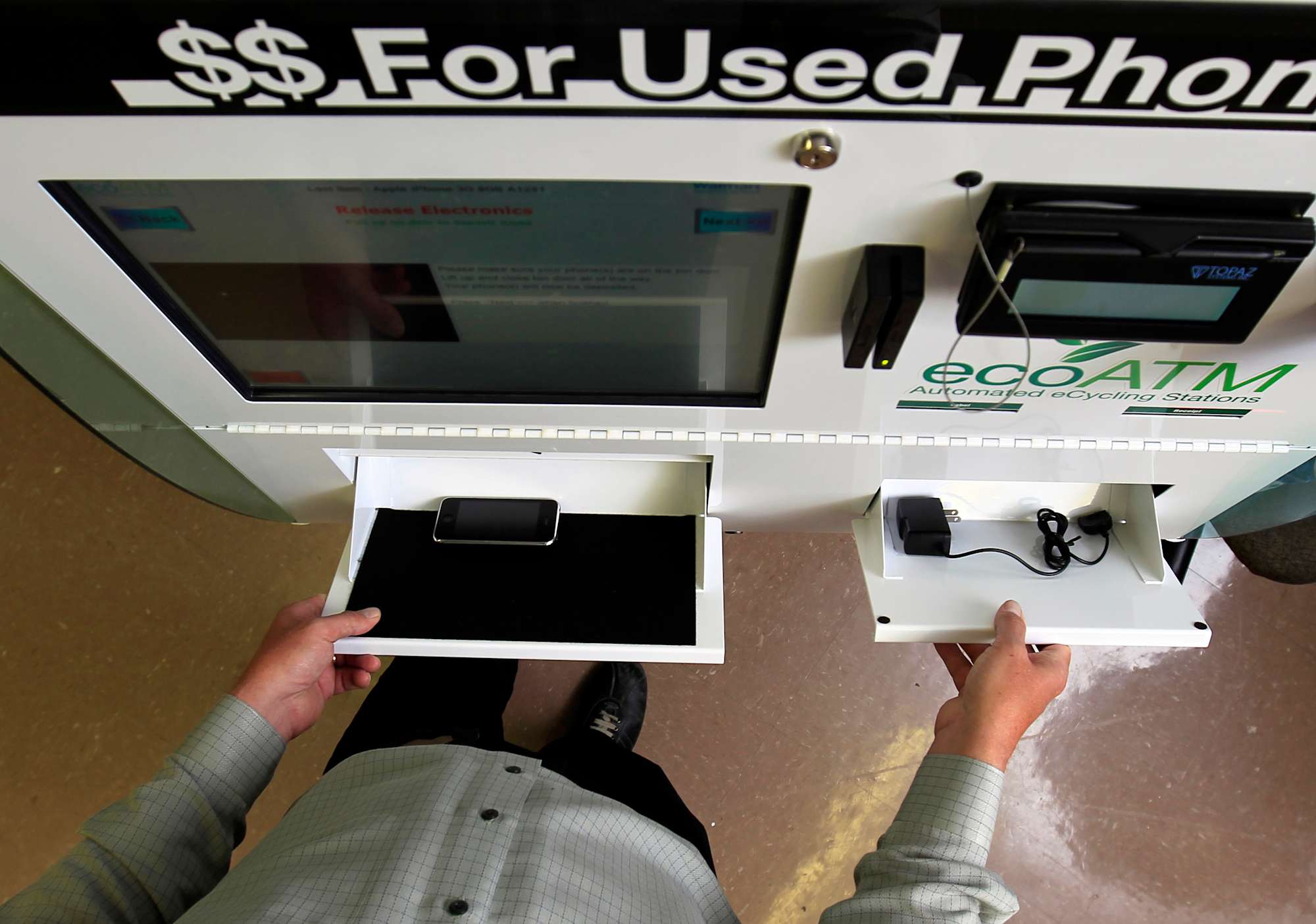
If you don't want to have to worry about packaging up your old device and mailing it off, or would like to receive your payout right away, there's always ecoATM. It's literally there in the name: an automated machine that you place your device into and it examines the handset and pays you on the spot. It accepts the biggest brands (i.e., Apple, Google and Samsung), along with devices from a wide variety of manufacturers, including LG, Motorola and ZTE. If the machine determines that your device isn't worth anything at all, you can still use ecoATM to responsibly recycle your old gadget. You'll find ecoATM kiosks in Walmart and Kroger locations, as well as malls and check cashing stores across the country.
Amazon
While browsing Amazon listings, it’s likely you’ve come across products marked as “refurbished.” Well, if you’ve ever wondered where those come from, a lot of them likely hail from Amazon’s trade-in program. The company will put its own products, like Kindle readers and Fire tablets front and center, but you can also send in phones and gaming products in for an Amazon gift card as well. It’s not great if you want cash, but if you’re looking to upgrade an Amazon device this option is your best bet, as trading in an older one also nets you a 25 percent discount in addition to the store credit. You’ll need to print out a shipping label, or you can drop off your electronics at select Amazon Locker or Whole Foods locations.
Apple
This is a good option if you’re looking to upgrade to a newer Apple device. You can trade in iPhones, iPads, Macs and even Apple Watches. That’s notable as wearables are a category you don’t often see on trade-in sites. Apple will even take your old Android phone if you were thinking of making the switch. The trade-in values are on par with other sites, but you can get a smaller payout in the form of a gift card instead if you’d rather wait before making a new purchase, want to put it toward media purchases or even just use it in an Apple Store. Which, by the way, also accepts trade-ins in case you’re not comfortable shipping your old but still expensive device.
It'sWorthMore
The nice thing about It’sWorthMore is that its on-site forms handle a larger variety of gadgets than other sites, incorporating companies such as Microsoft, AMD and even GoPro in addition to standards like Apple, Samsung and Google. You’ll answer a few standard questions about your device’s condition and whether you still have the original box — obviously, the more you’ve kept from the original packaging, the better. You’ll then get a ballpark estimate of its worth and a prepaid shipping label to print out. Once your device is received you’ll generally get the assessment and payment via check, PayPal, Venmo or Zelle within two to three business days.
BuyBackWorld
The appeal of BuyBackWorld is that device assessment is a streamlined process: Instead of having to answer a barrage of detailed questions for your device you give it a general assessment and let the site handle the rest. Just like with It’sWorthMore, BuyBackWorld will provide a printable shipping label in your confirmation email but, if you don’t have a printer or boxes to pack your device up, you can always have the site send you a free shipping kit, which can handle everything the site takes except desktop computers.
GadgetGone
If you’ve read through the other site descriptions, GadgetGone’s modus operandi should be familiar: To sell a product, you’ll have to answer a few questions about what type of device you have and what condition it’s in, after which the site will generate a prepaid shipping label. At least here you can find brands like OnePlus included among the options, and you can also sell MacBooks and Mac Minis here. You can get paid a number of ways, too, including PayPal, virtual VISA card, Amazon and Target gift cards or just good old fashioned bank transfer.
Store trade-ins
Sometimes you need your money right now, or just don't want to trust your device to the vagaries of various shipping companies. There are a few nationwide retailers that accept trade-ins for cash or store credit. Additionally, wireless carriers like Verizon, T-Mobile, AT&T and Sprint will all give you credit toward a new phone.
Best Buy
Best Buy also offers trade-ins both by mail and in-store — with more than 1,000 locations, this might be extremely convenient for you. You fill out the form online and bring that to customer service. It's easy, but there's one big downside: You can get your payout only via a Best Buy gift card. This is great if you spend a lot of money with them anyway, but less good if you really need cash.
GameStop
GameStop is infamous for buying games back at ridiculously low prices and flipping them at near retail, but don't let that stop you from making some easy cash when you need to quickly clear your closet of old electronics and games. And yes, I said cash: GameStop offers store credit, a Visa prepaid card or actual money if you want to take your bounty elsewhere. For example, you can trade in Animal Crossing for the Switch and get $22 in store credit or $18 cash, which isn't bad when new copies are going for $48 on Amazon. GameStop also accepts phones, tablets and Apple Watches, though the prices aren't going to match what you'd get from an online trade-in site.
Consumer to consumer
Sometimes you prefer to cut out the middleman and get a bit more personal — a transaction where you're selling your device directly to another person instead of letting a faceless site flip it for you as a "refurbished" unit. In those cases, you want a site that's more user-to-user, though a few will still automate certain bits to make your sale as smooth as possible.
Swappa
Swappa is a marketplace site, which means sellers can set their own price. So if you're getting rid of a newer phone, this is probably the best way to go — the iPhone 13 fetches around $515, for example. That's a huge improvement over what you'd get selling through a site like Decluttr, which is offering only $422 for a 128GB unit.
Amazon
When shopping on Amazon, you've probably been tempted by some of those marketplace deals in the past and, chances are, if you list an item on there, someone will give your old device a look. Since almost everyone on earth seems to have an Amazon account, your potential customer base is huge, and it costs only $0.99, plus a percentage based on category, to sell an item through the site. The downsides are that Amazon isn't really optimized for individual sales; you'll be competing with wholesale companies and even bots that will tweak the price of a product automatically in response to the competition.
eBay
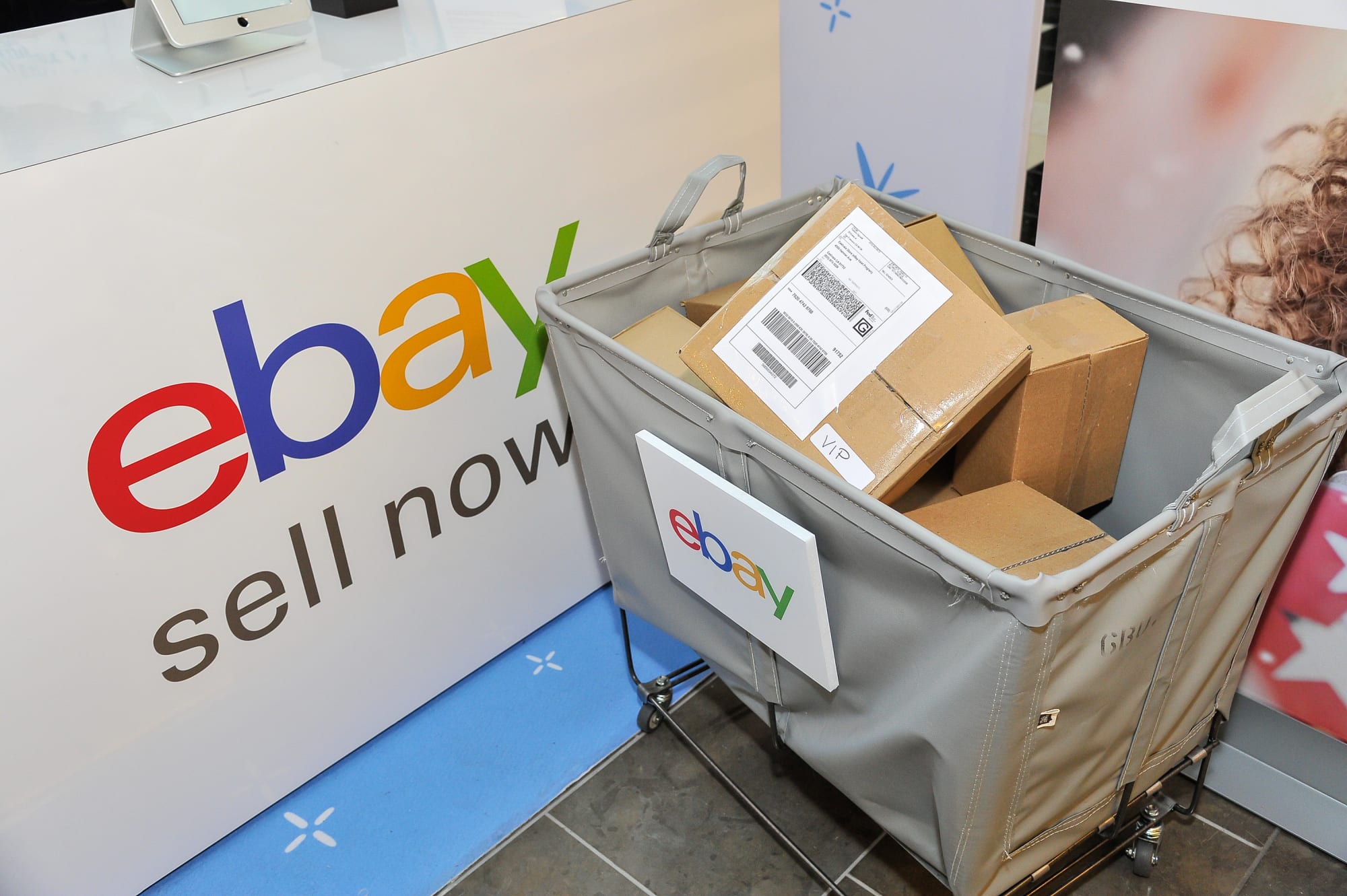
eBay is sort of the Wild West of sales sites, but the biggest advantage is that you can sell anything there and hopefully find a buyer, regardless of how old a product is. Even so, the site has come a long way in the past decade or so, adding structured categories that can help lead customers to your product. For phones, you can search by network, color or storage capacity, and even filter for features like 4K video or fingerprint sensors.
In the end, it still works as it always did: You list a product and set an end date for the listing with a minimum price, or just set a "Buy It Now" price if you don't want to wait to see how an auction turns out. Chances are you already have an eBay account with a feedback score, so there's no extra setup required on your part. Your first 250 listings are free every month, and you'll pay up to 15 percent of the purchase price only if an item sells. The biggest downside is that you're competing with a lot more sellers, and chances are there's always someone willing to undercut you on price.
Cash-back comparison
Ultimately, the site you go with should be whatever's most useful and convenient, but if you just care about how much money you'll end up with, we've priced out a few recent flagship handsets just to give you an idea of what each site offers. We've also thrown in the Nintendo Switch, because it might be time to sell yours off and finally upgrade to an OLED model.
All phone prices are for the lowest storage capacity, usually 128GB. The prices are for the unlocked models when available, or the carrier where it's being traded. These prices were valid the day this post was written, but they fluctuate daily or, in the case of sites like Amazon and eBay, hourly.
Apple iPhone 12 Pro Max
Samsung Galaxy S21 Ultra
Google Pixel 6
Nintendo Switch
Declutter
$432
$226
$135
$125
uSell
N/A
N/A
N/A
N/A
ecoATM
$280
$155
$40
N/A
Sprint
$230
$115
$45
N/A
Verizon
$282
$220
$15
N/A
T-Mobile
$230
$115
$45
N/A
AT&T
$280
$230
$130
N/A
Best Buy
$330
$150
$105
$50
GameStop
$291 cash / $364 credit
$131 cash / $164 credit
N/A
$80 cash / $100 credit
Swappa
$455
$224
$124
$238
Amazon
$401
$275
$190
$75
eBay
$405
$368
$200
$131
BuyBackWorld
$415
$230
$140
$110
It'sWorthMore
$442
$273
$153
$100
GadgetGone
$465
$271
$141
$41
If you were looking to sell some games, we've also got a shorter list, because not every site accepts trade-ins. GameStop will offer you more money than what's listed below if you're a member of its Elite or Elite Pro programs.
Elden Ring (Xbox)
Horizon Forbidden West (PS5)
Pokémon Legends Arceus (Switch)
Decluttr
$17
$17
$20
GameStop
$11 cash / $14 credit
$13 cast / $16 credit
$14 cash / $17 credit
Amazon
$8
$51
$14
eBay
$21
$20
$25
Once you've picked a site and listed your item, there are a few important things to remember before you ship off your device. The most important, when disposing of a phone or laptop or any other device containing personal data, is to do a full factory reset. That also means turning off "Find My iPhone" and the activation lock on iOS devices. See if you can unlock the phone, too; you'll actually get more money selling it carrier-free. And finally, make sure you've backed up any important data you may have, like contact info, game saves and, of course, photos. Cash is great, but it won't save your memories.
Images: Mike Blake / Reuters (ecoATM); Alamy (Gamestop); Getty Images for eBay (eBay)
This article originally appeared on Engadget at https://www.engadget.com/where-to-sell-used-electronics.html?src=rss
The folks at Arduino have decided to shake things up a bit this year by moving Arduino Day to March 25th and doing an in person event! There will be both virtual sessions and a bunch of in-person events, the main one being at mHub Chicago with tours and talks. The crew at Arduino is […]
Ford has finally shown the medium-sized electric crossover it teased last year, and it might not be what you expect. The company has unveiled an electric Explorer that's "designed for Europe" and as suited to tight city streets as it is weekend jaunts. It's relatively compact (under 14.8ft long versus 16.6ft for the gas SUV) and offers creature comforts like "sporty" seats. Notably, it also includes a few technology features you won't even find in higher-end Ford EVs like the Mustang Mach-E.
The 15-inch vertical touchscreen will seem familiar, but it slides up and down — you won't have to settle for an awkward position. You also won't find the physical knob from earlier Ford EVs. The automaker also takes advantage of the electrified design to provide a massive amount of console storage space (enough for a 15-inch laptop) and a private "locker" for valuables. Wireless phone charging is standard, as is wireless Android Auto and Apple CarPlay. The five cameras and three radar sensors provide Ford's usual range of driver aids, although this is the first time Europeans will have access to features like Assisted Lane Change (which changes lanes through a stalk press).
Most performance specs aren't yet available, including range. However, Ford claims you can charge from 10 percent to 80 percent in a relatively quick 25 minutes.
The company is taking reservations for base Explorer and higher-end Explorer Premium trims now ahead of a release later this year. While final pricing will have to wait, Ford expects the line to start below €45,000 (about $48,500). Don't expect a launch elsewhere, unfortunately. Ford tells Engadget there are "no plans" to bring the Explorer EV to North America, and that the conventional Explorer will still be on sale worldwide.
The Explorer is part of a larger strategy to introduce seven EVs to Europe by 2024, including the compact Puma and the Transit van. Ford ultimately hopes to completely electrify its passenger cars in Europe by 2030. This new model may be key to that transition. On top of being more practical for European streets, it's considerably more affordable than the roughly €62,000 Mach-E. This is the mainstream (if still pricey) people-hauler that might reach a wider audience.
This article originally appeared on Engadget at https://www.engadget.com/ford-unveils-an-electric-explorer-crossover-built-for-europes-narrow-streets-144516934.html?src=rss
In a blog post that "Bard did help us write," vice president of product Sissie Hsiao and vice president of research Eli Collins invited folks to sign up at bard.google.com. The company said it will begin rolling out access to those in the US and the UK today, and that it's "expanding over time to more countries and languages." Opening up access to more people is "the next critical step in improving it," the pair said, noting that getting feedback from a wider tester base is crucial.
Much like you can with ChatGPT or Microsoft's Bing AI, you'll be able to talk to Bard like you would a friend, using natural language instead of a stilted series of keywords. "You might ask Bard to give you tips to reach your goal of reading more books this year, explain quantum physics in simple terms or spark your creativity by outlining a blog post," Hsiao and Collins wrote.
The pair also said "Bard is a direct interface to an LLM, and we think of it as a complementary experience to Google Search." Based on screenshots included in the announcement, Bard's interface looks fairly similar to Bing AI, with a few key differences. At the bottom of each response, Google's version offers four buttons: thumbs up, thumbs down, a refresh arrow and a button saying "Google it." There's also an option at the top right of the response that says "View other drafts." Bing AI doesn't have these, instead using the space below each response as an area for source citations.
The input bar at the bottom of the screen also has a couple of differences. Bard has a microphone symbol at the end, indicating speech-to-text might be supported, while Bing doesn't. Meanwhile, Microsoft's offering has a broom icon on the left of the text input bar to clean the slate when you want to start on a new topic. Google's doesn't. It's also worth noting that below Bard's text field is a line of fine print that reads "Bard may display inaccurate or offensive information that doesn't represent Google's views."
Google
In its announcement, Google was careful to acknowledge that large language models (LLMs) like LaMDA aren't perfect and that mistakes happen. "For instance, because they learn from a wide range of information that reflects real-world biases and stereotypes, those sometimes show up in their outputs," Hsiao and Collins wrote.
They even shared an example of where Bard has gone wrong before. "When asked to share a couple suggestions for easy indoor plants, Bard convincingly presented ideas…but it got some things wrong, like the scientific name for the ZZ plant."
Google said that it's important to know such challenges exist, and noted that quality and safety are significant issues to consider. "We've also built in guardrails, like capping the number of exchanges in a dialogue, to try to keep interactions helpful and on topic," Hsiao and Collins wrote. It's not yet clear what the limit on the number of exchanges in a dialogue is, though, and we've asked Google for clarification and will update this post when we hear back.
In spite of all its potential limits and possibility for error, Google still believes Bard is worth the work, adding that it will "continue to improve Bard and add capabilities, including coding, more languages and multimodal experiences." Hsiao and Collins said that Bard's help in writing the announcement post involved creating an outline and suggesting edits. "It didn’t always get things right," they said. "But even then, it made us laugh."
This article originally appeared on Engadget at https://www.engadget.com/google-is-opening-up-access-to-its-bard-ai-chatbot-today-140047434.html?src=rss