Scorsese’s Killers of the Flower Moon premieres globally on Apple TV+ on January 12

Set your calendars. Martin Scorsese’s latest and greatest, Killers of the Flower Moon, is premiering globally on Apple TV+ in just over a week. The film drops on January 12. It was originally released in theaters on November 20, which means it’ll be 12 weeks before arriving on a streaming service, which has become fairly standard in recent years.

We knew this would drop on Apple TV+, as Apple Studios financed the film and arranged for theatrical distribution. We just didn’t know when, and now we do. Incidentally, this is the first Apple-financed film to get a wide theatrical release.

Killers of the Flower Moon is a great match for streaming, as it's well over three hours long, which made for some frantic trips to the theater bathroom once the credits rolled. The movie stars Lily Gladstone, Leonardo DiCaprio, Robert De Niro and Jesse Plemons and is set in 1920s Oklahoma. The narrative is based on a true story and follows the serial murders of members of the Osage Nation tribe. There’s a lot more than that, but we ain’t about to start handing out spoilers like candy. Watch the movie. It’s good.

To that end, Killers of the Flower Moon has been nabbing up award nominations left and right, including 12 Critics Choice nominations and seven Golden Globe nominations. It was also named to the American Film Institute's list of Motion Pictures of the Year. Oscar nominations don’t drop until later this month, but it’s likely to make several appearances across multiple categories.

This is the biggest film to come from Apple Studios, but not the only notable release. Coda, another Apple original, actually won Best Picture at the 2021 Academy Awards. Apple is also behind Ridley Scott’s Napoleon and forthcoming releases by directors Jon Watts and Matthew Vaughn, among others.

This article originally appeared on Engadget at https://www.engadget.com/scorseses-killers-of-the-flower-moon-premieres-globally-on-apple-tv-on-january-12-165918214.html?src=rss
The 2023 Amazon Fire HD 10 tablet is cheaper than ever in a one-day sale

Amazon’s Fire HD 10 tablet is on sale for just $80 for today only from QVC. This is the latest iteration, originally released in 2023, and ships with 32GB of storage. You also have your pick of various colorways, including green, lavender and black. The regular price on this tablet is $140, so this represents a discount of $60. Incidentally, the sale price of $80 matches what was found on Black Friday, so consider this a bit of a holiday extension.

This isn’t the lowest price ever for the Fire HD 10 tablet, but it's the lowest for the current eleventh-gen device. We’ve seen this tablet go on sale for $75, but that was for the 2021 release.

The Fire HD 10 is a capable tablet, considering the price, and is a great device for viewing streaming content, browsing the web and playing simple mobile games. It has a USB-C port, which is always nice, and a 2GHz octa-core processor. The HD touchscreen boasts a 1920x1200 resolution, there’s 3GB of RAM and a pair of HD cameras on the front and rear. You can also expand the storage via a microSD slot.

Is this an iPad Pro? Nope. Not even close. But it gets the job done. I used a Fire HD 10 as my primary content streaming device for years and it was just fine. The Wi-Fi was snappy, Alexa was helpful and the actual headphone jack made it so I didn’t have to go digging for an adapter just to have some privacy while I watched Netflix in bed. Again, this deal ends today.

Follow @EngadgetDeals on Twitter and subscribe to the Engadget Deals newsletter for the latest tech deals and buying advice.

This article originally appeared on Engadget at https://www.engadget.com/the-2023-amazon-fire-hd-10-tablet-is-cheaper-than-ever-in-a-one-day-sale-160446037.html?src=rss

Google Bard Advanced is coming, but it likely won't be free

Google Bard Advanced is coming, and it may represent the company's first attempt to charge for an AI chatbot. The code on Bard's website shows the opportunity to get three months free of Bard Advanced — implying that it will be at a cost after that. X (formerly Twitter) user Bedros Pamboukian shared the discovered code, which also includes a defunct Google One link. This could mean that users will be required to get a Google One subscription to access Bard Advanced.

hi, bard advanced will be free for 3 months and you'll need Google One too, enjoysies

the fact that it's in prod implies it's ready & being tested (currently an experiment)

again, not a leaker, but Google keeps putting stuff in plain sight and literally nobody realizes... pic.twitter.com/YqfAK77f0F

— Bedros Pamboukian (@bedros_p) January 3, 2024

Google first announced Bard Advanced in December 2023 alongside the new AI large language model Gemini and an AI hypercomputer from Google Cloud. Gemini is Google's most capable model to date, with the ability to "seamlessly understand and reason about all kinds of inputs from the ground up, far better than existing multimodal models," Google CEO Sundar Pichai explained in a blog post. Gemini has three sizes: Gemini Ultra, Gemini Nano and Gemini Pro, with Bard using the latter. Gemini Ultra isn't publicly available yet, but Google has stated that it will be the force behind Bard Advanced.

As for Bard Advanced's availability, the aforementioned code suggests it could be tied to Google One (although it's unclear what subscription tier would be required) but no details have been confirmed at this time. Google is currently testing its capabilities with a small group (which also might be why the code is visible). There's no exact release date for Bard Advanced yet, but Google said in December that it would be available "early next year" so it could launch at any time.

This article originally appeared on Engadget at https://www.engadget.com/google-bard-advanced-is-coming-but-it-likely-wont-be-free-142653282.html?src=rss

Apple Fitness+ will spotlight Super Bowl halftime performers

Apple Fitness+ is adding new content for the new year. The workout service’s Artist Spotlight series celebrates the Super Bowl halftime show with playlists devoted to recent performers (including this year’s artist, Usher). In addition, new meditations, programs and Time to Walk episodes will arrive soon.

The Apple Fitness+ Artist Spotlight series dedicates entire workout playlists (across various exercises) to a single artist. In this case, it will devote them to several: Rihanna (available January 8), Britney Spears (January 15), U2 (January 22) and Usher (February 5, ahead of his performance).

Three of the four artists have been (or soon will be) Super Bowl halftime headliners: Rihanna in 2023, U2 in 2002 and Usher in 2024. Spears hasn’t had top billing, but she performed in the 2001 show, co-headlined by Aerosmith and NSYNC.

Fitness+ is also adding sound meditations. Apple says they’ll only include “light guidance” from the trainer, leaving room for you to focus on the “tranquil sounds of singing bowls and the deep pitch of gongs, all arranged to create a sense of ease.” There will be seven sound-themed meditations, arriving every week. You can choose between five, 10, and 20-minute sessions.

Apple Fitness+ will soon let you walk with Al Roker.
NBC via Getty Images

Time to Walk, Apple’s series of celebrity-guided audio walking experiences, is adding Al Roker. The Today Show weather anchor and co-host will share what he learned about mentorship, including a pivotal chat with his father. Other episodes will feature rapper and actor Common (who already works with Apple on the sci-fi series Silo), Trixie Mattel (aka Brian Firkus, RuPaul’s Drag Race), actor Colman Domingo (Rustin) and author / actor Lilly Singh will host episodes.

50 of Apple’s older Time to Walk episodes will be available on Apple Podcasts. Celebrity guests on the available content will include Prince William, Al Roker (again!), Patti LaBelle, Becky G, Simu Liu, Malala Yousafzai, Camila Cabello, Dolly Parton, Jason Segel and Shawn Mendes. Although the podcast version will omit guest-chosen songs and photos, you can still access those through the Fitness+ app. In addition, anyone who isn’t subscribed to Fitness+ can listen to 10 free Time to Walk episodes on Apple Podcasts.

Golfers will get some love from the service, too. Apple is adding a new workout program designed for links enthusiasts. The workouts will blend strength, core, and yoga training, focused on the specific strength, balance, flexibility and mobility golfers need. The workouts will feature (and were designed by) pro golfer Rose Zhang. “Whether people are new to the sport or want to advance their skills, I’m excited that the workouts in this program on Fitness+ will help users feel more confident in their swing and have fun on the course,” Zhang said. Fitness+ trainer Kyle Ardill will lead the videos.

Apple has partnered with Anytime Fitness, a US gym franchise, to offer perks to use both companies’ services. First, “prospective members” who try Anytime Fitness will get “up to three months” of Apple Fitness+ for free. In addition, Fitness+ subscribers who join the gym and sign up for at least a 12-month membership will get their first 30 days for no charge. The Anytime Fitness app on iOS will also integrate with Apple Fitness+ workouts.

Apart from the Artist Spotlight rollouts, Apple hasn’t shared specific launch dates for the new content. However, it said the new features will arrive “starting Monday, January 8.”

This article originally appeared on Engadget at https://www.engadget.com/apple-fitness-will-spotlight-super-bowl-halftime-performers-140053585.html?src=rss

Qualcomm's improved Snapdragon XR2+ chip for VR headsets will debut at CES 2024

Qualcomm will be bringing a new VR/MR chip to CES 2024 in Las Vegas next week. The Snapdragon XR2+ Gen 2 is an update to the standard XR2 Gen 2 that was revealed back in September. The chip is intended for use in virtual reality headsets, mixed-reality headsets and other wearables. 

The Snapdragon XR2+ Gen 2 supports 4.3K per eye resolution, compared to 3K per eye with the previous version, and can integrate with up to 12 cameras at once, up from 10, for passthrough and body tracking. To that end, Qualcomm promises that devices with this chip will be able to enter full-color passthrough in less than 12ms.

Qualcomm

As for standard specs, the XR2+ Gen 2 will be able to handle content up to 90 fps. This chip also represents an improvement in raw power, with an approximate CPU speed increase of 20 percent and a GPU increase of 15 percent compared to last year’s chip. It’s worth noting that all of this is on one chip to preserve space. There’s not a lot of room for this stuff in many VR headsets.

Qualcomm is bringing just the chip to CES and hasn’t announced any devices to go along with it. It has, however, said that it’s working on something with Samsung and Google that will involve the XR2+ Gen 2. The previous XR2 Gen 2 chip powers the recently launched Meta Quest 3 virtual reality headset, so this upgrade should allow for even beefier standalone headsets in the near future. 

We're reporting live from CES 2024 in Las Vegas from January 6-12. Keep up with all the latest news from the show here.

This article originally appeared on Engadget at https://www.engadget.com/qualcomms-improved-snapdragon-xr2-chip-for-vr-headsets-will-debut-at-ces-2024-140047958.html?src=rss

Ford is raising the price of its entry-level F-150 Lightning by $5,000

Ford's F-150 Lightning electric pickup was one of the few models to retain the full $7,500 US tax credit for 2024, but a lot of that advantage is about to be negated. The price of 2024 models is set to rise from $49,995 to $54,995 (excluding delivery charges and incentives), while the next model up, the XLT, is going up massively by $10,000 to $64,995, according to a report from The Detroit Free Press seen by The Verge. The 2023 models will retain the same pricing. 

Buyers eyeing premium versions of the F-150 Lightning are in luck, however. The Platinum model with a 300 mile EPA estimated range is dropping from $91,995 to $84,995, while the price for the Platinum Black (pictured above) is falling $5,000 to $92,995. A complete list of the changes is pictured below (excludes destination charge):

  • Pro (240 mile EPA-estimated range): $5,000 increase from $49,995 to $54,995

  • XLT 311 A (240 mile EPA-estimated range): $10,000 increase from $54,995 to $64,995

  • Flash (320 mile EPA-estimated range): New "tech-forward" model with 300 miles of range for $73,495

  • Lariat (320 mile EPA-estimated range): $2,000 increase from $77,495 to $79,495

  • Platinum (300 mile EPA-estimated range): $7,000 price reduction from $91,995 to $84,995

  • Platinum Black (300 mile EPA-estimated range): $5,000 price reduction from $97,995 to $92,995

Ford

Ford added a new model call the F-150 Lightning Flash to the lineup (above), which includes "in-demand tech capabilities" like an extended-range battery with 320-miles of EPA-estimated range, BlueCruise hands-free highway driving and a standard 15.5-inch touchscreen." However, the automaker completely dropped two models from the lineup, namely the 240-mile range Lariat and 320-mile range XLT 312. The 2024 models aren't yet available on Ford's website.

Ford CEO Jim Farley recently said that the company must cut down on the number of Lightning models to improve quality. At the same time, the changes are designed to improve "sales growth, profitability and customer access to the IRA tax benefits," a spokesperson told CNBC News. "The F-150 Lightning is America’s best-selling electric pickup after a record fourth quarter, and demand continues to grow." 

While Tesla sold a record number of EVs in 2023, sales of Ford's electric offerings have been relatively weak, representing a $3.1 billion loss for the company last year. Ford was one of the few automakers that managed to retain the full $7,500 tax credit for the F-150 Lightning, though, along with Tesla (across most of its range) and Chevrolet's Bolt EUV and EV. 

This article originally appeared on Engadget at https://www.engadget.com/ford-is-raising-the-price-of-its-entry-level-f-150-lightning-by-5000-123521105.html?src=rss

The Morning After: Someone finally ‘beat’ NES Tetris

Tetris always endures. The blocks keep coming and the game itself gets reinterpreted, twisted and remade for new generations. Now, a 13-year-old boy has become the first person to ‘beat’ the NES version of Tetris, 34 years after it was first released.

Yes, ‘beat’ goes in quotes because there’s no way to complete the game. Instead, he played such a flawless game that he forced a kill screen, from an overflow error. While he’s the first person to do this, but not the first time it’s been achieved: An AI program called StackRabbit forced a kill screen with the NES Tetris back in 2021.

But hey, we got there eventually.

– Mat Smith

​​You can get these reports delivered daily direct to your inbox. Subscribe right here!​​

The biggest stories you might have missed

Roku's 'high-end' Pro Series TVs feature Mini LED screens

The best fitness trackers for 2024

JLab's first premium ANC headphones will cost just $80

Microsoft Copilot keyboard keys are coming

Coming soon to a Windows 11 PC near you.

Microsoft

Microsoft calls this "the first significant change to the Windows PC keyboard in nearly three decades" in a blog post ahead of CES 2024 in Las Vegas. The Copilot key immediately summons Microsoft's AI companion to do your bidding, and while yes it is just a key, it signifies how serious the company is taking its AI moves. The last time it tweaked the keyboard in a major way might have been the Windows key, following the introduction of the Start menu.

Continue reading.

LG’s 2024 OLED TVs can hit 144Hz refresh rates

The big CES TV spec fight begins.

LG revealed its new lineup of OLED TVs, just days before CES 2024 starts. Its Signature OLED M4 and OLED G4 TVs will have an updated AI processor that offers four times the performance of last year’s models. The refresh rates have also been improved. Last year’s models capped out at 120Hz, but both the M4 and G4 will now hit refresh rates of up to 144Hz. Marginal? Yes. But better? Yes. Expect the prices to appear closer to going on sale.

Continue reading.

Finally, you can smoke indoors

BBQ meats, we mean.

GE

After an Indiegogo campaign amassed over $800,000 in funding, GE Appliances is bringing its indoor smoker to consumers nationwide – before CES even started. While the design has been updated since it first appeared, it’s still the same thing: a countertop device for all your BBQ smoking needs. I’m British and don’t understand good BBQ, so please read on for Billy Steele’s explanation – he knows what he’s talking about.

Continue reading.

Jack Black will reportedly play Steve in the long-delayed Minecraft movie

He’ll co-star with Jason Momoa.

Is there a video game character Black won’t play?

Continue reading.

This article originally appeared on Engadget at https://www.engadget.com/the-morning-after-someone-finally-beat-nes-tetris-121503520.html?src=rss

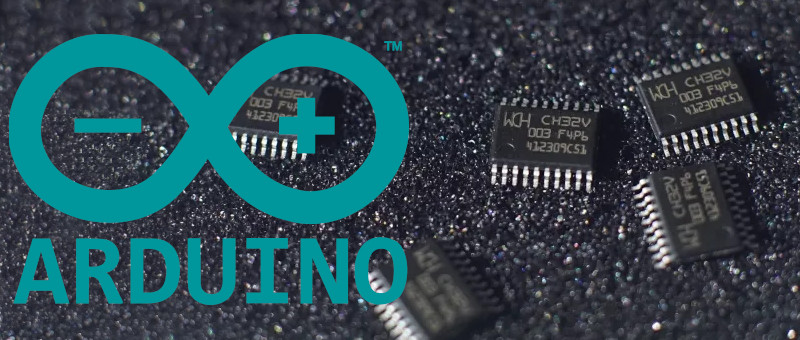
CH32 RISC-V MCUs Get Official Arduino Support

Like many of you, we’ve been keeping a close eye on the CH32 family of RISC-V microcontrollers from WCH Electronics. You can get the CH32V003, featuring 2 kB RAM and 16 kB of flash for under fifteen cents, and the higher-end models include impressive features like onboard Ethernet. But while the hardware is definitely interesting, the software side of things has been a little rocky compared to what we’ve come to expect from modern MCUs.

Things should start looking up a bit though with the release of an Arduino core for the CH32 direct from WCH themselves. It’s been tested on Windows, Linux, and Mac, and supports the CH32V00x, CH32V10x, CH32V20x, CH32V30x, and CH32X035 chips. Getting it installed is as easy as adding the URL to the Arduino IDE’s Boards Manager interface, though as the video below shows, running it on Linux does require an extra step or two.

So far, we’ve seen several projects, like this temperature sensor or this holiday gizmo that use [cnlohr]’s open-source toolchain. But there’s no question that plenty of hobbyists out there feel more comfortable in the Arduino environment, and if those folks are now able to pick up a CH32 and do something cool, that means more people jumping on board, more libraries developed, more demo code written…you get the idea.

Just like the ESP8266’s popularity exploded when it was added to the Arduino IDE, we’ve got high hopes for the CH32 family in the coming months.

Dell unveils new XPS 13, 14 and 16 laptops ahead of CES 2024

Dell is bringing the bold design of last year's XPS 13 Plus to the rest of the XPS lineup ahead of CES 2024 in Las Vegas — and now that includes new 14-inch and 16-inch models. The "Plus" name is also gone entirely: the new models are simply called the XPS 13, 14 and 16. They all sport the defining featured of the XPS 13 Plus: A seamless glass wrist rest, which hides an invisible haptic touchpad right in the middle; touch sensitive function buttons above the keyboard; and large key caps for more comfortable typing. And notably, the larger two models fix some of my biggest issues with the XPS 13 Plus.

Once again, minimalism is the defining theme for Dell with these computers: They're all polished aluminum and glass at first glance. They're also dominated by their screens: in true Dell fashion, they feature the company's ultra-thin "Infinity Edge" screen bezels. (These computers are also among the first to get dedicated Windows Copilot keys.)

Dell arguably went a bit overboard with the minimalism angle last year. The XPS 13 Plus only had two USB-C ports and didn't have a headphone jack. That's true of the XPS 13 this year as well, but not so for the XPS 14 and 16. They both feature headphone jacks, three Thunderbolt 4 USB-C ports and a microSD card slot. (Dell also includes a USB C to USB Type A and HDMI adapters in the box, which notably don't come with the XPS 13.)

All of these new laptops feature Intel's new Core Ultra chips, which means they also include NPUs to deal with AI work. So even without a dedicated GPU, they have the potential to be more useful for some creative work compared to Dell's last XPS machines (or at the very least, deliver some killer Windows Studio Effect backgrounds during video chats). But if you need additional graphics power, the XPS 14 and 16 can also be configured with NVIDIA's RTX 40-series GPUs.

Each new XPS machine also includes variable refresh rate FHD+ screens, ranging form 30hz to 120Hz. But they can also be equipped with OLED screens: the XPS 13 and 14 have optional 3K OLED screens with a maximum 60Hz and 120Hz refresh rate, respectively, while the XPS 16 has a 4K OLED panel that can hit 90Hz. Those higher refresh rates make a big difference: Last year plenty of productivity laptops were achieving smoother screens thank to higher refresh rates, so it's nice to see that finally reach the XPS machines.

The XPS 14. Just look at that headphone jack!
Devindra Hardawar/Engadget

I was a bit disappointed by the XPS 13 Plus because its touchpad was a bit finicky and it really needed more ports. But the XPS 14 seems like it could be the step forward Dell was originally aiming for — especially since its 14.5-inch screen looks almost as big as a 15-incher if you squint a bit. It's also relatively light at 3.7 pounds (3.8 pounds with OLED), so it's a potential powerhouse that would be easy to move around. 

The XPS 16 also looks like a genuinely compelling option for Windows users who demand massive screens. Sure, its 16.3-inch screen is smaller than the old XPS 17, but it's also a half-pound lighter. For many power users, that tradeoff may be worth it.

Dell's new XPS lineup will be available soon, with the XPS 13 starting at $1,300, the XPS 14 at $1,700 and the XPS 16 at $1,900.

We're reporting live from CES 2024 in Las Vegas from January 6-12. Keep up with all the latest news from the show here.

This article originally appeared on Engadget at https://www.engadget.com/dell-unveils-new-xps-13-14-and-16-laptops-ahead-of-ces-2024-110041195.html?src=rss

You can now buy the Xbox Series S toaster for $40

Waking up in the mornings is especially hard in these cold, dark winter months. Now there's a fun incentive to do so, thanks to the release of the Xbox Series S Toaster. For $40 you can get it from Walmart and have the Xbox sphere logo toasted onto your bread every day — a dream fulfilled that you never knew you had? The Xbox Series S toaster was first spotted in France back in March 2023, with gaming deals poster Wario64 sharing the news of its US arrival.  

Xbox's toaster is more than a fun gimmick: It fits two slices of bread, has six browning levels available, an LED countdown and a removable crumb tray. It also offers bagel and defrost settings — though it's unclear how the logo will appear when facing a canvas with a hole in the middle. 

The toaster isn't Xbox's first foray into the kitchen appliances market. The Xbox Series X "Mini Fridge" started as a meme in 2021 and became a six-foot, 400-pound reality. Now, its third iteration is on sale for $199, down from $250. The Xbox Series X Compact Fridge is actually mini at just over two-feet tall, with a matte black exterior and Xbox green light glowing inside it. The freezer compartment reads, "Power your dreams" for that extra motivation you need when grabbing a drink mid-gaming. 

This article originally appeared on Engadget at https://www.engadget.com/you-can-now-buy-the-xbox-series-s-toaster-for-40-104548270.html?src=rss