You have about one more week to pre-order Samsung's latest smartphones before they come out on February 25th. Samsung has a number of offers available to those who pre-order, but now Amazon is matching one of the discounts. The online retailer has knocked up to $100 off the higher-storage variants, so you can essentially get extra onboard space at no additional cost. The 256GB Galaxy S22 Ultra is $1,200 and $100 off, while the 512GB version is also $100 off and down to $1,300. As for the Galaxy S22+ and S22, the 256GB models of those handsets are $50 off and on sale for $1,000 and $800, respectively.
Samsung unveiled the three smartphones last week and the Galaxy S22 Ultra is the most premium of the bunch. It has a mesmerizing 6.8-inch QHD+ OLED screen with a 120Hz refresh rate, an impressive rear camera array, and is outfitted with the highest specs you can get in a Samsung phone — a Qualcomm's 4nm Snapdragon Gen 1 chip, up to 12GB of RAM and up to 1TB of onboard storage. Samsung married the designs of its S- and Note-series phones in this new model, and fans of the Note family will be happy to see that the S22 Ultra comes with a built-in S Pen. While we had a bit of time to test out the Galaxy S22 Ultra before Samsung's announcement, stay tuned for a full review coming soon.
The Galaxy S22+ and S22 may not have all the bells and whistles found on the Ultra, but Samsung made important updates to the insides of both smartphones. They share a design that looks similar to last year's flagships, but they're now made partially of post-consumer recycled material and come in new colors. The 6.6-inch S22+ and the 6.1-inch S22 both have FHD+ displays with 120Hz refresh rates, a triple rear camera array, a 40-megapixel selfie camera and a new Vision Booster feature, which adjusts screen settings automatically throughout the day to make it easier to view in different environments. As far as performance goes, both handsets run on Qualcomm’s 4nm Snapdragon 8 Gen 1 chip, 8GB of RAM and up to 256GB of storage. Keep an eye out on Engadget for our full review in the coming weeks.
Follow @EngadgetDeals on Twitter for the latest tech deals and buying advice.
Guerrilla Games set itself up with an unusual challenge when developing Horizon Forbidden West, which comes out on Friday, February 18th. According to the game’s director and technical director, Guerrilla was well aware of the PS5 and much of its capabilities when it started working on Forbidden West in 2018. But, the company also planned to make the game work on the PS4, a console that turns nine years old this fall.
It’s not unusual for games to be released on both consoles, but Forbidden West is notable for being a particularly massive and detailed game, perhaps the most advanced title yet to come out on the PS5. In a conversation with Engadget, game director Mathijs de Jonge and technical director Michiel van der Leeuw discussed Guerrilla’s process for making sure that the game worked for the PS4 while simultaneously showing off everything the PS5 is capable of.
“We knew it was going to be tricky making something that would make the PlayStation 5 shine, but also be really rewarding for people who have PlayStation 4,” said van der Leeuw. “So we're very happy that we knew about the PS5’s capabilities very early on, because that meant we could plan for how we're going to make this distinction.”
The most immediately obvious difference between the two versions is visual fidelity, with the PS5 targeting 4K resolution (reduced to a checkerboard-upscaled 1800p when running in 60 fps “performance” mode). “From the start, we targeted having higher-fidelity characters, high-fidelity environments, higher-fidelity vegetation, everything, just for the PS5,” van der Leeuw said. “So you'll just see different models for the PS4 version, but with the same sort of atmosphere throughout the game.”
The realities of play-testing during a worldwide pandemic actually provided Guerrilla plenty of opportunities to get feedback on the PS4 experience. “It was really difficult for us, the pandemic just hit us while we're in peak production,” van der Leeuw added. But Guerrilla was able to use Sony’s PlayStation Now game streaming technology to send early builds of the game to PS4 play testers. “Because of the pandemic, we had to switch to remote play testing,” said de Jonge. Sony would have done that with the PS5, but it wasn’t possible to have people into their offices during the pandemic.
The upshot of this was that Guerrilla had to make sure the PS4 version was getting plenty of attention throughout the development process. “It was a big advantage, in a way, that we did have the PlayStation 4,” de Jonge said, “because that meant we really had to get the build in a good state rather than just focusing on the PS5 version.”
SIE
While the team was conscious of making things work for the PS4 throughout the game’s development, they also were painstaking about having the PS5 version stand out visually. “We’d look at screenshots for every single thing on-screen, whether it was the grass, the sky, the leaves, the cloth, the hair – everything should have something where if you look at the screenshots, you'd feel like this is definitely the PS5 version,” van der Leeuw said.
While improved fidelity and frame rate were obvious things to expect in the PS5 version, Guerrilla put a lot of thought into how the PS5’s controller could be a differentiator – but it was somewhat of a balancing act getting the experience right. “In our early prototypes, I remember that we set the [adaptive trigger] values relatively high,” de Jonge said, “and I remember that after a few minutes we already felt some fatigue with the triggers. And then we started adding the haptic feedback. And then you have to balance how much haptic you have versus how much pressure you put on the triggers.”
Somewhat surprisingly, the team working on haptics is separate from the team working on the adaptive triggers. “Haptics are handled in our studio by the audio design designers, but the adaptive triggers are handled by our game designers,” de Jonge said. Obviously, no part of game design happens in a vacuum, but he specifically cites the collaboration between those teams as something he was proud of in the development process.
The end result is something that doesn’t scream out to you as a huge update, but a skillfully executed component that helps Horizon Forbidden West shine on the PS5. “I think it was great to see also how we could [use haptics and adaptive triggers] make the different weapons stand out, sort of give them their own character,” de Jonge said. “So it really feels different when you use a slingshot versus when you fire an arrow using a bow.”
Like most games specifically built for the PS5, Horizon Forbidden West loads quickly, thanks to the console’s built-in SSD. With such a massive map to explore, near-instantaneous loading (like when you fast travel) is a huge quality of life improvement. But van de Leeuw said these optimizations are more than just having a fast drive. “You don’t realize how easily games are bottlenecked,” he said. “If you run a PC game on a very fast SSD, it doesn't automatically load in like seven seconds. There's so much work we had to do.”
SIE
The end result is a game so quick that the development team had to revamp the tips that appear on loading screens. “In Horizon Zero Dawn, we called it fast travel, but it could take maybe a minute to actually load,” de Jonge said. “With the PS5, it’s maybe four or five seconds, it loads so quickly that players can’t even read the hints.” But from testing, Guerrilla knew that players came to rely on these hints, so they decided to slow things down just a bit. “We had to add a very simple feature where it hangs on the loading screen for enough time so you can actually read at least one hint while it loads.” Of course, people who want to speed through things can just mash X or turn off the pause in settings so that the game loads up as fast as possible.
While Engadget hasn’t tested Horizon Forbidden West on the PS4 yet, early reportsindicate that Guerrilla stuck the landing, building a game that doesn’t feel compromised on the PS4 that still shows off the power of the PS5. “I'm quite happy how it turned out,” said van der Leeuw. “I'm very proud of the PS5 version. But the PS4 version has the same sort of atmosphere, same sort of feel. Of course, it's a generation older, but it holds up, I think, quite well.”
Four Wordle puzzles at once? That was so five hours ago. Now, a site called Sedecordle has come up with a version that lets you do no less than 16 Wordle-style puzzles at a time, following the path of Octordle (eight), Quardle (four) and Dordle (two).
When I checked out a Sedecordle puzzle, I thought "that's not so bad" before I realized it didn't fit on the screen and I had to scroll (and scroll) to reach the end of the puzzle. Sedecordle ups the ante on Octordle in terms of the number of guesses too, giving you 22 shots at each puzzle compared to 13. That increases your odds of avoiding a failure that would really suck if you got, say, the first 15 correct.
I would love to tell you that I tried to do one, but even Quardle is a huge time sink that has been driving users mad. Suffice to say, you'd have to be a massive Wordle fan and slightly masochistic to try one four times that size. Much as folks expanded on the original Rubik's cube with up to 22 sides, knock-offs are now taking Wordle to its logical, very silly conclusion.
According to Deadline, Forbes Entertainment and EOne are teaming up to produce two projects — a scripted series and a documentary — around bitcoin money launderers Heather "Razzlekhan" Morgan and Ilya Lichtenstein. Both projects will lean on Forbes' reporting, but the twist is that Morgan was also a Forbes contributor for several years. It won’t be the only studio working on the story, either. Netflix is already making its documentary on the billion-dollar bitcoin launderers. I look forward to the rap segments.
Sony has launched a contest for the chance to finally get your hands on a PS5. Over the next few weeks, Sony will release 14 unique codes resembling the PlayStation controller across its sites, social media channels and even at high-profile events in sports, gaming, film and music. Finding them doesn't automatically mean you win a console: Each code will only give you the opportunity to enter a draw to win a PS5, but if you’ve been unable to get the new console, perhaps you're willing to jump through all these hoops.
While Alienware’s newest x14 isn’t quite as powerful or configurable as its larger siblings, it offers strong performance and a vibrant 144Hz screen in a deliciously sleek chassis. And if you really like traveling light, the x14 even supports charging over USB-C by default. Unsurprisingly, perhaps, expect short battery life during gameplay. However, the smart move would be to wait a month or two for competitors to release their latest 14-inch laptops. Both Razer and ASUS are coming out with refreshed versions later this spring. We gave it an 85.
It’s admitted to finding purchases for transport routes in Iraq controlled by the terrorist group.
Ericsson's CEO told Swedish newspaper Dagens Industri the company may have made payments to the Islamic State (ISIL/ISIS/Daesh) terrorist group for its operations in Iraq. According to Bloomberg, CEO Boörje Ekholm said the telecoms giant has identified "unusual expenses dating back to 2018."
The first major No Man's Sky patch of the year has arrived. Among other things, Hello Games says the Sentinel update improves the space exploration sim's AI and introduces a buildable AI mech. You can put an AI pilot in your Exomech and have it follow you and help out in battles. Players can build a drone companion, too.
New York City has the lowest average rider rating.
Uber riders can now see how many one-star and five-star ratings they're getting. The platform's Privacy Center, which debuted last month, shows riders and drivers a breakdown of their ratings. The company also revealed which major US cities have the highest and lowest average rider ratings. Drivers typically dish out higher ratings in San Antonio, St Louis and Nashville. Riders tend to get the lowest ratings in New York City, followed by Seattle and Washington, DC. If you’ve got a dire rating, Uber offers up a handful of tips, encompassing safety and common decency, to help you bump up your average.
As Apple pushes on with its anti-tracking features on iOS, and Google continues to refine its Privacy Sandbox for serving targeted web ads without third-party cookies, it's time for Android. Google announced today it's starting a "multi-year initiative to build the Privacy Sandbox on Android.” It’s early days, and the company is in the design and testing stage, but it said developers can "review our initial design proposals and share feedback on the Android developer site."
Amazon and Visa have resolved their simmering dispute over payment fees in the UK and elsewhere, Reuters has reported. "We've recently reached a global agreement with Visa that allows all customers to continue using their Visa credit cards in our stores," a spokesperson told Reuters.
Amazon threatened to stop accepting Visa in the UK starting January 19th, citing the high fees it charges for credit card transactions. The rest of Europe wasn't impacted as the EU has a cap on card issuer fees, but both Mastercard and Visa card issuers jacked fees in the UK following Brexit. UK regulators recently announced that they'd investigate those increases.
It seemed likely that Amazon wouldn't carry out its threat, given Visa's dominance in the payment market. Sure enough, shortly before that deadline, Amazon announced it would continue accepting the cards after all and said it was "closely working with Visa on a potential solution."
Amazon didn't ban or threaten to ban Visa cards anywhere else, but it has been charging an additional transaction fee for Visa-using customers in Australia and Singapore. That charge has now been revoked, and Visa and Amazon appear to have put the whole thing behind them. "This agreement includes the acceptance of Visa at all Amazon stores and sites today, as well as a joint commitment to collaboration on new product and technology initiatives," a Visa spokesperson said in a statement.
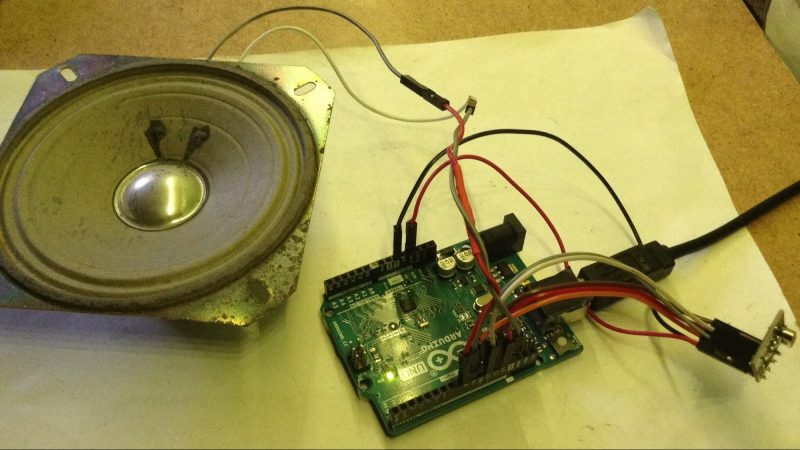
MIDI is a standard known by musicians and instruments all over the world. The basic twist on regular serial has helped studios around the world to work more efficiently. [Kevin] wanted to try sending MIDI data wirelessly, but rather than the typical Bluetooth solution, decided to use the humble nRF24L01 instead.
The circuitry used is simple: [Kevin] simply wired up two Arduino Unos with nRF24L01 radio modules, which communicate over SPI. Alternatively, an even quicker solution is to use a Keywish Arduino RF Nano, which packs a nRF24L01 on board. One Arduino can then be hooked up to a MIDI OUT port on an instrument, and it will send out MIDI signals wirelessly. The second Arduino can then be plugged into a MIDI IN port and repeat out what it receives over the air.
The real work was in the firmware, which takes MIDI data and packages it in a suitable form to send out over the nRF24L01. The system can operate in a one-to-one mode, emulating a single MIDI cable, or a multicast mode, where one sender transmits information to many receivers.
It’s a neat hack and one we could imagine would be useful in some fun performance situations. We’ve seen others do work on wireless MIDI interfaces for Eurorack hardware, too. Video after the break.
As both the Chrome and Firefox browsers approach their 100th versions, what should be a reason for the developers to celebrate could turn into a bit of a mess. It turns out that much like the Y2K bug, the triple-digit release numbers coded in the browsers' User-Agents (UAs) could cause issues with a small number of sites, Bleeping Computer reported.
Major milestone: Chrome and Firefox will soon reach version 100! 💯
The version number is going up to three digits and both browsers are working on mitigating the potential impact of this change. Learn more about it and pitch in to help with testing ➡️https://t.co/FtPl4CRjfk
Mozilla launched an experiment last year to see if version number 100 would affect sites, and it just released a blog with the results. It did affect a small number of sites (some very big ones, though) that couldn't parse a user-agent string containing a three-digit number. Notable ones still affected included HBO Go, Bethesda and Yahoo, according to a tracking site. The bugs include "browser not supported" messages, site rendering issues, parsing failures, 403 errors and so on.
How could such a silly thing be happening? "Without a single specification to follow, different browsers have different formats for the User-Agent string, and site-specific User-Agent parsing," Mozilla explained in the blog. "It’s possible that some parsing libraries may have hard-coded assumptions or bugs that don’t take into account three-digit major version numbers."
Luckily, developers for both browsers have a plan. If there are issues with sites that can't be resolved before the versions are released, both browsers will freeze the version numbers at 99 in the UA strings or inject code overrides to fix the problems. Both have also asked developers to test their sites with Firefox/Chrome 100 user agents. The browsers are set to arrive on March 29th and May 3rd for Chrome and Firefox respectively — hopefully like Y2K, it'll be much ado about nothing..
An Amazon union avoidance officer has reportedly told workers at the company's JFK8 warehouse that there's a possibility they could get lower pay than what they're currently getting if they unionize. Motherboard has obtained an audio recording of a mandatory anti-union meeting that happened on Wednesday, wherein the officer could be heard describing the collective bargaining process. "The negotiation phase of the process is called collective bargaining, and in the negotiation, there are no guarantees. You can end up with better, the same, or worse than you already have," the officer said.
An employee then cuts in and asks what they mean that workers could end up with worse, and the officer responds that there are no guarantees what would happen: "We can't promise what's going to happen. Amazon can't promise you that they're going to walk into negotiations and that the negotiations will start from the same [pay and benefits workers have already]. They could start from minimum wage for instance. I don't think that will happen, but it's a possibility."
"So you're saying that Amazon’s gonna say..." the worker said, to which the officer responded: "I just said I'm not saying that." When the worker asked "So why put that out there?," the officer completely changed the topic. In addition, the officer also talked about how workers will be liable to pay union dues if they unionize and that there's no limit to how much they could be charged in New York. The election will have "significant and binding consequences not just for yourselves but for future associates, your coworkers, and potentially for your family," they warned.
Frank Kearl, the lawyer representing workers at JFK8, told Motherboard:
"The [union avoidance consultant] makes the threat and tries to walk it back but once you’ve poisoned the well you can’t take it back. Even though she realized she made a mistake in making the threat, it doesn’t mean the threat wasn’t made and heard by all the workers who were forced to sit in on that session. It's against the law and an unfair labor practice to make a threat of reprisal.”
The National Labor Relations Board had previously accused Amazon of threatening, surveilling and interrogating workers at its JFK8 warehouse to discourage them from unionizing. A union avoidance consultant reportedly told them back then that organizing at the warehouse would fail anyway, because the organizers were "thugs." Amazon denied the allegations.
The Amazon Labor Union, which is an independent group seeking to represent workers in the company, successfully collected enough signatures at JFK8 in its second attempt to unionize. Amazon and the ALU have reached an agreement to hold an in-person union vote at the facility between March 25th and March 30th.
Spotify announced today that it is acquiring two major podcast ad tech firms, Chartable and Podsights, in a move to expand its offerings to advertisers. Both companies offer popular tools that help brands and agencies better understand the effectiveness of their podcast ads.
In a blog post announcing the acquisitions, Spotify laid out how both companies will expand its ad platform. With Podsights, advertisers will be able to see more detailed data on who clicked on an ad and what actions they took after the fact (i.e. if they purchased the actual product). “As part of Spotify, Podsights will be able to utilize Spotify’s technology and intelligence to bring more accurate measurement and actionable insights to podcast advertisers around the world,” wrote Spotify in its post.
The Chartable acquisition seems more geared towards podcast ads about podcasts. It's two promotional tools — SmartLinks and SmartPromos — will now be available to podcasters on Spotify. SmartPromos allows podcasters to see which ads are resulting in the most downloads and essentially measure the success of their ad campaigns. SmartLinks, according to Chartable’s website, are “shareable, trackable URLs that automatically route listeners to their podcasts”. The tool allows podcasters to track both clicks and downloads.
Spotify has invested heavily in expanding its podcast offerings over the past couple of years; both by locking high-profile creators into exclusivity deals and offering podcast advertisers more bang for their buck with more detailed analytics. The Chartable acquisition in particular will build on Megaphone’s offerings; another ad tech acquisition Spotify made in 2020.
These two acquisitions are likely to sweeten the pot for both advertisers and professional podcasters looking to join Spotify. If you’ve felt that podcast ads have become more numerous over the past couple of years or so, you’re not imagining things: Spotify has expanded its ad setup with in-app ads and pre-recorded ad slots that are tailored to your listening habits. "This latest deal seems positioned to make the platform a more attractive option for brands and advertisers, and to entice podcasters without a network or salespeople of their own into Spotify's walled garden."
Samsung's next hardware event will coincide with Mobile World Congress in Barcelona. The company announced today it will host a fully virtual keynote on Sunday, February 27th at 1PM ET. You'll be able to watch the event on Samsung's website and the company's YouTube channel. You'll also find full coverage here at Engadget.
In years past, Mobile World Congress was one of the most important events in Samsung's release calendar. Between 2014 and 2018, the company frequently took to Barcelona to announce its latest Galaxy S phones. However, after it came out with the Galaxy S9 in 2018, the company began instead to unveil those devices at its own Unpacked events. It's easy to see why: while Samsung always dominated the MWC news cycle, it still shared the limelight with other phone makers, including Sony and LG.
As for what we can expect from Samsung, it's hard to say. At its first Unpacked of 2022, the company announced the Galaxy S22 and Tab S8. Judging from the invite Samsung shared, the company could focus on devices like the Galaxy Z Flip and Z Fold. The next version of the latter will reportedly take inspiration from the new Galaxy S22 Ultra and add a built-in slot for the company's S Pen Stylus. We won't know the full details until Samsung confirms them come February 27th. Either way, you'll want to visit Engadget that day to see what the company has been working on behind the scenes.