Peloton owners can now play a video game while they work out

Peloton today launched Lanebreak, a new series of workouts that mimic a racing game for its connected stationary bike. Riders get behind a virtual wheel, race down a multi-lane highway and gain points for higher levels of output and resistance. The fitness company briefly beta tested Lanebreak last July, and is now launching the new mode as a software update to all Peloton bikes in the US, UK, Canada, Germany and Australia.

Unlike the majority of other Peloton workouts, there’s no instructor on Lanebreak offering encouragement throughout the ride. Instead, riders can choose from a selection of different pop-centric playlists to listen to in the background, featuring the likes of David Guetta, David Bowie, Bruno Mars and Ed Sheeran.

For Peloton riders who are bored with the usual slate of instructor-led classes, Lanebreak adds a change of pace. It’s also the first new program that the fitness company has added to their fitness library in a while, following a major expansion in 2020 that included barre, yoga, pilates and strength training classes.

The fitness company, once a darling of the pandemic, has now run into financial woes due to a decline in demand. Earlier this month, Peloton replaced its CEO and laid-off roughly 20 percent of its workforce in an effort to streamline its expenses. But despite its struggles on Wall Street, Peloton's incredibly loyal customer base has a 96% one-year retention rate. The bikes are a large upfront investment, and few Peloton riders want the added hassle of reselling and moving their $1,495 bike. While it’s unlikely that Lanebreak will recruit new Peloton riders, it’ll add some variety to a fitness library that, for some seasoned riders, has become stale.
Twitter now lets anyone pin DM conversations

You might be used to pinning text conversations on your phone, and now you can pin your Twitter chats in much the same way. Twitter's DM conversation pinning is now available to everyone on Android, iOS and the web without requiring a Blue subscription. The functionality is familiar — on mobile, you just have to slide a favorite conversation to the right and tap button to float it to the top of your inbox. You can pin up to six threads this way.

The expansion comes just a few months after DM conversation pins came to Blue users in November 2021. Not that it's a shock, however. Twitter said it would use Blue to offer early access to features, and DM pinning was one of the first.

This broader release mainly gives a rough sense of how long it might take for Blue-first features to reach a general audience. While the timing is likely to vary based on the feature, the wait for this DM upgrade might just line up with what you'd expect. The months-long interval may have helped Blue members justify their $3 monthly outlay, but it wasn't extreme.

Keep your fave DM convos easily accessible by pinning them! You can now pin up to six conversations that will stay at the top of your DM inbox.

Available on Android, iOS, and web. pic.twitter.com/kIjlzf9XLJ

— Twitter Support (@TwitterSupport) February 17, 2022

question about Obstacle Avoiding Robot

Forums

Hi,

I read the link of 'Obstacle Avoiding Robot using Arduino and Ultrasonic Sensor':

https://circuitdigest.com/microcontroller-projects/arduino-obstacle-avod...

I have a question how to determine the turning angle or turning amount when the  HC-SR04 Ultrasonic Sensor detected an obstacle, if set the car heading to fix direction say North. 

Thanks

Adam

Circuit Digest 17 Feb 21:16

Unique Clock is All Hands, No Dial, and Does the Worm

Back in the old days, we didn’t have fancy digital clocks. No, we had good analog clocks with a big hand and a little hand, and if you wanted to know the time you had to look at the clock and figure out which number each hand was pointing at, or kind of pointing at. It wasn’t easy, and we liked it that way.

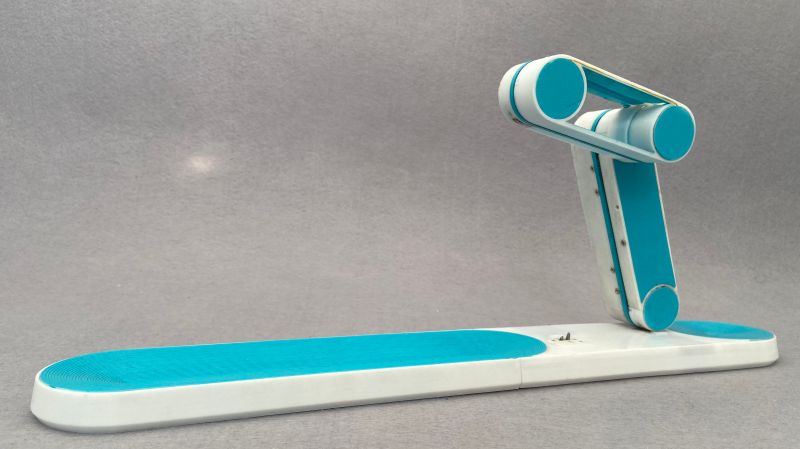
So now, along comes an analog clock that’s nothing but the hands — no dial, no numbers, just hands. How is such a thing possible? The clue is in the clock’s name: AKUROBATTO, and in the video below, which shows the acrobatic movements of the clock’s hands as it does its thing. Serial improbable-clock maker [ekaggrat singh kalsi] clearly put a lot of thought into this mechanism, which consists of the hands and a separate base. The hands are joined together at one end and powered by small stepper motors. The base has two docking areas, where servo-driven claws can grasp the hand assembly, either at the center pivot or at the tip of either hand. With a little bit of shuffling around at transition points, the hands sweep out the hours and minutes in a surprisingly readable way.

For as cool as the design of AKUROBATTO is, the internals are really something else. There are custom-built slip rings to send power to the motors and the Arduinos controlling them, sensors to determine the position of each hand, and custom gearboxes for the steppers. And the locking mechanisms on the base are worth studying too — getting that right couldn’t have been easy.

All in all, an impressive build. Whether displaying the time on a phosphorescent screen or a field of sequins, it seems like [ekaggrat] has a thing for unique clocks.

Hack a Day 17 Feb 21:00

Spotify's deal with Joe Rogan is reportedly worth at least $200 million

As soon as Spotify struck a deal with Joe Rogan in 2020 to become the exclusive distributor of his podcast, The Joe Rogan Experience, it was evident that the company was paying him a pretty penny. Initial reports pegged the value of the deal at around $100 million. However, in the wake of a firestorm over claims that Rogan was enabling the spread of COVID-19 vaccine misinformation, a new report suggests Spotify is paying much more than that.

According to The New York Times, the three-and-a-half year deal is worth at least $200 million, with a possibility of additional payments. As the report notes, that's more than Spotify paid to buy major podcast production companies Gimlet Media and The Ringer — each of those deals was worth a little under $200 million.

Rogan's show is Spotify's most popular podcast in 93 countries, including the US. Episodes of The Joe Rogan Experience can garner tens of millions of listeners. Spotify CEO Daniel Ek reportedly told employees this month that big exclusive deals such as the Rogan one helped make the company as successful as it is. Spotify has remained behind Rogan, even after his use of racist language on the show came under the spotlight. Rogan removed some episodes containing that language from Spotify.

The backlash against Rogan and the company ramped up after hundreds of doctors, nurses, scientists and educators sent an open letter to Spotify in January urging the company to take more action against the spread of misinformation. They sent the request after Dr. Robert Malone made claims about COVID-19 vaccines on The Joe Rogan Experience that they called "false and societally harmful assertions."

Notable critics including Neil Young and Joni Mitchell accused Spotify of spreading harmful misinformation and pulled their music from the platform. Around the same time, Brené Brown put episodes of her Spotify-exclusive podcasts on hold. Film director Ava DuVernay struck a podcast deal with Spotify last year, but cut ties this month before producing any content for the company. Reports suggest Barack and Michelle Obama may not renew their Spotify deal, which is set to expire in a few months.

Spotify has also faced criticism from employees over Rogan. The host and editor of Gimlet's Science VS podcast said they'd no longer make episodes of their show until "Spotify implements stronger methods to stop the spread of misinformation on the platform." There was one exception to that stance, though. Wendy Zukerman and Blythe Terrell are publishing episodes that debunk misinformation being spread on the platform. They released one earlier this month that examines some of the claims made in Rogan's chat with Malone. 

YouTube could ‘break’ sharing on borderline content to fight misinformation

YouTube is eyeing new measures to tackle misinformation on its platform. Among the changes being considered, according to Chief Product Officer Neal Mohan, are updates that would effectively “break” sharing features for videos with “borderline content.”

The change would be a major shift for the platform, though it’s not clear if the company will actually take such a step. Mohan described the possibility in a lengthy blog post outlining the company’s approach to preventing misinformation from going viral. In the post, he noted that so-called borderline content — “videos that don’t quite cross the line of our policies for removal but that we don’t necessarily want to recommend to people” — can be particularly challenging to deal with.

That's because YouTube aims to remove these videos from its recommendations, but they can still spread widely when shared on other platforms. “One possible way to address this is to disable the share button or break the link on videos that we’re already limiting in recommendations,” he wrote. “That effectively means you couldn’t embed or link to a borderline video on another site.”

Mohan added that the company was still wrestling with whether or not it should take this more aggressive approach. “We grapple with whether preventing shares may go too far in restricting a viewer’s freedoms.” He said an alternative approach could be adding “an interstitial that appears before a viewer can watch a borderline embedded or linked video, letting them know the content may contain misinformation.”

If YouTube were to prevent sharing of some videos, it would be a dramatic step for the platform, which has repeatedly cited statistics claiming that less than 1 percent of views on borderline content comes from recommendations. But critics have pointed out that this doesn’t fully address the issue, and fact checkers and misinformation researchers have cited YouTube as a major vector of misinformation. Last month, a group of 80 fact checking organizations signed an open letter to the video platform urging it to do more to stop harmful misinformation and disinformation.

The YouTube exec hinted at other changes to come as well. He said the company is also considering adding “additional types of labels to search results” when there’s a developing situation and authoritative information may not be available. The company is also looking to beef up its partnerships with “with experts and non-governmental organizations around the world” and invest in technology to detect “hyperlocal misinformation, with capability to support local languages.”

Ford's Mustang Mach-E ousts the Tesla Model 3 as Consumer Reports' top EV

Tesla's Model 3 has been Consumer Reports' top EV choice for the past two years, but the publication is ready to declare a new champion. CR has revealed that Ford's Mustang Mach-E has ousted the Model 3 as its EV Top Pick. The Mustang crossover is not only "more practical," according to editors, but has better first-year reliability and a "far easier" infotainment system that doesn't require multiple steps for basic tasks. A better ride and reduced noise help, too.

Ford's BlueCruise driver assist technology also gave the Mach-E an edge thanks to a more effective drive monitoring system that now counts toward vehicle scores. Tesla's Autopilot was docked for functioning while drivers look away.

Consumer Reports still recommended the Model 3 thanks to its sports car-like performance, long range, charging network and technology. However, the outlet couldn't recommend the Mach-E's more direct rival, the Model Y, as an EV Top Pick. Tesla's SUV-like ride has "much worse" reliability than average vehicles in the lineup, and is noticeably worse than the average-rated Model 3.

This isn't going to please Tesla, which has had a less-than-amicable relationship with Consumer Reports over the years. The two have disputed test results, and CR has temporarily pulled recommendations for some models. However, it also reflects lingering concerns about Tesla's reliability. The EV producer has issued a string of recalls in recent months, and owners have frequently reported build quality issues. This might not have cost Tesla the lead by itself, but it certainly didn't help the company's chances.

Intel delays its first Arc desktop gaming GPUs until spring

Intel has shed more light on the roadmap for its Arc gaming GPUs, including more clarity about when consumers can expect to get their hands on them. As previously announced, the GPUs will debut in laptops from Intel's OEM partners this quarter, presumably alongside 12th-gen Alder Lake CPUs.

However, desktop gamers will need to wait a little longer before they can plug Arc GPUs into their rigs. Intel says those graphics cards will ship in Q2. It previously said those would arrive in Q1 as well. As for add-in GPUs for workstations, those will be available in Q3.

The first-gen Alchemist GPUs will have support for hardware-based ray-tracing, mesh shading, variable rate shading and DirectX 12 Ultimate. Gamers can expect to harness Intel's AI-driven super sampling tech too.

Intel says its Accelerated Computing Systems and Graphics Group (AXG) expects to ship more than 4 million discrete GPUs this year. Elsewhere, the company has started architecture work on the third generation of Arc GPUs, which are codenamed Celestial. Those will be geared toward the "ultra-enthusiast segment." The second-gen GPUs, codenamed Battlemage, are also in development.

Meanwhile, at an investor meeting, Intel revealed plans for a service that will enable access to Arc GPUs via the cloud. It says Project Endgame, which will be available later this year, is "an always-accessible, low-latency computing experience," but it hasn't shared additional details as yet.

FDA clears the first smartphone app to program insulin pump doses

Tandem Diabetes Care says the Food and Drug Administration (FDA) has cleared its smartphone app to program and cancel insulin doses from the t:slim X2 insulin pump. The company claims it's the first time the FDA has cleared a phone app for such a purpose.

The t:connect mobile app on iOS and Android will enable users to program and cancel bolus insulin doses from the pump, according to Tandem Diabetes Care. When connected to the pump, the app can display information about the last 24 hours of a user's glucose trends, changes in status (including alerts and alarms) and insulin therapy data.

Pumps typically require users to dial in insulin doses manually. Given that they are often able to view glucose readings on their handset, patients will be able to use their phone to determine how much insulin they need and then program their dose.

The FDA clearance could be a step toward a more convenient way for diabetes patients to administer insulin doses. Tandem Diabetes Care plans to offer the feature at no extra cost to new and in-warranty t:slim X2 insulin pump customers via a software update. The plan is to grant access to a limited number of users in the spring ahead of a broader rollout this summer.

NHTSA opens probe into Tesla's 'phantom braking' issue following owner complaints

Telsa's already-smudged safety reputation took another hit on Thursday as the National Highway Traffic Safety Administration announced the start of a new investigation into the company — this time, in response to a flurry of complaints by owners that their vehicles would randomly and dangerously decelerate while at freeway speeds, which they've come to call "phantom braking."  

Per the NHTSA's Office of Defects Investigation (ODI), the agency has received "354 complaints alleging unexpected brake activation in 2021-2022 Tesla Model 3 and Model Y vehicles" over the past nine months. 

"The complaints allege that while utilizing the ADAS features including adaptive cruise control," the ODI summary reads, "the vehicle unexpectedly applies its brakes while driving at highway speeds. Complainants report that the rapid deceleration can occur without warning, at random, and often repeatedly in a single drive cycle."

As such, the ODI is launching this preliminary investigation "to determine the scope and severity of the potential problem and to fully assess the potential safety-related issues" with further steps to follow depending, of course, on what, if anything, the investigators uncover.

Many of the complaints have come very recently. The Washington Post notes that following one of its pieces published earlier this month, the "NHTSA received about 250 complaints about phantom braking during the following two weeks. That compared to 107 complaints in the prior three months — a steep surge of its own — and only 34 in the preceding 22 months."

“It’s when the traffic is coming towards me that it randomly throws on the brake,” Sally Bergquist, of Alexander City, Al, a 2021 Model S owner who experienced the phantom braking effect, told The Post. “This random braking is really concerning to me.” 

Tesla has had to issue a number of recalls for defects in its products in recent months, from software glitches to separating suspensions. Despite these issues, Tesla vehicles remain hot sellers in the EV marketplace and CEO Elon Musk remains steadfastly confident in his company's "Full Self-Driving" technology

“It’s not like some little feature,” Musk declared on Tesla's Q4 earnings call. “It’s like the most profound software upgrade maybe in history.”

This news comes in the immediate wake of Consumer Reportsnaming the Ford Mustang Mach-E its Car of the Year over the Model 3, and word that Musk on Thursday accused the SEC of harassment for its "endless" and "unrelenting" investigation into Tesla — not because his personal tweets (the subject of said SEC investigations) violated long-standing federal regulations, but because he is an outspoken critic of the government. Tesla could not be reached for comment in response to any of this as Musk dissolved the company's PR department in 2020.