Audiences will get another chance to watch CODA, the first Apple Original movie nominated for an Oscar for Best Picture, in theaters. Apple is re-releasing the film, which is about a deaf family, in a limited run of free screenings with open captions. Directed and written by Sian Heder and featuring a primarily deaf cast, the film received three Oscar nods in total. Heder, who adapted the movie from a French film called La Famille Bélier, is also nominated for Best Adapted Screenplay. Troy Kotsur is also nominated for Best Supporting Actor, and is the first deaf man to earn that distinction.
The film follows Ruby (played Emilia Jones) , a high school student who navigates life as the only hearing member of a deaf family in Gloucester, Massachusetts. Kotsur plays her father, a struggling fisherman attempting to connect with his daughter. Ruby’s mother is played by Marlee Matlin (best known from Children of a Lesser God and The L Word), and her older brother is played by Daniel Durant, who starred in the 2015 Broadway revival of Spring Awakening.
The screenings will run in all major cities in the US and London, beginning Friday, February 25 through Sunday, February 27. You can view a list of showtimes and theater locations here.
Whistleblower Aid says it has filed complaints with the Securities and Exchange Commission that accuse Meta of misleading investors about efforts to mitigate climate change and COVID-19 misinformation across its platforms. The nonprofit, which represents Meta whistleblower Frances Haugen, claimed the company made “material misrepresentations and omissions in statements to investors” over how it was handling misinformation, according to The Washington Post, which viewed redacted copies of the documents.
“The documents shared with the SEC make it totally clear that Facebook was saying one thing in private and another in public regarding its approach to climate change and COVID-19 misinformation,” Whistleblower Aid senior counsel Andrew Bakaj told Engadget. “That’s not just irresponsible to the public, it’s actively misleading investors who have a legal right to truthful answers from the company.”
In one of the filings, which were based on disclosures by Haugen, Whistleblower Aid reportedly claimed that Meta didn't have a clear policy on climate change misinformation until last year. The complaint alleges that such misinformation was abundant on Facebook, despite assertions from executives to investors that the company was committed to battling the "global crisis," according to The Post.
In the other complaint, the nonprofit reportedly cited internal documents showing that COVID-19 misinformation and vaccine hesitancy proliferated on Facebook. That's despite Meta executives making public comments about measures it was taking to stem the spread of COVID-19 misinformation.
Since 2020, Meta has offered factual information about COVID-19 and climate change in its information centers.
The company has long struggled to stem the flow of misinformation on Facebook and its other platforms. Documents supplied to news organizations by Haugen last year led credence to critics' arguments that the company puts profits before user safety. In September, it was reported that the company gave misinformation researchers incomplete data.
“We’ve directed more than 2 billion people to authoritative public health information and continue to remove false claims about vaccines, conspiracy theories and misinformation," Meta spokesperson Drew Pusateri told Engadget. "We’ve also created our Climate Science Center in over 150 countries to connect people to factual and up-to-date climate information, while also partnering with independent fact checkers to address false claims. There are no one-size-fits-all solutions to stopping the spread of misinformation, but we’re committed to building new tools and policies to combat it.”
There are worse movies than Uncharted, especially when it comes to the seemingly cursed genre of video game adaptations. But as I struggled to stay awake through the finale — yet another weightless action sequence where our heroes quip, defy physics and never feel like they're in any genuine danger — I couldn't help but wonder why the film was so aggressively average.
Sony Pictures
The PlayStation franchise started out as a Tomb Raider clone starring a dude who wasn't Indiana Jones. But, starting with Uncharted 2: Among Thieves, the games tapped into the language of action movies to put you in the center of innovative set pieces. They were cinematic in ways that few titles were in the early 2010s. But going in the opposite direction — bringing aspects of those games into a movie — doesn't work nearly as well.
Director Ruben Fleischer (Zombieland, Venom), along with screenwriters Rafe Lee Judkins, Art Marcum and Matt Holloway, have crafted an origin story for the treasure hunter Nathan Drake (Tom Holland). It hits the notes you're expecting — his childhood as an orphan, his first team-up with his partner Victor "Sully" Sullivan (Mark Wahlberg), and a globe-trotting treasure hunt that defies logic — but it's all just a Cliff's Notes version of what we've seen in the games. And for a franchise that was already a watered-down version of Indiana Jones, a movie adaptation just highlights all of its inherent flaws. Watching Uncharted made me long for the basic pleasures of Nicholas Cage's National Treasure – at least that Indy clone had personality.
Even the iconic action scenes don’t hit as hard. The film opens mid free-fall, as Drake realizes he just fell out of a plane. Discerning viewers will instantly recognize the sequence from Uncharted 3. We watch as he hops across falling cargo (and wonder if that’s even possible while everything is falling), but the entire scene feels like Tom Holland is going on the world’s most extreme Disney World ride. Without the rumble of the Dualshock 3 controller in my hand, and my responsibility over Drake’s impending death, there just aren’t any stakes. It’s particularly unexciting compared to what we’ve seen in the recent Mission Impossible movies. Tom Cruise (and skydiving camera man Craig O'Brien) jumped out of an actual plane several times for our entertainment!
Still, it's somewhat surprising that this adaptation exists at all. Sony has been trying to develop an Uncharted film since 2008, starting with a loftier iteration by arthouse auteur David O. Russell. That version was going to star Wahlberg as an older Nathan Drake, as we see him in the games, and focus on the idea of family. But the project ended up changing hands several times over the last decade. By the time it was actually gearing up for production in 2020, Wahlberg had aged out of the starring role and into the older sidekick spot. (Sorry, Super Cool Mack Daddy, it happens to all of us.)
After we've seen so many video game films completely miss the mark, like Resident Evil: Welcome to Racoon City and Assassin's Creed, I'm starting to wonder if there's some sort of secret to making a good adaptation. Different audiences want different things, after all. Game fans typically want to see the characters and sequences they love so much legitimized on film. Discerning movie geeks may be comparing adaptations to other, usually better, films. And studio executives just want existing intellectual property that they can churn out to an undiscerning public.
There are a handful of memorable video game films, but they mostly seem like flukes. The original Mortal Kombat was iconic because of its killer soundtrack and (at the time) cutting-edge special effects. Werewolves Within doesn't have much to do with the VR title it's based on, aside from its name. And Sonic the Hedgehog was a blast, but that was mostly due to its lead performances.
As an avid gamer and cinephile, I'll never give up on hoping for successful adaptations. But it could just be that the two mediums are a bit incompatible. A film can never capture the interactive magic and freedom you get from a game. And when you're playing something, heavy-handed cut scenes and direction can often take you out of the experience (unless you’re Hideo Kojima, in which case gamers will argue it’s all a work of genius).
With its cinematic roots, Uncharted had a better shot at a decent adaptation than most games. It’s just a shame that, for a series that’s about exploring new lands and discovering forgotten treasure, it offers nothing new.
Don't panic if you can't play The Joe Rogan Experience or other podcasts on Spotify. The streaming service has confirmed to Engadget that a "technical issue" is preventing users from playing a number of Spotify podcasts, including Joe Rogan's and The Ringer shows like The Bill Simmons Podcast. The company didn't elaborate on what went wrong, but the shows are frequently missing.
Spotify didn't say exactly when the podcasts would be available again. The issue should be "resolved soon," according to a spokesperson. Some users have already reported shows returning.
The timing is less than ideal for Spotify, to put it mildly. The glitch comes soon after a controversy over misinformation in Spotify's podcasts. Rogan in particular has been accused of spreading and tolerating false claims about COVID-19 vaccines, including guest Dr. Robert Malone's unsupported claims that a "psychosis" led many people to get shots. Artists like Neil Young, Joni Mitchell and Crosby, Stills & Nash pulled their music from Spotify in protest, while doctors and scientists have called on the service to create a misinformation policy.
Spotify has so far resisted demands to pull episodes or shows. Chief executive Daniel Ek has promised a number of changes, such as content advisories for episodes discussing COVID-19, but has maintained that allowing misinformation promoted critical thinking and debate. This clearly didn't reassure users — it wasn't hard to find people worrying Spotify had pulled Rogan's shows despite past promises.
Kanye West says fans won't be able to stream his next album on Spotify, Apple Music, Amazon Music or YouTube Music. He plans to release Donda 2 exclusively on his $200 Stem Player, a portable device that makes it a cinch for users to remix music.
"Today, artists get just 12 percent of the money the industry makes," West, who claimed he rejected a $100 million deal from Apple, wrote on Instagram. "It’s time to free music from this oppressive system. It’s time to take control and build our own."
His fans might not find it easy to listen to Donda 2 legally, however. West said 67,000 units of the Stem Player are currently available, though another 3,000 are being manufactured every day.
The device can be used as a regular music player to listen to music as the artist intended. Those who want to play around with songs can control the volume on four different tracks or stems. With Donda 2, West says, users will be able to play just the vocals, drums, bass or samples, or any combination of those. The Stem Player also allows users to add effects and create loops they can reverse, speed up or slow down. Owners can upload other songs to the device through the Stem Player website.
West brought his last album, Donda,to the Stem Player, but it's available to stream elsewhere too. As with pretty much everything West says, it's worth taking this announcement with a grain (or an entire shaker) of salt until he actually releases Donda 2, which appears to have 22 tracks. Even so, it's not impossible to imagine the album winding up on other platforms later.
One of the reasons I’ve yet to leap head-first into the AirTag world is the design of the bloody things. Obviously, as gorgeous as the little white-and-silver discs are, they’re hardly practical unless you’re splashing out on a fancy keyfob. The dodgier corners of Amazon, meanwhile, are full of awkward AirTag wallets, with an awkward bulge on one side. So designed to hold the pill shaped AirTag close to your credit cards and only your credit cards, since tech bros never, ever, need to carry around loose change.
It’s also the reason that I was very excited to try Chipolo’s Card Spot, which offers the benefits of an AirTag in a much more sensible package. Announced back at CES, it’s Chipolo’s second device that can pair with Apple’s Find My Network. That means it’ll give you the same reach, pinging every iPhone in the vicinity with its location, without the quirkiness of Apple’s design. It’s as if the team at Apple decided to just design something for normal people to use normally for once.
Measuring the thickness of about two credit cards stacked on top of one another, and only a little shorter than one, it’s not going to make your wallet bulge too much when inserted. The speaker is pretty loud, too, although I don’t have a meter to hand to check if it hit the promised 105dB. The tune is pretty good, which was a surprise, given that normally shrill beeps are the order of the day for device-finders.
Daniel Cooper
To say this thing is easy to set up is almost a comical understatement, it took me longer to get it out of the box than to pair it. You just have to open up Find My on your iOS device, add a new item, and press the dimple on the Card Spot. The longest job was choosing the emoji I wanted to use to denote my wallet on the app’s map screen. (I went for the back of a gold credit card, not because I’m gauche but because it seemed silly, as a Brit, to use a stack of dollar bills.)
Much like the OneSpot that preceded it, Chipolo gets some, but not all, of the perks that come with hitching its wagon to Apple’s tractor. There’s no U1 chip for precise location finding and you can’t use it independently of the (Apple-exclusive) Find My network. Android users and folks looking for more local tracking will need to pick one of Chipolo’s standard finders instead.
Chipolo says that the battery inside the Card Spot will last for two years, after which point it’ll stop working entirely. But, buyers can get a replacement device for 50 percent off, and can send in the old, non-functional unit with a pre-paid envelope. There’s even a little card in the packaging which reminds you to register, ensuring you’ll get a reminder to swap when your device is ready to expire.
Fundamentally, the Chipolo Card Spot feels very much like the sort of no-brainer gadget that solves more problems than it causes. And while $35 makes it a little pricier than your standard AirTag, for twice as much battery life and a sensible form factor, I’m not nitpicking.
A number of new tech deals have popped up across the web ahead of the Presidents' Day holiday. Apple's iPad mini with extra storage is $50 off and down to a record low, while the AirPods Pro are on sale for $175. Both the 40mm and 45mm cellular Samsung Galaxy Watch 4s remain $80 off, plus you still have time to pre-order and save on the Galaxy S22 smartphones, which officially come out on February 25th. Here are the best tech deals from this week that you can still get today.
AirPods Pro
Billy Steele / Engadget
The AirPods Pro are down to $175 right now, or 30 percent off their normal price. We gave them a score of 87 for their solid sound quality, strong ANC and more comfortable fit.
The 256GB iPad mini is $50 off and on sale for $599. We gave the small tablet a score of 89 for its revamped design, solid performance, Center Stage cameras and good battery life.
Both Samsung and Amazon will knock up to $100 off Galaxy S22 smartphones when you pre-order them. This discount applies only to the higher-storage variants, so you can essentially get extra onboard space at no additional cost.
The Stream Deck MK.2 is $10 off right now and down to $140. For a gadget that rarely goes on sale, this is a good discount and one that shouldn't be overlooked if you've had your eye on the controller for a while. It has 15 programmable hotkeys that let you easily do things like control audio and video feeds, launch apps, post to social media and more while you're streaming.
8BitDo's Pro 2 controller is 10 percent off at Amazon when you clip the on-page coupon, bringing the final price down to $45. That's the best price we've seen on the controller, which is leaps and bounds more comfortable to use than Joy-Cons if you're a Nintendo Switch fan. We like its ergonomic design, customization options and its compatibility with a bunch of platforms including PC, MacOS and Raspberry Pi.
Samsung's cellular Galaxy Watch 4 models are on sale for record-low prices right now. The 40mm model is down to $220 while the 44mm version is down to $250. We consider the Galaxy Watch 4 to be the best Android smartwatch you can get and it earned a score of 85 for its bright screen, comprehensive health tracking and new Wear OS features, like downloading apps directly from the Play Store.
Samsung's T7 portable SSD in 1TB is down to a record low of $110, or 35 percent off its usual rate. It's one of our preferred drives if you need something compact, speedy and compatible with a bunch of devices. We also like its aluminum unibody and its Dynamic Thermal Guard that helps control heat levels.
Samsung's 980 Pro internal drive in 2TB is 35 percent off and down to $280 — a great price for a powerful SSD that works with the PS5 (provided you have a heatsink). It has read speeds up to 7,000 MB/s, advanced thermal controls and works with Samsung's Magician Software, which lets you check its health and optimize settings as you'd like.
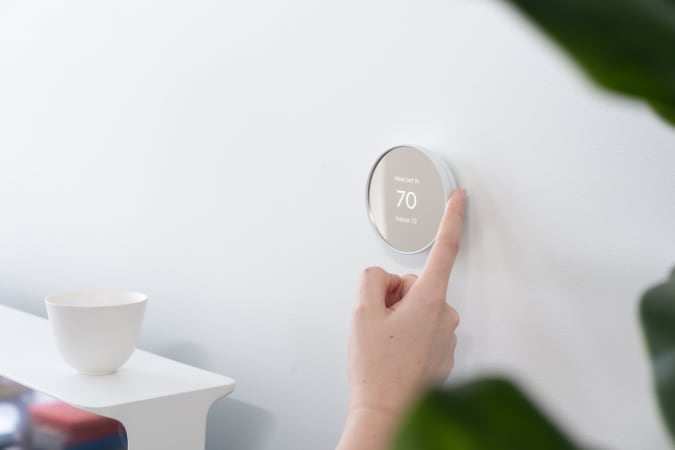
Google's Nest Thermostat is down to $99 right now, and the device with a trim kit will set you back $114. This version has a mirrored display and a touch-sensitive edge, and it can be controlled with the Google Home app. It also has features like Savings Finder, which suggests ways you can tweak your home system to conserve energy.
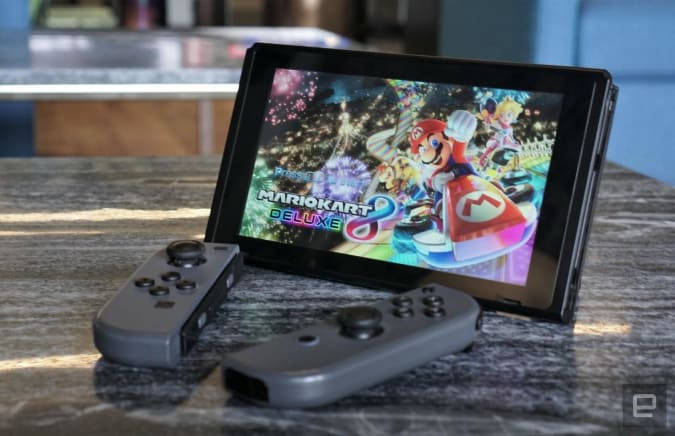
Prime members can get $20 off the Nintendo Switch at Woot right now. While the discount isn't on the OLED model, it's a good sale on a console that rarely sees sales like this. Just make sure to check out Woot's return policy before buying.
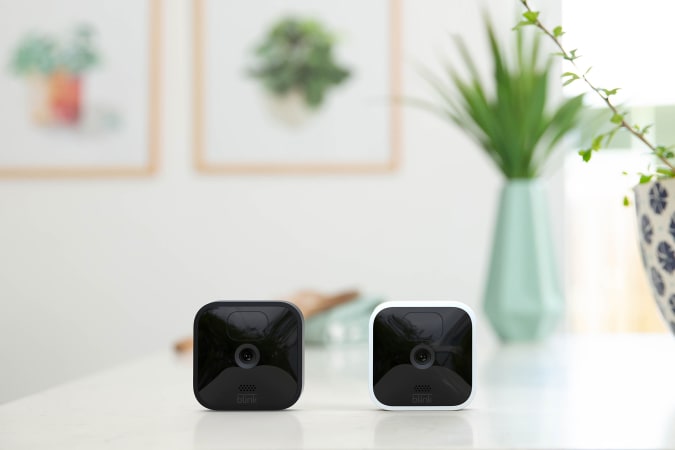
Blink home security cameras are up to 30 percent off, meaning you can get a one-camera Blink Outdoor kit for $70. In addition to being weatherproof, these cams are wireless and support 1080p video, night vision two-way audio and motion alerts. The wired Blink Mini is also on sale and down to only $25.
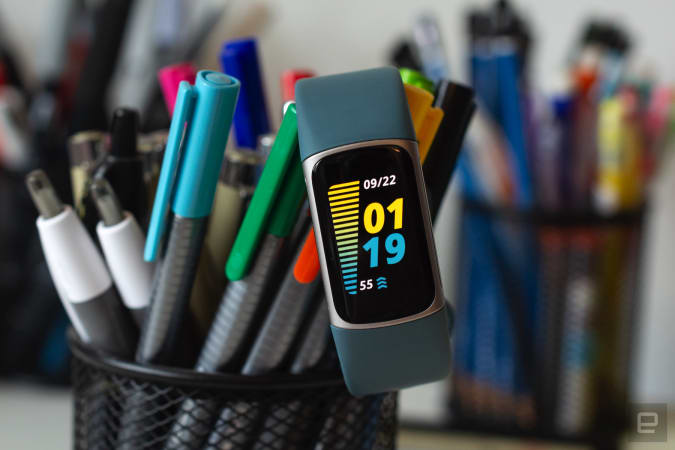
Fitbit's Charge 5 is on sale for a record low of $120 right now. We gave the fitness tracker a score of 82 for its large, full-color display, built-in GPS, standard Fitbit Pay and long battery life. The Fitbit Sense smartwatch is also on sale for $100 less than usual, bringing the price down to $200.
Apple's magnetic battery pack for iPhones is down to $88, which is 11 percent off its normal price. We have seen it cheaper in the past, but this is the best price we've seen since December. The accessory attaches magnetically to the back of the latest iPhones and provides up to 15W of wireless charging.
Woot knocked 34 percent off LG's 65-inch C1 OLED smart TV, bringing it down to $1,650. You're getting the deepest blacks and high contrast that are signature of OLED sets, plus LG's α9 Gen 4 AI processor 4K, Game Optimizer with Auto Low-Latency Mode and HGiG, and the Google Assistant and Amazon Alexa built in. Just make sure to check Woot's return policy before buying.
GameStop has two Star Wars wireless charging pads that are up to 50 percent off right now. If you or someone you love is a super fan, either the Millennium Falcon or The Mandalorian accessories will spice up their charging setup.
It's not on sale, but Dyson's AirWrap Complete in Nickel/Fuchia is available to order once again after being out of stock for along time. The high-tech hair gadget has become quite popular since its launch in 2018 for its versatility. Depending the attachment you choose, the device can curl, straighten or dry hair. It also uses continuously flowing air around the barrel that guides your hair around it, so you don't have to put your fingers near the hottest parts of the gadget.
The on-demand fitness service Alo Moves has an offer few new members that knocks 50 percent off the price of a one-year membership, bringing it down to $99. The platform has dozens of yoga, pilates, barre and strength training classes, along with guided meditations and series that help you master specific skills over the course of longer periods of time.
NordVPN's latest sale knocks the price of a two-year subscription down to just under $96, plus you'll get a free gift on top of it. The prize isn't anything physical, but rather additional subscription time on top of the two-year plan you paid for. Prizes are chosen at random, but after you make your purchase, you'll get either an extra month, and extra year or an extra two years added on to your subscription.
If you own an Amazon Echo, there’s a chance that just reading that word triggered a pavlovian “bimm” in your mind. Or, if you have the wake sound disabled, maybe it’s the timer alarm that makes you twitch if you hear it on a TV show (or someone else’s speaker). Whatever you think of the sounds a smart speaker makes, none of them are accidental. They have all been meticulously designed to pull your attention or provide reassurance, depending on their goal. And the Echo could have sounded very different from how we know it today.
The Echo series, in particular, has been instrumental in defining the smart speaker and the sounds we expect and (to avoid burned pizza) need it to make. Maybe you don’t think about these transient acoustic signposts much – the beeps and boops that bookend Alexa’s verbal responses – and that’s okay, that’s by design too. In fact, Chris Seifert, Senior Design Manager at Amazon wouldn’t mind if you don’t notice these sounds at all.
“One of the things that people often say about sound is you only hear about it when it's wrong,” Seifert told Engadget. “People don't go to a play and say how great the sound was, [it] probably wasn't a good play, if that's what your focus is.”
This is why, when you do say the magic wake word, Alexa responds precisely as it does. That “bimm” might seem like a neat, generic alert sound, but it was purposefully crafted that way. Seifert, the first person Amazon employed to build Echo’s sound design, reckoned that for users to be comfortable with a smart speaker, all the interactions – not just the spoken answers from Alexa – needed to feel natural and in context. ”If we just use skeuomorphism, and just real-world sounds, that's kind of strange, in a purely digital experience,” he said.
Amazon
This is a concept Seifert refers to as “abstract familiarity.” You know it, but you don’t know why you know it. And there’s no better example of this than Alexa’s wake sound, which is based on the ubiquitous and very human “uh-huh.” A sound we can hear dozens of times a day. A sound that lets us know someone is listening without us feeling interrupted.
“We took recordings of people saying that and we analyzed it and looked at the frequency it’s used and how long they typically took and how loud they were in comparison to their actual normal speaking responses,” Seifert said. “And then we recreated that, tried lots of different instruments. Some of them, real-world instruments, some of them completely synthetic, and found this combination of all of the above to create what we call our wake sound.”
If you have an Alexa device nearby, go ahead and try it. That short sound is also curiously practical. You might find that how you respond to it is different from someone else. I personally initially always waited for the sound and then issued my command. Turns out, I might have just been being a little too polite. Seifert informs me it was designed so that you don’t need to wait, you can happily talk right over it. Again, this is not a coincidence.
“I love this topic, because the whole point of the technology is it should work for you, right? Seifert said. “Even you know, during the day, I might say, ‘Alexa, what time is it?’ all in one phrase, right? Because I'm right by the device, just rattle it off. If I'm thinking of a larger question, before I start this long thing, I might actually pause to make sure I'm heard because I'm halfway down the hall. And I don't want to have to repeat the whole thing if it never heard me.”
If you ever wondered what that wake noise could have sounded like in an alternative universe or with some of the real instruments, then you can hear them in the audio embedded below.
Good sound design is an exercise in Occam’s razor: How does one create informative, appropriate feedback in a tone that’s maybe less than a half a second long? We’re all familiar with the dreaded Windows error alert or maybe the satisfying iPhone message swoosh. The terse, off-key alerts ignite frustration while the crisp chime of a task completed just feels right. But is it merely a case of choosing something that sounds positive or negative?
Not if the Echo wake sound is any indication. But sometimes, Seifert and his team have the luxury of a little more sonic breathing room. Like the Echo’s boot-up sound which is a full nine seconds. The audio equivalent of War and Peace in UI sound design terms. But also, the very first sound that any Echo owner is going to hear, so it has to count. Even more so back in 2014 when these things were new.
“We were making a speaker that you spoke to which now we totally take for granted,” Seifert said. “At the time, that was really a novel thing, like you're just going to speak to this, this device, you literally aren't having to touch it in any way, shape or form. So how do we encourage people to feel comfortable doing something that's so new, that that's just not expected?”
Seifert went on to explain how they needed to create expectations for everything to come. They needed a sound that would indicate this screenless device was powering up for the first time and that right at the end of those vital nine seconds Alexa was listening, waiting for you. The result is a pad sound that creates a little bit of suspense before breaking itself apart into three ascending notes that lead us right into Alexa’s first word: Hello.
These three notes also comprise the wake sound (two at wake, the third comes later in something called an “end pointing” tone). Oh, and the incoming call ringtone uses these three notes and adds in two more for fun. In fact, pretty much all of the Echo’s non-verbal signals boil down to just these three notes at some level. Just placed in different orders, pitches and lengths depending on whether they want your attention, already have it or no longer need it.
Elaine Thompson / Associated Press
“From the moment you boot up your device, you hear these three notes. When you speak to it, you hear two before you speak and one at the end, when you get an incoming call, you get a five-note version of that melody.” Seifert explained. “That's all happening before the logic part of the brain kicks in, and you start interpreting what you're hearing and thinking of the meaning of it.” In short, they are playing with our minds and we’re not even mad about it. If you’re still not convinced, maybe you will be when you learn that those three recurring tones are meant to sound like someone saying “Am-a-zon.”
But there’s one small thing that Seifert and his team haven’t been able to crack yet: Personalization. When it comes to our individual devices we can change and choose the sounds they make, but an Echo is often communal, part of the shared home. How does one allow for some level of personalization while maintaining the ubiquitous understanding of an “uh-huh?”
According to Seifert, that’s the next big challenge in smart-speaker land. “The next step is to make all of these experiences such that people can personalize them when it's just them, but that they're still understood by a collective group.” But he also remains tight-lipped, for now, about how that might actually work. “I think we’ll see a lot of the future is going to have more personalization and customization [...] and that's the challenge because prior to Alexa and Echo, most sounds were made, you know, one to one.”
An off-road racing series that uses hydrogen cars is expected to debut in 2024. Extreme H will be a companion championship to Extreme E, an off-road motorsport with electric vehicles that held its first race last year. The two series will hold races in the same locations on the same days using the same format. According to Alejandro Agag, who also founded Formula E, organizers are looking at two options for hydrogen integration: combined racing or full transition.
Development on the Extreme H car is underway and there are plans to have a prototype ready by early 2023. The vehicle will have the same powertrain and chassis that's used in Extreme E. The main difference is that the central power source will be a hydrogen fuel cell instead of a battery.
Extreme H organizers say that the fuel cells will be powered by green hydrogen, which combines water and solar energy. Extreme E uses the same process to power EV batteries, while the paddock runs on a combination of batteries and green hydrogen.
Baidu's Apollo Go robotaxi service should now a regular sight in China's biggest population hubs. Gizmodo and state-owned China Daily report the tech firm has introduced Apollo Go to Shenzhen's Nanshan District, making self-driving taxis available in every 'first-tier' Chinese city following rollouts in six cities that include Beijing, Guangzhou and Shanghai. The launch covers one of the most densely populated regions in southern China (Shenzhen's total population tops 13 million), and offers autonomous rides on the home soil of local tech industry heavyweights like Huawei and Tencent.
The initial robotaxi service is available through Baidu's Apollo Go app at 50 stations between 9AM and 5PM. The initial focus is on "high-frequency" transport arteries, including Shenzhen Talent Park and the surrounding area. Baidu plans to expand coverage to more than 300 stations by the end of 2022.
Apollo Go is far from ubiquitous at this stage. Baidu expects to serve 65 cities by 2025, and won't reach 100 cities until 2030. It also faces growing competition from rivals like AutoX, which also offers self-driving rides to the public. Even so, this represents one of the largest real-world robotaxi deployments. Waymo's One service is only generally available in parts of the Phoenix metropolitan area, while GM's Cruise just recently began offering limited public rides in San Francisco. Baidu is ahead of the curve, and it's just a question of whether or not the company can sustain that advantage.