Apple technicians will decline to fix iPhones that had been reported as stolen or lost, according to MacRumors. The tech giant has reportedly sent out a memo to Apple Stores and authorized providers not to accept a device for repair if they get a notice on their internal MobileGenius or GSX systems that the phone had been marked as missing. Presumably, that means technicians will check a device's IMEI against the GSMA Device Registry when a customer brings it in for repair.
The GSMA registry is a global database where owners can register their devices' IMEI and designate a status for them, such as whether they'd been lost, stolen or were fraudulently obtained. This move expands Apple's existing policy to decline repairs for devices whose owners cannot disable the Find My iPhone feature. It could discourage more people from buying second-hand devices outside of official and authorized sources in case they unknowingly end up with a stolen unit. That said, users could just as easily go to a third-party repair shop that doesn't care where they got their devices from.
Apple's iPhones have become increasingly cost-prohibitive over the years, giving rise to a market for second-hand units. According to a recent Bloomberg report, though, the tech giant is working on a subscription service for the iPhone and other hardware to make regular upgrades more accessible with monthly fees and no huge upfront costs.
Dyson just unveiled its first wearable product and… it’s not what you think it is. The device is called the Dyson Zone, and it's a set of noise-canceling, air-purifying headphones. It comes with a detachable visor for the bottom half of the wearer’s face that looks, to put it mildly, odd. That vizor actually blows filtered air to your nose, mouth and chin, sort of like a portable fan dedicated to the lower portion of your face. Dyson integrated a smaller version of its air filtration system into the earcups, and the idea is that people can protect themselves from pollution while out and about.
The Zone might seem like a response to the pandemic, but Dyson says this device has actually been six years in the making. It’s not borne from a desire to keep out COVID-19 germs, per se, and more as a means to help people breathe less-polluted air wherever they go. The Zone is not only a wearable air filtration system, but it’s also the company’s first audio product. In fact, Dyson describes it as “headphones delivering pure air and pure sound.”
If you’re thinking this thing looks absurd, you’re not alone. My first reaction to seeing the Zone on a mannequin’s head during a virtual briefing was complete and utter amusement. Shortly after, I saw it on an actual person on the demo call and it did not look like they were enjoying themselves. So when Dyson offered to show the contraption to me in person, I knew I had to see and try this thing out for myself. Sadly, I wasn’t allowed to take any photos or video of the Zone, so I’ll do my best to describe the experience.
Dyson
My biggest takeaway after spending some time with a prototype is that, yes, it does look just as ridiculous in real life. But somehow, in spite of its wild appearance, I still really want one. Dyson said it engineered the headset to fit comfortably and distribute weight evenly, by drawing inspiration from horse saddles. There are three cushions on the headband, and the central one is slightly curved like a saddle to distribute the load through “contact areas.”
When I put on the Zone and adjusted its arms to fit my head, it felt balanced and didn’t feel heavy. The earcups themselves were spongy and soft, and once they clamped on there was a noticeable noise canceling effect. That’s because the demo unit had already been set to enable active noise canceling when it’s worn. By clicking through a physical switch on the earcup, I toggled through different sound profiles, and though I occasionally heard some static, the pass-through and complete cancellation modes were effective.
Three ANC modes are available: Isolation, Conversation and Transparency. Isolation provides the highest level of muffling, while Conversation, which kicks in when you dip the visor, turns off the filtration motors to let you better hear who you’re talking to. Transparency allows certain sounds to pass through, so you can be aware of your surroundings.
For an initial foray into the audio space, the Zone is impressively satisfying. A company rep streamed Spotify to the demo unit and I enjoyed the ample bass and clear sound in songs like Doja Cat’s Say So.
Dyson
The highlight of my time with the Zone, though, has got to be when I snapped the magnetic visor on. After I figured out where on the headphones to aim the edges, taking the attachment on and off was easy. Once the mask was connected, the motors in the earcups whirred to life and a gentle, clean-smelling trickle of air started blowing at my lips and nose. It was surprisingly comfortable and, for an obsessive clean freak like me, felt borderline magical. This could not only be the personal air bubble I’ve dreamed of, but also might be a portable air conditioner for the lower half of my face, which would be a blessing in the summer.
Four air purification modes are available as well — low, medium, high and auto. You can toggle these to, say, use the maximum level when you need a higher purification speed if you’re breathing rapidly during a quick jog on the streets. For the Auto mode, the Zone will use onboard accelerometers to determine which setting to choose.
The visor was also designed to diffuse two jets of airflow and at no point during my time with the Dyson Zone did I feel like I was being overwhelmed or pummeled by wind. The earcup’s compressors draw air through dual-layer filters, including negatively charged electrostatic filters to catch particles like allergens and dust. A potassium-enriched carbon layer captures gas pollutants like nitrogen dioxide, sulfur dioxide and ozone.
Earlier versions of the Zone took the form of a snorkel-like mouthpiece connected to a backpack (like oxygen tanks in a scuba diving setup). 500 prototypes later, the company settled on the headset and visor combination, and the mouthpiece can deliver clean air without touching the wearer’s face. “Developing a non-contact solution was a must for Dyson engineers, to avoid the discomfort and irritation often associated with full-contact alternatives,” the company said in a statement.
Dyson
It does leave room for you to insert a face mask, though, and Dyson provides attachments for coverings that would meet FFP2 filtration standards in the box. It also includes a “community face covering attachment” that would form a “sealed solution” so you can mask up while keeping your filtered air clean.
Dyson also made a companion app that shows the air quality of the region you’re in, though at the time of the demo it didn’t offer information that was more location-specific than a city. You couldn’t, for instance, see if your place of work had more air pollutants than the park you’d walk to for lunch.
The company hasn’t shared pricing and availability information for the Zone just yet, other than to say it’s coming this year. I can already see this being a great device for my future travels — whether in an airplane or a commuter train, and at the demo I even went to lay down on a couch to see how comfortable the Zone would be to wear on a redeye flight. It felt surprisingly comfortable for the admittedly brief period of time I was lying down. But of course, there are still things I’d need to know before spending money on the Zone — like battery life and real-world performance. Hopefully, Dyson will share more information on those things soon.
A Dutch foundation has hit Apple with a lawsuit over the App Store’s developer fees, seeking €5.5 billion euro in damages for what it alleges is monopolistic behavior. In a press release, the Dutch Consumer Competition Claims Foundation stated it was filing a "collective claim" for damages, on behalf of any iPhone or iPad owners in the EU who have downloaded a paid app or made purchases within an app.
Suing Apple for its app store policies on behalf of consumers— instead of developers — might seem like an unusual move on the Dutch foundation’s part. Most of the scrutiny over the tech giant’s so-called “Apple tax” has focused on its deleterious impact on the profits of developers. Just this past January, Apple agreed to settle a class-action settlement by US developers for $100 million.
The Consumer Competition Claims Foundation alleges that Apple’s developer fees were passed on to consumers, in the form of higher prices. “App developers are forced to pass on to consumers the increased costs caused by Apple’s monopolistic practices and unfair terms,” wrote the foundation in its press release.
The foundation is asking EU consumers who purchased an app in Apple’s App Store or made an in-app purchase since September 2009 to join its complaint. The lawsuit is set to be filed in the Amsterdam District Court.
This isn’t the first time Apple is taking heat from Dutch authorities. Apple has yet to comply with a January order from Dutch regulators that requires the company to offer third-party payment options for dating app customers. The Netherlands Authority for Consumers and Markets (ACM) is fining Apple €5 million for every week it doesn’t follow through with the order. Dutch regulators have already fined Apple more than €50 million and counting.
But according to TechCrunch, there’s a sign of a potential compromise. Apple is working on an amended proposal of its dating app policy, which will be reviewed by ACM. But even if the two parties reach a consensus, Apple will soon have much larger battles to fight in the EU. The EU is working on finalizing the Digital Markets Act, which will (among a number of other anti-competitive measures) require companies like Apple and Google to allow alternatives for in-app payments.
The Russian developer behind the mystical RPG Loop Hero is telling players to just pirate the game if they are barred from buying it due to sanctions on Russia. In a post on Russian social media platform VK first spotted by Vice, the game’s developer Four Quarters addressed Russian fans who are currently unable to access Steam or Nintendo Switch’s eShop to buy Loop Hero. Both Steam and Nintendo have temporarily stopped accepting Russian payments, effectively barring the entire country from their inventories.
The developers invited players to torrent the game, even going as far as including a link to a torrent of Loop Hero on the Russian torrent site RuTracker in their post. “It is not known when all this will end, therefore, in such difficult times, we can only help everyone to raise the pirate flag (together with vpn) and share the most popular distribution on the rutracker,” wrote Four Quarter, according to an English translation by Google Translate.
Many fans of Loop Hero have asked if there were ways they could directly support or compensate the developers. Due to sanctions on state-owned banks in Russia, many Russian game developers haven’t been able to cash out their earnings. In lieu of sending donations, Four Quarters asked fans to take care of themselves.
“We are very grateful for your support, but the truth is that everything is fine with us, send this support to your family and friends at this difficult time,” wrote Four Quarters.
The ongoing Ukraine invasion has stalled — but not completely stopped — development of the new Loop Hero update. The update is nearly 80 percent finished, according to Four Quarters, and it plans to complete it soon. The developer is working on a new patch, as well as a completely new version of Loop Hero for the Switch. After the update is released on Switch and PC, players can expect a smartphone version of Loop Hero. But how quickly that happens all depends on the outcome of Russia’s invasion of Ukraine, and if and when the US and EU plan to drop sanctions. Between bans by the Russian government and sanctions from the West, Russians have been effectively blocked from Western tech companies and all their offerings.
The electric revolution is no longer limited to daily drivers and eco-commuters. Luxury brands such as Audi, BMW, Mercedes and Porsche have already begun augmenting their lineups with EV variants, while hypercar makers like Lamborghini and Ferrari expect their first electrics to arrive in the next few years. On Tuesday, British automaker Lotus announced that it too has an EV, the 600HP Eletre, with deliveries beginning next year in China, Europe and the UK.
Lotus
Developed under the codename Type 132, the Eletre "takes the heart and soul of the latest Lotus sports car – the Emira – and the revolutionary aero performance of the all-electric Evija hypercar, and reinterprets them as a Hyper-SUV," according to the company's press release. It also accomplishes a number of firsts, the release continued: "first five-door production car, the first model outside sports car segments, the first lifestyle EV, the most ‘connected’ Lotus ever."
The Eletre was developed atop Lotus' 800V Electric Premium Architecture (EPA) platform. That voltage puts it on par with the Audi e-Tron and Hyundai Ioniq 5, meaning that on a 350 kW DC fast charger, drivers will be able to add around 248 miles of range in a 20 minute charge, according to the company. Lotus hasn't specified how big the battery will be beyond that it "has a battery capacity that’s over 100 kWh" but the company is estimating a total range of 373 miles, equivalent to that of the Tesla Model X Long Range Plus. Its dual front and rear motors will reportedly output 600 horsepower producing a top speed of 161 MPH and a sub-3 second 0-60.
Lotus
Ben Payne led development of the Eletre's exterior design, which features "porous" aerodynamics, a low stance atop the platform's long wheelbase with short overhangs at either end. "The Eletre is a progressive all-electric performance vehicle embodying emotion, intelligence and prestige and, as the first of the brand’s lifestyle cars, it sets the standard for what will follow," he said. "We have taken the iconic design language of the Lotus sports car and successfully evolved it into an elegant and exotic Hyper-SUV.”
The interior will offer either the traditional two-buckets-and-a-bench layout or an optional four individual seats, front and rear, beneath a fixed panoramic sunroof. The material choices for the cabin reflect Lotus' net-zero goals, with "durable man-made microfibres on the primary touchpoints, and an advanced wool-blend fabric on the seats," while the hard parts are constructed from little bits of carbon fiber recycled from the edge of weaves rather than being made specially.
Lotus
The infotainment system is a whole production. "Below the instrument panel a blade of light runs across the cabin, sitting in a ribbed channel that widens at each end to create the air vents," Tuesday's announcement read. This light blade serves as part of the vehicle's HMI and changes color to alert occupants of important events like incoming calls.
Below that is a 30mm tall "ribbon of technology." On the driverside, that ribbon serves as the instrument cluster, displaying vehicle and trip information, which can also be displayed via the AR system, which comes standard. On the passenger side, a second ribbon shows relevant contextual information like the nearby points of interest or the current music selection which plays through a KEF Premium 1,380-watt 15-speaker surround sound set-up with Uni-QTM.
Lotus
Between these two ribbons sits a 15.1-inch OLED touchscreen infotainment system that folds away when not in use. While most of the cabin controls are digital and can be used either through the touchscreen or voice interfaces, Lotus deemed some functions vital enough to warrant being mirrored to physical knobs and switches so drivers won't have to dig through submenus to turn on the windshield wipers. Even those digital controls, Lotus boasts that "with three touches of the main screen users can access 95 percent of the car’s functionality."
Lotus
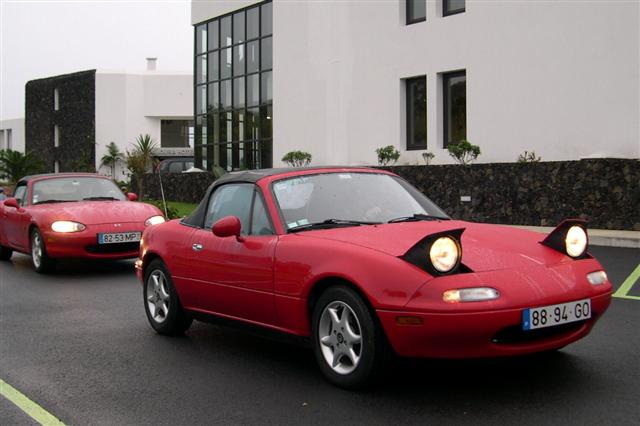
The Eletre is also the first vehicle on the market with a deployable LIDAR array. Used to supplement the driver assist system the unit pops up from the top of the windscreen, top of the rear glass and the front wheel arches — like the headlights from a 1990 MX-5 — when in use and then retracts when finished to maintain aerodynamics.
"ADAS technologies such as LIDAR sensors and cameras will become increasingly common on new cars as we move into a more autonomous era, and to have the world’s first deployable LIDAR system on the Eletre is a signal of the technology vision we have for Lotus," said Maximilian Szwaj, Vice President of Lotus Technology and Managing Director, LTIC. "This car has tech for today, and also for tomorrow, as it’s been developed to accept OTA updates as standard."
Lotus
Manufacturing begins later this year at Lotus' new production plant in Wuhan, China with deliveries beginning in 2023. The model will be available first in China, Europe and the UK. The company hasn't disclosed pricing details yet.
YouTube's copyright claim system has been repeatedly abused for bogus takedown requests, and Bungie has had enough. TorrentFreakreports the game studio has sued 10 anonymous people for allegedly leveling false Digital Millennium Copyright Act (DMCA) claims against a host of Destiny 2 creators on YouTube, and even Bungie itself. The company said the culprits took advantage of a "hole" in YouTube's DMCA security that let anyone claim to represent a rights holder, effectively letting "any person, anywhere" misuse the system to suit their own ends.
According to Bungie, the perpetrators created a Gmail account in mid-March that was intended to mimic the developer's copyright partner CSC. They then issued DMCA takedown notices while falsely claiming to represent Bungie, and even tried to fool creators with another account that insisted the first was fraudulent. YouTube didn't notice the fake credentials and slapped video producers with copyright strikes, even forcing users to remove videos if they wanted to avoid bans.
YouTube removed the strikes, suspended the Gmail accounts and otherwise let creators recover, but not before Bungie struggled with what it called a "circular loop" of support. The firm said it only broke the cycle by having its Global Finance Director email key Google personnel, and Google still "would not share" info to identify the fraudsters. Bungie hoped a DMCA subpoena and other measures would help identify the attackers and punish them, including damages that could reach $150,000 for each false takedown notice.
We've asked Google for comment. The lawsuit won't force YouTube to reform its DMCA system, but Bungie is clearly hoping this will add some pressure. As it is, the company believes the fake takedown requests did lasting damage by creating a "chilling effect" for Destiny's YouTube stars (who were afraid to post new videos) and damaging the community at large.
If a startup from New Jersey has its way, the next Ray Kroc will be a robot. In the last week, a company called RoboBurgerinstalled an autonomous burger chef in Jersey City’s Newport Centre Mall. Over on its website, RoboBurger breathlessly describes its vending machine as the “biggest innovation in hot food vending since the invention of the microwave.”
Inside of a frame that occupies about 12 square feet, the RoboBurger features everything it needs to make a complete – if somewhat visually unappealing – burger in approximately six minutes. And while there may not be any humans involved, the machine uses the same five-step cooking process employed by many quick-service restaurants. An automated griddle grills the patty at the same time the machine toasts the bun. When you order your burger, you can decide whether you want ketchup, mustard and cheese on it. There’s even a built-in cleaning system that is up to the standards of the National Sanitary Foundation. Oh, and you can pay for your burger with both Apple Pay and Google Pay. Handy that.
And while we can’t speak to the taste of the burger, RoboBurger claims it only uses the best ingredients possible. The patty is made from grass-fed Angus beef that isn’t subjected to antibiotics. As for the bun, it’s a potato one that comes from a local bakery. If you can’t make it to New Jersey for a taste test, fret not. RoboBurger says it plans to bring its automated burger chef to airports, malls, colleges and other similar venues across the country in the coming weeks and months.
A judge has ordered Activision Blizzard to pay $18 million to settle a federal lawsuit accusing the company of fostering a sexist, discriminatory workplace. The US Equal Employment Opportunity Commission filed the suit in September and that same afternoon, Activision Blizzard agreed to set up an $18 million fund for employees who experienced sexual harassment and gender-based discrimination at the studio. Today's ruling approves this plan.
The fund will be distributed among people who worked at Activision Blizzard from September 1st, 2016, to today. Eligible employees and former employees have to opt-in to receive a payout, and they can submit claims relating to sexual harassment, pregnancy discrimination and retaliation.
Today's ruling isn't the end of the legal issues for Activision Blizzard, and it may even complicate efforts still underway by other agencies. California's Department of Fair Employment and Housing first sued the studio in July 2021 following a two-year investigation into allegations that sexism, gender-based harassment and a "frat boy culture" pervaded the Activision Blizzard offices. That state-level lawsuit is still in progress, while the $18 million ruling today applies only to the federal case filed by the EEOC.
Anyone who signs on as a claimant in the EEOC suit will not be eligible to participate in the state's case, at least when it comes to harassment, retaliation or pregnancy discrimination. If they have additional claims, such as pay inequities, they can bring those to the DFEH lawsuit.
The DFEH and EEOC have been battling for dominance with their lawsuits against Activision Blizzard. Lawyers for the California agency have expressed concern that a federal settlement might prevent them from pursuing additional damages at a state level. The DFEH case is scheduled to go to trial in February 2023.
"The DFEH will continue to vigorously prosecute its action against Activision in California state court,” spokesperson Fahizah Alim said last week.
Additionally, the DFEH, activists and Activision Blizzard employees have argued the $18 million figure is far too low to properly compensate all potential claimants, which could add up to hundreds of people. Communications Workers of America, the labor union backing Activision Blizzard employees during this time, called the sum "woefully inadequate" in a letter to the EEOC in October.
"This would provide the maximum settlement for only 60 workers," the CWA letter reads. "If any significant number of workers received the maximum under federal law, there would be little available for many other workers adversely affected. We are concerned about how the EEOC got to that number and how it believes that number will be fairly distributed. Please explain."
California's DFEH fought against a similar ruling in the case of Riot Games. Following a 2018 class-action lawsuit claiming rampant sexual harassment and discrimination at the studio, Riot was originally ordered to pay $10 million to claimants. The DFEH blocked that payout, arguing it was much too small, and the amount was eventually increased to $100 million.
A spokesperson for the EEOC provided the following statement to Engadget following today's federal ruling: "We are pleased that the judge has indicated her intent to sign the consent decree. The consent decree not only provides monetary relief to potential claimants that were impacted by sexual harassment, pregnancy discrimination and related retaliation at Activision Blizzard throughout the United States, but also puts in place significant injunctive relief at Activision Blizzard to prevent and address discrimination, harassment, and retaliation."
The peaceful, zen-like puzzle gameplay of Unpacking (the real game, that is) will soon be available to the PlayStation crowd. As Polygonsays, Witch Beam and Humble Games have announced that Unpacking will be available on PS4 and PS5 this spring. It's launching alongside physical releases from Limited Run Games for the PS4, PS5 and Switch versions.
The game is already available in digital form on Macs, Switch, Windows PCs and Xbox consoles.
Unpacking was considered one of the stand-out games of 2021 precisely because it served as an antidote to the chaos and noise of the real world (and, we'd add, many other video games). All you do is unpack items as you settle into a new home — and, ultimately, a new life. The audio and visuals are relaxing by themselves, but the mechanics also encourage patience and curiosity. Throw in a subtle, near-wordless approach to storytelling and you might return just to give yourself a break.
Digital thieves just pulled off another major crypto heist. Motherboard has learned hackers stole 173,600 Ethereum (about $591.2 million) from the Ronin blockchain that powers Axie Infinity, a popular "play to earn" game where players can receive crypto in exchange for playing and paying some starting costs. The perpetrators reportedly exploited a backdoor in a Remote Procedure Call node from Axie creator Sky Mavis to get a signature, letting them "forge fake withdrawals" using compromised private keys.
Sky blamed the flaw on a holdover from the fall. The firm asked for help from the Axie DAO (decentralized autonomous organization) to handle free transactions and help cope with an "immense user load" in November. The move let Sky sign transactions on the DAO's behalf until December, but the access wasn't revoked after that point.
The company has responded by 'pausing' the Ronin bridge to close off avenues of attack, and has temporarily disabled the Katana decentralized exchange. It hoped to minimize near-term damage by increasing the threshold necessary for validation, but also said it was in the middle of a node migration that would leave the old system behind. Sky intends to track the stolen Ethereum with help from Chainalysis, and is contacting security teams at "major" crypto exchanges.
The theft compounds existing worries for Sky. Motherboard notes Axie Infinity has suffered from plummeting values for its NFTs and tokens in recent months, prompting reforms in a bid to keep the game afloat. An incident like could easily make things worse by not only starving the game of much-needed funds, but rattling the confidence of players.