Instagram is experimenting with a new Templates feature for Reels that will let users copy video formats from other Reels videos, reportedBusiness Insider. Templates are already an incredibly popular feature we’ve seen on TikTok, and are often the basis for viral challenges and trends on the platform. The Templates feature on Reels is still in beta testing mode, with only a small number of influencers able to access it.
Meta confirmed the news to TechCrunch. “We are always working on new ways to make Reels simpler to create. We are testing the ability for you to make a reel using an existing Template from another reel,” a Meta spokesperson toldTechCrunch in an email.
As influencer Josephine Hill describes in the tweet below, Templates gives users the option to select “Use as template” on any Reels video in order to replace video clips with your own. While the current version of Templates on Reels gives users a number of preset options, the new feature appears to give the option of using any Reels video as a template.
Instagram REELS announced a new feature! “Use as template” allows user to replace the clips with your own and it will match the time stamps of the template reel. Let me know what you think of this feature. Does this make you want to create more reels? pic.twitter.com/rLMJAX89jG
Instagram has rolled out many TikTok-like features on Reels in the past in an effort to keep up with the reigning Gen Z app of choice. Some recent examples include a Remix feature, the ability to collaborate on videos, new music features and visual replies. Given that Instagram head Adam Mosseri last year said the platform would double-down on video in 2022, we’ll likely see even more new innovations in the months to follow.
Your future electric car might benefit from some schoolwork. The Energy Department has teamed with GM and MathWorks to launch an EcoCAR Electric Vehicle Challenge that asks student groups at 15 North American universities to develop more efficient EV technology. The will have students tinker with a Cadillac Lyriq over four years as they develop automation, connectivity and propulsion tech, and they can will win annual prizes based on their progress.
The teams are also expected to use a mix of connected car and sensor tech to enable sharing EV battery power with homes, "recreational uses" (think camping) and the electrical grid. GM is supplying the cars as part of a broader $6 million investment in the challenge.
EcoCAR kicks off this fall. The American universities are spread across the country and include major institutions like Ohio State University, the University of California Riverside and Virginia Tech. Canada's McMaster University and the University of Waterloo (BlackBerry's home turf) will also take part.
The challenge won't guarantee longer-range EVs. However, it does reflect the Biden administration's determination to make electric transportation viable, including support for American automakers, setting EV adoption targets and improving access to charging stations. If all goes well, EcoCAR might help ease the transition away from gas-powered cars.
Sony Interactive Entertainment has revealed its rollout plan for the overhauled PlayStation Plus service. It's targeting a launch date of May 23rd in select markets in Asia before expanding to Japan on June 1st. The new tiers are then expected to arrive in the Americas on June 13th, followed by Europe on June 22nd.
In addition, SIE is opening up access to cloud streaming in Bulgaria, Croatia, Czech Republic, Greece, Hungary, Malta, Poland, Republic of Cyprus, Romania, Slovakia and Slovenia. Folks in those countries and the 19 others where PlayStation Now is currently available will be able to sign up for the Premium tier of PS Plus at launch.
Sony announced the long-rumored PS Plus restructuring in March. The current version of PS Plus will soon be the lowest tier of the updated service. As is more or less the case now, PS Plus Essential will offer online multiplayer access, cloud storage, PSN Store discounts and two claimable games per month (down from the usual three).
The middle tier is PlayStation Plus Extra, which adds a library of 400 PS4 and PS5 games that players can download to their console. At the outset, those are expected to include the likes of Death Stranding, God of War, Marvel’s Spider-Man, Marvel’s Spider-Man: Miles Morales, Mortal Kombat 11 and PS5 exclusive Returnal.
At the highest end is PlayStation Plus Premium, which includes access to another 340 games from PlayStation, PS2 and PSP titles that you can stream or download. PS3 games will be available through cloud streaming. Premium will also offer limited-time game trials and cloud gaming on PC.
In countries where cloud streaming isn't available yet, Sony will offer a Premium tier replacement called PS Plus Deluxe. This will be a bit less expensive than Premium and include downloadable PS1, PS2 and PSP games as well as everything from the Essential and Extra tiers.
US pricing starts at $10 per month, $25 per quarter or $60 per year for PS Plus Essential. Extra costs $15 per month, $40 per quarter or $100 annually. As for Premium, you'll need to pay $18 per month, $50 per quarter or $120 for a year of access. PlayStation Now will be folded into the new PS Plus, and subscribers of that service will be moved to the Premium tier.
Unlike with Microsoft's Game Pass, none of the tiers will offer access to first-party PlayStation games on their release day. However, a year of access to PS Plus Premium costs $60 less than 12 months of Xbox Game Pass Ultimate at the standard price.
Many publishers and developers are very protective of their intellectual property (what's up, Nintendo?). But Paradox Interactive and World of Darkness are taking things in a slightly different direction. As part of the Unbound project, they'll let anyone make a Vampire: The Masquerade fan game as long as they abide by certain rules.
Developers need to get their games approved by Paradox and can only offer them through the Itch.io storefront. They can charge for their creations if they want, but they'll need to give Paradox a 33 percent cut of revenue.
The developers will own all game assets that don't use World of Darkness intellectual property and can sell them in art books, soundtracks and so on. They can't run crowdfunding campaigns for their project, however, and aren't able to use science fiction, steampunk or cyberpunk settings. Beyond those (and a few other restrictions), developers can let their imaginations run wild.
The Unbound program stems from a successful game jam that took place in 2021. “Following the Vampire Jam last year, we realized how passionate our community is about creating Vampire: The Masquerade games," World of Darkness community developer Martyna Zych said in a statement. "While we could only award one grand prize to Heartless Lullaby, we knew we had to create a platform that empowered our community to work on the projects they love while giving them the support they need to be successful.”
Developers created more than 80 games during Vampire Jam and six of those are available through Unbound at the outset. They include survival horror game Descent, puzzle project The Chantry Trialsand strategic card title The Game of Elders. There's a first-person shooter called The Autumn People. You can also check out point-and-click adventure Prodigalas well as 4x strategy and roleplaying game Praxis. All are free to download.
It's neat to see a publisher and transmedia brand approve fan-made games. The fact that all of those six titles are in different genres is fascinating as well, since it shows the breadth of what developers can do when they have the freedom to be creative with a notable IP.
As it happens, these titles might be the only way for fans to play a new Vampire: The Masquerade game for a while. Last year, Paradox parted ways with Vampire: The Masquerade - Bloodlines 2 studio Hardsuit Labs and delayed the game indefinitely. The publisher said in November it was happy with the progress made by the game's new, unnamed developer, but the release window remains unknown.
Twitter might soon take a page from Instagram's defunct Threads app — not to mention other messaging apps you used in the past two decades. As The Vergereports, code sleuth Jane Manchun Wong has discovered that Twitter is developing a "Vibe" feature that would let you set status updates akin to Threads and the many, many IM clients at the turn of the century. You could set status at the profile level, but you could also attach them to specific tweets to indicate what you were doing at a specific moment.
Wong's examples only showed generic presets like eating, listening to music and shopping. It's not clear if you have the option of writing your own updates, or if third-party apps could hook into the feature (say, for music and videos).
The concept of a Twitter status update isn't completely new, either. The social network was testing another form of status update back in 2018, although it didn't work the same way and never reached everyday users.
We've asked Twitter for comment. There are no guarantees Vibe will reach the broader public or even enter testing. We wouldn't be surprised if it does, however. Twitter has long had messaging features that could benefit from status updates (such as letting others know you're busy), and it's increasingly relying on live features like Spaces audio sessions where you might want to share what you're doing.
Twitter is working on “Set a status” in Tweet Composer, codenamed “Vibe”
While Motorola might not have the same clout in the smartphone space as Apple and Samsung, the company holds an outsized influence on the US market. By the numbers, Motorola is the third most popular smartphone maker overall, the second largest maker of prepaid phones and the biggest seller of unlocked handsets.
The problem is that, as part of the company’s attempt to gobble up more of the market following the demise of LG Mobile, Motorola has been churning out too many phones too quickly while offering little in the way of long-term support. And even though the Moto G family of phones has earned a reputation for providing great value in recent years, that legacy is starting to deteriorate as things like camera quality and support for basic features like NFC have stagnated. In short, Motorola needs to slow down and shape up.
Just look at the dizzying number of Moto G handsets that have been released in the last two years. At CES 2021, Motorola launched four new phones including the second-gen Moto G Stylus, the revived Moto G Play, the Moto G Power and the Moto One 5G Ace – the latter of which is merely a rebranded version of the Moto G 5G from 2020. Then in the summer, Motorola released another Moto G Stylus (this time with 5G) followed by the Moto G Pure last fall.
At the pace Motorola has been releasing new G-series phones, it's become incredibly difficult to keep track of them all and the minor differences between them.
Chris Velazco/Engadget
More recently in February, Moto decided to update the G family with yet another version of Moto G Stylus, and just this week Motorola returned to announce two more additions in the Moto G Stylus 5G and the Moto G 5G. And this isn’t counting stuff like the Moto G Power 2022, which was actually released in November 2021. At this point, if you’re confused by the vomit of new Moto G phones, just rest assured you’re not the only one. It’s like some twisted smartphone version of Cap'n Crunch’s Oops! All Berries, except that instead of tasty fruit-flavored treats, it's an endless string of non-descript plastic handsets.
Meanwhile, some of Motorola’s most interesting phones like the 2020 Razr have been languishing waiting for an update, only getting a half-hearted refresh that added a slightly faster chip and support for 5G. Quite often, it feels like Moto has been releasing budget phones without 5G, just so the company can push out a “new” model six months later. Even then, it’s typically just sub-6GHz 5G, which only serves to increase customer confusion regarding current cellular standards. And while Moto has been idling, Samsung has dominated the foldable phone market with devices like the Galaxy Z Flip 3, which is not only cheaper than the Razr, it has a better screen and cameras too.
When Motorola made its first flagship phone in years with the 2020 Edge+, our lasting impression was that it was merely OK.
Chris Velazco/Engadget
Another big issue with Motorola’s recent phones is paltry software support. Last year, Samsung announced that it would provide four years of security updates for a wide range of Galaxy devices, including older phones and tablets such as the S10 and Tab S6. Then, just a couple of months ago, Samsung bolstered its software support again by giving four generations of Android upgrades to all of its 2021 and 2022 flagship phones. And over in Pixel land, Google also stepped up its efforts by promising five years of security updates for the Pixel 6 (though you’ll still only get three years of OS upgrades). And all of this still pales in comparison to iPhones, with Apple providing at least five years of OS and security updates for its handsets.
Then we come to Motorola, which even on its most recent flagship – the 2022 Edge+ – is only offering two major OS updates and three years of bi-monthly security patches. And if you move down to its more affordable handsets, things get even worse. The newly announced Moto G Stylus 5G and Moto G 5G, for instance, will only get a single OS upgrade. This isn’t a one-off situation either, because during a briefing about those phones, a Motorola representative confirmed that the general policy for the entire G family typically only covers one major Android OS update.
Mewanwhile, this year's Edge+ fell far short of living up to its $1,000 price.
Sam Rutherford/Engadget
Even worse is that, during the same briefing, a Motorola exec seemed to be making an excuse for the poor update policy by recounting a conversation they had with a car service driver. The driver owned a Moto G device and lamented that their device seemed like it was constantly prompting them to install some sort of update. Now I can certainly empathize, sometimes it feels like everything you own constantly needs to be patched. But that’s not a good reason to drop support for a gadget after a year or two. If an owner doesn’t want to install an update for whatever reason, that’s their choice, but they should at least have the option.
Perhaps my biggest concern about Motorola’s direction is a general lack of innovation and support for basic features. Take for example the Moto G Stylus, which doesn’t have NFC. I mean come on, it’s 2022. Basically every place supports some sort of contactless payment nowadays, which requires NFC. But if you buy a budget Moto phone, too bad. And it’s not just the Moto G Stylus, because the Moto G 5G announced this week doesn’t have NFC either. The company also routinely fails to equip its handsets with substantial water resistance, often doing just enough to protect against splashes but falling far short of the IP67 or IP68 ratings you get on competing devices.
Additionally, when I reviewed the Moto Edge+ back in March, I was kind of appalled with its cameras. This is a $1,000 phone that produces low-light photos that look like they come from a $500 phone at best. I even noted in my review that it seems like Motorola is going backwards, delivering a device with a lower-resolution main camera than its predecessor, while lacking a dedicated telephoto lens.
Sam Rutherford/Engadget
Motorola tells me that it puts macro cams in its phones instead because of demand from customers who like taking close-ups. And that may be true. But I also know that it costs more to put telephoto cameras on phones, and I have a sneaking suspicion that may be the bigger driving force. While Apple, Google and Samsung are making large strides when it comes to low-light performance and computational photography, what I’ve seen from Moto’s latest pseudo-flagship is second-tier at best.
The sad thing is that it doesn’t have to be like this. There are a number of things I still appreciate about Moto devices. They have near stock builds of Android and Moto Action gestures like double chopping to turn on a phone’s flashlight are often quite handy. But those small perks are easily overshadowed by the concerning trend of too many rehashes while returning too little value.
However, it’s not too late to reverse all this. Sure, it will take some strong leadership and willpower for the company to forgo short-term sales in order to focus on long-term growth and development. Improving mobile photography isn’t easy. Just ask OnePlus’ Pete Lau, who has been very vocal about his desire to bring the photography on the company’s phones up to speed. But unless Motorola wants to become the next HTC, it needs to reduce the churn and concentrate on releasing a smaller number of higher-quality devices with the software support its customers deserve.
Even for someone like me who likes working from home, the pandemic has made things a challenge – especially in my small 1,000 square-foot two-bedroom apartment. You see, when my wife and I welcomed our first child last year, dedicated working spaces became scarce. So I addressed the situation the best way I know how: with tech. In this case an ASUS ROG Strix XG17AHP portable monitor.
Before my son arrived, we actually had a pretty good setup going. I used our second bedroom as an office and very occasional guest room. And when all the office buildings closed in early 2019 due to Covid-19, we managed to find room for another desk in our bedroom. It wasn’t ideal because, even though I’m a gadget nerd, we try to keep the bedroom free of unnecessary screens and distractions. But we each had our own dedicated working space with dual monitors, and enough room between our desks that we could jump on video calls without disturbing one another. It was awkward but acceptable.
The Asus ROG Strix XG17AHP included stand means you can position it above your laptop's display, which does a ton to help prevent neck strain.
Note: For the photos, I swapped my 13-inch MacBook Pro work laptop in for my wife's machine for privacy.
Sam Rutherford/Engadget
But then our little bundle of joy threw a drool-covered wrench into those plans. Now just to be clear, I don’t begrudge him one bit. Parents often have to make sacrifices for kids, and more often than not, we’re happy to do so. But I think it’s fair to say that an office/nursery just isn’t a good combo. So after my son outgrew his bassinet and stopped sleeping in our room, I had to move my gear out (well most of it anyway) so he could have a real bedroom of his own.
What made this a bit more challenging is that my main computer at home is a desktop. I’ve always been a big PC person, and I love the speed and flexibility you get with a custom-built rig. (Side note: With work from home becoming a more permanent thing, I feel like there are a lot of people that would benefit from switching to a desktop. Assuming you have the space for it, of course). The downside of this is that I’m pretty limited in where I could put my PC. Big shock I know, but a desktop sort of necessitates having a desk. Thankfully, my wife graciously offered to let me use the one in our bedroom (which I honestly can’t appreciate enough), while she moved her workspace out to our dining table in the living room.
While the Asus ROG Strix XG17AHP does look seem of puny compared to regular monitors, its much easier to pack up and move when you need that space for other stuff.
Sam Rutherford/Engadget
At this point, you’re probably envisioning a host of issues. Since we eat dinner there, setting up dual monitors isn’t really an option. This meant my wife was completely reliant on her 13-inch MacBook Pro, which doesn’t offer a lot of screen space and messes with her posture. Looking down at a laptop screen for eight (or more) hours a day is a surefire recipe for chronic neck and back pain.
That’s where the ASUS’ ROG Strix XG17AHP portable monitor comes in. At first glance, it seems like overkill for general productivity, and it is. It has a 240Hz refresh rate and support for AMD FreeSync, which are great for gaming but don’t do much when you’re looking at spreadsheets. There’s even a built-in 7,800 mAh battery so you can use it completely untethered for four to five hours. And with a price of $600, the ROG Strix XG17AHP is two to three times more expensive than a lot of competitors, particularly the traditional business-oriented ones.
Sam Rutherford/Engadget
But honestly, I feel like that money has been well spent. My personal philosophy is that for something you’re going to use a lot, it’s better to spend a little extra than pinch pennies and end up with an unsatisfactory device. Unlike most of its rivals, the ROG Strix XG17AHP comes with a stand, and I’m not talking about a simple kickstand. It’s a full-on detachable tripod, which means you can position the screen so it sits above your laptop’s display, instead of off to the side. No need to crane your neck. Important apps live up top on the portable monitor, while less critical stuff like Slack live down below.
The ROG Strix XG17AHP also measures 17.3-inches across, which makes it one of the largest portable monitors you can buy. Most enterprise-focused alternatives top out at 14 or 15 inches, and while we probably would have gone even larger if we could, there aren’t really any 19-inch or larger portable monitors that offer the same level of specs and features. Sure, the monitor’s brightness of 300 nits could be better, but its matte coating makes it easy to look at all day – even in sunny rooms with lots of reflections.
The ROG logo even lights up, if you're into that sort of thing.
Sam Rutherford/Engadget
Meanwhile, thanks to support for video and power delivery over USB-C, setting up the monitor only requires a single cable. This makes it super easy to break down and pack away when friends or family come over. And during the week when we’re too lazy to do that, the whole kit is slim enough we can just push it to the side and still have plenty of room for food.
I also want to give ASUS props for including a bunch of useful accessories. The monitor comes with a carrying bag and a foldable screen protector that doubles as a kickstand, along with a USB-C cable, a USB-C to USB-A adapter, a power brick, and even an HDMI to micro HDMI cable – in case your PC doesn’t support video over USB. My only gripe is that the locking mechanism for its height adjustment isn’t super secure. So if I press hard, even when it’s locked, the monitor still moves up and down.
One of the best things about the Asus ROG Strix XG17AHP are all the included accessories.
Sam Rutherford/Engadget
But this one demerit doesn’t really detract from all its positives. That’s because while the ROG Strix XG17AHP isn’t as good as a regular monitor, it’s way more than simply adequate. It’s flexible and it fits in my life (and on my table) in a way that a regular desktop display can’t. It even has a lot of potential as a handy companion for my Switch while traveling. Though due to the pandemic, I haven’t had a chance to test that out yet. And while my wife and I are thinking about getting a bigger place, with the housing market the way it is, moving isn’t in our immediate future. So until we upgrade to a larger home, ASUS’ portable gaming monitor is filling an important role when it comes to making a cramped work from home situation a lot more tolerable.
Mother's Day is quickly approaching and if you're looking to get mom a piece of new tech, you can do so right now while saving some money in the process. Apple's latest AirPods remain on sale for $150 and you can pick up the Apple Watch Series 7 for as low as $330, depending on the color you choose. A few robot vacuums have been discounted, including the already affordable Roomba 694, plus Ninja's 10-in-1 multicooker is still $70 off and down to $130. Here are the best tech deals from this week that you can still get today.
Roomba 694
Valentina Palladino / Engadget
iRobot's affordable Roomba 694 is still on sale for $180 right now, which is a record low. This is one of our favorite budget-friendly robot vacuums thanks to its easy to use mobile app, good cleaning power and sleek design.
Apple's newest earbuds are close to their record-low price right now. You can grab the third-gen AirPods for $150, or $30 off their normal rate. We gave them a score of 88 for their improved design, much better audio quality and longer battery life.
Apple's AirPods Pro are back on sale for $174, which is 30 percent off their normal price. We gave them a score of 87 for their improved fit, good audio quality and solid ANC.
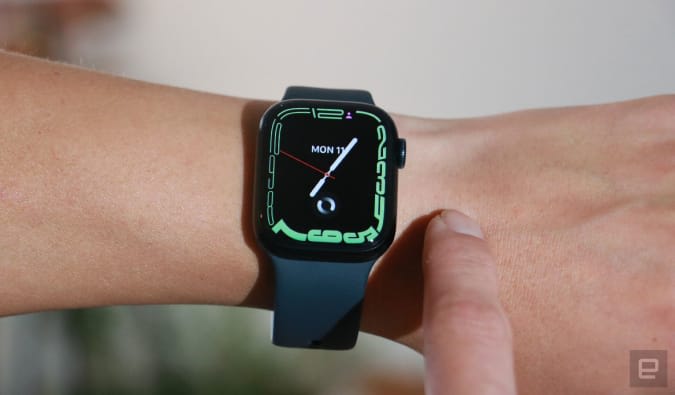
Many color options of the 41mm Apple Watch Series 7 are down to $330, or $70 off their normal price. We gave the wearable a score of 90 for its bigger screen, faster charging and handy watchOS 8 features.
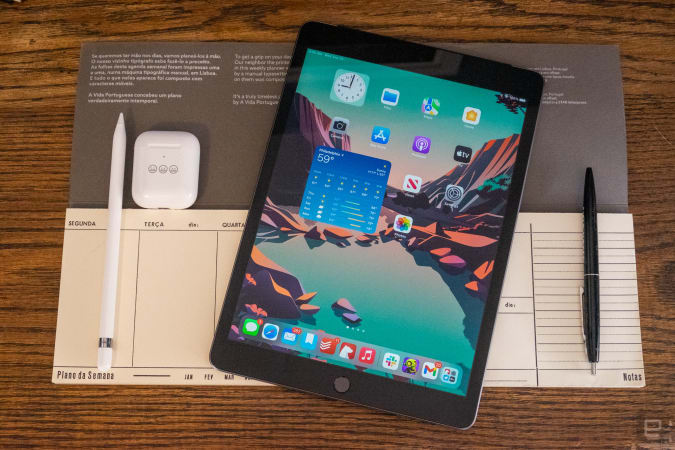
Both Amazon and Walmart have the entry-level iPad for $309 right now, or $20 off its normal price. We gave the slab a score of 86 for its improved performance, excellent battery life and Center Stage-capable front cameras.
A couple of colors of the AirPods Max are $100 off and down to $450. We gave the premium headphones a score of 84 for their excellent sound quality, solid ANC and reliable onboard controls.
The Roomba j7+ robo-vac and the Roomba s9+ are both $200 off right now and down to $599 and $799, respectively. These are both advanced machines from iRobot, with the j7+ sporting a pet poop detection feature, while the s9+ has the strongest suction power of all of the company's robot vacuums. Both also come with clean bases, so you won't have to empty their dustbins manually after each cleaning job.
A bunch of Eero 6 router packs are on sale right now, including a three-pack of the Eero 6 Pro, which is $120 off and down to $479. You save spend a bit less money and opt for the two-pack, which is $80 off and down to $319. These are the latest WiFi 6 systems from the Amazon-owned brand, and many of the come with built-in Zigbee smart home hubs.
The Fitbit Charge 5 tracker is down to $130, which is only $10 more than its record-low price. We gave the device a score of 82 for its accurate onboard GPS, slim design, standard Fitbit Pay and long battery life.
Ninja's 10-in-1 multicooker is $70 off and down to $130, which is close to its all-time-low price. This is a solid alternative to an Instant Pot as it has a bunch of cooking modes including pressure cook, slow cook, steam, yogurt and even air fry.
A handful of Google smart home devices are on sale right now, including the Nest Video Doorbell Battery, which is $30 off and down to $150. This gadget will let you keep an eye on what's going on outside your door from your phone, and there are no wires to fuss with when you install it. You can also pick up the Nest Cam Indoor and Outdoor for less, coming in at $80 and $150, respectively.
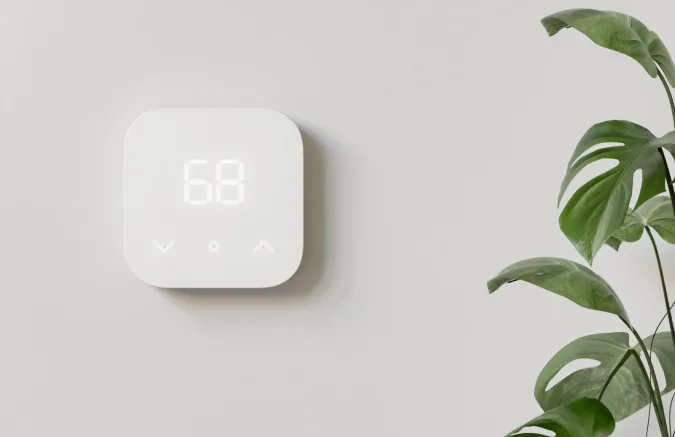
Amazon's smart thermostat is back on sale for $48, which is 20 percent off its regular price. The Energy Star-certified device uses Honeywell's Home Thermostat tech to help you save on energy costs — and, like other Amazon devices, it works with Alexa so you can use voice commands to control the temperature in your home.
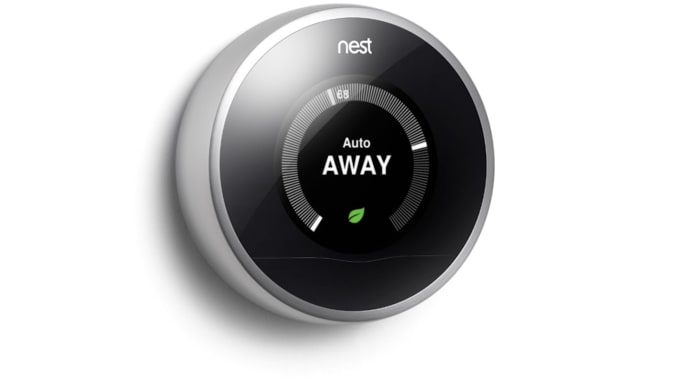
Both Google's standard Nest Thermostat and the more advanced Learning model remain discounted right now. You can pick up the regular version for $100, while the Learning Thermostat is still on sale for $200. They share most of the same features, but you'll get a slicker design, a higher-res display and the ability to connect with Nest Temperature Sensors with the Learning model.
NordVPN's latest deal lets you save 51 percent off the price of a two-year subscription, so you'll pay only $96 for that time period. After the first two years, the price goes up to $99 per year. NordVPN is one of our favorites thanks to its speed, its no-logs policy, the thousands of servers it has to choose from and that one account supports up to six connected devices
This midrange Bluetooth speaker is $80 off and down to $300, which is the cheapest we've seen it. It earned a spot in our portable Bluetooth speaker guide for its dynamic yet balanced sound quality, IP67-rated design and relatively compact size.
This massive OLED TV from Sony is $500 less than usual, bringing it down to $5,500. It's the 2021 model and it supports XR Motion Clarity, the Google TV interface, voice commands with Alexa, HDMI 2.1 and more.
Although the sequel to The Legend of Zelda: Breath of the Wild has slipped to 2023, Nintendo still has a bunch of major exclusives lined up for Switch this year. We now know exactly when another one of those will arrive, as Splatoon 3 has a release date of September 9th.
A new gameplay clip shows off a full round of the classic Turf War mode. It looks as slick, chaotic and colorful as ever. Two teams for four are tasked with covering as much of an arena in their squad’s paint color as possible. You can temporarily take out a rival Inkling or Octoling by splatting them.
Players will have a variety of weapons and special abilities in their tool belt. At one point, a player jumps into a mech that has a high rate of fire.
Splatoon 3 will also have a new single-player campaign as well as the co-op Salmon Run mode. The latest game in the series will cost $60.
Alongside the release date announcement, Nintendo revealed a new perk for Switch Online Expansion Pack subscribers. Splatoon 2 players can now snag the Octo Expansion DLC from 2018 at no extra cost. Expansion Pack members also just got access to three more Sega Genesis games: Sonic the Hedgehog Spinball, Space Harrier II and Shining Force II.
Does your lone WiFi router not quite cover your home? This might be a good time to upgrade. Amazon is running a sale on Eero mesh routers that includes particularly steep discounts for higher-end Eero Pro models. The Eero Pro 6 represents one of the better values, and is down to $319 (20 percent off) for a two-pack and $479 (also 20 percent off) for a three-pack. And if you're happy with WiFi 5, the earlier Eero Pro 6 is down to a record-low $336, or 25 percent off — it'll even dip to $314 if you have Amazon Prime.
The allure of Eero Pro routers is simple: they provide a compact, straightforward way to blanket your home in wireless networking with more coverage than you'd get from regular Eero models — a three-pack will cover an enormous 6,000 square feet. They're unsurprisingly well-suited to anyone steeped in Amazon's ecosystem, with streamlined setup (if you have an Amazon account), Alexa voice control and a Zigbee hub for compatible smart home devices.
These might not be the best choices if you're more interested in Apple or Google's smart home frameworks. However, future-proofing is another concern. Amazon recently introduced the Eero Pro 6E with (you guessed it) 1.3Gbps WiFi 6E support. If you use internet service beyond a gigabit (or expect to upgrade soon), you might want the newer router to make the most of that connection. However, the Pro 6E is also much more expensive at $499 for a two-pack. The 'old' Pro 6 offers the same long range and most of the performance for a lot less.
Follow @EngadgetDeals on Twitter for the latest tech deals and buying advice.