Netflix cancels 'Space Force' after two seasons

Netflix has canceled Space Force, according to Deadline. The comedy series from Parks and Recreation co-creator Greg Daniels won’t get a third season. The cancelation comes only weeks after season two of Space Force premiered on February 18th. Very much inspired by the Trump administration’s decision to create a space force, the series starred Steve Carell as a four-star general. And despite surrounding Carell with a star-studded cast that included the likes of John Malkovich and Ben Schwartz, the show never lived up to its premise.

Deadline reports Netflix caned Space Force for its usual reasons. The series failed to attract enough of an audience to justify its production budget. The cancelation comes mere days after Netflix laid off a significant number of the writers and editors it had hired to run its Tudum fan site website. On April 19th, the company revealed it lost about 200,000 subscribers in the first quarter of 2022, its first such loss in a decade.

Lyft and Uber will cover legal fees of drivers sued under Oklahoma abortion law

Much like they did in Texas, Lyft and Uber have pledged to cover drivers sued under Oklahoma’s forthcoming SB1503 law. The so-called Heartbeat Act prohibits most abortions after six weeks of pregnancy – a timeframe before many women know they’re pregnant.

And like its Texas counterpart, SB8, the legislation allows private individuals to sue anyone who assists a woman attempting to skirt the ban, including rideshare drivers who face fines of up to $10,000. The Oklahoma House passed SB1503 on Thursday, and Governor Kevin Stitt is expected to sign the bill sometime within the next few days.

Oklahoma pic.twitter.com/npCUyLAYUJ

— Logan Green (@logangreen) April 30, 2022

On Friday, Lyft CEO Logan Green said the company would extend its commitment, first announced in September, to cover 100 percent of legal fees for drivers sued under SB8 to include those impacted by SB1503. Additionally, Green said Lyft was working with healthcare providers to create a program to cover the cost of rides for out-of-state abortion care. The company also plans to cover travel costs for insured employees, if those laws force them to travel more than 100 miles to find care.

“Women’s access to health care is under attack again, this time in Oklahoma,” Green said on Twitter. “We believe transportation shouldn’t be a barrier to accessing healthcare and it’s our duty to support both our rider and driver communities.” Women’s health activists

After Green’s tweet, Uber said it would offer similar protections for drivers. “Like in TX, we intend to cover all legal fees for any driver sued under this law while they’re driving,” a spokesperson for the company told CNBC.

Microsoft Edge will soon include a free built-in VPN

Microsoft has consistently tried to get more people to use Edge. Some of the ways it has pursued that goal have been less well-received than others, but its latest effort to do so could make for a useful addition to the software. In a support page spotted by The Verge, the company revealed it’s adding a free built-in VPN service dubbed Edge Secure Network to its web browser. 

The company says the tool will encrypt your internet connection. You can use that functionality to protect your data from your internet service provider. As with most VPNs, you can also use Edge Secure Network to mask your location, making it possible to access services that might otherwise be blocked in the country where you live or are visiting.

If you find yourself frequently traveling, chances are Edge Secure Network won’t replace a paid VPN. The feature limits you to 1GB of data usage per month. It’s also worth noting you’ll need a Microsoft account to use the service. Microsoft has yet to begin testing the VPN. But once the feature is available, you’ll be able to enable it through Edge's three-dots icon. A new option titled “Secure Network” will turn the VPN on. Once you're done browsing, it will automatically turn off again. 

India seizes $725 million from Xiaomi

India has seized assets worth approximately $725 million from Xiaomi India after the country’s anti-money laundering agency found the subsidiary had broken local foreign exchange laws. According to Reuters, India’s Enforcement Directorate announced Saturday it recently determined Xiaomi had made illegal remittances when it attempted to pass off some transfers as royalty payments.

That money went to three foreign companies, including one under the wider Xiaomi banner. The Enforcement Directorate found Xiaomi designed the payments to benefit itself. "Such huge amounts in the name of royalties were remitted on the instructions of their Chinese parent group entities," the agency said. The Indian Enforcement Directorate began investigating the subsidiary, among a handful of other local Chinese firms, last December. It accused Xiaomi of providing “misleading information to the banks while remitting the money abroad.”

pic.twitter.com/QPfHboEP8X

— Xiaomi India (@XiaomiIndia) April 30, 2022

On Twitter, Xiaomi said it believes its payments were legitimate. "These royalty payments that Xiaomi India made were for the in-licensed technologies and IPs used in our Indian version products,” the company stated. “We are committed to working closely with government authorities to clarify any misunderstandings." We’ve reached out to the company for additional information and comment.

As of last year, Xiaomi was India’s leading smartphone manufacturer, with a dominant 24 percent share of the market. But like many Chinese firms in India, it has recently been forced to navigate a regulatory regime that has become less welcoming of Chinese business interests. In 2021, India temporarily banned TikTok following the country’s border dispute with China and later reportedly withheld WiFi device approvals to encourage domestic production.

New York lawmakers want to limit warehouse productivity quotas

New York State Senator Jessica Ramos and Assembly Member Latoya Joyner have introduced a new bill meant to limit production quotas for warehouse workers. The bill, called the Warehouse Worker Protection Act, takes aim at Amazon's labor practices. It expands upon and strengthens the language of a similar bill in California that was signed into law back in 2021, making the state the first in the US to have legislation that regulates warehouse quotas.

Productivity quotas prevent workers from complying with safety standards and contribute to rising injury rates in warehouse, Ramos notes in a statement. She explains that if the bill passes, it can "ease the bargaining process" for workers seeking to make demands for health purposes in their workplace. Warehouses will have to go through an ergonomic assessment of all tasks if the bill becomes a law, and companies could face penalties if they're found to be lacking. The New York State Department of Labor will enforce rules established under the bill. 

As Motherboard reports, the Warehouse Worker Protection Act will require employers with at least 50 employees in a single warehouse or 500 workers statewide to describe their productivity quotas in a written description. They also have to explain how their quotas are developed and how they can be used for disciplinary purposes. If the bill passes, it can make sure employees are giving their workers bathroom breaks and rest periods, as well.

Amazon made it to the National Council for Occupational Safety and Health's most dangerous workplaces in the US for the third time this year. The advocacy group included Amazon for having an injury rate more than double the industry average and highlighted the deaths that took place in its facility in Bessemer, Alabama. Workers' rights advocates also recently accused the e-commerce giant of using its charity work placement scheme to conceal true injury rates in its warehouses.

Cat adventure game ‘Stray’ delayed to summer 2022

Cat aficionados will have to wait a bit longer to get their paws on Stray. Developer BlueTweleve Studio’s feline simulator won’t release in early 2022 as previously announced. It’s now slated to come out sometime this summer. Sony shared news of the delay in a tweet spotted by The Verge. “Releasing summer 2022,” says the video accompanying the message.

🐈 Stray
🎤 We Are OFK
🐑 Cult of the Lamb

These are just three of the can't-miss indies coming soon to PlayStation. Discover more at https://t.co/u40zhqkUoypic.twitter.com/fkYbz7MoRl

— PlayStation (@PlayStation) April 28, 2022

The clip includes footage from the gameplay walkthrough publisher Annapurna Interactive shared last summer. And if you’re curious what Stray is all about, that video provides a few clues. In it, we see the game’s feline protagonist explore a neon-soaked city populated by robots of all shapes and sizes. Gameplay involves using his abilities as a cat to solve environmental puzzles. Partway through your journey, you’ll meet B-12, a drone that will allow you to converse with the city’s inhabitants. Naturally, as the cat, you can also do things like scratch furniture and rub up against the legs of robots you meet.

Intel CEO says chip shortage could continue until 2024

Experts and tech industry veterans have long expected the global semiconductor shortage to last for years, but Intel chief Pat Gelsinger now says it could go on longer than previously expected. The CEO told CNBC's TechCheck that he expects the issue to drag on until 2024, because the shortage has now hit equipment manufacturing. That could make it difficult for companies to obtain key manufacturing tools and hit production goals that might be bigger than before due to growing demand. 

Gelsinger told the publication:

"That's part of the reason that we believe the overall semiconductor shortage will now drift into 2024, from our earlier estimates in 2023, just because the shortages have now hit equipment and some of those factory ramps will be more challenged."

Lockdowns tied to the COVID-19 pandemic had severely impacted the chip industry at a time when demand was ramping up. It forced not just tech companies, but also automakers like GM and Ford, to limit and even to suspend production. Apple's MacBook and iPad shipments faced delays due to component shortages, and smartphone shipments in general fell in late 2021. This negative impact on the tech and auto industries translated to devastating economic consequences — according to CBS News, the global chip shortage cost the United States $240 billion in 2021 based on expert estimates.

Gelsinger previously said that he believes the situation will last until 2023, which falls in line with analysts' and other industry execs' expectations. After Gelsinger became Intel's CEO, the company had announced several massive investments meant to expand chip manufacturing outside Asia. (To note, a Bloomberg report from back in late 2021 claimed that the White House "strongly discouraged" Intel from ramping up its chip production in China.) Intel said it's spending $20 billion to build two chip factories in Arizona, and another $20 billion at least to build "the largest silicon manufacturing location on the planet" in Ohio.

Apple extends update deadline for outdated apps in danger of being deleted

Apple recently sent notices to some indie developers, warning them that their app will be pulled from the App Store if it's not updated within 30 days. The tech giant has had a policy in place against outdated and abandoned applications since 2016, but the move suggests that it's now more rigorously enforcing that rule. Some of the letters' recipients criticized the policy for being a barrier to indie developers, what with how tough it is to keep up with platform changes and how much work it takes to roll out even a minor update. Now, Apple has published a post clarifying why some old apps are in danger of being removed, along with the announcement that it's giving developers more time to update their applications. 

In the post, the company said that it will only send removal notices to developers whose apps haven't been updated in three years, as well as to devs whose apps have not "been downloaded at all or extremely few times during a rolling 12 month period." Apple said that dropping outdated apps makes newer ones more discoverable and also ensures users can enjoy games and tools that have been optimized for its latest OS and devices. 

As a lot of people know, there are older apps don't work as well on the latest generation of phones, tablets and laptops anymore, delivering a subpar user experience. Still, 30 days might not be nowhere near enough time for smaller developers to conjure up an update. The good news is that Apple has extended its grace period and is now giving them up to 90 days to update their applications. Users will get to keep apps that are already installed on their devices even if they end up getting deleted, and developers can continue earning from them through microtransactions. 

Arduino and Git: Two Views

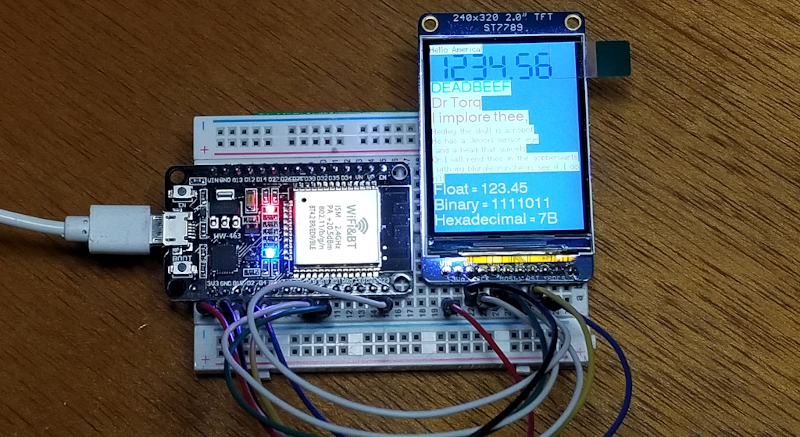
You can’t do much development without running into Git, the version control management system. Part of that is because so much code lives on GitHub which uses Git, although you don’t need to know anything about that if all you want to do is download code. [Dr. Torq] has a good primer on using Git with the Arduino IDE, if you need to get your toes wet.

You might think if you develop by yourself you don’t need something like Git. However, using a version control system is a great convenience, especially if you use it correctly. There’s a bug out in the field? What version of the firmware? You can immediately get a copy of the source code at that point in time using Git. A feature is broken? It is very easy to see exactly what changed. So even if you don’t work in a team, there are advantages to having source code under control.

If you are already using a more advanced IDE, Git is probably integrated into your environment, or, at least, it could be. If you are allergic to the command line, there are plenty of GUI tools to use Git, also. One nice thing about Git is that your local repository is just a directory. You don’t need to stand up a special server or anything to use it.

We don’t think it is directly related, but [Andreas] recently had a video on Git and Arduino. It isn’t as detailed, but it does have some good stuff and is worth the time to watch. You can see it below.

We’ve used Git for some odd things in the past. Note that Git is the version control system while GitHub is a website. However, if you are a hardcore command line user, you can manipulate GitHub from there, too.

Jack Dorsey: ‘Nothing that is said now matters’

Jack Dorsey is at it again. The twitter co-founder shared another rambling tweetstorm, in which he mused about Twitter’s shortcomings, user trust and whether or not the platform should be permanently banning users.

The comments come on the heels of a turbulent week for Twitter, which is facing uncertainty about what will happen to its platform with Elon Musk at the helm. But if people were hoping Dorsey could add some clarity to the discussion, they’ll likely be disappointed.

“Every decision we made was ultimately my responsibility,” he said. “In the cases we were wrong or went too far, we admitted it and worked to correct.”

The comments may have been an oblique reference to Elon Musk’s earlier tweets targeting a top Twitter policy official, but he didn’t directly address the situation. Instead, he shared some vague thoughts about what Twitter should do to fix itself.

Some things can be fixed immediately, and others require rethinking and reimplementing the entire system. It is important to me that we get critical feedback in all of its forms, but also important that we get the space and time to address it. All of that should be done publicly.

— jack⚡️ (@jack) April 29, 2022

“Some things can be fixed immediately, and others require rethinking and reimplementing the entire system,” he said. “A transparent system, both in policy and operations, is the right way to earn trust. Whether it’s owned by a company or an open protocol doesn’t matter _as much as_ deliberately deciding to be open about every decision and why it was made.”

Dorsey also seemed frustrated by what current CEO Parag Agrawal has referred to as “noise” about what’s happening to the company. “Doing this work means you’re in the arena,” Dorsey tweeted. “Nothing that is said now matters. What matters is how the service works and acts, and how quickly it learns and improves. My biggest failing was that quickness part. I’m confident that part at least is being addressed, and will be fixed.”

Dorsey added that it’s “crazy and wrong” that “individuals or companies bear this responsibility,” in an apparent reference to past unpopular decisions. “I don’t believe any permanent ban (with the exception of illegal activity) is right, or should be possible. This is why we need a protocol that’s resilient to the layers above.”

Doing this work means you’re in the arena. Nothing that is said now matters. What matters is how the service works and acts, and how quickly it learns and improves. My biggest failing was that quickness part. I’m confident that part at least is being addressed, and will be fixed.

— jack⚡️ (@jack) April 29, 2022

Musk’s buyout has rocked Twitter, a company whose own executives have told employees they are unsure what direction Musk will take the platform. Musk, who has said he has “no confidence” in the company’s current leadership, has suggested that he would drastically scale back the company’s existing content moderation policies and, potentially, its staff.

Whether Musk has Dorsey’s backing has been a major source of speculation. Dorsey said earlier in the week that “Elon is the singular solution I trust,” and said that his buyout is getting the company out of an “impossible” situation in which it is tied to an ad-based revenue model. Both Dorsey and former Facebook board member Peter Thiel reportedly encouraged Musk to take Twitter private, according to The Wall Street Journal.

Musk has reportedly floated the idea of charging organizations to embed tweets on other websites, and ramping up Twitter’s subscription product Twitter Blue. He also reportedly wants to replace Agrawal with an executive of his own choosing, Reutersreported Friday.

Dorsey’s comments are also notable for what he didn’t say. He didn’t mention Musk by name, and he didn’t defend Twitter’s employees, though he said “the company has always tried to do its best given the information it had.”