New MOSFET Devices with Top-side Cooling Simplifies Design and Reduces Cost for Compact Power Solutions
onsemi has announced a series of new MOSFET devices that feature innovative top-side cooling to assist designers in challenging automotive applications, especially within motor control and DC/DC conversion.
Genesis has unveiled the X Convertible concept, showing off its design chops with an EV that builds on the previous Genesis X and X Speedium Coupe vehicles. It shares the architecture and electric powertrain with those cars, but uses a folding hardtop roof and is meant to evoke "design purity" and uses what Genesis calls an "anti-wedge parabolic" design.
Gone are the extra bulgy fenders and aggressive front end, replaced by a more subtle design and cleaner, longer lines. That length is further accentuated by the short front overhang that gives it a protruding nose. The triangular headlights from the X Speedium are carried over, as are the double taillights. The hardtop roof has an integrated moonroof, offering drivers a view of the stars even when it's closed up.
Genesis
The interior is very similar to the previous two concepts, with the dashboard screen curving across and down toward the right armrest. It uses recyclable wool fabrics and leather seats, with the interior Giwa Navy and Dancheong Orange colors "inspired in part by traditional Korean roof architecture," according to Genesis.
We still don't know anything about the battery or drivetrain. It would make sense, though, to use the E-GMP platform found in Hyundai's Ioniq 5 and the Kia EV6. Genesis could then dial up the power and battery size so that range and performance would meet the expectations of luxury car buyers.
Genesis
Genesis says the X Convertible is a "beacon for the brand" that will presumably inspire future designs. It'll likely never be built in this form, but the company wants to show buyers what's possible. "We have to utilize this opportunity to inject more adrenaline in the brand," it told TechCrunch. "If somebody believes that electric vehicles cannot be sexy, Genesis will demonstrate the exact opposite."
NASA's Artemis 1 mission has finally launched after several delays caused by engine problems, fuel leaks and Mother Nature giving the agency no choice but to reschedule due to tropical storms. This is the first time NASA's Space Launch System, its most powerful rocket yet, and Orion crew vehicle are flying together — it also officially marks the beginning of the agency's Artemis program, which aims to take humanity back to the Moon.
There was a tense moment before this latest (and successful) launch attempt when NASA was unsure if the rocket would lift off. The launch team discovered a leak on the launch tower's liquid hydrogen replenish valve, and it took some time to tighten the bolts around it. In addition, the US Space Force had to fix the radar that was going to track the rocket's launch, because it suddenly went offline. In the end, the ground crew managed to fix the hydrogen leak, and Space Force found that the radar issue was caused by a bad Ethernet switch.
NASA had to push back Artemis 1's launch by around an hour, but that was the last time the mission got delayed. By 1:50AM Eastern, SLS was leaving its launchpad. The Orion capsule successfully deployed its solar arrays a few minutes later, and the core stage's engines powered down so it could break away and fall into the Atlantic Ocean. The rocket's second stage will then fire its engine to send Orion on a trajectory to the Moon. It will also ultimately break away, leaving the crew vehicle to go on a four-week journey around the Moon before coming back to Earth. Somewhere along the way, the capsule will deploy 10 CubeSats designed to perform their own science investigations meant to help future deep space missions.
Artemis 1 will give NASA the data it needs to ensure that astronauts can safely fly to the Moon aboard the Orion capsule. It will also give the agency the opportunity to see whether the vehicle's heat shield can adequately protect the astronauts onboard when it re-enters our atmosphere and splashes down into the Pacific Ocean. If everything checks out, NASA will be able to start planning for Artemis 2, which will be Orion's first crewed mission and will send astronauts on a lunar flyby.
Apple is gearing up to source chips from a factory in the US within the next couple of years, according to Bloomberg's Mark Gurman. Company CEO Tim Cook reportedly made the revelation during a meeting with local engineering and retail employees in Germany, telling them that Apple "already made a decision to be buying out of a plant in Arizona." As Gurman notes, it would lessen Apple's reliance on factories in Asia, particularly Taiwan, where 60 percent of the world's processor is produced. "Regardless of what you may feel and think, 60 percent coming out of anywhere is probably not a strategic position," Cook added.
The CEO is most likely talking about Taiwan Semiconductor Manufacturing Co.'s Arizona plant, which is currently under construction. TSMC is Apple's exclusive chip-making partner, though it also counts NVIDIA, MediaTek, AMD and ARM as some of its customers. The Arizona plant is expected to start running in 2024, with an output of 20,000 chips a month and the ability to produce 5-nanometer processors.
According to previous reports, Apple plans to adopt TSMC's new 3-nanometer chipmaking process, which is its latest and most advanced yet, for future devices. The Financial Times says the A17 mobile processor Apple is currently developing for its 2023 iPhone lineup will be mass produced using the new technology. It's unclear if Apple only intends to use the Arizona plant for older and less sophisticated chips or if TSMC has plans to update the factory. TSMC is already thinking of building a second plant next to its $12 billion facility in Arizona, but it told Bloomberg that it hasn't made a final decision yet.
As the publication previously reported, TSMC has been expanding to other countries over the past year in an effort to meet the needs of customers in countries encouraging domestic semiconductor production. President Joe Biden, for instance, recently signed the CHIPS and Science Act into law. Under the new law, the US government is offering $52 billion in funding and incentives for firms building chips in the country.
In addition to revealing that Apple will start sourcing US-made processors, Cook also reportedly told staff members: "I’m sure that we will also source from Europe as those plans become more apparent." While that's all he shared at the meeting, Bloomberg previously reported that TSMC is in talks with the German government to open facilities in the country. Europe, like the US, also looking to entice semiconductor manufacturers to open plants in the region and introduced the EU Chips Act in April to "bolster [its] competitiveness and resilience in semiconductor technologies and applications."
NASA is once again preparing to launch Artemis 1 after technical issues and hurricanes upended previous attempts. The next launch window for the uncrewed test flight around the Moon will be open for two hours, starting at 1:04AM ET on November 16th. In case NASA has to scrub it once again, the agency has scheduled another backup launch window, which opens at 1:45AM on November 19th.
The agency had penciled in a launch attempt for November 14th, but Hurricane Nicole forced a slight delay to those plans. NASA kept the Space Launch System (SLS) rocket and Orion spacecraft on the launch pad as the hurricane battered the Kennedy Space Center. They sustained minor damage, but not enough to force a lengthier delay.
NASA first tried to send Artemis 1 into space on August 29th, but engine issues and a hydrogen fuel leak forced the agency to scrub the initial launch attempts. The next stab at a launch in late September didn't work out either. NASA took the SLS and Orion back to the Vehicle Assembly Building to protect them from Hurricane Ian. Here's hoping NASA can finally send them on their way this time.
You can watch a livestream of the latest launch attempt below. Alternatively, you can watch the launch in virtual reality. If you happen to be in Florida or the south east region of Georgia, you may be able to see the SLS and Orion soar into the skies by going outside, if conditions are favorable enough.
Elon Musk has set a new date for Twitter Blue’s paid verification to return: November 29th. The new date comes just a few days after the company paused the roll out and halted new sign-ups after the site was overrun by pranksters and scammers impersonating brands, celebrities and other high-profile accounts.
Musk said the return date was set to give the company enough time “to make sure that it is rock solid.” Musk didn’t say what changes may come with Blue’s relaunch, but the company has already brought back “official” labels in an effort to reassure advertisers. Musk added that verified Twitter users will be unable to change their display names without losing their checkmark “until name is confirmed by Twitter to meet Terms of Service.”
Punting relaunch of Blue Verified to November 29th to make sure that it is rock solid
Twitter, which was losing advertisers even before paid verification launched, has seen even more brands pull back from the platform since the botched rollout of Twitter Blue. In addition to the “official” labels, Musk has proposed other was companies may be better able to identify official accounts, including a suggestion that organizations will be able to “identify which other Twitter accounts are actually associated with them.” It’s unclear how that idea might fit into Twitter’s revamped verification plans.
We’ve reached out to Twitter for more information, but the company no longer has a communications team.
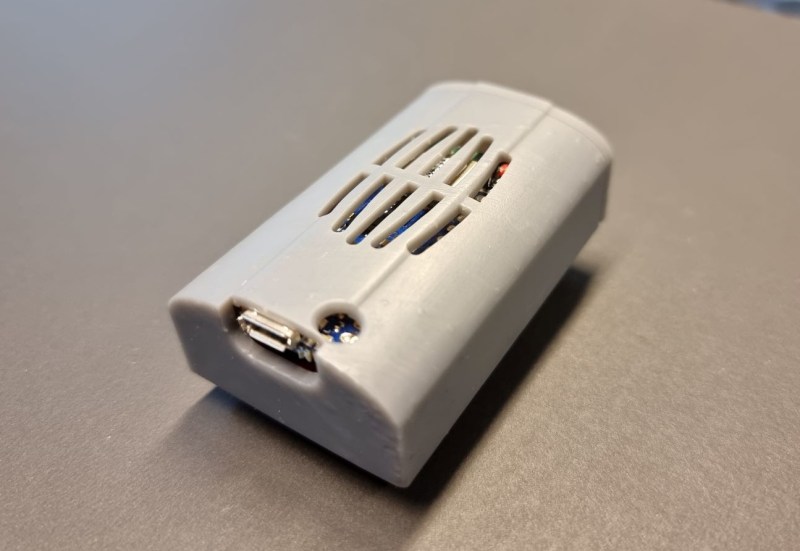
There are plenty of problems that are easy for humans to solve, but are almost impossibly difficult for computers. Even though it seems that with modern computing power being what it is we should be able to solve a lot of these problems, things like identifying objects in images remains fairly difficult. Similarly, identifying specific sounds within audio samples remains problematic, and as [Eivind] found, is holding up a lot of medical research to boot. To solve one specific problem he created a system for counting coughs of medical patients.
This was built with the idea of helping people with chronic obstructive pulmonary disease (COPD). Most of the existing methods for studying the disease and treating patients with it involves manually counting the number of coughs on an audio recording. While there are some software solutions to this problem to save some time, this device seeks to identify coughs in real time as they happen. It does this by training a model using tinyML to identify coughs and reject cough-like sounds. Everything runs on an Arduino Nano with BLE for communication.
While the only data the model has been trained on are sounds from [Eivind], the existing prototypes do seem to show promise. With more sound data this could be a powerful tool for patients with this disease. And, even though this uses machine learning on a small platform, we have seen before that Arudinos are plenty capable of being effective machine learning solutions with the right tools on board.
AI-generated art is a new frontier rife with potential. But for every thorny question about copyright and the potential for widespread manipulation, generated art can also inspire wonder and awe. For example, look no further than this AI-powered experiment that creates kaleidoscopic visual landscapes for composed music.
A collaboration between quirky synth and hardware brand Teenage Engineering and design studios Modem and Bureau Cool, the project draws inspiration from the neurological condition synesthesia. This rare phenomenon leads the brain to perceive sensory input for several senses instead of one. For example, a listener with synesthesia may see music instead of only hearing it, observing color, movement and shape in response to musical patterns. Conversely, a synesthetic person may taste shapes, feel words from a novel or hear an abstract painting.
The audiovisual experiment uses the Teenage Engineering OP-Z sequencer as the music source that is then translated into AI art. In real-time, Modem and Bureau Cool’s “digital extension” translates musical properties into text prompts describing colors, shapes and movements. Those prompts then feed into Stable Diffusion (an open-source tool similar to DALL-E 2 and Midjourney) to produce dreamy and synesthetic animations.
Modem co-founder Bas van de Poel sees the experiment as fuel for artists’ imaginations. “With the project, we see the potential for musicians to explore new forms of creativity, facilitating a joint performance between human and machine,” van de Poel told Engadget today.
If you’re a musician who owns Teenage Engineering’s OP-Z, you can’t yet use the extension yourself — but that may eventually change. Van de Poel tells Engadget that the companies are “exploring the potential of launching a public version.”
This AI-based project isn’t the first to bring synesthetic properties to the masses. Last year, Google Arts & Culture created an exhibition that flipped the concept around, bringing machine-learning-produced sound to Vassily Kandinsky’s paintings.
Qualcomm has announced its latest flagship mobile chipset, the Snapdragon 8 Gen 2. Along with making it more powerful and efficient than Gen 1 chips, Qualcomm says it has packed more AI smarts into the new platform.
The Snapdragon 8 will tap into the latest Qualcomm AI Engine and upgraded Hexagon processor to offer "faster natural language processing with multi-language translation and advanced AI camera features," the company claims. The processor has architectural upgrades that will enable up to 4.35 times the AI performance of Gen 1 chips, according to Qualcomm. There will be support for an AI precision format called Int4, which the company suggests will lead to a 60 percent performance/watt improvement over the previous-gen chipset for sustained AI inferencing. Meanwhile, the Sensing Hub will have dual AI processors, which can support features such as custom wake words.
Qualcomm notes that the upgrades will enable new camera-focused features as will. It says Snapdragon 8 Gen 2 will enhance photos and videos automatically and in real-time using semantic segmentation. This harnesses an AI neural network to make the camera aware of and individually optimize elements such as faces, hair, clothes and skies. Qualcomm has tuned the chipset to support new sensors, such as Samsung's 200-megapixel Isocell HP3. Meanwhile, this is the first Snapdragon model with an AV1 codec that supports 8K HDR playback at up to 60 frames per second.
There's an intriguing feature for mobile gamers: Qualcomm says there will be real-time hardware-accelerated ray tracing, which should improve the visuals on supported games. The company claims the latest Adreno GPU and Kyro CPU deliver over 25 percent faster performance and 40 percent more power efficiency than the Gen 1 chip. Qualcomm adds that it will offer the first mobile-optimized support for the Unreal Engine 5 Metahumans Framework, claiming that this will let players "experience photorealistic human characters in their games."
On the connectivity front, the Snapdragon 8 Gen 2 will use AI to manage 5G download speeds, latency, coverage and power efficiency. There will be support for dual 5G SIMs as well as WiFi 7 (with speeds of up to 5.8 Gbps). In terms of audio, phones that use the chipset will be able to offer spatial audio with dynamic head tracking, 48kHz lossless music streaming and latency as low as 48ms.
Qualcomm notes that the first phones with the Gen 2 chipset should be available by the end of the year. Partners including ASUS Republic of Gamers, Honor, Motorola, OnePlus, Oppo, Sharp, Sony, Xiaomi and ZTE plan to use the chip in their devices. There's likely to be more news from Qualcomm in the coming days, as the company is hosting its Snapdragon Summit this week.
It’s been less than a month since Elon Musk began his chaotic takeover of Twitter but, to many, the platform already feels like it’s entered an inevitable death spiral. Advertisers are fleeing. The few remaining top executives are also leaving. Musk’s Twitter Blue rollout was a complete disaster. The FTC says it has “deep concern” about the company. Musk told employees bankruptcy is a real possibility. Former engineers say the site could break at any moment.
Unsurprisingly, the uncertainty has inspired many users to explore Twitter alternatives. Among them, Mastodon, a decentralized platform founded in 2016, has emerged as one of the top destinations for Twitter quitters. The service saw an earlier uptick in April, when Musk’s buyout was announced, but it’s seen an even bigger flood of new users since Musk’s takeover was completed.
Between October 27th and November 6th, Mastodon gained nearly half a million new users, almost doubling its user base, according to founder Eugen Rochko. Data from Similarweb, shows that the two most popular “entry points” to Mastodon, the mastodon.social server and joinmastodon.org, are getting more than four times the amount of daily traffic compared with the end of October prior to Musk taking over the company.
SimilarWeb
It’s not the first time upheaval at Twitter has driven new users to the “fediverse,” but it’s the largest exodus. And even many of those who haven’t quit Twitter entirely have begun promoting their Mastodon accounts.
But not everyone is ready — or able— to give up on Twitter. And many don’t see Mastodon as a viable substitute for what Twitter has provided.
For Beth Hyman, executive director of the SquirrelWood animal sanctuary in New York, Twitter has for years been a vital source of donations thanks to the rescue’s popular “Crouton & Friends” account. She began to grow SquirrelWood’s Twitter presence in 2018 by posting nightly videos of Crouton, a baby cow living at the sanctuary.
Now, Twitter, where Crouton has more than 65,000 followers, is one of the sanctuary’s biggest, and most reliable, sources of donations. For example, she was able to raise $30,000 for a used horse trailer in just three days in 2021, and frequently shares other fundraisers for the sanctuary. She worries about how Twitter’s current instability could affect them. “I don't want to see the income that helps keep this sanctuary going, and all these animals fed, dry up,” Hyman tells Engadget.
She says she signed up for Mastodon as well as CounterSocial after noticing a dip in her followers in the days after Musk’s takeover, but she’s skeptical she will be able to recreate her Twitter account’s success on a new platform. “Our main home base has always been Twitter. A lot of work goes into this, and it's not like you just flip the switch and walk away and reignite it somewhere else,” she says.
She’s also found that it’s just not as easy to share photos and videos of SquirrelWood’s animals — the main draw for her social media followers — on Mastodon due to its file size constraints. “We’re taking care of 70 animals, I need something that I can do on the fly very easily,” she said.
— Crouton & Friends🏳️🌈 (M_Crouton@mstdn.social) (@m_crouton) October 31, 2022
For others, the decentralized nature of Mastodon has other drawbacks. Eric Feigl-Ding is an epidemiologist who grew his Twitter following at the start of the pandemic when he was among the first to go viral tweeting about the potential threat posed by the novel coronavirus. He now uses his Twitter account, where he has more than 700,000 followers, to share updates about the pandemic and to promote public health policy.
He says he tried to sign up for the mastodon.social server only to find that it was full, and that he and some colleagues are now debating starting their own server, But he worries he won’t be able to reach the same people as he can on Twitter.
“I knew I wanted to reach policymakers, members of Congress, and journalists, basically people who care that can move the needle on this pandemic and prepare for it,” he says. “And Twitter is that platform. Twitter is the platform to get your message out. They're not sitting on Mastodon.”
Feigl-Ding, who has spent a lot of time debunking COVID-19 misinformation, also worries about the consequences of leaving. “You do not want to cede the town square to misinformation, to disinfo, to slanted views on things,” he said. “You want to be there to engage, you want to show up at the debate.”
Others worry about losing the friendships and community they’ve formed on Twitter. Steven Aquino, a tech journalist who covers accessibility, says that Mastodon isn’t a realistic alternative for many people with disabilities because it lacks many of Twitter’s accessibility features. It also just wouldn’t be the same, he says. “The whole point of social media is to be social, and for a lot of disabled people … social [media] is how they interact with other humans,” he tells Engadget.
At the same time, the fact that Musk cut Twitter’s accessibility team makes him worried Twitter itself could become less usable. “The fact that they laid off the entirety of the accessibility team says a lot about what they think about people like me, and where they want the service to be,” he says.
“There’s so much being written about what Elon is doing, and hiring and firing, and those are all important things. But there is no respect for what is the real impact on the people who use the service.”