People aren't done hijacking major politicians' Twitter accounts for financial gain. TechCrunch reports an intruder temporarily seized control of Indian Prime Minister Narendra Modi's Twitter account on December 12th in local time. The attacker tweeted a bogus claim that India had adopted Bitcoin as legal tender and pointed users to a (thankfully broken) scam website. The post was at odds with India's well-known disdain for cryptocurrency.
The Prime Minister's office didn't say much about the incident. It acknowledged that Modi's account had been "briefly compromised," but that it contacted Twitter and "immediately secured" the politician's profile. Twitter told TechCrunch something similar.
It's not certain just who's responsible, or how they hijacked the account (some speculated the attackers exploited a website flaw). This wasn't a large-scale campaign like the one that defaced the Twitter accounts of Joe Biden, Elon Musk and other major figures, though. It's chiefly concerning that someone breached Modi's account in the first place — world leaders are expected to have strict security, and Twitter even has a system for protecting high-profile users against attacks. While those measures aren't foolproof, they theoretically reduce the chances of incidents like this.
Was the Twitter account of the Hon'ble PM shri #NarendraModi ji hacked? And promise of #Bitcoin<!!><a href="https://t.co/uz1U2IAJaZ">pic.twitter.com/uz1U2IAJaZ</a></p>— Tehseen Poonawalla Official 🇮🇳 (@tehseenp) <a href="https://twitter.com/tehseenp/status/1469772763321696256?ref_src=twsrc%5Etfw">December 11, 2021</a></blockquote></div><p></p>
The tech buzzword of the season is “metaverse.” Facebook kicked the craze into high gear at its Connect conference in late October, featuring an hour-long image-rehabilitation video where Mark Zuckerberg revealed the company’s new name, Meta, and showed off a vague digital-first future called the metaverse.
Dedric Reid has been selling his own version of the metaverse on and off for the past five years. He calls it MetaWorld and describes it as a persistent, decentralized space filled with life and change. It’s a “10,000 square mile vast-scale simulation, owned by community and run by community,” according to Reid. He’s said it’s his life’s work.
MetaWorld
Like many other organizations at the moment, Reid has been using the buzz around the metaverse to ramp up his own promotional efforts. MetaWorld has a slick website, a fresh YouTube channel, a new Discord server and Reid hosts daily chats on Clubhouse. He recently launched a marketplace where he's selling digital parcels of land and property as NFTs.
In the MetaWorld Discord server, a “press” channel lists articles from Engadget, Alphr, TechRadar, UploadVR, VentureBeat, Tom’s Hardware, Variety and CNBC, and links to a video from New Scientist magazine.
Early on November 3rd, a user named Wolfssskin entered the MetaWorld press room and started typing.
“Interesting that you think you can do the same scam again,” Wolf said.
“What’s interesting is that you think that you can stalk and harass me,” Reid wrote back. The confrontation continued with Reid accusing Wolf of being a troll, and Wolf claiming MetaWorld was a scam. The exchange has since been deleted, and Wolfssskin banned from the server.
However, Wolf is active on another Discord server — this one also called MetaWorld and also created by Reid, though he hasn’t posted in it since 2019. The old server is full of angry users who say they gave Reid their money between 2016 and 2018 to join MetaWorld, and believe they were scammed.
Reid’s final message in the old MetaWorld Discord server was posted on September 6th, 2019: “Check updates on the updates channel in coming weeks … I'll also be around with mods for discussion all week.” No update ever came, and in the two years since, the old server has become a guide to the seven stages of grief.
“It's disgusting to think that they have just left paying customers with not even a response,” a user named LordGirthVader wrote in June 2020.
“Yeah but that’s the thing,” another user named Floogey responded, “We weren’t actually customers, we were victims.”
Engadget first interacted with Reid in 2016, when a UK startup named Improbable arranged a meeting inside a MetaWorld prototype to demonstrate Spatial OS, the startup’s scalable server tech. Reid was one of several developers to make use of the company’s public SDK, and Improbable thought MetaWorld made an effective demo to promote its “open community platform.”
Shortly after the launch of that prototype, Improbable stopped promoting or mentioning MetaWorld at all. By 2017, questions were being raised about Reid’s ability to deliver on his ambitious promises, which included a custom avatar system, a living world as large as the state of Maryland, a virtual economy, rich environmental simulations and cross-platform capabilities for a variety of VR headsets.
Reid started an Indiegogo campaign in April 2017, a move that prompted his former business partner and MetaWorld prototype developer, Carelton DiLeo, to publicly distance himself from the project. DiLeo noted that he was “not currently working on MetaWorld” and didn’t know how Reid planned “to deliver on the promise of the fund.”
The Indiegogo campaign was not a success, eventually raising $3,674 of a $50,000 flexible goal, meaning Reid got to keep all of the money pledged. This was followed by a new revenue-driving initiative: land speculation. In September 2017, Road to VRnoted that Reid was selling virtual land for real money, and detailed the many questions surrounding the project. Land was available to buy in three tiers, ranging from $15 for a quarter acre to $100 for two acres, though it was unclear what exactly players would do with this property, how the economy would function or how people who didn’t buy land would join the game.
MetaWorld was listed on Steam as an Early Access title in mid-2017, advertising consistent updates and transparent, community-driven development. There was no actual game to play, no virtual world to explore, but Reid was selling land in MetaWorld regardless. On September 28th, 2017, a blog post in the MetaWorld Steam community claimed land titles were being sent out to investors, supported by a cryptocurrency Reid had created called MetaCoin.
In its September 2017 article, Road to VR concluded, “MetaWorld is headed into Early Access, which partly excuses it from being an incomplete product, but the inconsistency in messaging around the game’s core mechanics and features ought to leave you worried about the stability of the still unreleased MMO.”
By early 2018, Reid claimed he had been investing in crypto for several years to form the economy of MetaWorld, using the cash from early land sales to build the MetaCoin fund. He said he wasn’t personally making any money in the process, and all of the money coming into MetaWorld was being converted into cryptocurrency and kept in a single place called the Metabank, where it was reserved specifically for this new virtual economy.
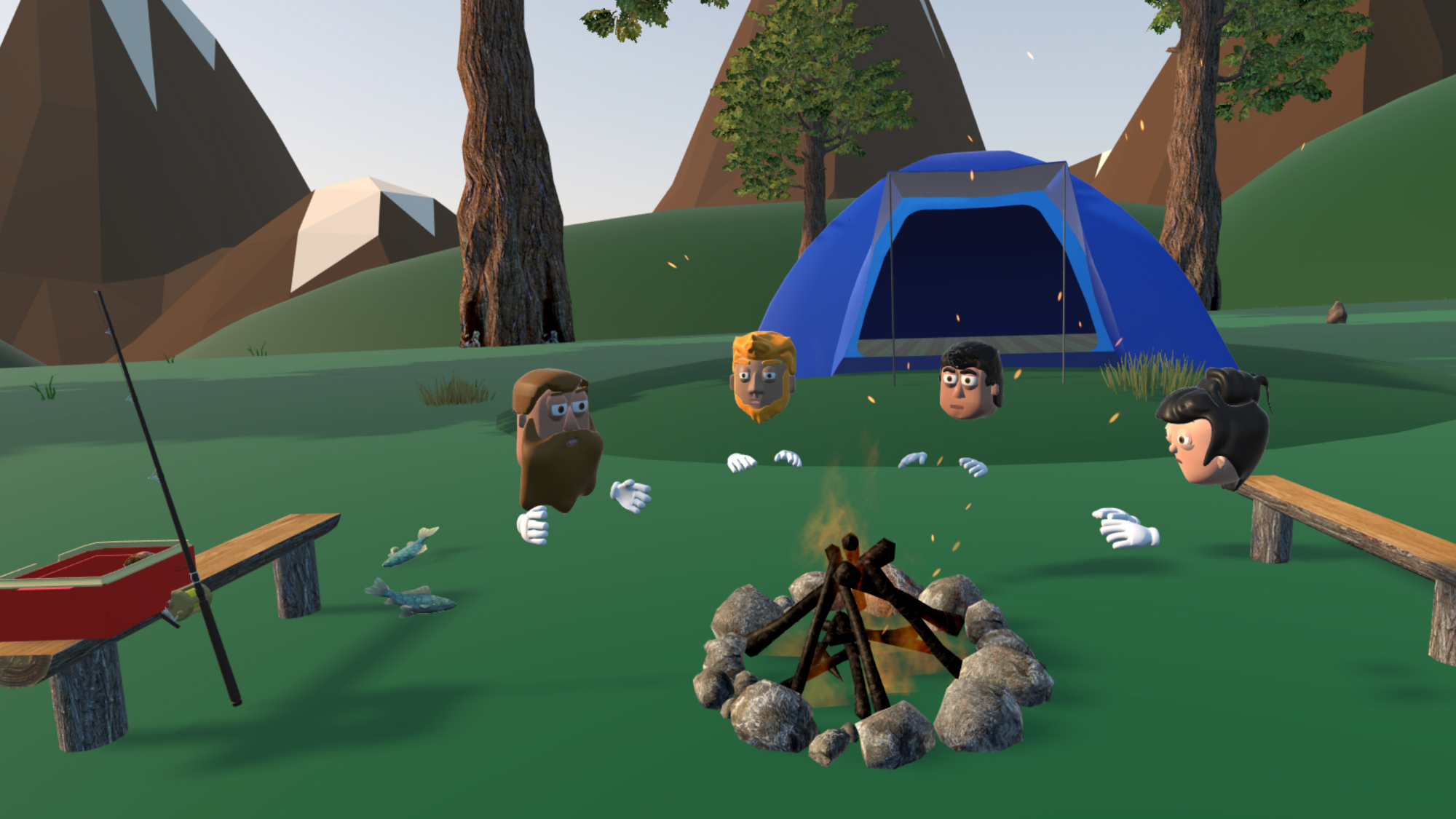
The 2016 MetaWorld prototype Engadget experienced.
MetaWorld
Reid told Engadget in 2018, “We're a community-funded entity. So we've been working on that, in fact taking on cash and kind of forming it into cryptocurrency, and building an economy.” He said he was using “robo-trading, a couple different investment tools to grow the money.”
Roughly a year after saying that, Reid left his final message in the original MetaWorld Discord and disappeared from the server.
A few weeks after Reid’s quiet exit, a user named Immortal posted in the lobby, “Been a while since I’ve heard anything on this game and even longer since my money was happily taken for it. Anyone know anything about this release or is this just one of those things that never happen?”
“I don’t expect anything to happen,” a user called Myrothas replied. “Asked for a refund a year ago and many times. All I heard was: send me a mail. I did do that multiple times and never received an answer. Quite the red flag for me.”
Myrothas, real name Johannes Fischer, shared with Engadget a 2018 email exchange where he requested a refund through the MetaWorld help channel. “Backed this project about a year ago and expected it to come out already,” he wrote in the email. “I’d like to ask for a refund.” He says he never received his money.
Engadget interviewed Reid twice in 2018. In these interviews, Reid explained how paying customers would build MetaWorld themselves, and how cryptocurrency would make the whole thing work as a decentralized, libertarian dreamscape. With players responsible for funding and developing MetaWorld themselves, it was difficult to pin down what exactly Reid was selling.
One year after the launch of his crowdfunding campaign, Reid said he had “a design worked out in Unity” for MetaWorld, and he planned to transfer this into the existing Spatial OS ecosystem — even though Improbable, Spatial OS’ parent company, wasn’t actively supporting the project any longer. He claimed he’d built a procedural terrain generator for VR and also a robust avatar system with “head tracking, eyes, eye blinking, eye gazing, lip sync, upper torso support,” though these features weren't ever demonstrated.
Most of Reid’s goals never materialized. The MetaWorld release date was pushed back again and again, until eventually the Steam page simply read, “Soon.” Reid showed off high-fidelity environments on YouTube and Discord, and then later revealed MetaWorld would be a Google Blocks project, making those assets impossible. MetaWorld never went live.
“We had a lot of broken promises right off the bat, that was a pretty major flag,” one early adopter told Engadget under the condition of anonymity. We’ll call them Morgan. “And the community was very quick to do some snooping.”
Engadget spoke with 11 original MetaWorld investors, including people who were deeply involved in the community and often interacted with Reid directly. Many of these members asked not to be named, considering Reid had their personal information and they didn’t trust him to not misuse it.
Users commiserating on the original Discord server in 2020. (Enlarge)
MetaWorld/Discord
After a few months of missed launch dates and hollow promises, MetaWorld members discovered Reid was using images from 3D model site TurboSquid to sell land and in-game items, and they said he changed critical details about the engine and development process seemingly on a whim. As people would ask for refunds in the original Discord server, Reid would call them trolls and delete their messages.
At the time, as calls for refunds were flooding the MetaWorld community, Reid told Engadget he was “in the process of coming up with a better refund policy” and he wanted to honor these requests, but it was difficult to do so without seriously affecting development. Not that Reid planned on doing much development himself — as he described it, he was a designer, the guy with the vision. According to his plan, the community would do the actual coding and game-making, after buying their way into MetaWorld.
“It was around then that we learned that users would also be responsible for creating assets,” Morgan said. “Assets included anything from buildings to animals… but we'd also be responsible for creating jobs, and performing said jobs to earn currency on the blockchain.”
Besides that, Reid told Engadget he planned to piggyback off the work happening at multibillion-dollar companies like Facebook, IBM and Google. He pointed out that these organizations had already built VR worlds, avatar systems and AI frameworks, and he said he’d simply use these to create MetaWorld. He seemed unconcerned with the concepts of intellectual property and trade secrets.
“From my perspective, all code is done and written,” Reid said. A few minutes on, he continued, “The code that drives the artificial intelligence — Watson, or just name your AI code — it exists, right? So I can play with concepts, whereas code's already written, right? You know what I mean? I can take from any code set I want. And I think by understanding code — I also write code. But rather than get heads down on writing code, I sort of enjoy dreaming up concepts and just understanding how things are put together.”
In the end, Reid was basically selling an early-concept Roblox, in VR and for adults. But first, he was asking players to build the game itself and pay him for the privilege. After all, he said, actually making MetaWorld was the easy part.
“This stuff is like, it isn't rocket science,” he said. “It's really pretty straightforward to throw a couple objects around and create a couple simulations, a couple VR simulations and put them together. That's not the hard part, like, making some VR games.”
That rudimentary 2016 demo, built before developer DiLeo left the team, is the only public proof that Reid’s MetaWorld has ever existed as an inhabitable virtual place. DiLeo went on to build his own simulated environment using Spatial OS, and he sold it in October 2018 to Somnium Space, which is an established, decentralized VR platform powered by blockchain. As part of that deal, Somnium Space offered a refund and land-exchange program for angry MetaWorld customers, in an effort to rebuild trust in VR development as a whole.
In October 2021, two years after Reid’s final message in the old Discord, a new MetaWorld server appeared. It had a fresh logo, links to his Clubhouse group, and the same pitch as before. A “passports” channel linked to a page where people could pay $10, $20 or $30 for “exclusive community access,” the opportunity to build MetaWorld, and early bidding on future NFT drops.
At the time of publishing, MetaWorld NFTs have raised 5,126 MATIC (around $11,000) since their launch on November 25th.
Listings for MetaWorld NFTs.
MetaWorld/Niftykit
Reid is now selling virtual land and properties as NFTs on the Polygon network, and people are buying. Land tends to run from $50 to $600, payable in Polygon’s MATIC currency, while a “Piano House” costs $650 and seems to be available via cash payment only. The MetaWorld website claims just 10 of these houses will be minted and simulated.
“So much excitement, creative thoughts and passion for the future,” Discord user Clare Bratina wrote in the new MetaWorld server on November 25th. “Definitely backing the creators and looking forward to learning how to create in the metaverse and on metaworld.”
Every now and then in the new server, a random member will spam the channels with warnings claiming that MetaWorld is a scam, and Reid will deny it and delete the messages. Just like old times.
There is one new, unexpected feature of the revamped MetaWorld campaign: Reid, who happens to be Black, is targeting people of color.
“So happy this exists!” a user called NiKole wrote in MetaWorld’s “town-square” channel on September 5th.
In October, a member named PixelPil0t posted, “Happy to join your Metaworld! Excited to see what you build Dedric, your background is incredible.”
Over the past few months, Reid has been doing much of his MetaWorld marketing on Clubhouse, where he has 1,800 followers and regularly joins talks with the Black Metaverse community, which is run by NiKole. Here’s how Reid closed out a Clubhouse chat for Black Women in Blockchain on November 5th, after spending a few minutes selling MetaWorld as a Hawaii-sized VR landscape where players would be able to fly airplanes and play around in a persistent, living environment:
“Much of the inspiration for the world is gearing it towards POC first. You know I've been in, sort of, the games and media industry for quite some time. And, you know, as a community we're often left behind. It's, you know, the computational world isn't exactly ‘us’ first, sort of, you know, we've been an afterthought. So now we are. So check out the identity system. Look forward to seeing Black faces in the MetaWorld. Peace. My name is Dedric.”
New users have been trickling into the new MetaWorld Discord server and Reid has been organizing its channels, most of which are empty. It’s mostly newcomers, but there are also a handful of folks from the old MetaWorld server floating around, tracking the similarities between the previous project and the new promises.
The "creators" channel showed off MetaWorld's photogrammetery. (Enlarge)
MetaWorld/Discord
The new server used to have a “creators” channel where Reid shared images of Redwood trees and forest foliage going through the photogrammetry process, and one old-server user noticed artifacts on the pictures, where it looked like text had been Photoshopped away. This user found the original images on a website unassociated with MetaWorld or Reid, and Engadget eventually traced all the images in channel back to an 80 Level interview with environmental artist Willi Hammes of MAWI United.
Engadget spoke with Reid in November, when the creators channel was still live, and asked him what photogrammetry software he was using to build MetaWorld.
“I'm not actually sure,” he said. “I'm not working on the photogrammetry stuff. So I'd have to ask somebody from my team what they're using to capture it.”
Original backer BenG found the original versions of many MetaWorld-related assets.
Discord
Reid said he had a few freelancers working on the project, but he presented himself as the sole full-time creator of MetaWorld. Minutes after our interview, the creators channel disappeared from the Discord server, taking all the photogrammetry claims with it.
Other MetaWorld assets vanished around this time, too. Reid deleted and unlisted at least two YouTube videos after facing questions about their origins. One of them, called “Generative + Procedural Design Redwood Creek,” was a minute-long speedrun through the Unreal Engine 4 development process, showing the creation of a lush forest scene. It was published on October 31st. The MetaWorld logo was prominently displayed over the entire video, it started and ended with the URL for the MetaWorld website, and its description read, “Using a combination of procedural / generative Design and hand freehand design to construct MetaWorld Redwood Creek region.”
After establishing we were talking about the same video, I asked Reid point-blank, “So that video, that was you in MetaWorld making something?”
He was silent for seven seconds. “The video’s MetaWorld, yes,” he finally said.
However, the footage in question was originally posted to YouTube by a user named Nitrogen in March 2019, without any of the MetaWorld bits. The MetaWorld version was edited down and cropped in places, but it was the same video. Reid did not make it, nor was it an example of anything he had built in MetaWorld.
I brought this information to Reid’s attention.
“Are you talking about promo videos?” he asked. I responded that I meant the videos on the MetaWorld website and YouTube channel, which we’d been discussing for a few minutes.
“Oh cool promo videos, yeah yeah yeah,” he said. “Right on, yeah, you’re talking about the promo videos.”
I clarified, “This one’s called, ‘Generative plus Procedural design Redwood Creek.’”
“Yeah, we're showing the power of Unreal Engine,” Reid said.
“So that’s not you?” I asked. “That’s not MetaWorld?”
“We’re showing the power of Unreal in our videos on YouTube,” Reid responded.
I then questioned Reid about a second video published on the MetaWorld YouTube channel on October 31st, this one called “Designing MetaWorld.” It was just five seconds long and showed a windswept valley, long grass blowing in the digital breeze. In reality, this upload was a snippet from a longer video by Joe Garth, posted in June and with more than 1 million views.
Reid repeated the argument that these videos were examples of the tools that would be used to build MetaWorld.
“As an industry we’ve been using these tools, this is a pretty common toolset that much of the industry has had access to — is there something different when we do it?” Reid said. “So I hear that a lot, ‘I hope this isn’t an asset flip.’ Well, no, we’re showing you what’s possible and we’re using the same pipelines and assets that everybody else is using. I find that interesting, that when we use assets, it’s a problem. But Joe Schmo white dude uses assets, nobody says anything. I feel like there’s a double standard. It’s frankly kind of annoying at this point.”
An image on an NFT that sold for $374 appears to have been sourced from an artist's ArtStation page. (Enlarge)
Before our interview had even wrapped up, the first MetaWorld video had been unlisted and the second video deleted entirely. On November 16th, the MetaWorld website was updated with new assets and a fresh video called “Esselen Redwoods,” which was branded with Reid’s white-and-blue MetaWorld logo. It appears this walkthrough was originally uploaded by Simon Barle, an environment artist at DICE, back in 2015, as “Redwood Forest UE4.” The accompanying assets seem to be taken from Barle’s original work as well.
Reid is using these lifted images to sell land as NFTs on the official MetaWorld website and in cryptocurrency marketplaces. He’s advertising two different environments, Esselen Creek and Esselen Islands, and apparently using misappropriated assets for both. The Esselen Creek images seem to be Barle’s, while a new video titled “MW Esselen Creek Promo 1 1” appears to be a chopped-up version of this 2017 upload by MAWI United. The MetaWorld version is emblazoned with Reid’s MetaWorld logo alongside the words, “World’s First Simulated Environment NFT.”
A MetaWorld promo comprised of footage from environment asset company MAWI United.
The Esselen Islands images look like cropped and mirrored versions of Island Landscape - B, a content pack uploaded to the Unreal marketplace by user Gokhan Karadayi in January 2019. The Islands NFTs aren’t live for purchasing yet, but the presale page collects name, email and crypto-ownership details from interested users.
Meanwhile, the “Piano House” that Reid listed for $650 is actually the historic Farnsworth House, and it’s being advertised with an image taken from Russian site CGBandit, uploaded by user chel0ve4ek before February 2021. The original image comes from a ready-to-render scene pack containing Photoshop files based on the Farnsworth House, including foliage, furniture and high-quality textures that Reid definitely did not make himself.Another page for the Piano House NFT, which has since been removed, showed 3D renders of an entirely different property, LINE Architects’ Piano House.
Reid has a clear modus operandi when it comes to advertising MetaWorld: find other people’s images and videos of impressive Unreal Engine environments, edit out the original watermarks, and present them as his own. Meanwhile, Reid has never provided any evidence that MetaWorld has ever looked like any of these assets.
This entire land-acquisition model dates back to the 2003 game Second Life and has recently been popularized in NFT form by Decentraland and similar platforms, with Decentraland’s virtual economy valued in billions of dollars. When it comes to the Esselen NFTs, the issue is that as far as we can tell, the MetaWorld Reid’s been promising has never existed at all.
The Esselen Islands landscape is seemingly taken from the Unreal Engine marketplace.
Engadget
In that Clubhouse monologue on November 5th, Reid claimed MetaWorld was already live, and had been for a few years.
“The other unique aspect of this world is the sheer size of it,” he said. “It exists in the cloud. We pushed it to cloud a couple years ago, and it's been kind of living and breathing on its own. There's sort of an AI operating system, if you will, kind of a world-operating system that manages the world and generates the land.”
This differs from the messaging Reid provided in interviews with Engadget. Reid had difficulty answering standard questions about the revamped MetaWorld, including how the project was being funded, what he’d actually built, where it was hosted, how he planned to sustain this massive world, and how many players he had.
After saying he was “not sure” how many players were active in MetaWorld, I asked, “Like dozens of people, hundreds of people?”
“So, I don’t know,” Reid said, before talking for a few minutes about the scope of the project, repeatedly calling it a “moonshot” for his main company, HelloVR. HelloVR seems to exist mainly as a LinkedIn page, with Reid and “Meta Bot” as the only two employees. Reid is listed as CEO. Reid in our interviews has said he works alone with contractors but also recently claimed to have a “partner.”
When confronted with the misleading nature of his assets or the discrepancies in his pitch, Reid responded with a singular argument: This was just another example of racism in the technology industry.
“It’s YouTube — am I missing something?” Reid said. “Is YouTube not a place to share videos? So again, there’s an issue when we share videos, but the nature of YouTube is to share videos, everyone else gets a pass?”
Reid isn’t wrong that the technology sector is dominated by heterosexual, cisgender, white men, and the industry has only recently begun recognizing and reckoning with this imbalance. That’s one of the reasons I was initially excited to interview Reid all those years ago; he was a Black developer in VR and his project sounded amazing. Only once I started asking questions, a lot of Reid’s ideas didn’t add up. And now he’s back with the same approach, but he’s specifically targeting people of color, which he knows is an underserved community.
“It doesn't sit right with me that he's selling this as being a ‘Black-owned’ project,” Morgan said. “I have this terrible feeling that he's using that to try and protect himself from backlash, because anyone who would go to attack him there could be labeled as racist.”
On Clubhouse and Discord, Reid regularly presents himself as a hyper-intelligent tech entrepreneur with ideas guaranteed to change the world. In interviews with Engadget, however, he acts confused by basic concepts like YouTube uploads, copyright and IP theft.
“If they come across as disingenuous, oops!” Reid said about his YouTube history. “Like, all right, but that wasn’t the intent, we can sort of learn from that. The last thing we want to do is like, piss a bunch of people off.”
The original MetaWorld server is filled with people who could be accurately described as “pissed off.” Many of them bought land the first time around and ended up requesting refunds, citing Reid’s inconsistent messaging and lack of results over a period of years.
One investor who asked to remain anonymous, called Kris here, said they joined MetaWorld in 2018 because they loved VR and wanted to support small, innovative developers. Kris spent at least $60 on virtual land and defended Reid in the original Discord server until the day he disappeared.
“The vision of sharing an open world with people who want to build something big catches me every time,” Kris said. “It would be so great if a game comes that includes what MetaWorld promised. ...We planned a whole city, we were very deep into this and really hoped that we could someday visit ... but after a while a lot of people asked for refunds, day after day, with no response from Dedric. After he wrote that last message there wasn’t a Dedric anymore, and all hope was gone.”
Another investor who asked for anonymity, whom we’ll call Ryan, joined MetaWorld as an escape from their real-world anxieties. Ryan is disabled, and saved for a VR headset before discovering MetaWorld in 2018.
“I was looking desperately to find something to just change the boredom of life,” Ryan told Engadget. “My life sucks. I've got a heart failure complicated with a bunch of other stuff right now, and I just can't get out and do things in the real world.”
Ryan shared receipts of all of their purchases with Engadget, alongside chat logs with Reid and an account called “Metabot,” which was controlled by Reid at least part of the time. Both reassured Ryan over the course of several months that all was well with MetaWorld.
“At first, even though I was concerned, I was still hoping that the project would happen,” Ryan said. “I tried to be patient.”
In total, Ryan spent almost $300 on passports, land, property and virtual currency. They never directly asked for a refund from Reid. By the time Ryan thought to do so, they saw multiple people had tried and failed to get their money back, and it didn’t seem worth the stress.
“I felt like I had been scammed, and was embarrassed,” Ryan said. “Due to the nature of a scam, I didn’t feel that there was a point. I was not getting answers in DMs … so I just gave up.” Ryan later heard from another community member about Somnium’s refund offer, and recouped his money from that company.
“Dedric and his group, I don't know who's responsible, mostly it bothered me a lot because they took advantage of me,” Ryan said. They continued, “They apparently don’t care for anybody except themselves … I lost a little faith at that time.”
These days, Ryan said they only use their VR headset for Beat Saber exercise, but they’ve found some friends and community in the MMO Dual Universe.
In a five-hour Discord call with the MetaWorld community in September 2018 (yes, five hours), Reid dodged probing questions from investors and made more bold claims. For one, he said MetaWorld was on track to launch in beta at the end of the summer, which was just three days away. A few callers chuckled and made snide comments at this goal, clearly in disbelief.
“Yeah, we're pushing for it to start next week,” Reid responded. “What's so funny about that?”
MetaWorld did not go live at the end of that summer. Of all the investors we spoke with, none of them received a refund from Reid.
As it stands in 2021, Reid still doesn’t seem to understand why anyone from the original round would want their money back, and he remains confused by the definition of “a refund.” This is years after Somnium Space facilitated refunds to some angry MetaWorld backers.
“This narrative of like, there's been anything disingenuous, is like nonsense, right?” Reid told Engadget this year. “It doesn't make any sense. Like, that doesn't necessarily fit into, as a leader of the project, my narrative, right? So like, yeah, so there's a lot of confusion around like, what a refund is. But like, the whole concept of refund was created by the folks over at Somnium.”
For early investors like Fischer, Kris, Ryan and Morgan, Reid’s stream-of-consciousness, nonsense-tinged responses are all-too familiar.
“I’m still mad about the whole thing, that one guy can do a scam on the web without consequences, it looks like he doesn’t even care,” Kris said. “Just think about some kids pumping their money in there for nothing, just an old man doing scams. That’s pretty sad.”
Reid is currently pitching the vague idea of MetaWorld on Clubhouse, Discord, Twitter and YouTube, and he said people are buying in (though exactly how many, he’s not sure). His NFT marketplace full of misappropriated assets is live, and so far, he’s raised more than $11,000. It's impossible to know how much Reid made from the initial backers, but at its height the first MetaWorld Discord had around 2,000 users, according to an ex-moderator we spoke with.
A Trello board linked on the new MetaWorld site serves as a roadmap for development and NFT drops, and current goals include a “land client” due February 14th, 2022, and “social simulation testing” due March 2022, complete with “Spatial OS Unreal Engine 5 support pending.”
Improbable, the company that runs SpatialOS, has no idea what Reid means by this claim. In a statement to Engadget, Marine Boulot, Improbable’s VP of PR and Communications, said, “Improbable has never had a commercial relationship with HelloVR/MetaWorld … neither HelloVR nor MetaWorld have any right or licence to use SpatialOS beyond any legacy prototyping kits they might have had access to years ago.”
Put simply, Reid does not have access to SpatialOS to build the game as he’s selling it.
It doesn’t end there: The quotes attributed to Engadget on the MetaWorld website and Reid's Clubhouse profile are fiction. One of them is credited to a writer that's never worked for Engadget.
Misattributed quotes on the MetaWorld website and Reid's Clubhouse profile.
Engadget
The original MetaWorld Discord server is still active — more active than the new, official one, even — and it’s filled with folks looking for closure and a way to warn potential investors about the lies they say they’ve encountered in Reid’s universe. Reid never shut down that server, saying he was hacked and lost access to the email account associated with it years ago, and adding that Discord had ignored his request for assistance.
A former member provided proof that Reid had access to his MetaWorld email account in April 2020, seven months after he last posted in the Discord server. At this point, that’s barely a surprise.
“He promised us this special, unique world where anything was possible,” Morgan said. “That we could build out our dreams in this place with no limits… and then just took our money and lashed out when we asked for updates or help. We were promised villages and towns with our own governance, that we could have full control over our collectives. I was really looking forward to making that persistent safe space where anyone was welcome.”
That seems to be exactly what the people in the new MetaWorld server want, too.
“Im not going anywhere,” a user called KBOT wrote on November 7th. “I support @dedricreid and @themetaworld completely!”
Meanwhile, in the old MetaWorld server on November 8th, user Kuma posted, “Please please please. Everyone with real evidence, expose him. He’s gaining loads of traction.”
For now, it’s a tale of two servers, with a vast digital paradise hanging in the balance — or not, depending on which channel you’re in.
Additional reporting by Aaron Souppouris, Executive Editor, and Nick Summers, who was a Senior Reporter at Engadget until early 2021.
Netflix has opened up a fan-focused hub for updates and information about its shows and movies. The minisite is called Tudum, the same name as a three-hour fan event that took place in September. It's also the onomatopoeic name for the signature sound that plays when you fire up Netflix or start watching an Original.
Say hello to Tudum — a backstage pass that lets you dig deeper into the Netflix films, series, and stars you love! It’s still early days but you can expect exclusive interviews, behind-the-scenes videos, bonus features, and more. Check it out https://t.co/sYnbZ6pTzFpic.twitter.com/WtCCAF3B9u
You'll also get to check out the latest Netflix news and trailers, and learn about upcoming releases. There's a section for trending content, as well as recommendations based on things you've watched. However, for me, that section is full of content about Lost in Space, a show I haven't watched in three years.
Tudum is obviously another way for Netflix to promote its shows and movies. Still, it could come in handy for fans looking for more details about the likes of Money Heist, Emily in Paris and the company's other hits.
Before Amazon's Alexa became known as the e-commerce giant's voice assistant, it was the name of the company's web ranking site. It was established in 1996 and became famous sometime ago for analyzing web traffic and listing the most popular websites around the world. The service also offers paid subscriptions for those who want detailed SEO analytics and insights. Now, Amazon has announced that it's retiring Alexa.com on May 1st, 2022, just a month after it celebrates its 26th anniversary.
In its announcement, the company said:
"Twenty-five years ago, we founded Alexa Internet. After two decades of helping you find, reach, and convert your digital audience, we’ve made the difficult decision to retire Alexa.com on May 1, 2022. Thank you for making us your go-to resource for content research, competitive analysis, keyword research, and so much more."
While Amazon didn't explicitly say why it's shutting down the service, Alexa Internet's traffic has been on the decline over the past decade based on data from Semrush, as Bleeping Computer notes. It's also been a while since anybody's been concerned about their Alexa ranking, so Amazon may have decided it was time to bid it farewell.
The e-commerce giant has already stopped accepting new subscriptions for Alexa's paid tier, but current subscribers will be able to access their account until May 1st, 2022. They'll lose access after that date, but they'll be able to export their data from the service's various tools if they wish.
As the meme goes, the goal of every Twitter user is to avoid being the main character of the day. But if you end up being that unlucky soul, it turns out Twitter is prepared to help you survive the potential trolling onslaught. As Bloomberg reports, the company has developed Project Guardian, an internal list of thousands of accounts who could potentially be attacked by other users. Being on that list fast-tracks any complaints related to those users on Twitter's moderation systems.
While it may sound a bit suspect, the big takeaway from Bloomberg's reporting is that Project Guardian is just a predictive aspect of Twitter's security measures. And unlike Facebook's treatment of VIP's, which has been criticized for allowing celebrities and politicians to break that platform's rules, Twitter's system doesn't necessarily grant more privileges to users.
Project Guardian also includes some well-known athletes, media personalities and politicians, but Yoel Roth, Twitter's head of site integrity, tells Bloomberg that the list doesn't include famous users. As, as we mentioned, it also helps to protect normal people who end up going viral.
“The reason this concept existed is because of the ‘person of the day’ phenomenon,” Roth said. “And on that basis, there are some people who are the ‘person of the day’ most days, and so Project Guardian would be one way to protect them.”
In an ideal world, Twitter would be able to give every user the same amount of security support. But, as Bloomberg notes, the company currently receives too many moderation requests to manage that. Perhaps that's an argument that user safety should be scaled in proportion with user growth. And while Project Guardian helps to protect some users, it's also a smart way for Twitter to squash harassment that could also hurt its own image. You could argue that's true for practically every security measure a social media company takes, though.
Facebook has launched a new professional mode for profiles that will let eligible creators earn money without the need to create a separate Page. The feature is part of Facebook parent Meta's $1 billion investment in creators that includes bonuses for Instagram influencers and an expansion to the Stars program announced yesterday by CEO Mark Zuckerberg.
The biggest feature of professional mode profiles is the addition of the Reels Play bonus program that allows creators to earn up to $35,000 a month based on views of qualifying reels (videos). Previously, that program was only open to users with Pages. It'll be invitation-only for professional profiles to start with, with more information about how to create reels here.
As part of Reels, Facebook is planning to add the ability to create longer, 60 second reels, save drafts mid-creation and create compositions from multiple clips. Those features are coming "soon" and it's planning to expand Reels to more countries next year, too. Professional Mode also lets profiles see the same kind of post and audience analytics data that Page users get, including shares, reactions and comments. You can also see your follower growth over time.
There's a caveat that, not surprisingly, involves privacy. Once you turn on professional mode, "anyone can follow you and see your public content in their feed," Facebook said. However, you'll still be able to limit specific posts or updates to friends only.
Facebook is playing catchup to rival platforms with the creator community, particularly TikTok, which recently passed 3 billion downloads and is ahead of Facebook in user engagement. On top of the new profiles, it recently introduced the Stars store website that lets creators earn cash from followers without paying app store commissions. Professional mode is testing with a limited number of profiles today in the US, but will be expanded to more people in the US "soon" and more countries in the coming months.
Twitter is testing a feature that allows people to append one-time content warnings to images and videos they share through the platform. The company announced the test on Tuesday, noting it’s available to “some of you.” If you have access to the feature, you’ll see a new flag icon in the image editing interface, which you can access by tapping on the three dots icon that appears at the bottom right of a photo when you add one to a tweet. In its current iteration, you can add warnings for nudity, violence and otherwise sensitive content.
People use Twitter to discuss what’s happening in the world, which sometimes means sharing unsettling or sensitive content. We’re testing an option for some of you to add one-time warnings to photos and videos you Tweet out, to help those who might want the warning. pic.twitter.com/LCUA5QCoOV
“The tweet author flagged this tweet as showing sensitive content,” says the warning Twitter appends to an image when you tell the app you’re sharing something sensitive. We’ve reached out to Twitter to see if the company will share more information about the feature. The test comes one week after the company banned the sharing of private images and videos without consent. This latest feature should help Twitter users protect their followers from accidentally exposing themselves to content that might be upsetting or otherwise difficult to watch.
Twitter is testing a new process for reporting tweets in what it says is a major overhaul intended to make it easier to flag harmful behavior on its platform. With the change, the company is changing how it allows users to flag tweets and significantly expanding the criteria that can be included in reports.
In a blog post, Twitter says it’s revamping the process to take a “people first” approach, in which the reporting process begins by asking users “what happened” rather than expecting them to figure out which of the company’s complex policies may have been violated. That’s a significant change from the current process, which requires users to navigate through a series of menus and identify specific rules that were broken by the tweet in question.
Instead, the new reporting flow allows users to specify who was targeted and then describe how it happened. For example, it includes much more detailed ways to report hate speech, including hate speech targeting groups of people. Then, once users have described the incident, Twitter will suggest which of its rules may apply.
Twitter
The company says this process is both simpler for users, and could help the company improve its policies and process further. “The more first-hand information they can gather about how people are experiencing certain content, the more precise Twitter can be when it comes to addressing it or ultimately removing it,” the company writes. “This rich pool of information, even if the Tweets in question don't technically violate any rules, still gives Twitter valuable input that they can use to improve people’s experience on the platform.”
Twitter is currently testing the new reporting flow with a “small group” of users in the US, and plans to expand it to more people in 2022.
You may not have heard of messaging service Quill, but it was positioned as a Discord- or Slack-style app for team communications that tried to be less noisy and more structured. The platform only launched this past February, but today Twitter has announce it is purchasing Quill and shutting it down this weekend. Twitter's tech GM Nick Caldwell announced the move this morning, and Quill confirmed the news in a blog post on its own site.
Excited to share that today we’re welcoming @QuillChat to Twitter! 👋🏿👋🏿🪶🪶
The fact that it's shutting down this weekend is a stunningly fast turn-around; Quill is offering details on how to export data, which any team using it will probably want to do ASAP. (They'll also want to go and find a new messaging service to use post-haste.)
The app had billed itself as "messaging for people that focus," and it's not clear how that mission will continue as part of Twitter. Caldwell said that the goal was to have the Quill team help "make messaging tools like DMs a more useful & expressive way people can have conversations." Chances are good this is more of an acqui-hire situation, in which Twitter wanted to have the Quill team working on Twitter's existing products. Given how fast Quill is shutting down, it's pretty clear Twitter doesn't have any interest in spending resources on that existing product.
It's the second major acquisition Twitter has made in the last month or so — in mid-November, Twitter purchased Threader, a popular tool that pulled threads of tweets together into an easier to read format. Just like the Quill purchase, Twitter didn't waste much time shutting down Threader — the app is set to disappear on December 15th. (At least it got a longer lease on life than Quill.) Threader is expected to be rolled into the Twitter Blue subscription service; we'll have to see if some of Quill's legacy ends up there, as well.
Facebook said that it's cracking down on anti-vaccine messages, but it recently allowed multiple anti-vaccine ads to run on its site, CNNhas reported. One ad compared the rollout of vaccines to the Holocaust, and another promoted T-shirts with the message "I'm originally from America but I currently reside in 1941 Germany."
The ads were run by merchandise companies, including one called "Ride the wave" that spent $280,000 with Facebook's parent, Meta. Another company called "Next Level Goods" spent $500,000 on ads for items like anti-vaccine T-shirts, according to the report.
Facebook, now under parent company Meta, recently vowed to remove claims that COVID-19 vaccines can harm children, among others. It also said that it deleted more than 20 million pieces of content as part of its fight against misinformation in an ongoing partnership with the CDC, WHO and other health authorities.
Meta said that the ads comparing COVID policies to Nazi German or calling the vaccines poison went against its misinformation policies. However, it still allowed them to slip through, in part because it doesn't review all ads manually, researcher Laura Edelson told CNN. It also has a weaker moderation approach to commercial pages compared to those associated with political campaigns, she added.
Facebook is already under heavy pressure for the US and other governments over privacy, misinformation and other issues. A trove of documents revealed recently by whistleblower Frances Haugen showed that the company was aware that harmful content increased engagement, yet failed to deploy countermeasures recommended in its own studies. "Facebook, over and over again, has shown it chooses profit over safety," she said.