The Artful Escape is an idealized vision of everything the music industry could be, straight out of the brain of Australian rockstar Johnny Galvatron. In five years of development (at least), The Artful Escape has transformed into a psychedelic adventure game with a living soundtrack of original folk and rock music, a cast of ridiculous characters, otherworldly environments, and a roster A-list voice actors, including Jason Schwartzman, Lena Headey, Michael Johnston, Carl Weathers and Mark Strong.
The Artful Escape is set to hit Xbox One, Xbox Series X and S, and PC on September 9th, priced at $20. It'll hit Game Pass at the same time, and it's being published by indie hit-maker Annapurna Interactive.
Galvatron is the frontman of The Galvatrons, a high-energy Australian rock group that toured the continent and opened for bands like Def Leppard and Cheap Trick in the late 2000s. However, for the past few years, Galvatron has been a game developer first and foremost. In the 2010s, he used YouTube videos to teach himself how to create a game in Unreal, building off the 3D animation and coding courses he took back in college, right before Warner Music signed him. He then founded a studio, rented some office space, secured a deal with Annapurna, and somewhere along the way, he ended up in a recording booth with Jason Schwartzman.
"We just hung out and spoke about David Bowie and Bob Dylan and video games and stuff," Galvatron said. "And it was just like, it was a moment for me. He came into the studio and he had like a cape and he had a dressing gown and like an umbrella and a little tiny Korg synth. He brought all these things and he put them all around him and he would like, do the line with the cape and then he would throw the cape around another way, and then he would hold the umbrella and do the line. I was just on my feet the whole time."
Annapurna Interactive
In The Artful Escape, the main character, Francis Vendetti, goes on a multidimensional journey to discover his true stage persona — which seems to be a David Bowie-esque shred machine — while at the same time reckoning with the legacy of his late uncle, a Bob Dylan-style folk icon. He travels through strange and trippy worlds, playing music and hunting for his true sound.
To give a sense of the game's oddball vibe, Schwartzman plays a giant brain perched atop a pile of discarded fish parts.
"He’s a really funny comic support character," Galvatron said. "Like a very lofty British alien, like a brain floating in an aquarium on a flotilla of goldfish fins. It'll make sense when you see it."
For Galvatron, The Artful Escape is exactly that — an escape. His career as a mainstream rockstar was ultimately unfulfilling, filled with red tape, stagnant bureaucracy and awkward interactions. In between shows, he often found himself curled up in the corner of the tour bus, reading Dune or writing his own novel, watching the continent fly by.
As a game developer, he's building the industry he actually wanted to be a part of, one line of code at a time.
"It's kind of what I dreamed the music industry would be, this world of magical doors and these great experiences, instead of like drinking Melbourne Bitter at an RSL in Wollongong, trying not to get beaten up because you look like you're in Poison," Galvatron said. He laughed and, without missing a beat, added, "Can you use that quote in its entirety?"
Sure thing, Galvatron — but only because that sounds like a solid premise for a sequel to The Artful Escape.
Facebook is taking new steps to limit advertisers’ ability to reach teens with targeted ads. With the change, advertisers will no longer be able to use “interests” or information gleaned from other services to show ads to Facebook, Instagram and Messenger’s youngest users.
The change won’t prevent advertisers from reaching teens at all — they can still use broad demographic information like age, gender, and location — but the update will prevent more granular data from being used, including info from third-party websites and apps.
Instagram is also making several changes to make teens on its platform less visible. The app will begin making new accounts private by default for teens younger than 16, though teens as young as 13 can still opt for a public-facing account if they wish. Instagram said that in early tests “eight out of ten young people accepted the private default settings during sign-up,” suggesting the change could lead more teens to have non-public accounts.
For teens who do opt for public accounts, Instagram is making it more difficult for adults they don’t know to interact with them in the app. The company says it has “developed new technology” that makes it easier to identify “potentially suspicious behavior” in adults who could pose a risk to teens.
According to Instagram, adults flagged as “potentially suspicious” will be blocked from following teens or commenting on their posts (the app has previously limited adults ability to direct message teens). These adults also won’t see content from teens in Reels, Explore and other in-app recommendations. The company isn’t sharing many details about how it determines which adults might be sketchy, but said one factor would be adults who get blocked or reported by younger users.
The changes come as Instagram is vying for younger users. The company has publicly discussed future plans for a version of its service for children younger than 13 years old. That idea, which the company has said is in early stages, has already prompted pushback from lawmakers and other officials. But Facebook is still pushing ahead with the idea. In a separate blog post, the company again said it plans to work with experts in child development and online safety as it creates the service, and that it welcomes "productive collaboration with lawmakers."
We've seen helmets and AI that can spot brain tumors, but a new hard hat can actually treat them, too. As part of the latest neurological breakthrough, researchers used a helmet that generates a magnetic field to shrink a deadly tumor by a third. The 53-year-old patient who underwent the treatment ultimately passed away due to an unrelated injury. But, an autopsy of his brain showed that the procedure had removed 31 percent of the tumor mass in a short time. The test marked the first noninvasive therapy for a deadly form of brain cancer known as glioblastoma.
The helmet features three rotating magnets connected to a microprocessor-based electronic controller operated by a rechargeable battery. As part of the therapy, the patient wore the device for five weeks at a clinic and then at home with the help of his wife. The resulting magnetic field therapy created by the helmet was administered for two hours initially and then ramped up to a maximum of six hours per day. During the period, the patient's tumor mass and volume shrunk by nearly a third, with shrinkage appearing to correlate with the treatment dose.
The inventors of the device — which received FDA approval for compassionate use treatment — claim it could one day help treat brain cancer without radiation or chemotherapy. “Our results...open a new world of non-invasive and nontoxic therapy...with many exciting possibilities for the future,” said David S. Baskin, corresponding author and director of the Kenneth R. Peak Center for Brain and Pituitary Tumor Treatment in the Department of Neurosurgery at Houston Methodist Neurological Institute. Details of the procedure have been published in the peer-reviewed journal Frontiers in Oncology.
Football Manager developer Sports Interactive has a history of inclusive gameplay, and that now extends to women. The company has revealed that it's adding women's soccer (aka football) to its management sim. This will likely be a "multi-year" project, SI warned, but this also isn't a simple character model swap. The studio wants to offer the same kind of depth it has for men's sport while accounting for the differences between players and leagues.
There will be new models and databases, of course. However, SI noted that it also has to account for different league rules, gender differences in text translations (the most expensive part of the project) and tweaks to different player attribute systems. The company also has to decide whether or not it accounts for certain practical realities of women's soccer, at least at first — does it factor in menstruation and pregnancy, for example?
The team recently hired coach and research expert Tina Keech to lead its women's soccer efforts, and there are already motion capture sessions underway.
The expansion will likely prove costly. SI expects adding women will "cost millions," and it's looking for sponsorship deals that could help fund the project. However, the company believes there's a moral imperative to add women to the game — it wants to "smash" the glass ceiling for women's soccer and help it get the same attention given to men's leagues. In other words, Football Manager will be part of a larger sports equality campaign that includes games like FIFA as well as better TV coverage of real-world matches.
NASA's InSight lander arrived on Mars in 2018 to learn about its interior by monitoring "marsquakes," and now the project is starting to really pay off. NASA has announced that researchers have mapped the red planet's interior and discovered some big surprises and major differences with Earth.
The map is the first ever of the interior of another planet. Compared to Earth, Mars has a thicker crust, thinner mantle layer and a bigger, less dense and more liquid core than expected. That in turn suggests that Mars may have formed millions of years before our planet, when the sun itself was still not fully formed.
"It gives us our first sample of the inside of another rocky planet like Earth, built out of the same materials but very, very different," University of Cambridge seismologist Sanne Cottaar (who wasn't involved in the project) told the Wall Street Journal. “It is impressive.”
Constructing a map from the limited data provided by InSight was no easy feat. The probe only recorded quakes from one location and has just a single seismometer, for one thing. And Mars — while seismically active — didn't have any quakes larger than around 4 on the Richter scale.
Science
Still, taking that data, along with planet's magnetism and orbital wobbles, scientists were able to create a detailed map. The planet's innermost core was found to have a diameter of around 2,275 miles, larger than previously thought. Given the mass of the planet as a whole, that implies that the iron/nickel core likely contains lighter elements like sulfur, oxygen and carbon.
The crust, meanwhile, was found to be very old. It was also thicker in Mars' southern highlands and thinner in the northern lowlands, which may have hosted oceans long ago. On average, it's between 15 and 45 miles thick and split into several layers of volcanic rock.
The mantle between the crust and core extends roughly 970 miles below the surface. It's thinner than Earth's and has a different composition which suggests the two planets arose from different materials when they formed. This “might be the simple explanation why we don’t see plate tectonics on Mars,” ETH Zurich geophysicist and study co-author Amir Khan told the New York Times.
The results has given scientists new insight into not just the inside of Mars, but how rocky planets form in general. That will help them develop new theories about planet formation that could become particularly valuable in the near future, when new instruments like the James Webb Space Telescope will allow astronomers to scan exoplanets around the galaxy. NASA will reveal more about its findings in a live event later today.
We know you may not be ready to go back to school just yet — but being prepared for the inevitable return can’t hurt. In between beach days and summer barbecues, it’s worth starting to think about all the things you’ll need for the new school year, because no one enjoys scrambling for supplies at the last minute.
We hope our annual back-to-school gift guide can help students everywhere figure out what they need well before they return to campus in the fall. Since tech is kind of our thing, we have a number of laptop recommendations suitable for all kinds of students (and all budgets) along with picks for dorm room essentials, studying supplies and helpful gadgets that come in under $50. And for those of you with little ones, our staffers share their favorite educational toys for kids in case you want to add something new to your repertoire.
We know going back to school this year is going to feel different; it may even make you feel anxious for various reasons. But we hope our product recommendations can ease at least one source of stress. Figuring out which tools you need to be your best academic self, and which gadgets you want to invest in to make your time at school easier (and maybe a bit more fun).
It’s tempting to get your kid every shiny new toy they ask for. But some toys are better than others when it comes to actually stimulating your child’s brain while also keeping them entertained. The parents on the Engadget staff know this well, and we’ve tried out a bunch of educational toys with our kids, with various results. These are some of the ones that have had staying power with our children — and even we adults have to admit we found them pretty fun, too.
Smart Lab: Smart Circuits
Will Lipman Photography for Engadget
When it comes to introducing kids to electronics there are a ton of options, but I personally like the Smart Circuits kit. It can take a kid from simple blinking lights to complex motion-controlled games. The snap-together baseboard can lie flat on a table like a regular breadboard, but it can also be folded into a cube or the pieces can be attached at a 90-degree angle. This gives kids an extra element to play with when they graduate to designing their own circuits.
The kit itself only has a few pieces, but they’re quite flexible. And they’re all housed in large colorful plastic that should be easy for a kid to handle. There’s the usual electronics kid fare, like LEDs, a speaker, a potentiometer and two buttons. But there’s also a tilt switch, a light sensor and a microprocessor capable of handling some relatively robust tasks. The kit comes with instructions for 50 projects, but with the parts available a creative child could build quite a few more.
My one critique is that the jumper wires can be tough to insert and might require a bit of patience — something we know not every eight-year-old has an abundance of.— Terrence O’Brien, Managing Editor
A shape sorter is an awesome toy for younger kids because it encourages hand-eye coordination, fine motor skills, problem-solving and even vocabulary (by identifying the names of shapes and colors). My kids have a few of them, but the one I like most is this Playskool model and here’s why. The lid latches, which means they can’t just dump the shapes out easily; they have to learn how to work the mechanics of the lid as well. Also, the multi-colored shapes have tactile patterns on them that match the area of the box they’re supposed to fit into, and that gives me another teaching opportunity. The whole thing is durable, too — my son likes to chew on the shapes and my daughter likes to stand on the box, but despite that abuse, there’s not so much as a dent or a scratch on it. And because it’s only $9, it makes a great gift if you’re buying for someone else’s kiddo. — Amber Bouman, Associate Editor, Parenting
The Yoto Player is the perfect toy for a young child who wants to play their own tunes and stories, but who isn’t ready for an iPad or smart speaker of their own. Yoto’s cute design and blocky, pixel-like display looks distinctly retro. It’s detailed enough for kids to make out images, but it’s insufficient for video, which should actually be good news for parents worried about too much screen time. Yoto calls the player a “carefully connected” speaker: You bring it online during the initial setup, but from there kids can access safe songs and other content through physical cards. — Devindra Hardawar, Senior Editor
While Amazon’s Fire tablets may not always be the best option for adults, the company’s kid-friendly models are a safe bet. Thanks to the included case, the Fire Kids Pro lineup is built to withstand frequent tumbles. The company offers adequate parental controls so you can keep tabs on content and includes one year of Amazon Kids+ for free. The Kids+ service offers access to over 20,000 apps, games, books, videos, songs and audiobooks from National Geographic, LEGO and more. You also get access to a digital store where you can install additional apps as you see fit. — Billy Steele, Senior News Editor
I am, admittedly, a sucker for a good subscription box. But Kiwi Crate is the only one that doesn’t feel like an indulgence. Each month my three-year-old gets a collection of simple DIY toys, crafts and games built around a theme. For instance, a recent box was all about bioluminescent animals. Inside was a plush lightning bug that we had to stuff ourselves and shape using hair ties; a mushroom that had us painting a Slurpee lid and then dotting it with glow-in-the-dark stickers; and a dancing, glowing jellyfish as well as several window clings of sea creates for him to create scenes with.
Past kits have covered farm life, dinosaurs and simple machines like ramps. The stuff inside the box is usually pretty simple (think: cardboard, felt and wood). It’s definitely not built to last, but my kid has gotten plenty of use out of each piece.
The best part is the crates will grow with him. As he gets older the projects will get more complex (and the price will go up). Later boxes include everything from screen-printing tools, to trebuchet kits and even robots. — T.O.
Sorry, folks, but this isn’t an electronic gizmo-toy that you can plug in, connect to the internet and treat it as somehow educational. As something of a traditionalist, I’ve always preferred solid toys that offer kids some license to imagine what’s going on, and this offers that in spades. Duplo’s My First Number Train is a train, with the coaches made from double-height number blocks running from 0 - 9. The aim is for your rugrats to place each block in chronological order and get familiar (almost subconsciously) with the concept of a number line.
Then, as they get a little older, you can do any number of things with the set, including (as we did) tie a ribbon around the chimney and fashion it as a pull-along train. Both my son and daughter (we bought one for each) love racing through the hallway with their pull-along trains. And, now that my daughter is in school, the train’s number blocks come in handy to help with the basics of her maths homework. Plus, it never hurts to have a surplus of double-height Duplo bricks for all of the (completely inaccurate) Frozen castles you’ll be building on Saturday mornings. — Daniel Cooper, Senior Editor
The Kano PC may look at first like a cheap Surface knock-off, but based on our testing, it’s also a perfect introduction to the computer world for young children. It’s partially DIY — the base unit is a Windows 10 tablet with a pre-installed CPU, memory and storage, but kids will have to plug in a colorful battery and speaker module to get it going. Kano encourages youngsters to take a close look at all of the PC’s clearly labeled hardware with the bundled magnifying glass. And once they get going, it’s still a decently capable Windows 10 PC, with a Celeron CPU, 4GB of RAM and a 1080p webcam. Heck, it even comes with a keyboard cover, something Microsoft still hasn’t bundled with the Surface tablets. — D.H.
The Blipblox may look like a simple noise-maker for kids, but this gadget is much more than just a toy. While the device is loaded with 300 melodies and a synchronized light show, it also packs a capable digital synthesizer engine. There’s an oscillator with the usual assortment of synth parameters along with an amp envelope, two LFOs, modulation envelope and a low-pass filter. The Blipblox also has a MIDI input for use with a keyboard or other accessories in addition to a ¼-inch output. Lastly, it runs on three AA batteries or plugged in via a USB cable. Blipblox can teach kids about music through a basic approach to instruments and synthesis, but its features are advanced enough to offer noise-making magic for parents, too. — B.S.
My kids are currently fascinated with snaps, zippers and closures, which is fun because it means it’s easy to amuse them, but awkward, too, because they often decide to undo the closures on the shirt I’m wearing. A busy board capitalizes on this curiosity by offering several different clasps, snaps, zippers, buttons and openings for little ones to work their fingers on. It intrigues children by activating their senses and helps them develop their fine-motor skills and problem solving by using real-world obstacles. It also adheres to the Montessori philosophy of simple, wooden toys that help children explore the world around them through play. The deMoca busy board is one of my favorites because it has bright, eye-catching colors, and 10 sensory activities including a zipper, a buckle, a latch and Velcro. It’s easy to bring along on trips, and deMoca also makes a “Quiet Book” — a soft-cover, fabric version that’s washable. — A.B.
Amazon's support for the Matter smart home platform is coming into focus. Previously known as Project Chip (Connected Home over IP), Matter comes from the Connectivity Standards Alliance, a group made up of device manufacturers like Amazon, Google, Apple and Samsung. It's meant to standardize voice assistant support across multiple devices, as well as to make it easier to connect smart home gadgets to your home network. During its Alexa Live developer presentation, Amazon said that practically every plug-in Echo speaker will support Matter, save for the first-generation Echo, Echo Dot and Echo Tap, The Verge reports.
It's unclear when the Echo support will actually arrive, but at this point we're expecting Matter devices to launch later this year. Google has already declared strong commitment for the platform — so much so that we've speculated it could help unite the fragmented smart home ecosystem. Google devices supporting the Thread standard, like the Nest Wi-Fi and Nest Hub Max, will also work as Matter connection points (AKA hubs). But as The Verge notes, it's unclear if any Echo devices will work as Matter hubs.
“The Matter mark will serve as a seal of approval, taking the guesswork out of the purchasing process and allowing businesses and consumers alike to choose from a wider array of brands to create secure and connected homes and buildings,” the CSA said in May after the Matter rebrand.
Colleges are returning to their pre-pandemic normal this year, which also means a return to dorm room living. Since this is the first time many of you will be away from home, it’s a good idea to stock up on a few items for your new tiny abode. Not all of our recommendations will be strictly tech-related here because, while tech is important in college (of course), we also wanted to cover the other essentials that will bring you the comforts of home to your dorm and hopefully make student life less stressful.
Examples include kitchen items like an adjustable-temp electric kettle, a weighted blanket for reducing anxiety, and a mattress topper that will make that dorm bed much more comfortable. At the same time, you might not want to be in your room forever, which is why we’ve also recommended a few items that could improve your social life, such as a portable Bluetooth speaker for parties and a couple of casual board games. Whether you just want to chill out or make a few friends, we hope this list will help you settle into dorm life.
Linenspa foam pillow
Comfort is key to dorm living, which is why we recommend an oversized reading pillow like this one from Linenspa. It helps change up your seating position so you’re not in your desk chair all the time, plus it’s a lot more comfortable than just piling up bed pillows against the wall. The pillow is filled with shredded memory foam so it won’t put a lot of stress on your back, plus it comes with a soft velour cover. That posture support makes it great for reading, playing games or watching TV. As a bonus, there’s also a handle on the top that makes it easy to carry around.
If you frequently use your laptop not just for work but also for watching videos and general entertainment, consider getting a portable desk that you can place on your lap. This one from Mind Reader is excellent thanks to its dual-bolster pillow support. All told, it has eight different angle options that you can adjust to your liking. Additionally, you can use it to prop up a book or tablet for easy reading. When you’re done working, it also works well as a tray table for snacks while watching TV.
Having a reliable way to make coffee every morning is practically a must-have for a lot of college students, especially for those dreaded 8am classes. One of the cheapest and fastest ways to get an excellent brew is to use the Aeropress, which has been a favorite among caffeine addicts for years. It can make a strong, full-bodied cup in just a few minutes, and its plunger-driven design is so simple that even a coffee beginner can use it. It’s small and compact enough for travel and it doesn’t require any electricity, which makes it ideal for camping trips. On top of that, there’s minimal cleaning involved. Equally important, it’s quite affordable at around $30.
One of the first lessons you’ll likely learn as a college student is that you’ll have no one to clean up after you. That means doing your own laundry and yes, cleaning your own room. The easiest way to do so is with a handheld vacuum, like the Black+Decker 20V Max. It only weighs three pounds so it’s lightweight enough for you to clean your whole room without a lot of fuss. It has a pivoting nozzle which makes it ideal for getting around tight corners and hard-to-reach shelves. Its high-performance motor provides plenty of suction and its 15-ounce capacity is large enough for most dorm rooms. The bowl and filter are removable so you can give them a good wash in between uses. It’s also overall easy to use and fairly affordable, two things you can’t often say about fancy, expensive vacuums.
You’re probably not allowed to have an Instant Pot in your dorm room, but one kitchen appliance that almost always gets the thumbs up is a microwave. Sure, you can use it to heat up frozen dinners, but why not try it to cook actual dishes as well? Anyday’s line of microwave cookware lets you do exactly that. Everything is microwave safe, including the stainless steel rim (its smooth and curved shape prevents electrical arcing). Its primary feature is its lid, which has a knob that can vent excess steam when it is lifted. Thanks to this innovation, you can make everything from mac and cheese to a breakfast burrito using only your microwave. For college students, we recommend the medium dish set — they’re sized just right for solo diners.
If you’re like most college students, you’ll probably have your fair share of stress throughout the semester, which can make it harder to get enough sleep. One way to help overcome it is with a weighted blanket, which helps reduce anxiety. Our favorite is the Bearaby cotton napper. Unlike other weighted blankets that are filled with tiny glass beads, it’s handmade with a heavy chunky-knit material that feels like a warm hug when wrapped around you. Another bonus is just how gorgeous they look: They come in a variety of luscious colors — from Midnight Blue to Butternut Bliss — and their knit design makes them far more stylish than most weighted blankets on the market. They’ll go well in any decor and are sure to garner plenty of likes on Instagram.
Even though you could use your phone as an alarm clock, it’s still useful to have a dedicated device for the task. It lets you keep your phone away from your bedside for a more restful sleep, plus you can tell time just by glancing at it. One of our favorites is Lenovo’s Smart Clock Essential, which has Google Assistant built in. There are other smart alarm clocks out there — like Amazon’s Echo Show 5, for example — but it retails for close to $85. The Smart Clock Essential, on the other hand, is very affordable at only $50. Sure, it isn’t nearly as advanced as the Echo Show 5, but if all you want are the alarm clock features, then the Essential should more than suffice. The clock’s 4-inch LED screen shows time in bold digits, and you can ask the Assistant to play music, set timers or create reminders. The integrated nightlight is also a nice touch for those who don’t like to sleep in complete darkness.
Roommate pulling an all-nighter with the lights on? Want to catch some z’s in the afternoon in between classes? Or maybe you’re just particularly sensitive to light? If you can relate to any of this, we recommend getting a sleep mask to make it easier for you to drift off into dreamland. This one from Lunya is one of our personal favorites because it completely blocks out light and feels comfortable to boot; it’s like wearing pillows on your eyes. We tend to prefer this model over masks with eye cups because it’s not quite as bulky. The Lunya’s wide elasticized band will fit most people and it even covers the ears, which helps reduce noise. It’s also machine washable, so you can easily keep it clean.
Most dorms don’t allow appliances with an open heating element, which is why there are no toasters or hot plates on this list. But thankfully for tea and coffee aficionados, many do permit electric kettles. One of our favorite models is the OXO Brew Adjustable Temperature Pour-Over Kettle. You can adjust the temperature in one-degree increments from 140 to 212 Fahrenheit, which is perfect for those who like to dial in the right temp for a specific brew — most green tea, for example, brews between 160 and 170 Fahrenheit, while you generally want boiling water for black tea. This specific model is especially useful for those who like pour-over coffee due to its gooseneck spout. There’s also a built-in timer to keep track of your brewing process. Of course, you can use boiling water to heat up other concoctions too, like hot cocoa mix or cup noodles.
Chances are, the bed in your dorm room isn’t very comfortable. It’s also probably not easy (or cost effective) to change the mattress. That’s why we recommend getting a mattress topper because it’s the one way to control how your bed feels without spending a lot of money. We prefer a natural latex option like this one from Pure Green because it delivers comfort and support without the sinking feeling of memory foam. It also won’t absorb much body heat, which helps keep you cool throughout the night. Pure Green sells its mattress topper in three different thicknesses — from 1-inch to 3-inch — to fit your particular needs. Opt for the 1 or 2-inch if you want firm or medium-firm, or spring for the 3-inch model if you prefer things soft.
When you’re in college, you’ll no longer have quick access to your family’s pantry, which you could easily raid for late-night munchies. Instead, you’ll have to supply your own, and you’ll want to keep them in airtight storage containers like these ones from Rubbermaid. The lids snap tight to keep food fresh and they stack on top of each other in order to save space. They’re durable enough to withstand everyday use, whether you use them for crackers, pretzels or cereal. You could also use these containers to grab a hot dinner from the dining hall on your way to a group study session.
College life isn’t all work and stress — sometimes you’ll want to have parties and blast your favorite tunes. The best way to do so is with a Bluetooth speaker like the Boom 3 from Ultimate Ears. Your smartphone just won’t have the same level of volume or audio quality as a dedicated speaker, and your laptop’s speakers likely aren’t to task either (not to mention you probably want to put your laptop away if you’re at a party). The Boom 3 has an attractive cylindrical design, a rechargeable battery that lasts 15 hours on a charge, and it delivers punchy, immersive sound that will easily fill the room. It’s also IP67-rated to be waterproof, which makes it ideal for hanging out by the pool or a trip to the beach.
Playing casual board games is a great way to socialize at gatherings without the need to engage in small talk. A really popular one is called Codenames, a party game that pits two teams of spies against each other. Each “spymaster” has to get their teammates to guess hidden words (which are plotted out on a grid) using only one-word clues and a number. For example, if you wanted your team to guess the words “costume,” “web,” and “spider,” you might say “Peter, 3” to indicate that there are three clues on the board that match that word. There are also clues you have to avoid, which makes the game a little harder. The game is easy to explain, plus it encourages communication, which helps break the ice.
For larger groups (up to 20 people in this case) who want to have a bit of silly fun, Monikers is a fantastic party game. Players take turns giving clues to teammates so that they’ll guess what’s on the card, which can be anything from a famous musician (eg. Rick Astley) to a viral meme (e.g., LOLCats). For the first round, they can use as many words as they want to describe the clue. But in the second round, they can only use one. In the third, they can’t use any words at all, which is basically charades. Almost every game of Monikers will result in giggles, laughter and hopefully a memorable evening.
Amazon kicked off this week with a sale on its kids-focused tablets, speakers and other devices. Parents looking to replace old slabs or gift their kids new ones can still get Fire Kids Pro tablets for less, including the new Fire HD 10 Kids Pro for $130. Also, the base Mac Mini M1 remains discounted to $600 and the well-loved Google Pixel 4 smartphone is still half off at B&H Photo, coming in at $400. Here are the best tech deals from this week that you can still get today.
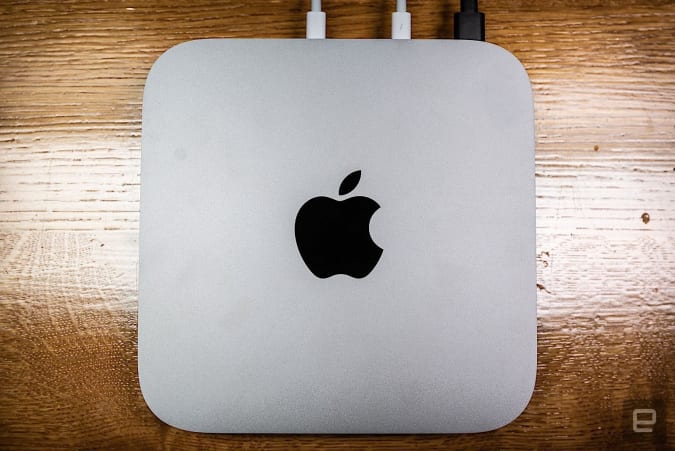
Apple's Mac Mini M1 is down to $600 thanks to an automatically applied coupon that knocks $59 off the sale price. In addition to the M1 chipset, you're also getting 8GB of RAM and 256GB of storage in this model. If you've wanted to upgrade your aging desktop to something more modern and powerful, this is a good option.
The pink model of Apple's AirPods Max are down to a new all-time low of $466. The other colors are also on sale, but for $479. We gave these headphones a score of 84 for their excellent sound quality, good ANC, reliable controls and solid battery life.
Apple's 10.2-inch iPad is still on sale for $299, or $30 off its normal price. It's arguably the best iPad for new tablet owners and we liked its improved performance, familiar design and support for the first-generation Apple Pencil.
The latest MacBook Air M1 is down to $899 at Amazon, or $100 off its regular price. It's one of the best laptops for most people, and the M1 chipset only makes it a better buy. The Air M1 earned a score of 94 from us for its incredibly fast performance, excellent keyboard and trackpad, good battery life and lack of fan noise.
The new Acer Chromebook Flip 713 is on sale for $619 at Best Buy, which is $80 off its normal price. While still pricey for a Chromebook, this is a high-end model that has enough power to be some people's daily driver. We gave it a score fo 85 for its sold performance, good keyboard and trackpad and excellent display.
Those looking for a budget smartphone can grab the Google Pixel 4 for $400, or half off its original price. If you can live with a two-year-old handset, you'll still get a well-powered smartphone with a great camera experience and a smooth display.
Jabra's solid Elite 85h wireless headphones are down to $150 right now, or $100 off their normal price. We gave them a score of 84 for their custom EQ and ANC modes, attractive and comfortable design and insane 36-hour battery life.
The Thermapen Mk4 has been discounts to $69 as ThermoWorks makes room for the new Thermapen One thermometer. The Mk4 is the best instant-read thermometer we've used so far —the backlit display makes it easy to read in almost any situation and the display rotates depending on how you're holding the pen. Plus, you never have to remember to turn it off because the pen automatically turns on when you pick it up and will shut off after some time of no use.
If you're on a tight budget, an open-box sale on the ThermoPop thermometer just started and it knocks the price of most colors down to $25. It doesn't have as many "smart" features as the Thermapen Mk4, but it's still a solid food thermometer with a splash-proof design and the ability to provide readings in 3 to 4 seconds.
The Eero 6 three-pack with one router and two extenders has returned to its Prime Day price of $181 — but at Best Buy rather than Amazon. This system supports WiFi speeds up to 500 Mbps and can cover p to 5,000 square feet. Plus, it has a Zigbee smart home home built in, so you can use it as the starting point for the smart home system you want to create.
In Omaze's latest giveaway, you can win two seats on one of the first Virgin Galactic flights to space. In addition, you'll go on a tour of Spaceport America in New Mexico with Richard Branson. You don't have to pay to enter, but funds from all paid entries will support Space for Humanity, an organization that hopes to make space more accessible for all.
Omaze is giving away another $20,000 to build your ultimate gaming PC. This sweepstakes is free to enter, but funds donated with purchased entries will benefit Schools on Wheels, an organization that provides free tutoring and mentoring services to children experiencing homelessness across Southern California.
Pricing and availability is subject to change. No donation or payment necessary to enter or win this sweepstakes.See official rules on Omaze.
New tech deals
HomePod Mini
Through July 19, B&H Photo has Apple's HomePod Mini speaker for $90, or $10 off its normal price. It's not a huge discount, but it's a good one on a gadget that rarely goes on sale. Aside from a few exclusive Costco discounts, this is one of the best prices we've seen on the HomePod Mini. We gave it a score of 84 for its solid audio quality, attractive and compact design, stereo mode when two are paired together and Siri smarts.
Through the end of August, new Tidal users can get a three-month free trial of either Premium of HiFi subscription tiers. Premium is Tidal's basic music service that normally costs $10 per month, while the HiFi tier includes high fidelity and master sound quality audio and typically costs $20 per month.
Fitbit's Charge 4 tracker is back down to its record-low price of $100. If the smartwatch life isn't for you, this might be a good fit because it does a good job marrying fitness tracking with handy smart features. We gave it a score of 82 for its accurate built-in GPS, standard Fitbit Pay and multi-day battery life.
Jabra's Elite 85t wireless earbuds are down to $180 again, or $50 off their normal price. These are some of our favorite wireless earbuds thanks to their powerful ANC, comfortable size and long battery life. If you can live without the wireless charging case, the Jabra Elite 75t in gold beige are down to $113 right now, too.
A bundle including Google's Nest Hub and the Nest Audio smart speaker is only $139 on eBay, or $60 off what they would be if you purchased them separately. If you already rely on the Google Assistant for all your voice commands, this bundle is an affordable way to expand your smart home with a few solid, Assistant-friendly devices.
Amazon has a bundle including the latest Echo Dot plus a four pack of Tile Bluetooth trackers for $80, which is $40 off its normal price. The Echo Dot is a handy smart speaker to have in your home if you use Alexa to control smart home devices, set timers and alarms and more, and Tile's trackers make it easier to keep track of your keys, bags and other belongings.
One of our recommended VPNs is running a good sale on a two-year subscription. You can sign up for NordVPN for only $89 for the first two years, which comes out to $44.50 per year — and an additional summer promotion adds three free months on top of that. We like NordVPN for its speed, its no-logs policy, the thousands of servers it has to choose from and that one account supports up to six connected devices.