Nearly a decade after its initial release on the seventh generation of consoles, Grand Theft Auto V will come out on PlayStation 5 in March 2022. Rockstar first announced GTA V was making its way to Sony's latest console at the company's previous PlayStation 5 showcase last summer. The enhanced and expanded port was originally supposed to come out in the second half of 2021.
The new trailer Rockstar shared during Sony's promised the game will feature improved graphics, gameplay enhancements and seamless character switching between its three protagonists. It will also come with the game's immensely popular GTA Online multiplayer component.
Project Eve is a futuristic action RPG built for the latest console generation, and today Korean studio Shift Up provided the longest look yet at how it'll play. From today's trailer, it feels like a cyberpunky blend of Nier, Devil May Cry, Bayonetta and God of War, with an energetic undercurrent. And bonus, some of the enemies are truly horrifying.
Shift Up showed off the new trailer during today's PlayStation showcase. The studio didn't provide a release date, but the game is certainly looking closer to completion.
The first teaser trailer for Project Eve hit in 2019 and the game has garnered a small yet fervent group of followers, mainly drawn to the impressive-looking graphics. Shift Up published a second trailer in November 2020 and provided the following description:
"The video depicts 'Eve' and the battle against unknown invaders, NA-tives, to reclaim the lost Earth after its collapse. Intense battle scenes were realized with overwhelming live-action-grade graphics, showing advanced technology of SHIFTUP since the title’s first trailer video. SHIFTUP now operates an independent studio for console games, utilizing technology such as high-density 3D scan system and performance capture system. Development is in progress to show maximum performance on various platforms including consoles."
As promised, Sony is ready to offer a peek at the PS5's future. The company is livestreaming PlayStation Showcase 2021 at 4PM Eastern, and you can watch the whole event below. It won't be a short presentation — Sony said the Showcase will clock in at about 40 minutes, with an after-show providing updates from featured studios.
The stream will officially focus on upcoming PS5 games (including for the holidays) from both PlayStation Studios as well as third-party developers. However, we also wouldn't be surprised if Sony devotes some time to system updates for the console. The company has teased a number of significant OS improvements as part of the beta program, including the option to add SSD storage. This is Sony's big chance to set its agenda for the next year, and it might not limit that agenda to the console's game lineup.
Sony debuted its latest flagship Dolby Atmos soundbar in July. The HT-A7000 is also the first of the company's soundbars to support 360 Reality Audio. The device is premium in every way, from connectivity options that include both 8K and 4K/120fps passthrough right down to the $1,300 price tag. If you don't want to spend that much, but still crave the same features, Sony announced another home theater speaker today. The HT-A5000 is a 5.1.2-channel soundbar that offers nearly all of the same bells and whistles as the A7000, but for $400 less.
In addition to Dolby Atmos, the A5000 also supports DTS:X, and Sony's Vertical Surround Engine simulates audio above your head thanks two a pair of upward firing drivers. S-Force Pro Front Surround creates a wider soundscape horizontally, using the company's X-Balanced speakers and "digital sound field processing" tech in an attempt to make things more immersive. In terms of the actual speakers, the A5000 has seven of those X-Balanced drivers: two up-firing, three front-firing, two built-in subwoofers. The soundbar also packs in a pair of beam tweeters situated on the front corners of the device. If you happen to own a compatible Bravia TV, Sony offers a Center Speaker Mode that uses the television speakers to boost the center channel. The company says that this can help with things like dialog and a secondary wired connection to the TV ensures sound and visuals are in sync.
To properly calibrate the A5000 to your living room, Sony's Sound Field Optimization feature uses built-in microphones to measure speaker position in relation to the walls and the ceiling. This tool can also assess the position of any satellite speakers or a subwoofer to ensure the system is properly adjusted for the space.
Sony
For connectivity, a single HDMI eARC output allows for 8K HDR, 4K/120Hz and Dolby Vision passthrough, making the A5000 a worthy option for gaming in addition to movies and television. The soundbar also offers AirPlay 2, Chromecast, Spotify Connect, Bluetooth and WiFi for wireless connections, in addition to Alexa and Google Assistant for voice control via a separate device. The A5000 is compatible with Hi-Res Audio content and it employs Sony's AI-powered DSEE Extreme technology to upscale compressed files in real time, restoring someof the detail that's otherwise lost. 360 Reality Audio is available for use here via Amazon Music HD, Deezer, Tidal or nugs.net.
There are a few key differences between the A7000 and the A5000. First, the former is a 7.1.2-channel soundbar while the latter is 5.1.2. Depending on your sonic preferences, those two extra channels and two extra speakers may make a difference in immersive sound. Typically, more channels and more speakers means better audio quality and more detail, but some folks may be just fine with a 5.1.2 setup. On the A7000, the tweeters are positioned in a way so that they bounce sound off the side walls to help with the overall immersion. Lastly, the A5000 only has one HDMI 2.1 (eARC) input and the A7000 has two. From supported audio formats to Sony's various home theater tech, nearly all of what the A7000 has to offer is available on the A5000.
Like the A7000, the A5000 works with Sony's latest arsenal of satellite speakers and subwoofers. The company announced two subwoofer options, the SA-SW5 and SA-SW3, and a pair of rear satellite speakers (SA-RS3S) as separate add-ons when it debuted the A7000 in July. All three connect to the HT-A5000 wirelessly. The difference between the two subs is the SW5 packs 300 watts of booming bass via a 7-inch driver and the SW3 offers 200 watts of low-end tone with a 6-inch speaker.
The HT-A5000 will go on sale "in early fall" for $900 at Sony retailers. The SA-SW5 and SA-SW3 subwoofers are $700 and $400 respectively, while the SA-RS3S satellite speakers are $350. All three of those expansion items should be available in September or October alongside the A7000. Sony hasn't yet announced exact dates for any of this new home theater gear just yet.
After teasing it yesterday, Lego and Nintendo have unveiled the Lego Super Mario 64 block set, complete with microscale levels including Peach's Castle along with several microfigures, Lego announced. The companies describe it as a "unique way for fans to rediscover the magic of Super Mario 64."
Along with Peach's Castle, the 2,064-piece set includes Bob-omb Battlefield, Cool, Cool Mountain and Lethal Lava Trouble, all appearing when you unfold the large, brick-built question mark block. You also get microfigures including Mario and Princess Peach, or you can add full-sized Mario or Lego Luigi features for interactive play, complete with "unique music and sounds from the video game," according to the companies. Players can also seek out "hidden Power Stars that reveal secret reactions from the figures," as hinted in the build instructions.
The new set joins other Nintendo/Lego collaboration products, including Lego Super Mario and a Lego Luigi kit. "It’s difficult to imagine the Super Mario Universe without the classic game’s iconic levels full of discovery and secrets," said Lego's Pablo González. It will come exclusively to Lego stores and Lego.com around the world on October 1, 2021, at a retail price of $170.00.
Over the past two decades, iRobot has steadily evolved its Roombas from being fairly dumb robotic dirt suckers to devices that are smart enough to unload their own bins. Now with the $849 Roomba j7+, the company is ready to take on its greatest challenge yet: Pet poop. It's iRobot's first vacuum that can recognize and avoid obstacles, like cables or a pile of clothes, in real-time. And for pet owners, that could finally be reason to adopt a robot vacuum.
After all, you can't exactly trust your bot to clean up while you're away if they could run into surprises from your furry friends. That's a disaster that could lead to poop being spread around your home, not to mention gumming up your expensive bot. To alleviate that concern, iRobot is making a Pet Owner Official Promise (yes, P.O.O.P.): If your j7+ runs into poop within your first year of ownership, the company will replace your vacuum. That should go a long way towards making pet parents feel more comfortable with a Roomba. (It would be nice to see that offer extended beyond just one year, though.)
While the j7+ is technically the smartest Roomba yet, it's not the company's most powerful cleaner. That honor still belongs to the $1,299 s9+. This new model is basically the Roomba i7+ with a more powerful camera, better sensors and far more processing power. It can also automatically empty its bin into a redesigned Clean Base, which is shorter and sleeker than the previous models we've seen. Now you should be able tuck it into an inobtrusive corner, or under a table, instead of dedicating floorspace to a tall iRobot monolith.
With its "PrecisionVision Navigation" — iRobot's marketing term for AI-driven computer vision — the j7+ can detect specific objects, as well as alert you to obstalces in the iRobot app after a cleaning job. You can label them as permanent or temporary obstructions, which helps the vacuum learn how to deal with similar issues in the future. If there's a pile of cords that will always be in one corner, the j7+ will just stop cleaning around that area for good. But if it's just a headphone cord that you've dropped onto the floor, the robot can give that area another go on future jobs. And since it can actually see and interpret your rooms, the j7+ will also be able to clean more gently along walls and furniture.
As it's relying on computer vision, iRobot had to train new models to help the j7+ recognize objects from floor level (there aren't too many other devices with a camera down there). At this point, CEO Colin Angle tells us that it can recognize and a pair of corded headphones on the ground, but eventually it'll handle shoes and socks as well. When it comes to recognizing pet poop, the company captured photos using playdough models, as well as images from employees, to build what's surely one of the most unique machine learning models around.
iRobot plans to bring the j7+'s sensors to future models, Angle says, but it wanted to introduce them in something more people could buy. As much as I like the pricey s9+, it's not a wise purchase when there are cheaper self-cleaning Roombas around.
iRobot
The j7+ is powered by iRobot's new Genius 3.0 software, which will also roll out to the rest of the company's connected vacuums. That builds on the features introduced last year — which includes a better mobile app, smarter scheduling and routine triggers — by adding cleaning time estimates, as well as the ability to automatically clean while you're away. The new OS smarts will also let Roombas automatically suggest room labels as they map out your home. And if you send you intrepid bot to clean one room, it'll be able to move throughout your home quietly until it reaches the work zone.
While I haven't tried out the j7+ yet, it's clear that iRobot is targeting a persistent issue with robot vacuums: trust. Early Roombas required plenty of babysitting, otherwise they could easily get stuck or jammed. These days, I habitually clear out my floors before I start a vacuum run, because even newer models can get into trouble. If iRobot can actually develop a vacuum bot that can deal with obstacles on its own, it may finally have the ideal device for people who hate cleaning. At the very least, it'd be nice to have something I can trust to avoid my cat's poop.
Sony has added another developer to its growing stable at PlayStation Studios. Firesprite, which is behind The Playroom and The Playroom VR, has become the company's 14th studio.
"Firesprite is a creative and ambitious studio that is exceptional at building incredible experiences that truly showcase the potential of our hardware," PlayStation Studios chief Hermen Hulst wrote in a blog post. "The team’s technical and creative capabilities will be paramount to growing our stellar catalogue of exclusive games, and I think you’ll be excited for what’s to come."
Several developers will be returning to Sony as part of the deal. Hulst noted that "quite a few members of Firesprite," including all of the founding team, came from Wipeout developer Studio Liverpool. Sony bought that studio in 1993, when it was known as Psygnosis, but shut it down in 2012.
Sony and Firesprite have been working together more or less since the latter was formed that same year. Firssprite teamed up with Team Asobi on The Playroom, a 2013 collection of augmented reality minigames designed to show off the PlayStation Camera's capabilities. Its most recent game is The Persistence, a survival horror title that hit consoles and PC last year after debuting on PlayStation VR.
The Firesprite team is working on something new, but it's not entirely clear what. Other than The Playroom and Vita and mobile title Run Sackboy! Run!, all of the studio's games have had a virtual reality aspect. Given Hulst's comments and that Sony's working on a second-gen PS VR headset, it wouldn't be a huge surprise to learn Firesprite's next game is for that platform.
I thought BMW’s bizarre crystal sculpture car dash was going to be the weirdest vehicle of the week, but Hyundai thought otherwise. Not only does it involve next-gen fuel cell technology — a car fuel system that’s struggled in the face of EVs — but it also introduces Trailer Drone to the world. This cab-less "hydrogen-powered container transportation system” can apparently function entirely autonomously, according to Hyundai.
On arrival, the trailer could automatically unload itself by lifting on to legs, yes like a real-life Transformer, while the e-Bogie driving frame below dashes off to its next task. And yet, I think betting on hydrogen fuel cell tech still seems the most outlandish part, at least right now.
Apple has announced a "California Streaming" event on September 14th at 1 PM ET. The invitation doesn't offer many clues, but there are already plenty of rumors about what you can expect for the new iPhone, updated Apple Watch. Those have so far included a smaller notch, an always-on display and improved cameras across the line. We might also get new ultra-wide sensors and more camera stabilization. It would include the seemingly obligatory chip upgrade and a slightly larger battery. That last one would be music to my ears.
An FCC filing for a revised MagSafe charger, spotted by MacRumors and 9to5Mac, suggests four "New Phone" items will work with it, alongside last year’s iPhone 12 family.
Unfortunately, this FCC filing doesn't identify the four "New Phone" items it used for testing, but it's very much possible they're the current generation's direct successors, meaning the iPhone mini — my favorite — gets another shot at glory.
It'll be in a few restaurants this week and in grocery stores later this month.
Impossible Foods’ plant-based “chicken” nuggets are now available to buy and gorge on. Mostly made of soy protein and sunflower oil, the Impossible Chicken Nuggets will initially be available in select restaurants across the country, and then sold in grocery stores in the frozen aisle later this month.
Notable restaurants that will be serving them include David Chang’s Fuku in New York City, Marcus Samuelsson’s Red Rooster in Harlem and Miami, Sean Brock’s Joyland in Nashville, Tal Ronnen’s Crossroads Kitchen in Los Angeles.
Ahead of September 9th, when the first full trailer for The Matrix Resurrections is set to appear, Warner Bros. has launched a teaser for the upcoming film. The website, whatisthematrix.com, offers a first look at Neo's latest adventure.
In a call back to the first film, you'll see a red and blue pill on the screen when you first visit the website. Each offers a different narration of several cuts from the movie. But, refresh the site and you get a different barrage of clips and cuts. Time to start sleuthing.
Chinese EV maker Xpeng has teased a robot unicorn for children to ride. As SCMP notes, the quadruped will take advantage of Xpeng's experience with autonomous driving and other AI tasks to navigate multiple terrain types, recognize objects and provide "emotional interaction."
The company is shy on most other details, but the design looks and trots like a cuter, more kid-friendly version of Boston Robotics' Spot. It's about as tall as a child, which I read as meaning I won’t be able to ride it.
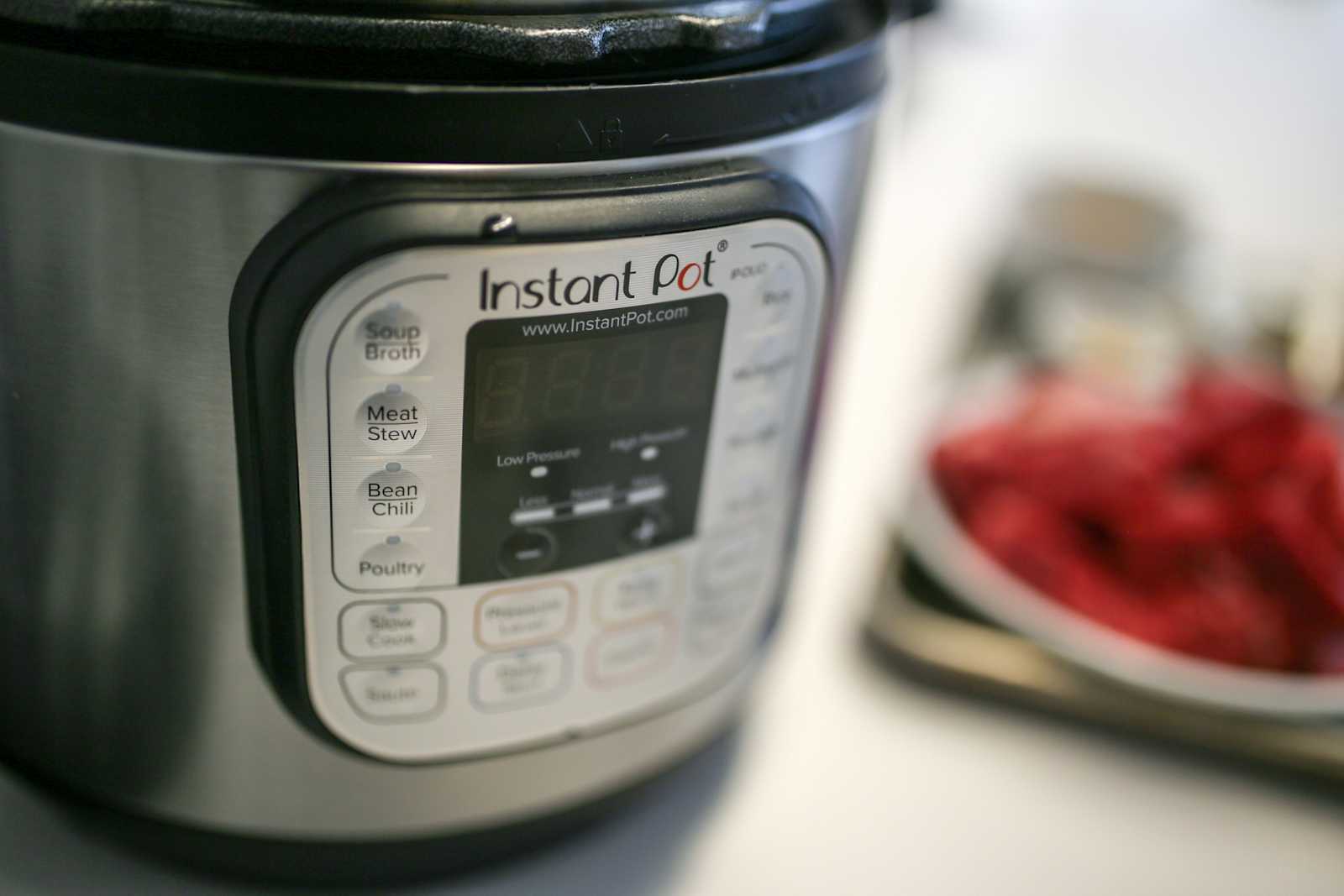
Few kitchen appliances have reached the same cult status as the Instant Pot. With 1.9 million members on the official Instant Pot Facebook group, more than 100 fan-created online groups, around 30,000 reviews on Amazon and accolades from the likes of TheNew York Times, it's no question that this kitchen marvel is a hit.
But what do you do when you get one? With so many recipes on the internet and so many different things you can do with it, where do you even start? In this guide, I'll attempt to give you a primer on the first steps you should take when you get one, some tips and tricks on how to use it and a few favorite recipes and source links. A lot of this comes from personal experience; I've been an Instant Pot owner for a few years. I'll also note that the listed recipes lean toward my own taste, but hopefully this guide will provide a good start for your own culinary adventures.
How Instant Pots work
If you're reading this, you probably already know what an Instant Pot is, but just in case you don't, here's a brief introduction. The Instant Pot is an "all-in-one" kitchen gadget that promises to replace a rice cooker, a yogurt maker and a slow cooker; it also lets you sauté and steam foods. But the real reason the Instant Pot has risen to fame is that it's also a very good electric pressure cooker. This lets you cook food at an accelerated rate; imagine pulled pork in an hour instead of five or a chicken curry done in 10 minutes. And because it's electric, you just press a few buttons and walk away. Unlike a stovetop pressure cooker, there's no need to keep a constant eye on it.
There are a bunch of Instant Pot models to choose from. Some of the lower-end ones lack the yogurt-maker, and a couple of the higher-end models have extra features like sous-vide cooking and canning, but all have the electric pressure cooker function, so much of this guide will focus on that. The Instant Pot comes in 3-, 6- and 8-quart sizes. Unless you're only cooking for yourself or you have a large family, I think the 6-quart model should work for most people.
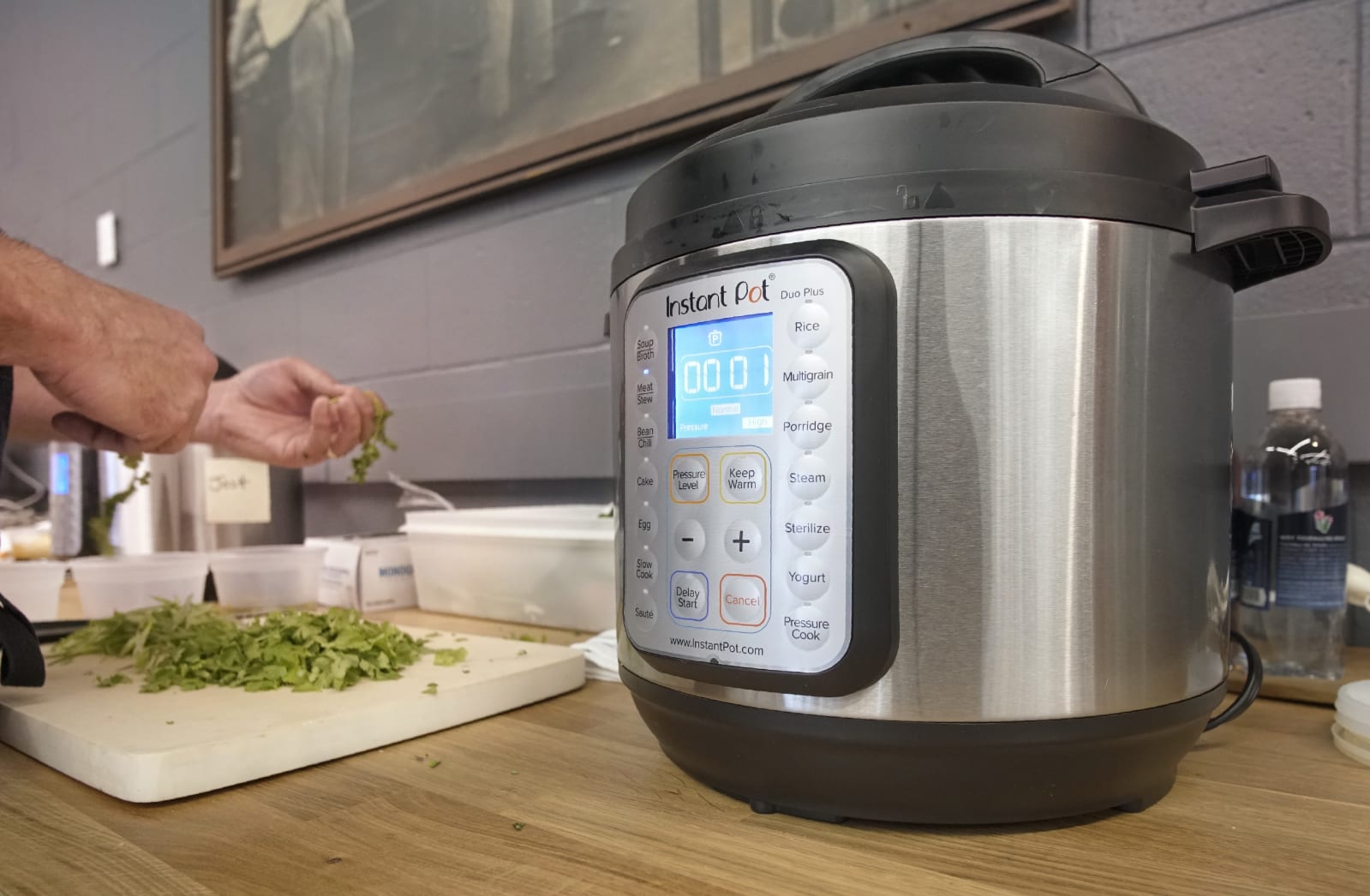
The Duo Plus (starting at $100) is an upgraded version of the Duo Series. It has two additional functions: sous vide (for temperature-controlled cooking) and sterilizer (a steam shortcut for sterilizing items like baby bottles). There’s also a cooking progress status bar plus an anti-spin design that keeps the inner pot in place when you’re sauteing.
The Pro (starting at $115) is designed for the serious cooking enthusiast, with plenty of upgrades over existing Instant Pots. The inner pot has an extra thick bottom that can go on the stove, plus it has handles so it’s easier to lift. It comes with 28 customizable programs for different foods, and there are five favorites buttons that you can assign to frequently cooked meals. The steam release switch has been upgraded to reduce noise and splatter, and there are even steam release reminder alerts with 5- and 10-minute pre-sets. The Pro is also one of a few Instant Pots compatible with an optional QuickCool lid that helps you release pressure faster.
The Duo Crisp + Air Fryer ($180) is basically an Instant Pot that comes with an additional Air Fryer Lid, which adds dry-heat cooking methods like baking, broiling, dehydrating and of course air-frying. There’s also a Pro version of this Instant Pot ($200) that pairs the air fryer lid with the Pro model mentioned above.
The Star Wars Instant Pots ($100) are a great choice for the Star Wars enthusiast or just anyone who wants a fun and unique kitchen appliance. They’re really just rebranded versions of the Duo, with the same exact functionalities and features. They come in five iterations: Little Bounty, Darth Vader, Stormtrooper, BB-8, and R2-D2.
Which Instant Pot model is right for you?
The 6-quart Instant Pot is ideal for most people, but if you’re a singleton or a student, then the 3-quart model is best. For large families, or simply those who like to make a lot of food, then the 8-quart model is a good choice.
If you’re interested in diving into sous vide but don’t want to make an investment in a separate machine just for that, then the Instant Pot Smart WiFi, Ultra, Duo Crisp or the Duo Plus are good choices.
If you’re really into pressure-canning and preserving foods, then the Instant Pot Max is the one for you. It’s the only one that’s capable of reaching 15 PSI, which is needed for pressure-canning.
Making yogurt with the Instant Pot is really easy because it can maintain the same temperature for hours. Models that have this feature include the Duo, Duo Nova, Smart WiFi, Ultra and Duo Plus.
Getting started
With any appliance, I would suggest reading the instructions to get a full idea of how to use it, but here's a brief primer.
The Instant Pot has three parts: the housing with the cooking element at the bottom; the stainless steel inner pot; and the lid, which comes with a sealing ring plus a steam-release valve. Setup is as easy as putting the inner pot inside the housing and plugging it in. You'll also want to attach a tiny condensation collector on the back if the instructions call for it.
The first thing to do is a "water test," which not only helps familiarize you with the basic pressure-cooker features but will confirm your appliance is in proper working order.
To do a water test, put three cups of water in the pot, twist the lid on — it'll make a sound when it's locked in place — and set the pressure cooker on high for two minutes. The way to do this varies from model to model; on the Duo machines, you'll have to press Manual, select High, then dial down the time to two minutes. On something like the Ultra, you just need to go to the Pressure Cooker menu, dial it to two minutes and select High.
Then make sure your valve is set to "Sealing" so that the Instant Pot can build pressure. On the Duo machines, this means rotating it so the arrow points up, while on the Ultra, the valve will automatically be set to Sealing.
Then press "Start." From there, the Instant Pot will build up that pressure to High, maintain it for the set two minutes, and then stop. In some cases, you'll hear hissing and see steam coming out of the Instant Pot. This is totally normal. You'll know the Instant Pot is under pressure when the float valve pops up and the hissing quiets down.
The lid cannot be opened when the Instant Pot is under pressure. You must depressurize it first. Once the cooking is done, you can let the pot naturally depressurize (also known as "Natural Release"), which simply means leaving it alone for 20 or so minutes until the float valve comes down.
Or you can do a manual release (also known as "Quick Release") by switching that aforementioned valve to "Venting." To do that on the Duo models, you rotate the valve, while on the Ultra, you'll press a steam release button on the top. This method will release a lot of steam, so I suggest doing this under a range hood if you have one. Again, once the float valve comes back down, you'll know the Instant Pot has been depressurized.
Doing the water test teaches you the basics of sealing the Instant Pot, setting it and depressurizing it. Plus, if anything goes wrong along the way — especially if it doesn't seal the pressure — you can call the retailer or manufacturer to troubleshoot or ask about a return or exchange. It's a step that many people skip, but I recommend it, especially if you're a beginner.
Instant Pot accessories
The Instant Pot is ready to use right out of the box, but if you want to get even more functionality out of it, then you might want to consider some accessories. The following are just a few suggestions that we think will elevate your Instant Pot experience.
Tempered glass lid
The main reason to get an Instant Pot is to use it as a pressure cooker, but it has other functions too. If you want to use it as a slow cooker or you simply want to keep your food warm, then you’ll want to invest in a tempered glass lid. This lid will also keep your food covered if you want to transfer the inner pot to the table or the fridge.
Steaming food in the Instant Pot is quick and easy, but you’ll want specific equipment to get the job done right. Instant Pot makes two styles of silicone steamers; one is a stacking model that you can use for dumplings or fish, and another is a collapsible one that is ideal for batch-cooking vegetables. If you need even more capacity, we recommend this Hatrigo mesh steamer basket.
Along your Instant Pot discovery journey, you might come across a phrase called “PIP cooking.” This stands for Pot-in-Pot and involves putting another vessel inside the Instant Pot. This method is great if you’re cooking foods that don’t contain liquid (such as cheesecake) or you simply want to cook in smaller quantities. One of our favorite accessories for this is the Aozita Stackable Steamer, which not only acts as a steamer, but also contains tiered containers so that you could cook multiple foods at once.
If you use your Instant Pot for both savory and sweet applications, then we suggest getting extra sealing rings so that the odor of one doesn’t affect the other. You don’t really want your cheesecake to smell like pulled pork or vice versa.
Yet, after using it for a few months, I don’t quite recommend it if you plan on cooking a lot of meals this way. The non-stick coating on the fry basket can flake off if placed in the dishwasher, and as I’ve discovered, it accumulates a sticky film that is almost impossible to wash off. Plus, as I said in an earlier hands-on, the Lid really only works for small batches as well as smaller pieces of food. Even a hot dog is too large to fit inside the air fryer basket.
If you’re going to use the air-fryer lid to add roasting and broiling capabilities to the Instant Pot — so you can brown a roast chicken or melt the cheese on a lasagna, for example — then it’s not a bad option. But as far as air-frying goes, I’d probably save up and invest in an actual convection toaster oven rather than settle for the lid.
Tips and tricks
Let's go over a few tips and tricks on how to best use the Instant Pot. This is not an exhaustive list, as different people might have different takeaways from their usage of the Instant Pot, but these insights are what I found works best for me.
Don't worry about all the buttons
When you first get the Instant Pot, you might be overwhelmed by all of the different buttons on the front of it. There are ones that say "Meat/Stew," "Chili/Beans," "Multigrain," "Egg" and even "Cake." With the exception of a few, most of these are simply shortcuts that Instant Pot programmed ahead of time. You might never need to use them.
The most important buttons to know are "Sauté," which (as you might expect) lets you sauté things in the pot, and the aforementioned "Manual" or "Pressure Cooker" function. The rest are pretty superfluous, with the exception of "Keep Warm," "Cancel" and non-pressure cooker functions like the "Slow Cooker" or "Yogurt" (which helps maintain the cultured milk at a specific temperature).
Add at least half a cup of liquid, and don't go over the maximum
One of the things you'll learn about pressure cooking is that you don't need to add as much liquid like you would in regular recipes. But you'll still need to add some liquid because the pressure cooker requires some moisture to build that pressure. Otherwise, the Instant Pot could overheat and show an "OvHT" error on the display. On the other hand, you shouldn't fill it up beyond two-thirds capacity, which is handily marked on the inside of the inner pot. The Instant Pot probably won't explode on you — it has a lot of safety features to prevent that — but you probably shouldn't test its boundaries.
Cooking times aren't always accurate
Setting the pressure cooker timer for two minutes doesn't mean the entire cooking time is two minutes. You have to take into account the amount of time the Instant Pot needs to come to pressure and the time it'll need to depressurize. The more stuff you have in the pot (and the colder it is), the longer it'll take. Because of that, a "five-minute" chicken curry could really be more like 10 or 15 minutes from start to finish.
Clean it carefully and frequently
The inner pot is dishwasher safe, which is great, but the rest has to be cleaned by hand. Also, don't make the same mistake I did and accidentally spill something hot directly on the cooking element. The outer shell is hard to clean because you can't put it in the sink — electricity and water don't mix, after all — and you risk damaging the appliance. As for the lid, hand wash it after every use. You'll also notice after a while that the sealing ring — the rubber/silicone gasket on the inside of the lid — might develop an odd smell as it absorbs the scent of the food you're cooking. I recommend soaking it in a vinegar solution, or you could also put it on the top rack of your dishwasher for a couple of cycles.
Consider a separate sealing ring
If you find yourself cooking desserts in addition to savory meals — it's great for making cheesecakes and puddings — I recommend a separate sealing ring just for that. You probably don't want your cheesecake to smell like pulled pork, unless you're into that sort of thing.
You can't cook everything with it
Sure, you can cook everything from dog food to jam in the Instant Pot, but it's not a miracle worker. You can't deep fry in it. You can't bake a pie in it. Don't be ridiculous.
Recipes and guides
Now you're all ready to cook, and you're probably dying to know what to make in your newfangled machine. Due to the popularity of the Instant Pot, you'll find no shortage of cookbooks and recipe tutorials online. That aforementioned Facebook group is a good place to start, and there are numerous YouTube videos that are helpful as well. Here are just a few of my favorites:
Amy and Jacky are part of the OG Instant Pot community, and their site is great for beginners. Not only will you get the low-down on the aforementioned water test, but you'll also get great recipes for bone broth, "fail-proof" rice, yogurt, cheesecake and more.
Whether or not you're into the "paleo" lifestyle, you'll like Michelle Tam's list of Instant Pot recipes. Pressure cookers are great for shortening the amount of time for cooking braised meats, and she has a lot of recipes that cater to your inner carnivore. Her Instant Pot pulled pork recipe is still my go-to, and the short ribs are great as well.
My personal favorite site for pressure-cooker recipes is probably Serious Eats. All of these recipes are fantastic. I've tried the chicken stock, the mushroom risotto, the chicken pho, the chicken and chickpea masala, and they've all been outstanding.
Another personal favorite is The New York Times cooking section, which has a list of wonderful pressure-cooker-friendly recipes. My favorites are from Melissa Clark, who has written two Instant Pot cookbooks: Dinner In an Instant and Comfort in an Instant. There's a recipe in Comfort in an Instant for spaghetti and meatballs that I was hugely skeptical of but turned out to be one of the most amazing things I've ever made. I also love the recipes for chicken korma and shrimp biryani.
If you’re at a complete loss with what to do with your Instant Pot, then we recommend trying out products from Tiller & Hatch, a company that specializes in pressure cooker-ready frozen meals. Simply unload the contents of a bag into your Instant Pot, follow the instructions and you’ll have dinner in minutes. Some of the meals are better than others — I prefer the minestrone soup over the gnocchi — but on the whole I think they’re a pretty good value. Each bag costs around $16 and has four servings each. You can sign up for a subscription plan on the website, or pick up individual meals from select Wal-Mart and Target locations.
Other sources
Here are a few other guides that I found very useful in my own Instant Pot journey, and they contain links to many more recipes and sites than I have space for here:
With all of this information in your arsenal, you should have no fear in picking up an Instant Pot. Thankfully, not only is the base model pretty affordable at less than $100, Amazon frequently puts it on sale either on Prime Day or on Black Friday. So if you haven't bought one just yet, it's not a bad idea to wait until one of those times of year to get one at a deep discount. And when you do, come on back here, read through the guide once more and venture off on your own pressure-filled culinary adventures.
Images: Detroit Free Press via Getty Images (First Instapot); Portland Press Herald via Getty Images (Instapot / chopping board); Boogich via Getty Images (cooking)
Polestar's electric cargo sled now exists as more than just a pretty 3D render. The EV maker has unveiled its first working prototype of the Re:Move it introduced half a year earlier. The three-wheeler hasn't changed much since March, but it's now clear just what the machine could do.
The Re:Move demo unit is about as fast a typical e-bike with a 15MPH top speed and a 2.2kWh battery. However, it can haul a lot more. The 400lbs maximum load isn't as heavy as the 600lbs Polestar claimed early on, but that still makes it a viable alternative to delivery vans in some cases. It's nimbler than vans, too, with a 29-inch width (easily enough for a bike lane) and a 23-foot turning radius.
You can also expect always-on lighting, brake lights and a horn, although indicators are optional in Polestar's vision. The Re:Move should be more eco-friendly thanks to composite frame covers that replace the usual plastic and flax.
Polestar still hasn't said how likely it is to produce the Re:Move, let alone offer pricing or availability. The automaker certainly has roles in mind for the Re:Move, however. It pictures the sled filling in for lighter delivery duties, such as online orders. The machine might also help in rural areas where there isn't much infrastructure for conventional vehicles. Don't be surprised if you see this or vehicles like it in villages where more 'conventional' EVs just wouldn't be an option.