Amazon announced a revamped Kindle Paperwhite family last month, but the standard Kindle remains one of the best options if you're looking for a reliable and relatively affordable e-reader. It's normally priced at $90, but you can get it for $60 right now in a limited-time sale. The only time we've seen the e-reader drop to a lower price was during Prime Day back in June when it was $55.
We gave this model of the Kindle a score of 91 when it came out in 2019 — while it doesn't have as many bells and whistles as the Paperwhite has, it will be exactly what some need in an e-reader. Key upgrades include a higher contrast display and four LED front lights that make it easier to read in dark environments. Amazon also refined the design to be sleeker, although this Kindle is not waterproof like the Paperwhite is.
The Kindle excels at being a basic e-reader and it will be an upgrade if you're used to reading books and articles on your smartphone's screen. The anti-glare display is much easier on the eyes, the built-in 8GB of storage can thousands of titles and the battery will last weeks on a single charge. The only major downside to the Kindle is one that all other Kindles have, too: you'll have to deal with Amazon's lockscreen ads, unless you pay extra to remove them.
If you are interested in the extras that come with the Paperwhite, Amazon seems to be trying to get rid of the previous version as it anticipates the arrival of the 2021 e-reader, which will ship at the end of this month. The 2018 Kindle Paperwhite in twilight blue is currently on sale for $75, which is a record low. This model gives you a higher density display, a waterproof design and Audible support, so you can listen to audiobooks saved on the device when you connect a pair of wireless headphones. Both e-readers are good choices, so it ultimately comes down to which features are necessary to you and how much you're willing to spend.
While Chromebooks are meant to be an affordable alternative to standard laptops, you could easily drop hundreds on a fancy Chrome OS devices. Out of all of the Chromebooks we've tried, Lenovo's Flex 5 hits a sweet spot that most people will appreciate thanks to its solid performance, convertible design and attractive price tag. But today you can get the machine for even less thanks to a one-day sale on Amazon — the online retailer has the laptop for $300, or $130 off its normal price and a new record-low.
The specs on the Flex 5 are good even at its normal $430 price tag, but they're made even better by this sale price. The laptop has a 13-inch 1080p touchscreen along with a 10th-gen Core i3 processor, 4GB of RAM and 64GB of storage. Getting a Core i3 Chromebook for $300 is a great deal, and the memory and storage numbers are pretty standard for midrange Chrome OS devices. We'd never recommend a standard laptop with 4GB of RAM, but Chrome OS does more with less. One of the reasons why we named the Flex 5 our favorite Chromebook is that it performed well even with just 4GB of RAM. As far as storage goes, as long as you're not installing a bunch of Android apps or downloading your entire Netflix library, 64GB should serve you well.
We also appreciate the Flex 5's convertible design, allowing you to use it as a tablet if you wish. The laptop isn't the slimmest, measuring 0.66-inches thick and weighing about three pounds, but it does include two USB-C ports and a USB-A port, which is a more modern selection compared to those on other affordable Chromebooks. Lenovo did a good job packing a lot of value into the Flex 5 Chromebook — it's rare to find this combination of features at such a reasonable price point, and now that it's $130 less then usual, it's a no-brainer for anyone looking for a new Chrome OS laptop.
Follow @EngadgetDeals on Twitter for the latest tech deals and buying advice.
Amazon came out with the Fire Kids Pro family earlier this year to give parents with older children a secure tablet option. But since they have a couple more bells and whistles when compared to the standard Fire Kids tablets, these slabs come at a premium. However, Amazon has discounted the entire lineup, so you can grab one of the tablets for as low as $60. That's the price of the Fire 7 Pro, while the Fire HD 8 Kids Pro has dropped to $90 and the Fire HD 10 Kids Pro is on sale for $140.
Designed for kids ages six and up, the Fire Kids Pro tablets are similar to the standard kid-friendly slabs in that they come with a two-year warranty, a protective case and one year of Amazon Kids+. The latter also includes more content better suited for school-aged children rather than toddlers, including things like content from National Geographic, LEGO, Rabbids Coding and others. Kids Pro tablets also have a digital store in which parents can approve all apps purchases and downloads that their children request. That's on top of the standard parental controls that come with all Fire Kids tablets, making these slabs good options for parents that want to keep a close eye on what their children are doing while on their devices.
The biggest difference between the various Kids Pro tablets is their screen sizes — 7-, 8- and 10-inch models are available, and unsurprisingly, the Fire HD 10 Kids Pro also has the most power. It runs on an octa-core processor and 3GB of RAM, and should last up to 12 hours on a single charge. While the Fire 7 Kids Pro is best for those with tight budgets, we'd recommend upgrading to the Fire HD 8 Kids Pro for, at the very least, its USB-C charging port (the 7-inch tablet relies on a dated microUSB port).
Follow @EngadgetDeals on Twitter for the latest tech deals and buying advice.
If you've been on the market for a new portable drive, a microSD card for your Nintendo Switch or even an SSD for your PS5, Amazon has a big, one-day sale on a bunch of storage devices from brands like PNY, Crucial and Lexar. There are quite a few notable deals in this sale, two of which can help you store more games on your preferred console. Our favorite cheap SSD for the PS5, PNY's 4TB XLR8 CS3040, is down to a record low of $520, while Lexar's 1TB Play microSD card for the Nintendo Switch is nearly half off, bringing it down to an all-time low of $128.
All variations of PNY's XLR8 internal SSD have been discounted in some way — you can pick up a 1TB version for $145 — but you'll get the best deal if you spring for the 4TB model. Even at its normal price of $700, it was the only high-capacity SSD we could thoroughly recommend in our PS5 SSD guide due to its comparatively low price. And while Lexar's Play microSD card can be used in other devices like tablets, it's a great option to add more storage to your Nintendo Switch thanks in part to its 150MB/s read transfer speeds.
A couple of Crucial portable SSDs are included in this sale, too. The speediest option is the 1TB Crucial X8 drive, which is 21 percent off and down to a record low of $100. It has a slick yet durable design, supports read speeds up to 1050MB/s and can be used with iPad Pros, game consoles including the Xbox One, Android smartphones and more. If 1TB just won't cut it for you, Crucial's 2TB X6 SSD is also down to an all-time low of $143. It has a more square design than the X8 and it supports read speeds up to 540MB/s, so it'll be the better option if you care more about capacity than super-fast performance.
Unsurprisingly, Amazon filled out this daily deal with additional discounted SD cards and flash drives. Arguably the best on that front are the Lexar Professional-series SD cards, which will be good for photographers and videographers — a 128GB Professional 2000x card is $80 off, bringing it down to $110. And there are even a couple bay stations included in this sale, like this DiskStation from Synology that's down to a new low of $400.
Follow @EngadgetDeals on Twitter for the latest tech deals and buying advice.
Alongside a massive AirPods sale today, Beats' new Studio Buds have hit a new record-low price on Amazon. The online retailer has the wireless earbuds for $125, or $25 off their normal price and $5 less than their previous low. All three colors are on sale, so you can choose from black, red or white and get the same savings.
Beats finally figured out the formula to make a pair of wireless earbuds that should please the masses. The Studio Buds impressed us enough to give them a score of 84, and we consider them to be the best Beats earbuds for most people. They have a small, comfortable design with IPX4 water resistance, which will make them good companions during workouts. The sound quality is good with (unsurprisingly) punchy bass, and they support Apple's Spatial Audio feature, too. Active noise cancellation is good as well and it uses adaptive gain control to adjust in real-time based on the noises in your environment. While ANC use will affect battery life, you should be able to get five to eight hours of use on a single charge.
Since they are technically Apple earbuds, the Beats Studio Buds have the H1 chip inside, allowing them to pair and switch easily between Apple devices. But Android users can also get some of that convenience now that the Studio Buds support Fast Pair, a feature which allows Android devices to quickly recognize the buds during the initial setup. The earbuds also work with Find My Device on Android, so you can always see their last known location.
There are a few downsides to the Studio Buds, though. Notably, their case doesn't support wireless charging, and they don't have onboard volume controls or sound customizations. However, Beats fans will likely overlook those shortcomings to get an attractive, reliable pair of wireless earbuds with a sound profile they're sure to enjoy.
Follow @EngadgetDeals on Twitter for the latest tech deals and buying advice.
Amazon is having a huge sale on AirPods right now, slashing up to 35 percent off some models. Of note are the AirPods Pro, Apple's best sounding earbuds, which are back down to $179. That's $70 off their normal price and only $10 more than the record low that we saw during the holiday shopping season last year. Also discounted are AirPods with the wireless charging case, which are down to an all-time low of $129, and AirPods with the standard case, which are on sale for $109. Amazon claims these are "limited time" sales, so it's unclear if these discounts will be available after today.
While we thought we might hear about new AirPods during Apple's event last month, the tech giant didn't announce anything new in that department. That means all of these models are a few years old at this point, but they remain some of the best true wireless earbuds you can get if you live within the Apple ecosystem. AirPods Pro earned a score of 87 from us for their improved sound quality, better fitting design with IPX4 water resistance and convenient features like hands-free Siri access. They're far and away the best sounding Apple earbuds you can get, and they do a good job of blocking out surrounding noises with active noise cancellation and Transparency Mode.
Regular AirPods are better for those who already liked the fit of Apple's EarPods, which used to come with each new iPhone. They have decent sound and good wireless range, plus a solid five-hour battery life, too. But what sets any pair of AirPods apart is their fast pairing and switching between Apple devices. The H1 chip inside allows them to recognize which device you're actively using and switch to it, so you can go form taking a call on your iPhone to listening to music from your Mac.
Aside from the AirPods Pro, the kicker in Amazon's sale is the wireless charging case — they originally cost $199 but have been hovering at $159 for months. The last time we saw them close to this $129 record low was in early August. And that means you're only paying $20 extra for the wireless charging case, which is a great deal.
Follow @EngadgetDeals on Twitter for the latest tech deals and buying advice.
Although most tech deals this week were limited-time sales, there remain a few good ones to consider as we head into the weekend. Apple's Mac Mini M1 is down to $600, or $100 off its normal price, and Best Buy has the original Google Nest Hub for only $40. Solo Stove is having a sale on its Bonfire fire pit and some of our favorite Sennheiser wireless earbuds are still $100 off. Here are the best tech deals from this week that you can still get today.
Mac Mini M1
Apple
Apple's Mac Mini M1 is down to its all-time-low price of $600 thanks to a sale and an automatically applied coupon. You're getting all of the performance boosts provided by the M1 chipset in a compact desktop package. This is a good machine to get if you have an older desktop that needs replacing, but you don't want to spend a ton of money.
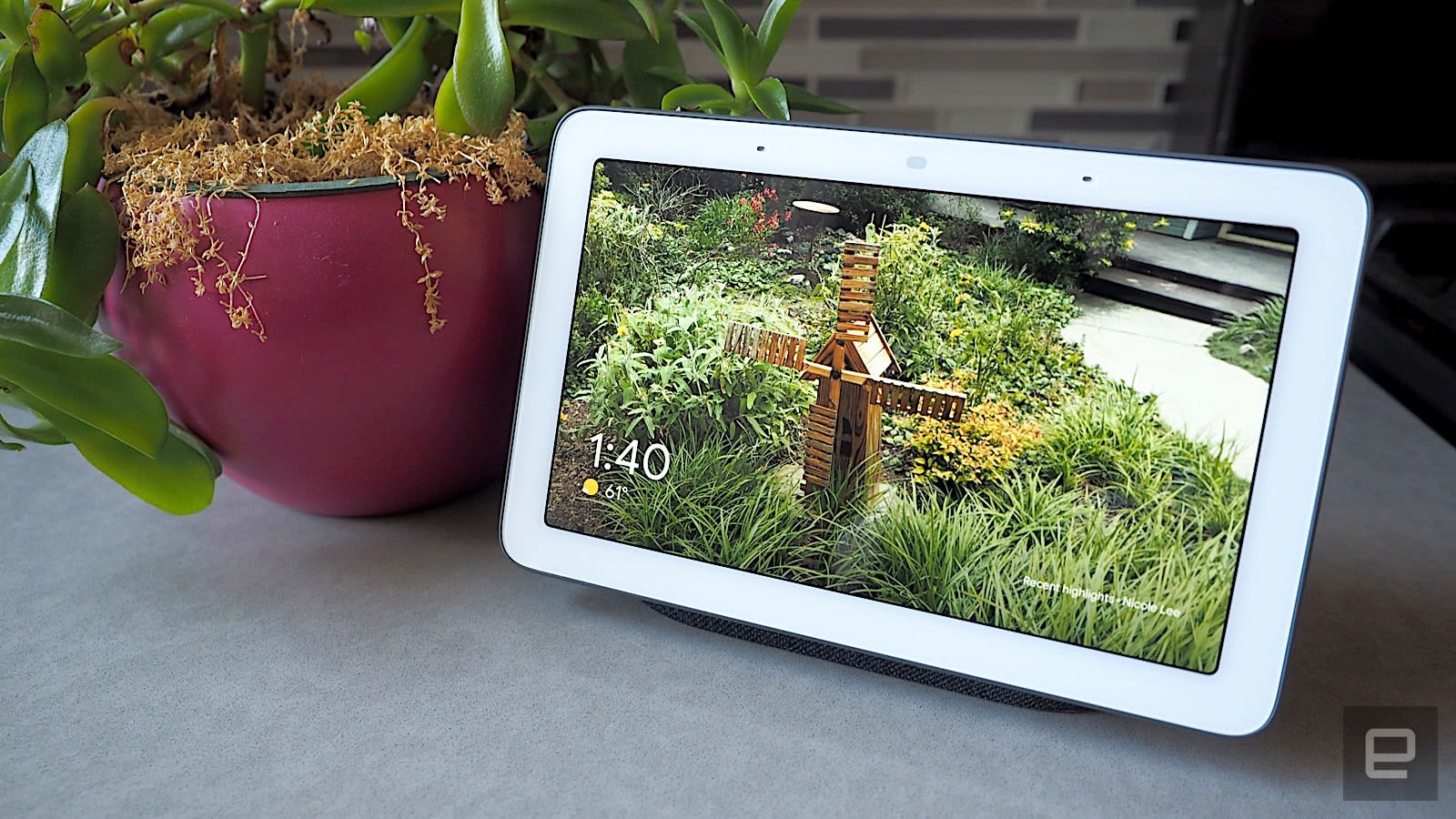
Google's original Nest Hub is down to $40 at Best Buy, or $50 off its normal price. While it doesn't have the motion sensor and the improved audio of the latest Nest Hub, we still like it for its lovely 7-inch display, minimalist design and solid performance.
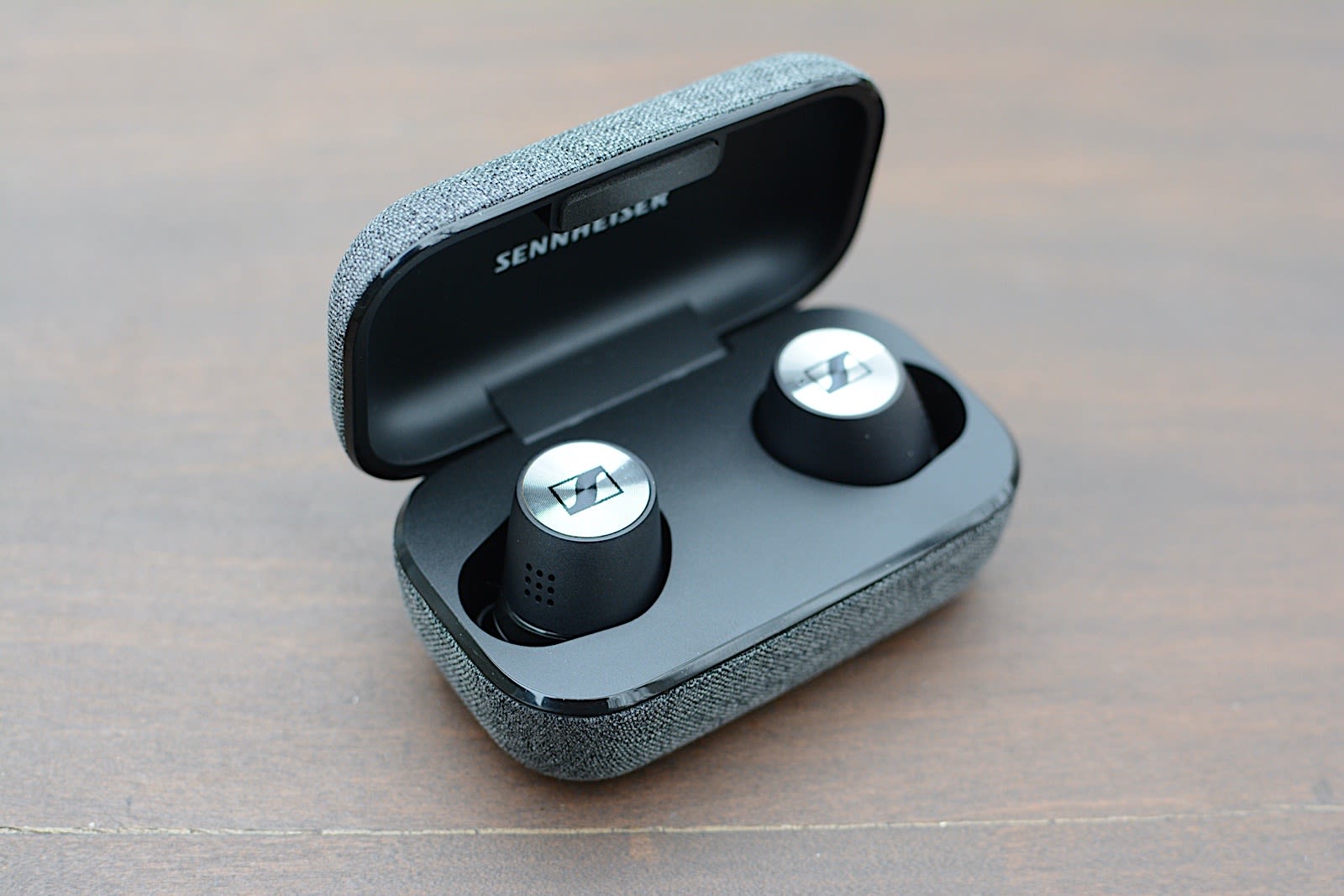
Amazon and Sennheiser have the excellent Momentum True Wireless 2 earbuds for $200, or $100 off their normal price. We gave these buds a score of 85 for their stellar audio quality, good ANC, smaller size and handy companion app.
Solo Stove's Bonfire is $100 off right now, bringing it down to $250. This is one of the company's best-selling fire pits and it's made it into some of our outdoor-focused gift guides in the past. It's a good device to get if you like gathering around a fire pit in the backyard but you don't like the smoke or cleanup that typically comes with it.
Through October 6, GOG.com has more than 120 games on sale, with some up to 90 percent off. Included this time around are Blood Omen, Elvira, Baldur's Gate, Dishonored, Wolfenstein, Cuphead and more.
Fitbit's Luxe tracker is down to $100 on QVC, or $50 off its normal price. We gave this slim band a score of 82 for its delicate design, solid activity tracking and good battery life.
Through December 8, you can enter to win four-day passes to San Diego Comic-Con 2022. Along with the passes, you'll get access to a special preview night, reserved seating in Hall H, a personal concierge, a private tour of the Comic-Con Museum, dinner in Balboa Park and tickets to the "Night at the Comic-Con Museum" event. It's free to enter, but funds from this sweepstakes will go to the San Diego Comic Convention.
Woot is having a big sale on 2019 and 2020 iPad Pros, knocking some 12.9-inch models down to $769. Apple's most powerful iPad hasn't changed much in look over the past few years, but the 2021 models got a big upgrade in performance with the M1 processor. If you're comfortable skipping that and a number of other, smaller updates, you could save a bunch and still get a powerful iPad. Just make sure to review Woot's return policy before you buy.
75-inch Hisense U6G Series Quantum Dot 4K Android TV
This massive Hisense 4K smart TV is $255 off, bringing it down to $995. It has local dimming zones for better brightness, Quantum Dot technology for rich colors and it supports Dolby Vision and Atmos. It also has auto low latency mode for better gaming, and Android TV gives you access to a plethora of streaming services including Netflix and Prime Video.
Through October 7, Satechi has knocked 20 percent off of its 100W USB-C PD wall charger, bringing it down to $56, when you use the code GAN100 at checkout. This brick uses gallium nitride technology to prevent overheating and provide a faster, more efficient charge. Not only can it power up smartphones and tablets, but it can juice up a 16-inch MacBook Pro at full speed as well.
NordVPN, one of our favorite VPNs, is running a sale on a two-year subscription. You can sign up and pay $99 for two years, plus you'll get an extra three months free. We like NordVPN for its speed, its no-logs policy, the thousands of servers it has to choose from and that one account supports up to six connected devices.
If you've wanted to add to your Google Assistant home setup without spending too much money, Best Buy has a new way that you could do that. The retailer has the original Nest Hub smart display for $40, or $50 off its normal price. This gadget came out in 2018 and has since been replaced by the sleep-tracking, second-generation Nest Hub — but if you're willing to skip a few new features, you can get a largely similar device for one of the best prices we've seen.
We gave the original Nest Hub, formerly known as the Google Home Hub, a score of 87 when it first came out for its lovely 7-inch display, charming minimalist design and extra privacy thanks to a lack of a camera. It makes a good smart alarm clock, even if it is slightly larger than something like the Echo Show 5, but it also won't look out of place on your kitchen countertop. It can even act as a digital photo frame if you use Google's Live Albums feature. Plus, you can control smart home devices from its touchscreen, and it'll show feeds from Nest security cameras so you can check in on any area of your home more easily.
So what will you miss out on if you opt for the previous-generation device instead of the new, $100 Nest Hub? It comes down to three main things: the Soli motion sensor, improved audio and a speedier Google Assistant. The Soli sensor enables gesture controls as well as sleep tracking, so you could position the new Nest Hub on your nightstand and it will track things like time asleep, sleep quality and snoring. We weren't super impressed by the device's nighttime tracking abilities, but we expect improvements to be made in future software updates.
As for sound and the Assistant, the new Nest Hub has the same audio system as the Nest Audio speaker, so it's a big improvement over the original. Plus, the onboard machine-learning chip allows the Assistant to respond more quickly to queries and commands. Overall, the latest Nest Hub is an improvement on the original, but the first-generation device remains a solid option if you're on a strict budget or if you feel you can safely skip the latest upgrades.
Follow @EngadgetDeals on Twitter for the latest tech deals and buying advice.
Fitbit went back to basics with last year’s Charge 4, reinstating a fitness tracker with onboard GPS into its lineup after many years of leaving that hole unfilled. With the introduction of the $180 Charge 5 this year, the company is trying to modernize its most capable band. It’s thinner, lighter and less bulky than the Charge 4 and it now has some features previously reserved for Fitbit’s full-fledged smartwatches, the Versa and Sense.
That translates to a $30 increase in price, and on top of that, Fitbit’s hoping you’ll pay $10 each month to access your historical health data (and more) through Fitbit Premium. The Charge 5 certainly feels more polished than the Charge 4, but those who prefer bands to smartwatches will find that most core features remain the same — and you’ll have to decide if the perks of Premium are really worth paying for.
Design
I was surprised by how much of a difference was made by Fitbit updating the design of the Charge 5. It’s 10 percent thinner than the previous version and has new rounded edges, and the module itself is stainless steel in a color that should complement the band choice you picked. It feels less bulky on the wrist and its rounded edges make it so the device doesn’t stick out as much. If you’re wearing the band tightly, the Charge 5 sits more flush against the wrist than the Charge 4 did, so it’s less obtrusive and more comfortable. The strap is also better, too: the Charge 5 comes with a soft-touch band that looks (and hooks) almost like the Apple Watch’s sport bands.
The display has been updated as well: it’s a 1.04-inch color AMOLED touchscreen that wakes up when you lift your wrist. It’s leaps and bounds better than the grayscale OLED screen on the Charge 4 and it puts the Charge 5 more in line with Fitbit’s smartwatches.
It also has a new always-on feature, which you can activate in the settings. It will automatically turn off at night if you have sleep mode turned on, but otherwise, it keeps the clock and watch face on, if slightly dimmed, all day long. This obviously affects battery life and Fitbit makes that clear.
But with the addition of a touchscreen, Fitbit took all physical buttons off of the Charge 5. You may think the shiny slivers on the long edges of the module are capacitive-touch buttons but they’re not — they’re actually the electrodermal activity (EDA) sensors that enable stress monitoring. While I didn’t have any problems using the touchscreen, it was a bit weird to not have a button to fall back on because I was used to the inductive side button on the Charge 4.
New (and old) features
Fitbit trickled down a few advanced features from its Sense smartwatch to the Charge 5, namely ECG measurements and EDA monitoring. The former is “coming soon,” so I wasn’t able to test it, but the latter is similar to the EDA tool on Fitbit’s smartwatch. Instead of covering the device’s screen with your palm like you would on the Sense, the Charge 5 has two long sensors on its sides that you pinch and hold when you want to take an EDA scan.
At first, I didn’t know you could change the duration of each scan, so I sat in semi-frustrated silence for three whole minutes (torture, I know). The EDA sensor looks for changes in your skin that may be linked to stress and it’ll report how many differences it captured at the end of the scan. The Charge 5 reported 18 incidents in my first session, which probably reflected my increasing frustration with the tool as I used it.
Valentina Palladino / Engadget
The device’s screen counts down the remaining time in your scan, but it doesn’t show anything else. Fitbit used to have guided breathing exercises on its devices which would take you through a few minutes of breathwork with the intention of calming you down. Fitbit still has meditation exercises available in its app (most available via Premium, with only a scant few free) but I wish Fitbit had brought over that aspect into its EDA tool on the Charge 5. I never felt significantly more calm after a scan — if anything, pausing during my busy day to have my fitness tracker tell me that I might be stressed, without providing any aid, made me more annoyed than less.
Otherwise, the Charge 5 is much the same as the Charge 4, although all of its features look a bit more glossy thanks to the full-color screen. The GPS was, arguably, the most important thing about the Charge 4 and it remains solid on the Charge 5. The built-in sensor grabbed my location within seconds of me starting a run and my route was accurately mapped in Fitbit app after I synced.
But Fitbit didn’t add more music-focused features. In fact, it actually removed some, which is a bummer. The Charge 4 had no onboard storage and only Spotify Premium subscribers could control playback from its screen. According to Fitbit, it’s data showed that customers weren’t using the music controls a lot, so they removed the Spotify option as well. While I understand the logic, I was disappointed each time I ran with the Charge 5 — I would turn to my wrist to skip a track only to immediately realize I had to take my phone out of my fanny pack.
On a positive note, Fitbit added solid alarm and timer apps on the Charge 5. The device is not designed to have as many onboard programs as a smartwatch, but these are pretty basic and many fitness bands include them. I love being able to set daily alarms so I never forget to take medication, and I inevitably end up setting a timer or two each day to keep track of laundry, cooking food and the like.
What you get with Premium
Fitbit has been slowly incorporating Premium, its $10-per-month health and fitness service, into all of its devices over the past few years. What that means for the Charge 5 is that some advanced metrics are behind that paywall, along with things like wellness reports, guided workouts, meditations, recipe inspiration and more.
My biggest problem lies with the walled-off health metrics. It essentially means that Fitbit users can only get the data necessary to up their sleep and exercise game if they pay for it. You may only realize how much of your data you don’t have access to after using the Charge 5 for months, too, which is a bummer (you get six months of Fitbit Premium when you buy a new Charge 5, so at least you’ll get a taste of it).
For example, Premium gives you access to 30-day and 90-day health trends based on your recorded data, plus “advanced” health insights related to your heart, activity, sleep and more. And Fitbit’s wellness reports, which gathers your recorded information about heart rate, steps, weight, water and food intake, exercise, sleep and more for you to easily give to your doctor, are only available to subscribers.
A new feature only available to Premium subscribers is what Fitbit calls a Daily Readiness Score. It basically tells you how ready your body is to work out any given day based on things like heart rate variability, sleep and fitness fatigue. This sounds similar to Garmin’s Body Battery score (which, by the way, doesn’t cost anything extra).
However, I couldn’t test this out because it’s “coming soon” just like the ECG app I mentioned earlier. Fitbit has hyped up its new products with coming-soon features for years, with at least a few of them taking forever to actually arrive. It should go without saying, but I wouldn’t recommend buying a Fitbit device for any yet-to-be-released features — it may take months for them to actually arrive.
This isn’t a Fitbit Premium review — I haven’t gathered enough data with the Charge 5 to get the most out of the service, and that can only be done by spending at least a few weeks to a few months with it. But I will say that Premium really isn’t for someone like me who already has a fitness system in place and already tries to eat as healthily as possible (most of the time). But it may be useful for those just getting started on their fitness journey, whether that means they’re trying to lose weight, exercise more regularly or eat better. Premium’s video workouts and recipe inspirations aren’t particularly special (I guarantee you’ve seen similar one-minute recipe videos on Instagram), but having them all in one place encourages you to use them on a daily basis. A common idea in the fitness world is that the hardest part of working out is actually showing up to do it. That can translate to many parts of someone’s health journey — Fitbit’s Premium service removes a lot of the guesswork that can make living healthier seem inconvenient.
Battery life
Fitbit promises up to seven days of life on the Charge 5, but that estimate drops to two days when you have the screen in always-on mode. Thankfully, Fitbit’s estimates were mostly correct — I got about two and half days with always-on mode enabled and five with it disabled. Just keep in mind that how often you use the built-in GPS will affect battery life, too. During my time with the device, I used the GPS almost every other day for 45 minutes to one hour during my runs.
The competition
It’s hard to compare the Fitbit Charge 5 to other fitness trackers because there aren’t many at the $180 price point. Most simple band-style trackers are more affordable, like the $80 Garmin Vivofit 4 or the $130 Vivosmart 4, while smartwatches like the $200 Garmin Forerunner 55 dominate the higher end. Arguably the most comparable device out of those is the Vivosmart 4, which has a thinner design but a less exciting, grayscale OLED screen. It also only has connected GPS, not onboard, but it does have features like all-day activity monitoring, workout tracking, VO2 max measurements, Body Battery scores, sleep and blood oxygen tracking and more. It also does have music controls directly on the device and a similarly long battery life.
And when it comes to Fitbit’s own lineup, the Charge 5 shares a lot of features with the $150 Luxe. Sure, the latter is thinner and targeted more towards those who want a bracelet-like wearable, but it’s more affordable and has a full-color display (which will soon support always-on mode), activity and sleep tracking, smartphone alerts, and more. What it doesn’t have is onboard GPS and Fitbit Pay.
Wrap-up
When you’re talking about $180 for the Charge 5, it’s tempting to say “just get a smartwatch instead.” You could get a capable Garmin smartwatch for only $20 more than that, or even an Apple Watch Series 3 (although I wouldn’t recommend the latter). But one of the reasons many will consider the Charge 5 is its band style — some people just prefer that to larger smartwatches. In general, fitness bands have lower profiles, multi-day battery life and they typically keep fitness at the forefront. If that sounds like what you’re looking for in a wearable, the Charge 5 is a breath of fresh air.
But considering its biggest perks are onboard GPS and Fitbit Pay support with NFC, the Charge 5 remains pretty similar to the Charge 4. It’s also disappointing that Fitbit didn’t really fix much about the previous band other than its dated design. You still have a limited selection of apps on the Charge 5, it doesn’t integrate with Apple Health or Google Fit and Fitbit removed all music control functionality, even for Spotify Premium users. I’d expect more progress and differentiation in a device that now costs $30 more. You could safely skip this update if your Charge 4 is still serving you well. But if you don’t have a fitness tracker right now, the Charge 5 remains one of your best options if you’re looking for a capable band with built-in GPS.
Amazon announced a slew of new Echo devices today, and with those came some new Alexa features that users will be able to take advantage of. The most interesting, by far, are the new privacy features coming to the latest Alexa devices. Soon, US customers can choose to have all of their voice commands processed on their Alexa devices. That means these audio clips won't be sent to the cloud and they'll be automatically deleted after the Alexa device processes them.
The online retailer has received much scrutiny over the years when it comes to the privacy implications of its smart speakers and displays. Back in 2019, Amazon added a toggle that let users opt-out of having their voice recordings and message transcripts "manually reviewed," and before that, the company added an option to delete your entire voice history with one command. This new feature builds on that, but it seemingly will only work with the latest Echo devices with the AZ1 Neural Edge processor. According to Amazon, the feature will first be available on the 4th-generation Echo and the Echo Show 10, and will come to more devices in the future.
Most other new Alexa features are only available on Amazon's smart displays, like the new Echo Show 15. First, Sling TV will be coming to all Echo Show devices soon, adding to the already lengthy list of streaming services accessible from Amazon's displays. Second, Echo devices with cameras will be able to use Visual ID, a feature that lets Alexa recognize you when you're in the camera's field of view. By knowing who's in front of the camera, the device's display can then present personalized information like calendar alerts and TV show preferences. It's important to note that Visual ID is something you have to enroll in — not an automatic feature — and you can delete your Visual ID at any time.
Amazon's also revamping Care Hub, which connects caregivers and their loved ones using the Alexa app and compatible devices, into a new subscription service called Alexa Together. This essentially lets caregivers check in on others remotely and set up things like alerts, emergency contact information and more. It includes features like Urgent Response, which gives you access to a professional emergency help line, and Remote Assist, which lets caregivers do things like set reminders, link music services and more to make things easier for their loved ones. Alexa Together will be available later this year for $20 per month, and current Care Hub customers can get one year of the service free.
Developing...
Follow all of the news from Amazon’s fall hardware event right here!