Arduino UNO R4: A/D and D/A Converters for Audio, from Testing to a Voice Changer
Contributor Pasquale Barrega, author of the YouTube channel Pasquale’s LAB, has published a series of four videos dedicated to the analog-to-digital (A/D) and digital-to-analog (D/A) converters built into the Arduino UNO R4 board. The journey starts from the basic concepts and arrives at the practical construction of an electronic voice changer, using just a few external passive components and a dynamic microphone.
The first experiment: digitizing the voice
In the introductory video “Audio applications with AD and DA converters”, Pasquale explains how to take the first steps in digitizing an analog signal, in particular the one coming from a microphone. The video illustrates the schematic for audio acquisition, the code based on the Arduino environment functions, and the first practical tests of reading from the A/D converter and writing to the D/A converter.
From digitized signal to sound: the D/A converter
In the second video, “Let’s listen to the voice from the DA converter”, the focus shifts to the D/A converter: the digitized human voice is played back, with an analysis of the resulting signal also on an oscilloscope. Pasquale also illustrates the changes to the schematic and the code needed to complete the acquisition-playback cycle.
Adapting the impedance with the internal op-amp
The third installment, “UNO R4: adapting the DAC impedance with the internal op-amp”, tackles a critical aspect: the output of the D/A converter has a fairly high impedance, so it is advisable to insert an adapter. Pasquale shows how to take advantage of the operational amplifier integrated into the board, both on the hardware connection side and on the firmware activation side, with a comparison of the noise before and after inserting the op-amp.
The electronic voice changer: the project synthesis
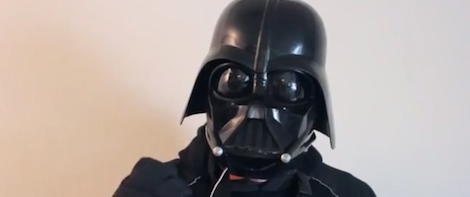
The last video, “Electronic voice changer”, puts all the previous pieces together to build a pitch shifter using the A/D and D/A converters of the UNO R4. The device can be used for audio effects or to alter the voice in situations where it must not be recognizable. Pasquale shows the updated wiring diagram, the test setup, several practical tests with voice and musical content, and finally the complete code.
The post Arduino UNO R4: A/D and D/A Converters for Audio, from Testing to a Voice Changer appeared first on Open Electronics.