


Finding datasheets for old and new parts with datasheets.pro
Recently I was made aware of a new website for finding datasheets, “datasheets.pro”. It is quite useful, so I’ll let the site creator Mike Mchedlishvili describe it in his own words below.
If you have followed the tutorials here for a while, you know the routine: a project starts with a part, and the part starts with its datasheet. The trouble is that datasheet links age badly. Atmel became part of Microchip, National Semiconductor went to TI, Fairchild went to onsemi, and every time a company is bought or rebuilds its website, years of links in tutorials, forum posts and project pages quietly stop working.
datasheets.pro is a free datasheet search I built to deal with exactly that. It holds about 2.2 million datasheets covering more than 16 million part numbers from over 5,500 manufacturers, both current and long obsolete. There are no ads, no sign up and no paywall.

Search by part number, or by what you need
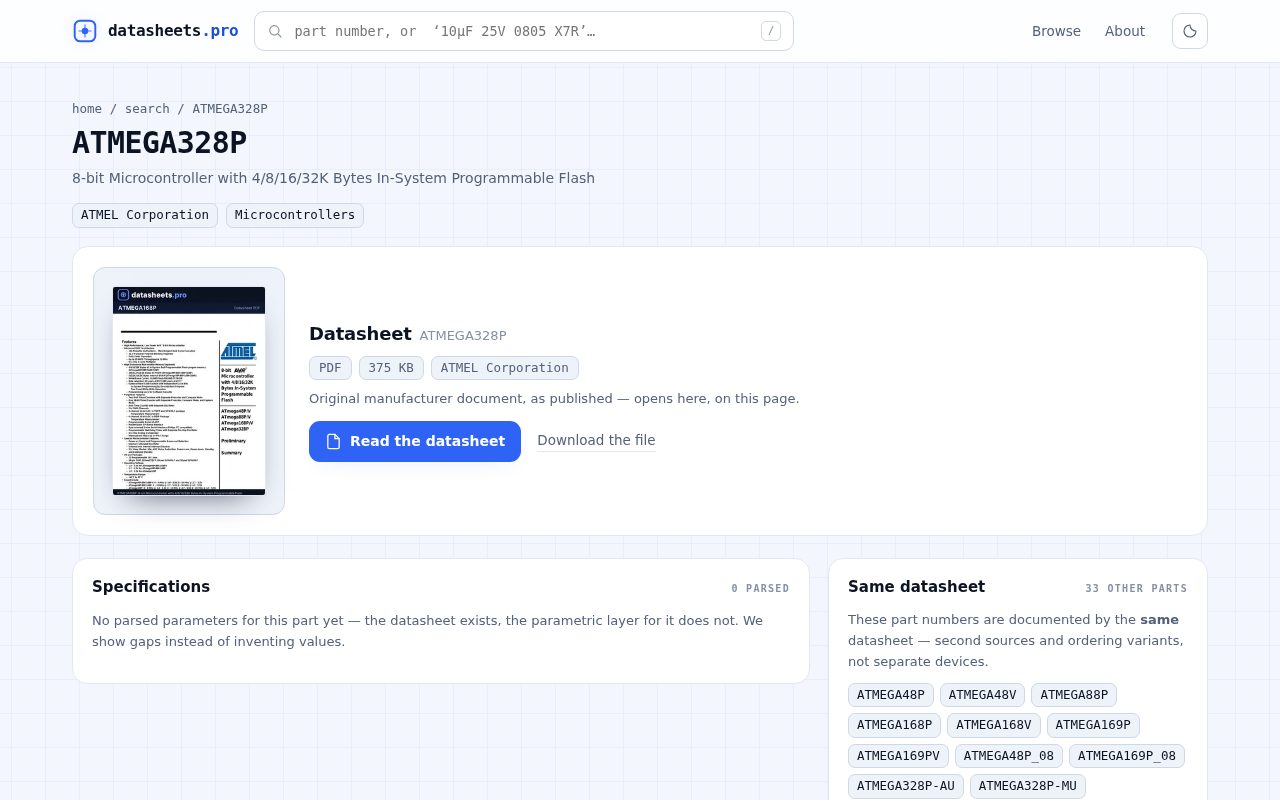
Type a part number such as LM2596 and you get the exact match on top: manufacturer, a short description and the original PDF one click away. Below it are the related parts and variants, and the filters above the list are built from real parameters such as output voltage, quiescent current, switching frequency and manufacturer, so you can narrow 332 results down to the ones that actually fit your circuit.
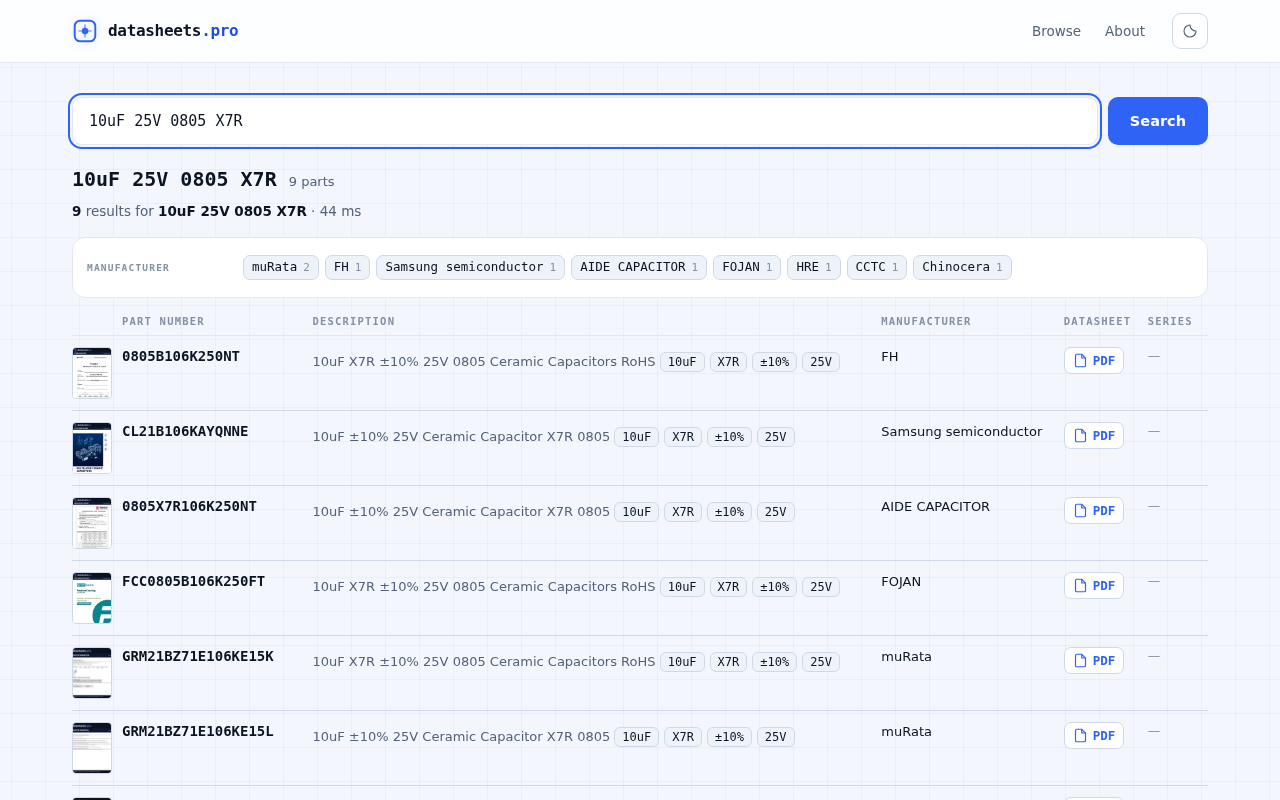
You can also search by specification instead of a part number. Typing 10uF 25V 0805 X7R returns ceramic capacitors from Murata, Samsung and other makers that match all four values, each with its datasheet.
One page per part, with the original document
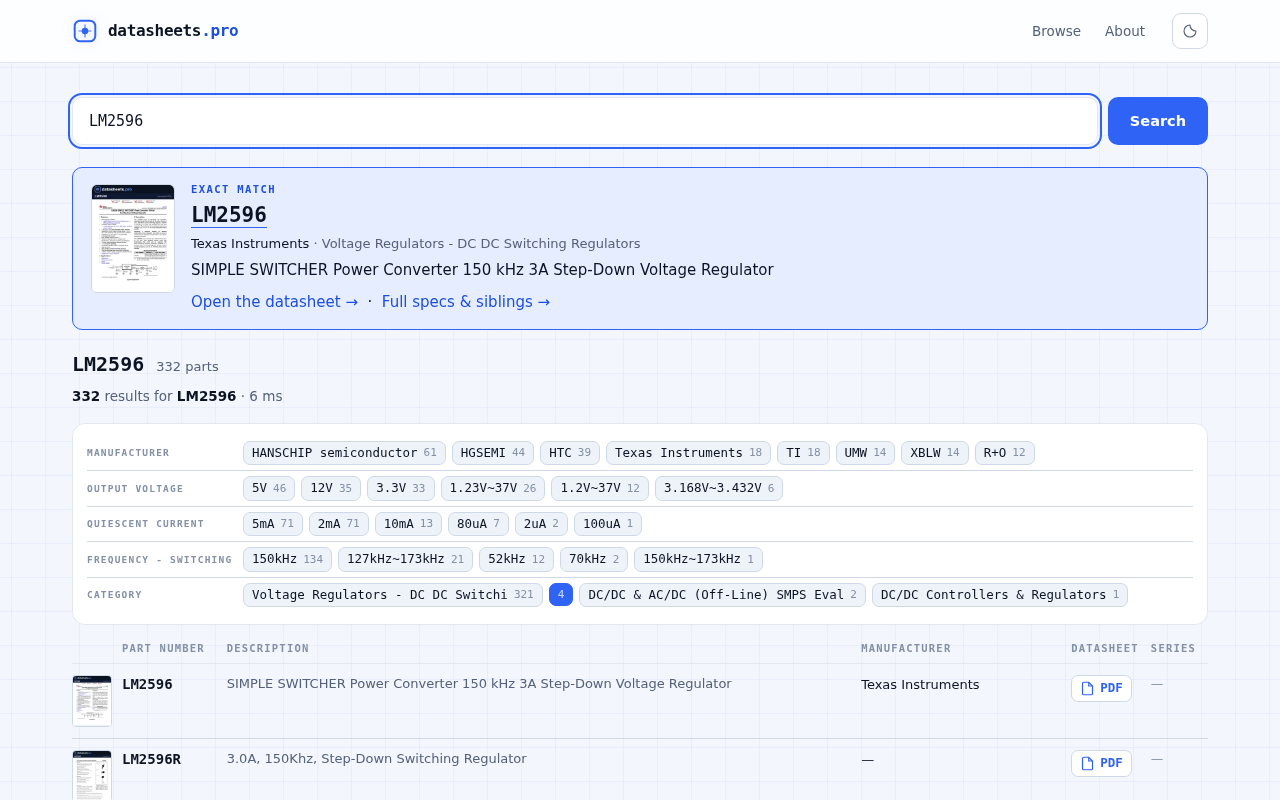
Each part has its own page with the manufacturer’s PDF exactly as it was published, readable in the browser or as a download. Ordering variants that share one datasheet are grouped together, so the ATmega328P, ATmega328P-AU and ATmega328P-MU lead to one document instead of three copies. Where the specifications have not been parsed yet, the page says so plainly instead of filling the table with guesses.
Why it helps with older projects
Many parts used in classic Arduino projects are now made by a different company than the one printed on the chip, or are not made at all. Their original datasheets still matter, because the project was designed around them. If a datasheet link in your notes or on your own site has died, searching the part number on datasheets.pro usually brings back the same manufacturer document, and the part address (for example datasheets.pro/part/lm2596) stays the same.
If you spot a datasheet that is missing or wrong, there is a Report bad data link at the bottom of the pages, and the reports come straight to me.
Mike Mchedlishvili, datasheets.pro