Posts with «community» label

Thea: exploring a wearable experience for people with allergies
For people living with chronic respiratory allergies, a reaction often seems to come out of nowhere. Potential triggers may accumulate before symptoms appear. Pollen, dust, pet dander, pollution, a bad night’s sleep: the student team designed Thea to explore how information about environmental exposures and user-reported factors could be presented before symptoms arise. It is a wearable built on the Arduino by students of the Master of Arts in Interaction Design (MAInD) at SUPSI, the University of Applied Sciences and Arts of Southern Switzerland.

At Maker Faire Rome 2026, visitors to the Arduino booth got to try it for themselves.
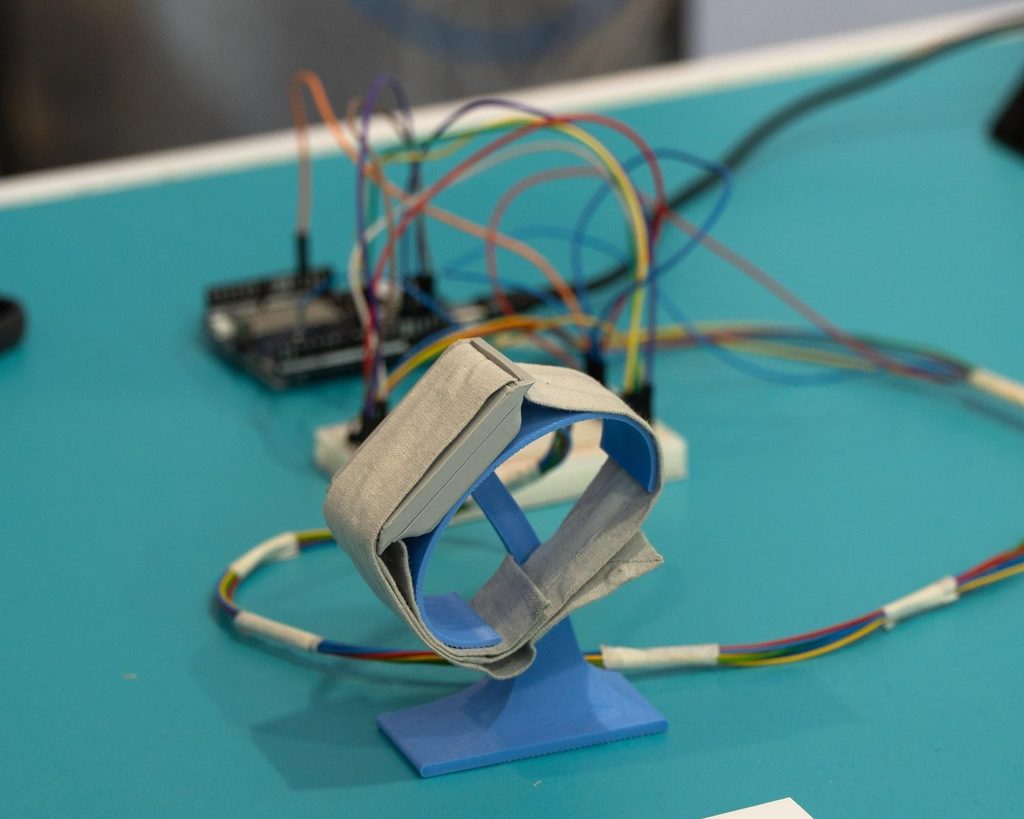
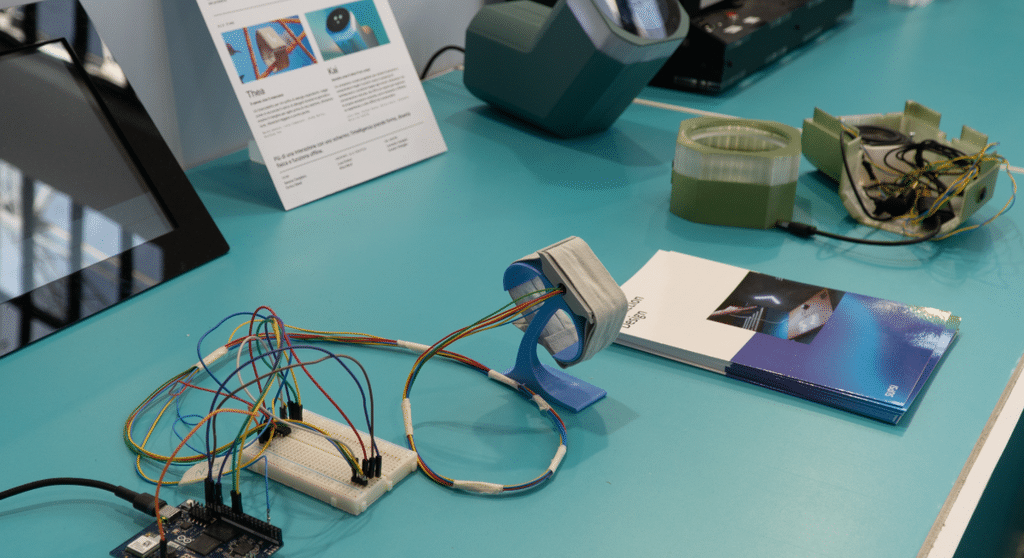
The Thea wristband prototype: a 3D-printed case wrapped in a fabric strap, wired to an UNO Q.

Not a tracker, a new sense

Most allergy apps follow one trigger at a time. Thea looks at cumulative load: how everything you have been exposed to adds up, and how close that brings you to your personal threshold. The space between the two is what the team calls the “action window”: an estimate generated by the prototype’s model to indicate when the user may wish to consider taking action.

Rather than sounding alarms, Thea follows the principles of calm technology. It stays at the edge of your attention and communicates through the senses:

•      Light. A gauge fills clockwise to show how much headroom is left.

•      Vibration. Pulses tell you how fast the window is narrowing or opening again, always paired with the light.

•      Voice. Used rarely, and never on its own. You open the conversation yourself and tell Thea what it cannot measure (“I was just near a dog”); it answers in a calm voice. When the window is about to close, the light and the vibration ask you to acknowledge the situation first. Only then does a voice provide information based on the prototype’s simulated exposure model.

A single tap gives you a status check at any moment, without opening an app. Thea never speaks unless you asked, or acknowledged a signal first. The prototype may then provide a status message based on its model.

Two brains, one board

The team selected UNO Q, because Thea is two systems in one. A predictable, real-time layer senses and signals. A conversational layer listens and talks. UNO Q combines a Qualcomm Dragonwing QRB2210 processor running Linux with a real-time STM32U585 microcontroller, so both can live on the same board.

•      On the microcontroller: the button, the light gauge, and the haptic motor, together with the cumulative load model that calculates the action window. This layer is designed to operate deterministically and in real time in the demonstrated prototype.

•      On the Linux side: the voice agent, connected to a microphone and speaker, which handles the moments when light and vibration are not enough.

The split also reflects a key design principle. The language model never decides how much room you have: the load model does, on the microcontroller. The voice only puts that state into words, which is intended to keep responses tied to the state generated by the load model.
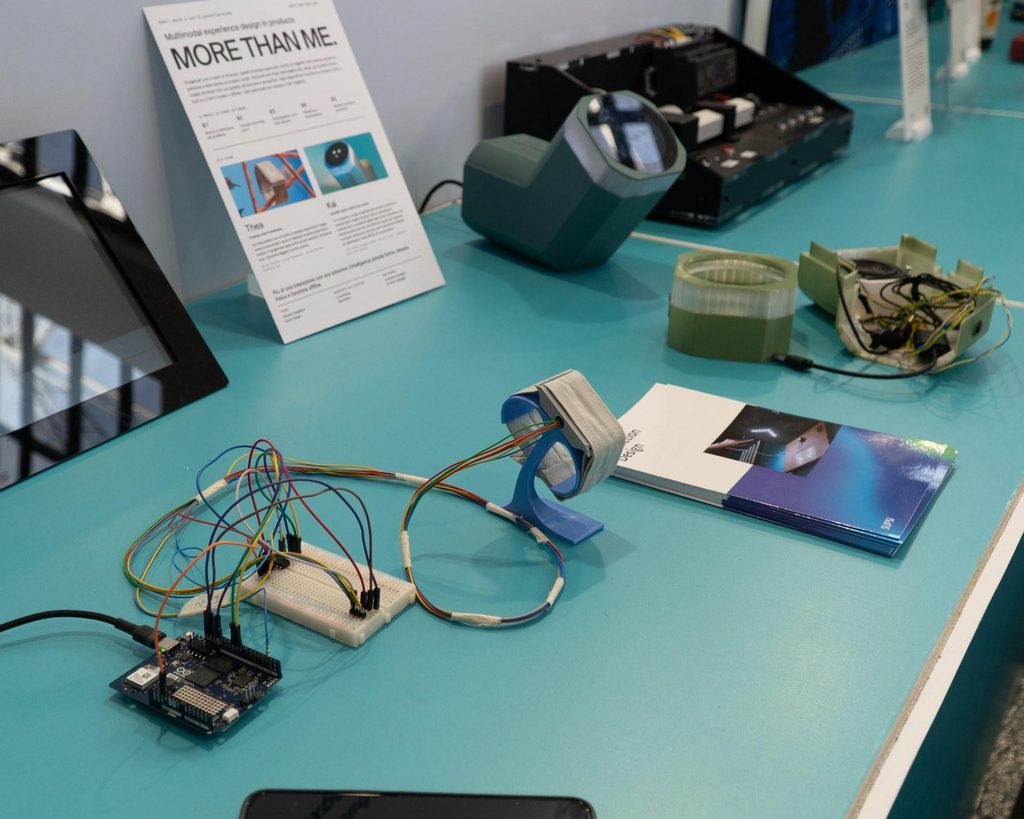
Thea’s setup on the table: the wristband prototype wired to UNO Q through a breadboard.

Local by design

Allergy data is health data, and the team believes it should stay with the person it belongs to. That is why Thea is designed to run locally: the risk model and the voice live on the device, and the team’s intended on-device implementation would process health-related data locally.

UNO Q supports this intended architecture. Its Linux side can run small open-source language models, speech recognition, and text-to-speech directly at the edge.

In Rome, the voice agent still ran on a cloud model, so the team could iterate quickly on the conversation design. The architecture is built so that this model can be swapped for one running on the board itself, without changing the experience. Bringing the voice fully on-device is the next step.

Local processing brings more than a privacy feature. If the voice functionality is implemented fully on-device, the architecture is intended to support operation without a server connection and local processing of sensitive data.

From the classroom to the Arduino booth

Thea was born in “More Than Me”, a five-week MAInD module on multimodal experience design in products, led by Serena Cangiano and Enrico Bassi. Every team designed and built its prototype on UNO Q.

From October 23 to 25, Thea was one of two MAInD projects shown at the Arduino booth. Over three days, the team talked with makers, families, students, and curious visitors.

The prototype on the table was the one that came out of the course: a 3D-printed case with the light gauge and the vibrating button, connected to UNO Q, a speaker, and a microphone, running on simulated exposure data. A companion app on a phone completed the experience, walking visitors through onboarding.

Visitors gathering around the Thea demo at the Arduino booth.
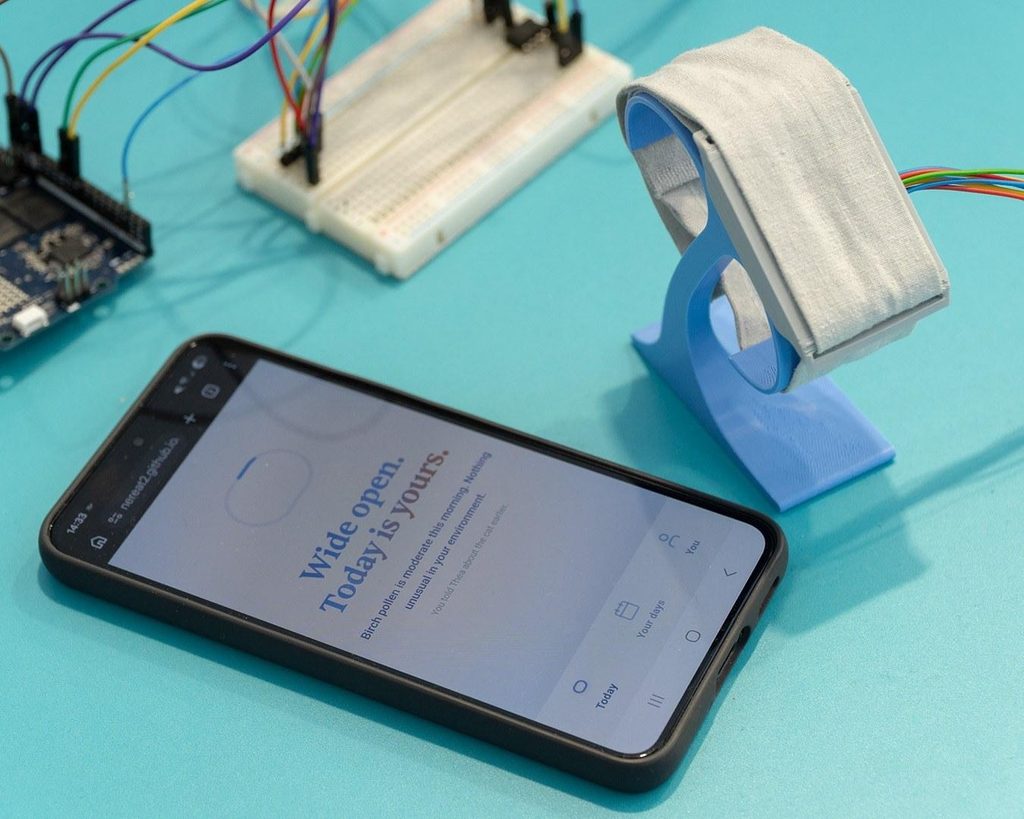
The companion app on a phone next to the prototype: on an open day, Thea simply says “Wide open. Today is yours.”

What’s next for Thea

After Rome, the team is taking Thea beyond the classroom. The team plans to seek input from people who live with allergies, medical experts, and technical specialists as it develops the next version. If that is you, get in touch at info.thea.ch@gmail.com

Behind all of it is the question the team kept asking in Rome: what could technology feel like if it lived on the body instead of on a screen?

Thea was designed and built by Nerea Asensio, Nicholas Vos, Lucia Ciapessoni, and Jérémy Martin at MAInD SUPSI.
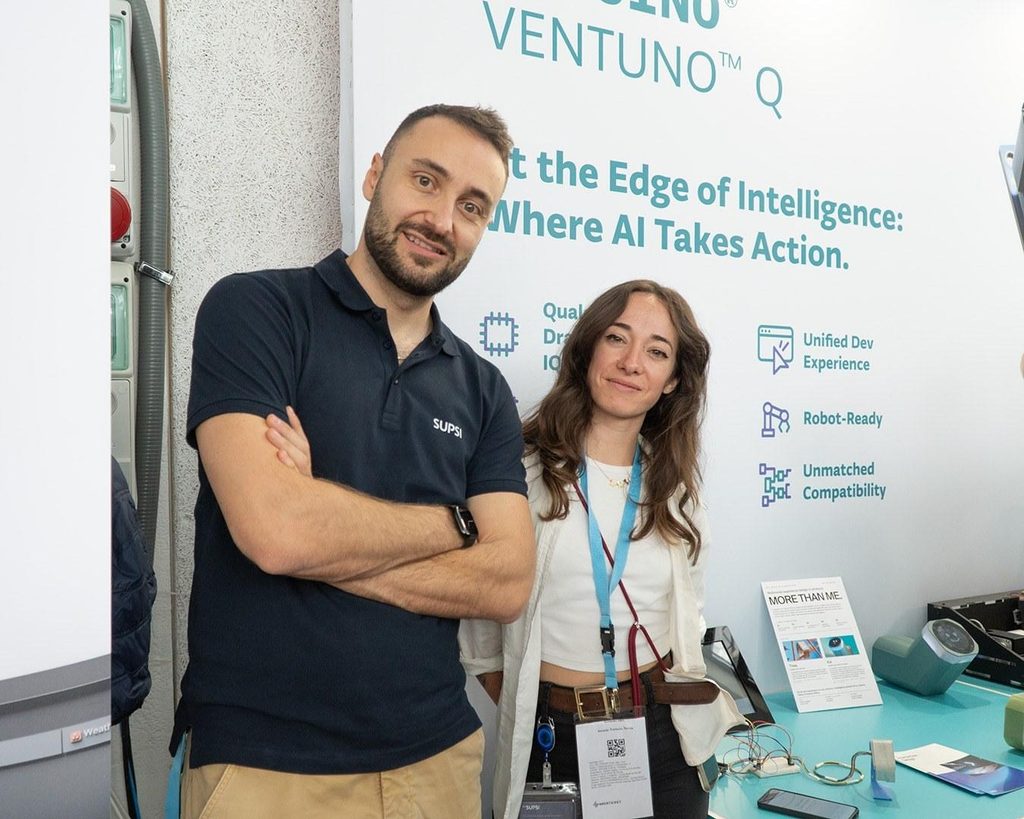
Nicholas and Nerea, two of the team members, at the Arduino booth, Maker Faire Rome 2026.

Qualcomm branded products are products of Qualcomm Technologies, Inc. and/or its subsidiaries. Arduino, UNO, and the Arduino logo are trademarks or registered trademarks of Arduino S.r.l.

The post Thea: exploring a wearable experience for people with allergies appeared first on Arduino Blog.
Arduino Blog 23 Nov 14:03

Save the date: Arduino Day 2019 is Saturday, March 16th!

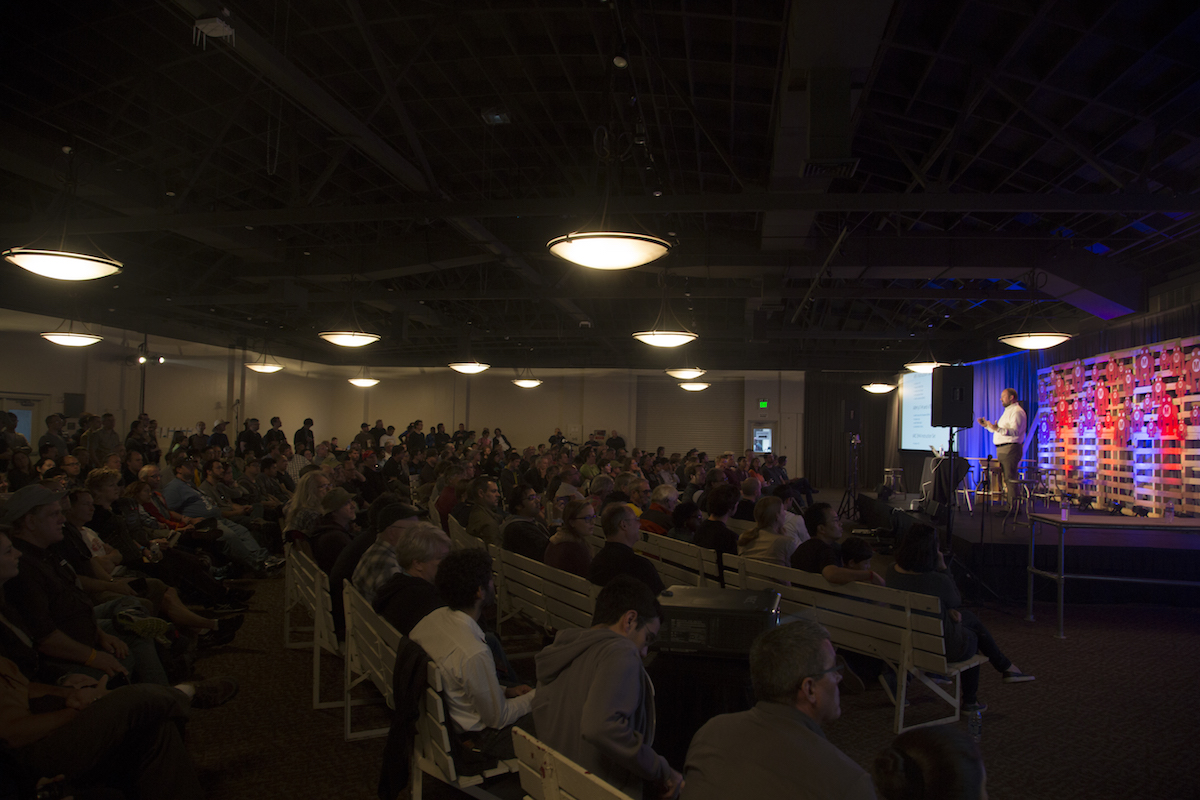
For the sixth year, we are inviting the open source community to join us for Arduino Day 2019 on Saturday, March 16th!

Arduino Day is a worldwide celebration of Arduino’s birthday. It’s a 24-hour-long event—organized by both the community and our team—where those interested in Arduino get together, share their experiences, and learn more about the platform. Participation is open to anyone, either as a organizer or participant, from makers and students to professional developers and educators.

In 2018, there were 529 events spanning across the globe full of activities, workshops, talks, and project exhibitions for a wide range of audiences and skill sets. This year, we are hoping to make Arduino Day even bigger! If you want to organize an event, please fill out this online form and submit your proposal by March 3rd.

A university research project for Arduino community members by a community member

Back in December, we received an email from a university student named Lucrezia Alfonsi regarding her dissertation research. Lucrezia’s goal is to to understand what motivates our community to use Arduino, share knowledge, and produce open source innovations. Not only would we love to help Lucrezia, we always like hearing about our users’ involvement with open hardware and software.

The survey, which can be found here, will be up until February 20th and the results will be posted later on our blog. By answering Lucrezia’s report, we hope to provide our community with rich insights into the experiences and inspirations of our users.

Hi, I’m Lucrezia Alfonsi, a Bocconi University MSc student. Right now, I’m writing my MSc thesis and I would like to ask your help completing the survey I have prepared for last research steps – it takes only 10 minutes, the data are anonymously tracked and the results will be elaborated only for academic purposes.

“I strongly believe in ‘doing well, by doing good’ and I immediately associate this with the motivation that moves Arduino Community members to improve and innovate everyday”; this is what I think, how I started my email to Arduino, and why I decided to focus my thesis on individual attitudes and motivational factors that lead open-source software and hardware communities, like Arduino Community. This is my genuine interest in the new and the right moment to challenge it.

Here, you can find the direct link to the questionnaire I built appropriately; I think this research can give something interesting back. Feel free to take a look and decide if you would like to bring your precious contribution.

Arduino Blog 24 Jan 15:11

Calling volunteers for Maker Faire Rome!

Planning to attend Maker Faire Rome in October? We’re currently seeking volunteers to join our team during the event—staffing tables and displays, helping with demos, and providing technical assistance when necessary.

Those who help us for one shift will receive a day pass; spend two days with us, and you’ll have a ticket for the entire weekend to explore the show. Water and snacks will be provided, of course, and we’ve even prepared a small gift to show our appreciation for your time and effort.

Interested? Please fill out this questionnaire, and we’ll get back to you soon! (If you are under the age of 18, we will need your parents’ permission.)

Maker Faire Rome: AAA, cercasi volontarie e volontari per il booth Arduino

Cercasi volontari/e per Arduino! Hai in programma di visitare Maker Faire Roma? Siamo alla ricerca di volontarie e volontari per lo il nostro booth – che ci aiutino a spiegare i progetti e diano supporto durante le demo.

Con un turno di volontariato allo stand Arduino, avrai a disposizione un pass per la giornata; se, invece, sarai al nostro booth per almeno due giorni avrai il pass per l’intero evento. Sappiamo quanto sia importante il tuo tempo e quanto sia fondamentale il tuo aiuto al nostro booth, per questo motivo saremo felici di offrirti il pranzo e una selezione di gadget Arduino.

Ti interessa partecipare al booth Arduino? Per favore completa questo form, ti faremo sapere prestissimo!

Se hai meno di 18 anni, puoi partecipare ma con il consenso firmato dei tuoi genitori!

See you at Maker Faire Bay Area!

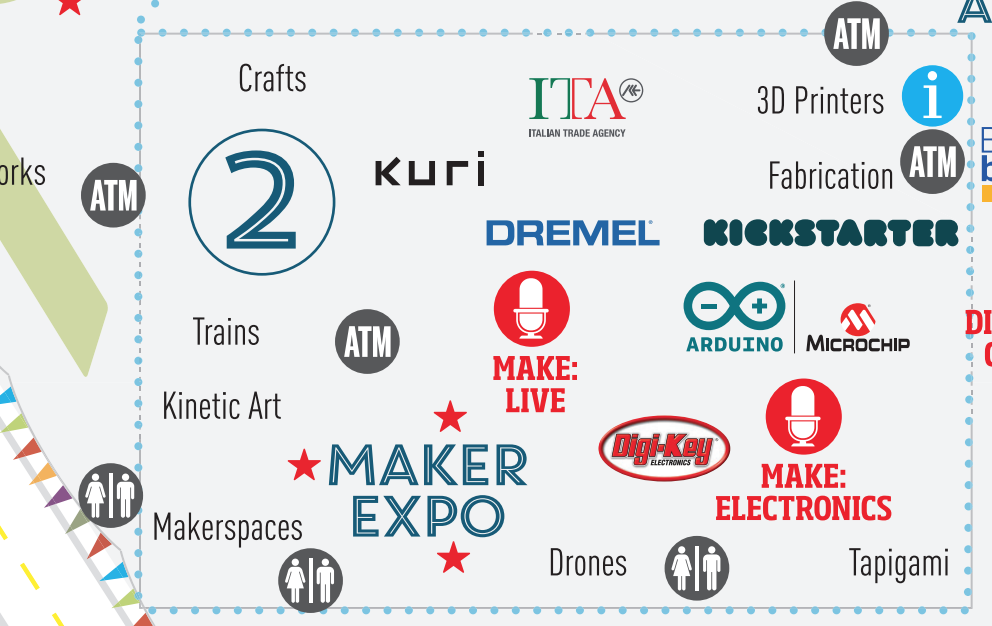
In just a few days, the Arduino team will once again be attending Maker Faire Bay Area! Those heading to San Mateo on May 18-20th will want to swing by our booth, where we are partnering with Microchip, inside the Electronics Pavilion (Zone 2). 

We have also been preparing a series of demos that showcase the latest Arduino products announced during Arduino Day, including the new MKR WiFi1010, MKR NB 1500, and Arduino Engineering Kit.

As is tradition, Massimo Banzi will take Center Stage on Saturday at 12:30pm PT for The State of Arduino. 

We look forward to seeing you this weekend in Zone 2! For more information on the program and venue, be sure to check out the Maker Faire website. 

Save the date: Arduino Day 2018 is Saturday, May 12th!

For the fifth year in a row we are inviting the open-source community to join us for Arduino Day 2018 on Saturday, May 12th!

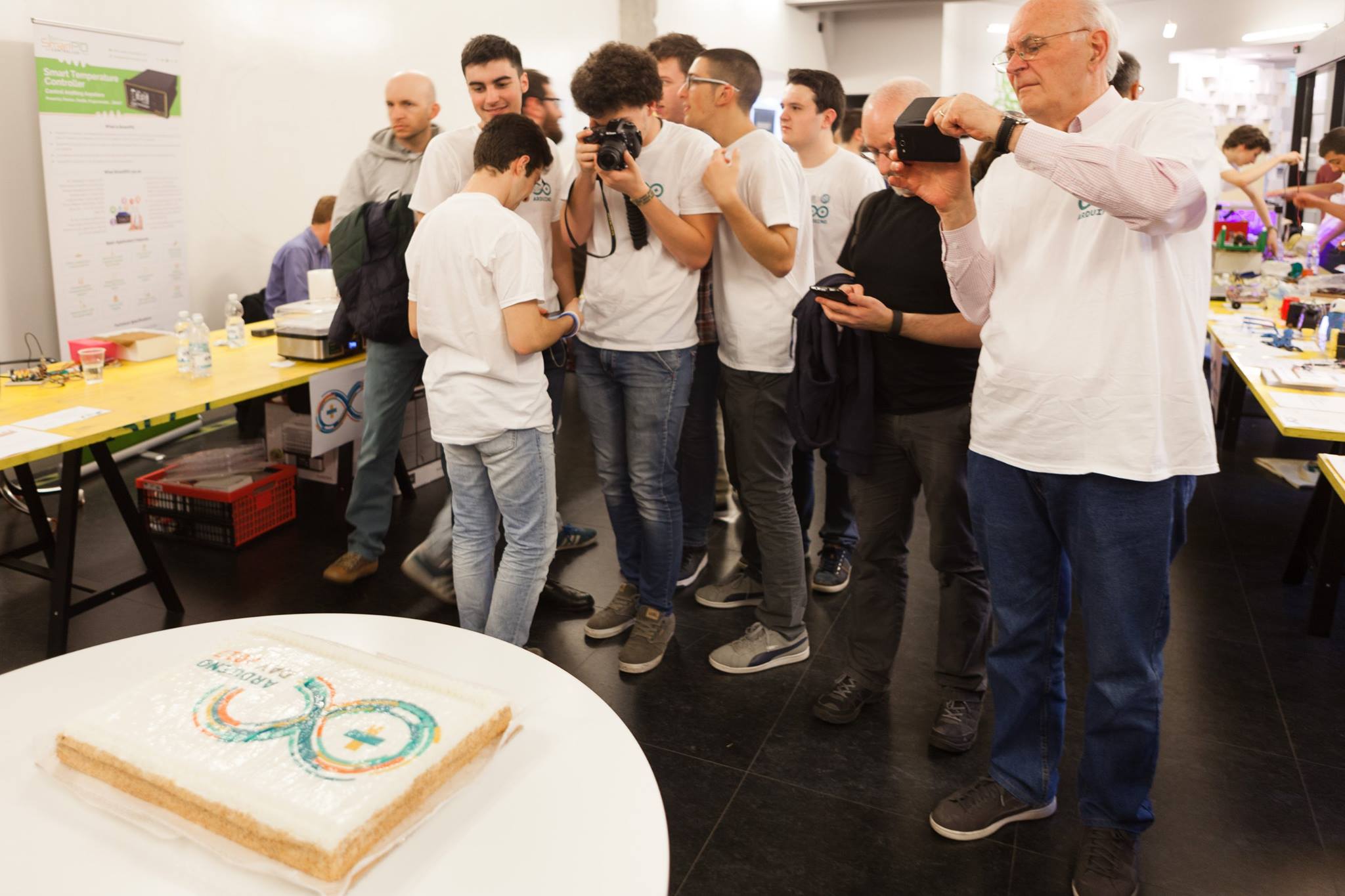
Arduino Day is a worldwide celebration of Arduino’s birthday. It’s a 24 hours-long event–organized by the community and our team–where people interested in Arduino get together, share their experiences, and learn more about the platform.  Participation is open to anyone, either as a local organizer or participant.

In 2017, there were 499 global events consisting of various activities, workshops, talks, and project exhibitions for a wide range of audiences and skill sets. This year, we are hoping to pass the 500 mark! If you want to organize an Arduino Day festivity, please fill out this online form and submit your proposal by April 29th.

Over the next few weeks, make sure to visit the Arduino Day website to learn more or locate an event in your area. Moreover, don’t forget to spread the word on social media using the hashtag #ArduinoD18! 

A community-made, Arduino-powered interactive town map

A group of students from Farmington, Connecticut partnered with artist Balam Soto and master teachers Earl Procko and Jim Corrigan to create a community-based sculpture project that allows people to explore the sights, sounds and history of their town through new media.

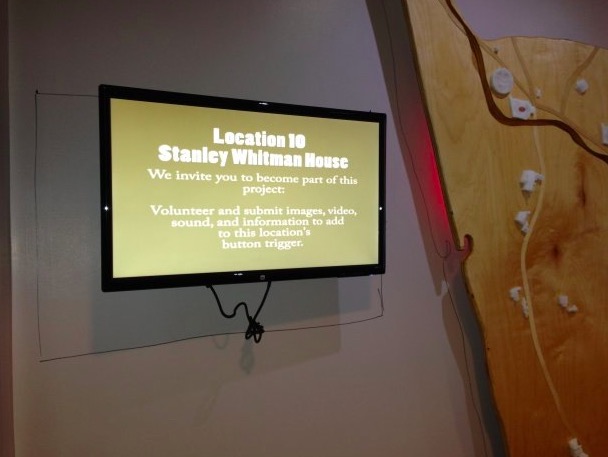
The installation runs on Arduino Uno and XBee, and is comprised of two panels which act as viewing screens for multiple visual projections. Visitors can interact with the display and manipulate the images using 24 buttons placed on the physical map. Plus, they are encouraged to record and add their own stories and memories of Farmington to the ever-growing multimedia library.

Permanently exhibited in Farmington’s public library, the Farmington Map Project was also the opportunity to introduce the students to physical computing, digital fabrication, woodworking, Arduino programming, and to the potential that Makerspaces have to offer for bringing ideas to life.

The project was created with the support of an Arts in Education Mini-Grant, funded by the Connecticut State Department of Education, the Department of Economic and Community Development, the Connecticut Office of the Arts, and the Connecticut Association of Schools, Farmington High School’s Fine and Applied Arts.

Interested? Check it out on Hackster.

Coding an Interactive Map of Their Hometown Connects a Community

The people of Farmington, Connecticut, now have a beautiful, community-made interactive map to share the history of their town.

Read more on MAKE

The post Coding an Interactive Map of Their Hometown Connects a Community appeared first on Make: DIY Projects and Ideas for Makers.

From the community: unboxing and setup of Arduino 101

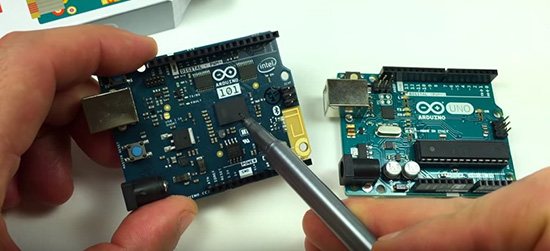
Circuit Basic recently posted a 9-minute video unboxing, Setting Up, and Comparing the Arduino 101 to the Arduino Uno.

The Arduino 101 (US only) and the Genuino 101 (outside US), created in collaboration with Intel, keeps the same robust form factor and peripheral list of the Uno with the addition of onboard Bluetooth LE capabilities and a 6-axis accelerometer/gyro to  expand your creativity into the connected world.

Watch the video below to learn the first steps on how to use this new board!

Solenoid drum machine and bass running on Arduino


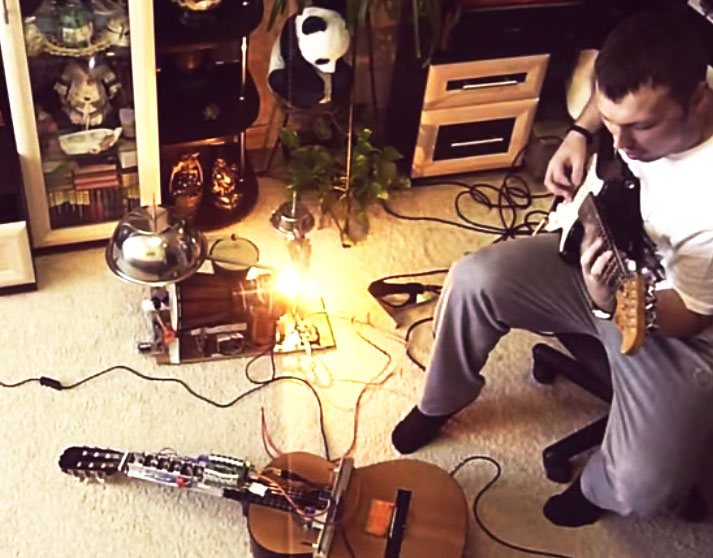
Arduino user named Muiota shared with us an experimental DIY music project running on Arduino Uno and  solenoids.

Take a look at the video to hear how it sounds: