Posts with «language|en-us» label

'Far Cry 6' post-launch drops include Stranger Things, Rambo and Danny Trejo

Far Cry 6 doesn't even come out for another month, but Ubisoft is already hyping all the things players will get to do (and pay for) after launch. Far Cry 6 will feature Danny Trejo, Rambo and the Stranger Things crew in a series of additional missions, available for free in the coming year and playable in co-op or solo. 

Trejo's mission involves delivering tacos across Yara with the game's protagonist, Dani, by his side. It's called Danny and Dani vs Everybody. The Rambo-inspired mission is called Rambo: All the Blood, and it features a heavily armed, cosplaying superfan in a story straight out of a 1980s action flick. The final free mission is a Stranger Things crossover called The Vanishing — players have to find their loyal weiner dog, Chorizo, in the Upside Down.

From the jump, Far Cry 6 will also have weekly insurgency challenges and special ops missions available for free. Now, on to the paid content.

The Far Cry 6 season pass will go live in late 2021, and it'll feature three missions starring villains from the series' history, detailing their backstories through die-and-retry mechanics. These missions are playable solo or with a friend, just like the main game. The popular Far Cry 3 spin-off, Blood Dragon, is also included in the season pass. The season pass comes with the gold edition of the game, which costs $100 on PC and $110 on Xbox One, Series X/S, PlayStation 4 and PS5. The standard edition runs $60. 

Regardless of the version you want, Far Cry 6 lands on October 7th.

‘Splitgate’ brought out the ‘Quake III Arena’ addict in me

I once spent an entire college summer doing nothing but play Quake 3 Arena. Well, almost nothing. I was an IT help desk drone during the day, but my nights and weekends were almost entirely filled learning the intricacies of the game's rail gun, rocket jump maneuvers, and inventive mods (if I ruined your day in a Threewave match, sorry). Now that I have a child, a home to take care of, and an endless list of adult responsibilities, I thought I had put all that behind me. Then I started playing Splitgate.

At first, it seems to be a fairly standard free-to-play multiplayer shooter, like a lost Halo clone from a decade ago. But the twist is that it also brings in the core mechanic from Portal. Alongside your normal weaponry, you also have a gun that can create portals on specific areas, no matter how far apart they are. And it's not just for teleporting, either. You can also use peer through those portals to pick off far-away enemies.

That may seem like a small, even quaint, addition to the world of online shooters. But in practice it fundamentally changes how they work. Being able to strategically use portals is just as important as being a crack shot who's memorized every map. And of course, it goes the other way too. If you can sneak up on an enemy with portals, they can do the same to you. Nowhere is safe.

Splitgate's subtle complexity is what makes it addictive. All of a sudden, walls high up on the map could give you a vantage point to snipe oblivious foes. A chase through a corridor could easily get wild as you jump between multiple portals. And being able to sneak up on a camping sniper by throwing a portal behind them is always satisfying.

I've gotten into plenty of shooters over the years, but they've never quite scratched my Quake 3 itch (perhaps because I never again had vast amounts of free time to eat pizza and play all day). Battle Royale titles like PUBG and Apex Legend changed the landscape with enormous maps with 100 players, but they've always felt more like tense survival games than huge fragfests. They take longer to play, and one screw-up could take you out of a match entirely. I didn't know how much I missed the days of simple multiplayer shooters, games with quick matches that deliver a direct dose of adrenaline and dopamine all at once, until I started playing Splitgate.

Even though it's become wildly popular over the last few months, Splitgate hasn't officially launched yet. But its most recent beta release, Season 0, has added a lot on consoles and PCs. That includes new character models, more maps and an infection gameplay mode. I've been playing earlier betas for the last few months, but now it's finally starting to look like a complete product, with more UI polish and player models I don't entirely hate. It's also the perfect time to give it a shot before elite players make online matches less enjoyable to play.

Since it's a free-to-play game, Splitgate developer 1047 Games is following in the footsteps of modern shooters by making you pay for items, characters and Battle Passes to level yourself up. It's all cosmetic, but I've found myself throwing them a few bucks for holographic armor and other trinkets just because I enjoy playing the game so much. Spending $20 in add-ons doesn't seem that bad for something that’s already given me dozens of hours of joy.

1047 Games

If you’re considering jumping into Splitgate, I have one piece of advice: Learn to love the damn portals. Treating it like a normal run-and-gun FPS is a recipe for failure, no matter how great you are. It’s a game about quick movement across the map, sneaky shots through your portals, and sneaking up on your enemies. It’s not for everyone, but for players who find joy in a five-minute, fast-paced team deathmatch mode, it’s practically perfect.

Sonos is raising prices on almost all of its products

Sonos makes some excellent connected speakers and home theater products, but no one ever said they were cheap. As of this Sunday, September 12th, they'll cost even more here in the US. The company just announced it is raising the price of almost all its speakers; most will go up about 10 percent. 

A few to note: the Sonos One, probably its most popular speaker, will now cost $219 instead of $199. The One SL (which is the same as the One, but without mics for voice assistants) now costs $199 rather than $179. The new Sonos Roam portable speaker is getting a $10 price bump, to $179.

The flagship Sonos Five audio speaker will now cost $549 instead of $499, and the flagship Arc soundbar costs $899, a full $100 more expensive than before. The Sub, which is primarily geared towards home theater but can also be used with music speakers, is up $50 to $749. The only speaker that isn't going to cost more is the Move, which is staying at $399. Sonos didn't mention any changes to the Beam in its price list, either.

Sonos first announced that it would increase prices on its quarterly earnings call back in early August, but didn't provide details at the time. As for why now, the company gave some unsurprisingly vague details around "assessing market dynamics" to achieve growth goals and maintain innovation across its entire portfolio, including software and services as well as hardware. Obviously, no customer wants to see price increases, but given that Sonos solid the $199 Play:1 and then the One, its successor, at that price point for the better part of a decade, a 10 percent increase isn't too crazy. Given how new the Arc is, though, a $100 bump on an already expensive product might limit its broader market appeal a little. Though on the other hand, most home theater aficionados are probably used to opening their wallets for good hardware.

Don’t sleep on the iPhone mini

Last year, Apple revealed more new iPhones than ever. There was the iPhone 12, the iPhone 12 Pro and then the most expensive model, the iPhone 12 Pro Max, with Apple’s best camera sensor, a giant screen and an enormous battery to match. 

Then there was the iPhone 12 mini, the small iPhone that some of us were clamoring for. Outside of the 5.4-inch screen, it matched the specifications of the bigger, vanilla iPhone 12. You got the same dual cameras, the same powerful A14 Bionic processor, storage and color options. It’s just, well, mini.

To me at least, the smallest phone was the most exciting device from Apple’s big event. A new (in 2020 at least) iPhone form factor for those of us that balked at the size of most phones. We’ve covered the ups and downs of tiny smartphones over the last few years, so it was a surprise — but a welcome one — when Apple decided to cater to this niche. Working in Apple’s favor, smartphone makers weren’t making small phones anymore (barring, perhaps, Sony). 

So when we finally got the iPhone 12 mini in our hands, what did we think? Chris Velazco, who reviewed it, said it was, pretty much, an iPhone 12, but smaller. He added that while it was the most potent small phone he’d tested in years, it dodged the problems of typing on smaller screens, because the display stretched to the edges of the 12 mini’s body. 

The iPhone SE, by comparison, had to make space for the home button at the bottom and the camera and earpiece at the top, which was a tight squeeze for thumbs on a 4.7-inch screen. (The iPhone 12 mini is physically a smaller phone than the iPhone SE.)

About half a year ago, I switched from my iPhone 12 Pro Max to the iPhone 12 mini. Despite how excited I was about the smallest new iPhone at launch, I still wanted the 12 Pro Max as my main phone. I told myself I needed the cameras.

I had a few reasons for “downgrading” to the iPhone 12 mini. The pandemic had tricked me into beginning a jogging habit. The hulking iPhone 12 Pro Max was not made for running shorts, and I couldn’t use my Apple Watch as it didn’t offer the narrative features of the Couch24K app. 

So there was the iPhone mini, provided by Apple when the four phones were first introduced. Small, powerful enough, and I didn’t need high-res pics because I wasn’t going anywhere during London’s lockdown. Also, the iPhone mini’s cameras are fine — good even. 

One issue with the iPhone mini is that its smallest (cheapest) configuration comes with only 64GB of storage. But, honestly, I don’t use much on-device storage, so it wasn’t hard to migrate everything.

It’s a nice feeling to be able to fit more than just your phone into your pocket; not to awkwardly stretch your thumb to reach the top of the screen. The iPhone mini is wonderful to use one-handed most of the time. 

For roughly six months, the iPhone mini was the perfect petite device for me. My Apple Arcade favorites, including relatively processor-intensive games like Fantasian, ran without issue, and my other daily apps never suffered a hiccup. I could use Fitness+ and while you might think video streaming would be less compelling on a smaller screen, I was mostly in my home. I have a TV! 

It wasn’t all perfect, though, and the major issue was exactly what our review pointed to; meager battery life. Perhaps because the iPhone 12 mini matched the bigger iPhone 12 in all specifications barring screen size, there is a physical limit to how big the battery can be. 

I didn’t notice that during the first half-year, but that’s probably because I was, well, mostly trapped indoors. Any time the battery dipped below 50 percent, I was immediately near a power output and could easily top the iPhone mini back up to full power. 

When the country started opening up again, I went out more. And I wasn’t taking battery packs or charging cables with me. A few times, I cut it real close getting back home (or to a power outlet) before the battery reached single-digit percentages. After too many close calls, the pin went in, the SIM came out, and I left the iPhone 12 mini for the much bigger model.  

When stories of slashed iPhone mini 12 production started appearing, I feared that this was a short-lived Apple experiment that had run its course. However, the latest rumors suggest otherwise. Last week, a listing at the FCC suggested that Apple was testing four new devices with its latest MagSafe technology. That should be the Pro Max, the Pro, the base model and the mini.

Other reports suggest that the next series of iPhones, whether they’re called iPhone 13 or something else, will offer some subtle changes improvements to last year’s models. Crucially, one report from March suggests that batteries across the iPhone series will be bigger, while more energy-efficient components, from chipsets through to screens, should also improve battery longevity. 

Many phone buyers might have been skeptical that a smaller iPhone — even if new — would be as capable as bigger models. In the evolution story of smartphones, bigger screens always game with better specifications. The iPhone 12 mini was an anomaly, and maybe we weren’t ready to it. 

If Apple can make the iPhone mini go the distance, battery-wise, but keep the specifications on par with the bigger model, there wouldn’t be much left for me (or phone reviewers) to complain about. September 14th is pretty soon. Bring it on, Apple.

Vimeo is ready to host Dolby Vision videos shot on iPhone 12 Pro

When Apple announced the iPhone 12 Pro and Pro Max last fall, the company talked up the HDR capabilities of its new phones. In addition to playing Dolby Vision content, the devices can capture it as well. But despite the fact the iPhone 12 Pro and Pro Max have been on the market for almost a year, we're only now seeing platforms take advantage of those capabilities.

Starting today, all Vimeo users, including those with free accounts, can upload Dolby Vision content to the platform. While you can watch the content on any device, support for playback in Dolby Vision is currently limited to Apple products. 

On iOS, an iPhone 8 or newer or second-generation iPad Pro will do. On desktop, meanwhile, support goes as far back as some Macs released in 2018. Provided it's connected to a compatible Dolby Vision TV, you can also watch the content on an Apple TV 4K. When browsing the Vimeo website, you'll see a badge that denotes whether someone shot the video in Dolby Vision. As long as you have a compatible device, the video will automatically default to the format.

Sony's HT-A7000 soundbar with Dolby Atmos and HDMI 2.1 is up for pre-order

Since Sony announced its latest flagship soundbar at the end of July, we’ve been patiently waiting for the company to release the HT-A7000 to put it through testing. That hasn’t happened yet, but starting today you can pre-order the unit, as well as the supporting speakers Sony announced at the same time, from Amazon.

Part of what makes the $1,300 HT-A7000 intriguing is all the features Sony packed into it. Highlights include an HDMI 2.1 connection with eARC and both 8K and 4K/120 Hz passthrough, in addition to Dolby Atmos support. It also comes with the company’s DSEE Extreme technology for upscaling compressed audio. Another nifty feature is a set of built-in microphones the speaker can use to calibrate itself to your space.

Starting today, you can also pre-order the SA-SW5 and SA-SW3 Sony announced alongside the HT-A7000. The $700 SW5 is a 300-watt subwoofer with a 7-inch speaker, while the more affordable SA-SW3 will give you 200-watts of bass for $400. Also up for pre-order today are the SA-RS3S satellite speakers. They’re priced at $350 for the pair.

If you want to take your home theatre in a different direction, Sony’s HT-A9 system is another option. $1,800 nets you four cylindrical speakers the company says you can adapt to almost any space and layout. The system comes with a wireless control box that features an HDMI 2.1 connection with eARC output and 8K and 4K/120 Hz passthrough alongside Dolby Vision. They also come with Sony’s Sound Mapping Technology, which the company claims allows them to create a more immersive soundstage.

Apple's iPad Air is $100 off right now, plus the rest of the week's best tech deals

Labor Day weekend may be over, but some of the sales that came with it are still ongoing. A number of Apple products have been discounted ahead of the company's event next week, including the iPad Air and the MacBook Air M1. Amazon has a bunch of deals onFire tablets, knocking the Fire HD 10 tablet down to $100 and the Fire HD 8 down to $60. Plus, you can still save a ton on things like Samsung portable drives, eero 6 WiFi systems, Pixel smartphones and more. Here are the best tech deals from this week that you can still get today.

iPad Air

Dana Wollman/Engadget

Apple's iPad Air is $100 off right now, bringing it down to $500. All five colors are on sale at Amazon. thanks to automatically applied coupons, although with various shipping times. We gave the Air a score of 90 for its speedy performance and WiFi, healthy battery life and support for the second-gen Apple Pencil.

Buy iPad Air at Amazon - $500


Apple Watch SE

Cherlynn Low / Engadget

The Apple Watch SE is on sale for $240 right now on Amazon thanks to a few automatically applied coupons for certain color options. We gave the Watch SE a score of 88 for its comfortable, familiar design, solid performance and comprehensive feature set for the price.

Buy Apple Watch SE at Amazon - $240


MacBook Air M1

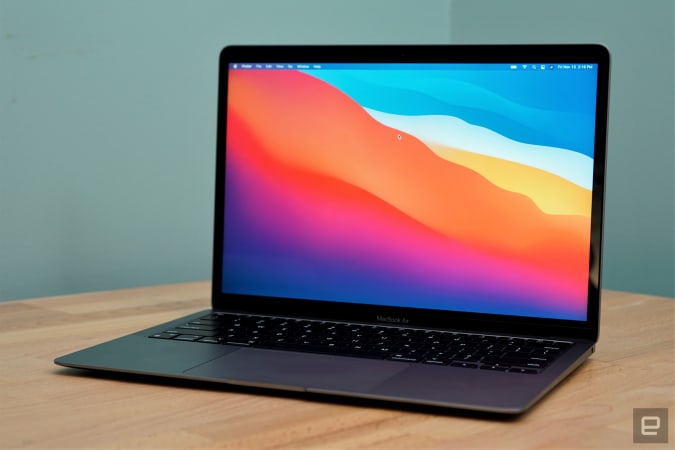
Apple's MacBook Air M1 is back down to an all-time low of $850 thanks to an automatically applied coupon. It earned a score of 94 from us for its stellar performance, attractive, fanless design and its comfortable keyboard and trackpad.

Buy MacBook Air M1 at Amazon - $850


Mac Mini M1

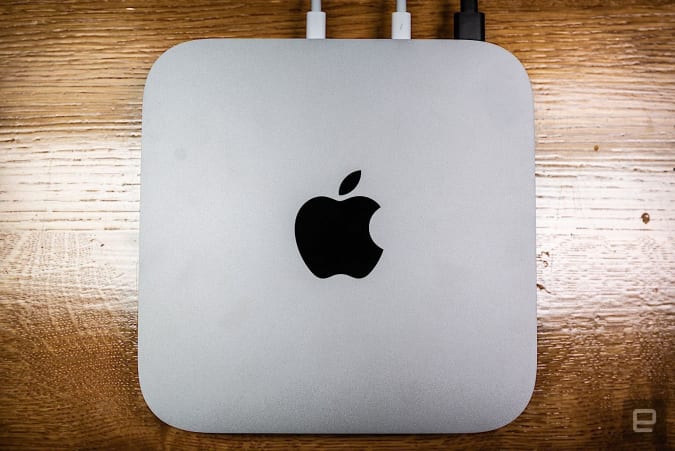
Apple's Mac Mini M1 returned to its all-time-low price of $600 thanks to a sale and an automatically applied coupon. You're getting all of the performance boosts provided by the M1 chipset in a compact desktop package. This is a good machine to get if you have an older desktop that needs replacing, but you don't want to spend a ton of money.

Buy Mac Mini M1 at Amazon - $600


Eufy SpaceView baby monitor

Will Lipman Photography

Eufy's SpaceView baby monitor with one camera is down to $125 thanks to a clippable coupon and the code eufybbm20 that you can use at checkout. The camera can pan 330 degrees and tilt 110 degrees to give you a full view of your baby's room, and you can expand the field of view up to 110 degrees thanks to the included extra lens. It also uses a FHSS connection instead of WiFi, which lets you check out your kids' activities in real time in a more secure way.

Buy SpaceView baby monitor at Amazon - $125


Eero 6 WiFi systems

Amazon

Amazon's Labor Day sale on eero 6 systems is still ongoing so you can pick up a pack with one router and two extenders for $195, or $84 off its normal price. A pack of three routers is also down to $244. These gadgets support a peak bandwidth of 900Mbps and they include a built-in Zigbee smart home hub, so you can connect things like smart lights directly to it.

Buy Eero 6 at Amazon - $195


Amazon Fire tablets

Valentina Palladino / Engadget

A number of Fire tablets are still on sale after the Labor Day holiday. The top-tier Fire HD 10 is $50 off, bringing it down to $100, while you can grab the Fire HD 8 for $60 or the Fire 7 for only $40. These devices make good starter tablets for kids as well as good couch devices for email-checking, web-surfing, online shopping and more.

Buy Fire HD 10 at Amazon - $100Buy Fire HD 8 at Amazon - $60


Echo Show 5

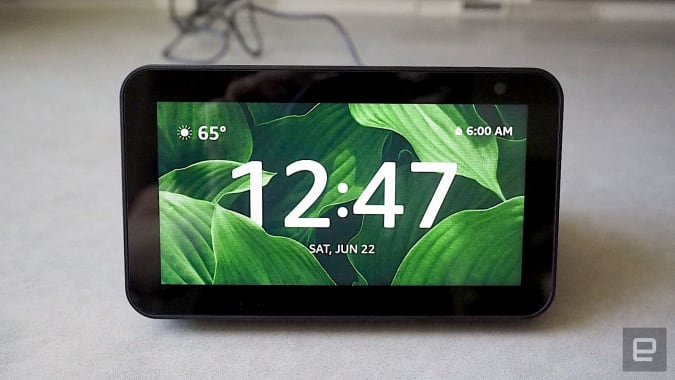
Both the first- and second-generation Echo Show 5s are on sale right now — the original is down to $45 while the updated version is only $10 more. These stand out as excellent smart alarm clocks thanks to their compact size, sunrise alarm feature and tap-to-snooze function. The main difference between the two is the improved, 2MP camera on the second-gen version, which will make for slightly better video calls.

Buy Echo Show 5 (1st gen) at Amazon - $45Buy Echo Show 5 (2nd gen) at Amazon - $55


Google Pixel 4

Google's Pixel 4 smartphone is down to a new low of $379 at B&H Photo. We believe the launch of the Pixel 6 to be right around the corner, so you may want to wait if you want the latest phone from Google. However, the Pixel 4 remains a solid handset — we liked its speedy performance, lovely display and stellar camera experience.

Buy Pixel 4 at B&H Photo - $379


Samsung T7 Touch SSD (1TB)

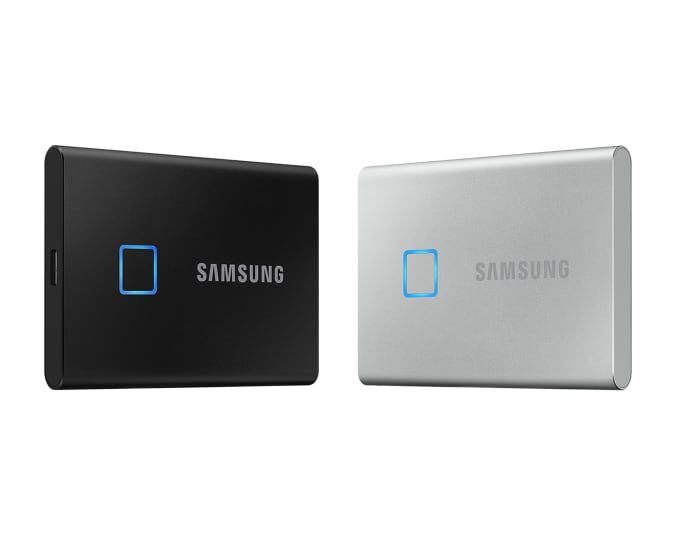
Samsung's T7 Touch portable SSD in 1TB is down to $170, or $10 off its normal price. It has dropped to $160 in the past, but this is the best price we've seen in a number of months. In addition to read speeds up to 1,050 MB/s and write speeds up to 1,000 MB/s, this tiny SSD has a shock-resistant body and a built-in fingerprint reader for an extra layer of security.

Buy Samsung T7 Touch at Amazon - $170


Google Nest WiFi (2 pack)

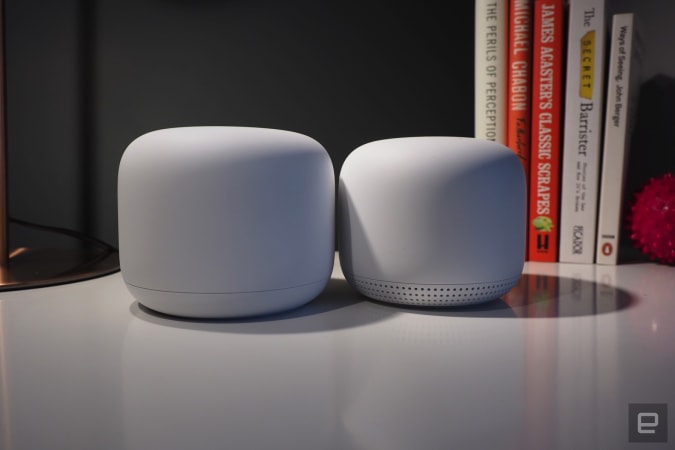
Google's Nest WiFi pack with one router and one access point is down to $199 right now at Best Buy. That's $70 off its normal price and a great deal on one of our favorite mesh systems. We gave it a score of 84 for its minimalist design, simple installation and built-in smart speaker.

Buy Nest WiFi (2 pack) at Best Buy - $199


Samsung Premiere projector

Samsung's Premiere Projector is $1,000 cheaper both at Amazon and Samsung's own site. The 4.2.2 sound channel model is down to $5,498, which is still quite expensive, but much better than its normal $6,500 price. We included this in our best projectors guide for its separate red, green and blue lasers that cover the full Rec.2020 color range, maximum 2,800 lumens of brightness and 4K resolution.

Buy Premiere (4.2Ch sound) at Amazon - $5,498Buy Premiere (4.2Ch sound) at Samsung - $5,499


Gaming PC sweepstakes

Through September 18, Omaze is giving away another $20,000 to build your ultimate gaming PC. This sweepstakes is free to enter, but funds donated with purchased entries will benefit Schools on Wheels, an organization that provides free tutoring and mentoring services to children experiencing homelessness across Southern California.

Enter to win at Omaze


Comic-Con 2022 sweepstakes

Through December 8, you can enter to win four-day passes to San Diego Comic-Con 2022. Along with the passes, you'll get access to a special preview night, reserved seating in Hall H, a personal concierge, a private tour of the Comic-Con Museum, dinner in Balboa Park and tickets to the "Night at the Comic-Con Museum" event. It's free to enter, but funds from this sweepstakes will go to the San Diego Comic Convention.

Enter to win at Omaze


New tech deals

Dyson Labor Day sale

A few Dyson cordless vacuums are still on sale even after the Labor Day holiday. Of note are the Dyson Outsize for $700, or $100 off its normal price, and the Dyson V8 Animal for $350, which is $50 off. Although both models are a few years old at this point, they remains solid cordless vacuums made even better by these sale prices.

Shop Dyson deals


Weber grills

Weber knocked hundreds off its high-end SmokeFire grills — both the EX6 and EX4 are $200 off, bringing them down to $999 and $799, respectively. These WiFi-connected grills are some of our favorites because they're relatively easy for even grilling novices to use and their companion mobile app gives you a number of convenient features like remote temperature adjustment and SmokeBoost activation.

Buy Weber grills starting at $799

Samsung Galaxy Buds 2

The new Galaxy Buds 2 are on sale for $125 at Woot, which is $25 off their normal price. These buds earned a score of 84 from us for their improved sound quality, small and comfortable design and wireless charging capabilities. A note: Woot's return policy is not the same as Amazon's, despite being owned by the retail giant, so check it out before you make a purchase.

Buy Galaxy Buds 2 at Woot - $125


Samsung Chromebook Plus V2 (one-day deal)

Woot also has a one-day sale on the Samsung Chromebook Plus V2, knocking it down to $270. This is a great deal considering this Chromebook is usually prices between $375 and $500. You're getting a lightweight 2-in-1 design here with an Intel Celeron 3965Y processor, 4GB of RAM, 64GB of storage, a 12.2-inch FHD display and a built-in stylus. A note: Woot's return policy is not the same as Amazon's, despite being owned by the retail giant, so check it out before you make a purchase.

Buy Chromebook Plus V2 at Woot - $270


Garmin smartwatches

Wellbots is having a sale on a bunch of Garmin smartwatches — you can get $100 off the Fenix 6 series using the code GARMIN100 at checkout, $75 off the Garmin Venu with the code GARMIN75 at checkout and $50 off the Garmin Lily with the code GARMIN50. These are some of Garmin's latest wearables and they serve most types of people — the Fenix 6 will be best for the most outdoorsy among us, while the Venu and the Lily are good options for those that want an alternative to an Apple Watch or a Wear OS device.

Shop Garmin smartwatches at Wellbots


NordVPN

One of our recommended VPNs is running a decent sale on a two-year subscription. You can sign up for NordVPN for $99 for the first two years, which comes out to $49.50 per year, and get three additional months of access for free. We like NordVPN for its speed, its no-logs policy, the thousands of servers it has to choose from and that one account supports up to six connected devices.

Buy NordVPN (2 years) - $99

Follow @EngadgetDeals on Twitter for the latest tech deals and buying advice.

What to expect at Apple’s iPhone 13 event

In just a few days, Apple will be hosting an event that we’re all but certain will be the iPhone 13 launch. The company sent out invites earlier this week that featured the words “California Streaming,” which of course led many of us in the industry to speculate like crazy what surprises might be in store. My money is on new TV+ or Apple Music content, while others are guessing game streaming or a cloud-based macOS might be possible. But as always, we already have a good idea of what to expect thanks to analysts, leakers and FCC filings. Here’s a selection of the more-credible leaks that have been swirling around so you can catch up on all the iPhone 13 rumors ahead of the September 14th keynote.

iPhone 13

Just as there were four iPhone 12 models last year, we’re expecting the same number of iPhone 13s next week. This was pretty much confirmed by an FCC filing about upcoming MagSafe updates, which didn’t name them but referred to four “New Phone” items in addition to the existing generation. Those four devices are most likely the iPhone 13 mini, iPhone 13, iPhone 13 Pro and Pro Max, and I’m personally glad Apple is keeping the baby iPhone around.

As early as February this year, rumors of the new iPhones featuring Always On displays have been floating and have only gainedtraction since. This would allow Apple to constantly have the time and other system indicators appear on your lock screen. Another popular rumor suggests the next iPhones will have smaller notches, and that a 120Hz screen is coming to the Pro model. If that’s true, Apple would be catching up to Samsung, though Google still hasn’t hit that high of a refresh rate on its flagships yet.

With the potential Always On display and faster refresh rates, battery life could be a concern for the new flagships. But it sounds like Apple might be mitigating that by using lower power LTPO (or Low-Temperature Polycrystalline Oxide) screens and bigger batteries. There’s also talk of an in-display fingerprint reader coming to the iPhone 13 line, though the reports on that are less consistent. It’d also be weird since the main iPhone series, haven’t had a Touch ID sensor since the iPhone X was launched in 2017.

Chris Velazco / Engadget

Beyond their screens, the iPhones are also expected to get some camera upgrades. On the hardware front, we’re reportedly getting improved ultra-wide cameras across the lineup, with better sensors and lenses. As for imaging software, Apple is supposedly adding an automatic astrophotography feature and a portrait video mode that could blur out the background while you film. Samsung already offers this on its S21 series, so it’ll be interesting to see how the two compare.

A surprising recent rumor suggests the iPhone 13 might even support satellite communications, which could let you make emergency calls if you’re out of a typical cellular coverage area. This would be a unique feature in modern smartphones, and almost hard to believe. But the report said Apple would be using a modified Qualcomm radio to enable this, meaning the components could already be easily available, making it more possible this is coming this year.

Externally, the phones aren’t expected to look significantly different from their predecessors, other than a potentially “gripper” texture on their backs. Reports seem to agree that the lightning port will remain, and that the updated MagSafe charger (and the phones) will have stronger magnets to prevent accidental slippage.

Finally, as we’ve been referring to it throughout this article, the next generation is most likely going to be called the iPhone 13. Not the iPhone 12S or the iPhone 14, because apparently Apple is not superstitious. Which is cool. Courage.

Cherlynn Low / Engadget

Watch Series 7

In addition to new phones, it’s also quite likely that we’ll see new Apple Watches next week. Specifically, we’re expecting the company to unveil the Watch Series 7 with larger cases and screens.

Some reports suggest the new wearables will also sport thinner bezels, a flatter design, a faster chip and updated “ultra-wideband functionality,” which might improve its communication with doors, locks and other devices. And that’s about all we’ve heard so far.

According to various sources, anticipated features like a body-temperature sensor or blood sugar monitor won’t be ready for this year’s Watch. Those waiting for a rugged variant will also probably have to wait till 2022 at least.

AirPods 3

Speaking of waiting, we’re coming up on about two and a half years since Apple launched the AirPods 2nd gen in 2019. It took about the same amount of time for the company to introduce the follow-up to its original wireless earbuds, though, so it’s very likely we’ll see the next generation come September 14th.

At some point, rumors suggested they might arrive earlier this year. We’re now well into the 2nd half of 2021, and all we’ve seen of the third-generation AirPods is a photo leaked in February. The image is purportedly of the regular model, not the Pro, and includes the device’s carrying case. The holder appears wider than the second gen’s and the buds seem to have an in-ear design similar to the AirPods Pro. That fits with other rumors swirling around.

52Audio

Beyond what can be seen in the picture, the source 52Audio also claimed that the third-gen AirPods would support active noise cancellation and spatial audio. That contradicts an earlier Bloomberg report that said those features wouldn’t make it. The Bloomberg story did say the AirPods would offer a new chip and longer battery life, though.

iPad 9, iPad mini 6, MacBook Pro and more

Those three product lines seem all but guaranteed to show up at next week’s launch, but let’s not forget about the iPad. Apple’s next entry-level tablet should be the iPad 9 and multiple reports from sources like Digitimes and Bloomberg’s Mark Gurman suggest that it’ll arrive this month alongside the iPhones. An iPad mini 6 is also supposedly on the horizon.

In general, rumors indicate that the iPad 9 is going to look quite similar to its predecessor, with a somewhat thinner design and slightly bigger screen. The more noteworthy upgrades are likely to be internal, with faster chips and more RAM being a popular speculation. If Apple does launch a new tablet next week, these incremental improvements do seem like a given. It’s also possible that the iPad 9 may offer MagSafe support, though since a slate wasn’t mentioned in the FCC filing I mentioned earlier, this seems unlikely.

As for the iPad mini 6, it appears as if a redesign might be in the works that would make the compact tablet look more like the M1 iPad Pro, with thinner bezels and a squarer design. It could also come with a USB-C port instead of Lightning, as well as a potential Smart Connector for keyboards and other accessories.

That’s a whole smorgasbord of Apple devices that might be unveiled next week, as the company readies new products for the upcoming holiday shopping season. But there could still be more surprises up its sleeve. Though a new Apple TV was already launched earlier this year, based on the words California Streaming on the invitation, we’ll probably hear about new shows coming to TV+. Plus, Bloomberg’s Gurman also wrote in a newsletter that he’s expecting a redesigned MacBook Pro between September and November this year, which means it could be announced alongside the iPhones. Or maybe Apple is saving that for another event later in the year.

Whatever you might be most interested to see come September 14th, it’s clear Apple has plenty to show off. We’ll be hosting a live show on the Engadget YouTube channel when the event is over, so that we can all be disappointed or excited together with you in real time. I hope you’ll come hang with me and UK Bureau Chief Mat Smith and have some fun then!

Judge issues permanent injunction on App Store model in Epic v. Apple case

The judge in the case between Apple and Epic Games has issued a permanent injunction against Apple. The company must allow developers to direct users to other payment systems, which would let them bypass the 30 percent cut of in-app payments Apple takes. The judge issued the ruling several months after the trial drew to a close. 

Developing...

WhatsApp rolls out end-to-end encryption for chat backups

WhatsApp began quietly testing end-to-end encryption for chat history backups earlier this summer. Now, the company is making the feature official: WhatsApp announced today that all users will be able to encrypt backups of their chat history.

While WhatsApp messages have been encrypted since 2016, the app hasn’t offered end-to-end encryption of backups, which rely on iCloud or Google Drive. But with the latest update, users will be able to opt-in to end-to-end encryption for their backups before those backups hit their cloud storage service. Users can expect the update “in the coming weeks,” according to the company.

Once end-to-end encryption is enabled, “neither WhatsApp nor the backup service provider will be able to access” the backup, WhatsApp writes in a blog post. Backups are encrypted with a “unique, randomly generated encryption key.” Users will then be able to choose between two options: manually storing the 64-digit key, or setting a password, which can be used to access the key.

While the feature certainly makes backups more secure, there are a few factors to keep in mind. The first is that opting in means there will be no way to recover your backup should you lose the 64-digit encryption key (you are able to reset the password if you forget it). Next is that even though WhatsApp recently announced support for multiple devices, you’ll only be able to use encrypted backups on your primary device.

It’s also worth pointing out that end-to-end encryption doesn’t guarantee your chats will never be used in a way you might not like. This week, ProPublica published a lengthy story on WhatsApp’s use of human moderators who review chats that are reported by WhatsApp users. And earlier this year The Information reported that Facebook may be researching AI that could one day allow it to serve users ads based on encrypted messages. While neither of these “break” the security offered by encryption — and there are many very good reasons why people should be able to report abusive messages — it's a good reminder that privacy is about much more than just the presence of end-to-end encryption.