Posts with «language|en-us» label

Sonos Beam (Gen 2) review: A bit of Dolby Atmos makes all the difference

I didn't expect much from the second-generation Sonos Beam. It has the same exact speaker components as the original, a device we already loved. The main difference is that the new Beam also has more processing power to handle Dolby Atmos surround sound. I tend to want more in a sequel, especially since in this case Gen 2 costs $50 more at $450. But even though it's more of a revision, the new Beam still manages to deliver a wider, more immersive soundscape than before. It proves that having a dollop of Dolby Atmos can go a long way.

The original Sonos Beam was a predictable hit. Consumers were hungry for soundbars to beef up their flatscreen TVs, and it turned out that many people also wanted a cheaper alternative to Sonos's two TV solutions at the time , the aging Playbar and the awkwardly shaped PlayBase, both priced at $699. Enter the $400 Beam: it was compact enough to fit in small living rooms; featured Amazon Alexa built in; and, most importantly, it sounded great. It was an accessible entry point into Sonos's family of connected speakers, pluss an easy upgrade for existing customers.

The new Beam looks almost the same as before; the only difference is that it has a perforated plastic grille around its curved exterior, a departure from the thin cloth covering on the previous-gen model. It's still surprisingly small, measuring just 25.6 inches wide and weighing a mere six pounds. It has the same rear ports, too: Ethernet, HDMI and power. You'll need to plug it into an HDMI ARC/eARC socket on your TV to tap into the power of Dolby Atmos and TrueHD. (But if you've got an older set, you can get basic Dolby Digital decoding with the bundled HDMI to optical adapter.)

Speaking of Atmos, that was a major deficiency on the earlier Beam. When that speaker was released in 2018, soundbar makers like Vizio were already exploring what was possible with Dolby's new technology. Typically, that involved using upward-firing speakers to bounce sound off of your ceiling. And, despite seeming like a bit of an audio hack, in my experience those speakers do a decent job of replicating what you get from Atmos-equipped cinemas, which have dedicated hardware built into their ceilings. There are limits, though: Upward-firing Atmos speakers tend to max out with 15-foot ceilings, and they work best with flat surfaces.

Devindra Hardawar/Engadget

Given the additional hardware and room requirements, why go through the trouble of getting Atmos hardware at all? Simply put, it makes for more room-filling surround sound than traditional 5.1 solutions like Dolby Digital and DTS. Those earlier technologies sent sound to specific channels — left, right, center, two rears and a subwoofer. Atmos is different: It's object based, allowing engineers to map sounds in 3D (XYZ) space coordinates. That lets an Atmos mix automatically scale up anywhere from two speakers (or basic stereo support) to 64 in cinemas.

Sonos is no stranger to Atmos soundbars: It's the defining feature on the $899 Arc. But what makes the second-generation Beam unique is that it doesn't even have upward-firing speakers. It has the same basic hardware as before: a center tweeter, four mid-woofers for mid-range sound, and three passive radiators to handle the low-end. Instead, it's relying entirely on audio processing to simulate the Dolby Atmos experience. The additional CPU speed allows it to power two additional channels: height and surround for both the left and right speakers.

When Sonos first announced the second-gen Beam, I immediately wondered how the heck it could provide any height channels without adding more speakers. It turns out, the company leaned even more heavily into psychoacoustics, or the science of how we perceive sound. According to Scott Fink, the product manager behind all of Sonos's home theater gear, the company can tweak the audio timing and frequency to make it seem as if sound is coming from the side, or slightly above you. It's no replacement for having actual speakers dedicated to blasting height channels, but it worked surprisingly well in my testing.

During the opening chase in Baby Driver, for example, I could hear cars whizzing by my ears, the roar of powerful engines and Jon Spencer Blues Explosion's "Bellbottoms" filling my family room. That same scene on the original Beam sounded fine, but there was no sense of enveloping surround sound. The second-generation model just sounded like a richer experience, as if cotton balls were removed from my ears.

The same was true while revisiting 2015's (seriously underrated) The Man from U.N.C.L.E., or the epic car-turned-motorcycle chase in MIssion Impossible: Rogue Nation. The new Beam is a tiny speaker meant to make a meal of bombastic action sequences, and it does so without distorting or breaking a sweat. Sonos also focused on making dialog clearer too, something I appreciated when conversations were happening amid those huge set pieces.

Mostly, though, I was impressed by what Sonos was able to do with such a small device. You can find soundbars and wireless surround sound systems for less than $450, and many will deliver bigger sound. But Sonos offers things other systems don't. For one, it's easy to set up: You just plug it into the appropriate ports and step through the process on Sonos's app. With competing products, you may also have to find spots to hold rear speakers, which still need to plug into power. As great as the new Beam sounds, though, it's no match for the Atmos capabilities of the Arc. But for half the price, I wouldn't expect it to.

Devindra Hardawar/Engadget

When it comes to synchronized audio throughout your home, Sonos is still the connected speaker company to beat. There's no easier way to program music for house parties (and outdoor shindigs with the portable Roam and Move speakers). The second-gen Beam is a solid addition to the family when it comes to music, though it's less of an immediate upgrade compared to movies. It'll support Dolby Atmos on Amazon Music later this year, but that service currently doesn't have a huge number of Atmos tracks. Sonos isn't saying when it'll support Atmos on Apple Music, but there's technically nothing stopping that from happening down the line.

The new Beam sounded fine while playing back some of my favorite albums, like Bjork's Homogenic and Janelle Monae's The Electric Lady, with a decent sense of presence and some thumping low-end. But it didn't sound dramatically different like it did with action movies. Amazon Music's Ultra HD mix of Marvin Gayes' "What's Going On" sounded very crisp and clear, but I'll be more interested in hearing what the Atmos version of that song sounds like eventually. On my Echo Studio, that Atmos mix almost sounds like Gaye is performing a live concert right in front of you.

And speaking of Echo devices, the Beam’s Alexa integration still works well. Its far-field microphones can hear me from the other side of my large family room, and it supports all of the same commands as Amazon’s own devices. It could easily replace an Echo in the same room, but you can also just mute the microphone and keep your Amazon account unlinked if you don’t want to have it listening in.

The Sonos Beam excels at being a simple and compact soundbar that'll give you a large soundstage for movies. But I'd recommend sitting back and thinking about what's really important to you. Do you care more about having a clean TV setup without many wires? Or do you want a soundbar system with more realistic surround sound? (Actual rears, a subwoofer and upward-firing Atmos speakers.) If so, you've also got great options like Vizio's M-series 5.1.2 for around $500.

Devindra Hardawar/Engadget

You could eventually build a Sonos surround sound system around the Beam by adding two One speakers as rears, as well as the company's wireless subwoofer. But those two pieces of hardware alone would run you another $1,150 (or you could buy them all bundled together for $1,499). If you're going that route, you might as well jump straight to the $899 Arc to have the best possible Sonos system.

The second-generation Sonos Beam isn’t a huge leap ahead of the original, but it’s still a better soundbar overall thanks to the addition of Atmos. If you already own a Beam, you don’t need to run out and grab one. But it’s a solid sub-$500 soundbar if you want to take your movie watching up a notch.

Note: Sonos is a former sponsor of my movie podcast, The Filmcast, but that hasn't stopped me from being critical of the company.
Instagram users can now join group chats in Messenger

After introducing cross-messaging between Messenger and Instagram last year, Facebook has made it more useful with the addition of cross-app group chats. With the new feature, you'll be able to start a group chats and loop in both Messenger and Instagram contacts. In addition, you'll be able to run Messenger-style polls in both Instagram DMs and cross-app group chats if your group needs to decide whether to get pizza, tacos or both, for instance (both, obviously).

Meanwhile, Instagram gets an exclusive new feature called "Watch Together." To use it, you just start a video chat within Instagram, scroll to the post you want to share then click on the share button and "Watch Together." Instagram has added some new content from Steve Aoki, Travis Barker and Cardi B. 

Other new additions include group typing indicators available in cross-app group chats for both Messenger and in Instagram DMs. Facebook also brought in new chat themes for Messenger and Instagram DMs, including "Cottagecore" and a theme centered around Columbian singer J Balvin. There's also a new Astrology art suite, with an Astrology group chat theme, AR effect and sticker pack. The new features roll out for Messenger and Instagram today. 

GM can't find the chips to enable Super Cruise in the next Cadillac Escalade

Cadillac has dropped quite an important feature from the 2022 Cadillac Escalade. According to Motor1 and Roadshow, the model won't come with Super Cruise, GM's hands-free driver-assistance technology. A spokesperson from the brand has confirmed to the publications that the Super Cruise would be "temporarily unavailable at the start of regular production," though they expressed the possibility that it would be available for vehicles manufactured later on. The spokesperson also revealed that the reason for this change is none other than the global chip shortage born out of the COVID-19 pandemic.

Cadillac's whole statement reads:

"Super Cruise is an important feature for the Cadillac Escalade program. Although it's temporarily unavailable at the start of regular production due to the industry-wide shortage of semiconductors, we're confident in our team's ability to find creative solutions to mitigate the supply chain situation and resume offering the feature for our customers as soon as possible."

The company also told Roadshow that it was only able to build "a few" CT4 and CT5 sedans scheduled for release this year with the capability to use Super Cruise. It had to postpone the full launch of its driver assistance system in the sedans until model year 2022, which will start shipping next year. 

The global semiconductor shortage has had an extensive effect on the tech and auto industries. GM, Cadillac's manufacturer, had to suspend production at all but four of its North American factories due to supply constraints. Nissan, Ford, BMW and Honda had to cut vehicle production, as well. In Ford's case, it led to the delay in shipments of the Mach-E electric vehicle.

GM has big plans for Super Cruise and previously announced its plans to bring the technology to 22 vehicles by 2023. It's unclear if these delays and adjustments caused by the chip shortage would affect the timeline it set for itself.

ABB claims its Terra 360 is the 'world's fastest electric car charger'

Swiss company ABB, which supplies EV chargers to Ionity and Electrify America, has unveiled what it calls the "world's fastest electric car charger," Reuters has reported. As its name suggests, the Terra 360 has a 360 kW capacity, meaning it could fully charge a (theoretical) EV in 15 minutes. More realistically, it can charge four vehicles simultaneously, saving space at charging stations. 

The Terra 360 isn't the most powerful charger by much, as companies like Electrify America, Ionity and EVGo have been using 350 kW chargers manufactured by ABB and others since at least 2018. However, it's the "only charger designed explicitly to charge up to four vehicles at once," the company said. "This gives owners the flexibility to charge up to four vehicles overnight or to give a quick refill to their EVs in the day." They also have a relatively small footprint, allowing installation in small depots or parking lots. 

There aren't a lot of EVs that can handle that kind of charge. The fastest-charging EV available is Hyundai's Ioniq 5, which supports DC fast-charging at up to 350 kW, in theory. The only two approaching that are Porsche's Taycan, with 270 kW of charging capacity and the new Lucid Air, which allows for up to 300 kW fast-charging. Tesla's Model 3 and Model Y EVs can charge at up to 250 kW. 

Such high charging levels aren't necessarily great for an EV's battery. Porsche, for instance, has a battery preservation setting on its Plug & Charge Taycan feature that lowers voltage to 200 kW from the maximum 270 kW allowed — so it's essentially acknowledging that faster charging degrades the battery. On top of that, extreme charging levels don't necessarily save you much time, as Car and Driver found. Tesla recently promised to upgrade its own Supercharger V3 network from 250kW to 300kW. 

ABB's new chargers will be able to add 100 km (62 miles) of range in less than three minutes. They'll arrive in Europe by the end of the year and start rolling out in the US and elsewhere in 2022.

The Watcher takes center stage on this week’s 'What If…?'

This post contains spoilers for episode eight of Marvel's 'What If…?'

In physics there’s what’s known as the “observer effect,” wherein an object or system is changed merely by observing it. On Marvel’s What If…? each episode has been witnessed by an apparently omniscient narrator known as The Watcher, who seemingly believes himself to be above this simple rule. He’s seen the Avengers murdered, zombies overrun the galaxy and Steven Strange completely destroying his own universe, but the Watcher has always refrained from doing anything that would change the outcome — until now.

The twist in this episode is that in Age of Ultron, the titular villain managed to get control of the Vision body before it awakened as the hero we all know and love, taking it over and then, the world and even gaining the Infinity Stones. Somewhere in all this the Avengers are killed, with the exception of Natasha and Clint, finally giving us that Black Widow and Hawkeye adventure we should have had years ago. I haven’t been the biggest fan of either character, but here they’re a lot of fun despite the grim circumstances.

Marvel Studios

The real star here, however, is Jeffrey Wright’s Watcher character. We still know little about him, or the faction he serves. The Watchers, as a group, have only appeared in live-action during a brief scene in Guardians of the Galaxy Vol. 2. What If…? has been our first proper introduction to the concept and, after eight episodes, we’re still mostly in the dark about them.

But this week’s installment did shed some light, at least. We know that our Watcher has taken an oath to never interfere with the things he sees, though to whom we still don’t know, nor are we made aware of possible consequences of breaking that vow. And we now know he’s emotionally invested in the universes he observes, if only based on his reaction to Clint not finding the folder they need in the KGB archives (luckily, Natasha is there to save the day).

Marvel Studios

However, that observer effect comes into play regardless of the Watcher’s intentions, as his omniscient narration is overheard by the powered-up Ultron, who seeks him out and attacks. In the process Ultron becomes aware of the multiverse, which explains his sudden appearance at the end of last week’s episode. Previews for the finale hint at some sort of multiversal team-up, one involving Captain Carter, Party Thor and the other altered characters we’ve met over the first eight episodes.

While it’s certainly a fun concept — there’s an entire comic series called Exiles about a multi-reality team such as this — it raises questions about what, exactly, season two will be about. It’s already been confirmed, but Marvel has shown it’s not really interested in running What If…? as an anthology series like the comic it’s based on. The instance on making it part of the larger canon has led to the show having its own internal continuity, though it’s unlikely it will be needed to understand the larger Marvel Cinematic Universe.

Marvel Studios

At least we hope it remains a side-story of the MCU: the power levels in the battle between The Watcher and Infinity Ultron puts even the massive conflicts shown in the last two Avengers films to shame. (Especially after Thanos is offed rather unceremoniously.) It’s a weird escalation in scale given that the teased villain of Phase IV, Kang the Conqueror, hasn’t even made a proper appearance yet.

Marvel Comics has a deep, expansive mythology and it’s nice to see the MCU finally explore some of those outer reaches. But right now the current approach to continuity feels a little cramped, and in danger of getting in its own way. Hopefully, next week’s finale will see the Watcher fully break free of his oath, and maybe help What If…? shed its remaining ties to its live-action counterparts to do something truly new.

The Morning After: Boba Fett's very own show debuts this December

The drama, litigation and tweets continue between Elon Musk, Jeff Bezos and all those space-faring companies. As reported by CNET, Musk told Code conference attendees Bezos should put more effort into "getting into orbit than lawsuits," and that you couldn't "sue your way to the Moon" as Blue Origin allegedly tried when it lost its lunar lander bid.

SpaceX

NASA legal documents have revealed the space agency felt Blue Origin "gambled" with its originally proposed $5.9 billion lunar lander price. Bezos' company allegedly set the price far higher than necessary, expecting (hoping?) NASA to award the contract and negotiate a lower cost. Further, it assumed NASA would get the full funding from Congress needed for that initial price. That didn’t happen.

Blue Origin’s VP Megan Mitchell told The Verge the company rejected NASA's views. She felt it made a "great offer" and that it disagreed with how NASA had framed its bid.

An Amazon representative also got in touch with Engadget to remind us that SpaceX has a "long track record" of suing the US government over contracts and other decisions. Yes, we’re aware.

In the end, SpaceX’s lower bid of $2.9 billion was picked by NASA, despite Blue Origin’s subsequent challenges and a last-minute $2 billion bid — almost a third of its original proposal.

— Mat Smith

Fitbit Charge 5 review

New look, same tricks.

Engadget

Valentina Palladino puts the latest Fitbit through its paces. Don’t expect any major shakeups, but we do get a more modern fitness tracker. Not only is it thinner, lighter and less bulky than the Charge 4 but it now has some features previously reserved for Fitbit’s full-fledged smartwatches, the Versa and Sense. At $180, you will pay a premium for those updates.

Continue reading.

'Mandalorian' spin-off 'premieres December 29th

Disney+ will have one more big show before 2021 is over.

Disney

Disney vowed The Book of Boba Fett would premiere this December, and it's making good on its promise — barely. It’s revealed the Mandalorian spin-off will debut December 29th on Disney+, replete with a little bit of teaser art you can see above. We’d explain more, but spoilers abound. For everyone already caught up with The Mandalorian, click on.

Continue reading.

Amazon's biggest innovation is being cheap

You look familiar, Alexa.

If you were following along with all the Amazon product announcements yesterday, you might have experienced a dose of tech deja vu. Cherlynn Low felt exactly that. With products that borrowed heavily from the likes of Fitbit, Nest (both Google properties now), as she put it, Amazon's biggest innovation increasingly seems to be: being cheap. Aside from that robot.

Continue reading.

Sony's latest true wireless earbuds are only $100

The company also revealed $250 ANC headphones promising 30-hour battery life.

Sony's flagship noise-canceling headphones and tech-filled true wireless earbuds have both been updated for 2021. Now, the company's more affordable options are getting the same treatment. With the WF-C500, you can pick up a solid set of true wireless earbuds capable of handling immersive 360 Reality Audio for $100. And if over-ear noise-canceling headphones are more your vibe, the WF-XB910N pairs ANC (active noise cancellation) with 30-hour battery life for $250.

Continue reading.

The biggest news stories you might have missed

Facebook publishes slides on how Instagram affects teen mental health

Valve is reportedly working on a standalone VR headset

Apple finally lets you rate its apps on the App Store

That show with a golden arm returns, thanks to Roku

Nintendo denies it supplied developers with tools for a 4K Switch

Jeep's Grand Cherokee plug-in hybrid will arrive in early 2022

GM's new software hub will update your next EV like a smartphone

Google wants to streamline the tricky process of assigning addresses in rural areas

Engadget Deals: SanDisk memory cards are discounted for today only on Amazon

Fairphone swings for the fences with its newest smartphone

Ever since its first “ethical” smartphone hit the market, Fairphone reviews have always been haunted by the wary acknowledgement that the devil always has the best toys. But times have changed, and Fairphone can at least be confident that it has won both the moral and the economic argument. Right to Repair laws are currently being kicked around in several US states and Framework is now building Fairphone-esque laptops. If there’s one word I can use to describe the new Fairphone 4, it’s mature. As much as the previous generations of this handset have been good, none deserve as much attention as this one likely does.

First, a caveat: Various global crises have pushed back the launch date for the Fairphone 4. I didn’t receive a unit until a few days before the announcement, so I’ve only had a limited amount of time to give this thing a thorough going over.

Daniel Cooper

Pick up the Fairphone 4 and you’ll first notice how solid this thing feels in your hand compared to its predecessor. This is not the flimsy plastic concoction we saw in previous generations but a monument, wrought from metal and glass. It may weigh a gram less than the iPhone 11 Pro Max I was holding in my other hand, but this one just feels more substantial. The new metal chassis and thick plastic backplate gives it, to quote Auric Goldfinger, a divine heaviness. I have no qualms about how sturdy and durable this thing is, even knowing that I can pick up replacement parts for very little cash up front.

The design language has changed from the awkwardly long slab of the 3 and 3+ to something that looks a lot more like a current-generation (or at least previous-generation) Android handset. Fairphone has also taken the courageous decision to ditch the 3.5mm headphone jack here in favor of just USB-C. The only things breaking up the outside of the frame, beyond the antenna lines, are a power button with a built-in fingerprint sensor and a pair of sturdy volume buttons. Gone, too, is the conspicuous branding of the previous editions in favor of the company logo edged into the base of the backplate.

Daniel Cooper

A 6.3-inch Full HD+ display coated with Gorilla Glass 5 takes up most of the room up front, although this is no slim-bezel chin-free edge-to-edge number. The only interruption is the teardrop in the middle of the screen, which houses the 25-megapixel selfie camera. There’s nothing of note to say about the screen, which has a decent backlight, good viewing angles and solid black levels. I think I said a year ago that it’s now hard to mess up a phone display and Fairphone hasn’t fixed what didn’t need mending. Sadly, as good as the vision is, the sound that accompanies it is tinny, thin and reedy with non-existent bass. 

Now, Fairphone hasn’t strayed too far from its goal of producing an affordable and reliable modular smartphone. But while it’s splashed out on some specs, others remain firmly in the “nothing to write home about” league. The system-on-chip, for instance, is a Snapdragon 750G, which you’ll find in a number of non-premium 5G handsets like the Moto G 5G and Galaxy A52 5G. It’s worth saying that the 750G offers very respectable performance and tests well in benchmarks but it’s certainly not a screamingly-fast flagship unit.

Daniel Cooper

Unlike previous models, Fairphone is actually offering two versions of the Fairphone 4, one with 6GB RAM and 128GB storage, the other with 8GB RAM and 256GB storage. Both can be bolstered with the internal microSD slot that’ll take up to 2TB cards. The Fairphone 4 can support both a physical nano-SIM as well as an eSIM, both of which support 5G (although not simultaneously.)

Fairphone opted for a double-camera setup here with an f/1.6 48-megapixel primary camera packing Sony’s half-inch Exmor IMX582 sensor with OIS. You’ll get 8x digital zoom, and can shoot 4K video at 30fps, or HD slow-motion at 240fps. The second camera is a 48-megapixel f/2.2 120-degree wide-angle lens for landscape photography. Joining those two on the back of the phone is a time-of-flight sensor for better autofocus, which also makes it look like you’re rocking a triple-camera phone.

Daniel Cooper

Nestled up front in the teardrop is a 25-megapixel, f/2.2 forward-facing camera which uses a Sony IMX576 sensor. You’ll get support for HDR, 8x digital zoom and the ability to record video in HD at up to 30 fps. The images you get out of that selfie lens are respectable, although even when you shoot 25-megapixel images, you’ll get very little detail when you zoom in and things get muddy pretty quickly.

The company said that I shouldn’t do too many photography tests with the Fairphone 4 until a yet-to-be-distributed software update pushes the final tweaks. That said, the standard camera is perfectly reasonable and the live filters produce pretty lovely images.

Repairing this phone should, again, be relatively easy given how little a challenge it was to upgrade the previous model. Simply pop off the back cover and extract that replaceable 3,905mAh battery and a Phillips 00 screwdriver is all you need to get working. Again, I’ve not had any time to delve yet, but even a quick poke inside makes me think that it’s not more difficult to do any repair job than it was on the older models. One thing to bear in mind, however, is that Fairphone is no longer shipping a screwdriver in the box, assuming instead that you already own a tool suitable for the job.

Daniel Cooper

Fairphone has said that it has learned a number of valuable lessons from the launches of its last few handsets. That’s why this new model has a five-year warranty and guarantees software support until 2025 at the earliest, but pledges to keep that going to 2027 at best. (Fairphone has previous here: Earlier this year it managed to get Android 9 running on the Fairphone 2, five years after it was first released.) It also has pledged to ensure that spare parts for the phone remain available until that same 2027 deadline.

Whereas before Fairphone talked about a “fair” supply chain both looking for ethically-clean raw materials and paying workers a fair wage, it also describes the 4 as “e-waste neutral.” This is a neat way of summing up the idea that the company will recycle one device for every Fairphone 4 it sells. In addition, Fairphone can boast that it now uses 70 percent “fair” material inside the handset, including FairTrade Gold and Silver, aluminum from ASI-certified vendors and a backplate made from 100 percent post-consumer recycled polycarbonate.

And while some of the spare parts are a little more expensive than on the previous edition, the prices are more or less affordable. The company supplied me with a parts and price list (in GBP, at least) and the most expensive components are a replacement display and rear camera, which both retail for £69.95 (around $78 before sales tax). The forward-facing camera and battery pack replacements, meanwhile, are £25.95 (around $29), while components like the loudspeaker, USB-C port, earpiece and so on all cost less than £20 (around $22).

Daniel Cooper

Interestingly, as part of this launch, Fairphone is also launching a pair of true wireless headphones. These are, naturally, one of the most notoriously hard-to-repair and recycle devices currently littering the market. At this point, Fairphone hasn't tried to re-design these things to be more repairable, but did say that the units were made with “fair and recycled materials” including at least 30 percent recycled plastic and FairTrade Gold.

The Fairphone 4 will be available to pre-order on September 30th, with the first handsets due to arrive on October 25th. Unlike previous years, however, there will be the two previously-outlined variants depending on storage and RAM options. The 6GB RAM / 128GB model will retail for €579 / £499, while the 8GB / 256GB model will set you back €649 / £569.

Subaru shows the first teaser video of its Solterra EV

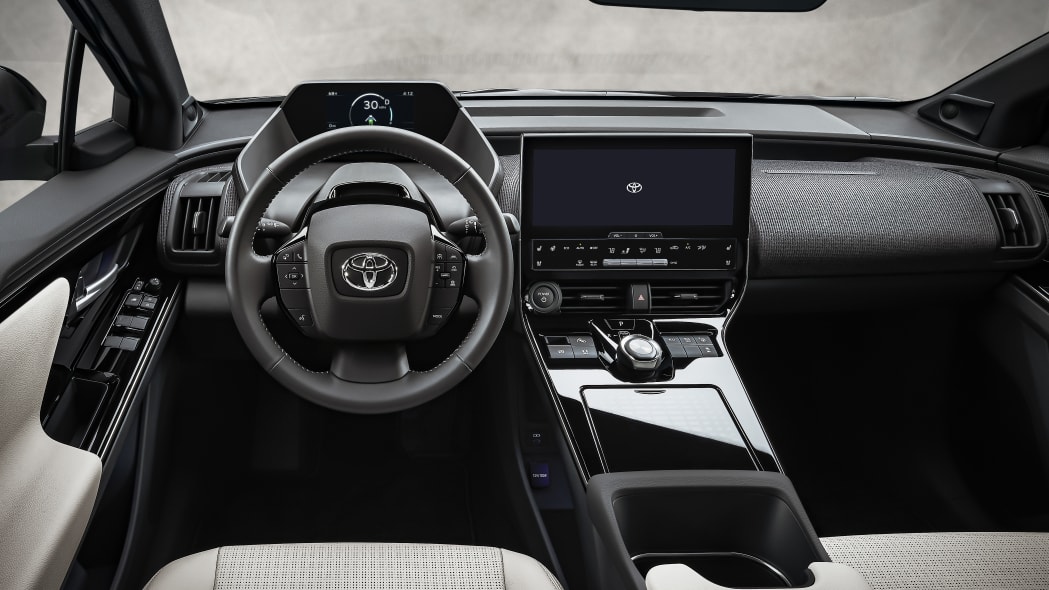
Subaru has showed the first video of its first EV, the 4x4 Solterra crossover, essentially confirming that it's a slightly reworked version of Toyota's upcoming bZ4X EV, according to Autoblog. Both electric cars are the fruit of Toyota and Subaru's collaboration on the e-TNGA platform designed for multiple EVs, first announced in 2019. 

Design cues visible in the teaser video, particularly the odd dual roof spoiler, are similar to those on Toyota's upcoming bZ4X (the "bZ" stands for "beyond zero"). The side profile in a longer shot also looks nigh-on identical, making us wonder why Subaru doesn't just reveal it in full and be done with it. 

It also showed a dim shot of the interior, with the centerpiece being a giant mid-mounted display. Again, that looks mighty similar to what Toyota has shown us with its own EV crossover, though Autoblog pointed out that Subaru appears to have some extra features below the rotary knob. Another notable difference is Subaru's bolstered seats that might allow for more sporty 4x4 activities. 

Other key details, like price and battery capacity, have yet to be released. However, the price could be somewhere in the high $30,000 to low $40,000 range. Like Toyota's offering, it's set to arrive in the US and other markets next summer. 

Amazon settles with employees allegedly fired over working condition criticisms

Amazon was supposed to defend its decision in court to let Emily Cunningham and Maren Costa go last year. The former Amazon employees were outspoken critics of the company, and both were, the National Labor Relations Board (NLRB) previously decided, illegally fired. The e-commerce giant didn't have to defend itself, however, because it has settled with the affected parties shortly before the hearing could take place.

Cunningham and Costa, who worked on user experience design, openly criticized Amazon's climate policies and workplace practices. They previously slammed the company's climate policies in a video that gained national attention. And before they were let go in April 2020, both of them tweeted that they'd match donations up to $500 to support their warehouse worker colleagues. Cunningham said the "lack of safe and sanitary working conditions" puts the workers and the public at risk, while Costa tweeted that the workers "struggle to get consistent, sufficient protections and procedures" from their employer.

Amazon said when the news broke that they were let go for violating internal policies, namely for discussing the company without prior approval, and not for speaking out about working conditions specifically. The NLRB looked into accusations that Amazon retaliated against its employees for organizing or participating in protests, however, and determined that Cunningham and Costa were illegally fired.

According to The Washington Post, the settlement still needs to be approved by the NLRB regional director in Seattle, though Cunningham and Costa are already considering the settlement a victory. In a joint statement, they said the development is a "win for protecting workers rights" and that Amazon will be required to pay them lost wages. The whole statement reads:

"We are thrilled to announce that we have reached an agreement to settle the charge against Amazon at the National Labor Relations Board (NLRB) alleging that the company illegally fired us for speaking up about warehouse workers' conditions during COVID. This is a win for protecting workers rights, and shows that we were right to stand up for each other, for justice, and for our world. Amazon will be required to pay us our lost wages and post a notice to all of its tech and warehouse workers nationwide that Amazon can't fire workers for organizing and exercising their rights.

It’s also not lost on us that we are two women who were targeted for firing. Inequality, racism, and sexism are at the heart of both the climate crisis and the pandemic. 

Tech workers standing up together have immense power to move the biggest corporations in the world. Everything we love is threatened by climate chaos. Workers at every company need to be standing up for each other and the world, together. Now is the time to be our best, bravest selves. We can only do this together. We hope you’ll join us."

Honda announces plans to build electric VTOLs and telepresence robots

Honda builds much more than cars and trucks — power equipment, solar cells, industrial robotics, alternative fuel engines and even aircraft are all part of the company's production capacity. On Thursday, Honda announced that it is working to further expand its manufacturing portfolio to include Avatar-style remote telepresence robots and electric VTOLs for inter- and intracity commutes before turning its ambitions to building a fuel-cell driven power generation system for the lunar surface. 

For its eVTOL, Honda plans to leverage not only the lithium battery technology it's developed for its EV and PHEV vehicles but also a gas turbine hybrid power unit to give the future aircraft enough range to handle regional inter-city flights as well. Honda foresees air taxis as a ubiquitous part of tomorrow's transportation landscape, seamlessly integrating with both autonomous ground vehicles and traditional airliners (though they could soon be flown by robots as well). Obviously, the program is still very much in the early research phase and will likely remain so until at least the second half of this decade. The company anticipates having prototype units available for testing and certification by the 2030s and a full commercial rollout sometime around 2040. 

Honda will have plenty of competition if and when it does get its eVTOLs off the ground. Cadillac showed off its single-seater aircar earlier this year, while Joby (in partnership with NASA) already has full-scale mockups flying. In June, Slovakian transportation startup, Klein Vision, flew from Nitra and to the Bratislava airport in its inaugural inter-city flight — and then drove home after the event. But building a fleet of flying taxis is no easy feat — just ask Bell helicopters — and we're sure to see more companies drop out of the sector before eVTOLs become commonplace.

Carlo Allegri / reuters

Honda reps also discussed the company's future robotics aspirations during a media briefing on Wednesday. The company envisions a future where people are unencumbered by space and time, where telepresence robots have visual and tactile acuity rivalling that of humans. Rather than hopping on a plane to inspect remote factory floors or attend product demonstrations in person, tomorrow's workers may simply don VR headsets and step into the body of an on-site humanoid robot. 

The company announced that it wants its Avatar Robot — a newly refined iteration of the Asimo (above) — put into practical use in the 2030s and will conduct technology demonstration testing by the end of Q1, 2024 in order to meet that goal. But before that happens Honda reps noted that the company has work to do downsizing the robot's hand hardware and improving its grasping dexterity.

JAXA/Honda

Honda also has big plans for its space ventures including working on ways to adapt its existing fuel cell and high differential pressure water electrolysis technologies to work on the lunar surface as part of a circulative renewable energy system.

This system would use electricity gathered from renewable energy sources (like solar) to break the molecular bonds of liquid water, resulting hydrogen and oxygen. Those two elements would then be run through Honda's fuel cell to generate both electricity and supply the lunar habitats with oxygen for breathing and hydrogen for rocket fuel. 

The company also hopes to utilize the more-nimble Avatar hands its developing as manipulators on a fleet of remote controlled lunar rovers which will perform tasks on the lunar surface rather than subject astronauts to the moon's many dangers. Honda has partnered with Japan Aerospace Exploration Agency (JAXA) and began joint research into both of these systems in June.