Posts with «language|en-us» label

An appreciation of the PlayStation Vita on its 10th birthday

A decade ago today saw the Japanese release of Sony's last dedicated gaming handheld, the PlayStation Vita. It wasn't quite as popular as its predecessor the PlayStation Portable (or its main rival the Nintendo 3DS), and Sony is still trying to bring its gaming experience to mobile, but the Vita still holds a special place in the hearts of those who owned one. At Engadget, that's Nathan Ingraham and Devindra Hardawar, who have both extolled the virtues of the system in our internal Slack many times over the years (yes, I checked). So on the Vita's 10th birthday we've asked our resident experts what their favorite games for the system were, and inspired them to dig the shiny little handheld out of their closets for another go-around. — Kris Naudus, Buyer's Guide Editor

Gravity Rush

The freedom of Gravity Rush’s acrobatic gameplay, which lets you fall through the air in every direction, as well as walk along the sides and bottoms of buildings, went hand-in-hand with the Vita’s portability. That made it a game I couldn’t help but love despite its frustrations. Gravity Rush took full advantage of the system’s motion controls — you had to tilt the Vita to control your flying momentum — and its watercolor anime aesthetic looked incredible on the Vita’s screen. Few games captured the magic of the system’s hardware that well.

Sure, the combat was simplistic and the story didn’t make much sense. But the visceral feeling of flying was hard to match, especially on a portable console. I never got around to playing the PlayStation 4 Gravity Rush remaster, mostly because my memories of the game are so intimately tied to the Vita. I suppose it’s time to finally get over that hangup, though. The Vita is well and truly dead, and if I wanted to play the sequel, I have no choice but to move over to my PS4. — Devindra Hardawar, Senior Editor

Lumines: Electric Symphony

Every portable console needs a good puzzle game. For the PS Vita, it was Lumines: Electric Symphony. The first Lumines game was a launch title for the Vita’s predecessor, the PlayStation Portable, and Electric Symphony arrived when the Vita went on sale. The basic gameplay remained the same: you manipulate 2-by-2 squares of varying colors together and match those colors to clear things out. If your screen gets overloaded, that’s that.

What makes Lumines: Electric Symphony so engrossing is the way the gameplay is matched up to the beat of a lengthy selection of classic electronic tunes from artists like LCD Soundsystem, Aphex Twin, The Chemical Brothers and about 30 more. Each song has a different speed, and that speed is reflected in the gameplay; it’s not like Tetris where things progressively get faster and faster. It’s actually more like Tetris Effect, which was the first Tetris game to make music and sound a crucial part of the gameplay experience.

Lumines: Electric Symphony doesn’t reach the lofty heights of Tetris as a puzzle game, but that’s not a huge knock. It’s hard to compete with one of the most popular video games of all time, but Electric Symphony is still a great way to kill some time, either through a short session or a long play-through of the more than 30 tracks the game has to offer. — Nathan Ingraham, Deputy Editor

Modnation Racers: Road Trip

Ever since Super Mario Kart arrived in 1992, game developers have tried to emulate its appeal with little success. For my money, Modnation Racers: Road Trip came pretty damn close. The PS Vita title was a new version of a PS3 game that came out in 2010. Both installments follow the Mario Kart script pretty closely: crazy tracks with weapons and items that let you even the odds against your competition.

What the Modnation Racers games did differently was offer endless customization — of your kart, racer and, most crucially, the courses themselves. Even on the somewhat scaled-back Vita game, you could download all manner of creations from the Modnation community, something that gave the game life for years until Sony inevitably shut down the servers.

Even without all the community content, though, Modnation Racers: Road Trip is still a blast to play. The 30 tracks in its career mode are extremely well designed, and the driving mechanics simply feel great. After almost 10 years, this game is showing its age, but it’s a great example of Sony’s promise to bring console-quality games to the Vita. The graphics don’t look quite as sharp as they used to, but the racing experience remains a blast. — N.I.

OlliOlli

Sony initially pitched the PS Vita as a way to play console-quality games on the go, but its legacy is just as much about the smaller, indie games that hit the handheld. OlliOlli and its sequel OlliOlli 2: Welcome to Olliwood are two games that I played for hours on end, even though they weren’t as flashy and high-profile as games from bigger studios.

OlliOlli is a masterful side-scrolling skateboarding game that combines lo-fi music and graphics with gameplay that was simple to learn, but maddening to master. And let me be clear, “maddening” is a complement. Once I figured out how to do more advanced moves and pull off longer combos to juice my score, I got addicted to the challenge of mastering every level.

And there’s a ton to master here; both games had five worlds to conquer, each with five “amateur” and “pro” levels. And, each level has five objectives to nail if you really want to be a completist. Usually, I don’t try to hit 100 percent of all the goals in a game, but here I was compelled to keep on pushing myself to beat as many challenges as I possibly could.

Both games have held up over the years, with the sequel adding crucial new mechanics like manuals, so you can skate through entire levels without stopping your combo. I recently replayed both, and still really enjoy trying to do a level as cleanly as possible — if you like chasing high scores, OlliOlli is a great option. And if you never tried these games, I’ve got some good news: both are available for current PlayStation consoles, and a new game, OlliOlli World, is coming out on February 8th. — N.I.

Persona 4 Golden

I couldn’t have asked for a better introduction to the world of Persona than this title on the Vita. Persona 4 Golden’s bold and colorful aesthetic practically popped off of the system’s OLED display. (I can’t say if the later LCD Vita handled it worse.) It also featured one of the most memorable JRPG soundtracks I’ve ever encountered. Best of all, the Vita’s portability was perfectly suited to P4G’s grind. Being able to bring the game outdoors, on the subway and all over my apartment made leveling up feel more like a genuine adventure, rather than a typical JRPG chore.

For me, someone who grew up with every iteration of Game Boy, Persona 4 Golden also proved that portable systems could finally deliver a premium experience similar to home consoles. Sure, there were limitations around battery life and screen size, but in 2012 playing a deep and visually rich RPG on the Vita felt like a miracle. And honestly, it still does. Time to dig up my Vita. — D.H.

Xenogears

I know this is a bit of a cheat. But the Vita is one of the last systems I own that can still run Xenogears, Square’s brilliant and enigmatic Neon Genesis Evangelion-esque RPG. As someone who was fundamentally shaped by both Chrono Trigger and Evangelion in the ‘90s, Xenogears is that rare bit of culture that has always felt specifically made for geeks like me. I love it all: the unique combat, the eclectic Yasunori Mitsuda score and the giant mech battles. Hell, I even dig the exposition-heavy final act. Once the Vita arrived, being able to play Xenogears on the go made me fall for it all over again. — D.H.
Netflix drops a surprise teaser for its 'Witcher' prequel

The Witcher: Blood Origin, a prequel to Netflix’s live-action adaptation of Anderzej Sapkowski’s dark fantasy novel series, will debut in 2022, and you can watch the first trailer now. In a surprise move, Netflix shared footage from the show as part of season two of The Witcher. The trailer is attached to the final episode of the season as a post-credits scene. And as of the writing of this article, Netflix has yet to upload the clip to YouTube.

THE WITCHER: BLOOD ORIGIN is coming to Netflix in 2022 pic.twitter.com/Bzva1q5jEu

— Netflix Geeked (@NetflixGeeked) December 17, 2021

Per Gizmodo, the trailer doesn’t provide many story hints, but what it does do is offer a look at Michelle Yeoh as Scian, one of the protagonists of the tale. Blood Origin will center on the Conjunction of the Spheres, the moment in the Witcher universe where humans, elves and monsters all came to inhabit the fantasy world of the series.

Blood Origin is just one of several Witcher-related projects Netflix has in the production pipeline following the success of the first season of its live action adaptation. The company recently greenlit a third season of the show, in addition to a second animated movie (following Nightmare of the Wolf) and a kids and family series.

AT&T and Verizon settle FCC 911 outage investigations

AT&T and Verizon are among four providers that have agreed to settle FCC investigations into outages that led to failed 911 calls. CenturyLink (now Lumen Technologies) and Intrado will also pay settlements and enact measures to ensure they adhere to the agency's 911 rules.

Verizon (Engadget's former parent company) will pay $274,000, the smallest settlement of the four, to resolve an investigation into an outage on May 7th, 2020. The other investigations all related to outages on September 28th, 2020. AT&T will settle two investigations with its $460,000 payment, while CenturyLink and Intrado will pay $3.8 million and $1.75 million respectively.

In addition to failed 911 calls, the FCC says the investigations into AT&T, CenturyLink and Intrado concerned whether those companies gave 911 call centers timely notifications about the outages. The second AT&T investigation related to whether the provider violated FCC rules by failing to deliver number and location information during the outage.

“The most important phone call you ever make may be a call to 911,” FCC chairwoman Jessica Rosenworcel said in a statement. “Sunny day outages can be especially troubling because they occur when the public and 911 call centers least expect it. It’s vital that phone companies prevent these outages wherever possible and provide prompt and sufficient notification to 911 call centers when they do occur."

The settlements pale in comparison to the $19.5 million T-Mobile agreed to pay to resolve an investigation into a 12-hour outage in June 2020. Still, they should at least serve as a reminder the FCC doesn't take outages impacting 911 calls lightly.

Waze can finally help you find EV charging stations

One of the trickier aspects of EV ownership is finding charging stations. The infrastructure improves every year, but it’s still not as widespread and robust as what’s available to those who drive gasoline cars. That’s where apps like PlugShare and Chargemap can be a godsend, helping you not only find nearby stations but also plan your routes. Now there’s another option you can turn to for help.

Waze has partnered with Volkswagen (the automaker owns Electrify America) to map EV charging stations across the US. Starting today, you can use the software to add stops at stations along your planned route. If you’re so inclined, you can also change the car icon to that of a Volkswagen ID.4. We’ve reached out to Waze to find out more about the feature and whether it has a timeline for when it will arrive in other countries. We’ll update this article when we hear back from the company.

Waze parent company Google has been helping people find EV charging stations through Maps since 2019. And even if the update is long overdue, it’s one diehard Waze users are sure to appreciate — if only because it means they probably can get away with one less app on their phone.

Hyundai’s Ioniq 5 delivers on its EV-of-the-future promise

Automakers have been struggling to produce an EV that looks futuristic but not pretentious. Starting at $39,700, the Hyundai Ioniq 5 seems to toe that line with a mixture of retro and futuristic design elements combined with technology that actually works as advertised.

The hatchback-esque SUV doesn’t just look cool, it’s a pleasure to drive and is the culmination of the technology Hyundai has been adding to vehicles for years. We got a chance to drive it around Southern California and suffice to say, Hyundai has produced a winner.

Tencent buys 'Back 4 Blood' studio Turtle Rock

Tencent has added another notable game developer to its roster after buying Slamfire, the parent company of Turtle Rock Studios, for an undisclosed sum. The studio is behind Left 4 Dead, Evolve and, most recently, Back 4 Blood. Co-founders Phil Robb and Chris Ashton will continue to run the studio.

"By joining the Tencent family, we will not only get access to their vast resources and expertise, but we have found a partner who is encouraging us to be ambitious and visionary," Turtle Rock wrote in a blog post. The studio said it's expanding its team to support Back 4 Blood and create more multiplayer experiences. It added it will be able to do something new: "turn a universe we created into a true long-standing AAA franchise."

Tencent has made more major strides in the gaming sphere this year. It acquiredLittleBigPlanet 3 developer Sumo Group this summer for $1.26 billion. As analyst Daniel Ahmad notes, the company has bought or invested in more than 100 gaming-related companies in 2021 alone. For instance, it took stakes in Remedy Entertainment and Life is Strange studio Dontnod.

Universal Audio Volt review: Pro audio pedigree at bedroom studio prices

The 21st century gave rise to the bedroom producer. And in 2020 the music industry finally acknowledged that songs recorded in someone’s bedroom were just as viable as those captured in a studio filled with millions of dollars worth of equipment. This has, of course, led many of those high-end studio equipment makers to try and get in on the home studio game.

The latest to make the leap is Universal Audio. They’re a brand with over 60 years of experience, whose gear has been used to record some of the most iconic albums of all time. But, until recently the most affordable interface the company made was the $699 Apollo Solo – hardly the sort of money a beginner or casual hobbyist is gonna drop. The Volt series, however, ditches the company’s expensive DSP chips and focuses on delivering the basics with a few unique twists. The result is a collection of affordable audio interfaces that should be on the shortlist for any home studio setup.

The Volt lineup includes five models from the $139 single-input Volt 1, all the way up to the $369 four-input Volt 476. Some of the features are different and the number of ins and outs varies from model to model, but they share the same core including 24-bit/192 kHz audio converters and preamps with a “Vintage” mode that attempts to recreate the sound of a classic UA 610 tube preamp.

I tested two midrange models: the $189 Volt 2 and $299 Volt 276. These are both two-input interfaces. What separates the “76” versions from the base models are some ergonomic and design tweaks, and the inclusion of a built-in compressor modeled on the company’s iconic 1176 limiting amplifier.

Hardware

Terrence O'Brien / Engadget

Before you even start contemplating the compressor, though, the difference between the Volt 2 and 276 is immediately obvious. The 2 is simple and utilitarian. It looks like most other interfaces in the sub $200 range. There’s a pair of combination TRS / XLR inputs on the front, along with knobs to control the gain of each channel There’s buttons to turn on 48v phantom power for using condenser mics, Vintage mode, and for switching between line level and instrument level signals. Lastly, there’s a monitor volume knob, headphone jack and a button for turning on and off direct monitoring.

Around back are MIDI in and out ports (something notably absent from the company’s higher-end Apollo interfaces), balanced outs for connecting studio monitors, a USB-C port, a 5V power jack (necessary when using it with an iPad or other mobile device) and, somewhat strangely, an on and off switch.

Terrence O'Brien / Engadget

The rest of the Volt 2 is a plain box. On the plus side, if you have limited desk space you can stick the Volt 2 in tight spots or rest things on top of it, and still have access to all the controls. On the downside, it can feel cramped, especially when you’re trying to monitor your input levels. There are two tiny LEDs next to each input that light up to warn you when you’re about to start clipping.

The 276, on the other hand, is handsome and spacious. But you’re going to need extra deskspace since most of the controls are on the top. On the top right you’ll find large five-segment LEDs for checking your levels. The gain knob and monitor level knob on top are also much bigger, which makes it easier to dial things in.

In addition, the whole thing just has a lot more style. The metering LEDs are on a slight angle to make them easier to see, and the sides are a lovely wood. Are those aesthetic flourishes and conveniences alone worth the extra $60? Honestly, they might be.

The competition

Terrence O'Brien / Engadget

Once you factor in the compressor, I think the choice between the two here is obvious, as long as your budget can handle it. The Volt 2 (and by extension the Volt 1) are reasonably priced, perfectly serviceable audio interfaces. But they don’t necessarily stand out from the crowd. Focusrite’s Scarlett series is well established, competitively priced and shares a lot of the same features. The third-generation Scarlett 2i2 is $170 ($20 less than the Volt 2), shares all of the same connectivity options and has “Air” mode, which is comparable to UA’s Vintage.

Most importantly, though, you’d be hard pressed to tell the difference between the two if your goal is to capture the clean audio. With Air and Vintage turned off and the gain on the preamps set to lower levels, both interfaces produce crisp and clear results. Are there differences? Sure. But they’re extremely subtle. I wouldn’t be able to separate a Volt, from a Scarlett, from an Arturia Minifuse in blind taste test. And I doubt the target audience of hobbyists and beginners would be able to either.

(If you want to get really nerdy about the signal-to-noise ratio and noise floor and frequency response, I highly recommend Julian Krause’s YouTube channel.)

Terrence O'Brien / Engadget

Latency among all of these is pretty similar too. I gathered the interfaces I had lying around – the Volt 2, Volt 276, Focusrite Scarlett 2i4 second-gen, and Arturia MiniFuse 2 – and plugged them into my MacBook Pro (2019, quad-core Core i7 CPU, 16GB of RAM) and Dell XPS 15 (2019, quad-core Core i7 processor, 32GB of RAM), set the sample rate to 44,100Hz and buffer size to 128 samples and measured total latency in Ableton Live 11. All four interfaces delivered the same exact latency of 12.2ms on the Mac. On the Dell, both Volts came in at just 8.89ms, the MiniFuse at 9.89ms and the Scarlett brought up the rear at 12.9ms. While lower latency is obviously better, none of those numbers are particularly alarming.

That difference starts to show up a bit more when you crank the gain and push the preamps on these interfaces. I plugged my Fender Toronado with Atomic humbuckers directly into the Volt 2, Volt 276, 2i4 and MiniFuse. I cranked the preamp gain on each all the way up and fed them into a basic clean amp simulator in Ableton. Here the differences are a little more obvious, but they’re not that dramatic – at least until you turn on the 276’s compressor.

The MiniFuse at full gain is a bit brittle and sounds like a full-on fuzz pedal. The Scarlett has a bit more bottom end and slightly scooped mids, but is still plenty aggressive. While the Volt 2 is a touch thinner at the bottom end and puts more focus on the mids and highs. The compressor on the 276 makes a huge difference here, though. It softens the edges a bit and tames a bit of the harsher frequencies. It’s worth noting that all of these sound pretty harsh at the higher frequencies with the gain turned all the way up. Then again, it’s unlikely that anyone will be cranking these preamps to max on a regular basis.

Unfortunately, I did not have an SSL2+ on hand to test, which would have been the better comparison for the Volt 276.

The 76 Compressor

The compressor on the 176, 276 and 476 are really what separate the Volt line from the pack. Both Vintage mode and the 76 Compressor are analog emulations, not digital recreations. But SSL and Focusrite have something similar to Vintage in 4K and Air. Essentially, they boost high frequencies while adding saturation. The 76 Compressor, though, is completely unique in this price range at least.

Now, if you record anything using the builtin compressor it’s obviously printed to the audio permanently. So, if you want to retain the most flexibility in your recordings for tweaking in DAW later, you’ll leave Vintage Mode and the 76 Compressor off. But if you just want to capture the best recording possible from moment one and leave less work for your plugins to do later, never turn Vintage off and use that compressor generously.

Vintage mode delivers relatively subtle changes in tone. I rarely plug directly into my interface, and instead run through a Tascam Portastudio 424 as a mixer first because I love the sound of the preamps. Still, I found myself leaving Vintage mode on all the time. It added a different flavor of analog warmth than the Portastudio and I liked the way the two things complemented each other.

Terrence O'Brien / Engadget

The 76 Compressor, on the other hand, is not particularly subtle. It makes an obvious and dramatic difference to your sound. I would not leave it on all the time. But if I were recording directly to the interface, I’d probably leave it on most of the time. The main issue is that you can’t dial in any specifics. The compressor has three presets: vocals, guitar and fast, and you simply switch between them by pressing a button. For recording vocals – especially something spoken like a podcast or voice over – the 76 Compressor is incredible. I would absolutely use it on voice no matter what. Fast mode is excellent on drums… or at least drum machines. I don’t have an actual drum set in my home to test it with.

Miscellaneous

Terrence O'Brien / Engadget

One other thing you can’t really dial in is direct monitoring. Being able to hear raw audio as it’s coming into the interface is essential, but other devices like the MiniFuse and the Scarlett let you manually set the balance between direct monitoring and audio from the PC. On the Volt, it’s simply on or off. If you press the direct button input one and two get panned hard left and right, press it again and they’re both summed to mono. And that’s it. If the direct input is too loud, you either need to change the gain on the preamp or turn up the volume in your DAW.

One last thing to mention is the software bundle that comes with the Volt. It’s not bad, but frankly there are better ones. The big coup here is Melodyne Essentials, a $99 app that lets you correct pitch and timing of recordings, sort of like Autotune. Relab LX480 Essentials reverb is another standout that recreates Lexicon’s famous digital 480L reverb from the ‘80s. The other inclusions are enough to get you making music, but don’t bring anything special to the table. The Softube amp sim and Ableton’s Live 11 Lite are often included with other interfaces as well, and Spitfire Audio’s LABS instruments are free and can be downloaded by anyone. (Also, if you don’t have Spitfire’s LABS you should rectify that, like right now.)

Wrap-up

Universal Audio’s first serious foray into the budget interface world is definitely a success. The Volt 1 and 2 don’t necessarily separate themselves from the pack, but they’re still excellent audio interfaces at reasonable prices. The Volt 176, 276 and 476, however, bring something special to the table – an all-analog emulation of one of the most iconic compressors of all time. They also have a stylish and ergonomic design that many other interfaces in this pricepoint can’t match.

My trusty Scarlett 2i4 gets the job done and I don’t feel any particular urgency to replace it. But I can tell you that if I had to go out and buy a new interface today, I would probably pick up the Volt 476.

Apple's latest AirPods drop to $140, plus the rest of the week's best tech deals

With Christmas right around the corner, now's the time to make sure you have all your gifts in check and grab any last-minute holiday gifts you may need. Thankfully, there remain a good number of tech deals available, and a good portion of them are still slated to arrive before the holiday if you're quick to order. Apple's second-generation AirPods are still on sale for $90, while a couple of colors of the Apple Watch Series 7 are $50 off. NVIDIA's Shield TV Pro streamer remains on sale for $180 and you can get $230 off one of the latest Roomba robot vacuums at Wellbots. Here are the best tech deals from this week that you can still get today.

AirPods (3rd gen)

Billy Steele/Engadget

Apple's latest AirPods are down to $140, which is $40 off its normal price and a new low. We gave them a score of 88 for their more comfortable design, much improved audio quality and longer battery life.

Buy AirPods (3rd gen) at Amazon - $140

AirPods (2nd gen)

Chris Velazco / Engadget

The previous-generation AirPods are down to $90 right now, or $70 off their normal price. While not the latest models, these are still decent earbuds that we liked for their improved wireless performance and good battery life.

Buy AirPods (2nd gen) at Amazon - $90

Apple Watch Series 7

Cherlynn Low / Engadget

The latest Apple Watch Series 7 is on sale for $350, or $50 less than usual. It's the most comprehensive wearable Apple makes and it earned a score of 90 from us for its larger screen, faster charging and handy features in watchOS 8.

Buy Series 7 at Amazon - $350

Mac Mini M1

Engadget

The Mac Mini M1 is down to a new low of $570, while you can get the model with extra storage for $750. Adorama even has the desktop with 16GB of RAM for $100 less than usual, too. This is the most affordable M1 machine you can get right now, and it's a good option if you prefer a desktop and want all of the performance improvements that come with one of Apple's latest chipsets.

Buy Mac Mini M1 (256GB) at Amazon - $570

iMac M1

Apple

Apple's 24-inch iMac M1 is $100 off, bringing the 8GB RAM/256GB storage model down to $1,399. We gave the colorful desktop a score of 89 for its speedy performance, stunning Retina display and thin design.

Buy 24-inch iMac M1 at Amazon - $1,399

NVIDIA Shield TV Pro

NVIDIA

The high-end NVIDIA Shield TV Pro streamer is down to $180 right now, or $20 off its normal price. It's on the expensive side, but it's one of the best streaming devices you can get at the moment thanks to its Tegra X1+ processor, 16GB of expandable storage and support for 4K upscaling, Dolby Vision, Dolby Atmos, Chromecast technology and more.

Buy Shield TV Pro at Amazon - $180Buy Shield TV Pro at Best Buy - $180

Amazon Fire TV Cube

Nicole Lee / Engadget

Amazon's most powerful streaming device, the Fire TV Cube, has dropped to a new record low of $75. It supports 4K streaming, Dolby Vision and Atmos, plus hands-free Alexa controls.

Buy Fire TV Cube at Amazon - $75

GOG.com Winter Sale

ZA/UM

GOG's annual winter sale has slashed prices of many popular PC games. Some of the highlights include Disco Elysium - The Final Cut for 55 percent off, bringing it down to $18; Cyberpunk 2077 for only $30; and Metro Exodus - Gold Edition for $14.80, or 63 percent off.

Shop Winter Sale at GOG.com

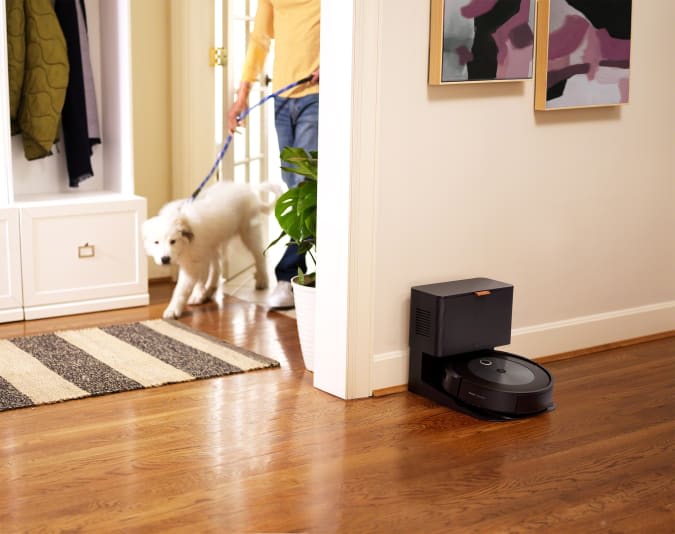
iRobot Roomba j7+

iRobot's latest vacuum, the Roomba j7+, has dropped to $619 at Wellbots when you use the code 30VAC at checkout. You can also still get the robot without the clean base for $449. This is one of the higher-end robo-vacs the company makes and it has new AI-driven computer vision technology that can detect objects and move around them as it cleans. That means it'll better avoid things like chairs and table legs, as well as unexpected obstacles like pet poop. The j7+ also comes with a clean base into which the robot will empty debris at the end of every cleaning job.

Buy Roomba j7+ at Wellbots - $619Buy Roomba j7 at Wellbots - $449

GoPro Hero 10 Black

Engadget

GoPro's Hero 10 Black action cam is $100 cheaper at Amazon right now, bringing it down to $399. This model has the updated GP2 processor, support for 5.3K max resolution at 60fps, 4K at 120 fps and 2.7K and 240 fps. We also liked its Hypersmooth 4.0 feature, which stabilizes bumps while you're recording. While that's a great deal on the camera alone, you can spend $50 less and get the camera with a 1-year GoPro subscription if you shop directly at GoPro's website.

Buy Hero 10 Black at Amazon - $399

Fitbit Charge 5

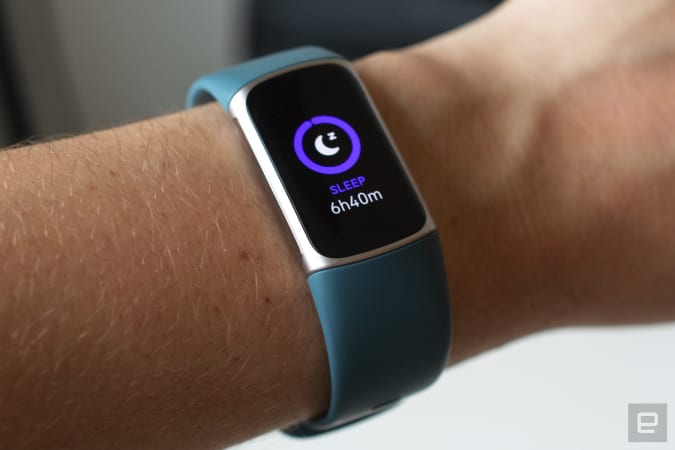
You can pick up the Fitbit Charge 5 for $130 right now, or $50 off and the same price as it was on Black Friday. This is Fitbit's most comprehensive fitness band and it earned a score of 82 from us for its full-color touchscreen, built-in GPS, onboard EDA sensors for stress tracking and multi-day battery life.

Buy Charge 5 at Amazon - $130

Amazon Kindle

You can grab the standard Kindle for $55 and get three months of Kindle Unlimited for free with it. We gave this e-reader a score of 91 for its improved contrast display, extra front lights and sleeker design.

Buy Kindle at Amazon - $55

Amazon Fire tablets

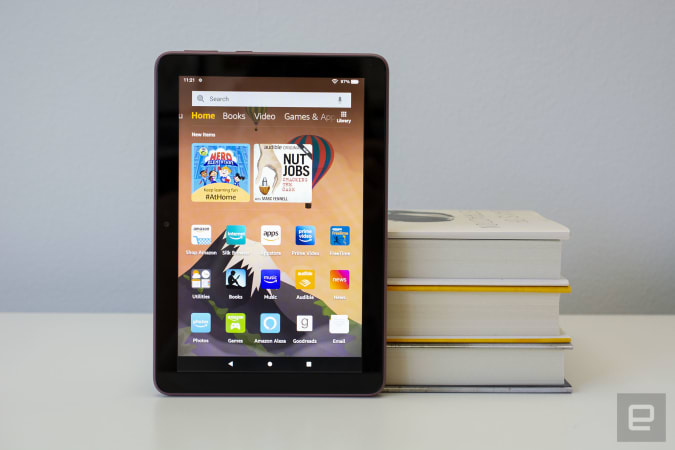
A bunch of Fire tablets are on sale again — you can get the Fire 7 for only $35, the Fire HD 8 for $55 and the Fire HD 10 for $100. These are all close to Black Friday prices, so you're still getting a good deal even if you missed the sales a few weeks ago. We gave the Fire HD 8 a score of 81 for its refined design, good performance and new USB-C charging.

Buy Fire 7 at Amazon - $35Buy Fire HD 8 at Amazon - $55Buy Fire HD 10 at Amazon - $100

Amazon smart thermostat

Amazon's new smart thermostat is down to $48 right now, or 20 percent off its normal price. Like similar gadgets, it's designed to save you money on your home heating and cooling by automating the process. it doesn't have all the bells and whistles that other, more expensive thermostats do, but it's Energy Star-certified and supports a feature called Hunches, which will automatically adjust the temperature based on your habits. You can also control it with Alexa if you have an Echo speaker or smart display in your home.

Buy smart thermostat at Amazon - $48

Sony WH-1000XM4

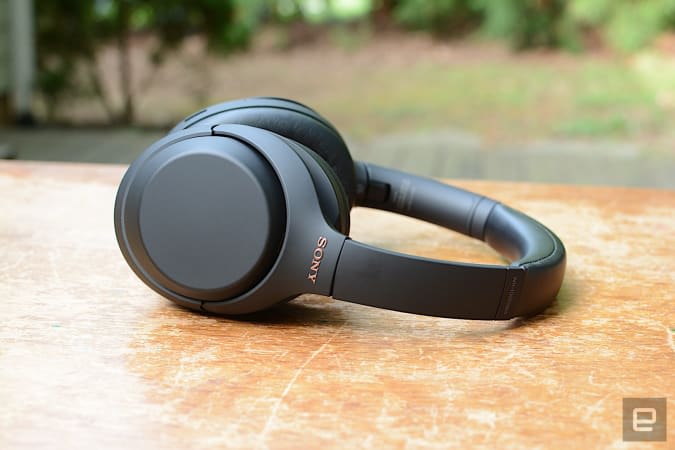
Our favorite pair of Sony headphones, the WH-1000XM4, are down to $248 right now, which is just about $100 off their regular price. We gave these cans a score of 94 for their powerful ANC, immersive sound quality and multi-device connectivity.

Buy WH-1000XM4 at Amazon - $248

Instant Pot Duo Nova

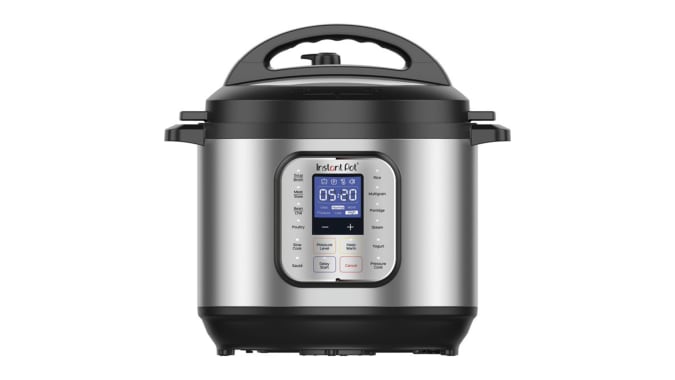
Walmart has an exclusive version of the 8-quart Instant Pot Duo Nova for $59. That's nearly half off the price that the normal model is going for on Amazon right now. You'll get seven cooking modes along with additional one-touch programs that make it easy to prepare things like soups, stews, porridge and more.

Buy Instant Pot Duo Nova at Walmart - $59

Samsung EVO Select microSD

Samsung’s EVO Select microSDXC card in 128GB is down to $16, or 20 percent off its normal price. This is the latest model and while you can find microSD cards for less, EVO is a reliable brand and you're getting a full-sized adapter with this one.

Buy Samsung EVO Select (128GB) at Amazon - $16

Chromecast with Google TV

The Chromecast with Google TV has dropped to $40, which is $10 cheaper than usual. We gave the device a score of 86 for its 4K HDR streaming capabilities, Dolby Vision and Atmos support plus its much needed and very handy new remote.

Buy Chromecast with Google TV at Best Buy - $40

Samsung 980 Pro

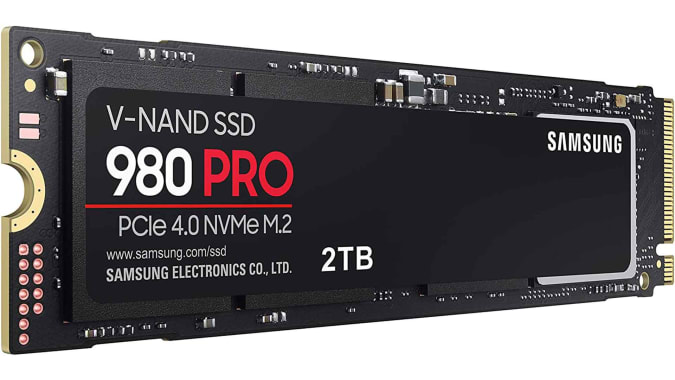
Samsung's 980 Pro is one of the best internal SSDs you can get right now and a 1TB model is on sale for $170 right now. It has sequential read speeds up to 7,000MB/s and it'll work with the PS5 as long as you have a heatsink attached.

Buy Samsung 980 Pro (1TB) at Amazon - $170

Crucial P5

Crucial’s P5 NAND NVMe SSD in 1TB is on sale for $145 right now, or 19 percent off its regular rate. This drive can reach sequential read speeds of up to 3,400MB/s and its M.2 format makes it a good option for both desktop and laptop users.

Buy Crucial P5 (1TB) at Amazon - $145

Razer Wolverine Ultimate

Razer's Wolverine Ultimate gaming controller is down to $81, or nearly half off its normal price. The controller that comes with your Xbox is pretty good, but sometimes you might need a little more features from your gamepad. The Wolverine Ultimate may be wired, but it also has interchangeable thumbtacks and d-pads, so you can actually tweak the controller’s layout according to the games you play and your own personal preferences.

Buy Wolverine Ultimate at Amazon - $81

Amazon Echo

Amazon's Echo smart speaker is on sale for $60 right now. We gave it a score of 89 for its solid audio quality, attractive design and inclusion of a 3.5mm audio jack.

Buy Echo at Amazon - $60

Amazon Echo Dot

The tiny Echo Dot has dropped to $30, and you can grab the Echo Dot with Clock for only $35. We gave it a score of 88 for its good audio quality for the price, compact design and tap-to-snooze feature.

Buy Echo Dot at Amazon - $30Buy Echo Dot with Clock at Amazon - $35

Google Nest Mini

The Nest Mini is down to $25. It's the affordable speaker to get if you want to put the Google Assistant in your home without dropping too much money, or taking up too much space.

Buy Nest Mini at Best Buy - $25

Philips Hue White and Color smart bulbs (3 pack)

Philips

A three-pack of Philips Hue White and Color bulbs is down to about $77 thanks to a sale price and an additional 15-percent-off coupon that you can clip on the product page. That's the best price we've seen on this bulbs-only pack, making it best for those that already have a Hue bridge. You'll just have to wait a bit to get them as they will not ship until early January.

Buy Philips Hue smart lights (3 pack) at Amazon - $77

Tidal HiFi

PRNewsFoto/TIDAL

For those curious about Tidal's HiFi service, you can take advantage of the company's holiday sale and get three months of the music service for just $1. Three months of the HiFi Plus Plan is also on sale for $2, and it gets you everything in the standard HiFi plan along with Master Quality audio with Dolby Atmos and Sony 360 Reality Audio support and other extra perks.

Shop Tidal holiday sales

Follow @EngadgetDeals on Twitter for the latest tech deals and buying advice.

TikTok Kitchen will make its most popular recipes for you

If you've ever seen a viral TikTok of a recipe that looks surprisingly delicious, you might soon be able to try the dish without having to make it yourself. Starting in March, the platform is opening hundreds of delivery-only TikTok Kitchen locations across the US.

TikTok teamed up with Virtual Dining Concepts to create the ghost restaurants, Bloomberg reports. They'll start with around 300 locations and plan to expand to more than 1,000 by the end of 2022. Virtual Dining Concepts has notable experience in this field, having worked with YouTube megastar MrBeast on his MrBeast Burger virtual restaurants (that brand's first brick-and-mortar location is now in the works).

The TikTok Kitchen menu, which will change on a quarterly basis, will include some of the platform's biggest food trends. The initial batch of dishes features baked feta pasta (which Google says was the most-searched dish of 2021), a smash burger and pasta chips. 

TikTok says it will give its cut of profits from the venture to the creators of the recipes, as well as burgeoning food creators on the platform. However, the service didn't clarify how it will determine the true creators of the dishes, as opposed to a user who might have copied a recipe and made it go viral.

Nintendo brings five more Sega Genesis games to Switch Online Expansion Pack

The Nintendo Switch Online + Expansion Pack lineup of Sega Genesis games has just grown by five more titles. Nintendo has added Altered Beast, ToeJam & Earl, Dynamite Headdy, Sword of Vermilion and Thunder Force II to the library.

Nintendo rolled out the higher tier of its Switch Online service in October, which added Nintendo 64 and Sega Genesis games (and Animal Crossing: New Horizons DLC) to the existing offerings of NES and SNES titles, as well as cloud storage for save data and the option to play online multiplayer games. However, Nintendo charges a premium for the Expansion Pack. It costs $50 per year or $80 for a family plan, compared with $20 per year for the regular Switch Online service.

Soon after Switch Online + Expansion Pack went live, players raised a number of issues they had with the service, such as strange control mapping for N64 games on standard controllers and iffy emulation quality. Others claimed they lost save data and encountered crashes.

Nevertheless, Nintendo is continuing to bolster the lineup of Expansion Pack titles. It added N64 classic Paper Mario earlier this month, while Banjo-Kazooie will arrive in January.