The pandemic pushed US lawmakers to provide provisions to expand medical coverage for telehealth in 2020, speeding up a process that would otherwise have taken years. Since then, there have been efforts to make the change permanent, through things like the Telehealth Expansion Act of 2021. But there is an interim period that could present some uncertainty over whether people can get crucial telehealth services while permanent legislation is drawn up. Today, a bipartisan group of 45 lawmakers, led by Senators Brian Schatz (D-Hawai‘i) and Roger Wicker (R-Miss.), said they're "calling for the extension of expanded coverage of telehealth services to be included in must-pass legislation in February."
The group published a letter addressing Senate majority leader Mitch McConnell and House Speaker Nancy Pelosi, as well as their minority counterparts and notable signees include Senators Marco Rubio (R-Fla.), Kyrsten Sinema (D-Ariz.), Lindsey Graham (R-S.C.), Elizabeth Warren (D-Mass.) and Bernie Sanders (I-Vt.).
The letter states "While Congress prepares to enact permanent telehealth legislation, we urge you to include an extension of the pandemic telehealth authorities in must-pass government funding legislation in February."
Currently, pandemic telehealth decision-makers have temporary authority, and that's tied to the COVID-19 public health emergency declaration. As stated in today's letter, the emergency declaration is renewed in three-month increments. "Without more definitive knowledge about the duration of the pandemic and Medicare’s long-term coverage of telehealth, many organizations have been hesitant to fully invest in telehealth."
In addition to providing more confidence to providers that investing in telehealth will be a sound long-term investment, adding an extension to telehealth coverage while making it permanent will also "reassure patients that their care will not end abruptly."
The lawmakers called for "An extension to maintain expanded coverage of Medicare telehealth services for a set period of time," which the letter said "would provide much-needed certainty to health care providers and patients." They believe an extension would also allow additional time for studies to be conducted on the impact of telehealth, which "could help inform Congress's next steps on permanent telehealth legislation and appropriate program integrity and beneficiary protections."
Therefore, the group is also asking to ensure that "an extension not include unnecessary statutory barriers in accessing telehealth services during this data collection and analysis period," which could prevent people from getting essential care.
Waymo has sued the California Department of Motor Vehicles. In a case first reported by The Los Angeles Times, the Alphabet subsidiary filed a complaint with the Sacramento County Superior Court on January 21st to prevent the agency from disclosing what it believes to be trade secrets.
At the center of the lawsuit is a public records request an unidentified party made to obtain Waymo’s driverless deployment application. Before sharing the requested documents, the DMV allowed the company to redact any sections it believed would reveal its trade secrets, including questions that were asked by the agency. When the DMV eventually forwarded the package to the requester, that individual or group challenged the redactions. The agency then contacted Waymo and invited the company to sue it to resolve the matter.
Some of the information Waymo wants to prevent from entering the public domain include details on how it plans to handle emergencies involving its autonomous vehicles. Another redacted section details the abilities of its Driver software to handle San Francisco’s tricky one-way streets and hills. The company began offering taxi service to a limited number of customers in San Francisco in August. Those vehicles operate with a backup human driver.
The company contends it has publicly shared almost all of the information contained in its application with the DMV. According to Waymo, the redactions involve technical details that touch on how it achieves the safety performance it has detailed in other public venues. Waymo claims that information could give a competitor an edge on it. The suit's purpose here is to either forestall or completely prevent the disclosure of the requested information. As TheLos Angeles Times notes, resolution for these types of cases can take years.
“Every autonomous vehicle company has an obligation to demonstrate the safety of its technology, which is why we’ve transparently and consistently shared data on our safety readiness with the public,” a spokesperson for Waymo told Engadget. “We will continue to work with the DMV to determine what is appropriate for us to share publicly and hope to find a resolution soon.”
The DMV declined to comment on the case, but said it's currently reviewing the complaint.
Despite an already crowded market featuring big names like Airbnb and Vrbo, travel app Hopper is now expanding its services to include short-term home rentals.
Featuring more than two million properties spread across the world, Hopper Homes (which is available inside the Hopper app) should make it a bit easier to book airfare, car rentals and lodging (hotel or short-term) in a single place.
Hopper says users will be able to apply filters to help narrow down their options based on criteria like location, number of bedrooms, amenities and price. And over the next few months, the company says it will add support for some of its other booking features like Price Prediction and Cancel for Any Reason to the new service to help give its customers more flexibility over their travel plans.
That last part might end up being one of the biggest differentiators between Hopper Homes and its competitors. Other services such as Airbnb allow hosts to select from a range of cancellation policies including “flexible” plans that allow guests to cancel as late as 24 hours before check-in without penalty to “firm” plans that require guests to cancel at least 30 days before check-in.
By adding home rentals to its list of services, the company is hoping to attract a growing number of travelers who prefer staying in rental homes instead of hotels. Hopper claims Zoomers and millennials are especially keen, with more than four in 10 rental travelers being younger than 35.
Similar to its airfare and hotel bookings, Hopper also plans to integrate its Carrot Cash system in order to help customers save money, with credit earned from booking rentals homes able to be applied to other forms of travel.
The Federal Aviation Administration says it has reached an agreement with AT&T and Verizon (Engadget's former parent company) regarding the rollout of their C-Band 5G networks at and around airports. The agency said the three sides have found common ground "on steps that will enable more aircraft to safely use key airports while also enabling more towers to deploy 5G service."
According to the FAA, the providers offered "more precise data about the exact location of wireless transmitters and supported more thorough analysis of how 5G C-Band signals interact with sensitive aircraft instruments." The agency said it used the data to "determine that it is possible to safely and more precisely map the size and shape of the areas around airports where 5G signals are mitigated, shrinking the areas where wireless operators are deferring their antenna activations. This will enable the wireless providers to safely turn on more towers as they deploy new 5G service in major markets across the United States.”
The accord follows a months-long tussle between airlines and wireless providers over C-Band 5G. AT&T and Verizon voluntarily delayed the rollout for six weeks to address concerns that their services could interfere with aircraft systems and electronics, due to C-Band frequencies being close to ones used by altimeters.
Earlier this month, the CEOs of airlines including Delta, United and Southwest claimed in a letter to the federal government that the networks could affect their planes' instruments and lead to a “catastrophic” event.
It's not clear when AT&T and Verizon plan to turn on C-Band 5G towers closer to airports following the FAA agreement. AT&T declined to comment on the development. Engadget has contacted Verizon for comment.
The CTIA, a trade association for the wireless industry, was bullish about the news. "This is a positive development that highlights the considerable progress the wireless industry, aviation industry, FAA and FCC are making to ensure robust 5G service and safe flights," CTIA chief communications officer Nick Ludlum told Engadget in a statement.
Meanwhile, the FAA said it would continue discussions with helicopter operators and other stakeholders in the aviation industry "to ensure they can safely operate in areas of current and planned 5G deployment."
A week before the Winter Olympics get underway, EA has added women's teams to its NHL games for the first time. You can now select one of 10 women's International Ice Hockey Federation national squads in NHL 22: Canada, Czech Republic (Czechia), Denmark, Finland, Germany, Hungary, Japan, Russia, Switzerland and, of course, Team USA.
EA has also introduced IIHF Men's and World Juniors teams to NHL 22. Along with competing in IIHF World Championship tournaments, the Men's and Women's teams are playable in the Play Now, Online Versus, Threes Now and Offline/Online Shootouts modes. EA announced the additions last month.
NHL 12 (which was released in 2011) was the first game in the series in which players could take to the virtual ice as a woman, as long as they created one themselves. The following year, Canadian hockey pioneer Hayley Wickenheiser and American defense player Angela Ruggiero (who could join any team in NHL 13) became the first real playable women hockey players in the franchise, but it's taken almost another decade for EA to add full women's squads.
The NHL series is following other major sports games franchises in adding women's teams. EA brought them to its FIFA games for the first time in 2015, while 2K Games introduced the WNBA to NBA 2K in 2019.
For the first time in its storied history, New York City’s annual Obie Awards will consider virtual, digital and audio productions, the event’s organizer, the American Theater Wing, announced on Friday. The move comes in response to the challenges Off- and Off-Off-Broadway artists and groups have had to face through the coronavirus pandemic. Due to some of the strictest lockdown restrictions in the country, many New York theater companies turned to online streaming to survive.
“We wanted to make sure that the work that did happen was eligible,” Heather Hitchens, the CEO and president of the American Theater Wing, told The New York Times. “The Obies respond to the season, and to the evolving nature and rhythms of theater.”
The American Theater Wing hasn’t decided on an exact date for this year’s show, but Hitchens told The Times she expects it will take place sometime in November and involve an in-person presentation. In addition to expanding the mandate of the Obies to honor online productions, judges will consider projects staged between July 1st, 2020 and August 31st, 2022. That's because the most recent Obie Awards took place in 2020. The American Theater Wing is also responsible for the Tony Awards, and 2022 will mark the first year that the organization will have staged the Obies on its own.
It’s hard to say what the future will bring, particularly in the middle of a constantly changing pandemic, but the American Theater Wing’s decision to consider online productions could open the door for the Obies to consider shows staged outside of New York City.
Tesla is selling a new accessory: a microphone for in-car karaoke. The TeslaMic is only available in China for the time being. The company introduced it amid the rollout of a Chinese New Year software update, which adds a karaoke platform called Leishi KTV to infotainment systems.
The microphone automatically pairs with the infotainment system, according to Tesla. The TeslaMic comes in a pack of two, so it could come in handy if you ever feel like parking somewhere with a date and belting out some duets. The pack costs around $188 but the Tesla store page is failing to load for many would-be crooners.
A Weibo post (which has been mirrored onto YouTube) shows the TeslaMic and karaoke system in action. As Elektrek notes, by adopting the Leishi KTV interface and catalog, Tesla is building on a "Caraoke" feature it introduced in 2019, which had a more limited selection of tracks.
It remains to be seen whether Tesla will sell the TeslaMic outside of China, though maybe you'll be able to buy it with Dogecoin if it ever comes to the US. In the meantime, there's an official Carpool Karaoke microphone that you can connect to your car's audio system (though you'll need to provide your own backing tracks and a display with lyrics).
Ahead of being able to actually drive it, Ford offered us a chance to check out a prototype of the fleet version of the upcoming F-150 Lightning. While we don’t know what it’s like to be behind the wheel, we did have a chance to check out the truck, some of its features and experience the EV torque as it blasted up a hill.
The F-150 Lightning, whether it be for fleets or for customers, is a huge deal in the EV world. The F-Series truck has been the number one selling vehicle in the United States for three decades. Electrifying that sales juggernaut gives the automaker a leg up in the EV truck world since it has such a large established customer base. Check out the video above for the full story.
This week was a good one for those holding out for discounts on Apple gadgets. Most AirPods models remain on sale at Amazon, so you can grab the second-gen earbuds for only $100 or the latest AirPods Pro for $180. The 2021 Apple TV 4K is also on sale for $160, or $20 off its normal price. Elsewhere, GOG.com's New Year sale has discounted hundreds of titles and you can still pick up a few Roomba robot vacuums for hundreds of dollars less than usual. Here are the best tech deals from this week that you can still get today.
AirPods Pro
Billy Steele / Engadget
The AirPods Pro are 28 percent off, bringing them down to $180. These updated buds have the MagSafe charging case and we liked them for their good sound quality, solid ANC and improved fit.
Apple's second-generation AirPods are down to $100, and that's only $10 more than they were on Black Friday. While the third-gen buds fix some issues that these have, the original AirPods remain a good option for those on a budget. We gave them a score of 84 for their improved wireless performance, decent sound quality and good battery life.
A few colors of the high-end AirPods Max are $100 less than usual, bringing them down to $449. These cans earned a score of 84 for their excellent, balanced sound, strong ANC and good battery life.
The latest Apple TV 4K is on sale for $160, or $20 off its normal price. While the 2021 version isn't drastically different from the previous model, its new Siri remote is a big selling point. We gave it a score of 90 for its speedy performance, HomeKit integration and the easy of use that comes with the improved Siri remote.
A few colors of Apple's iPad Air are on sale for $539, or $60 less than usual. We gave this tablet a score of 90 for its speedy performance, fast WiFi, updated design with USB-C and healthy battery life.
GOG's New Year sale knocks up to 90 percent off popular titles, making it a good time to pick up a few that will help carry you through the winter months. Key among them are Cyberpunk 2077 for 50 percent off, The Witcher 3: Wild Hunt for 80 percent off, Control Ultimate Edition for only $12 and more.
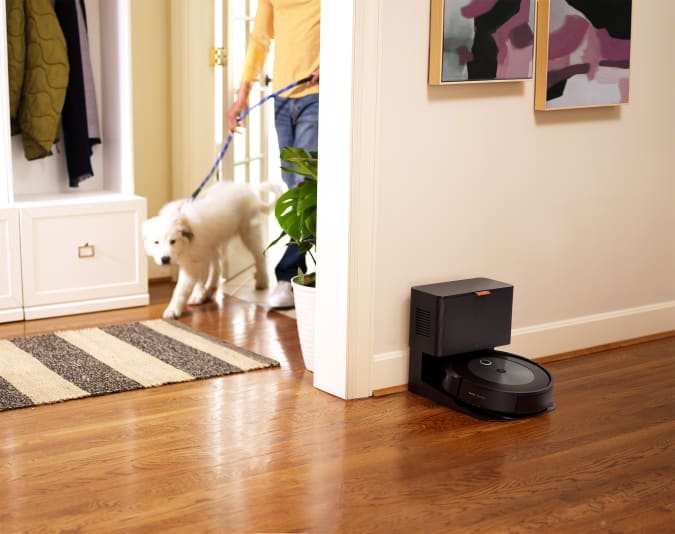
The new Roomba j7+ is $250 off right now and down to $599 at both Amazon and Wellbots. The higher-end Roomba s9+ is also $250 and down to $850. The former just came out at the end of last year and has 10x the suction power of a standard Roomba plus advanced obstacle avoidance, which means it will avoid things like pet poop more easily than other models. The s9+, on the other hand, has 40x suction power and a more corner-friendly design. Both also support automatic emptying and come with clean bases, too.
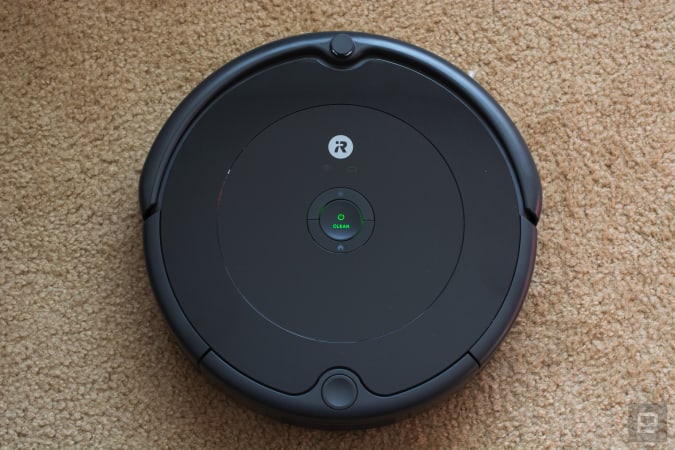
The Roomba 694 is down to $179, or $95 off and a return to its record-low price. It earned a spot in our best budget robot vacuums guide thanks to its strong cleaning power, on-device button controls and handy companion mobile app.
Fitbit's Charge 5 is on sale for a record low of $120 right now. We gave the fitness tracker a score of 82 for its large, full-color display, built-in GPS, standard Fitbit Pay and long battery life. The Fitbit Sense smartwatch is also on sale for $100 less than usual, bringing the price down to $200.
All Eero 6 WiFi packs are on sale right now, so you can one for as low as $90. The three-pack of routers is down to $244 while the three-pack with one router and two extenders has been discounted to $195. This system supports WiFi 6, up to 5,000 square feet of coverage and it has a built-in Zigbee smart home hub.
Microsoft's Elite Wireless Series 2 controller for Xbox remains on sale for $140, or $40 less than usual. If you want to treat yourself (or someone else) to a fancy gaming accessory, this is a good option. It comes with six thumbsticks, four paddles, two D-pads, a charging dock, a carrying case and a USB-C cable, and its battery can last up to 40 hours on a single charge.
The Galaxy Buds 2 are down to $100 right now, or $50 off their normal price. We gave them a score of 84 for their improve sound quality, adjustable ambient sound mode, comfortable design and support for wireless charging.
Samsung's latest smartphone, the Galaxy S21 FE, is officially available and starting to ship and Amazon throws in a $100 gift card if you order the handset through the online retailer. We briefly tested the FE at CES 2022 and called it "last year's flagship without the frills," and it includes a 5-nanometer processor, a 120HZ display, a 32-megapixel front-facing camera, a larger battery and more.
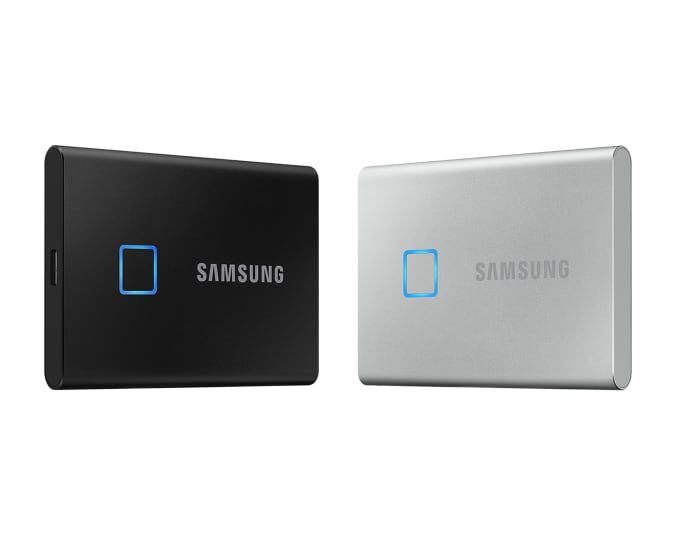
The Samsung T7 Touch SSD in 1TB is down to a record low of $140 right now. That's even better than the price it was during the holiday shopping season last year. We like the drive's compact design, fast speeds and built-in fingerprint reader for extra security.
Engadget readers can get a total of two free audiobooks when signing up for Libro.fm, the audiobook subscription service that supports local bookstores. Similarly to Audible, a Libro.fm membership costs $15 per month and gives you one audiobook credit per month, plus 30 percent off any audiobooks you buy á la carte.
Ultraloq's U-Bolt Pro smart lock with its WiFi bridge is $45 off when you use the code ENGADGET45 at checkout, bringing it down to $154. This model gives you six different ways to unlock your door including a fingerprint sensor, a personal numerical code, an e-key or using the companion mobile app. And with the included bridge, you can control the lock from anywhere, allowing you to remotely unlock or lock your door at any time or give digital keys to your loved ones.
Through January 31, you can get 40 percent off Master & Dynamic's MW07 Plus earbuds when you use the code TAKE40 at checkout. This sale fixes one of our main gripes with these buds — their high price tag. We gave them a score of 86 for their great sound quality, reliable onboard controls and 10-hour battery life.
Hisense's 55-inch Quantum Dot 4K TV is 30 percent off and down to just under $600. It packs a lot of value into a relatively affordable TV — the set supports a 120Hz native refresh rate, Dolby Vision and Atmos, 1,000 nits of peak brightness and Game Mode Pro, the latter of which makes use of HDMI 2.1, low latency mode, variable refresh rates and more.
A bunch of Garmin smartwatches are $50 at Wellbots when you use the code ENGADGET50 at checkout. Key among them are the Venu 2 for $350 and the Lily for $150. The former has a number of advanced features like a pulse ox sensor, Garmin Pay and a built-in GPS, while the latter is more affordable and stylish to boot.
A standard 2021 Porsche Taycan has broken the Guinness World Record for the shortest charging time to cross the United States in an electric vehicle. It only needed a cumulative charge time of 2 hours, 26 minutes and 48 seconds to cover a 2,834.5-mile drive from Los Angeles to New York. While the record it broke is highly specific, there was a previous holder: A Kia EV6, which had to be charged for 7 hours, 10 minutes and 1 second to make a similar, but just slightly longer, trip from New York to LA.
Wayne Gerdes, known for his efficiency driving and for coining the term "hypermiling," was behind the wheel for the record-breaking journey. Hypermiling, as you may know, involves the use of adjustments and driving techniques to maximize the vehicle's fuel use. Porsche told Engadget that Gerdes drove normal speeds and sometimes even went faster, depending on the charge level, for the duration of the trip.
As for the vehicle itself, it was equipped with the company's Performance Battery Plus, which has a higher gross capacity than the base battery option, and Adaptive Cruise Control. For the attempt to be recognized by the Guinness World Records, every mile of the journey had to be filmed and the vehicle's GPS had to be tracked.
Gerdes said that the first time he charged a Taycan on a 350KW charger, its battery levels went from 6 to 82 percent in just 22 minutes. He relied on Electrify America's CCS DC fast charging network for the trip, since the company is a partner for this attempt. Porsche first revealed the Taycan electric sedan in 2019 and started making deliveries in 2020. The automaker has released several variants since then, including the category-blurring Cross Turismo EV.