Posts with «featured» label

A DIY Laser Scanning Microscope
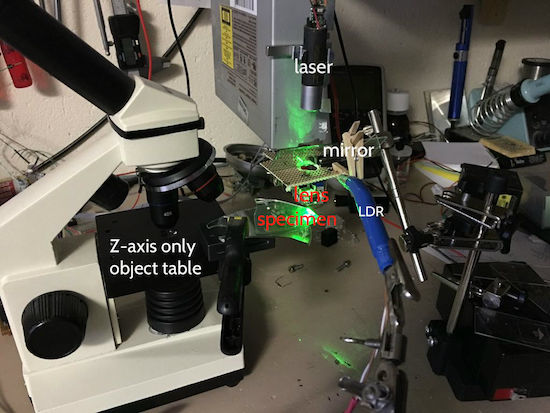
With a DVD pick-up, an Arduino Uno, a laser, and an LDR, Instructables user “Venkes” has managed to create a DIY Laser Scanning Microscope (LSM).

A laser microscope works by shining a beam of light on a subject in an X-Y plane. The intensity of the reflected light is then detected by a photoresistor (or LDR) and recorded. When the various points of light are combined, you get an image.
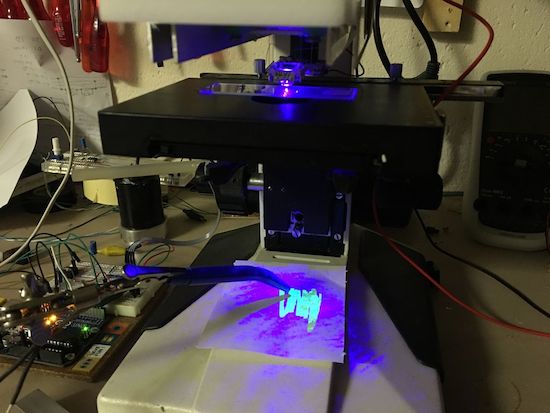
Obviously you need a very small laser beam. Since a DVD laser unit has to work with the extremely small bit markings on these disks and has coils to steer the lens built-in, this seems like a logical choice to use with a custom microscope. Though it took quite a bit of effort to make, it’s capable of 1300x magnification to attain a resolution of 65,6536 pixels (256 x 256) in an area of .05 x .05mm. Results start around 3:00 in the video below.

More details of this impressive build can be found on the project’s Instructables page.
Teleknitting: TV-based string art

Have you ever wondered what television would look like if transposed onto string and wrapped around another object? If so, you’re not the only one, as shown in this teleknitting sculpture.

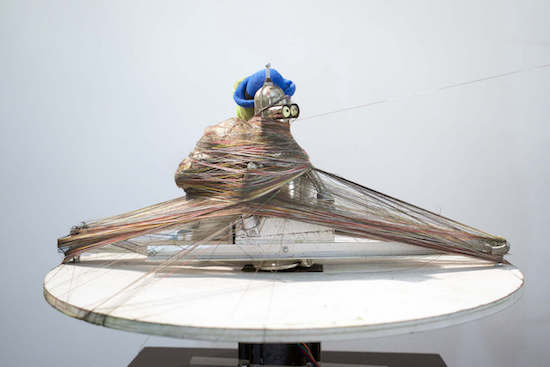
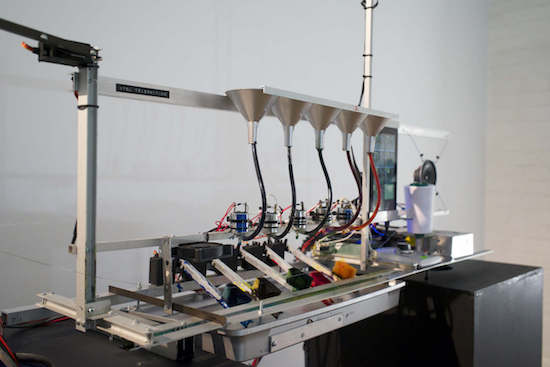
Although it’s hard to say where the idea for this piece came from, Moscow-based artist ::vtol::’s teleknitting installation resolves a TV signal down into one pixel by lowering its resolution in eight steps. This process is displayed as video on an Android tablet, and the results are transferred to thread via a unique dying mechanism involving “dye arms.”

This multi-colored string is then wrapped around an object (or objects) rotating on a pedestal, the height of the string being controlled by the TV signal’s volume.

As you can see below, the character Bender from Futurama along with an alligator bearing an accordion act as the items being wrapped in TV-string. You can find more details of this build on ::vtol::’s website, along with a number of his other Arduino-based interactive projects.

Start your day with Nerf target practice!

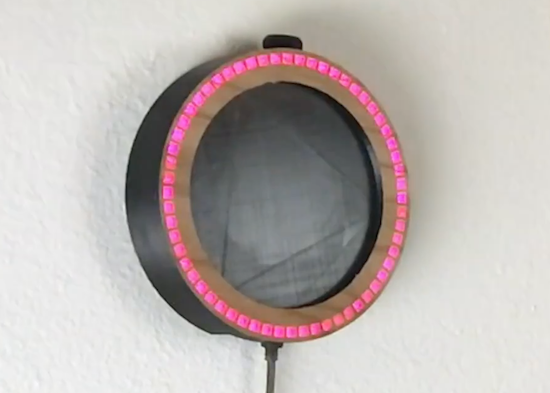
If you need motivation to actually wake up rather than sleep more, this Nerf target clock from “Normal Universe” could be a great solution!

For many of us, traditional alarm clocks have given way to smartphones, but the concept is still the same: an annoying sound, followed by either waking up, or hitting the virtual snooze button just… one… more… time. On the other hand, when this alarm goes off, you need to shoot it with a Nerf gun in order to silence it.

The alarm/target works using a piezoelectric sensor attached to the clock’s housing. When the alarm sounds, if it senses a dart hit by counting the signal pulses generated, it turns off. Ingeniously, and perhaps annoyingly, it can tell if it’s tapped by a finger, and not respond accordingly!

The clock uses a programmable RGB ring controlled by an Arduino Uno to display the time, and is nicely modeled in Fusion 360. Definitely worth a watch.

You can see more details in the video below!

Haptic game controller UnlimitedHand joins AtHeart!

We are excited to announce that UnlimitedHand is now an officially licensed Arduino AtHeart product. Created by Japanese startup H2L, the wearable controller straps around your forearm like an Ace bandage and allows you to actually touch and feel things within the gaming world.

UnlimitedHand consists of a 3D motion sensor, an array of muscle sensors, a multi-channel electronic muscle stimulator, and a vibration motor, which together, enable you to interact with objects and characters in VR. It does this by syncing the movement of a user’s hand and fingers with its virtual counterpart, and contracting the muscles on the wearer’s forearm to simulate haptic feedback.

With UnlimitedHand, not only will you be able to experience the ricochet of a gunshot or pet animals, but also hack various customized gestures thanks to its full compatibility with the Arduino IDE.

According to H2L:

Arduino, with their commitment to open-source, has reached out with their technology to muster a great force of Makers and inventors. This omni-present community has no doubt supported us in many ways during the development of UnlimitedHand. By joining the program, we can now present our results back to the community.

UnlimitedHand–which surpassed its Kickstarter goal in less than a day–is now available for purchase on Amazon and its website, as well as in retail stores throughout Japan.

Converting a coffee maker into a 3D printer

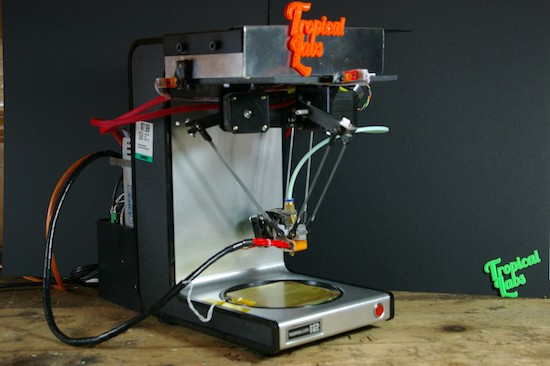
Heavy duty coffee makers are good for, well, making coffee. On the other hand, if you were to look at the frame without the preconception of what it can do, you might notice that there is space on top where equipment could be attached, and space on the bottom with a built-in heating pad on which to place an object… in other words, a perfect 3D printer frame!

Tropical Labs realized this, and turned the ordinary household appliance into a delta printer with three steppers for motion and another to feed the printing media. An Arduino Mega serves as the brains of the operation along with a popular RAMPS 1.4 shield.

Frame aside, it’s a neat mechanism, and definitely worth checking out. You can see more about the project on Hackaday.io.

Sort your M&Ms or Skittles with this ingenious machine

Inspired by a YouTube video of another candy sorter, Willem Pennings decided to build his own version.

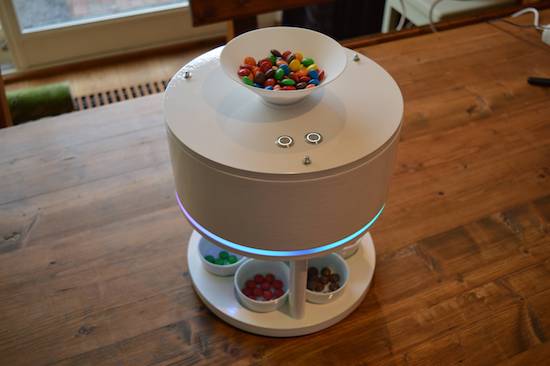
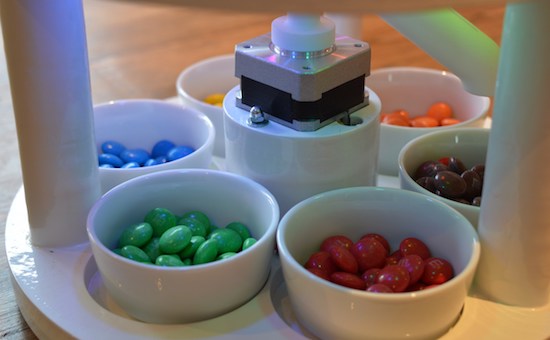
After nearly eight months of work, he now has a device that can separate M&Ms or Skittles into their respective color dishes. Control is accomplished via a pair of Arduino Nano boards along with two EasyDrivers and an RGB sensor. These actuate a small servo for mixing the candies, and a stepper motor to properly position the candy tube.

Besides designing the controls for the machine, everything is modeled beautifully in the NX10 CAD package. The results, as seen in the video, look extremely polished–and it’s quite soothing to watch these candies drop into their little bowls in automated fashion!

You can find more details on Pennings’ project page and check out the video that inspired him here.

The Hunt is both a playful game and tasteful home decor

Carlos Rodriguez–who not only happens to be an Arduino team member but also a Masters student at Malmö University’s K3 school–has shared with us a project that he and a group of his interaction design classmates have created. 

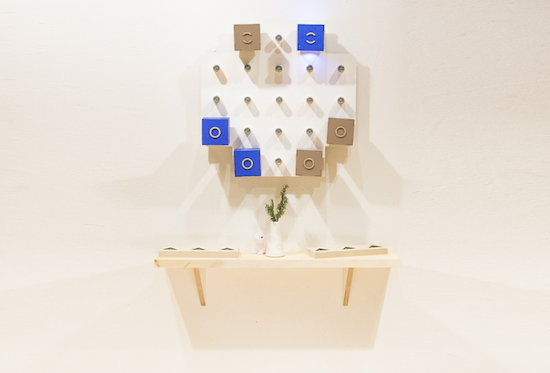
For the outsider, The Hunt is an Arduino-based light board; a piece of decoration in a tasteful home. Its six carefully crafted boxes are sources of light that shine when attached to the board. But what’s hiding in plain sight is a whole new world. The intrinsic light and shadow patterns hide an exciting game of strategy, hunt, and kill.

The Hunt is inspired by board games such as Quoridor, Chess, and Ludo. It is a two-player game, where each player has three tokens–two hunters and one beast–and the goal is for a hunter to catch the opponent’s beast. At each turn, a player moves one token–up, down, left or right– but the catch is: if moving a hunter, their beast will also have to move but in the opposite direction. The main strategy of the game is then to find out how to catch the opponent’s beast without sacrificing your own.

You can find more photos and information on this interactive project here. Shout out to Ana Barbosa, Andrea Serra, and Dennis Bücker as well for their impressive work!

The Rick and Morty Alarm will make sure you’re always on time

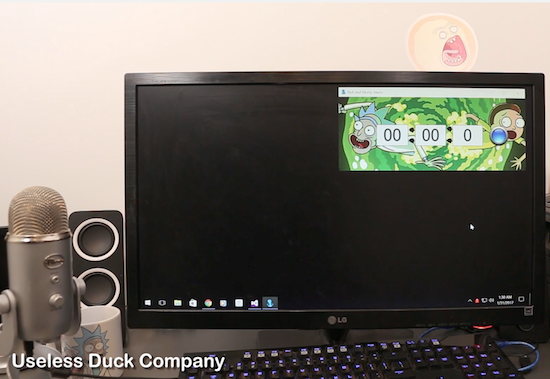
Mike, CEO of the Useless Duck Company, recently got sidetracked playing computer games. After receiving a notification on his phone, he realized that he had lost track of the time and was late to a very important meeting. Being the Maker that he is, he decided to invent a system that would prevent this from happening again. Introducing the Rick and Morty Alarm.

Now Mike just has to enter how much time he has remaining (in hours, minutes and/or seconds), and he’ll receive an alert in the form of a Screaming Sun when it’s time to leave.

The alarm consists of a Windows Forms application that sends a serial signal to an Arduino Uno, triggering a stepper motor. He also designed and 3D-printed the mechanism that raises the TV show character’s cutout. Meanwhile, the loud yelling noise is played through his computer speakers.

Since this worked so well for his desktop, Mike say he created a mobile app to help him wake up in morning. Check it out below!

Build your own MIDI accordion with Arduino

If you want to play accordion via a MIDI interface, manufacturers such as Roland do make such a device. The downside is that they tend to be fairly expensive, as one would have to assume they are something of a specialty item.

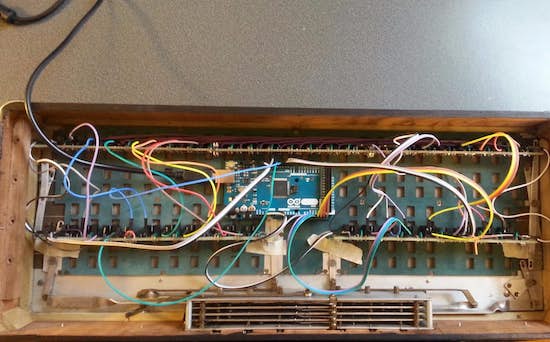
Conversely, if you are able to get your hands on an accordion whose buttons and general movement work, but can’t actually produce good notes, you can build your own! This is just what developer and composer Brendan Vavra did, purchasing a broken instrument for $150 on eBay, then carefully disassembling the keys which were mapped to an Arduino Mega.

The setup also includes a Bluetooth transceiver module for sending MIDI signals wirelessly to a computer running music production software, as well as a barometric pressure sensor for adding dynamic expression using the accordion bellows.

As you can see in the video below, the result and his accordion skills are quite impressive! You can find more information on this project on its GitHub page and read New Atlas’ write-up here.


Watch the Toa Mata Band perform a cover of Kraftwerk

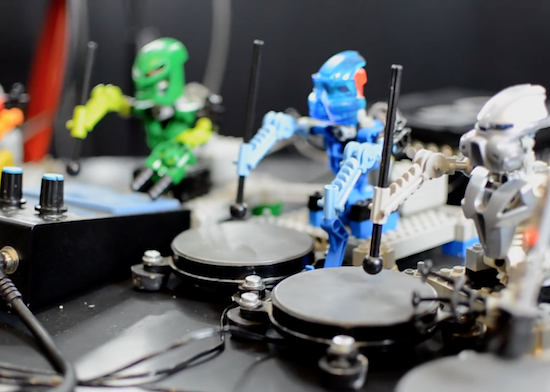
By now, you are probably familiar with the Toa Mata Band–the world’s first LEGO robotic band controlled by Arduino Uno, which is hooked up to a MIDI sequencer.

Now a few years since Toa Mata Band’s debut, Italian producer Giuseppe Acito has shared the group’s latest music video: a cover of Kraftwerk’s “The Robots.” As you can see below, Acito himself performs the 1978 track’s vocals while the LEGO Bionicle figures play the tunes using a variety of gadgets, including pocket synths, drum pads, xylophone keys, and iPhones running apps.

This is my inspiration to this Kraftwerk ‘s tribute, regarding their vision of the future and to their brilliant approaching to the music with a touch of irony that even now is still influencing a thousand of music producers around the world. My video contribution from Toa Mata Band (a tiny orchestra of Lego robots driven by Arduino) represents a version of the iconic tune “The Robots” using nowadays open-source technologies, microcontrollers, 3D printer, robot arm, music DAW, smarthphones, pocket synthesizers and more… trying to give a new way to read the message we got from them 40 years ago.