Posts with «featured» label

“Smarten” a dumb switch without running wires

Using a pair of Arduino Unos and nRF24L01+ modules, this hacker can now remote control his lights.

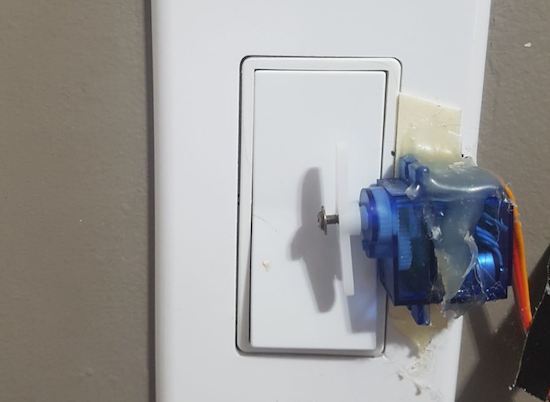
After struggling with a wall switch that was just too far from his desk to turn off without getting up, “Guyfromhe” decided to take matters into his own hands and rig up a servo to do it for him. The servo is simply hot glued to the switch plate, and when it gets a command, it obediently switches the lights on or off. Though crude, it seems to get the job done, and it wouldn’t be too hard to imagine a good bracket setup.

An Arduino Uno controls the servo, and takes signals from another Arduino via an nRF24+ RF module. He chose this wireless device as a simple transmission method, and one that uses less power than an ESP8266 that he also tried out. The non-servo Arduino can potentially take signals from several sources, including a Raspberry Pi, laptop, or even a hacked Amazon Dash button.

You can see this makeshift system demonstrated in the video below, and read more about the build here.

Talk to the (low-cost robotic) hand!

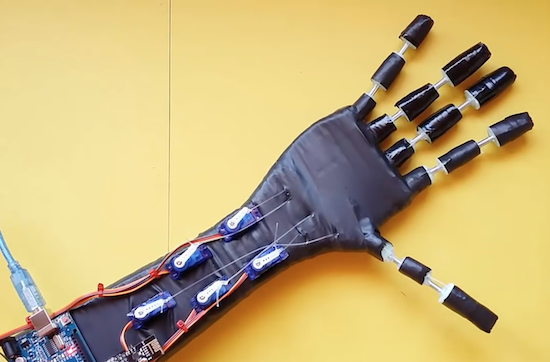
Though this low-cost robotic hand by Maker “MertArduino” might not be the best platform for manufacturing, or even world domination, it does show off some interesting physical build techniques. The DIY device can mimic a human’s hand wirelessly via a pair of Arduino Unos and nRF24L01 modules.

For construction, the fingers and thumb are made out of springs and foam, and nylon cords are used to pull them closed with a small servo for each digit. Control is accomplished by flex sensors attached via zip ties to a glove. It’s a great demonstration of how you don’t actually need a 3D printer or other advanced CNC machinery to craft something really unique!

You can see the project in the video below, and check out more hacks on Mert Arduino’s YouTube channel!

Temboo adds more Arduino board support

This is a guest post from Vaughn Shinall, Head of Product Outreach at Temboo.
Making 20,000 cakes more safely and efficiently every day, improving engine manufacturing for lawnmowers so they run more quietly, and designing farms to need less water. These are just a few examples of how Arduinos are being used everyday by engineers, businesses, and researchers with Temboo. Our embedded code generation engine empowers all sorts of people and organizations to program Arduino to connect to any cloud service, enabling ideas and creative applications all over the world.

Today we’re excited to announce a big update to our support for Arduino devices. In line with the great advances that Arduino has made with its development boards and Internet-connectivity shields recently, we’ve upgraded our generated code and Arduino library to support the latest Arduino hardware.

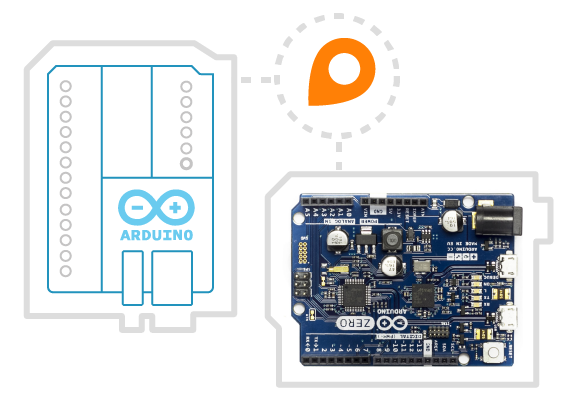
Temboo’s code generation engine now officially supports the following boards:

As well as the following Internet connectivity shields:

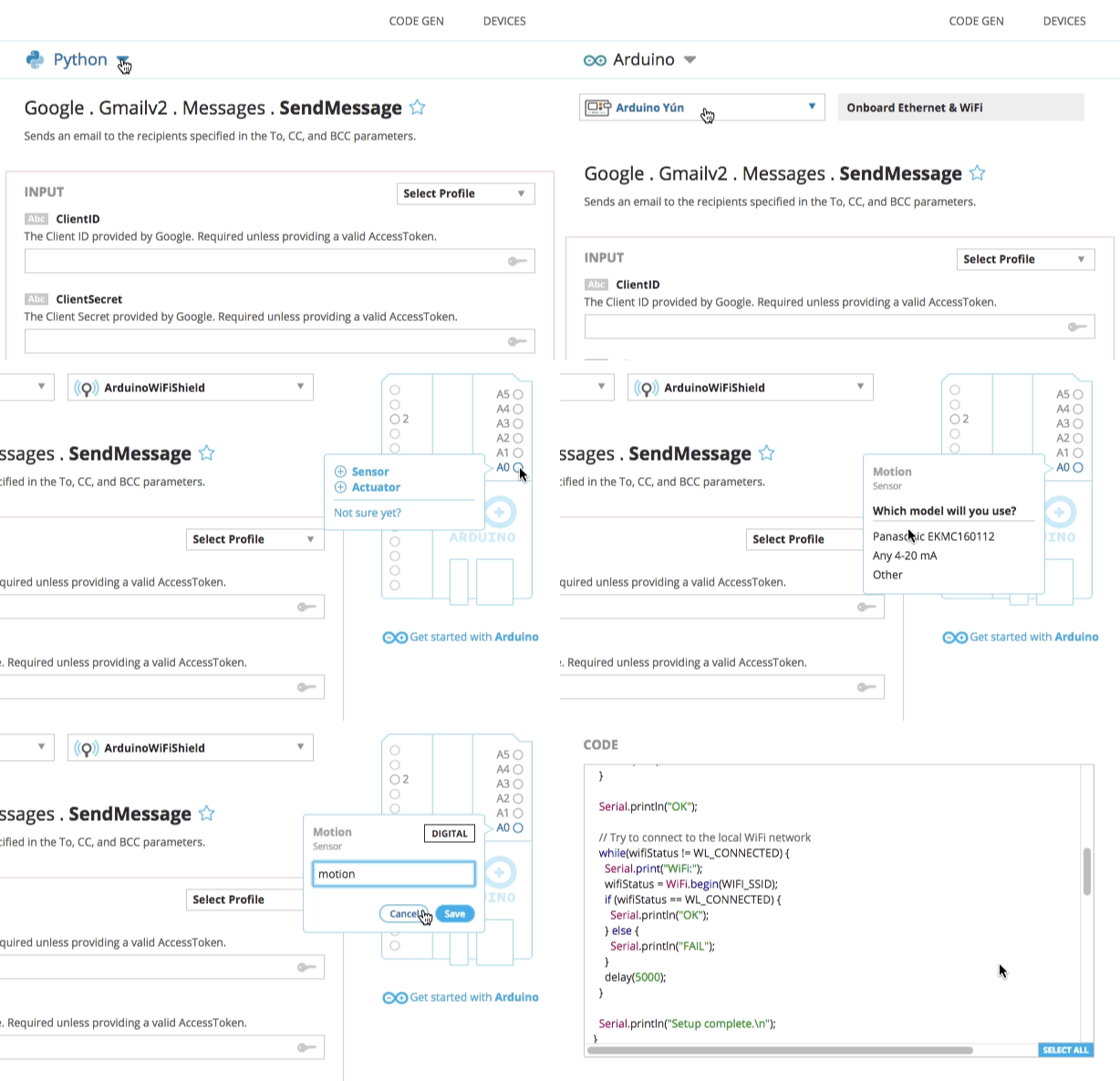
Temboo will generate code for these Arduino boards that is production-ready and optimized for embedded devices. You can even select the sensors, actuators, and GPIO pins you are working with in our interface so that the generated code automatically converts sensor readings into real world units and handles conditional logic to, for example, send an SMS alert whenever high temperatures are detected.
Temboo also ensures that your sensor data and other information is protected in transit by establishing a secure connection from your board to the Temboo platform via HTTPS. As always, any information that you store on the Temboo platform is secured via military-grade encryption. Combining Temboo’s generated code with your Arduino board enables you to easily accomplish many common IoT tasks, from generating sensor data graphs viewable in any browser, to integrating with 100+ popular APIs, triggering sensor-based alerts via email and SMS, and remotely controlling actuators like LEDs, solenoids, fans, motors, and more.

Our customers in the food & beverage and manufacturing industries have been putting these features to good use on top of Arduino hardware, and they’re part of a growing trend. More and more types of engineers, from chemical and civil to mechanical and electrical, are incorporating Arduino and Temboo into their work and in the process acquiring new skills that can be applied to many engineering tasks, from retrofitting existing machinery for connectivity to remotely monitoring any type of physical asset.



We’re really excited about supporting the latest Arduino hardware, and will be regularly enhancing our Arduino library and generated code, so stay tuned for updates!

WinchBot is a robotic arm composed of 3 winches and 5 servos

Using an Arduino Uno along with a Raspberry Pi for control, hacker “HomoFaciens” came up with this clever delta-style robot.

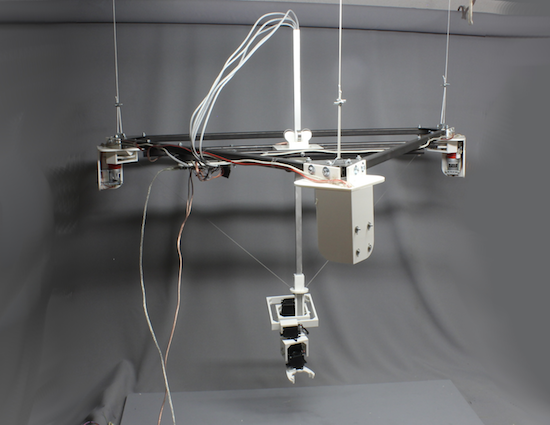
If you were going to make a robot with five servos, many Makers would make a robot arm with them and call it a day. HomoFaciens, however, who is known for making amazing machines with minimal tools and improvised materials, instead made something that seems to be a cross between a delta robot and a Skycam.

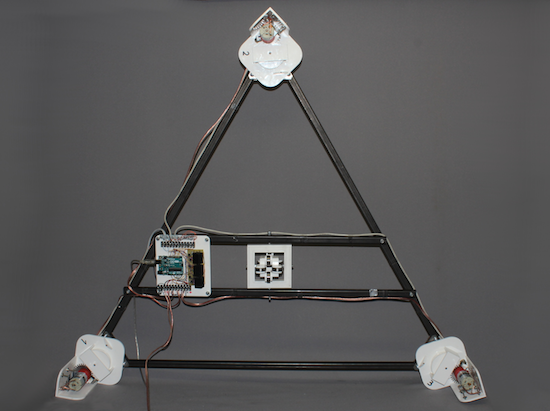
His device, called “WinchBot,” uses three winches attached to an equilateral triangle frame to move a slider on a central pivoting square rod. This allows the robot’s 5-axis “hand” to be positioned within the robot’s work area. The servos are then tasked with keeping everything in the correct orientation, as well as opening and closing the gripper as needed.

If you’d like more details than given in the very entertaining video seen here, be sure to check out the project’s write-up.

GOBLIN 2 IoT development board joins AtHeart!

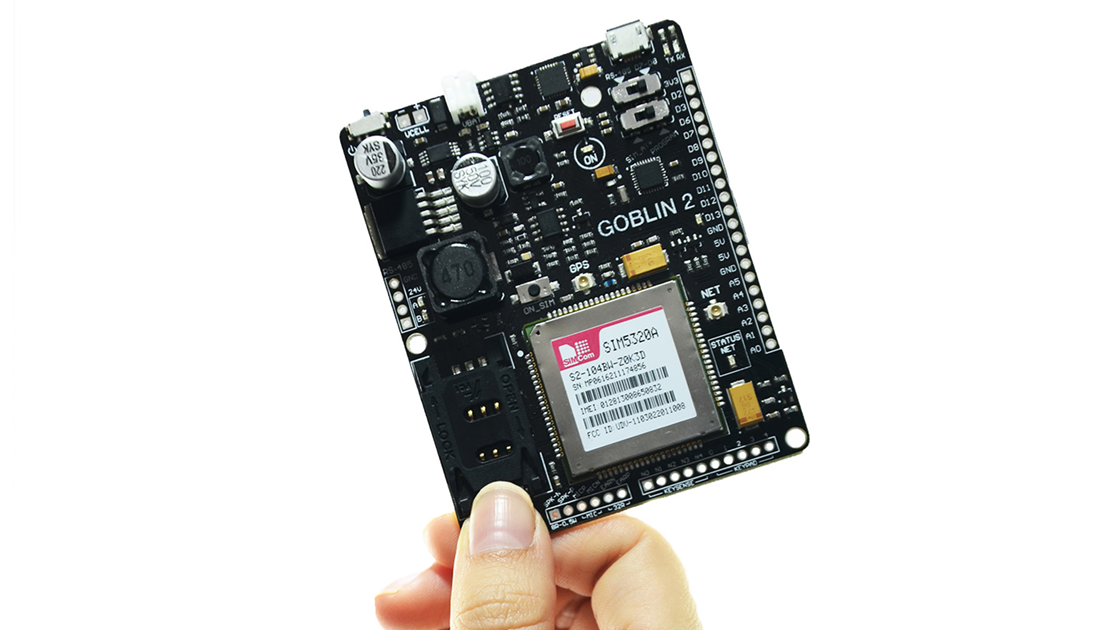
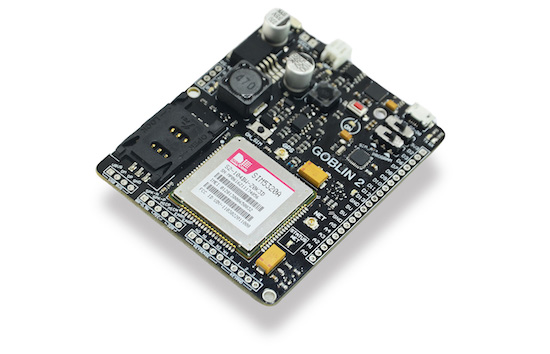
We are happy to announce another new member in the Arduino AtHeart Program! GOBLIN 2 from Mexican startup VERSE Technology is an Arduino-friendly development board with powerful wireless capabilities and broad compatibility with industrial protocols like RS-485.

Designed for both IoT professionals and Makers alike, GOBLIN 2 features an ATmega328P MCU and SIM5320A module at its core, providing dual-band HSDPA and quad-band GSM/GPRS/EDGE connectivity, along with high accuracy 16-channel GPS. The SIM5320A enables GOBLIN 2 to connect with web servers through any cellular network, and includes a header for keyboards, microphones, and speakers. 

GOBLIN 2 is equipped with six analog and 10 digital ports (half of them work as PWM), and offers 24V, 5V and 3.3V voltage outputs. The board is powered by a LiPo battery, which can be charged through micro-USB or solar cell thanks to its built-in battery management system. 

According to VERSE Technology CEO Aaron Benitex:

“We are developing technology to monitor and control the billions of present and future Internet of Things-ready devices. GOBLIN 2 is a board that allows our users to measure parameters like temperature, humidity, position, and others in remote locations. We have designed it in a way that it can easily work with industrial sensors and other applications such as telemetry, weather, GPS systems, and more.”

GOBLIN 2 can be programmed using the Arduino IDE as well as Atmel Studio. Simply upload your code to the board via micro USB, and begin exploring the IoT. Want to learn more? Check out VERSE Technology website. 

An interactive Lea shapes puzzle for visually impaired children

Using two Arduino Micros, these parents created a unique Lea shapes puzzle for their daughter Rebecca.

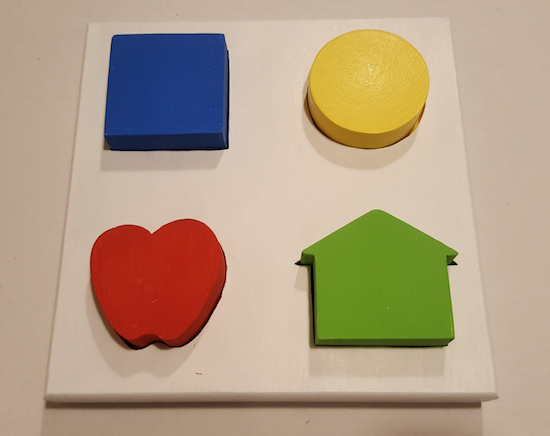
Because of a medical condition, Rebecca will need to have her vision assessed at the age of two or younger. This means that she’ll have to be tested without yet knowing her alphabet, and instead need to be familiar with Lea shapes which can act as a substitute for letters in a vision test. Unfortunately, her hearing is also impaired, meaning that a non-visual type of stimulus is needed to encourage a correct response.

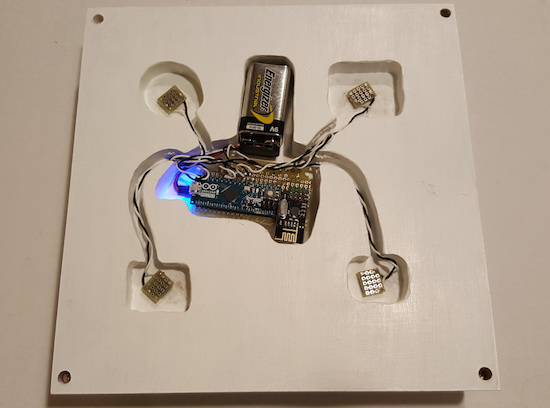
To accomplish this, her parents came up with an excellent puzzle system, where when one of these shapes is dropped into the correct slot, the smart lights in the room change to the corresponding color. It’s an interesting project that will hopefully help with a pressing need.

In terms of hardware, a Raspberry Pi 3 is used as a central hub along with a Hue smart lights bridge, which is paired with a couple of Arduinos and 2.4GHz radio modules that handle the wireless communication between the two devices.

You can see more about this build on their blog here and more background on their lighting system here.

This device converts gestures into keystrokes

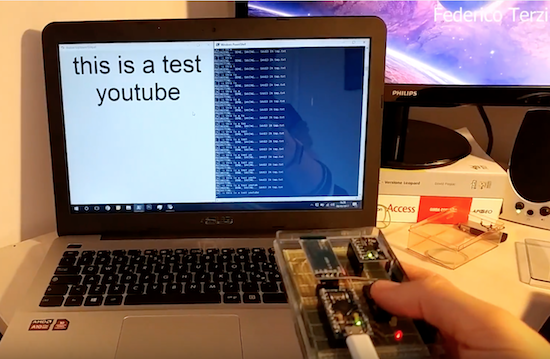
Engineering student Federico Terzi has built an impressive computer interface device reminiscent of a Wiimote.

When talking in person,  you can express meaning using facial expressions, and your hands. Usually this acts to add emphasis to a statement or perhaps to point out a certain object, but what if you could actually type letters based on how your hands move?

Terzi’s aptly named “Gesture Keyboard” does just this, using an Arduino Pro Micro, an MPU-6050 accelerometer, and an HC-06 Bluetooth module for sending signals to his laptop. A Python library using Scikit-learn’s SVM (Support Vector Machine) algorithm then translates the motion readings into characters that appear on the screen.

You can find the code and more information on Terzi’s GitHub page.

Arduino Day: Extended deadline, new events, and more updates!

Arduino Day is now less than three weeks away, and we cannot wait to celebrate with everyone on April 1st. So far, we’ve received hundreds of submission from all across the world and are constantly updating our map with new events — which by the way, if yours has been approved, do not forget to add the agenda!

As we prepare for Arduino Day, we’ve got three more announcements to share:  

  • NEW DEADLINE: The call for submissions has been extended until March 18th! Remember, participation is open to everyone and anyone can organize event of their own Submit yours here!
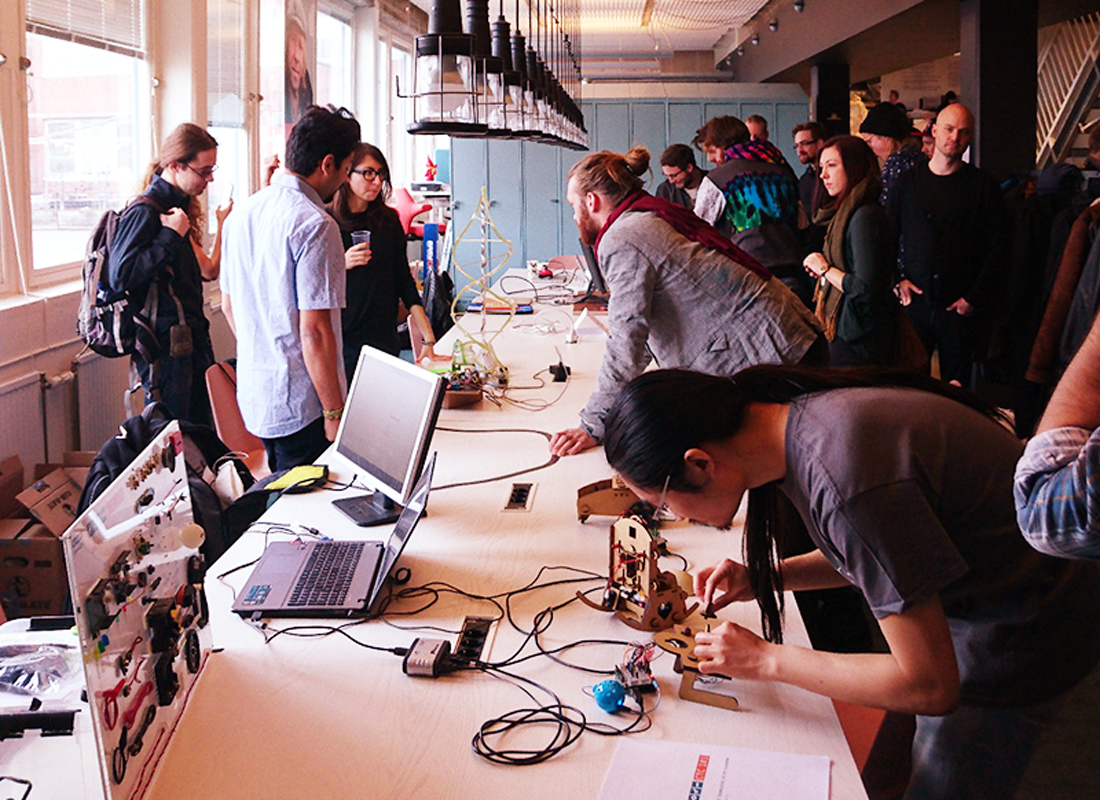
  • OFFICIAL ARDUINO DAY IN MALMÖ: Aside from our festivities in Turin, the Arduino team will host another official event in Malmö. The program will include a showcase of Maker projects, free activities for kids, and a lineup of talks. Live in Sweden or nearby? Join us!
  • ONLINE EVENTS: Not only will the Arduino community come together at various physical locations throughout the globe, but now several celebrations this year will also be taking place virtually. If you want to host an online event — such as a hangout or a live streamed workshop (we are very open!) — please contact arduinoday2017@arduino.cc with your idea, and we’ll get back to you!

Last but not least, do not forget to post and invite your friends via social media using the hashtag #ArduinoD17


An Arduino-controlled Team Fortress 2 sentry gun prop

If you’ve played Team Fortress or its sequel TF2, you’ve certainly run into a sentry gun. This unit can be set up by an engineer character to guard various positions, and looks like something that could make an amazing prop.

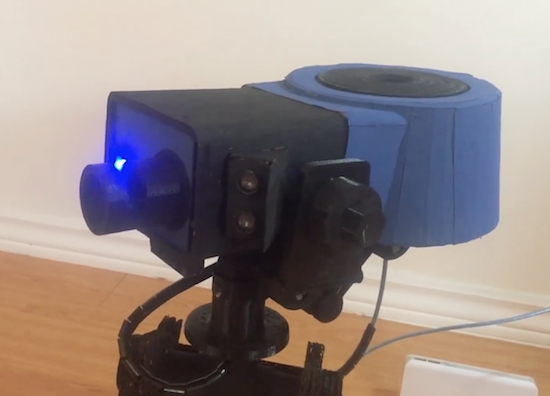
YouTuber “henry3136” apparently agrees, and spent an estimated 400-500 hours building and programming his own out of cardboard, plastic bottles, and a few 3D-printed bits.

His Arduino-controlled gun pans back and forth using a servo and “fires” whenever it senses a target with its ultrasonic sensor. An Adafruit Audio FX Sound Board helps produce some fun effects, while the barrel moves in and out to scare off the bad guys.

You can see it in action below!

Heat up a small pool with this solar-powered system

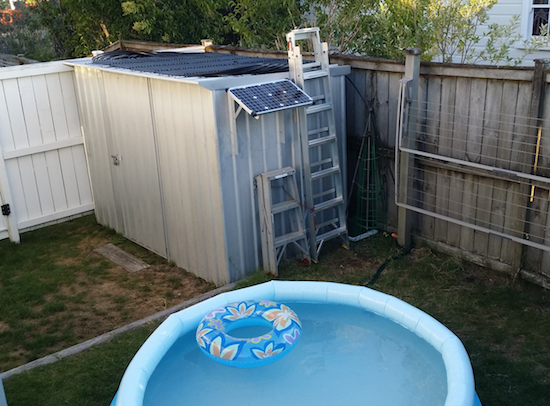
Imgurian “ElectricYFronts” has created an Arduino-controlled solar heating system for his kids’ paddling pool.

Small semi-portable above ground pools can be fun, but are generally not heated. The “Solar Paddle” system, however, raises the temperature of the pool from a chilly 68 degrees Fahrenheit to a much warmer 83 degrees (20 to 28 Celsius). It does this by piping water into and out of the pool, then heating it in over 200 yards of black watering pipe on top of a shed.

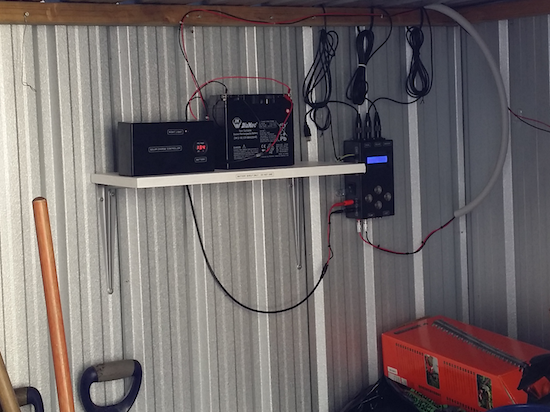
Water is cycled via an impeller pump, which is powered by a solar panel along with a battery to keep power even over fluctuations. A few buttons and an LCD panel allow things to be changed around without opening up the Arduino Uno’s enclosure.

You can see more on how this heater was made on Imgur.