Posts with «featured» label

Why buy a soldering station when you can build one instead?
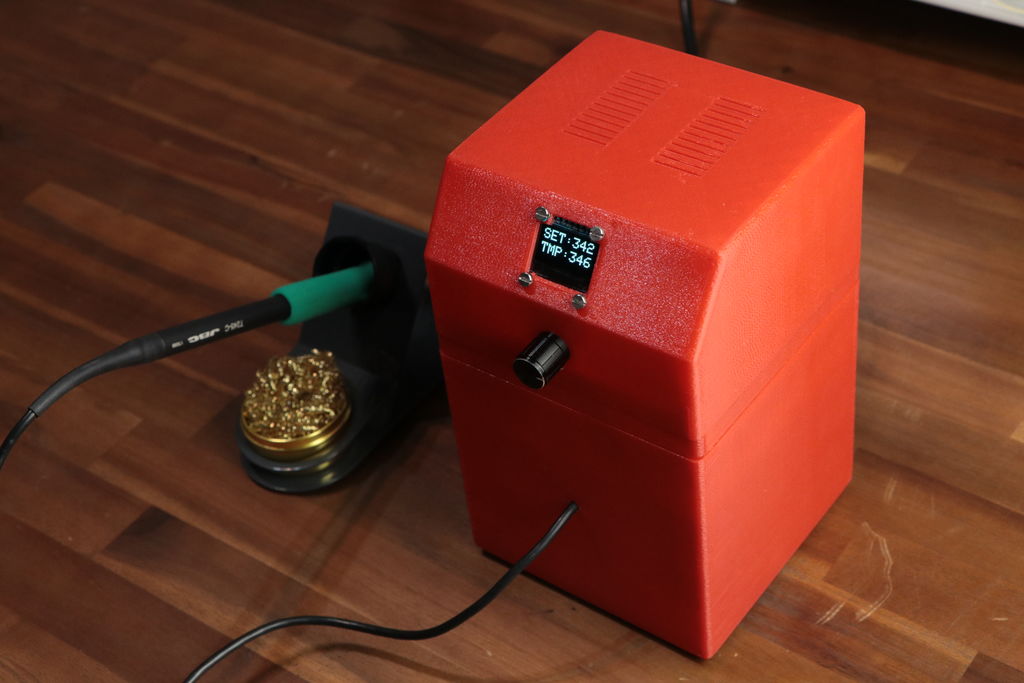
As with many products, if you want the best, you’ll pay top dollar for it. After seeing that the supposed best soldering station on the market sells for $500, YouTuber GreatScott! decided to instead purchase the iron and tip for a total of around $100, then reverse-engineer how the station should work.

From there, he used an Arduino Pro Mini along with a little OLED screen to display the temperature, and a toroidal transformer as well as several other components to power and complete his build. Finally, he 3D-printed a nice red enclosure and attached everything together, making his own custom soldering station.

You can see more on this station’s Instructables write-up, and check out GreatScott!’s channel for other interesting projects!
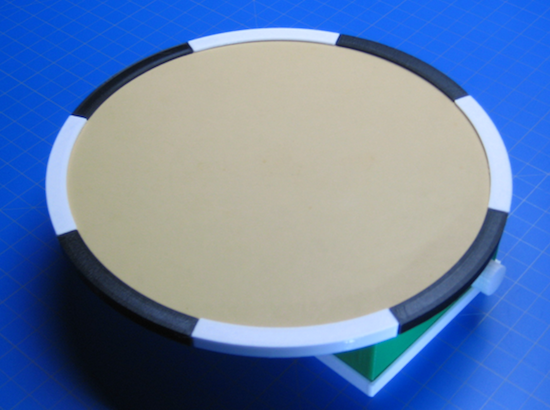
Turn and film your projects in style with this $8 DIY device

Using an Arduino along with some 3D-printed and salvaged parts, hacker “notionSunday” made an excellent photo turntable for under $10.

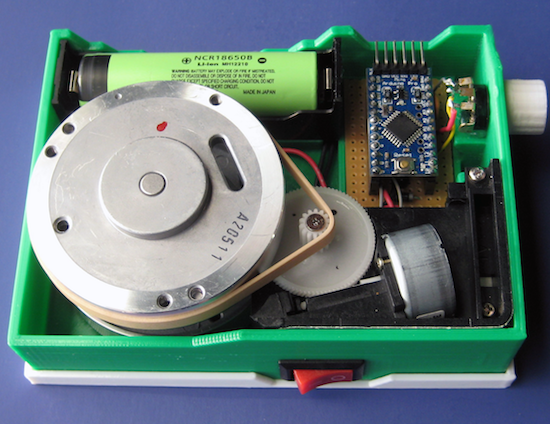
In a masterful display of converting one man’s junk into another man’s treasure, notionSunday used a VCR head as a very smooth-looking bearing surface for a small turntable. A DVD-ROM drive motor, a potentiometer from an old TV, and screws and wires from other electronics rounded out the internals of this build, as well as an Arduino Pro Mini with an H-bridge driver for control. All of this was placed inside of 3D-printed housing, then a disk was added to the top for other contraptions to rest on.

You can see it in action around the 8:00 mark in the video below. What really sticks out are the 3D-printed circumference markers, apparently there to indicate the speed of rotation or to hypnotize viewers. Check out notionSunday’s YouTube channel for more interesting projects, or his website for more pictures and code.

Join DSI4EU’s final event in London!

The Digital Social Innovation for Europe (DSI4EU) is an online platform supporting those developing open hardware and software solutions that tackle social challenges.

The platform showcases the work of Makers and designers, and tags their organizations as part of networks like research alliances or membership bodies. DSI4EU also aims to map and identify fundings across Europe, along with other potential partners and collaborators for digital social innovators.

On May 16th, DSI4EU will share their approach to policy, funding, and public service partnerships with policymakers, investors and practitioners in London. The event will take place at Nesta headquarters (58 Victoria Embankment, London, EC4Y 0DS) and is open to everyone (free registration).

Topics discussed will include: lessons about growth and impact from the innovators themselves, building capacity in the non-profit, funding, investment and sustainable business models, as well as emerging city-based strategic approaches to digital social innovation.

Then on May 17th, participants will be able to join fellow practitioners, policymakers, and civil society groups from Europe on a tour of London’s most exciting digitial social innovation venues, while gaining an overview on some amazing projects that are delivering real social impact. Each organization will host for an hour and offer a short workshop with opportunities for networking, conversation, and knowledge exchange.

Interested? You can read more about next month’s event here.

Smart earbud lets you control your phone with facial expressions

After much experimentation, researchers at Fraunhofer Institute for Computer Graphics Research in Rostock and the University of Cologne in Germany have developed an electronically-augmented earplug that can read facial expressions and convert them into controls for your smartphone. For example, you may soon be able to answer a call with a wink or launch an app by moving your head to one side.

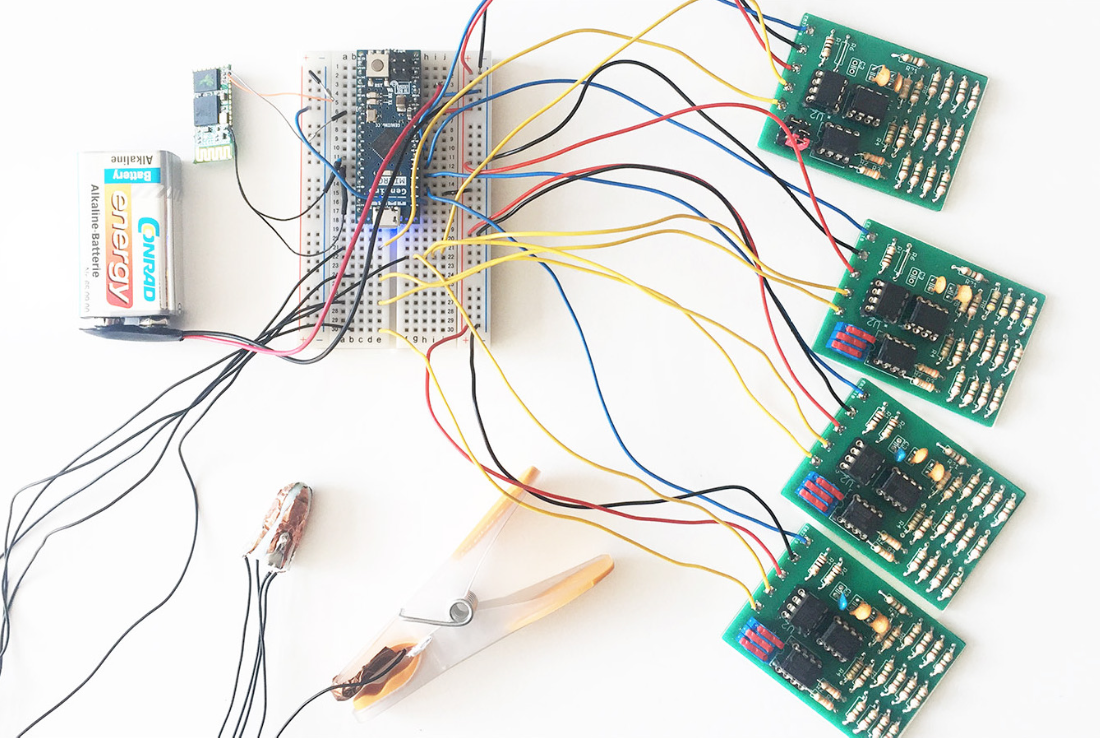
The prototype of this EarFieldSensing, or EarFS, technology consists of the earbud itself, a reference electrode attached to the user’s earlobe, and an Arduino along with four sensing shields in a companion bag.

Currently, the system can recognize five expressions–winking, smiling, opening your mouth, making a ‘shh’ sound, and turning your head the right–with over 85% accuracy while walking, and even better when sitting. Hands-free emojis would be an obvious use case, but perhaps it could be employed for covert signaling as well. Was that a nice smile, or are you calling in backup? It could also be quite useful while driving or for those with disabilities.

You can read more about EarFS in the team’s paper and in this New Scientist article.

Photo: Denys J.C. Matthies / Daily Mail

Add smartphone control to your rolling backpack

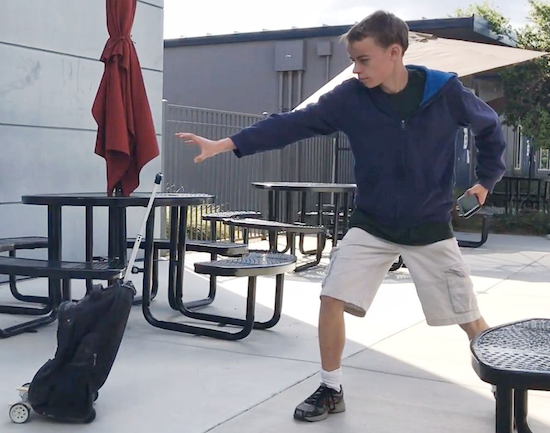
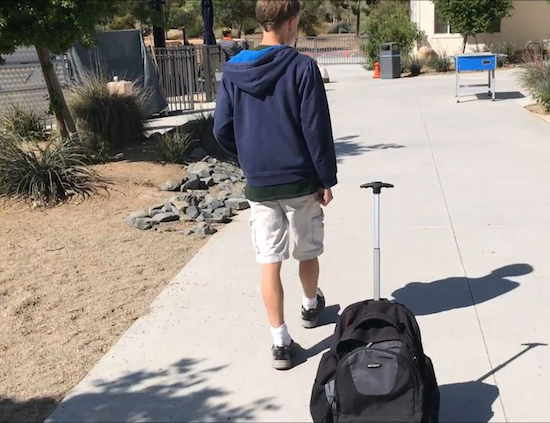
Have you ever hopped off the plane at LAX with a… rolling backpack, and wished it would just push itself? Using an Arduino and motor controllers, “TannerTech” made his own robo-backpack.

Carrying backpacks around is so 20th century. Modern travelers, of course, get their robotic minions to drive the bags around for them. Or at least that’s what this Maker’s vision seems to be. The backpack in question is wheeled around by two motors on mounts made out of paint sticks. Control is provided by an Arduino Mega using an H-bridge motor controller to handle the relatively high current required.

In order for a human to call the backpack to him or herself, an “Arduino bluetooth controller” Android app is used to send characters to the Mega and Bluetooth module in the bag. Electronics are housed inside of a pencil case, making this a surprisingly accessible project.

You can find out more on TannerTech’s Instructables page, and see a demo of it below!

Arduino Day 2017: Thank You!

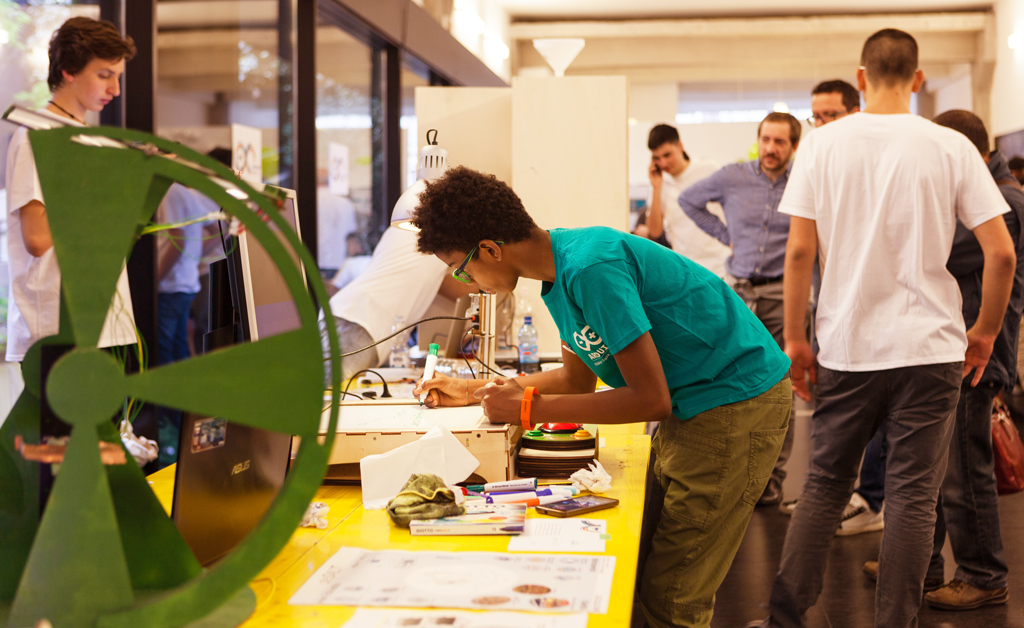
On April 1st, Arduino Day was celebrated by more than 499 communities in 79 different countries, with official events held in Turin, Malmo and San Jose.

In Turin (photos can be found here), Massimo Banzi and Federico Musto unveiled the latest developments of the Arduino platform, including products like the MKRFOX1200, NFC Shield, LoRA Gateway Shield, LoRA Node Shield, as well as the Casetta and Libretto Kits. Moreover, they also highlighted new improvements to Arduino Create, particularly its expansion to Chromebook users, and recent advancements of Arduino’s educational project, CTC.  

Weren’t able to tune in to our live stream? Watch the video below to catch all of the day’s talks by various members of the Arduino team.

Most importantly, we would like to express a heartfelt thanks to our extremely passionate and awesome community. It was YOU who made Arduino Day a huge and successful celebration we will never forget.


Arduino Blog 06 Apr 14:44

ArduECU is a waterproof and rugged Arduino electronic control unit

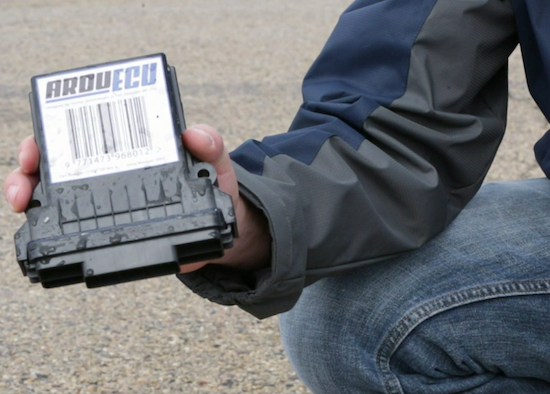
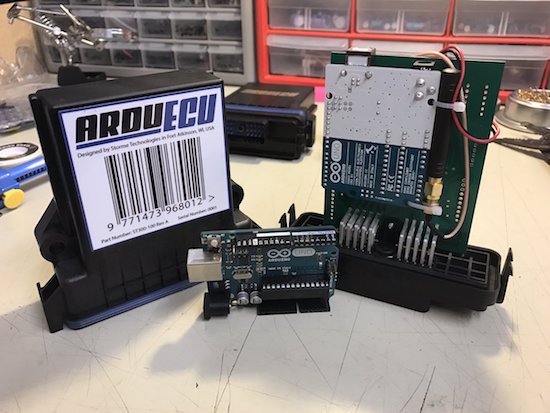
Now on Kickstarter, ArduECU is an IP69K-rated waterproof, rugged and impact-resistant electronic control unit (ECU) that enables your Arduino projects to withstand the elements and other harsh environments.

ArduECU is compatible with all 12V to 24V systems, and can be used in a wide range of applications such as vehicle diagnostics and control, stationary machines, remote monitoring, industrial automation, and agriculture to name just a few.

Based on an ATmega328, the ECU can be programmed with the Arduino IDE and also supports CoDeSys, meaning you can now configure your ArduECU with ladder logic, functional block, structured text, instruction list, or sequential function charts.

ArduECU comes in three models–one for basic projects, one for CAN bus vehicle and machine control applications, and another which converts an existing Arduino Uno into a weatherproof, custom-tailored ECU with an on-board prototyping area for your own creations and circuits. Each of these units will have expansion headers to leverage IoT and wireless capabilities, including Wi-Fi, Bluetooth, cellular and GPS, or to house future expansion shields with additional functionality at a later time.

Arduino Blog 05 Apr 20:10

Geared clock measures time linearly

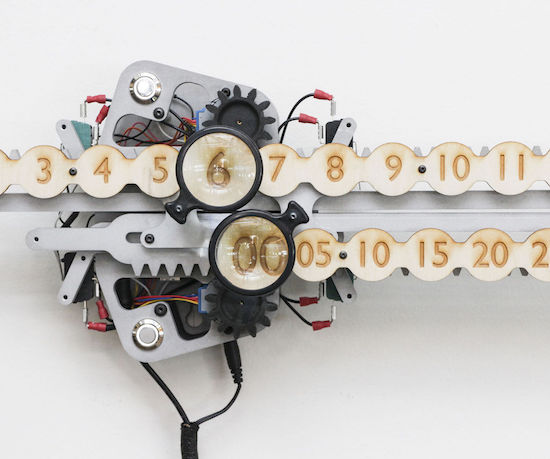
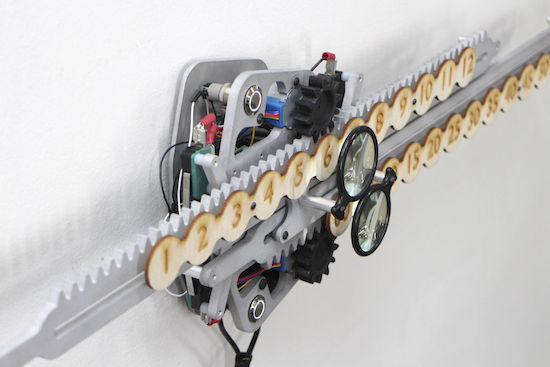
Jonathan Odom, a full-time designer at Instructables who goes by the name “JON-A-TRON,” decided to make a clock illustrating time’s linearity.  What he came up with was a beautifully crafted (robotically manufactured at the Pier 9 workshop, that is) clock that uses two rack and pinion assemblies to move a line of numbers for hours on top of another line signifying minutes.

The minute “hand” is divided up into five-minute intervals, which seems to him to feel less neurotic than being precise down to the exact minute. Magnifying glasses are used to magnify an hour and minute number, reminding onlookers to focus on the present.

The clock is actuated using an Arduino Uno with a motor driver, controlling a stepper motor for each “hand.” It’s an incredible build, and nicely illustrated. Whether or not you have access to the tools needed to recreate this exact clock, perhaps this concept will inspire something similar!

Be sure to check out Odom’s clock Instructables write-up here and see a demo of it below!

Arduino at Salone del Mobile: Come and visit us in Milan!


The annual Salone del Mobile–which will be taking place in Milan from April 4th-9th–is a world-renowned, weeklong furniture design event with 2,500 exhibitors and 300,000-plus visitors from 160 countries.

Over the years, Arduino has become a common tool amongst interactive designers looking to bring their installations to life, and Salone del Mobile is a great place to witness these various applications of the board firsthand. After browsing the show floor, don’t forget to visit our booth inside Pavilion 22, Stand G26, Workspace 3.0!

There, attendees will have a chance to play games, participate in giveaways, and learn more about our latest products. Moreover, be sure to get a glimpse of the great “Bridge” project from the Accademia di Architettura of Mendrisio, Switzerland–a fantastic demonstration of how Arduino can be used in architecture.

We look forward to seeing! Until then, more information can be found here!

Arduino Day Turin, Malmö and San Jose: Schedule of Events

As Arduino Day quickly approaches, we are blown away by the tremendous support of the Arduino community with more than 480 events from all around the world.

Arduino Day Turin will feature talks by Massimo Banzi, Federico Musto, and other Arduino members, which will be streamed live on the Arduino Facebook, Twitter and YouTube channels. The streaming will begin at 3pm CET. A final program of presentations will be posted as soon as possible at this link. Starting at 11am CET at Toolbox Turin, the agenda will include: two workshops for children in collaboration with Fablab for Kids (registration here and here), a basic and an advanced workshop for adults in coordination with the Casa Jasmina crew (registration here and here), as well as a young Maker activity corner supported by Codemotion Kids. Everything will be free of charge.

Arduino Day Malmö festivities (full program here) will consist of an Arduino project showcase, a panel of discussions with David Cuartielles and local Makers, in addition to a pair of free activities for kids (registration is not necessary). Starting at 5pm, there will also be a live streaming of the talks from Arduino Day Turin.

Last but not least, the Arduino team will be hosting a third official event in San Jose, CA (register here). The program will kick off with a demonstration of Arduino projects, followed by a live video exchange with Arduino Day Toronto. This is a great opportunity for Arduino enthusiasts in America to socialize with one another, exhibit their latest creations, and even learn more about Arduino in the classroom. Everyone is welcome to attend!

We cannot wait to celebrate with our community this Saturday! Until then, continue sharing your plans and inviting your friends to join Arduino Day via social media using the hashtag #ArduinoD17.