Posts with «environmental monitoring» label

Atmosis provides a digestible report, rather than raw environmental data
As part of the Arduino UNO Q Dream Lab Challenge hosted in partnership with DigiKey, makers and innovators were challenged to push the boundaries of what is possible with the dual-brain Arduino® UNO Q board and Arduino App Lab. From an incredible pool of creative submissions showcasing the board’s unique dual-brain architecture, this entry emerged as one of the top winning designs.

You likely have a local weather service that will provide you with free information about the environmental conditions in great detail. But how well can you make sense of that data? Is a value of 54 for PM2.5 good or bad? Most people only care if the values are bad enough that they should be concerned, which is why Next Builder designed Atmosis to automatically determine if that is the case.

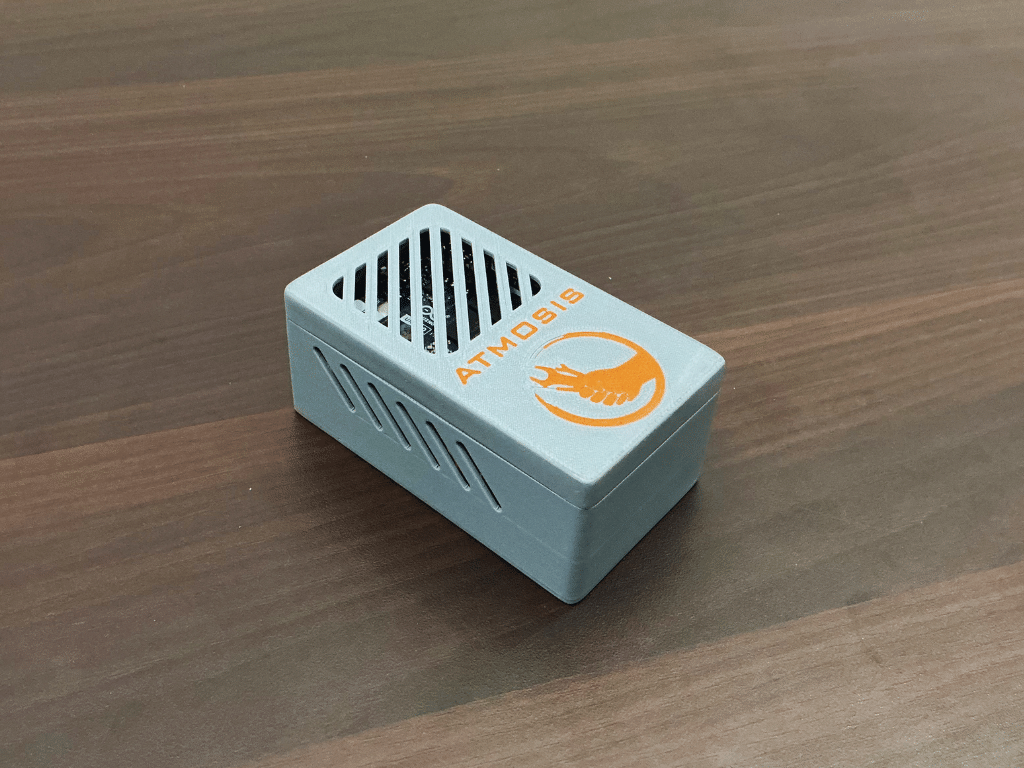
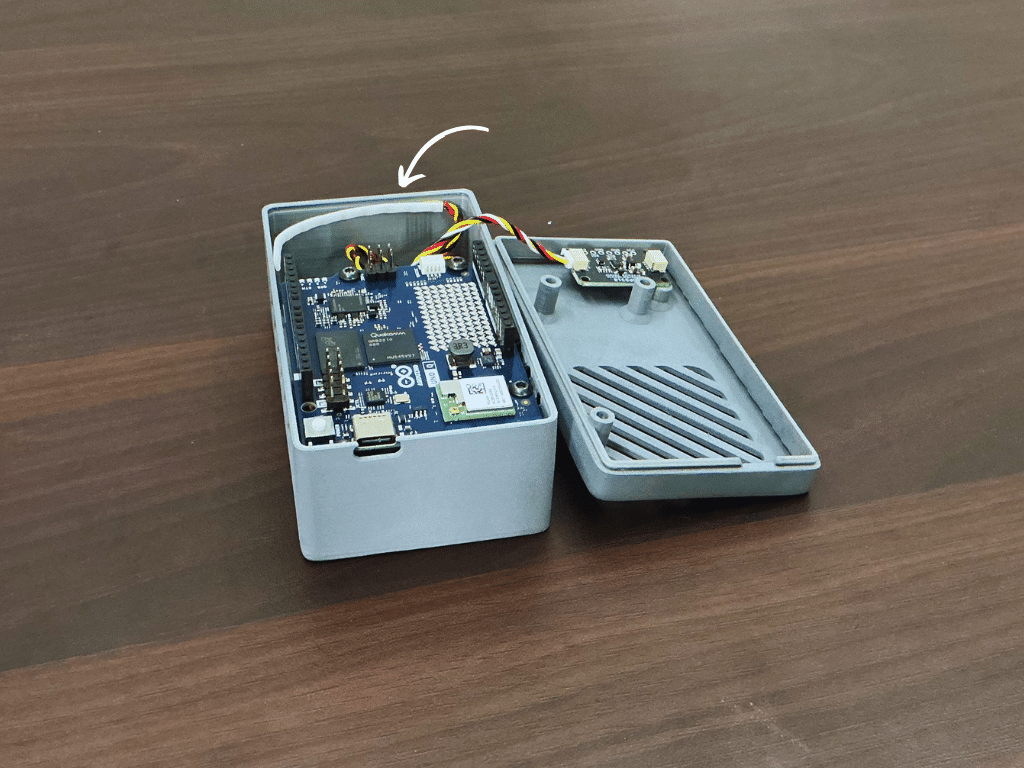
On the hardware side, Atmosis isn’t that much different than a conventional DIY environmental data monitor. It has an UNO Q, an Adafruit DPS310 sensor (barometric pressure and altitude), a Waveshare X6 sensor (various gases, temperature, humidity), a Waveshare dust sensor, and an LED strip that acts as an indicator. All of that hardware fits inside of a compact and rather fetching 3D-printed enclosure.

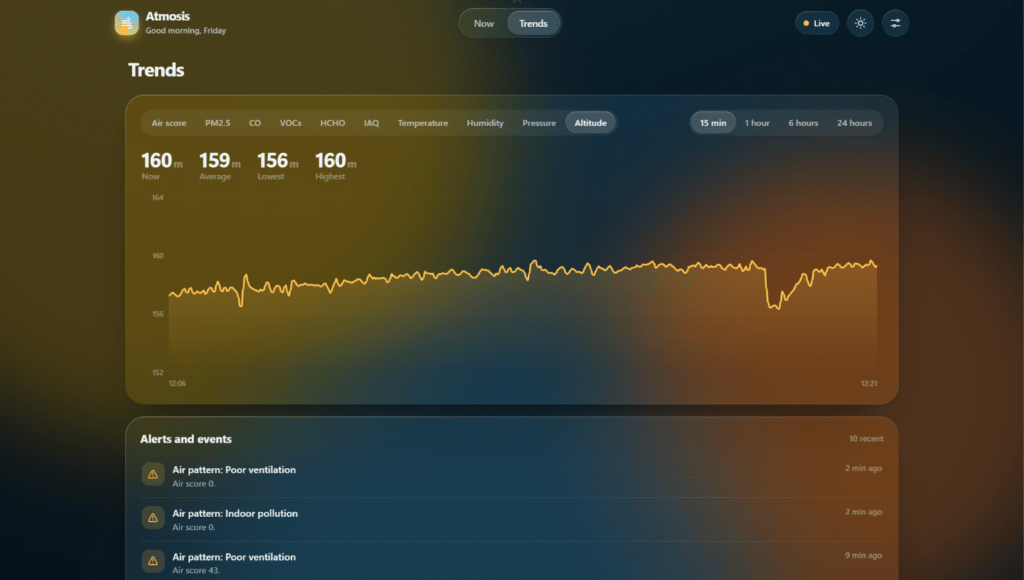
But while most environmental sensor devices like this simply tell you the sensor readings, Atmosis is built to use onboard edge AI, deployed through Edge Impulse, to automatically analyze the data. It looks at all the sensor readings and lets the user know when it identifies data that may need attention.
In most cases, that is all the user needs. But sometimes, a user might want to explore the data with more nuance or receive a more detailed evaluation. That’s why Next Builder gave Atmosis the ability to also work through Google’s Gemini LLM. That can dig into the sensor readings, look up references, and provide information in response to users’ questions.

Whether or not Gemini gets involved, the user can view the information through a web interface. They can also choose to receive updates from a Telegram bot.
Most areas will have more comprehensive data available from local weather stations than Atmosis can provide. However, your exact location may be unique, either as a result of differing micro climates or because of localized conditions, such as dust at a worksite. In those cases, Atmosis aims to provide valuable information that is easy to digest.

Arduino, UNO, and the Arduino logo are trademarks or registered trademarks of Arduino S.r.l.

The post Atmosis provides a digestible report, rather than raw environmental data appeared first on Arduino Blog.

Smart Citizen Opens Eyes and Ears in Barcelona

More often than not, our coverage of projects here at Hackaday tends to be one-off sort of thing. We find something interesting, write it up for our beloved readers, and keep it moving. There’s an unending world of hacks and creations out there, and not a lot of time to cover them all. Still, it’s nice when we occasionally see a project we’ve previously covered “out in the wild” so to speak. A reminder that, while a project’s time on the Hackaday front page might be fleeting, their journey is far from finished.

A perfect example can be found in a recent article posted by the BBC about the battle with noise in Barcelona’s Plaza del Sol. The Plaza is a popular meeting place for tourists and residents alike, with loud parties continuing into the middle of the night, those with homes overlooking the Plaza were struggling to sleep. But to get any changes made, they needed a way to prove to the city council that the noise was beyond reasonable levels.

Enter the Smart Citizen, an open source Arduino-compatible sensor platform developed by Fab Lab Barcelona. We originally covered the Smart Citizen board back in 2013, right after it ran a successful funding campaign on Kickstarter. Armed with the data collected by Smart Citizen sensors deployed around the Plaza, the council has enacted measures to try to quiet things down before midnight.

Today people tend to approach crowdfunded projects with a healthy dose of apprehension, so it’s nice to see validation that they aren’t all flash in the pan ideas. Some of them really do end up making a positive impact, years after the campaign ends.

Of course, we can’t talk about distributed environmental monitoring without mentioning the fantastic work of [Radu Motisan], who’s made it his mission to put advanced sensors in the hands of citizen scientists.

[Thanks to muA for the tip.]

Intelli-Buoy gathers water data

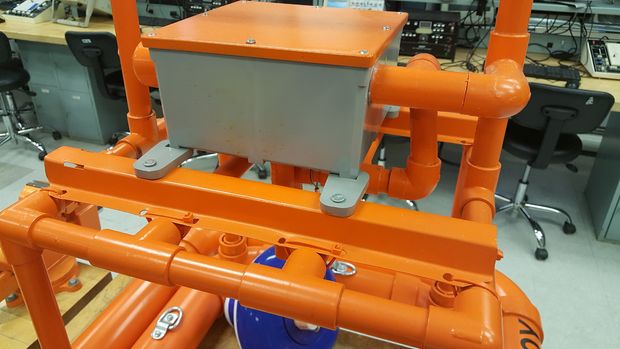
Water is essential to life on earth, and making sure our rivers and lakes are free from pollution is therefore quite important. For environmental monitoring, students from Bergen County Academics Magnet High School have come up with the Intelli-Buoy system that can track water turbidity, pH, oxygen, and temperature levels for analysis. It can also keep tabs on wind speed and rain stats for possible correlation.

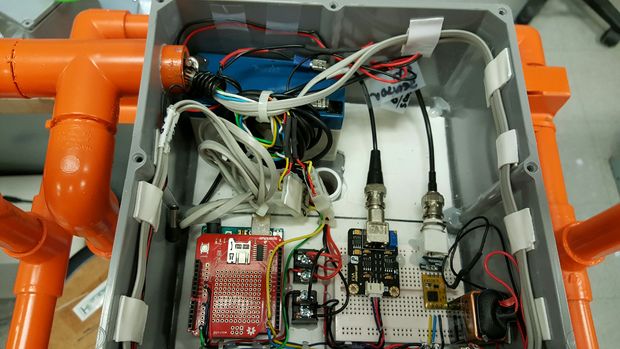
The floating device uses a pair of Arduino Unos with an SD card shield mounted on each in order to record these statistics over several days, and it’s designed with two external USB ports for easy access.

Be sure to check out this orange PVC sensor assembly the video seen here.

Digioxide: A Portable Device That Makes Art Out of Environmental Pollution

In an effort to raise public awareness of environmental pollution, artist Dmitry Morozov has created a device called that makes digital prints from the pollutants it detects.

Read more on MAKE

LED Atmospheric Analyzer Kit Now Available In The Maker Shed

The Maker Shed LED Atmospheric Analyzer Kit is now available in the Maker Shed. Use it to create a photometer, a device that measures how much blue, green, and red light are penetrating the atmosphere.

Read the full article on MAKE