Posts with «education» label

Music and language skills get a boost with Toot

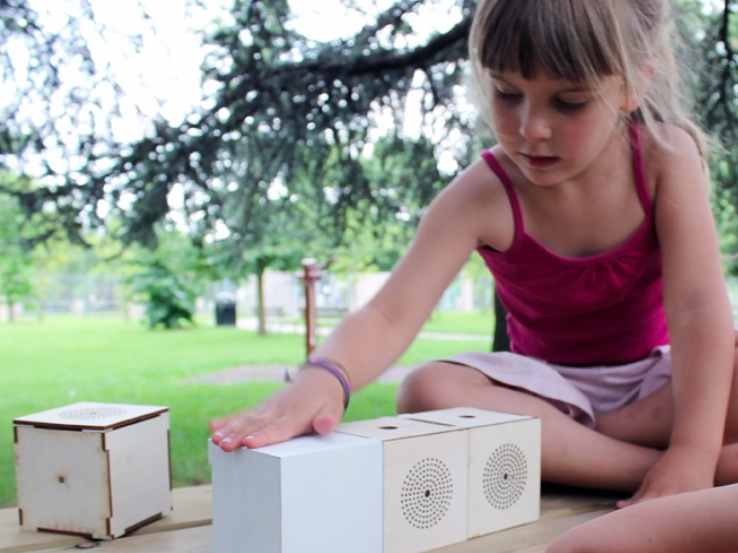
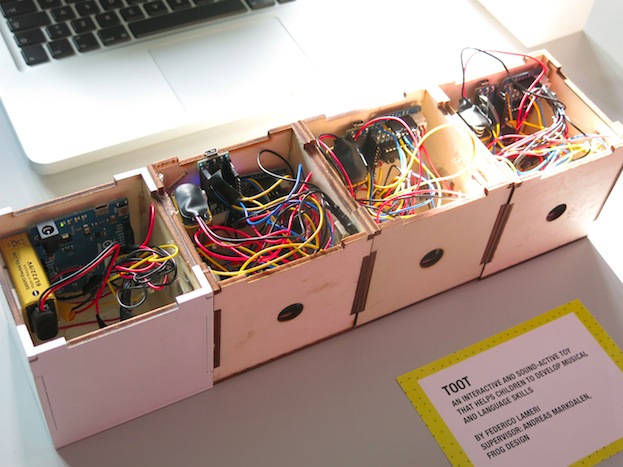
Toot is an interactive and sound-active toy designed for children aged between 3 and 6 years old that wants to enhance their auditory, music and language skills. It was developed by Federico Lameri as his thesis project of Master of Interaction Design at Supsi and prototyped using Arduino Leonardo.

The toy is composed by eight little cubical speaker boxes:

On each speaker children are able to record a sound. In order to listen back to the recorded sound the speaker must be shaken as if the sound was physically trapped into a box. After having recorded sounds on them, the speakers can be placed in a sequence after Mr.toot, and by tapping on his head it is possible to trigger the playback of the speakers in a sequence. toot is also matched with a mobile application that offers different kind of interactions and experiences. it allows to play some exercise that will teach children to listen, understand and catalog sound and melodies.

The app expands the possibilities of interaction, offering different exercises created with the help of musicians and educators from different areas of expertise,  some of them are also inspired by a Montessori sensorial activity.

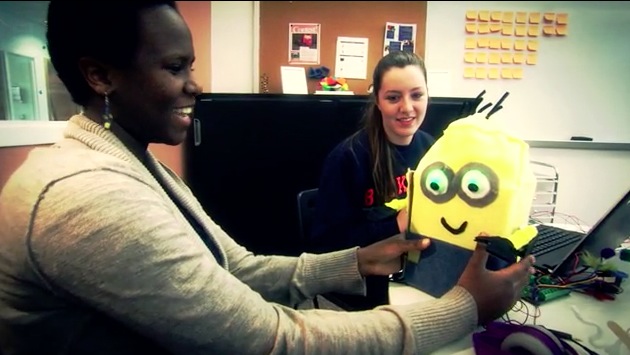
Take a look at the video interview with Montessori educator Fanny Bissa:


Arduino Blog 01 Sep 18:20

How the Makers at Nomiku Are Moving Manufacturing Into The Bay Area

This is a series that will document Nomiku’s journey into lean manufacturing in America through the conversations of the founding team: Lisa, Abe, and Bam. We will update the series as our adventure in building our high-tech device that lets people cook with the cloud continues. As we enter uncharted […]

Read more on MAKE

Fritzing is out with a new release including Arduino Yún microcontroller!

Fritzing is an open-source hardware initiative that makes electronics accessible as a creative material for anyone. You can easily learn how to build a circuit for you project and also design your own PCB.

Last week, the Fritzing team announced the new release with a number of new parts, especially a number of popular microcontrollers, among which also Arduino Yún:

We have upgraded to their latest version Qt5, which brings stability and speed improvements (especially for Mac OS X users). This also enables us to port fritzing to Android, iOS, etc.

You can download Fritzing 0.9.0b at this link.


Arduino Blog 28 Jul 16:39

Opensourcing imagination and sharing knowledge in Nepal

David Cuartielles held a worshop at Campus Party Berlin introducing  Arduino and the cool things you can do with it. Some months later, on of the students, Sanjeet Raj Pandey, wrote him to reveal that the event was a life changing moment.

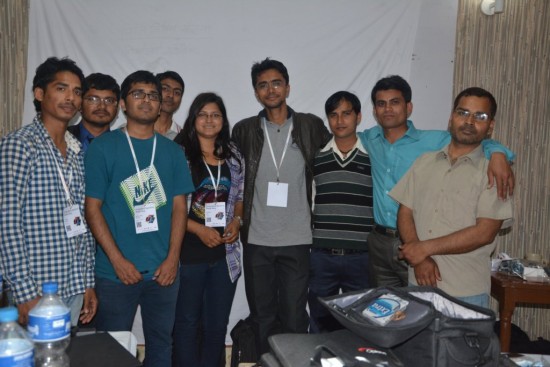
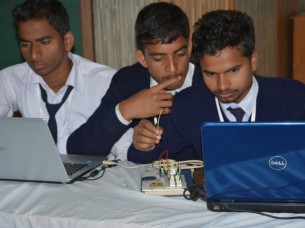
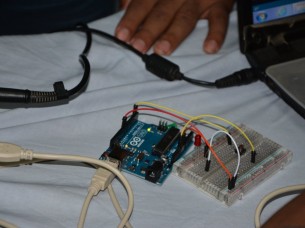
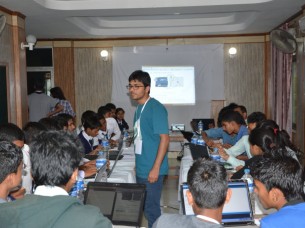
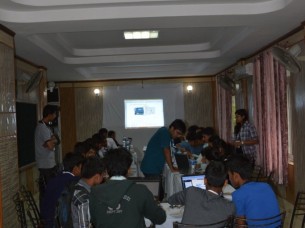
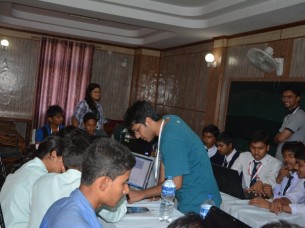
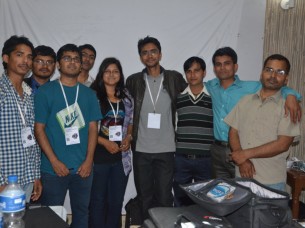
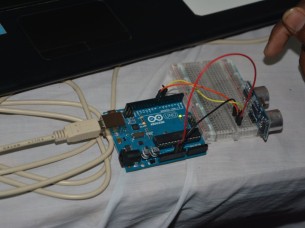
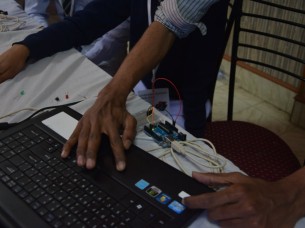
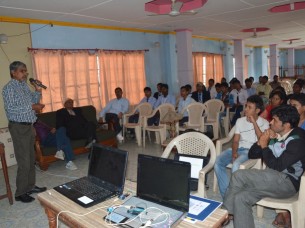
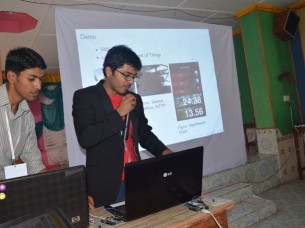
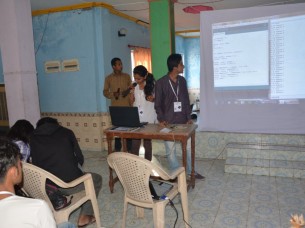
After that Sajeet decided  to share his knowledge and experience organising workshops in a rural city called Janakpur in Nepal. In that occasion a 100 participants got introduced to Arduino. They learnt how to blink LEDs, work with a temperature sensor, light sensor, ultrasound sensor and also to make a DIY Arduino:

Most of it was financed by myself and a bit of donation from Telecommunication department -Technical University of Berlin and Berlin Promotion Agency.

I like to make things which are real and can be put to work for society . Making things, one just cannot see but also touch is awesome.

Hope you will share Janakpur (Nepal) as one more place with Arduino. I would be keeping up pace and will be doing more such projects, workshops, seminars, remote sessions, etc for students in Nepal.

These are some pictures from the workshops:

Do you have a similar story to share? Submit it to our blog!

A new way of learning and transmitting knowledge with Arduino

The training program Creative Technologies in the Classroom (CTC) is a 3-month  educative program designed by David Cuartielles and Arduino Verkstad in collaboration with Fundación Telefónica, Fundación la Caixa and Ultra-lab.

It’s a toolbox comprised of more than 20 hands-on, easily assembled electronic experiments; an online source for course materials and documentation tools; and a collaborative space where teachers can meet with a moderator to share their findings and ask technical questions.

It aims to train teachers of Technology and students to creative technologies, which means technologies empowering young students to make devices, machines, art-works, experiments etc., enable them to learn doing things and to express themselves as creators.

Teachers are trained in programming with Processing and prototyping with Arduino, in order to become a mentor and help all along the program the students, following the different step-by-step experiments of the program.

The beneficial aspect of this program is not only about acquiring new skills and technical knowledge but mainly on experimenting a different methodology of learning and transmitting knowledge, based on sharing information,  questions,  doubts, and resolving them together by experimenting.

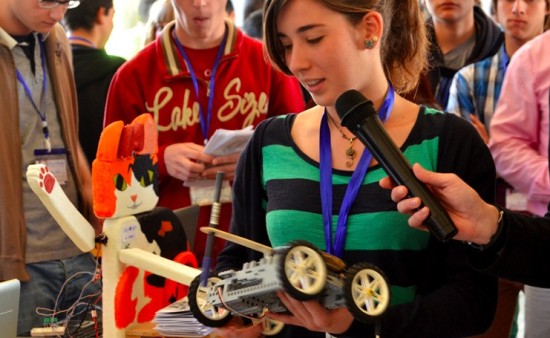
This project has been successfully implemented in the Region of Castilla La Mancha and Madrid involving 50 enthusiastic teachers,  around 1200 youngsters who were able to invent, create and exhibit their project made with Arduino.

See the video below for details (in spanish):

Thanks to the support of Fundación La Caixa, the same program will be held in 50 colleges of Barcelona and a new edition, with the renewed support of Fundación Telefónica, will begin again in Madrid in 2015.

Arduino Blog 21 Jul 15:35

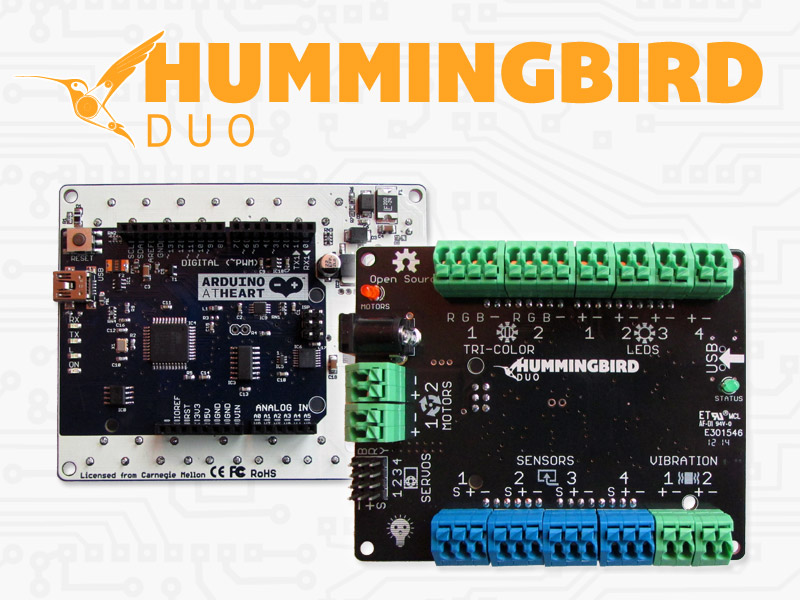
HummingBird Duo is an Arduino At Heart Robotics Kit for Ages 10 to 110

Today we want to introduce you to a new Arduino at Heart Partner launching on Kickstarter this week: Hummingbird Duo is an electronics kit designed to be fun and educational for a fourth grader, a high school student, a college engineering student, or an adult maker.

Hummingbird Duo  creates a bridge between making and classroom education combining craft materials, electronic components and drag &drop programming. Part of Hummingbird’s mission is, in fact, to explode common conceptions of how robotics can be used in K-12 education:

 We have designed several levels of learning into the Hummingbird experience. Instead of a steep learning curve, learners go up a staircase where each step increases skills and where mastering each step allows one to use the Hummingbird in a new and more interesting way.


The kit was developed by BirdBrain Technologies, a Pittsburgh, PA firm founded by Tom Lauwers in 2010 to commercialize educational technology developed by the Carnegie Mellon Robotics Institute’s CREATE lab and since 2012, they have pledged 1% of their net profits to the Computer Science Teacher’s Association.

Support them on Kickstarter!


LittleBits' Arduino module puts the focus on programming, not wiring

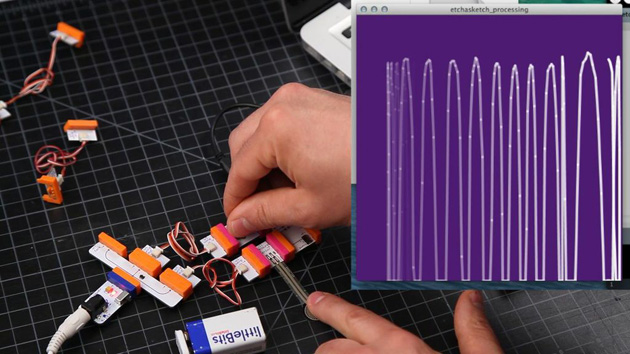
Getting your feet wet with programmable hardware can be tricky; even if you're comfortable with coding, you may not want to break out the soldering iron just to build a usable device. LittleBits is aware of just how intimidating these make-it-yourself gadgets can be, so it has just launched its first software-programmable module, the Arduino at Heart. As the name implies, it's an Arduino core (the same as the Leonardo) designed to fit into LittleBits' simple, building block approach to circuit boards. If you want to attach a light, motor or sensor to the Arduino board, you just snap it on -- you can spend more of your time coding rather than dealing with wiring and other hardware hassles. %Gallery-slideshow193425%

Filed under: Household, Peripherals

Comments

Source: LittleBits

Growing Grit: My 8th Grade Garduino Project

Making a self-maintained, Arduino-based garden helped with instilling “grit,” the trait of not giving up when you hit obstacles.

Read more on MAKE

Mirobot—a WiFi robotics kit at Maker Faire UK

The Mirobot, the brain child of Ben Pirt, brings long buried memories of the Logo Turtle flooding back. It's a Wi-Fi robot designed kit help children learn about technology and programming.

Read more on MAKE

Learn electronics with Chris Gammell and “Contextual Electronics”

Electrical engineer Chris Gammell has spent almost a year creating his new online electronics program called “Contextual Electronics“, and we’re excited to share this with our readers. You may have heard of Chris from his regular successful podcast with Dave Jones  – “The Amp Hour“.

Chris has the knowledge and expertise to take electronic ideas from simply that – an idea, right through to production. And by participating in his Contextual Electronics program you can learn the required skills to do this as well. Chris gives us a quick introduction in this video.

Contextual Electronics is a new program aimed at electronics enthusiasts who are ready to take their Arduino (or similar platform) skills to the next level. The first session of the course is an 8 week program that will teach you how to design a large, multi-function Arduino shield using KiCad, the open source CAD software.

It will also show you all of the design decisions that go into making the project. Here are some of the sub-circuits included in the 4-layer PCB design:

  • High level signals measurement using op-amps
  • Power supply output
  • Relay control
  • LED driver circuitry
  • Current source output

The course has a large community component, so you will be grouped with others learning at the same time, regardless of where you’re located in the world. The goal of the course and the community aspect is to make you more confident designing a project so you can go and design your own.

Future sessions of the course will also go over building, troubleshooting and coding for the shield described above. There is also a free short course that you can review to give you an idea of Chris’ methods and what the Contextual Electronics program will be like.

Additional courses will be developed using other popular development boards, including the Raspberry Pi and BeagleBone. For a more in-depth introduction, check out this video.

Frankly the program will help all of you who are ready to take your ideas and projects off the breadboard and into finished products, and with the guidance available with the program and the use of open-source tools you’ll be up and making things you can be proud of showing to friends or even potential employers. For more information about the program, and to sign up – visit the Contextual Electronics program website.

And if you enjoyed this article, or want to introduce someone else to the interesting world of Arduino – check out my book (now in a third printing!) “Arduino Workshop”.

Have fun and keep checking into tronixstuff.com. Why not follow things on twitter, Google+, subscribe  for email updates or RSS using the links on the right-hand column, or join our forum – dedicated to the projects and related items on this website. Sign up – it’s free, helpful to each other –  and we can all learn something.

The post Learn electronics with Chris Gammell and “Contextual Electronics” appeared first on tronixstuff.