Since Apple announced it was working on a technology for detecting child sexual abuse material (CSAM), the system has been a lightning rod for controversy. Now, two Princeton University academics say they know the tool Apple built is open to abuse because they spent years developing almost precisely the same system. “We wrote the only peer-reviewed publication on how to build a system like Apple’s — and we concluded the technology was dangerous,” assistant professor Jonathan Mayer and graduate researcher Anunay Kulshrestha wrote in an op-ed The Washington Post published this week.
The two worked together on a system for identifying CSAM in end-to-end encrypted online services. Like Apple, they wanted to find a way to limit the proliferation of CSAM while maintaining user privacy. Part of their motivation was to encourage more online services to adopt end-to-end encryption. “We worry online services are reluctant to use encryption without additional tools to combat CSAM,” the researchers said.
The two spent years working on the idea, eventually creating a working prototype. However, they quickly determined there was a “glaring problem” with their tech. “Our system could be easily repurposed for surveillance and censorship,” Mayer and Kulshrestha wrote. “The design wasn’t restricted to a specific category of content; a service could simply swap in any content-matching database, and the person using that service would be none the wiser.”
That’s not a hypothetical worry either, they warn. The two researchers point to examples like WeChat, which the University of Toronto’s Citizen Lab found uses content-matching algorithms to detect dissident material. “China is Apple’s second-largest market, with probably hundreds of millions of devices. What stops the Chinese government from demanding Apple scan those devices for pro-democracy materials?” Mayer and Kulshrestha ask, pointing to several instances where Apple acquiesced to demands from the Chinese government. For example, there’s the time the company gave local control of customer data over to the country.
“We spotted other shortcomings,” Mayer and Kulshrestha continue. “The content-matching process could have false positives, and malicious users could game the system to subject innocent users to scrutiny.” Those are concerns privacy advocates have also raised about Apple’s system.
For the most part, Apple has attempted to downplay many of the concerns Mayer and Kulshrestha iterate in their opinion piece. Senior vice president of software engineering Craig Federighi recently attributed the controversy to poor messaging. He rejected the idea the system could be used for scanning for other material, noting the database of images comes from various child safety groups. And on the subject of false positives, he said the system only triggers a manual review after someone uploads 30 images to iCloud. We've reached out to Apple for comment on the op-ed.
Despite those statements, Mayer and Kulshrestha note their reservations don’t come from a lack of understanding. They said they had planned to discuss the pitfalls of their system at an academic conference but never got a chance because Apple announced its tech a week before the presentation. “Apple’s motivation, like ours, was to protect children. And its system was technically more efficient and capable than ours,” they said. “But we were baffled to see that Apple had few answers for the hard questions we’d surfaced.”
T-Mobile says millions more people have been impacted by its recent data breach than initially believed. In a Securities and Exchange Commission filing, the company said an additional 6 million or so accounts were affected, taking the total to more than 54 million.
On Wednesday, T-Mobile disclosed that data from around 40 million former or potential customers had been compromised in a cyberattack. The data included names, birth dates, social security numbers, driver’s licenses and information from other types of identification. The company now says another 667,000 accounts of former customers were accessed, with attackers obtaining some personal data from those, but no SSNs or ID details.
In the previous disclosure, T-Mobile said approximately 7.8 million current holders of T-Mobile postpaid accounts were impacted, with attackers gaining at least some customers' personal data. The company now says phone numbers and IMEI and IMSI details (identifiers for mobile devices and SIM cards respectively) were compromised as well.
On top of that, T-Mobile has identified another 5.3 million affected postpaid accounts. No SSNs or driver’s license/identification details were compromised from those, the company said, but the attackers accessed other identifiable information.
Around 850,000 active T-Mobile prepaid customers have been impacted as well. The attackers may have garnered up to 52,000 names connected to current Metro by T-Mobile accounts too. Accounts of former Sprint prepaid and Boost Mobile customers are unaffected.
Other data was stolen in the cyberattack, including additional phone numbers and IMEI and IMSI numbers, but the company claims there was no personally identifiable information in those files. Meanwhile, T-Mobile still has "no indication" that customer financial details, such as credit card data, were affected.
A member of an underground forum claimed over the weekend to have data for more than 100 million T-Mobile customers. They reportedly attempted to sell information of around 30 million of those for about $270,000 worth of Bitcoin.
T-Mobile's investigation into the breach is ongoing and it will provide more details if it finds more affected accounts. The company says it's "confident that we have closed off the access and egress points the bad actor used in the attack" and that it has taken steps to mitigate the impact on customers. For instance, it has offered two years of identity protection service to anyone who thinks they might have been affected.
The internet was awash with tech deals this week, with some of the best coming from Apple and Amazon. Apple's AirPods Pro dropped to $180 while the MacBook Pro M1 received at $200 discount. Amazon kicked off its "off to college" sale by reducing the prices of its Echo speakers, including the Echo Dot, Kindle e-readers and a handful of Fire tablets. And those looking for a new streaming gadget can get the Roku Streambar or the NVIDIA Shield TV for less. Here are the best tech deals we found this week that you can still get today.
AirPods Pro
Billy Steele / Engadget
Apple's AirPods Pro are down to $180 right now, or $70 off their normal price. These are the best sounding earbuds you can get from Apple, and we gave them a score of 87 for their better, more secure fit, IPX4 water resistance and solid audio quality.
The MacBook Pro M1 is $200 off at Amazon thanks to a sale price and an automatically applied coupon on top of that. That means you can get the model with 256GB of storage for $1,099 and the 512GB version for $1,299. We gave the Pro M1 a score of 84 for its powerful performance, solid keyboard and trackpad and healthy battery life.
Those looking to invest in an iPad Pro as a laptop alternative need look no further than Amazon's most recent sales on the 1TB models. The WiFi version of the latest 11-inch iPad Pro is down to $1,399 while the WiFi + Cellular version is down to $1,599. These iPad Pros run on Apple's M1 chipset, so you're getting the latest processor technology and formidable performance in these slabs.
The Echo Dot has been discounted to $35 while the regular Echo smart speaker is down to $80 as part of Amazon's "off to college" sale. While not all-time lows, these sale prices are great for those that want to save a bit and add an Echo device to their home, or college students who want a convenience speaker for their new dorm room.
Both Amazon's Kindle Paperwhite and regular Kindle are on sale right now for $80 and $65, respectively. These are some of the best prices we've seen on both e-readers since Prime Day back in June. We recommend the Paperwhite to those that can afford it, but the standard Kindle is an even better buy now than it was a couple of years ago thanks to its new front light and higher-contrast display.
A number of Amazon Fire tablets are on sale this week, including the new Fire HD 10, which is down to a record low of $100. The Fire HD 8 has been discounted to $60, which is a great price for a basic tablet that we praised for its long battery life, USB-C charging and hands-free Alexa capabilities. And if you've been eyeing a Fire tablet for your child, the Fire 7 Kids Pro and the Fire 8 Kids Pro are both on sale for $60 and $90, respectively.
Amazon knocked $20 off its Fire TV Cube, bringing it down to $100. It's been around for a while, but the Fire TV Cube remains the most powerful streaming device in Amazon's lineup. It has solid performance and supports 4K HDR output as well as voice commands via Alexa for both your TV and other smart home devices.
The NVIDIA Shield TV is $20 off right now, bringing it down to $130. We like it for its Tegra X1+ processor and its support for Dolby Vision HDR, Dolby Atmos audio, Chromecast 4K and AI-powered HD-to-4K upscaling.
The Roku Streambar is down to $99 right now, or $30 off its normal price. It's a relatively affordable device to get to upgrade an old TV in your home, or up the audio chops on your main set. We gave it a score of 86 for its compact size, good sound quality and 4K HDR streaming chops.
Samsung's premium Galaxy Buds Pro are on sale for $127 at B&H Photo right now. That's 37 percent off their normal price and close to a record low. We gave them a score of 85 for their comfy fit, good sound quality and wireless charging case.
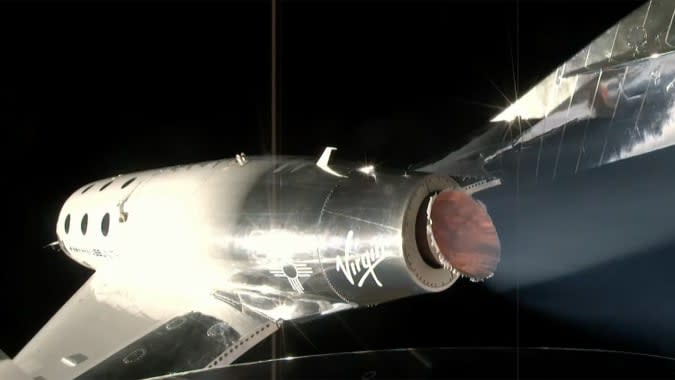
In this Omaze giveaway you can win two seats on one of the first Virgin Galactic flights to space. In addition, you'll go on a tour of Spaceport America in New Mexico with Richard Branson. You don't have to pay to enter, but funds from all paid entries will support Space for Humanity, an organization that hopes to make space more accessible for all. The sweepstakes is open through September 1, so you still have time to enter.
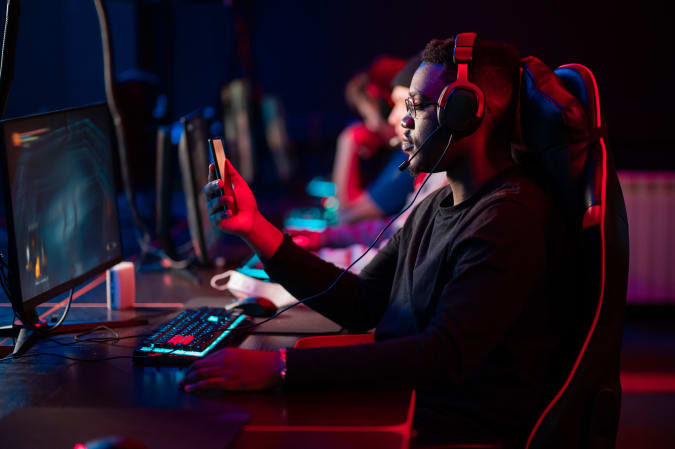
Through September 18, Omaze is giving away another $20,000 to build your ultimate gaming PC. This sweepstakes is free to enter, but funds donated with purchased entries will benefit Schools on Wheels, an organization that provides free tutoring and mentoring services to children experiencing homelessness across Southern California.
Through December 8, you can enter to win four-day passes to San Diego Comic-Con 2022. Along with the passes, you'll get access to a special preview night, reserved seating in Hall H, a personal concierge, a private tour of the Comic-Con Museum, dinner in Balboa Park and tickets to the "Night at the Comic-Con Museum" event. It's free to enter, but funds from this sweepstakes will go to the San Diego Comic Convention.
Logitech's C922x Pro webcam is on sale for $75, or $25 off its normal price. While not a record low, it's a good sale price on a solid webcam that you'll actually be able to get relatively soon — Amazon estimates orders will ship in the first few weeks of September. This version of the C922 webcam is optimized for streaming, so it could be your Zoom-meeting webcam as well as your main game streaming camera.
One of our recommended VPNs is running a decent sale on a two-year subscription. You can sign up for NordVPN for $99 for the first two years, which comes out to $49.50 per year, and get three additional months of access for free. We like NordVPN for its speed, its no-logs policy, the thousands of servers it has to choose from and that one account supports up to six connected devices.
Sony, arguably nine months too late, is finally unlocking the 10 million PlayStation 5s around the world to accept expandable SSD storage. At launch, the next-gen console offered only 667GB of space for storing your PS5 games, with no way to expand that. While that’s been fine for some (like me), others (like my son) have been performing a near-daily juggling act, having to frequently delete and re-download games due to the restrictive storage size and the apparent need to have constant access to every Call of Duty game.
With the upcoming system software update — currently in beta testing — you’ll be able to increase your storage by slotting in a standard PCIe Gen4 x4 M.2 NVMe SSD. If that mess of acronyms has you recoiling, don’t worry, you’ll see that it’s not all that complicated, and if you want to know which drives we recommend, you can skip to the end.
How much storage do I need?
Aaron Souppouris / Engadget
The PS5 will accept drives between 250GB and 4TB in capacity. If you already have a PlayStation 5, chances are you have a reasonable idea of how much storage you want. If you’re buying an SSD with a new PS5, or buying for someone else, though, it’s difficult to tell.
PS5 games are a little smaller on average than their PS4 equivalents, typically ranging between 30GB and 100GB, with some notable (and very popular) exceptions. If you’re a fan of the Call of Duty series, just having Cold War multiplayer and Modern Warfare/Warzone installed will require 307GB of space. A full Warzone-Modern Warfare-Cold War install will take up almost two thirds of the PS5’s internal storage. If you’re not a CoD fan, though, chances are you’ll be good to store between six to 10 games on your PS5 internally before running into problems.
One additional thing to consider is your internet speed. If you live in an area with slow broadband, the “you can just download it again” rationale doesn’t really work out. A 100GB download takes me around eight hours, during which time it's difficult to simultaneously watch Twitch or, say, publish articles about upgrading PS5 SSDs. Keeping games around on the off-chance you’ll want to play them at some point make sense, at least for my household.
Off the bat, there's basically no point in going for a 250GB drive. Economically, 250GB drives aren’t that much cheaper than 500GB, and practically, that really isn’t a lot of space for modern games to live on. 500GB drives, coming in at around $90 to $150, are a decent bet, but the sweet spot for most is to opt for a 1TB drive, which should run you between $160 and $250. That will more than double the space you have available for games without breaking the bank. (Seagate’s official 1TB Xbox Series expansion card, for comparison, sells for $220.)
If you have the money, 2TB drives sometimes offer marginal savings per gigabyte, and can often be found when other models are out of stock. Unless you’re rolling in cash and want to flex, 4TB models should mostly be avoided, as you’ll end up paying more per gigabyte than you would with a 1TB or 2TB drive.
One final note: While the 825GB PS5 only provides 667GB of storage, that’s largely due to storage being reserved for the operating system and caching. If you install a 1TB SSD, you'll have, within margin of error, 1TB of storage available for games.
What about external SSDs?
Samsung
These are dramatically cheaper than the high-end internal SSDs, but there are restrictions on what you can do with them. An external SSD connects to your PS5 via USB, and is only suitable for playing PS4 games, or storing PS5 titles. This is useful if you have anything but the best internet — it’s faster to move a PS5 game out of “cold storage” on an external drive than it is to re-download it — or just want a large number of PS4 games to hand.
Due to the limitations here, you don’t need the highest performing model, although you should opt for SSDs over HDDs for improved transfer speeds. Any basic portable drive from a reputable brand will do, with the Crucial X6 and Samsung T5 being options we’ve tried and can recommend.
What SSDs are compatible with PS5?
The official answer to this question is an “M.2 Socket 3 (Key M) Gen4 x4 NVME SSD.” But even within that seemingly specific description, there are still more things to consider. The main requirements Sony has laid out for compatibility come down to speed, cooling and physical dimensions.
For speed, Sony says drives should be able to handle sequential reads at 5,500MB/s. Early testing has shown that drives as slow as 4,800MB/s are accepted by the PS5, and using them to play a game that taps into the SSD regularly — such as Ratchet & Clank: Rift Apart — causes no issues. Pretty much the only thing the PS5 will outright reject is one that doesn't match the Gen4 x4 spec.
In our opinion, though, using a drive slower than the specification is a risk that, if you don’t already have that drive lying around, is not worth taking. Just because we haven’t found issues now, that doesn’t mean there won’t be games that will be problematic down the line. The price difference between these marginally slower Gen4 drives and the ones that meet Sony’s spec is not huge, and you may as well cover all your bases.
Slightly more complicated than speed is cooling and size. Most bare SSDs are going to be just fine; the PS5 can fit 22mm-wide SSDs of virtually any length (30mm, 42mm, 60mm, 80mm or 110mm, to be precise). The vast majority of drives you find will be 22mm wide and 80mm long, so no problem there.
It should be noted that the system can fit a 25mm-wide drive, but that width must include the cooling solution. Speaking of, Sony says SSDs require “effective heat dissipation with a cooling structure, such as a heatsink,” which is where most of the complications arise.
The maximum height supported by Sony’s slot is 11.25mm, of which only 2.45mm can be “below” the drive. This is intensely specific, and rules out some popular heatsinked Gen4 SSDs such as Corsair’s MP600 Pro and Sabrent’s Rocket 4 Plus. With time, it’s likely that manufacturers will want in on this new avenue for high-end SSD sales, and these heatsink size limits are going to become the de facto standard for the industry. In the meantime, however, only a couple of heatsinked drives fit out of the box.
If you’re looking to save some money, bare drives are often much cheaper and prevalent than their heatsinked alternatives, and it’s trivial to find a cooling solution that will work for the PS5.
The only component in an NVMe SSD that really requires cooling is the controller, which without a heatsink will happily sear a (very small) steak. Most SSDs have chips on only one side, but even on double-sided SSDs, the controller is likely to be on top, as manufacturers know it needs to be positioned there to better dissipate heat. So, head to your PC component seller of choice, and pick up basically anything that meets the recommended dimensions. A good search term is “laptop NVME heatsink,” as these will be designed to fit in the confines of gaming laptops, which are even more restrictive than a PS5. They’re also typically cheaper than the ones popping up now that are labelled as “PS5 heatsinks.”
One recommendation is this $7 copper heatsink, which attaches to the SSD with sticky thermal interface material. It works just fine, and really, performing stress tests on a PC, we couldn’t find anything metal that didn’t keep temperatures under control. When you’re searching, just make sure the solution you go for measures no more than 25mm wide or 8mm tall including the thermal interface material and has a simple method of installation that’s not going to cause any headaches.
Now, if all of that was very boring, here are some ready-to-go recommendations:
Best PS5 SSD: Patriot Viper VP4300
Patriot
Patriot may not be the biggest name in components, but it has a long history in the PC market, and the Viper VP4300 is a solid drive for the PS5. With a sequential read rating of 7,400MB/s and a slim heatsink preinstalled, it meets all the necessary requirements for a simple upgrade. The reason it tops our list is the cost. It comes in 1TB and 2TB varieties, both of which are competitively priced. Expect to pay around $210 for the 1TB version or $430 for the 2TB.
If you’re not a PC user, PNY is another company you probably haven’t heard of. Again, though, it has a good track record, operating for three decades out of the US. The XLR8 CS3040 is a fantastic value option, though it will require you to add your own cooling solution, as the one PNY sells won’t fit in the PS5.
While that may sound like a hassle, maybe the pricing will convince you: The $90 500GB option is great, but the $160 1TB drive is a steal, and the $307 2TB model is also outrageously cheap. As mentioned, we don’t really recommend 4TB drives but, among the typically four-figure options on the market, PNY’s $700 CS3040 is the only one that makes any sense.
The SN850 is a plug-and-play option for the PS5, with a sequential read rating well above the necessary numbers and a 6.5mm-high heatsink preinstalled. It comes in 500GB, 1TB and 2TB varieties, all of which are priced fairly competitively, though the price-per-GB of the 1TB and 2TB is significantly lower than the 500GB.
Expect to pay around $140 for the 500GB drive, $250 for the 1TB version or $430 for the 2TB. If you’re willing to go it alone on the heatsink, those prices drop to around $120, $200 and $400, respectively.
We haven’t been able to test this one ourselves, as it starts shipping “this summer,” but given Seagate is a trusted brand and has outright said its heatsinked drive supports PS5, we’re happy to include it on this list. Unfortunately, the list pricing on the 530s is high, at $160 for 500GB, $260 for 1TB, $540 for 2TB and $1,000 for 4TB. The non-heatsink version will retail at $140, $240 and $490, for the 500GB, 1TB and 2TB versions. These aren't a million miles away from the RRP on other drives on this list that have a lower real-world price now, so we’d expect that you’ll be able to find some deals at similar rates down the line.
Samsung does not sell a 980 Pro with a heatsink attached, but it does have a fantastic reputation for reliability, and prices that are competitive with WD, Seagate and others on this list. Expect to pay around $130 for 500GB, $190 for 1TB, or $370 for 2TB.
Crucial’s P5 Plus is another budget model, which missed out on the “best cheap SSD” spot thanks to PNY’s marginally lower prices. Again, this one has no heatsink, so you’ll need to supply your own. The 1TB drive is the sweet-spot option, coming in at $180, while the 500GB and 2TB drives will set you back $108 and $368, respectively.
Sabrent sells a bunch of Rocket drives, but only the Plus model actually meets Sony’s requirements, so be sure you’re looking at the correct model before you buy. The Rocket 4 Plus’ heatsink is too chunky to fit in the PS5, so you’ll again have to fit your own cooling solution. Sabrent typically has aggressive pricing, but as of writing the Plus hasn’t seen any major discounts. The 1TB model can be found at around $180, the 2TB $360 and the 4TB for $900.
As of writing, the first thing you’ll need to install an SSD is access to the semi-closed system software beta. From an admittedly small sample, I’ve yet to hear of people being denied access to this; everyone I know who's applied was accepted within a week. You can enroll here if you’re in the US, or you can google “PlayStation 5 System Software Beta Program sign-up” to find your local sign-up link.
Once you have the beta on your PS5, installation of a PS5 SSD is fairly straightforward. Sony recommends a #1 Phillips or crosshead screwdriver, but this isn't rocket science. Any crossed screwdriver of similar size will do fine.
Begin by powering down your PS5, unplugging everything, removing the stand and flipping it over to its underside. If you have the regular PS5, that’s the side with the disc drive, if you have the Digital Edition, it’s the side without the PlayStation logo cutout.
Sony has a video guide to popping off the outside cover here, but the gist is you gently lift up the opposing corners and slide the panel towards the flat end of the console. There’s a knack to this, and it requires very little effort or strength. If you’re not getting it, rather than force it just readjust your grip and try again. A member of our video team managed to break one of the tabs on our review unit doing this last November so… yeah, don’t force it.
Engadget
Once you’ve got everything open, you’ll see a rectangular piece of metal with a screw holding it in place. Remove that screw, and you’ll be able to access the drive bay.
You’ll see five holes inside, each numbered corresponding to the standard SSD drive lengths I mentioned earlier. The one numbered 110 will have a metal insert and screw inside. You need to unscrew the screw with a screwdriver, and then unscrew the insert with your fingers and move it to the relevant hole. Your eyes should tell you which is the right one for your drive, but it’s most likely going to be 80.
Aaron Souppouris/Engadget
Then take your SSD — mine is a 980 Pro I bought on Prime Day with a $2 piece of aluminum attached to the top — and slot it in. The slot is at the edge closest to the number “30,” and SSDs are keyed to only fit in one way, so again, no force is required. If it’s not sliding in, don’t force it. You’ll notice the SSD doesn’t sit flat — that’s fine, and is as intended.
Engadget
Once the SSD is seated, take the screw you removed from the insert, line it up with the little notch at the end of your SSD, and push down so it meets the insert. Give the screw it a few turns — it doesn’t need to be very tight — and you’re done.
Engadget
Replace the metal cover and screw it down, and then slide the plastic outer shell back on. When you first turn on the PS5, it’ll prompt you to format the drive. Do that! You have now successfully expanded your console’s storage, and can set about downloading and moving games to it. Personally, I moved all of the PS4 games I had to the new drive, along with all of my clips and screenshots. The PS5’s built-in SSD is always going to be the most compliant, so I’m keeping my important stuff there.
We'll be updating this guide as more SSDs come to market and onto our test bench, so feel free to bookmark it for when you need it.
A year after it wowed many with its first gameplay video, Chinese developer Game Science Studio is back with an even more impressive look at Black Myth: Wukong. The studio has switched from Unreal Engine 4 to UE5 for the action RPG. According to NVIDIA, it's the first peek at a UE5 game that uses Deep Learning Super Sampling (DLSS), the company's AI-powered upscaling tech.
The 12-minute preview, which you can watch in 4K at 60 frames per second, shows off much more action from the game. It features a couple of stunning boss fights, including one with an electric dragon on a frozen lake. The visuals here are eye-popping: expect buttery-smooth animations, gorgeous environments and dazzling snow and ice effects.
Black Myth: Wukong is based on the story of the Monkey King and the Journey to the West. Game Science Studio seems to have taken inspiration from Sekiro: Shadows Die Twice here, but that's hardly a bad thing. The gameplay and creature design certainly draw from the Souls-like approach popularized by From Software — for instance, you see the protagonist evading the terrible beasts' attacks while looking for an opportunity to leap in with their staff.
The studio was formed by a group of former Tencent Games employees, according to prominent games industry analyst Daniel Ahmad. There's no confirmed release window as yet for Black Myth: Wukong. Game Science Studio said last year it was aiming to bring the game to PC (which is a sure bet given the DLSS support) and consoles by 2023.
While Apple may have released Siri before Google Assistant and Amazon Alexa, in many ways its voice-activated assistant is the least advanced of the three. A lot of that has to do with the amount of data and training digital assistants need to understand different languages, dialects and speech patterns. In an effort to improve its digital assistant, Apple recently launched a study to collect speech data and feedback with the help of an app called Siri Speech Study.
“The Siri Speech Study app allows participants to send certain data to Apple for product improvement, as detailed in the informed consent form,” the company says in a listing spotted by TechCrunch. The software is available in the US, Canada, Germany, France, Hong Kong, India, Ireland, Italy, Japan, Mexico, New Zealand and Taiwan. According to data from analytics firm Sensor Tower, Apple uploaded Siri Speech Study to the App Store on August 9th, and recently updated the software on August 18th.
Apple isn’t being exactly secretive about the app, but nor is it advertising its existence either. You can’t find the software by searching for it, nor is it listed as one of the apps published by Apple. Similarly, you can’t join the study simply by installing the software on your phone; you need an invite from Apple to participate. We've reached out to Apple for more information on the app.
Notably, the app allows those involved to choose what Siri requests they send to the company. That's an important point. In 2019, The Guardian published a report that detailed an Apple program where third-party contractors listened to anonymized Siri recordings to analyze the assistant’s responses. A whistleblower told the outlet there had been “countless instances” where graders listened to private conversations, including some that involved criminal dealings and sexual encounters. Apple subsequently moved the program in-house, and switched to opt-in transcripts.
While Samsung redesigned the latest Galaxy Buds 2 with the budget-conscious in mind, the Galaxy Buds Pro are its complete-package wireless earbuds. They debuted in January and we found them to be Samsung's best wireless earbuds to date — but they're also the company's most expensive at $200. But B&H Photo has a limited-time sale going on right now that knocks 37 percent off the buds, bringing them down to $127. That's close to an all-time low and a great price on the most premium Samsung earbuds.
Samsung had many iterations of its earbuds before the Galaxy Buds Pro came along, and it took all previous criticism to hear when designing the Pros. They have a compact, comfortable design with an IPX7 waterproof rating, so you could use them while working out. Active noise-cancellation is solid, blocking out sounds from things like running dishwashers well, and Android users can download the companion mobile app to change noise-cancellation settings.
The mobile app also lets you do things like enable hands-free Bixby and disable voice detection, which will automatically lower the volume and switch to ambient sound mode when you're speaking. We were also impressed by the buds' sound quality — the 11mm woofer handles the low-end well and highs are crisp and punchy. The Galaxy Buds Pro also support 360 Audio, which is Samsung's equivalent to Apple's Spatial Audio on AirPods Pro.
As far as battery life goes, it's decent but nothing to write home about. You'll get roughly 18 hours of listening time out of the buds, and that includes the extra charges carried by its case. We do like that the case supports wireless charging, though, so you can sit them on any Qi pad in your home to get extra juice. These remains the most premium earbuds you can get from Samsung, and considering B&H's sale makes them more affordable than even the new Galaxy Buds 2, it's a solid buy if you want the best Samsung has to offer.
Follow @EngadgetDeals on Twitter for the latest tech deals and buying advice.
This week, Cherlynn and Devindra are joined by Washington Post Staff Writer (and former Engadget colleague) Chris Velazco to dive into all of the latest phone reviews. What’s up with Samsung’s Galaxy Z Flip 3 and Fold 3? Who needs the Pixel 5a? And why did Qualcomm try to make a phone of its own? Tune in for our discussion, as well as to find out what you should be looking for in your next phone upgrade.
Listen below, or subscribe on your podcast app of choice. If you've got suggestions or topics you'd like covered on the show, be sure to email us or drop a note in the comments! And be sure to check out our other podcasts, the Morning After and Engadget News!
Credits Hosts: Cherlynn Low and Devindra Hardawar Guest: Chris Velazco Producer: Ben Ellman Livestream producers: Julio Barrientos, Owen Davidoff, Luke Brooks Graphics artists: Luke Brooks, Kyle Maack Music: Dale North and Terrence O'Brien
SpaceX won't be working on its $2.9 billion lunar lander contract for a while after NASA agreed to put the project on hold. The space agency told Reuters that it temporarily ceased all work on the project after Jeff Bezos' company Blue Origin filed a complaint against it with the US Court of Federal Claims. "In exchange for this temporary stay of work, all parties agreed to an expedited litigation schedule that concludes on November 1st," the space agency said in a statement.
Blue Origin sued NASA over its decision to award a lunar lander contract to SpaceX alone when it originally planned to award two contracts. The agency historically works with more than one contractor for each mission to ensure that it can launch in time. However, it only received a fraction of the budget it requested for the Artemis lunar lander, which will be designed to carry human astronauts to the surface of the moon from the Orion spacecraft, and chose to forgo awarding a second contract.
Bezos' company first challenged the decision back in April and filed a protest with the Government Accountability Office. As The Verge notes, that complaint put the SpaceX contract on hold for 95 days, so this is the second time NASA and Elon Musk's company have to temporarily halt the project. Blue Origin argued that the selection process was unfair, because it wasn't given the opportunity to revise its bid like SpaceX was able to.
GAO ultimately dismissed the case, concluding that NASA's evaluation of all the proposals for the mission "was reasonable and consistent with applicable procurement law, regulation, and the announcement's terms." Before GAO revealed its decision, though, Jeff Bezos wrote an open letter to NASA, telling the agency that Blue Origin is willing to waive up to $2 billion in payments in return for a fixed-price lander contract.
In both of the lawsuits it filed, Blue Origin said it's making "an attempt to remedy the flaws in the acquisition process found in NASA's Human Landing System." For its more recent complaint, the company explained that it "stand[s] firm in [its] belief that there were fundamental issues with NASA's decision, but the GAO wasn't able to address them due to their limited jurisdiction." We'll know soon enough which side the court will pick: A judge has set a hearing for the case on October 14th.
If streaming the Neon Genesis Evangelion saga on Netflix and Amazon Prime Video has made you an acolyte of the hit anime, then we have good news. The original series is coming to Blu-Ray for the first time in North America.
But, this isn't just a regular physical release. Billed as "Neon Genesis Evangelion: Ultimate Edition," the box set is spread across 11 discs, contains over 7 hours of bonus features, along with extras that span a 156 page book, art boards and limited edition artwork, a Sachiel resin paperweight and a NERV ID Card with lanyard.
The release includes the official and classic dubs and subtitled versions, plus the follow-up films, Evangelion: Death (True)² and The End of Evangelion. All of that will cost you $275 during the current pre-order period, which ends December 7th. Afterwards, you'll have to fork out $350 for the special release. As of now, the Blu-Ray is listed as sold out in the US, probably because fans quickly snapped up the 5,000 copies that were available. Though it still appears to be in stock in the UK, where it's limited to just 2,500 copies.
GKIDS Films
Despite all the riches on offer, what you won't get here is the series' "Fly me to the Moon" ending theme, likely due to licensing issues. As fans will know, the song was also missing from Neon Genesis Evangelion on Netflix. The streamer opted to replace it with "Hostility Restrained" from the show's score. Those feeling wistful can listen to it in the video below.